

Hazardous Waste Regulations UK 2025: Essential Guide for Businesses

UK businesses face a tough wake-up call with hazardous waste regulations about to change dramatically. Over 30,000 companies risk hefty fines if they fail to comply with stricter waste separation rules starting 31 March 2025. Most assume the challenge lies in dealing with toxic materials themselves. The real surprise is that missing out on paperwork alone could cost thousands, making proper record-keeping just as crucial as safe disposal.
Table of Contents
- Understanding Hazardous Waste Regulations UK 2025
- Types Of Hazardous Waste And Business Impact
- Compliance Steps For Facilities, Offices And Sites
- Best Practices For Safe And Legal Waste Disposal
Quick Summary
| Takeaway | Explanation |
|---|---|
| Understand Legislative Updates | It is crucial for businesses to familiarise themselves with the updated hazardous waste regulations coming into effect on 31 March 2025, which impose stricter requirements for waste classification, separation, and management. |
| Implement Proactive Waste Management | Organisations should invest in comprehensive staff training, waste tracking systems, and risk assessment protocols to ensure compliance and mitigate environmental risks, thereby enhancing operational efficiency. |
| Prioritise Legal Documentation | Accurate record-keeping and adherence to documentation guidelines outlined by government authorities are essential for regulatory compliance and to avoid significant legal and financial penalties. |
| Stay Informed on Waste Categories | Businesses must correctly identify and classify hazardous waste types, such as chemical waste and electronic equipment, to align with the legal definitions and ensure proper handling and disposal. |
| Emphasise Best Practices in Disposal | Adopting state-of-the-art waste treatment and disposal protocols, and prioritising recycling and reduction, solidifies an organisation’s commitment to environmental stewardship and legal obligations. |
Understanding Hazardous Waste Regulations UK 2025
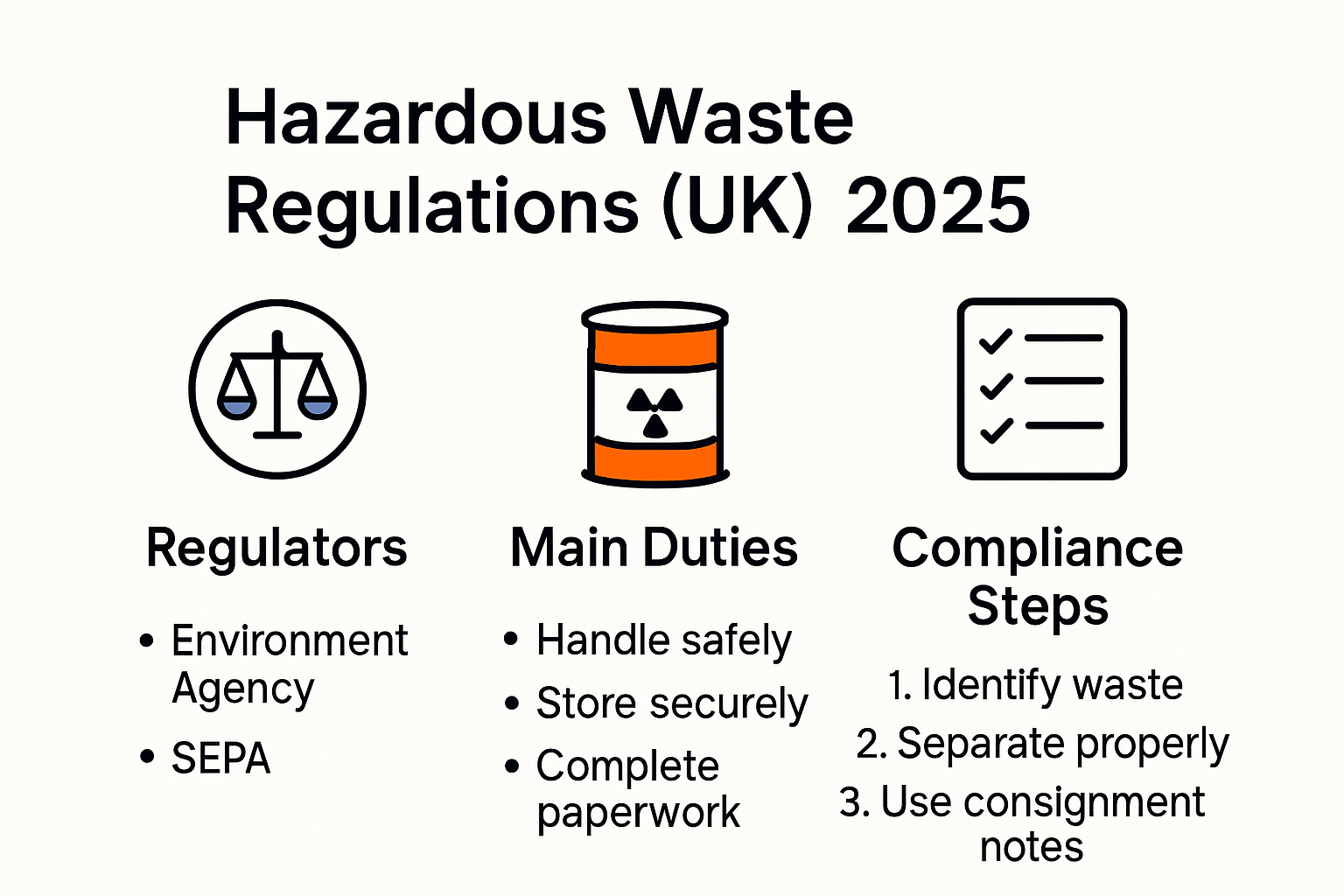
Hazardous waste regulations in the United Kingdom represent a complex framework designed to protect environmental and human health by ensuring responsible waste management. The year 2025 marks significant legislative updates that businesses must comprehend and implement strategically.
Core Principles of Hazardous Waste Management
The UK’s hazardous waste regulations fundamentally aim to control substances that pose potential risks to the environment and human wellbeing. Explore our comprehensive guide on hazardous waste handling to understand the intricate details of these requirements.
According to the Environment Act 2021, national authorities now have expanded powers to regulate hazardous waste management. These regulations empower governmental bodies to:
- Restrict specific waste handling activities
- Impose stringent storage requirements
- Establish mandatory registration processes
- Enforce comprehensive record-keeping obligations
Classification and Separation Requirements
The Separation of Waste (England) Regulations 2025 introduce critical changes to waste management practices. Effective from 31 March 2025, businesses must implement separate collection protocols for recyclable waste streams, with particular emphasis on hazardous waste categories.
Key classification principles include:
- Precise Identification: Businesses must accurately categorize waste types before disposal or recycling
- Detailed Documentation: Maintaining comprehensive records of waste streams
- Environmental Impact Assessment: Evaluating potential risks associated with specific waste materials
The UK government’s guidance released on 1 May 2025 provides businesses with comprehensive frameworks for waste identification and classification. Recoup’s analysis highlights that these new regulations aim to streamline waste management processes while enhancing environmental protection standards.
Compliance and Legal Implications
Non-compliance with hazardous waste regulations can result in significant legal and financial consequences. Businesses must invest time and resources in understanding these intricate requirements. Proactive waste management strategies should include:
- Regular staff training on hazardous waste protocols
- Implementing robust waste tracking systems
- Conducting periodic internal audits
- Maintaining updated knowledge of regulatory changes
By adopting a comprehensive approach to hazardous waste management, businesses can mitigate environmental risks, ensure legal compliance, and contribute to sustainable waste management practices in the United Kingdom.
Types of Hazardous Waste and Business Impact
Understanding the diverse range of hazardous waste and its potential business implications is crucial for organisations across various sectors. The complexity of hazardous waste management requires comprehensive knowledge and strategic approaches to ensure environmental safety and regulatory compliance.
Identifying Hazardous Waste Categories
Hazardous waste encompasses a wide array of materials that pose significant risks to human health and the environment. Explore our detailed disposal guide for comprehensive insights into managing these challenging waste streams.
According to gov.uk, hazardous waste in the United Kingdom includes several critical categories:
- Chemical Waste: Brake fluids, print toners, industrial solvents
- Electronic Equipment: Devices containing ozone-depleting substances
- Battery Types: Lithium, lead-acid, and other specialized batteries
- Pesticide Residues: Agricultural and industrial chemical remnants
- Contaminated Oils: Industrial and mechanical oils (excluding edible varieties)
- Asbestos Materials: Construction and demolition waste
The Health and Safety Executive emphasizes that hazardous waste is defined by its potential to cause substantial harm, requiring meticulous assessment and management throughout its lifecycle.
To help clarify the main categories of hazardous waste mentioned, the table below summarises types and examples for quick reference.
| Hazardous Waste Category | Examples |
|---|---|
| Chemical Waste | Brake fluids, print toners, industrial solvents |
| Electronic Equipment | Devices with ozone-depleting substances |
| Battery Types | Lithium, lead-acid, specialised batteries |
| Pesticide Residues | Agricultural, industrial chemical remnants |
| Contaminated Oils | Industrial and mechanical oils (not edible) |
| Asbestos Materials | Construction, demolition waste |
Business Compliance and Risk Management
Businesses across various sectors face significant challenges in managing hazardous waste effectively. The “duty of care” regulations mandate that organisations must prevent environmental and health risks associated with waste disposal. This legal requirement encompasses several critical responsibilities:
- Accurate waste classification
- Proper documentation and tracking
- Safe storage and transportation
- Implementing risk mitigation strategies
- Ensuring staff training on hazardous materials handling
Industries most impacted include manufacturing, healthcare, construction, automotive, and agricultural sectors. Each sector encounters unique challenges in managing specific types of hazardous waste, necessitating tailored approaches to compliance and risk management.
Financial and Operational Implications

The management of hazardous waste presents substantial financial and operational considerations for businesses. Non-compliance can result in significant penalties, including:
- Substantial financial fines
- Potential legal proceedings
- Reputational damage
- Increased insurance costs
- Operational disruptions
Proactive businesses are investing in advanced waste management technologies, comprehensive staff training, and robust tracking systems to mitigate these risks. By developing strategic approaches to hazardous waste management, organisations can transform potential regulatory challenges into opportunities for environmental responsibility and operational efficiency.
Effective hazardous waste management is not merely a legal requirement but a critical component of responsible business practice in the modern environmental landscape.
Compliance Steps for Facilities, Offices and Sites
Navigating the complex landscape of hazardous waste regulations requires a systematic approach for facilities, offices, and industrial sites. Businesses must implement comprehensive strategies to ensure legal compliance and environmental responsibility.
To assist with planning and compliance, the following table presents a checklist summarising essential actions for hazardous waste management as described in the article.
| Compliance Step | Description | Status (To Do/Done) |
|---|---|---|
| Classify Waste | Identify and categorise all waste types | |
| Separate Waste Streams | Segregate dry recyclables, food waste, and non-recyclable waste | |
| Label and Provide Containers | Use clear labelling and proper containers for each waste type | |
| Staff Training | Train staff on disposal protocols and risk management | |
| Conduct Risk Assessments | Assess hazards and enact preventive measures | |
| Maintain Documentation | Complete consignment notes and keep records for three years | |
| Use Authorised Waste Carriers | Ensure only registered carriers handle hazardous waste |
Waste Classification and Separation Protocols
Effective hazardous waste management begins with precise classification and separation. Learn our comprehensive approach to waste compliance to streamline your organisation’s waste management processes.
According to gov.uk, workplace waste separation requirements effective from 31 March 2025 mandate distinct waste streams:
- Dry Recyclable Materials: Plastic, metal, glass, paper, and cardboard
- Food Waste: Organic waste from kitchen and dining areas
- Non-Recyclable Waste: Materials that cannot be recycled
Businesses must develop robust systems to:
- Identify and label different waste categories
- Provide clearly marked segregation containers
- Train staff on proper waste disposal protocols
- Maintain accurate waste tracking documentation
Risk Assessment and Preventive Measures
Comprehensive risk management is crucial for hazardous waste handling. The Health and Safety Executive emphasizes employers’ obligations to:
- Conduct thorough risk assessments for hazardous substances
- Implement preventive control measures
- Provide comprehensive health and safety training
- Ensure appropriate personal protective equipment (PPE)
- Establish emergency response protocols
Legal Documentation and Record Keeping
Strict documentation requirements are fundamental to regulatory compliance. Gov.uk guidelines specify that businesses must:
- Accurately classify waste to determine hazardous status
- Store hazardous waste in secure, designated areas
- Use only authorized waste carriers for collection
- Complete detailed consignment notes for all waste transfers
- Retain comprehensive waste management records for three years
Failure to maintain proper documentation can result in significant legal and financial penalties. Organisations must invest in robust waste management systems that facilitate accurate record-keeping and demonstrate ongoing compliance.
By adopting a proactive and systematic approach to hazardous waste management, businesses can protect themselves from potential regulatory risks while contributing to environmental sustainability. Continuous staff training, regular audits, and staying informed about regulatory updates are key to maintaining effective compliance strategies.
Best Practices for Safe and Legal Waste Disposal
Safe and legal hazardous waste disposal represents a critical responsibility for businesses across all sectors. Implementing comprehensive waste management strategies requires a nuanced understanding of regulatory requirements and environmental protection principles.
Identifying and Handling Hazardous Materials
Learn our comprehensive approach to hazardous waste disposal to ensure your organisation meets the highest standards of safety and compliance.
According to the Health and Safety Executive, businesses must prioritize the following practices when managing hazardous waste:
- Precise Hazard Identification: Thoroughly assess and categorize potential hazardous materials
- Risk Assessment: Develop comprehensive evaluation protocols for each waste type
- Safe Containment: Utilize appropriate storage containers and protective measures
- Proper Labeling: Clearly mark all hazardous waste containers with detailed information
- Restricted Access: Limit access to hazardous waste storage areas
Regulatory Compliance and Best Available Techniques
The Environment Agency’s Sector Guidance Note S5.06 provides critical insights into defining appropriate waste management techniques. Key considerations include:
- Implementing best available techniques (BAT) for waste recovery and disposal
- Developing comprehensive environmental performance standards
- Creating detailed operational protocols for different waste streams
- Establishing monitoring and reporting mechanisms
Businesses must demonstrate a proactive approach to minimizing environmental impact and ensuring legal compliance through systematic waste management strategies.
Treatment and Disposal Protocols
The Environment Act 2021 provides a comprehensive framework for hazardous waste management, emphasizing several critical disposal principles:
- Prioritize waste reduction and minimization
- Implement recycling and recovery processes where possible
- Ensure safe treatment of non-recyclable hazardous materials
- Maintain detailed documentation of waste disposal activities
- Regularly review and update waste management procedures
Effective waste disposal goes beyond mere compliance. It represents a fundamental commitment to environmental stewardship and organisational responsibility. Businesses must adopt a holistic approach that combines technological innovation, staff training, and continuous improvement in waste management practices.
By integrating these best practices, organisations can transform hazardous waste management from a regulatory obligation into a strategic opportunity for environmental leadership and operational excellence. Proactive waste management not only mitigates legal risks but also demonstrates a genuine commitment to sustainable business practices.
Frequently Asked Questions
What are the key changes to hazardous waste regulations in the UK for 2025?
The hazardous waste regulations in the UK will see stricter requirements for waste classification, separation, and management. These changes take effect from 31 March 2025, with businesses required to implement separate collection protocols for recyclable waste streams, particularly for hazardous waste.
How can businesses prepare for the new hazardous waste regulations?
Businesses should start by familiarising themselves with the updated regulations, investing in staff training on hazardous waste protocols, implementing waste tracking systems, and ensuring thorough documentation of waste management practices to ensure compliance.
What penalties can businesses face for non-compliance with hazardous waste regulations?
Non-compliance with hazardous waste regulations can result in severe penalties, including substantial financial fines, legal proceedings, reputational damage, and increased insurance costs, as well as operational disruptions due to non-compliance.
What types of materials are classified as hazardous waste in the UK?
Hazardous waste in the UK includes categories such as chemical waste (e.g., solvents), electronic equipment (e.g., devices containing ozone-depleting substances), certain battery types, pesticide residues, contaminated oils, and materials containing asbestos.
Stay One Step Ahead with Compliant Hazardous Waste Solutions
Feeling overwhelmed by the changing landscape of hazardous waste regulations in the UK for 2025? You are not alone. The article highlighted the risks of failing to keep up with new classification, separation, and record-keeping standards. Missed paperwork or unclear waste streams could result in legal consequences or unexpected costs for your business. Now is the time to get proactive and secure your compliance with confidence.

Protect your business and peace of mind. Visit our regulations hub for dedicated support and actionable insights, or explore our home page for a full range of waste management solutions. Book your service quickly and efficiently while ensuring your business stays ahead of the 2025 regulations. Take the next step now to guarantee legal compliance and avoid costly penalties.
Recommended
- Hazardous Waste Handling for UK Businesses: Complete 2025 Guide – Venture Waste
- Blog Archives – Venture Waste
- hazardous waste handling Archives – Venture Waste
- Hazardous Waste Disposal Guide 2025 for UK Businesses – Venture Waste
- hazardous waste disposal guide Archives – Venture Waste
- Recycling Hazardous Materials: Safe Disposal for UK Businesses 2025 – Venture Waste


Leave a Reply
Want to join the discussion?Feel free to contribute!