

Hazardous Waste Incident Response – Protecting UK Businesses
Over 50 percent of British industrial sites experience hazardous waste incidents every year, making swift and effective response protocols more urgent than ever. Mishandled chemical spills or improper disposal can threaten worker health, damage local environments, and spark serious legal consequences. Understanding the essentials of hazardous waste incident response empowers businesses to protect their people, their community, and their reputation while strengthening their compliance with tough UK regulations.
Table of Contents
- Defining Hazardous Waste Incident Response
- Common Types Of Hazardous Incidents In The UK
- Legal Duties And Regulatory Compliance Requirements
- Steps In Responding To Hazardous Waste Spills
- Risks, Liabilities And Safety Best Practices
Key Takeaways
| Point | Details |
|---|---|
| Hazardous Waste Incident Response | A coordinated set of actions to manage risks associated with hazardous materials is essential for protecting health and the environment. |
| Legal Responsibilities | Businesses must adhere to UK regulations regarding hazardous waste management to avoid penalties and ensure safe practices. |
| Emergency Spill Response | Immediate and systematic action is crucial during hazardous waste spills to minimise environmental damage and protect human health. |
| Safety Best Practices | Implementing rigorous safety protocols and conducting regular staff training are vital for mitigating risks involved in hazardous material handling. |
Defining Hazardous Waste Incident Response
A hazardous waste incident response represents a coordinated set of actions designed to manage, mitigate, and neutralise potential environmental and safety risks associated with dangerous materials. These responses are critical for protecting human health and preventing potential ecological damage when hazardous substances are accidentally released or improperly handled.
Under UK regulations, businesses have a legal duty of care to manage hazardous waste responsibly. This means developing comprehensive strategies that address potential incidents from initial detection through complete resolution. Hazardous waste management requires businesses to follow specific governmental guidelines to ensure safe handling, transportation, and disposal of potentially dangerous materials.
Key components of an effective hazardous waste incident response typically include:
- Immediate containment procedures
- Risk assessment and identification of potential environmental impact
- Deployment of specialised personal protective equipment
- Proper notification of relevant authorities
- Safe neutralisation or removal of hazardous substances
- Documentation and post-incident analysis
For businesses operating in regions like Newcastle, Durham, and other North East industrial zones, understanding and implementing robust hazardous waste incident response protocols is not just a regulatory requirement but a fundamental aspect of responsible operational management. Proper preparation can significantly reduce potential financial, legal, and reputational risks associated with hazardous waste emergencies.
Common Types Of Hazardous Incidents In The UK
Chemical waste incidents represent some of the most prevalent and dangerous hazardous waste emergencies across British industrial settings. Businesses must understand the complex risks associated with chemical handling, storage, and transportation to prevent potentially catastrophic accidents that could endanger workers, local communities, and the environment.
Chemical waste incidents documented by health and safety authorities frequently arise from several critical scenarios, including unintentional mixing of incompatible chemical substances, improper storage conditions, and degradation of unstable compounds. These incidents can rapidly escalate into serious emergencies involving fires, explosions, toxic chemical releases, and widespread environmental contamination.
The most common types of hazardous waste incidents in the UK industrial landscape include:
- Chemical storage tank leakages
- Accidental chemical mixture reactions
- Transportation spillage during waste transfer
- Decomposition of unstable chemical compounds
- Industrial equipment contamination
- Improper waste disposal procedures
Particular regions like Newcastle, Manchester, and Liverpool, with significant industrial infrastructure, face heightened risks of hazardous waste incidents. Detailed governmental reviews of hazardous waste management facilities emphasise the critical importance of comprehensive risk assessment, staff training, and robust emergency response protocols to mitigate potential environmental and safety threats.
Legal Duties And Regulatory Compliance Requirements
Legal responsibilities surrounding hazardous waste management represent a critical obligation for UK businesses, demanding meticulous attention to complex regulatory frameworks. Companies must navigate an intricate landscape of governmental requirements that span waste production, transportation, storage, and ultimate disposal, with significant potential consequences for non-compliance.

UK governmental regulations mandate that businesses handling hazardous waste must prevent potential harm or damage through comprehensive waste management strategies. The legal framework distinguishes between different organisational roles, imposing specific duties depending on whether a business functions as a waste producer, carrier, or consignee.
Key legal compliance requirements for businesses include:
- Obtaining appropriate waste management licences
- Maintaining detailed waste transfer documentation
- Implementing strict waste tracking and recording procedures
- Ensuring proper employee training on hazardous waste handling
- Conducting regular risk assessments
- Adhering to specific packaging and transportation guidelines
- Implementing robust emergency response protocols
Businesses operating across industrial regions like Manchester, Newcastle, and Birmingham must remain particularly vigilant. Non-compliance can result in substantial financial penalties, potential legal prosecution, and reputational damage. The Environment Agency and Health and Safety Executive maintain stringent oversight, conducting regular inspections to ensure businesses meet their statutory obligations in managing hazardous waste responsibly and safely.
Steps In Responding To Hazardous Waste Spills
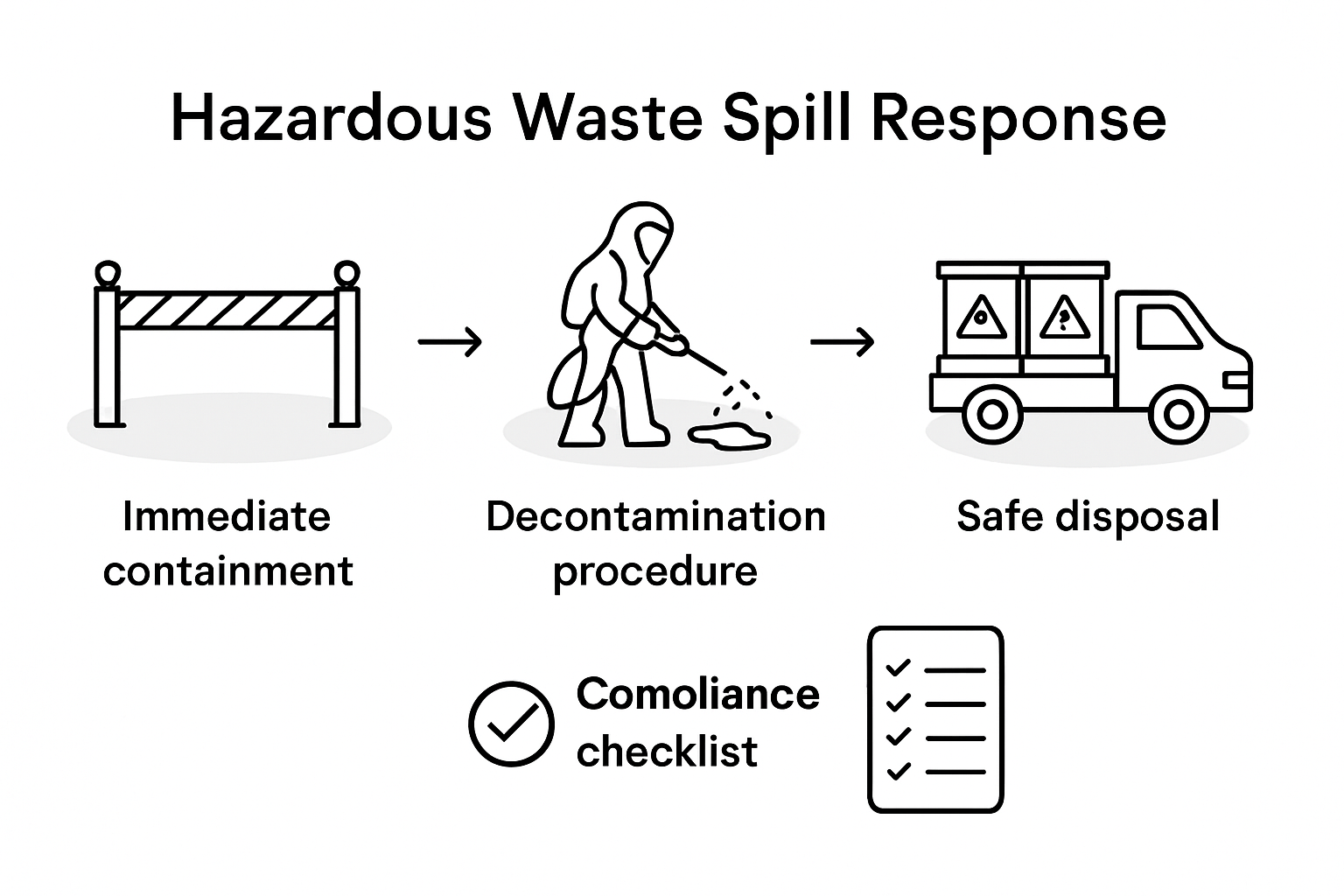
Hazardous waste spill response demands immediate, systematic action to minimise environmental damage and protect human health. Every moment counts during these critical incidents, requiring businesses to have well-rehearsed protocols that enable swift, coordinated intervention.
Emergency chemical response services emphasise the importance of rapid, professional intervention when managing hazardous material incidents. The initial response can significantly determine the potential environmental and safety consequences of a spill, making comprehensive preparation absolutely essential.
Standard steps for responding to hazardous waste spills include:
- Immediate containment of the spilled material
- Assess potential risks and spread of contamination
- Evacuate personnel from affected areas
- Activate emergency communication protocols
- Deploy appropriate personal protective equipment
- Use specialised neutralisation or absorption techniques
- Document the entire incident for regulatory reporting
Professional waste management guidelines recommend developing comprehensive decontamination and disposal procedures that align with national safety standards. Businesses across industrial regions like Manchester, Liverpool, and Newcastle must invest in regular staff training, maintaining up-to-date emergency response kits, and establishing clear communication channels with local environmental authorities to ensure efficient incident management.
Risks, Liabilities And Safety Best Practices
Hazardous waste management represents a complex landscape of potential risks and significant legal responsibilities for UK businesses. Companies must navigate a minefield of potential environmental, health, and financial consequences associated with improper waste handling and disposal.
Health and safety authorities consistently highlight incidents caused by improper chemical waste storage, handling, and transportation, which can lead to catastrophic outcomes including fires, explosions, and widespread environmental contamination. These risks underscore the critical importance of implementing rigorous safety protocols and comprehensive risk management strategies.
Key safety best practices and risk mitigation strategies include:
- Conducting comprehensive chemical compatibility assessments
- Implementing strict segregation protocols for different waste types
- Maintaining detailed chemical inventory and tracking systems
- Providing regular staff training on hazardous material handling
- Investing in high-quality personal protective equipment
- Establishing clear emergency response and evacuation procedures
- Maintaining up-to-date safety documentation
- Regularly reviewing and updating risk management protocols
Government reviews of hazardous waste management facilities emphasise the critical importance of learning from past incidents to prevent future accidents. Businesses across industrial regions like Manchester, Birmingham, and Newcastle must adopt a proactive approach, recognising that effective risk management is not just a legal requirement but a fundamental aspect of responsible operational management.
Ensure Your Business Stays Protected with Expert Hazardous Waste Solutions
Managing hazardous waste incidents requires swift and compliant action to safeguard your business from environmental and legal risks. Whether dealing with chemical spills, storage challenges, or regulatory demands, Venture Waste is here to simplify your responsibilities. Explore our expert services and guidance tailored to support businesses navigating the complexities of hazardous waste management in the UK through the hazardous waste Archives – Venture Waste.

Don’t let hazardous waste incidents threaten your operation or reputation. Act now to ensure full legal compliance and effective incident response with our streamlined solutions. Visit Venture Waste Management to discover how our comprehensive waste handling and transport services can support your safety and environmental goals. Learn more about the evolving waste collection landscape and how it benefits your business at How the Waste Collection Network in UK Serves Businesses in 2025 – Venture Waste. Take the first step towards responsible hazardous waste management today.
Frequently Asked Questions
What is a hazardous waste incident response?
A hazardous waste incident response is a coordinated set of actions designed to manage and mitigate risks associated with dangerous materials released or improperly handled, aimed at protecting human health and the environment.
What are the common types of hazardous waste incidents?
Common types include chemical storage tank leakages, accidental chemical mixture reactions, transportation spillages, and improper waste disposal procedures that can lead to environmental contamination and safety hazards.
What are the legal duties related to hazardous waste management for UK businesses?
UK businesses have a duty of care to manage hazardous waste responsibly, which includes obtaining waste management licences, maintaining waste transfer documentation, ensuring employee training, and conducting regular risk assessments.
What are the first steps to take in responding to a hazardous waste spill?
Immediate steps include containing the spilled material, assessing risks, evacuating affected personnel, activating emergency communication protocols, and using appropriate personal protective equipment for safety.
Recommended
- Hazardous Waste Disposal Guide 2025 for UK Businesses – Venture Waste
- Hazardous Waste Risks: What UK Businesses Must Know in 2025 – Venture Waste
- Types of Hazardous Waste: Business Waste Guide UK 2025 – Venture Waste
- Hazardous Waste Regulations UK 2025: Essential Guide for Businesses – Venture Waste
- 9 Signs of Fuel Contamination Symptoms You Should Know – My WordPress
- Complete Guide to Emergency Cleaning Services Malta | Rozie – Malta’s Best Cleaning Services
- Emergency HVAC Services Explained: Essential Benefits


Leave a Reply
Want to join the discussion?Feel free to contribute!