

Hazardous Waste in Schools: Compliance and Safe Disposal 2025
Schools across the UK handle chemicals, electronics, and even medical supplies every day. That sounds routine, but what if you realised that even a single mistake with hazardous waste can lead to fines of tens of thousands of pounds or potentially put students and staff at risk. Most people focus on lessons and technology upgrades, but few realise just how crucial proper hazardous waste management has become for safety and compliance in education.
Table of Contents
- Common Types Of Hazardous Waste In Schools
- Legal Obligations For Uk Schools And Facilities
- Safe Storage And Handling Best Practices
- Choosing A Reliable Hazardous Waste Disposal Company
Quick Summary
| Takeaway | Explanation |
|---|---|
| Understand waste types in schools | Recognising chemical, electronic, and biological waste is essential for safe management and compliance. |
| Implement legal compliance measures | Familiarise yourself with regulations governing hazardous waste to avoid penalties and ensure safety. |
| Prioritise safe storage practices | Use proper segregation and containment measures to minimise risks associated with hazardous materials. |
| Choose a qualified waste disposal partner | Select a disposal company with the necessary certifications and technical expertise for effective hazardous waste management. |
| Maintain ongoing staff training | Regularly train staff in hazardous waste handling and updates on safety protocols to ensure compliance and safety. |
Common Types of Hazardous Waste in Schools
Schools generate numerous types of hazardous waste that require careful management and specialised disposal strategies. Understanding these waste categories is crucial for maintaining safety and ensuring regulatory compliance across educational institutions in the United Kingdom.
Chemical Hazardous Waste in Educational Settings
Science laboratories represent the primary source of hazardous chemical waste in schools. Chemistry, biology, and physics departments routinely handle substances that pose significant environmental and health risks. Our comprehensive hazardous waste disposal guide highlights the most common chemical waste types encountered in educational environments.
Typical chemical hazardous waste includes:
- Corrosive Chemicals: Acids and bases used in scientific experiments, such as hydrochloric acid, sulfuric acid, and sodium hydroxide solutions
- Toxic Substances: Mercury from broken thermometers, chemical reagents, and outdated laboratory chemicals
- Flammable Liquids: Organic solvents like acetone, ethanol, and methanol used in scientific research and practical demonstrations
According to The Royal Society of Chemistry, proper chemical waste management is essential to prevent potential environmental contamination and protect student and staff health.
Electronic and Electrical Hazardous Waste
Modern educational institutions generate significant volumes of electronic waste (e-waste), which contains hazardous materials requiring specialised disposal. Computers, tablets, projectors, and scientific equipment often include toxic components such as lead, cadmium, and mercury.
Schools in Newcastle, Durham, and other North East educational institutions frequently replace technological equipment, generating substantial quantities of electronic hazardous waste. The Environment Agency recommends strict protocols for managing these materials to prevent environmental harm.
Key electronic waste categories include:
- Computer Equipment: Monitors, CPUs, keyboards containing heavy metals
- Scientific Instrumentation: Outdated laboratory electronic devices
- Multimedia Equipment: Projectors, smartboards with complex electronic components
Biological and Medical Hazardous Waste
School medical rooms and science laboratories generate biological hazardous waste that demands careful handling. These waste types include contaminated materials, expired medical supplies, and biological specimens that pose infection risks.
Common biological hazardous waste in schools encompasses:
- Medical Waste: Used bandages, contaminated medical gloves
- Biological Specimens: Preserved biological samples in formaldehyde
- Laboratory Biological Materials: Microbiology culture media, potentially infectious research materials
Effective hazardous waste management requires educational institutions to implement comprehensive segregation, storage, and disposal strategies. Schools must train staff, establish clear protocols, and partner with licensed waste management providers to ensure safe and compliant waste handling.
By understanding and systematically addressing these hazardous waste categories, schools can create safer learning environments while demonstrating environmental responsibility and regulatory adherence.
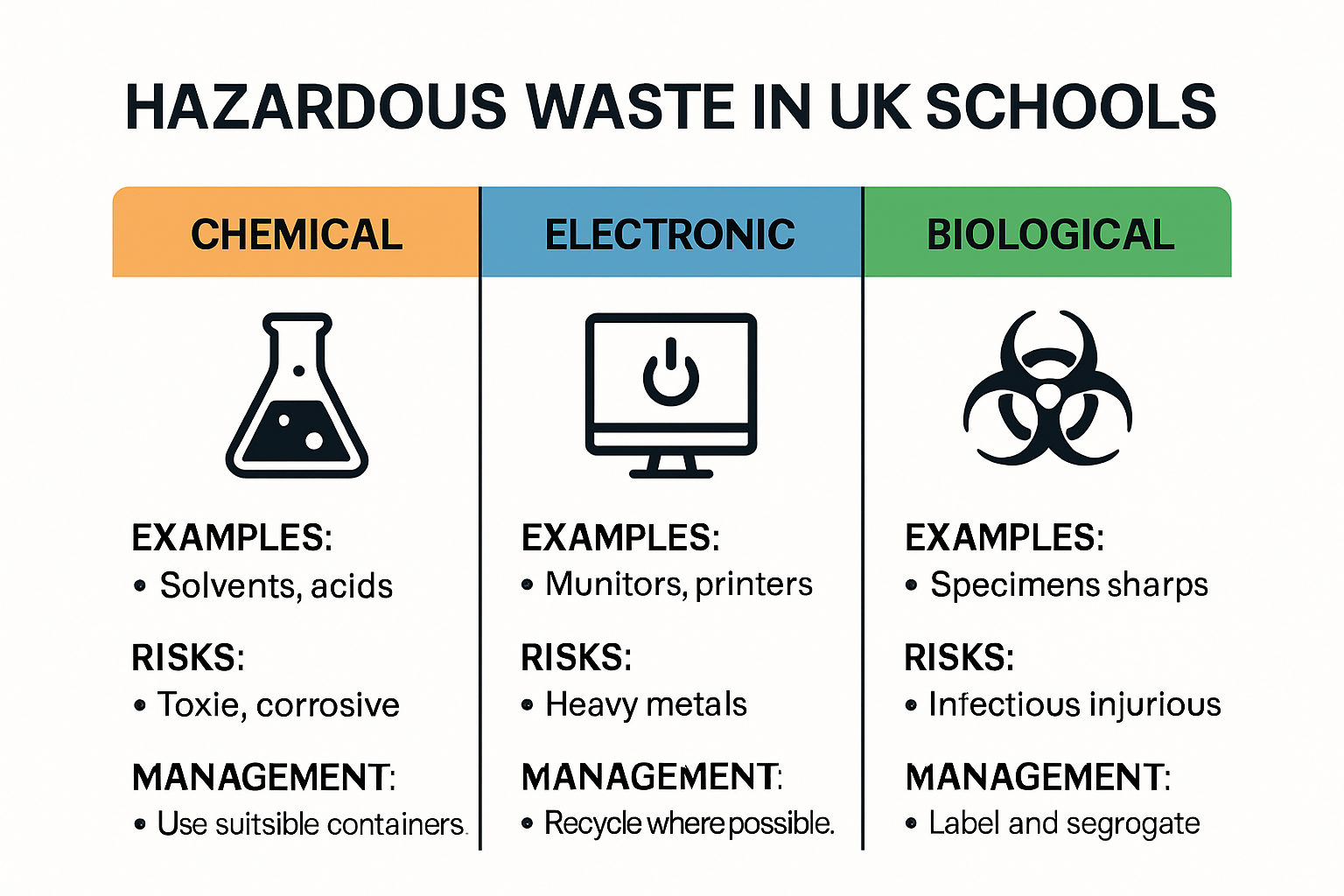
To highlight the differences between the primary categories of hazardous waste in schools, the table below summarises their sources, common examples, and potential risks.
| Waste Category | Typical Sources | Common Examples | Potential Risks |
|---|---|---|---|
| Chemical | Science laboratories | Corrosive acids/bases, mercury, flammable solvents | Burns, poisoning, environmental harm |
| Electronic & Electrical | IT rooms, labs | Monitors, CPUs, scientific devices, projectors | Toxic metal exposure, e-waste pollution |
| Biological & Medical | Medical rooms, labs | Used bandages, preserved specimens, culture media | Infection, contamination, health hazard |
Legal Obligations for UK Schools and Facilities
UK educational institutions must navigate a complex landscape of legal requirements governing hazardous waste management. Understanding and implementing these obligations is crucial for maintaining safety, protecting the environment, and avoiding potential legal consequences.
Regulatory Framework for Hazardous Waste Compliance
Schools and educational facilities are subject to multiple legislative frameworks that dictate hazardous waste handling. The Health and Safety Executive outlines comprehensive guidelines under the Control of Substances Hazardous to Health (COSHH) Regulations 2002, which mandate rigorous risk assessment and management protocols.
Key legal obligations include:
- Comprehensive Risk Assessment: Detailed documentation of all potential hazardous substances used within educational environments
- Proper Storage Protocols: Secure containment of hazardous materials with appropriate labeling and segregation
- Staff Training Requirements: Mandatory training programmes for personnel handling potentially dangerous substances
According to The Environment Agency, educational institutions must demonstrate a systematic approach to waste management that prioritises environmental protection and human safety.
Waste Transfer and Disposal Legal Requirements
Schools in the North East and across the United Kingdom must adhere to strict legal protocols when transferring and disposing of hazardous waste. Our comprehensive waste disposal guide provides essential insights into these complex regulations.
Specific legal requirements encompass:
- Waste Consignment Notes: Mandatory documentation tracking the entire disposal process
- Licensed Waste Carrier Agreements: Contractual obligations with certified waste management providers
- Environmental Reporting: Regular reporting of waste volumes and disposal methods to regulatory authorities
Institutions failing to comply with these regulations face significant financial penalties. The Environment Agency can impose substantial fines for improper hazardous waste management, with penalties potentially reaching tens of thousands of pounds for serious breaches.
Institutional Responsibility and Liability
Educational facility administrators bear direct legal responsibility for hazardous waste management. This involves establishing robust internal systems that ensure consistent compliance with national environmental regulations.
Key institutional responsibilities include:
- Designated Waste Management Coordinator: Appointing a responsible individual to oversee hazardous waste procedures
- Regular Compliance Audits: Systematic internal reviews of waste management practices
- Continuous Staff Education: Ongoing training programmes to maintain awareness of current regulations
The legal landscape surrounding hazardous waste management continues to evolve, with increasing emphasis on environmental sustainability and risk mitigation. Schools must remain proactive, adapting their waste management strategies to meet emerging regulatory standards and demonstrate their commitment to responsible environmental stewardship.
By understanding and implementing these comprehensive legal obligations, educational institutions can effectively manage hazardous waste while protecting their students, staff, and the broader community from potential environmental and health risks.
Safe Storage and Handling Best Practices
Safe storage and handling of hazardous waste in educational settings represent critical components of environmental protection and institutional safety. Implementing comprehensive strategies ensures the protection of students, staff, and the surrounding environment from potential risks associated with dangerous materials.
Chemical Storage and Containment Protocols
Proper chemical storage demands meticulous attention to detail and strict adherence to safety guidelines. Our comprehensive waste management guide highlights the critical importance of systematic chemical management in educational environments.
Key storage considerations include:
- Segregation of Incompatible Substances: Preventing chemical interactions that could cause dangerous reactions
- Temperature Controlled Storage: Maintaining appropriate environmental conditions for different chemical types
- Secure Containment Systems: Using specialist chemical storage cabinets with robust locking mechanisms
According to the Health and Safety Executive, schools must implement rigorous storage protocols that minimise potential risks of chemical exposure or accidental spillage.
Personal Protective Equipment and Handling Procedures
Schools must establish comprehensive guidelines for personal protective equipment (PPE) and safe handling practices when managing hazardous waste. Staff and students involved in waste management require specialized training and appropriate protective gear.
Essential protective measures include:
- Chemical Resistant Gloves: Preventing direct skin contact with hazardous substances
- Eye Protection: Safety goggles or face shields to prevent chemical splashes
- Protective Clothing: Specialised laboratory coats and aprons designed for chemical resistance
The Royal Society of Chemistry emphasises the importance of continuous training and awareness in maintaining safe handling practices.
Waste Segregation and Documentation Strategies
Effective hazardous waste management requires systematic segregation and comprehensive documentation. Schools in Newcastle, Durham, and across the North East must develop robust processes for categorising and tracking different waste types.
Critical documentation practices involve:
- Detailed Waste Inventory: Maintaining accurate records of all hazardous materials
- Colour Coded Containment: Using standardised colour systems for different waste categories
- Regular Waste Audits: Conducting systematic reviews of waste management procedures
To consolidate the best practices for safe storage and handling, the table below summarises recommended measures, their purposes, and associated benefits.
| Best Practice | Purpose | Main Benefit |
|---|---|---|
| Segregation of Incompatible Substances | Prevent hazardous chemical reactions | Reduces risk of accidents |
| Temperature Controlled Storage | Safeguard sensitive chemicals | Maintains chemical integrity |
| Secure Containment Systems | Restrict access and avoid spills | Enhances safety and compliance |
| Use of PPE (gloves, goggles, apparel) | Protect staff and students from exposure | Minimises injury and contamination |
| Colour Coded Waste Bins | Correct waste segregation | Simplifies disposal and tracking |
| Detailed Waste Inventory | Track hazardous materials within the school | Improves regulatory compliance |
| Regular Waste Audits | Review and improve waste management procedures | Identifies gaps; reduces legal risk |
By implementing these comprehensive storage and handling best practices, educational institutions can significantly mitigate risks associated with hazardous waste. Proactive management demonstrates institutional commitment to safety, environmental responsibility, and regulatory compliance.
Continuous staff training, regular equipment maintenance, and staying updated with evolving safety guidelines are paramount in creating a secure environment for learning and scientific exploration.
Choosing a Reliable Hazardous Waste Disposal Company
Selecting an appropriate hazardous waste disposal company represents a critical decision for educational institutions, directly impacting environmental safety, legal compliance, and institutional risk management. Schools must exercise rigorous due diligence when identifying a waste management partner capable of meeting their complex disposal requirements.
Certification and Regulatory Compliance
The foundation of selecting a reliable hazardous waste disposal company lies in verifying comprehensive regulatory credentials. Our detailed waste disposal guide emphasises the importance of examining a company’s environmental certifications and operational licenses.
Key certification considerations include:
- Environment Agency Registration: Confirming official waste carrier license status
- ISO 14001 Environmental Management Certification: Demonstrating systematic environmental responsibility
- Waste Carriers License: Ensuring legal authorization for hazardous waste transportation
According to the Environment Agency, schools must verify a waste management provider’s credentials to guarantee legal and environmental compliance.
Technical Expertise and Specialisation
Educational institutions require waste disposal partners with specific expertise in managing complex scientific and institutional hazardous waste streams. Specialised knowledge becomes paramount when handling diverse waste types generated in school laboratories and facilities.
Critical technical competence indicators include:
- Comprehensive Waste Stream Understanding: Ability to manage multiple hazardous waste categories
- Advanced Disposal Technologies: Employing environmentally responsible treatment methods
- Detailed Waste Tracking Systems: Providing transparent documentation and disposal reporting
The Health and Safety Executive recommends schools prioritise waste management companies demonstrating sophisticated technical capabilities and sector-specific experience.
Comprehensive Service Evaluation
Beyond technical capabilities, schools must assess a waste disposal company’s holistic service offering. This involves examining their operational reliability, environmental commitment, and overall institutional compatibility.
Evaluation criteria should encompass:
- Responsive Customer Support: Immediate communication and problem resolution capabilities
- Flexible Collection Scheduling: Accommodating educational institutional requirements
- Competitive Pricing Structures: Offering transparent and reasonable disposal costs
- Environmental Sustainability Credentials: Demonstrating commitment to responsible waste management
Schools in Newcastle, Durham, and across the North East should conduct thorough comparative assessments, requesting detailed service proposals and conducting site visits to potential waste management partners.
By implementing a comprehensive evaluation approach, educational institutions can select hazardous waste disposal partners who not only meet legal requirements but also demonstrate a genuine commitment to environmental protection and institutional safety.
Ultimately, the right waste disposal partner becomes an extension of the school’s environmental management strategy, providing expertise, reliability, and peace of mind in managing complex hazardous waste challenges.
Frequently Asked Questions
What types of hazardous waste are commonly found in schools?
Schools typically generate three main types of hazardous waste: chemical waste from science laboratories, electronic waste from outdated or broken electronic equipment, and biological waste from medical rooms or science experiments. Each category requires specific disposal and management strategies to ensure safety and compliance.
What legal obligations do UK schools have regarding hazardous waste management?
UK schools are required to comply with several regulations governing hazardous waste, including conducting comprehensive risk assessments, implementing proper storage protocols, and ensuring staff are trained in handling hazardous substances according to the Health and Safety Executive guidelines.
How can schools ensure safe storage and handling of hazardous waste?
To ensure safe storage and handling of hazardous waste, schools should implement best practices such as segregating incompatible substances, using secure containment systems, and maintaining a detailed inventory of hazardous materials. Additionally, staff training on personal protective equipment and safe handling procedures is crucial.
How should schools choose a reliable hazardous waste disposal company?
When choosing a hazardous waste disposal company, schools should verify certifications such as Environment Agency registration and ISO 14001 compliance, assess the company’s technical expertise in managing hazardous materials, and evaluate the service offered, including responsiveness and flexibility in scheduling waste collections.
Take Control of Hazardous Waste in Your School—Stay Compliant, Stay Safe
Is your school worried about the real risks of hazardous waste mismanagement, from hefty fines to student safety concerns? You need solutions that address the tough realities of complex legal duties, chemical storage requirements, and safe disposal. Many schools in the UK struggle to stay on top of regulations covering everything from electronic waste to laboratory chemicals. If the threat of penalties or harm keeps you awake, it is time to put those concerns to rest. Explore how the Waste Collection Network in UK for Businesses in 2025 meets all the needs highlighted in this article—offering professional management of hazardous, electronic, and medical waste in educational settings.

Do not risk compliance failures or uncertain disposal procedures. Partner with experts who specialise in hazardous waste and understand every requirement set out by UK law. Visit Venture Waste Management to secure a reliable solution now. Book your school waste collection in three simple steps and safeguard both your students and your institution today.
Recommended
- Hazardous Waste Regulations 2025: A Guide for UK Businesses – Venture Waste
- Hazardous Waste Regulations UK 2025: Essential Guide for Businesses – Venture Waste
- recycling hazardous materials Archives – Venture Waste
- Recycling Hazardous Materials: Safe Disposal for UK Businesses 2025 – Venture Waste
- Safety Signage Requirements for Sites in 2025: A Complete Guide – Sterling Access
- Health and Safety in Logistics: Essential Guide for UK Businesses 2025 – BHA Couriers


Leave a Reply
Want to join the discussion?Feel free to contribute!