

Hazardous Waste Identification: A 2025 Guide for UK Businesses
Hazardous waste is turning into one of the biggest compliance headaches for UK businesses, especially with stricter rules hitting in 2025. Some companies still think it is just about handling a few chemicals in a storeroom. Actually, fines for failing to identify or manage hazardous waste properly can reach tens of thousands of pounds, and the rules now cover everything from old laptops to cleaning products. Most firms will spot at least one form of hazardous waste on their site without even realising it, and with regulations changing fast, those who guess or cut corners could pay the price.
Table of Contents
- How To Identify Hazardous Waste In Your Business
- Key Hazardous Waste Categories And Examples
- UK Regulations And Compliance Steps For 2025
- Best Practices For Safe Hazardous Waste Disposal
Quick Summary
| Takeaway | Explanation |
|---|---|
| Identify Hazardous Waste Characteristics | Understand that hazardous waste is defined by its chemical composition, flammability, reactivity, and infectious properties, requiring thorough waste assessments by businesses. |
| Implement Practical Identification Techniques | Establish structured waste assessment protocols, including a detailed inventory, chemical testing, and ongoing staff training to correctly identify hazardous materials. |
| Adhere to UK Regulatory Frameworks | Compliance with regulations such as the Hazardous Waste Regulations 2005 and the Environmental Protection Act 1990 is essential for tracking and disposing of hazardous waste. |
| Practice Safe Disposal Protocols | Ensure the use of personal protective equipment (PPE), proper waste segregation, and adherence to disposal procedures through certified waste contractors to mitigate legal and environmental risks. |
| Stay Updated on Emerging Compliance Requirements | Be aware that 2025 regulations will include enhanced digital reporting and stricter waste reduction targets, requiring businesses to adapt their waste management practices accordingly. |
How to Identify Hazardous Waste in Your Business
Identifying hazardous waste is a critical responsibility for UK businesses. Proper hazardous waste identification protects your organisation from potential legal risks, environmental damage, and significant financial penalties. Understanding what constitutes hazardous waste requires a systematic approach and comprehensive knowledge of waste characteristics.
Understanding Hazardous Waste Characteristics
Hazardous waste is not simply defined by appearance or type. Learn more about UK waste regulations to comprehensively understand these materials. Waste is considered hazardous if it contains substances that can harm human health or the environment. The Environment Agency provides specific criteria for classification.
Key indicators of hazardous waste include:
- Chemical Composition: Substances containing toxic metals, persistent organic pollutants, or corrosive chemicals
- Flammability: Materials that can easily ignite or cause combustion
- Reactivity: Chemicals that become unstable under certain conditions
- Infectious Properties: Waste from healthcare settings containing biological hazards
According to UK Environment Agency Guidelines, businesses must conduct thorough waste assessments to determine hazardous status. This involves examining waste’s physical properties, chemical makeup, and potential environmental impact.

Practical Identification Techniques
Effective hazardous waste identification requires a structured approach. Businesses should implement comprehensive waste assessment protocols that include:
- Detailed waste inventory documentation
- Chemical composition testing
- Professional waste classification consultations
- Regular waste stream monitoring
Specialist waste management professionals recommend creating a systematic waste tracking system. This involves categorising waste types, maintaining accurate records, and understanding the specific properties that make certain materials hazardous.
Manufacturing, healthcare, construction, and chemical industries often generate complex waste streams requiring expert assessment. Each sector has unique waste characteristics that demand specialised identification techniques.
Business owners must train staff in recognising potential hazardous waste indicators. This includes understanding safety data sheets, recognising warning labels, and knowing the specific regulations governing different waste types.
The consequences of misidentifying hazardous waste can be severe. Improper handling can result in environmental contamination, significant legal penalties, and potential health risks to employees and surrounding communities. Investing time and resources in robust waste identification processes is not just a legal requirement but a fundamental aspect of responsible business management.
Consult with certified waste management experts who can provide detailed guidance specific to your business sector and help develop comprehensive hazardous waste identification strategies.
Key Hazardous Waste Categories and Examples
Understanding the diverse categories of hazardous waste is crucial for UK businesses to ensure proper management and compliance. Explore our comprehensive waste disposal guide to gain deeper insights into these critical waste types.
To help you quickly compare the main hazardous waste categories, the following table summarises their types, sources, and key examples:
| Waste Category | Common Sources | Key Examples |
|---|---|---|
| Chemical & Industrial Waste | Manufacturing, chemical, pharma | Solvents, paint thinners, heavy metals (lead, mercury), acids, alkalis |
| Biological & Medical Waste | Healthcare, research labs | Infectious materials, used needles, expired meds, human tissue |
| Electronic & Tech Waste | Technology, electronics, IT depts | Circuit boards, batteries, display monitors, devices with toxic metals |
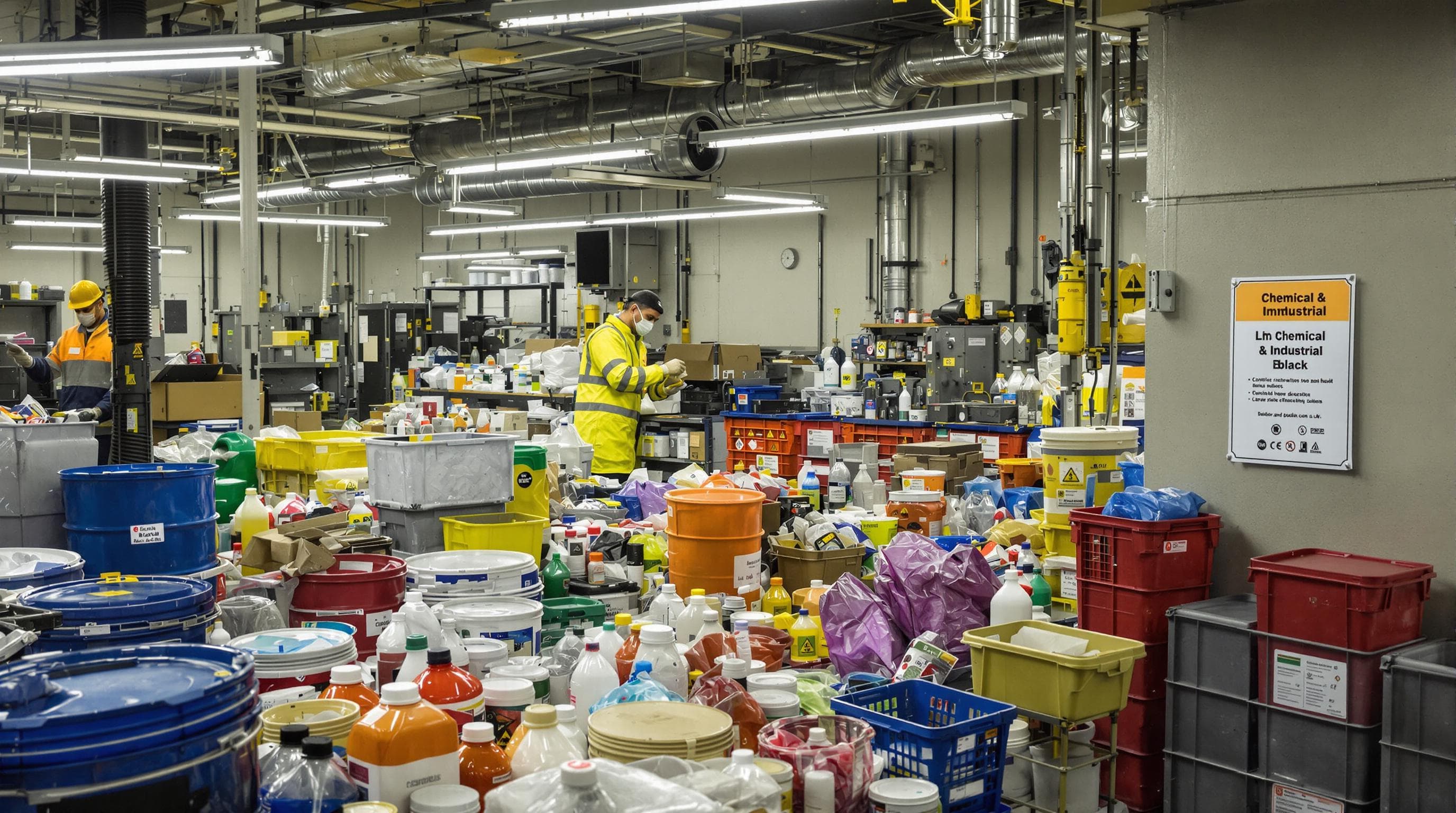
Chemical and Industrial Hazardous Waste
Chemical and industrial waste represent significant hazardous waste streams that require meticulous handling. According to the UK Environment Agency, these categories include:
- Solvents and Chemicals: Waste containing volatile organic compounds, paint thinners, industrial cleaning agents
- Heavy Metal Waste: Materials contaminated with lead, mercury, cadmium from manufacturing processes
- Acid and Alkaline Waste: Corrosive substances from industrial cleaning, metal processing
Manufacturing, pharmaceutical, and chemical industries frequently generate these complex waste types. Each category demands specific disposal protocols to prevent environmental contamination and health risks.
Biological and Medical Hazardous Waste
Healthcare and research facilities produce unique hazardous waste streams that require specialized management. These include:
- Infectious Waste: Contaminated medical equipment, used needles, blood-soaked materials
- Pharmaceutical Waste: Expired medications, chemotherapy drugs, contaminated containers
- Pathological Waste: Human tissue, bodily fluids, contaminated biological materials
Medical institutions must implement rigorous waste segregation and disposal processes. Improper handling can lead to significant health risks and potential disease transmission.
Electronic and Technological Hazardous Waste
Electronic waste (WEEE) represents a growing hazardous waste category with complex environmental implications. Modern technology contains numerous toxic components requiring specialized disposal:
- Circuit Boards: Contain heavy metals like lead and mercury
- Batteries: Lithium-ion, lead-acid batteries with toxic chemical compositions
- Display Screens: Monitors and screens with hazardous phosphor coatings
Technology companies, IT departments, and electronic manufacturers must develop comprehensive waste management strategies. Recycling and proper disposal are critical to minimize environmental impact.
Business owners must recognize that hazardous waste identification is not just a regulatory requirement but an ethical responsibility. Each waste category presents unique challenges that demand specialized knowledge, advanced tracking systems, and commitment to environmental protection.
Professional waste management consultants can provide tailored guidance for navigating these complex waste streams, ensuring your business remains compliant and environmentally responsible.
UK Regulations and Compliance Steps for 2025
Navigating the complex landscape of hazardous waste regulations requires businesses to stay informed and proactive. Discover the latest compliance guidelines to ensure your organisation meets the most current legal requirements.
To clarify the main regulatory frameworks guiding hazardous waste in the UK, here is a summary table outlining each regulation and its purpose:
| Regulation Name | Coverage & Purpose | Examples of Applicability |
|---|---|---|
| Hazardous Waste Regulations 2005 | Classification, handling, and transfer processes | Site waste audits, consignment procedures |
| Environmental Protection Act 1990 | General waste management and environmental health | Broadly governs all UK waste activities |
| Waste (England and Wales) Regs 2011 | Waste hierarchy, disposal, and recovery principles | Mandates recycling and recovery priorities |
Key Regulatory Frameworks
The UK’s hazardous waste management is governed by a comprehensive set of regulations designed to protect environmental and human health. According to the Environment Act 2021, businesses must adhere to stringent waste management protocols. The primary regulatory frameworks include:
- Hazardous Waste Regulations 2005: Establishes the fundamental classification and handling requirements
- Environmental Protection Act 1990: Provides overarching guidelines for waste management
- Waste (England and Wales) Regulations 2011: Specifies waste hierarchy and disposal principles
These regulations mandate that businesses take responsibility for identifying, tracking, and safely disposing of hazardous waste. The Environment Agency plays a crucial role in enforcing these guidelines and monitoring compliance across various industry sectors.
Compliance Documentation and Reporting
Precise record-keeping is a critical component of hazardous waste management. Businesses must maintain comprehensive documentation that demonstrates responsible waste handling. This includes:
- Detailed waste transfer notes
- Consignment tracking documentation
- Annual hazardous waste summaries
- Waste classification and assessment records
The Health and Safety Executive emphasizes the importance of maintaining accurate records. Failure to provide proper documentation can result in significant financial penalties and potential legal consequences. Businesses must implement robust tracking systems that provide transparent evidence of their waste management practices.
Emerging Compliance Requirements for 2025
The 2025 regulatory landscape introduces several new considerations for businesses managing hazardous waste. Key emerging requirements include:
- Enhanced digital reporting mechanisms
- Stricter waste reduction targets
- More comprehensive environmental impact assessments
- Increased emphasis on circular economy principles
- Advanced tracking of waste stream origins and destinations
Businesses must proactively adapt to these evolving regulations. This involves investing in staff training, upgrading waste management technologies, and developing more sophisticated waste reduction strategies.
Companies that view compliance as more than a legal obligation will gain a competitive advantage. Demonstrating environmental responsibility can enhance corporate reputation, attract environmentally conscious clients, and potentially reduce long-term waste management costs.
Consulting with professional waste management experts can provide tailored guidance on navigating these complex regulatory requirements. They can help businesses develop comprehensive compliance strategies that not only meet legal standards but also contribute to broader environmental sustainability goals.
Best Practices for Safe Hazardous Waste Disposal
Safe hazardous waste disposal is a critical responsibility for UK businesses that requires meticulous planning, advanced knowledge, and rigorous implementation. Explore our comprehensive disposal guide to understand the most effective strategies for managing hazardous materials.
Personal Protective Equipment and Safety Protocols
Handling hazardous waste demands comprehensive safety measures. According to the Health and Safety Executive, businesses must implement stringent personal protective equipment (PPE) protocols:
- Protective Clothing: Chemical-resistant suits, gloves, and footwear
- Respiratory Protection: Specialized masks and respirators for preventing toxic inhalation
- Eye and Face Protection: Safety goggles and face shields to prevent chemical splashes
Employees must receive thorough training on PPE selection, proper wearing techniques, and maintenance. Regular safety drills and equipment inspections are essential to maintaining a safe working environment.
Segregation and Containment Strategies
Proper waste segregation is fundamental to safe hazardous waste management. The Environment Agency recommends implementing robust containment strategies:
- Use colour-coded containers for different waste categories
- Implement strict labelling protocols
- Maintain separate storage areas for incompatible waste types
- Utilize leak-proof and chemical-resistant containers
Specialized containers prevent cross-contamination and reduce the risk of dangerous chemical reactions. Businesses must invest in high-quality storage solutions that meet regulatory standards and provide maximum safety.
Transportation and Final Disposal Procedures
Transporting and disposing of hazardous waste requires extensive planning and expertise. Critical considerations include:
- Selecting certified waste transportation specialists
- Preparing comprehensive waste transfer documentation
- Using specialized vehicles designed for hazardous material transport
- Following strict route planning and emergency response protocols
- Ensuring final disposal at licensed treatment or recycling facilities
Businesses must work exclusively with licensed waste management providers who demonstrate comprehensive understanding of regulatory requirements and safety standards. Maintaining detailed audit trails and documentation is crucial for legal compliance and environmental responsibility.
The financial and legal consequences of improper hazardous waste disposal can be severe. Fines can reach tens of thousands of pounds, and businesses may face significant reputational damage. Investing in professional waste management services and maintaining rigorous internal protocols is not just a legal requirement but a fundamental aspect of responsible business operations.
Continuous staff training, regular safety assessments, and staying updated with evolving regulations are key to developing a comprehensive hazardous waste management strategy. Businesses that prioritize safety and environmental responsibility will not only comply with legal requirements but also demonstrate corporate leadership in sustainable practices.
Frequently Asked Questions
What is hazardous waste?
Hazardous waste is any waste that contains harmful substances that can pose risks to human health or the environment. It includes materials classified as toxic, flammable, reactive, or infectious.
How can a business identify hazardous waste?
Businesses can identify hazardous waste by conducting thorough waste assessments, examining the chemical composition and properties of materials, and consulting safety data sheets and environmental regulations.
What are the penalties for failing to manage hazardous waste properly in the UK?
Penalties for failing to properly manage hazardous waste in the UK can reach tens of thousands of pounds, including fines for legal non-compliance and potential legal action for environmental damage.
What regulations do UK businesses need to comply with regarding hazardous waste in 2025?
In 2025, UK businesses must comply with updated regulations under the Hazardous Waste Regulations 2005, Environmental Protection Act 1990, and Waste (England and Wales) Regulations 2011, which emphasise strict waste identification, management, and reporting protocols.
Take the Uncertainty Out of Hazardous Waste Management in 2025
Worried about identifying hazardous waste correctly and staying compliant with the ever-changing UK rules? With new regulations coming in 2025, many businesses feel overwhelmed by the threat of heavy fines and the pressure to get every detail right. Failing to recognise hazardous waste in your business can risk not just your reputation but also the safety of your team and community. The article highlights how strict documentation, safe processes, and proper identification are now more essential than ever. Getting it wrong can cost far more than just money.
A reliable solution is closer than you think. Our Waste Collection Network for UK Businesses in 2025 takes the strain off your shoulders. We make it simple to keep pace with regulations and manage hazardous waste safely, thanks to our comprehensive services and transparent support.

If you do not want confusion to put your business at risk, choose an expert team who delivers compliance and peace of mind every step of the way. Discover how Venture Waste can streamline compliance and protect your organisation now. Visit Venture Waste Management or see our step-by-step waste collection process to get started in just minutes.
Recommended
- Hazardous Waste Regulations 2025: A Guide for UK Businesses – Venture Waste
- hazardous waste handling Archives – Venture Waste
- Blog Archives – Venture Waste
- Hazardous Waste Handling for UK Businesses: Complete 2025 Guide – Venture Waste
- Understanding the Importance of WHMIS Labels in 2025 for Canadian Food and Childcare Businesses – Probe IT


Leave a Reply
Want to join the discussion?Feel free to contribute!