

Complete Guide to Hazardous Waste Containers UK
Every year, UK businesses generate over 3 million tonnes of hazardous waste, forcing them to make critical decisions about storage and safety. Choosing the right hazardous waste container does more than meet a legal requirement. It shields staff from harm, prevents costly environmental damage, and upholds public trust. Get clear on what makes a container safe, how to avoid common mistakes, and why careful selection can protect both your business and your community.
Table of Contents
- Hazardous Waste Containers Defined and Explained
- Types of Hazardous Waste Containers UK Businesses Use
- Legal Requirements for Hazardous Waste Containers
- Safe Use, Storage, and Labelling Procedures
- Risks, Common Mistakes, and Regulatory Penalties
Key Takeaways
| Point | Details |
|---|---|
| Proper Container Selection is Critical | Choose hazardous waste containers based on material compatibility, waste type, and required safety features to ensure environmental and public safety. |
| Compliance with Legal Regulations is Essential | Strict adherence to labeling, storage, and documentation requirements helps avoid significant regulatory penalties and environmental risks. |
| Regular Monitoring and Maintenance are Necessary | Conduct routine inspections of containers to identify any damage or leaks, maintaining operational safety and compliance. |
| Training and Awareness is Key | Ensure staff are well-trained in hazardous waste handling protocols to minimize mistakes and enhance safety measures within the workplace. |
Hazardous Waste Containers Defined and Explained
Hazardous waste containers are specialised storage solutions designed to safely manage dangerous materials that pose significant risks to human health and environmental safety. According to the UK Government, these containers are engineered with stringent standards to prevent leaks, spills, and potential contamination that could harm people or ecosystems.
These critical storage units are not one-size-fits-all solutions. Different hazardous waste types require specific container characteristics. For instance, chemical waste might need corrosion-resistant materials, while biological waste requires sealed, temperature-controlled containers.
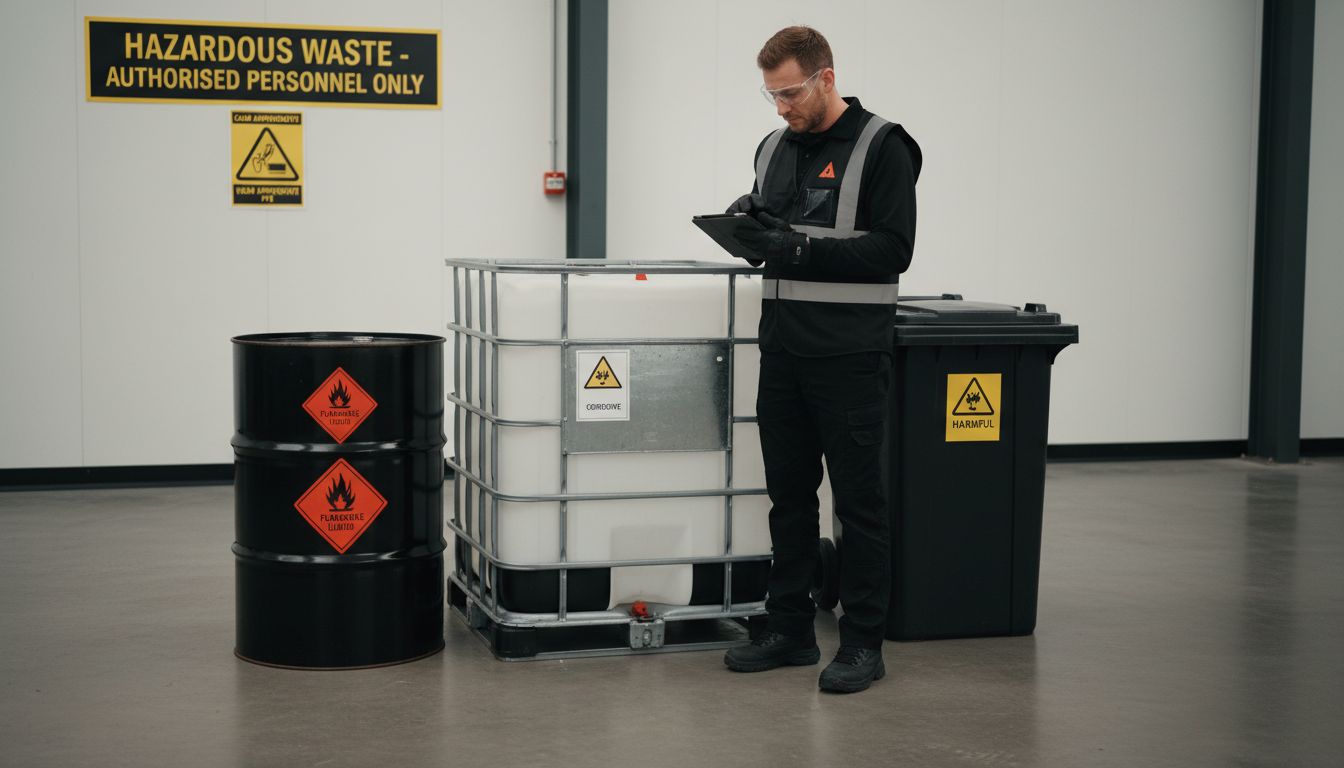 University of Greenwich emphasises that containers must be:
- Suitable for the specific waste type
- Clearly and prominently labeled
- Securely stored to prevent unauthorized access
- Constructed to minimise environmental contamination risks
From manufacturing workshops in Newcastle to pharmaceutical labs in Durham, businesses across the North East must understand the critical importance of proper hazardous waste container selection. Proper containers aren’t just about compliance – they’re about protecting workers, communities, and the broader environment. When selecting a hazardous waste container, businesses should consider material compatibility, volume requirements, transportation needs, and potential chemical interactions.
Understanding these nuanced requirements is crucial. A guide on hazardous waste disposal can provide deeper insights into managing these complex waste management challenges effectively and safely.
Types of Hazardous Waste Containers UK Businesses Use
According to Materials Oxford, UK businesses employ a diverse range of hazardous waste containers tailored to specific waste management needs. These containers are not generic storage solutions, but precisely engineered systems designed to safely contain and transport potentially dangerous materials across various industrial sectors.
The primary types of hazardous waste containers utilised by UK businesses include:
Here’s a comparison of common hazardous waste containers used by UK businesses:
| Container Type | Typical Materials | Suitable Waste Types | Key Features |
|---|---|---|---|
| UN-Approved Drums | Steel High-density plastic |
Chemical Solvent Oily waste |
Leak-proof Stackable Robust |
| Intermediate Bulk Containers | Plastic Metal |
Liquid waste Bulk chemicals |
Large capacity Transportable Stackable |
| Specialised Chemical Bins | Corrosion-resistant plastic | Reactive chemicals Acids |
Chemical resistance Secure lids |
| Biological Waste Containers | Durable plastic Metal |
Medical Biological hazards |
Sealed Temperature controlled |
- UN-Approved Drums: Heavy-duty metal or plastic containers rated for transporting dangerous goods
- Intermediate Bulk Containers (IBCs): Large, stackable containers typically used for liquid hazardous waste
- Specialized Chemical Bins: Corrosion-resistant containers for reactive or corrosive chemical waste
- Biological Waste Containers: Sealed, temperature-controlled units for medical and biological hazards
Government Guidelines highlight that healthcare facilities, in particular, must use rigid, leak-proof, and weatherproof containers that meet strict regulatory standards. From pharmaceutical companies in Manchester to research laboratories in Newcastle, selecting the right container is crucial for ensuring workplace safety and environmental protection.
For businesses navigating the complex landscape of hazardous waste management, understanding container specifications is just the beginning. A comprehensive guide on types of hazardous waste can provide deeper insights into selecting, handling, and disposing of these potentially dangerous materials safely and compliantly.
Legal Requirements for Hazardous Waste Containers
Hazardous waste management involves strict legal compliance that goes far beyond simple storage. UK Government regulations mandate comprehensive requirements for hazardous waste containers, ensuring businesses protect both environmental and public safety through meticulous handling protocols.
The key legal obligations for hazardous waste containers include:
- Appropriate Labeling: Clear identification of waste type and potential risks
- Secure Storage: Preventing unauthorized access and potential contamination
- Container Compatibility: Ensuring containers are chemically resistant to contained waste
- Segregation: Separating different hazardous waste types to prevent dangerous interactions
- Proper Documentation: Maintaining detailed records of waste generation, storage, and disposal
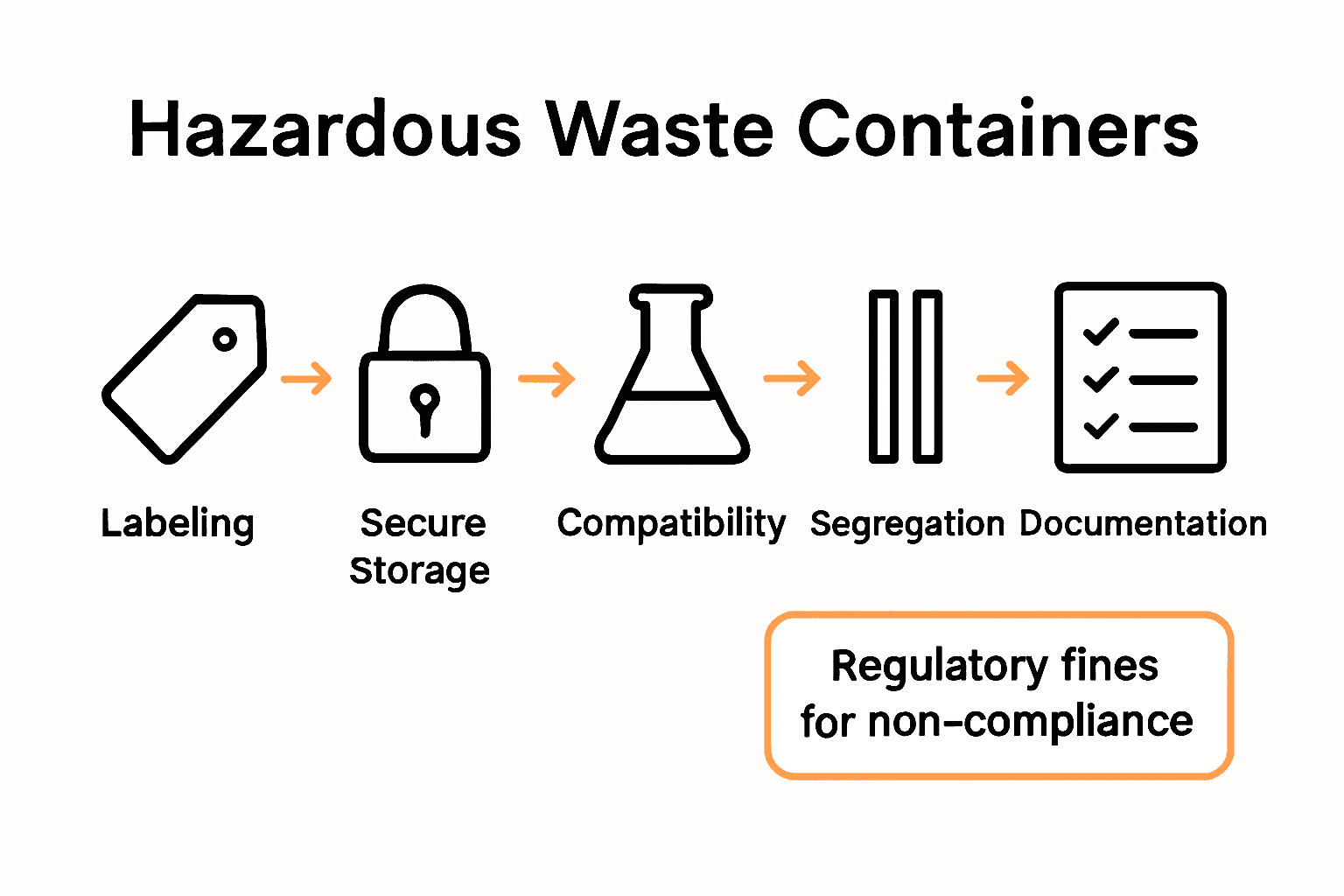
Lift and Escalator Industry Association emphasizes that legal compliance requires more than just physical containment. Businesses across sectors – from manufacturing plants in Newcastle to research laboratories in Manchester – must implement comprehensive waste management systems that demonstrate due diligence and environmental responsibility.
Navigating these complex legal landscapes can be challenging, which is why consulting a comprehensive guide on hazardous waste regulations can provide crucial insights into meeting your legal obligations effectively and safely.
Safe Use, Storage, and Labelling Procedures
Hazardous waste management requires precision and meticulous attention to detail. UK Government guidelines emphasize the critical importance of using containers that are sealed, maintained in excellent condition, and stored strategically to prevent potential environmental and safety risks.
Key procedures for safe hazardous waste container management include:
- Proper Positioning: Always store containers upright to minimize spillage risks
- Condition Monitoring: Regular inspection for damage, corrosion, or structural weaknesses
- Environmental Controls: Maintain appropriate temperature and humidity levels
- Access Restriction: Secure storage areas to prevent unauthorized entry
- Emergency Preparedness: Keep spill response equipment nearby
University of Oxford recommends additional critical practices such as ensuring container exteriors remain clean and leak-proof. Businesses across industrial sectors – from chemical manufacturers in Teesside to research facilities in Durham – must implement comprehensive labelling protocols that clearly communicate potential hazards, waste composition, and handling instructions.
For businesses seeking comprehensive guidance on navigating these complex safety requirements, a guide on hazardous waste handling can provide invaluable insights into creating robust waste management strategies that protect both personnel and the environment.
Risks, Common Mistakes, and Regulatory Penalties
Hazardous waste management is a complex landscape fraught with potential legal and environmental risks. UK Government regulations highlight that improper handling can result in severe consequences, including substantial financial penalties and potential environmental damage.
Common mistakes that businesses frequently make include:
- Incompatible Waste Mixing: Combining different hazardous waste types
- Inadequate Labeling: Failing to clearly identify container contents and risks
- Improper Container Selection: Using containers not designed for specific waste types
- Insufficient Training: Lack of staff knowledge about proper waste handling
- Poor Record Keeping: Failing to maintain accurate waste management documentation
Lift and Escalator Industry Association warns that these mistakes can lead to significant regulatory fines and increased contamination risks. Businesses across the North East – from manufacturing facilities in Sunderland to chemical research centers in Newcastle – must remain vigilant about their hazardous waste management practices to avoid potentially devastating financial and legal repercussions.
Navigating these complex regulatory waters can be challenging, which is why consulting a comprehensive guide on business waste penalties can provide crucial insights into avoiding costly mistakes and maintaining compliance.
Safeguard Your Business with Expert Hazardous Waste Container Solutions
Managing hazardous waste containers according to strict UK legal requirements and safety standards can be overwhelming. From selecting the right container type to ensuring proper labelling and storage, the risk of costly mistakes is real and compliance is non-negotiable. If you want peace of mind and protection for your staff and environment, expert support is essential.

Discover how Venture Waste brings clarity and reliability to hazardous waste management through tailored services that meet regulatory demands and your unique business needs. Explore our hazardous waste Archives – Venture Waste for in-depth resources and practical solutions. Ready to take action without delay Visit https://venturewaste.co.uk now to simplify your hazardous waste handling, ensure full compliance, and safeguard your reputation. Learn more about regulations and best practices in our regulation Archives – Venture Waste and make informed choices starting today.
Frequently Asked Questions
What are hazardous waste containers?
Hazardous waste containers are specialized storage solutions designed to safely manage dangerous materials that pose risks to human health and the environment. They help prevent leaks, spills, and contamination.
What types of containers are used for hazardous waste?
Common types of hazardous waste containers include UN-approved drums, Intermediate Bulk Containers (IBCs), specialized chemical bins, and biological waste containers. Each is tailored to specific waste types and hazards.
What are the legal requirements for hazardous waste containers?
Legal requirements for hazardous waste containers include appropriate labeling, secure storage, container compatibility with the waste type, segregation of different waste types, and proper documentation of waste management practices.
How should hazardous waste containers be stored and maintained?
Hazardous waste containers should be stored upright, regularly inspected for damage, kept in controlled environmental conditions, and secured to prevent unauthorized access. Proper labeling and emergency preparedness also play vital roles in safe storage.
Recommended
- Hazardous Waste Disposal Guide 2025 for UK Businesses – Venture Waste
- Hazardous Waste Identification: A 2025 Guide for UK Businesses – Venture Waste
- Hazardous Waste Regulations UK 2025: Essential Guide for Businesses – Venture Waste
- Complete Guide to UK Home Energy Labelling – Home Energy Model
- EPC vs DEC Certificate: Complete UK Guide – Complete EPC


Leave a Reply
Want to join the discussion?Feel free to contribute!