

General Waste Roll Over Contracts: The Dark Side and How to Avoid Getting Locked In
General waste roll over contracts sound like a simple solution for busy businesses. Many firms across the North East sign them without a second thought. Yet behind the convenience lies a harsh truth. Some companies find themselves facing annual cost increases of up to 15 percent, all buried in the fine print. What is even stranger is that you can be legally trapped into these deals for years without ever agreeing to stay. Turns out the real risk is not what you can see. It is what you miss on page two that could cost you the most.
Table of Contents
- The Dangers of Roll Over Waste Contracts
- Why We Do Not Offer Roll Over Contracts
- How to Prevent Getting Locked In to Unwanted Agreements
- Choosing a Transparent Waste Management Partner
Quick Summary
| Takeaway | Explanation |
|---|---|
| Avoid automatic roll over contracts | These contracts can trap businesses in unwanted long-term agreements with increasing costs. |
| Scrutinise contract terms thoroughly | Ensure to review renewal clauses, pricing adjustments, and termination conditions to prevent unfavourable commitments. |
| Negotiate flexible terms and exit options | Aim for shorter contracts with reasonable termination fees to retain operational flexibility. |
| Choose partners prioritising transparency | A transparent waste management partner provides clarity on costs, processes, and environmental impact, fostering trust. |
| Implement proactive contract management | Regularly monitor agreements and assess performance to stay informed and avoid lock-ins with poor terms. |
The Dangers of Roll Over Waste Contracts
General waste roll over contracts represent a significant financial and operational risk for businesses across the North East, from Newcastle to Durham. These seemingly convenient arrangements often conceal predatory terms that can trap organisations into long-term, unfavourable waste management agreements.
Hidden Financial Traps in Waste Management Contracts
Roll over waste contracts are designed to automatically renew without explicit consent, creating a legal mechanism that keeps businesses locked into agreements they might no longer find beneficial. Research from the Environmental Services Association reveals that many companies unknowingly commit to multi-year contracts with escalating costs and minimal exit options.
The financial implications can be substantial. Businesses might face annual price increases ranging from 5% to 15%, which compound over time. These incremental changes often go unnoticed until they represent a significant burden on operational budgets. The EPA’s guidance on waste management contracts specifically warns against ‘put-or-pay’ commitments that require payments regardless of actual waste generation, creating a lose-lose scenario for businesses trying to implement sustainable waste reduction strategies.
Operational Inflexibility and Strategic Limitations
Roll over contracts fundamentally restrict a company’s ability to adapt to changing waste management needs. As businesses evolve, their waste generation patterns, recycling requirements, and disposal strategies also change. However, these rigid contracts prevent organisations from easily switching providers or negotiating more favourable terms.
For businesses in industrial areas like Sunderland or Middlesbrough, this inflexibility can be particularly problematic. A manufacturing facility might invest in new waste reduction technologies or implement circular economy principles, but remain contractually obligated to maintain outdated waste management approaches.
Moreover, these contracts often include complex termination clauses that impose significant financial penalties. Breaking free might require paying substantial early termination fees, effectively trapping businesses in agreements that no longer serve their strategic interests. Learn more about smart waste management strategies to avoid these common pitfalls.
Legal and Compliance Risks
Beyond financial concerns, roll over waste contracts can create unexpected legal and compliance challenges. Many businesses fail to track contract renewal dates, inadvertently extending agreements that might not meet current environmental regulations or corporate sustainability goals.
The risks extend beyond immediate financial implications. Non-compliant waste management can result in environmental fines, reputational damage, and potential legal challenges. Businesses must remain vigilant, understanding the full scope of their contractual obligations and the potential long-term consequences of seemingly convenient roll over arrangements.
Ultimately, the key to avoiding these dangers lies in proactive contract management, thorough review of terms, and a strategic approach to waste management that prioritises flexibility, transparency, and alignment with organisational goals.
Here is a table summarising the common dangers associated with general waste roll over contracts, as well as their practical implications for businesses:
| Danger | Description | Practical Impact |
|---|---|---|
| Hidden Financial Traps | Automatic renewals and escalating costs of 5–15% per year, often buried in contract fine print. | Increased operational costs |
| Operational Inflexibility | Difficulty adapting waste services as business needs change due to rigid, long-term contract terms. | Limits to switching providers |
| Complex Termination Clauses | Financial penalties or obstacles for early contract exits, making it costly to leave. | Trapped in outdated agreements |
| Legal and Compliance Risks | Risk of extending contracts that no longer fulfil current regulations or sustainability commitments. | Exposure to legal or regulatory issues |
This table provides a quick reference to the specific risks your business may face when entering or maintaining roll over waste contracts.
Why We Do Not Offer Roll Over Contracts
At Venture Waste Management, our commitment to transparency, fairness, and client empowerment drives our decision to categorically reject roll over waste contracts. This stance stems from a deep understanding of the inherent risks and ethical concerns these contracts pose for businesses across the North East and beyond.
Prioritising Client Flexibility and Autonomy
Roll over contracts fundamentally contradict our core business philosophy of providing flexible, client-focused waste management solutions. The U.S. Environmental Protection Agency’s guidance on waste management contracting emphasises the importance of creating agreements that align with organisational goals and environmental objectives. Traditional roll over contracts do the exact opposite by trapping businesses into rigid, potentially outdated arrangements.
Our approach recognises that waste management needs are dynamic. A manufacturing facility in Newcastle might experience significant changes in production processes, waste generation, or sustainability initiatives within a short period. Locking such businesses into long-term contracts would be detrimental to their operational efficiency and environmental goals.
Transparent Pricing and Ethical Business Practices
Research from the Government Accountability Office highlights the risks of ‘rollover’ practices that can lead to financial inefficiencies and reduced performance incentives. We reject this model entirely. Our contracts are designed with complete transparency, allowing businesses to understand exactly what they’re paying for and why.
Instead of implementing automatic renewals that can hide incremental cost increases, we provide clear, competitive pricing that requires active renewal. This approach ensures that our clients are always making informed decisions about their waste management services. We believe that trust is earned through transparency, not through contractual mechanisms that limit client choice.
Aligning with Sustainable Waste Management Principles
The Minnesota Counties Intergovernmental Trust emphasises the critical importance of clear contract terms that protect both service providers and clients. Our contract philosophy goes beyond mere legal compliance. We aim to create partnerships that actively support our clients’ sustainability goals.
Roll over contracts often disincentivise waste reduction and innovative disposal strategies. By contrast, our approach to waste management encourages businesses to continuously improve their waste management practices. We want our clients to have the freedom to adapt, innovate, and optimize their waste disposal strategies without being constrained by restrictive long-term agreements.
Our commitment extends beyond mere service provision. We view ourselves as strategic partners in our clients’ environmental and operational journey. This means providing the flexibility to change, grow, and improve waste management approaches as business needs evolve.
Ultimately, our refusal to offer roll over contracts is a testament to our dedication to client empowerment, transparency, and sustainable waste management practices. We believe that businesses deserve contracts that work for them, not against them.
How to Prevent Getting Locked In to Unwanted Agreements
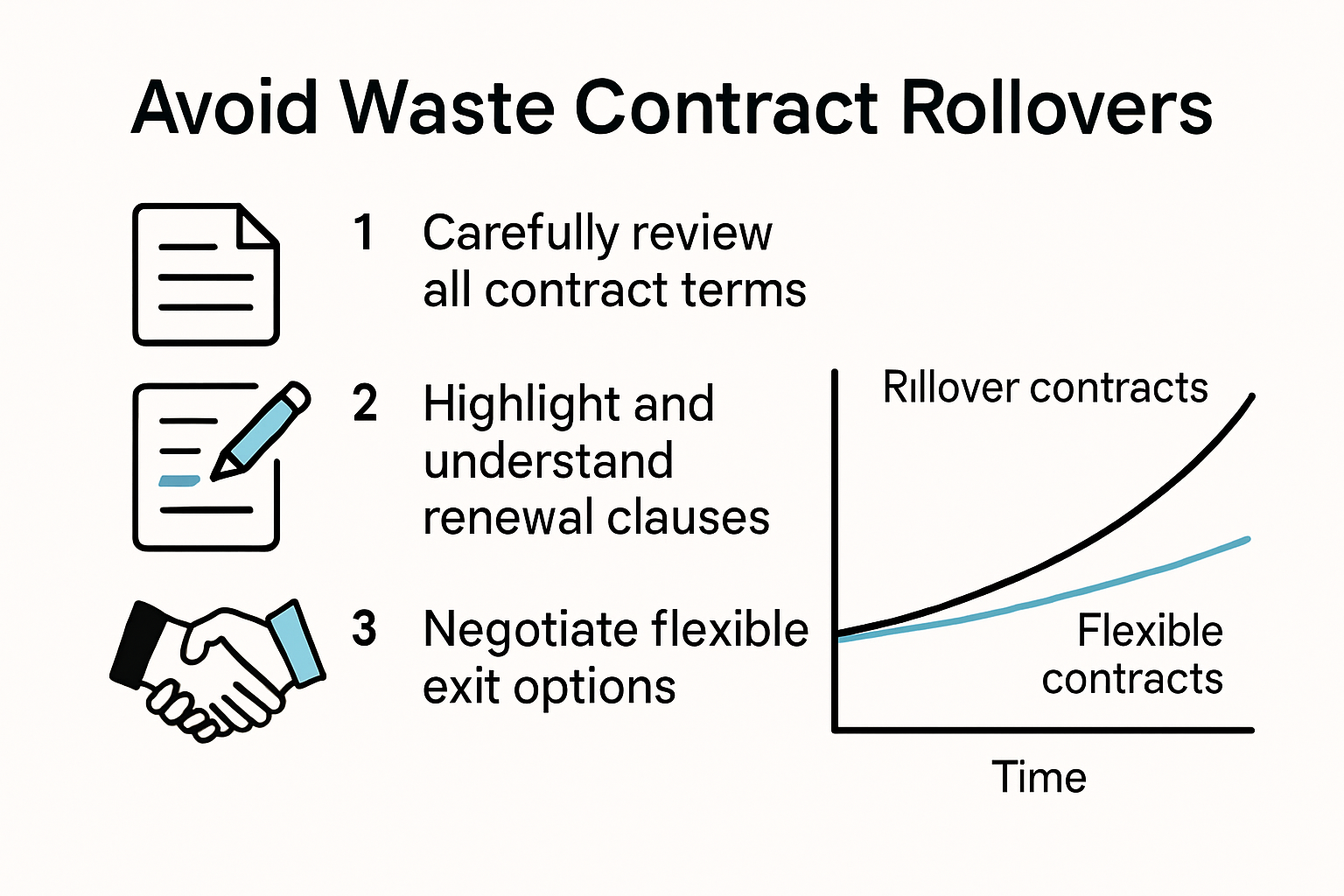
Navigating waste management contracts requires strategic awareness and proactive management to avoid unintended long-term commitments that can drain financial resources and limit operational flexibility. Businesses across the North East, from Newcastle to Durham, must develop robust strategies to protect themselves from predatory contract structures.
Comprehensive Contract Review Strategies
According to Cornell Law School’s analysis of contract law, understanding the nuances of contractual terms is crucial in preventing unfavourable agreements. Businesses should implement a meticulous contract review process that goes beyond superficial examination.
Key steps include:
- Detailed Term Examination: Scrutinise every clause, paying special attention to renewal mechanisms, termination conditions, and price adjustment provisions.
- Automatic Renewal Clauses: Look for language that suggests automatic contract extensions or roll-over provisions.
- Pricing Transparency: Identify any hidden clauses that allow unilateral price increases.
Businesses should consider engaging legal professionals specialising in commercial contracts to provide comprehensive contract reviews. This investment can prevent potentially costly long-term commitments.
Negotiation and Flexibility Tactics
The Environmental Protection Agency’s guidelines on waste management contracts emphasise the importance of creating flexible agreements that align with organisational goals. Proactive negotiation is key to preventing restrictive contract terms.
Effective negotiation strategies include:
- Shorter Initial Contract Periods: Opt for shorter-term agreements that allow more frequent reassessment.
- Clear Termination Provisions: Negotiate reasonable exit clauses with minimal financial penalties.
- Performance-Based Provisions: Include terms that allow contract renegotiation based on service quality and changing business needs.
Do not hesitate to challenge standard contract templates. Many waste management providers are willing to modify terms to secure your business, especially if you demonstrate a clear understanding of contract intricacies.
Monitoring and Proactive Management
Contract management is an ongoing process that extends beyond initial signing. Explore our comprehensive waste management guide for additional insights into effective contract strategies.
Implement a robust contract tracking system that includes:
- Renewal Reminders: Set alerts at least 60-90 days before contract expiration.
- Regular Performance Assessments: Conduct periodic evaluations of waste management services.
- Market Comparison: Continuously benchmark current contract terms against alternative providers.
Businesses in industrial areas like Sunderland and Middlesbrough must remain particularly vigilant. Waste management needs can change rapidly with shifts in production processes, sustainability initiatives, and regulatory requirements.
Ultimately, preventing unwanted contract lock-ins requires a combination of thorough review, strategic negotiation, and ongoing management. By adopting a proactive approach, businesses can maintain the flexibility needed to adapt to changing waste management landscapes while protecting their financial and operational interests.
To help businesses prevent getting locked into unfavourable contracts, here is a process table outlining essential steps recommended in the article:
| Step | Action Description | Purpose |
|---|---|---|
| Detailed Term Examination | Scrutinise all contract clauses, focusing on renewals, termination, and pricing terms. | Identify hidden risks |
| Search for Auto-Renewals | Check for automatic renewal or roll-over clauses in the contract. | Prevent unintended extensions |
| Assess Pricing Transparency | Look for clauses that allow unilateral price changes or hidden fees. | Avoid unexpected cost increases |
| Engage Legal Professionals | Consult commercial contract legal experts for thorough review. | Ensure full contract understanding |
| Negotiate Key Clauses | Aim for shorter contracts, clear termination, and performance-based terms. | Increase flexibility |
| Set Renewal Reminders | Establish alerts before contract expiration dates. | Avoid accidental roll-overs |
| Conduct Regular Assessments | Evaluate provider performance and benchmark against alternatives. | Optimise services and maintain control |
This table organises the proactive measures businesses should take, as highlighted in the article, for effective contract management.
Choosing a Transparent Waste Management Partner
Selecting a waste management partner is a critical decision that extends far beyond simple service provision. For businesses across the North East, from Newcastle to Sunderland, the right partner can transform waste management from a necessary expense to a strategic asset.
Evaluating Transparency and Accountability
Research from Waste Advantage Magazine emphasises the crucial role of transparency in waste management contracts. A truly transparent waste management partner should provide clear, accessible information about their processes, pricing, and environmental impact.
Key indicators of transparency include:
- Detailed Reporting: Monthly performance reports that showcase waste volumes, recycling rates, and disposal methods.
- Open Communication: Willingness to discuss pricing structures, contract terms, and potential improvements.
- Environmental Commitment: Demonstrable evidence of sustainable waste management practices.
Our comprehensive guide to North East waste management companies can help businesses identify providers that meet these critical standards.
Performance-Driven Contract Structures
The Environmental Protection Agency’s guidelines highlight the importance of contracts that incentivise waste reduction and environmental responsibility. A transparent waste management partner should offer:
- Flexible Pricing Models: Contracts that reward waste reduction and recycling efforts.
- Performance Metrics: Clear, measurable goals for waste management efficiency.
- Continuous Improvement Mechanisms: Regular reviews and opportunities to optimise waste management strategies.
Businesses should seek partners who view waste management as a collaborative process, not just a transactional service. This approach ensures alignment with broader sustainability and cost-efficiency objectives.
Legal and Ethical Considerations
Open data standards in procurement provide critical insights into selecting an ethical waste management partner. Look for providers who demonstrate:
- Regulatory Compliance: Proven track record of meeting local and national waste management regulations.
- Ethical Business Practices: Transparent financial reporting and commitment to fair business standards.
- Environmental Certifications: Recognised accreditations that validate their environmental credentials.
In industrial areas like Middlesbrough and Durham, where waste management can be complex, choosing the right partner is paramount. A truly transparent provider will be a strategic ally, helping businesses navigate environmental challenges while optimising operational efficiency.

Ultimately, the ideal waste management partner goes beyond mere waste disposal. They should offer a comprehensive approach that combines environmental responsibility, cost-effectiveness, and strategic insight. By prioritising transparency, businesses can transform waste management from a necessary expense into a valuable opportunity for innovation and sustainability.
Frequently Asked Questions
What are the risks of general waste roll over contracts?
General waste roll over contracts can trap businesses in long-term agreements with escalating costs, often hidden in fine print. These contracts may also limit operational flexibility and pose legal compliance risks due to automatic renewals without consent.
How can I avoid getting locked into a waste management contract?
To prevent getting locked into unwanted agreements, thoroughly review contract terms, negotiate for flexible options and clear exit clauses, and implement proactive contract management strategies, including setting reminders for renewal dates.
What should I look for in a waste management contract?
When evaluating a waste management contract, examine renewal and termination clauses, pricing transparency, and any hidden fees. It’s crucial to understand the implications of automatic renewals and negotiate terms that align with your business needs.
Why is transparency important in waste management contracts?
Transparency is vital as it builds trust with your waste management partner. Clear insights into pricing, performance metrics, and environmental impact enable businesses to make informed decisions and align their waste management strategies with sustainability goals.
Break Free From Hidden Roll Over Contracts and Take Back Control
Tired of feeling powerless as your waste management costs climb due to automatic contract renewals and unclear pricing? You deserve a provider who puts your needs first. At Venture Waste Management, we believe you should never feel trapped by confusing roll over clauses or hidden annual increases. Instead, we put flexibility and clarity at the centre of our waste collection network for businesses all across the UK.

Ready to choose a transparent and ethical waste management partner? Visit Venture Waste Management today to discover solutions without contract lock-ins. Take the first step towards competitive pricing and reliable service by booking your waste collection in minutes. Do not wait for another renewal to catch you out—make the switch to committed, customer-focused waste solutions right now.


Leave a Reply
Want to join the discussion?Feel free to contribute!