

Food Waste Reduction Strategies for UK Businesses
British businesses generate a staggering 9.5 million tonnes of food and drink waste every year, according to UK government data. With over two thirds of this waste being completely avoidable, tackling the problem is urgent for organisations seeking to cut costs and support sustainability. This step by step approach guides you through practical methods to assess, track, and ultimately reduce food waste across your business, putting British companies at the forefront of positive environmental change.
Table of Contents
- Step 1: Assess Current Food Waste Streams
- Step 2: Implement Source Separation Systems
- Step 3: Educate Staff on Best Practices
- Step 4: Integrate Monitoring and Tracking Tools
- Step 5: Review and Optimise Waste Reduction Efforts
Quick Summary
| Key Insight | Explanation |
|---|---|
| 1. Assess Food Waste Streams | Conduct detailed audits to identify and categorise sources of food waste in your organisation. |
| 2. Implement Source Separation | Establish colour coded bins and train staff on effective food waste separation to comply with upcoming regulations. |
| 3. Educate Staff Thoroughly | Create comprehensive training programmes to engage staff in reducing food waste through practical techniques. |
| 4. Use Monitoring Tools | Implement digital tracking tools to measure and document food waste, providing actionable insights for improvement. |
| 5. Review and Optimise Regularly | Conduct quarterly reviews of waste data to refine reduction strategies and celebrate incremental successes. |
Step 1: Assess Current Food Waste Streams
To effectively reduce food waste across your business, you must first conduct a comprehensive assessment of your current food waste generation. Understanding the precise food waste streams within your organisation is crucial for developing targeted reduction strategies.
Begin by conducting a detailed audit of your food waste sources. The UK government’s research reveals that 9.5 million tonnes of food and drink are wasted annually in the UK, with a staggering 70% being entirely avoidable. Your business can significantly contribute to reducing this national waste by meticulously tracking where and how food waste occurs. Start by categorising waste streams: kitchen preparation waste, spoilage, plate waste, expired inventory, and overproduction. Quantify each category by weight, recording data daily or weekly to establish a clear baseline.
Pro tip: Implement a systematic waste tracking system that assigns responsibility to specific team members for recording and reporting waste. This approach not only provides accurate data but also creates accountability and raises awareness about waste reduction across your organisation. By understanding your current waste patterns, you will be well positioned to develop targeted strategies that can reduce waste, cut costs, and support environmental sustainability.
Step 2: Implement Source Separation Systems
With the upcoming legislative changes, your business must prepare to implement robust source separation systems for food waste management. From 31 March 2025, new UK regulations will require businesses to systematically separate food waste from other waste streams, making this a critical operational priority.
To establish an effective source separation system, start by designating specific colour coded bins for different types of food waste. Segregate waste into clear categories: raw food preparation waste, cooked food waste, plate leftovers, and expired produce. Train your staff thoroughly on proper waste sorting techniques, ensuring they understand the importance of precise separation. The Environment Act 2021 mandates that businesses producing food waste must arrange collection by licensed carriers, so meticulous documentation and tracking of your waste streams will be essential.

Pro tip: Position waste separation stations strategically in food preparation areas, kitchens, and dining spaces. Include clear visual signage and provide brief training sessions to help staff understand the environmental and legal significance of proper food waste separation. By implementing these systems now, you will not only comply with upcoming regulations but also demonstrate your commitment to sustainable business practices.
Step 3: Educate Staff on Best Practices
Successful food waste reduction depends critically on staff understanding and engagement. Comprehensive staff training programmes are essential for transforming workplace attitudes and practices around food waste management.
Develop a multifaceted training approach that combines theoretical knowledge with practical skills. Organisations like WRAP provide valuable resources for creating impactful educational materials that highlight the environmental and economic implications of food waste. Create interactive workshops that demonstrate practical waste reduction techniques, including proper food storage methods, portion control strategies, and efficient inventory management. Encourage staff to understand how their individual actions contribute to broader sustainability goals, emphasising that every small intervention can significantly reduce food waste.
Pro tip: Make training engaging by using real world examples and visual demonstrations. Consider implementing a reward system that recognises and celebrates staff members who consistently demonstrate excellent food waste reduction practices. By cultivating a culture of environmental responsibility, your team will become active participants in your organisation’s sustainability mission.
Step 4: Integrate Monitoring and Tracking Tools
To drive meaningful food waste reduction, your business must implement robust monitoring and tracking systems that provide actionable insights into your waste generation patterns. These tools are critical for understanding your current waste landscape and developing targeted improvement strategies.
Begin by selecting digital tracking tools that enable precise measurement and documentation of food waste across different stages of your operation. WRAP provides comprehensive guidance on establishing effective waste tracking methodologies, recommending detailed logging of waste volumes, types, and potential prevention points. Implement digital platforms that allow real time data entry, enabling kitchen staff and management to record waste immediately. Categorise waste streams meticulously tracking preparation waste, spoilage, plate waste, and overproduction to identify specific areas for intervention.
Pro tip: Choose tracking tools with visual reporting capabilities that transform raw data into clear graphs and charts. This approach not only simplifies data interpretation but also helps motivate staff by providing tangible evidence of their waste reduction efforts. Regular review of these metrics will help you continuously refine your food waste management strategies, turning data into meaningful operational improvements.
Step 5: Review and Optimise Waste Reduction Efforts
Continuous improvement is the cornerstone of successful food waste reduction. Systematic review processes will help your business refine and enhance waste management strategies to achieve more sustainable outcomes.
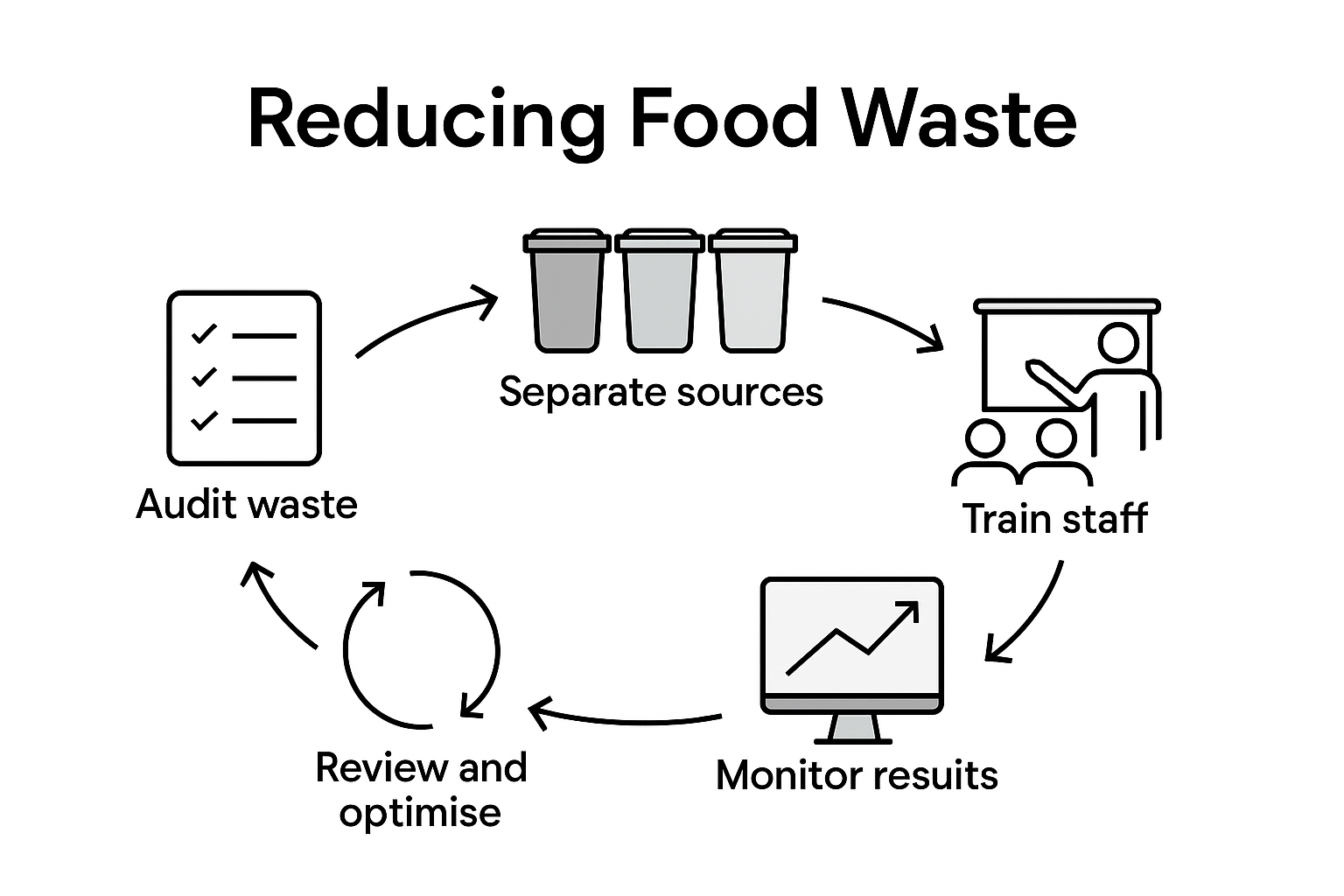
Conduct quarterly comprehensive reviews of your waste reduction data, comparing current performance against initial benchmarks. Organisations like WRAP recommend detailed analysis of waste tracking metrics, focusing on identifying patterns, persistent waste sources, and potential improvement areas. Engage cross functional teams in review sessions, encouraging open dialogue about challenges and innovative solutions. Analyse your tracking data to understand which interventions have been most effective and where additional training or process modifications might yield better results.
Pro tip: Develop a dynamic improvement framework that treats waste reduction as an ongoing journey. Celebrate incremental successes to maintain team motivation, and remain adaptable in your approach. By treating waste reduction as a continuous learning process, your organisation can progressively minimise food waste while driving operational efficiency and environmental sustainability.
Take Control of Food Waste with Venture Waste Management
Reducing food waste is a critical challenge for UK businesses striving to meet new legal requirements and achieve sustainability goals. The article highlights key issues such as the need for detailed waste audits, effective source separation, and continuous monitoring to ensure compliance and cut costs. These steps can feel overwhelming without expert support and a reliable waste collection partner who understands your unique operational needs.

Venture Waste Management is here to help you overcome these challenges with tailored solutions designed specifically for businesses committed to responsible food waste disposal. Explore our dedicated food waste Archives for practical insights or learn about the evolving Waste Collection Process in the UK for Businesses 2025 that ensures your compliance with upcoming regulations. Ready to make lasting improvements? Visit our main website today to simplify your waste management journey with our streamlined booking and expert support. Take the first step towards reducing your environmental footprint and boosting operational efficiency now.
Frequently Asked Questions
How can I assess my business’s current food waste generation?
To assess your business’s food waste generation, conduct a comprehensive audit of your waste sources. Categorise waste into types such as kitchen preparation waste, spoilage, and plate waste, and quantify each category by weight over a week to establish a clear baseline.
What are effective source separation systems for food waste?
Effective source separation systems involve designating colour-coded bins for different types of food waste, such as raw food and plate leftovers. Train your staff on proper sorting techniques to ensure compliance with regulations and enhance your waste management practices.
How can I educate my staff on food waste reduction best practices?
Educate your staff through comprehensive training programmes that cover the environmental impacts of food waste and include interactive workshops. Implement practical demonstrations and create incentives for staff who actively engage in waste reduction strategies to foster a culture of sustainability.
What tools can I use to monitor and track food waste in my business?
Utilise digital tracking tools that enable precise measurement and documentation of food waste across your operations. Record data related to waste volumes and types in real time to identify patterns and areas for improvement.
How often should I review my waste reduction efforts?
You should conduct comprehensive reviews of your waste reduction data at least quarterly. Analyse this data to compare current performance against benchmarks, identify persistent waste sources, and adapt your strategies to continuously minimise food waste.
Recommended
- Waste Reduction for SMEs: Practical UK Strategies for 2025 – Venture Waste
- How UK Businesses Can Save Money on Waste Management in 2025 – Venture Waste
- Effective Waste Minimisation Strategies for UK Businesses 2025 – Venture Waste
- Food Safety for Catering: Essential 2025 Guide for Canadian Businesses – Probe IT


Leave a Reply
Want to join the discussion?Feel free to contribute!