

Environmentally Friendly Disposal Guide for Healthcare Waste
Nearly 90 percent of British healthcare facilities face strict legal requirements for hazardous waste management. Understanding the risk and complexity of disposal is vital because poor practice exposes staff, patients, and the environment to harm. Facilities managers navigating the UK’s ever-evolving regulations will find practical solutions and fresh approaches here for safeguarding compliance and embracing truly sustainable waste handling.
Table of Contents
- Step 1: Assess Hazardous Waste Types And Storage Needs
- Step 2: Choose Compliant Containers For Safe Segregation
- Step 3: Arrange Licensed Environmentally Friendly Collection
- Step 4: Verify Legal Documentation And Disposal Compliance
- Step 5: Monitor Waste Provider Performance And Sustainability
Quick Summary
| Key Insight | Explanation |
|---|---|
| 1. Conduct a comprehensive waste audit | Systematically identify and categorise hazardous waste types to develop effective management strategies. |
| 2. Implement colour coded segregation | Use colour coded containers for different waste streams to minimise cross contamination risks. |
| 3. Select compliant waste containers | Ensure containers match waste types to maintain regulatory compliance and protect safety. |
| 4. Verify legal documents thoroughly | Routinely check disposal documentation against UK regulations to ensure complete legal compliance. |
| 5. Monitor provider performance systematically | Regularly assess waste management provider performance to drive sustainability and improve waste management practices. |
Step 1: Assess hazardous waste types and storage needs
Healthcare facilities must systematically identify and categorise hazardous waste to ensure safe disposal and environmental protection. Understanding the specific types of waste generated is critical for developing appropriate management strategies that comply with UK regulatory standards.
The first stage involves conducting a comprehensive waste audit across different departments. This requires careful examination of waste streams including infectious materials, sharps, chemical reagents, pharmaceutical residues, and radioactive substances. Healthcare waste management guidelines recommend creating a detailed inventory that classifies each waste type according to its potential environmental and health risks. Proper segregation begins with understanding the unique characteristics of each waste stream and implementing colour coded containment systems that prevent cross contamination.
Storage requirements demand precise attention to safety protocols. Each hazardous waste category requires specific containment conditions that minimise potential environmental exposure and human health risks. Secure, sealed containers with clear labelling must be used, ensuring that incompatible waste types are never stored together. Temperature controlled storage areas with restricted access help maintain waste integrity and prevent accidental exposure.
Here’s a summary of hazardous waste types and their typical storage requirements in UK healthcare settings:
| Waste Type | Key Characteristics | Required Storage Conditions |
|---|---|---|
| Infectious materials | High risk of contamination | Secure containers, yellow coding, sealed |
| Sharps | Puncture risk, biohazard | Rigid, puncture-proof, locked lids |
| Chemical reagents | Toxic, reactive | Chemical-resistant, segregated, ventilated |
| Pharmaceutical | Potentially harmful drugs | Sealed, labelled, temperature controlled |
| Radioactive waste | Emits radiation | Lead-lined, shielded, restricted access |
Expert Tip: Implement a digital tracking system that logs waste type, generation date, and disposal pathway to streamline compliance reporting and improve overall waste management efficiency.
Step 2: Choose compliant containers for safe segregation
Selecting the appropriate waste containers is a critical step in ensuring safe healthcare waste management and preventing potential environmental or health risks. Your container selection must precisely match the specific waste type to maintain regulatory compliance and protect staff and patients.
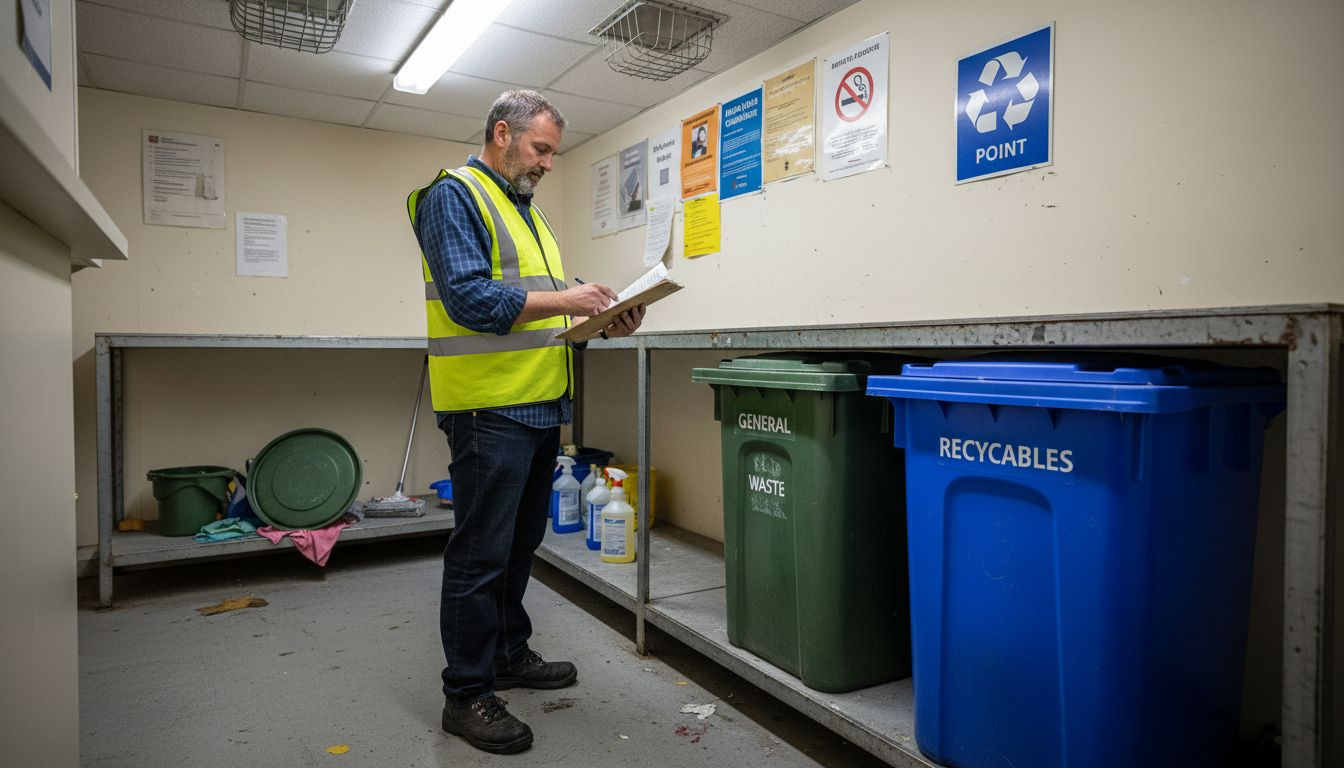
Healthcare facilities must implement comprehensive waste segregation guidelines that involve using colour coded containers designed for different waste streams. Infectious waste requires yellow bags or containers, sharps demand puncture resistant rigid containers with secure lids, while pharmaceutical waste needs specialised sealed receptacles. Each container must be clearly labelled with waste classification, generation date, and department of origin. Ensure containers are leak proof, appropriately sized for the expected waste volume, and constructed from materials resistant to potential chemical interactions.
Careful container selection involves understanding the unique properties of each waste type and matching them with appropriate containment solutions. Chemical waste containers must be chemical resistant, radioactive waste needs lead lined containers, and biological materials require sealed containers that prevent potential contamination. Always maintain separate storage areas for different waste categories and implement strict protocols for container handling and transportation.
Expert Tip: Conduct regular staff training on proper waste container selection and use colour coded signage to minimise human error in waste segregation processes.
Step 3: Arrange licensed environmentally friendly collection
Successfully managing healthcare waste requires strategic partnerships with licensed waste collection providers who understand the complex regulatory landscape of medical waste disposal. Your primary goal is to select a waste carrier that ensures environmental responsibility while maintaining strict compliance with UK healthcare waste regulations.
Sustainable healthcare waste management involves rigorous selection of licensed waste carriers who can demonstrate advanced treatment technologies and minimal environmental impact. Verify each potential waste management partner possesses current waste carrier licenses, Environmental Agency registration, and specific expertise in healthcare waste streams. Request comprehensive documentation including their waste treatment methodologies, transportation protocols, and carbon emission reduction strategies. Prioritise providers utilising innovative low emission technologies such as pyrolysis and bio digesters that support circular economy principles and align with NHS sustainability commitments.
Evaluate potential waste collection partners through a comprehensive due diligence process that extends beyond basic licensing requirements. Examine their track record of regulatory compliance, environmental certifications, technological capabilities, and demonstrated commitment to reducing healthcare waste environmental footprint. Request detailed waste audit trails, transportation manifests, and evidence of responsible final waste processing to ensure your facility maintains the highest standards of environmental stewardship.
This table contrasts licensed waste collection provider features emphasised in environmental compliance:
| Provider Feature | Business Impact | Environmental Benefit |
|---|---|---|
| Valid carrier licence | Regulatory compliance | Reduces legal and safety risks |
| Advanced technologies | Improved waste processing efficiency | Minimises carbon emissions and pollution |
| Transparent audit trails | Enhanced traceability and accountability | Supports continuous improvement |
| Low-emission transport | Supports NHS sustainability targets | Reduces greenhouse gas emissions |
Expert Tip: Negotiate waste collection contracts that include transparent reporting mechanisms and periodic environmental impact assessments to continuously improve your waste management strategy.
Step 4: Verify legal documentation and disposal compliance
Ensuring complete legal compliance represents a critical responsibility for healthcare waste management teams. Your goal is to meticulously validate all documentation and confirm that every aspect of waste disposal meets stringent UK regulatory requirements.
Environmental documentation verification demands comprehensive review of waste carrier licenses, environmental permits, and disposal certificates. Healthcare facilities must systematically examine each document to confirm current validity, checking registration numbers against official Environment Agency records. Scrutinise waste transfer notes which provide a legal audit trail documenting precise waste movements from generation through final processing. Ensure documentation includes specific details such as waste classification codes, generator information, carrier details, and destination facility credentials.
Careful examination extends beyond simple paperwork verification. Cross reference waste management documentation against key regulatory frameworks including the Environmental Protection Act 1990, Hazardous Waste Regulations, and Health Technical Memorandum 07-01. Look for comprehensive evidence demonstrating full traceability including chronological waste movement records, treatment methodology descriptions, and environmental impact assessments. Request detailed certificates confirming appropriate waste stream handling and final disposal methods that align with sustainability and safety protocols.
Expert Tip: Implement a digital document management system that automatically flags approaching expiration dates for licenses and permits to maintain continuous regulatory compliance.
Step 5: Monitor waste provider performance and sustainability
Ensuring ongoing environmental accountability requires systematic and proactive monitoring of waste management providers. Your strategic approach will focus on comprehensive performance evaluation that goes beyond basic contractual compliance to drive meaningful sustainability improvements.
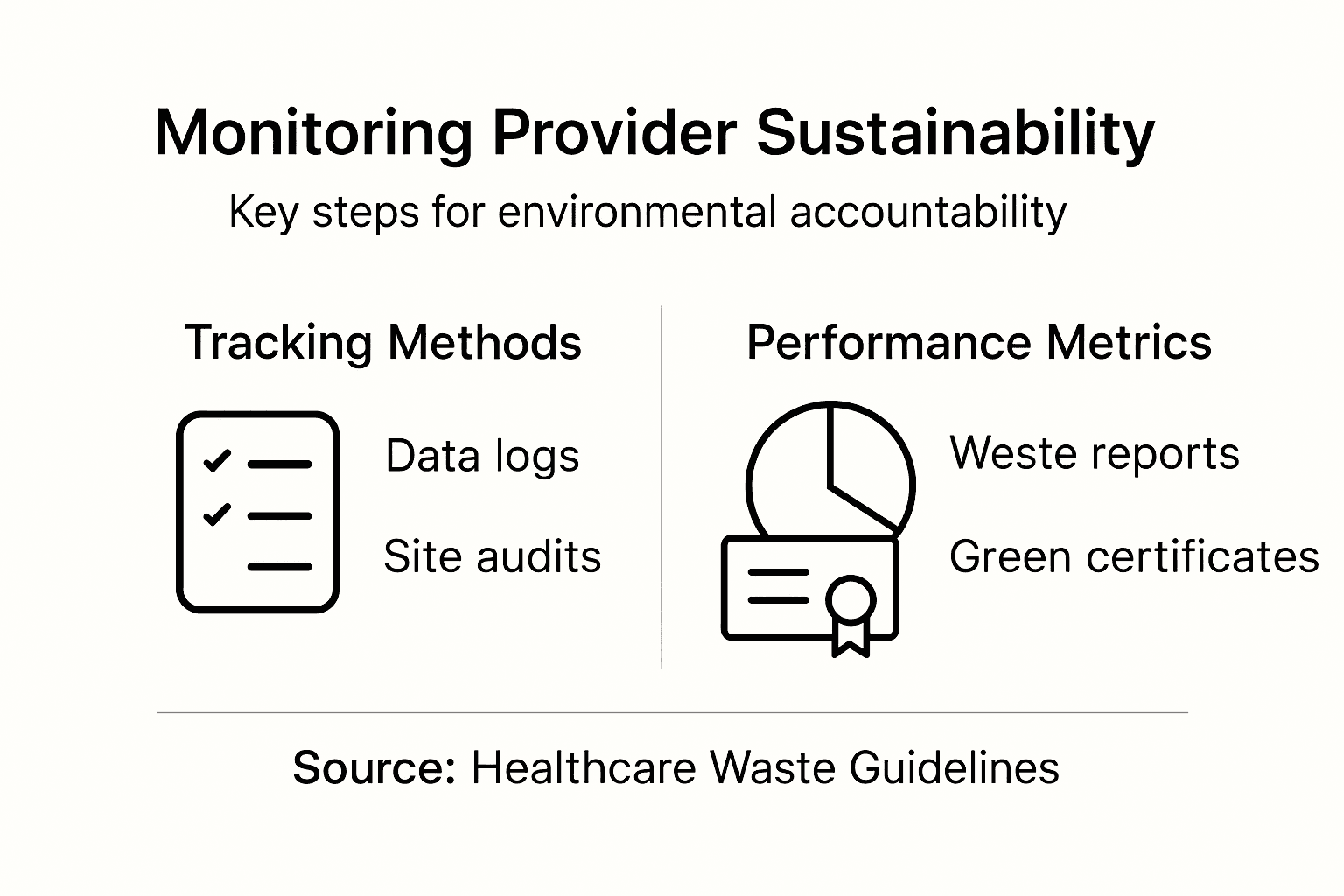
Sustainable healthcare waste management demands rigorous performance tracking through detailed data collection and analysis. Establish quarterly review processes that assess key performance indicators including waste volume reduction, segregation accuracy, carbon emissions, recycling rates, and adherence to sustainability targets. Request comprehensive monthly reporting that provides transparent insights into waste stream management, treatment methodologies, and environmental impact metrics. Develop standardised evaluation frameworks that compare provider performance against industry benchmarks and NHS sustainability goals.
Implement a multifaceted monitoring strategy that combines quantitative data analysis with periodic on site audits and independent environmental assessments. Create a scoring system that evaluates waste providers across multiple dimensions including technological innovation, regulatory compliance, carbon footprint reduction, and demonstrated commitment to circular economy principles. Maintain detailed documentation of performance evaluations to support continuous improvement and inform future procurement decisions.
Expert Tip: Design performance contracts with financial incentives tied directly to sustainability achievements to motivate waste providers towards more environmentally responsible practices.
Take Control of Your Healthcare Waste with Expert Support
Managing hazardous healthcare waste is a challenging responsibility that demands rigorous compliance with legal standards and a commitment to environmental protection. The risks of improper segregation, storage, and disposal can affect not only public health but also the reputation and operational efficiency of your facility. You need trusted solutions that help you implement best practices such as secure container selection, licensed collection, and continuous monitoring to achieve sustainable healthcare waste management.
Venture Waste is your partner in meeting these goals with reliable, compliant waste disposal services designed for UK healthcare settings. Explore our insights on how How the Waste Collection Network in UK Serves Businesses in 2025 supports streamlined waste journeys or discover tailored waste management equipment in our comprehensive Batteries Archives – Venture Waste. We prioritise legal compliance and environmental sustainability through clear processes that simplify your workload.

Ready to transform your healthcare waste management and safeguard your facility? Visit Venture Waste today for expert advice and services. Take immediate action to secure safe, environmentally friendly disposal that meets UK regulations and protects your community.
Frequently Asked Questions
What types of hazardous waste do healthcare facilities typically generate?
Healthcare facilities generate various types of hazardous waste, including infectious materials, sharps, chemical reagents, pharmaceutical residues, and radioactive substances. Conduct a comprehensive waste audit in your facility to identify and categorise these waste types.
How can I ensure proper segregation of healthcare waste?
To ensure proper segregation, implement colour coded containers tailored to each waste type. For example, use yellow bags for infectious waste and puncture-proof containers for sharps to minimise contamination risks.
What are the key features to look for in waste collection providers?
When selecting waste collection providers, ensure they possess valid carrier licenses, demonstrate advanced treatment technologies, and maintain transparency in their documentation. Evaluate their track record for environmental compliance and seek providers that prioritise reducing their carbon footprint.
How can I verify compliance with disposal regulations?
You can verify compliance by meticulously reviewing all legal documentation, including waste carrier licenses and disposal certificates. Ensure that documentation includes waste classification codes and generator information, and maintain a comprehensive audit trail for all waste movements.
What are the benefits of monitoring waste provider performance?
Monitoring waste provider performance helps ensure ongoing environmental accountability and continuous improvement in waste management practices. Establish quarterly reviews of key performance indicators, such as recycling rates and carbon emissions reduction, to drive sustainability improvements.
How often should I conduct waste audits in my healthcare facility?
Conduct waste audits at least annually or more frequently if your waste streams change significantly. Regular audits help you stay compliant with regulations and identify opportunities to improve waste management efficiency.
Recommended
- Clinical Waste Disposal Requirements for UK Businesses 2025 – Venture Waste
- Sustainable Waste Solutions – Enhancing UK Healthcare Compliance – Venture Waste
- Domestic Waste Types in the UK: 2025 Guide for Businesses – Venture Waste
- Hazardous Waste Disposal Guide 2025 for UK Businesses – Venture Waste
- Understanding Eco-Friendly HVAC Solutions for Your Home – HVAC Service and Repair | Louisville, KY | Project Heating & Cooling


Leave a Reply
Want to join the discussion?Feel free to contribute!