

End-of-Term Waste Management Guide for UK Health Facilities
Meeting strict waste disposal standards can feel daunting at the end of each term for facility managers in United Kingdom healthcare settings. As regulations demand precise segregation using colour-coded bins and careful documentation, efficient management is vital for safety and compliance. This guide brings practical steps, helping you navigate the complex process of assessing, sorting, and verifying diverse waste streams so your facility stays responsible and environmentally conscious.
Table of Contents
- Step 1: Assess Existing Waste And Identify Disposal Types
- Step 2: Prepare Necessary Equipment And Compliance Documents
- Step 3: Sort And Segregate Waste According To Regulations
- Step 4: Arrange Collection With Licensed Waste Providers
- Step 5: Verify Proper Disposal And Maintain Compliance Records
Quick Summary
| Key Point | Explanation |
|---|---|
| 1. Conduct a comprehensive waste audit | Assess and classify all waste types generated to establish a basis for successful waste management strategies. |
| 2. Implement strict waste segregation protocols | Use colour-coded systems for different waste types to prevent cross-contamination and enhance disposal safety. |
| 3. Prepare essential compliance documentation | Maintain accurate records including waste transfer notes and training logs to demonstrate adherence to regulations. |
| 4. Select licensed waste carriers | Partner with authorised providers to ensure safe, compliant transport and disposal of medical waste. |
| 5. Regularly verify and maintain disposal records | Track every stage of waste disposal meticulously to ensure transparency and compliance with environmental regulations. |
Step 1: Assess existing waste and identify disposal types
In healthcare facilities across the United Kingdom, systematically assessing and categorising waste is fundamental to ensuring safe, compliant disposal. When undertaking this critical process, you’ll need a structured approach to identify the various waste streams generated within your medical environment.
The first stage involves conducting a comprehensive waste audit by classifying healthcare waste types. This means carefully examining and documenting the different waste categories produced in your facility. Key waste types typically include:
- Clinical infectious waste
- Sharps and contaminated materials
- Pharmaceutical waste
- Chemical waste
- Radioactive medical waste
- General non-hazardous waste
To effectively categorise these waste streams, healthcare professionals must implement rigorous segregation protocols. The NHS recommends using colour-coded packaging systems to distinguish between different waste categories, ensuring each type receives appropriate treatment. This method prevents cross-contamination and supports environmentally responsible disposal.
Accurate waste identification is not just a regulatory requirement – it’s a critical step in protecting public health and environmental safety.
Your waste assessment should document the volume, frequency, and specific characteristics of each waste type. Consider factors like potential infectivity, chemical composition, and disposal requirements. Detailed record-keeping will help you develop targeted waste management strategies and demonstrate compliance with UK healthcare waste regulations.
The table below summarises the key characteristics for common healthcare waste types and their specific considerations:
| Waste Category | Main Risk | Handling Priority |
|---|---|---|
| Clinical infectious | Infection spread | Immediate, secure containment |
| Sharps & contaminated | Injury and contamination | Rigid, puncture-proof disposal |
| Pharmaceutical | Toxicity, drug misuse | Safe separate storage |
| Chemical | Corrosive or toxic exposure | Chemical-resistant containment |
| Radioactive | Radiation hazard | Specialist containment, tracking |
| General non-hazardous | Minimal risk | Standard waste procedures |
Top tip: Conduct quarterly waste audits to maintain accurate tracking and quickly adapt your disposal protocols to changing facility needs.
Step 2: Prepare necessary equipment and compliance documents
Preparing the right equipment and documentation is crucial for healthcare facilities to manage waste effectively and maintain regulatory compliance. This step involves gathering specialised tools and creating comprehensive records that demonstrate your commitment to safe waste management.
Begin by acquiring essential waste management equipment across your facility. This includes:
- Colour-coded waste bins for different waste categories
- Specialised sharps containers
- Protective personal equipment
- Secure packaging materials
- Labelling systems
Document preparation is equally critical. You’ll need to compile and maintain several key compliance documents:
- Waste transfer notes
- Disposal authorisation certificates
- Waste tracking records
- Environmental compliance documentation
- Staff training logs on waste management protocols
Comprehensive documentation is not merely bureaucratic – it’s your facility’s proof of responsible waste management practices.
Each document should clearly detail the waste type, quantity, handling procedures, and final disposal method. Accurate record-keeping helps demonstrate your facility’s commitment to environmental regulations and provides a transparent audit trail for potential inspections.

The following table compares essential compliance documents and their primary purpose in healthcare waste management:
| Document Type | Main Purpose | Retention Requirement |
|---|---|---|
| Waste transfer note | Track waste movement | Minimum three years |
| Disposal certificate | Confirm legal disposal | Minimum three years |
| Training log | Proof of staff competency | Regularly updated |
| Environmental assessment | Document environmental impact | Included in audits |
Top tip: Digitise your waste management documentation to ensure easier tracking, quick retrieval during audits, and seamless version control.
Step 3: Sort and segregate waste according to regulations
Properly sorting and segregating healthcare waste is a critical responsibility that ensures safety, regulatory compliance, and environmental protection. Your facility must implement a systematic approach to waste management that meets the stringent guidelines set by UK environmental authorities.
Begin by understanding the healthcare waste segregation protocols for different waste categories. Healthcare facilities must separate waste streams using a precise colour-coded system:
- Red bags: Highly infectious waste
- Yellow bags: Infectious anatomical waste
- Orange bags: Offensive/hygiene waste
- Purple bags: Cytotoxic and cytostatic pharmaceutical waste
- Blue bags: Radioactive medical waste
- Clear bags: General non-hazardous waste
Each waste type requires specific handling to prevent cross-contamination and ensure appropriate treatment. Your segregation process should include careful sorting at the point of generation, using designated containers with clear labelling to support accurate disposal.
Effective waste segregation is more than a procedural requirement – it is a fundamental responsibility to protect public health and the environment.
Establish clear protocols for staff training, ensuring every team member understands the critical importance of proper waste sorting. This includes recognising different waste types, using correct containment methods, and following strict handling guidelines.
Pro tip: Conduct regular waste segregation audits and provide refresher training to maintain high standards of compliance and reduce the risk of incorrect waste disposal.
Step 4: Arrange collection with licensed waste providers
Arranging waste collection is a critical step in your healthcare facility’s waste management strategy. You must select and coordinate with licensed waste providers who can safely and legally transport your segregated medical waste while maintaining full regulatory compliance.
Begin by identifying authorised healthcare waste carriers registered with the Environment Agency. Your chosen provider must demonstrate:
- Valid waste carrier licence
- Comprehensive insurance coverage
- Experience handling medical waste
- Documented environmental credentials
- Compliance with UK waste transportation regulations
Ensure you request and retain essential documentation for each waste collection, including:
- Waste transfer notes
- Collection certificates
- Disposal documentation
- Environmental impact statements
- Carrier registration details
Selecting the right waste collection partner is not just a legal requirement, but a fundamental responsibility to protect public health and environmental safety.
Carefully review each potential waste provider’s credentials, requesting detailed information about their handling procedures, disposal methods, and commitment to sustainable waste management practices.
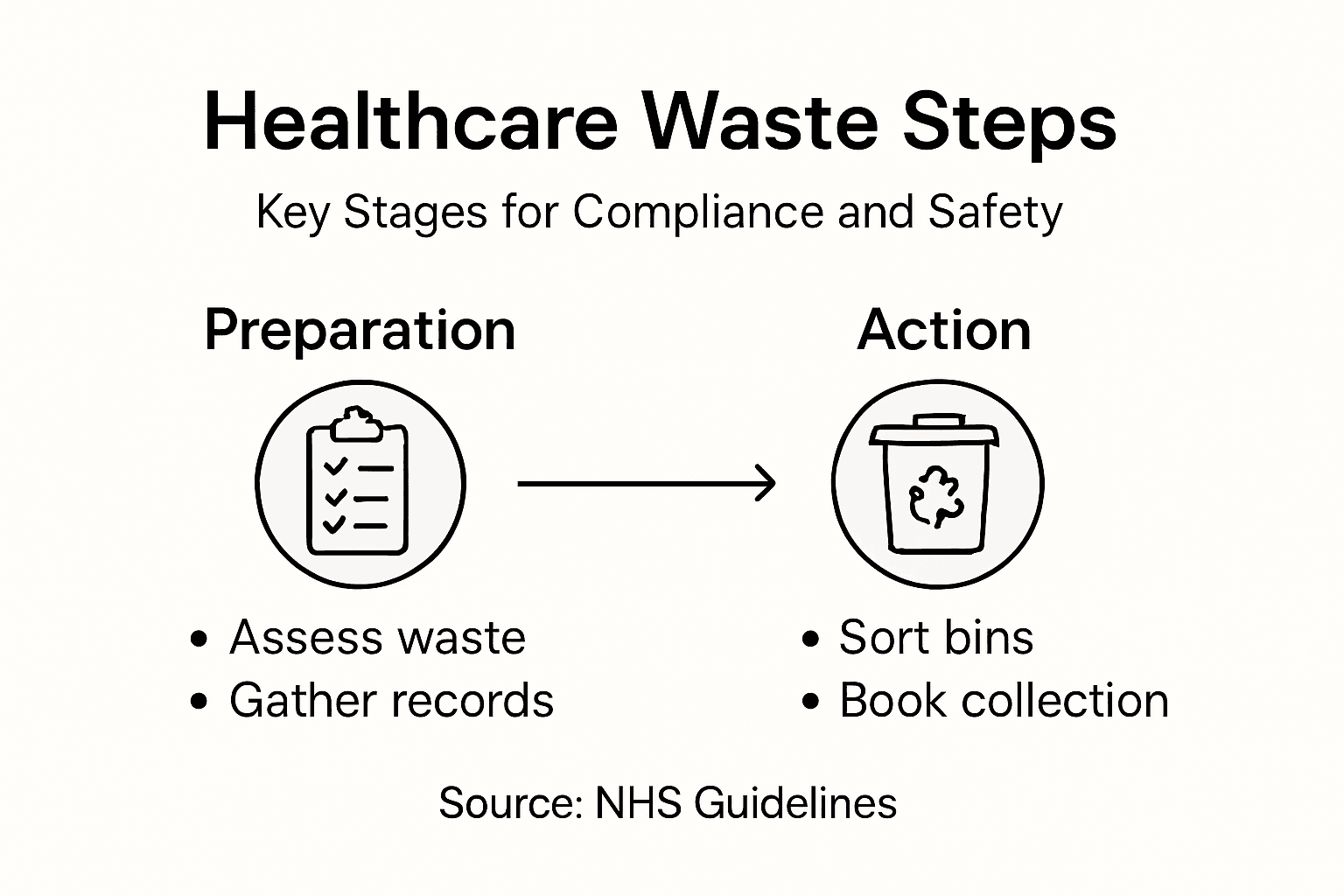
Pro tip: Negotiate comprehensive service agreements that include detailed reporting and transparent tracking of your medical waste from collection through final disposal.
Step 5: Verify proper disposal and maintain compliance records
Verifying waste disposal and maintaining meticulous compliance records is the final critical step in your healthcare facility’s waste management process. This stage ensures transparency, legal adherence, and demonstrates your commitment to environmental responsibility.
Implement a comprehensive clinical waste verification system that tracks every stage of waste disposal. Your documentation should include:
- Detailed waste transfer notes
- Disposal certificates
- Quantity tracking logs
- Environmental impact assessments
- Incident and audit reports
Ensure your record-keeping system captures essential information for each waste stream:
- Date and time of waste generation
- Type and quantity of waste
- Collection provider details
- Final disposal method
- Responsible staff members
Comprehensive record-keeping is not bureaucratic paperwork – it’s your facility’s proof of environmental stewardship and regulatory compliance.
Develop a systematic approach to document retention, ensuring all records are stored securely for a minimum of three years. Digital archiving can provide additional reliability and ease of access during potential regulatory inspections.
Pro tip: Conduct quarterly internal audits of your waste management documentation to identify potential gaps and continuously improve your compliance processes.
Take Control of Your Healthcare Waste Management Today
Managing end-of-term waste in UK health facilities demands precise waste assessment, strict segregation, and trustworthy disposal partnerships to meet legal and environmental standards. If you are facing challenges with compliance documentation, specialised waste segregation, or finding licensed carriers, you need a partner who truly understands these complexities. At Venture Waste, we help you transform these challenges into manageable steps tailored to your facility’s needs while upholding the highest standards of safety and regulation.

Discover how our comprehensive services support your waste management journey by offering reliable hazardous waste handling and seamless collection options compliant with UK regulations. Stay informed and compliant with updates from our regulation Archives – Venture Waste. Learn about the evolving waste collection landscape with How the Waste Collection Network in UK Serves Businesses in 2025 – Venture Waste. Start streamlining your healthcare waste processes now by visiting https://venturewaste.co.uk. Take action today to protect public health, maintain compliance, and ensure responsible waste disposal for your facility.
Frequently Asked Questions
How can I assess the existing waste in my healthcare facility?
To assess existing waste, conduct a comprehensive waste audit to identify and categorise waste streams. Document the volume and frequency of different waste types within your facility and ensure to cover categories such as clinical infectious waste, sharps, and pharmaceutical waste.
What equipment do I need for effective waste management?
You will need colour-coded waste bins, specialised sharps containers, protective personal equipment, and labelling systems. Gather these essential items to ensure proper segregation and handling of different waste categories from the outset.
How should I segregate waste according to regulations?
Properly segregate waste by using a colour-coded system that distinguishes between categories, such as red for highly infectious waste and clear for general non-hazardous waste. Train your staff on these segregation protocols to ensure adherence, preventing cross-contamination.
What documentation is required for waste disposal compliance?
Key compliance documents include waste transfer notes, disposal authorisation certificates, and tracking records. Maintain these documents meticulously to demonstrate compliance and responsible waste management practices for a minimum of three years.
How can I verify the proper disposal of medical waste?
Verify the proper disposal of medical waste by implementing a tracking system that records the details of waste disposal, including dates, quantities, and disposal methods. Ensure all records are securely stored, and review them regularly to confirm compliance.
What should I do to maintain compliance records?
Maintain compliance records by regularly updating documents like waste transfer notes and disposal certificates. Securely store these records for at least three years, conducting quarterly audits to identify any gaps and improve your processes.


Leave a Reply
Want to join the discussion?Feel free to contribute!