

Emergency Waste Removal: Step-by-Step Business Guide
Every year, improper handling of hazardous waste leads to thousands of workplace accidents and costly regulatory fines. Emergency waste removal is not just about speed, it is about protecting your people, your business, and the environment. From the moment hazardous materials are discovered, each step demands careful planning and strict safety measures. You will find practical guidance on how to safely address emergencies with confidence and keep your workplace secure.
Table of Contents
- Step 1: Assess The Waste And Identify Hazards
- Step 2: Isolate And Secure The Affected Area
- Step 3: Contact A Certified Emergency Waste Provider
- Step 4: Arrange Safe Waste Removal And Transport
- Step 5: Verify Site Clearance And Regulatory Compliance
Quick Summary
| Key Point | Explanation |
|---|---|
| 1. Assess waste hazards thoroughly | Conduct a visual inspection to classify waste types and identify any potential risks such as flammability or toxicity. |
| 2. Secure the waste area effectively | Create a safe perimeter with barriers and warning signs to restrict unauthorized access and minimize hazards. |
| 3. Engage a certified waste provider | Research and contact a registered waste management specialist for safe and compliant hazardous waste removal services. |
| 4. Prepare for safe transport | Ensure waste is properly contained, segregated, and documented before arranging its transportation to avoid legal issues. |
| 5. Confirm site clearance and compliance | Perform a thorough inspection and maintain documentation to verify that all waste has been removed in accordance with regulations. |
Step 1: Assess the waste and identify hazards
In this crucial first step of emergency waste removal, you will carefully evaluate the type and potential risks associated with the waste your business needs to dispose of. According to the Health and Safety Executive, proper risk assessment is fundamental to ensuring safe waste management and preventing potential hazards.
Begin by conducting a comprehensive visual inspection of the waste materials. Look carefully at the physical characteristics and composition of the waste. Are there any signs of chemical contamination? Do the materials appear potentially dangerous or unstable? Different waste types require specific handling protocols.
As Technical Guidance WM2 recommends, classification of hazardous waste depends on its precise chemical composition. Pay close attention to potential dangerous elements such as:
- Flammable liquids or substances
- Toxic chemicals
- Corrosive materials
- Biohazardous waste
- Electronic equipment with harmful components
Warning: Never touch or handle unknown waste without appropriate personal protective equipment.
If you are uncertain about the waste classification, consult a professional waste management specialist who can provide expert guidance on identification and safe removal procedures. Your safety and legal compliance are paramount during this initial assessment stage.
Once you have thoroughly evaluated the waste, you will be ready to move forward with selecting the appropriate removal strategy and necessary protective measures.
Step 2: Isolate and secure the affected area
In this critical stage of emergency waste removal, you will create a safe perimeter around the waste site to prevent unauthorized access and minimize potential risks. Health and Safety Executive guidelines emphasize the importance of preventing waste accumulations that could block emergency routes or create workplace hazards.
Start by establishing a clear physical barrier around the affected area. Use caution tape, safety barriers, or temporary fencing to create a visible and secure boundary. Ensure the perimeter is wide enough to provide a safe buffer zone between the waste and any personnel or operational spaces.
According to the Health and Safety (Safety Signs and Signals) Regulations, you must clearly mark the restricted zone with appropriate warning signs. These signs should:
- Indicate potential hazards
- Prohibit unauthorized entry
- Specify required personal protective equipment
- Provide emergency contact information
Important: Ensure all entry points to the secured area are clearly marked and controlled.
Remove any equipment or materials that could interfere with safe waste management. Verify that emergency access routes remain clear and unobstructed. Consider the potential movement of personnel and equipment around the isolated zone.
If the waste area is complex or particularly hazardous, consider implementing additional safety measures such as supervision or restricted access protocols. Your primary goal is to protect both personnel and the surrounding environment during the waste removal process.
With the area now securely isolated, you are prepared to move forward with the next steps of emergency waste removal.
Step 3: Contact a certified emergency waste provider
In this critical stage, you will connect with a professional waste management specialist who can safely handle your emergency waste removal needs. Clear It Waste emphasizes the importance of identifying a registered waste carrier with appropriate environmental credentials.
Begin by researching certified waste management providers who specialize in emergency and hazardous waste removal. Look for companies with specific experience in handling the type of waste you have identified. Check their professional credentials, environmental permits, and waste carrier registration status.
When reaching out to potential providers, prepare detailed information about the waste you need removed. This includes:
- Precise waste type and composition
- Estimated quantity
- Location of waste
- Any specific handling requirements
- Urgency of removal
According to Greenwich University, disposal methods must be comprehensively documented in your initial risk assessment. Share this documentation with potential waste removal specialists to ensure they can provide appropriate services.
Pro Tip: Request multiple quotes and compare the comprehensive service offerings, not just the price.
Ensure the waste provider can offer a complete service including safe transportation, proper documentation, and environmentally responsible disposal. Verify their compliance with current waste management regulations and ask about their environmental certification.
Hazardous waste collection services can provide the specialized expertise needed for complex waste removal scenarios. With a certified provider selected, you are now prepared to coordinate the safe and legal removal of your emergency waste.
Step 4: Arrange safe waste removal and transport
In this crucial stage of emergency waste management, you will coordinate the secure and legal transportation of hazardous materials. Health and Safety Executive guidelines emphasize the critical responsibility of assessing and controlling risks associated with waste handling and transportation.
Before transportation, conduct a thorough preparation process. Ensure all waste materials are properly contained and segregated according to their specific hazard classification. Different types of waste require unique handling protocols to prevent potential chemical interactions or environmental contamination.
Pay special attention to potentially dangerous waste components. Health and Safety Executive specifically highlights the importance of safely removing fluids from electrical equipment before transportation. For instance, cooling appliances may contain Ozone Depleting Substances that require careful extraction.
Prepare comprehensive documentation for the waste removal process, including:
- Detailed waste inventory
- Material safety data sheets
- Transportation manifest
- Emergency contact information
- Specific handling instructions
Warning: Improper waste transportation can result in significant environmental and legal consequences.
Recycling hazardous materials requires meticulous planning and execution. Confirm that your chosen waste management provider has appropriate vehicles, protective equipment, and trained personnel to handle your specific waste type.
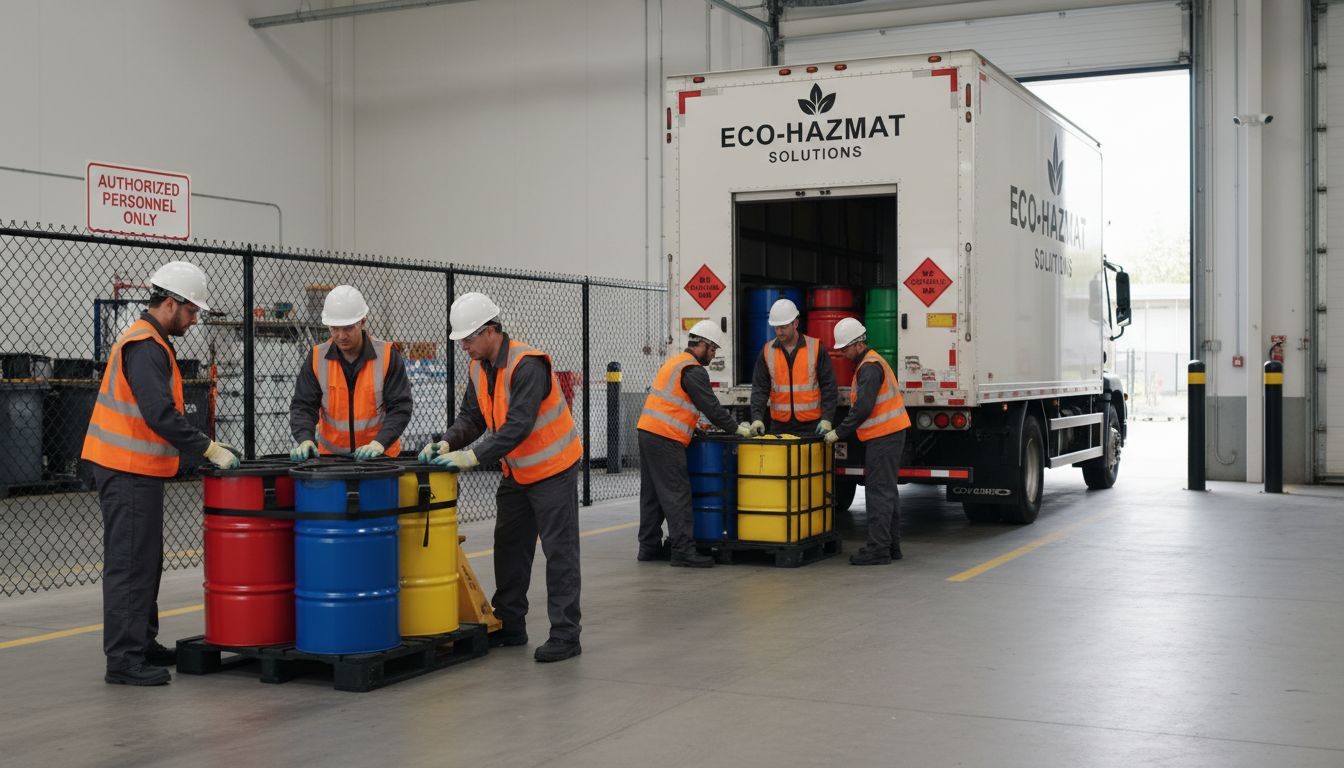
Ensure all personnel involved in the transportation process are wearing appropriate personal protective equipment and have been briefed on emergency protocols. Verify that transportation vehicles are properly marked and equipped to handle hazardous materials safely.
With the waste securely prepared and documentation in order, you are now ready to proceed with the final stages of emergency waste removal.
Step 5: Verify site clearance and regulatory compliance
In this final stage of emergency waste removal, you will comprehensively confirm that all waste has been safely and legally removed, and your site meets all required regulatory standards. UK Government Guidance emphasizes the importance of implementing a robust contingency plan to ensure complete compliance with operational procedures.
Conduct a systematic and thorough site inspection to verify total waste removal. Carefully examine the entire area where waste was previously located, checking for any remaining materials, potential contamination, or residual hazardous substances that might have been overlooked during initial removal.
Prepare a detailed site clearance report documenting:
- Complete waste inventory
- Removal confirmation
- Disposal method for each waste type
- Photographs of the cleared site
- Waste transportation and disposal documentation
According to Healthcare Waste Management Guidelines, you must have a comprehensive contingency plan that ensures compliance with all permit conditions and operational procedures.
Pro Tip: Retain all documentation for a minimum of three years as potential evidence of proper waste management.
Site Waste Management Plans can provide additional guidance on maintaining comprehensive waste removal records. Ensure that all team members are briefed on the successful completion of the emergency waste removal process.
Verify that your chosen waste management provider has issued a complete certificate of disposal. This document serves as official confirmation that all waste has been removed and processed according to legal and environmental standards.
With site clearance verified and documentation in order, you have successfully completed the emergency waste removal process.
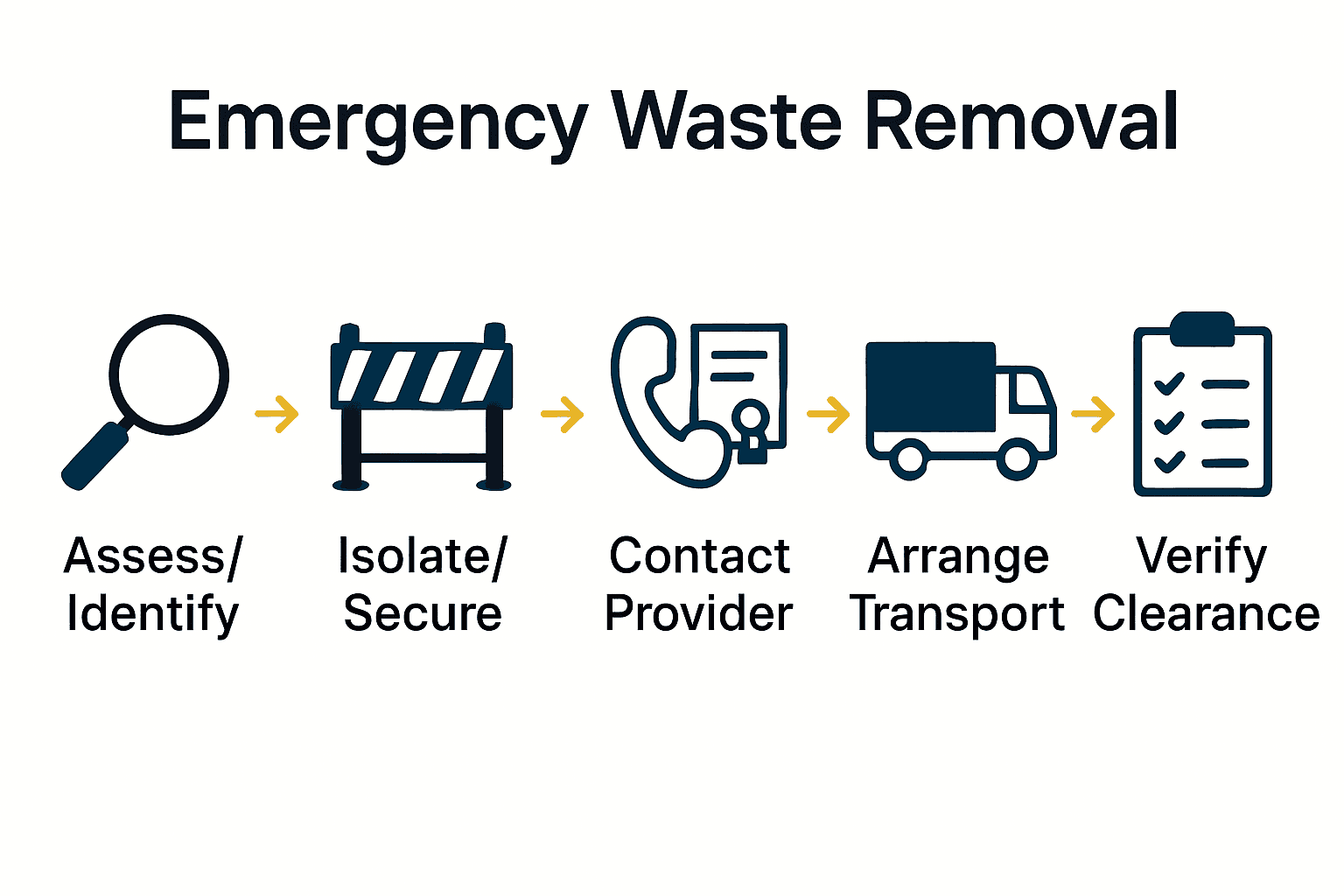
Here’s a comparison of the main steps in emergency waste removal:
| Step | Key Actions | Main Safety Focus |
|---|---|---|
| Assess waste and identify hazards | Visual inspection Classify waste types Identify risks |
Avoid direct contact Use protective gear |
| Isolate and secure area | Set barriers Post warning signs Clear access routes |
Restrict access Prevent exposure |
| Contact certified provider | Find registered carrier Share risk assessment Request detailed quotes |
Legal compliance Choose qualified experts |
| Arrange removal and transport | Segregate waste Prepare documentation Supervise transport |
Safe handling Regulation adherence |
| Verify clearance and compliance | Inspect site Complete clearance report Collect certificates |
Documentation Regulatory proof |
Take Control of Your Emergency Waste Removal with Expert Support
Dealing with emergency waste removal can be overwhelming, especially when hazards and legal compliance add extra pressure. This guide highlights the crucial need to assess risks, isolate affected areas, and trust certified professionals for safe disposal. If you want peace of mind knowing your hazardous materials are handled responsibly and according to the latest regulations, you’re not alone in facing these challenges.
Venture Waste offers tailored solutions designed to relieve this burden with seamless waste management services. From specialist hazardous waste handling and secure hard drive destruction to up-to-date insights on waste regulation, we guide you every step of the way.

Act now to safeguard your business and environment with trusted emergency waste removal experts. Visit our website today and start your simple three-step booking process to ensure safe, compliant, and efficient waste clearance.
Frequently Asked Questions
How do I assess waste and identify hazards in emergency waste removal?
Begin by conducting a visual inspection of waste materials, looking for signs of chemical contamination or instability. Classify the waste types based on their characteristics and potential risks, and document your findings for safety and compliance.
What steps should I take to isolate and secure the affected area?
Establish a clear perimeter around the waste site using barriers or caution tape, ensuring a safe buffer zone. Clearly mark the area with warning signs that indicate hazards and access restrictions to protect personnel from exposure.
How can I find a certified emergency waste provider?
Research registered waste management specialists who have experience with your specific type of waste. Prepare detailed information about your waste situation and request multiple quotes to compare their services and qualifications.
What preparations are required before arranging safe transportation of hazardous waste?
Ensure that all waste is properly contained and segregated according to its hazard classification. Prepare comprehensive documentation, including a detailed waste inventory and handling instructions, to facilitate safe and compliant transportation.
How do I verify site clearance and ensure regulatory compliance after waste removal?
Conduct a thorough site inspection to confirm that all waste has been removed and that no hazardous materials remain. Document your findings in a clearance report, including disposal documentation, to ensure compliance with legal and environmental standards.
Why is personal protective equipment important during emergency waste removal?
Personal protective equipment (PPE) is crucial to safeguard against exposure to hazardous materials during the waste management process. Always wear appropriate PPE throughout each step of waste handling and removal to minimize health risks.


Leave a Reply
Want to join the discussion?Feel free to contribute!