

Electrical Waste Explained: UK’s Environmental Challenge
Each year, the UK generates over 1.5 million tonnes of electrical waste, much of it containing hidden hazards that threaten both our environment and health. From old laptops to broken toasters, these everyday items demand far more than a simple toss into the rubbish. Understanding the real risks—and the common myths—behind electrical waste helps businesses and individuals protect themselves, avoid legal trouble, and make smarter choices for a cleaner future.
Table of Contents
- Defining Electrical Waste And Misconceptions
- Types Of Electrical Waste In The UK
- Environmental And Human Health Impacts
- UK Laws Governing Electrical Waste Disposal
- Best Practices For Responsible Waste Management
Key Takeaways
| Point | Details |
|---|---|
| Importance of WEEE Disposal | Electrical waste must not be disposed of in regular trash; specialized disposal methods are necessary to prevent environmental harm. |
| Misconceptions about Electrical Waste | Common beliefs about the disposal of electrical items lead to improper practices; all electronic waste requires proper handling. |
| Health and Environmental Risks | Improper disposal can cause serious contamination, affecting soil, water, and air quality, posing risks to ecosystems and human health. |
| Legal Compliance | Businesses must adhere to UK regulations regarding waste classification, segregation, and disposal, maintaining detailed records of their waste management practices. |
Defining Electrical Waste And Misconceptions
Electrical waste, often referred to as WEEE waste (Waste Electrical and Electronic Equipment), represents a complex environmental challenge facing businesses and consumers across the United Kingdom. From outdated computer monitors to discarded mobile phones, these seemingly innocuous items contain hazardous materials that can cause significant ecological damage if not handled correctly.
According to gov.uk, all electrical products displaying the ‘Crossed out wheelie bin’ symbol should never be disposed of in standard household rubbish. This critical guidance highlights the importance of specialized disposal methods. These items must be taken to appropriate collection points to prevent environmental harm and recover valuable materials that can be recycled and reused.
Common misconceptions about electrical waste can lead to improper disposal practices. Many businesses and individuals mistakenly believe that:
- All electronic items can be thrown away with regular trash
- Small electronics like batteries don’t require special handling
- Recycling electrical waste is too complicated or time-consuming
In reality, electrical waste contains complex components including:
- Metals like copper and gold
- Toxic substances such as lead and mercury
- Rare earth elements critical for manufacturing
By understanding these nuanced details, businesses can make more informed decisions about waste management.
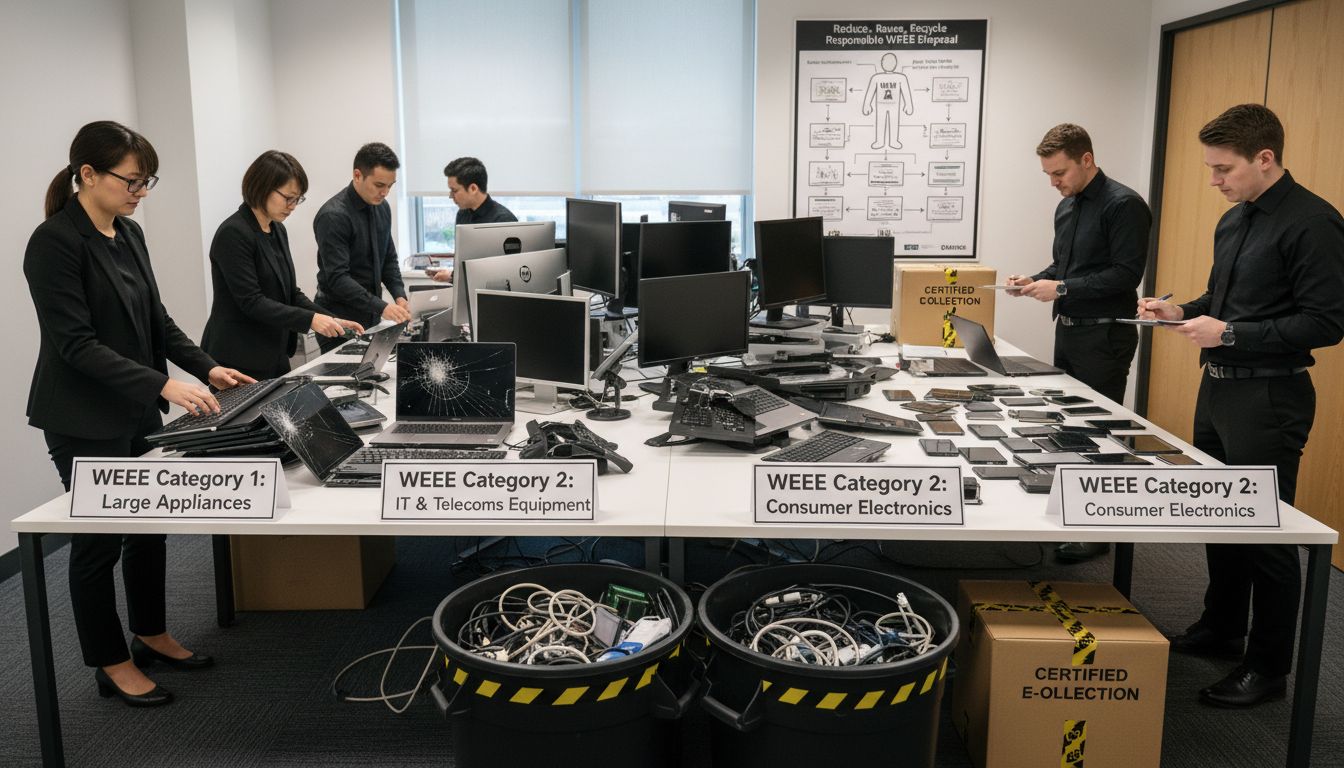 For comprehensive guidance on electrical waste disposal, check out our guide on WEEE waste for UK businesses.
Proper electrical waste management isn’t just an environmental responsibility—it’s a legal requirement. Companies must develop systematic approaches to tracking, collecting, and responsibly disposing of their electronic equipment, ensuring they comply with UK regulations while minimizing their ecological footprint.
Types Of Electrical Waste In The UK
Electrical waste encompasses a broad spectrum of discarded electronic and electrical equipment, each presenting unique challenges for responsible disposal and environmental management. From household appliances to industrial machinery, these items require careful categorization and handling to mitigate potential ecological risks.
According to gov.uk, the UK government classifies electrical waste into several distinct categories, providing a comprehensive framework for understanding and managing these materials. The primary categories include:
- Large Domestic Appliances: Refrigerators, washing machines, dishwashers
- Small Mixed WEEE: Toasters, kettles, vacuum cleaners
- Display Devices: Monitors, televisions, laptop screens
- IT and Telecommunications Equipment: Computers, printers, mobile phones
- Consumer Electronics: Audio and video equipment
- Lighting Equipment: Fluorescent tubes, LED fixtures
Understanding the detailed classifications from gov.uk reveals that many of these items contain hazardous substances like persistent organic pollutants (POPs), making their proper disposal critically important. For instance, large domestic appliances often contain complex components that require specialized recycling processes to extract valuable materials and prevent environmental contamination.
Businesses and organizations must recognize that electrical waste isn’t just a single, uniform category. Each type of electronic equipment demands unique handling techniques, from data destruction for IT equipment to careful chemical management for devices containing toxic materials. Our comprehensive guide on WEEE waste can help organizations navigate these complex disposal requirements, ensuring both environmental responsibility and legal compliance.
Environmental And Human Health Impacts
Electrical waste represents a critical environmental challenge that extends far beyond simple disposal, presenting profound risks to both ecological systems and human health. The complex materials contained within electronic devices can create long-lasting environmental damage when not managed responsibly.
According to gov.uk, improper disposal of electrical products can lead to toxic chemicals leaking into the environment, creating serious contamination risks. These hazardous substances can penetrate soil, groundwater, and ultimately enter the food chain, posing significant threats to ecosystems and human populations.
The potential health and environmental impacts of electrical waste include:
- Soil Contamination: Heavy metals like lead, mercury, and cadmium can render agricultural land unproductive
- Water Pollution: Toxic chemicals can seep into groundwater, affecting drinking water sources
- Air Quality Degradation: Burning electrical waste releases harmful chemical compounds
- Biodiversity Disruption: Toxic substances can harm plant and animal life
The Health and Safety Executive highlights that components in WEEE, such as fluids in cooling appliances, contain hazardous substances like ozone-depleting chemicals. These substances require specialized removal and treatment to prevent environmental contamination and mitigate potential health hazards.
Businesses must recognize that responsible electrical waste management isn’t just an environmental obligation—it’s a critical public health imperative. By implementing proper recycling and disposal strategies, organizations can significantly reduce the potential for long-term ecological and health risks. Our guide on hazardous waste risks provides comprehensive insights into managing these complex waste streams effectively and safely.
UK Laws Governing Electrical Waste Disposal
The regulatory landscape surrounding electrical waste disposal in the United Kingdom is complex and multifaceted, designed to protect both environmental integrity and public health. Businesses must navigate a sophisticated framework of legal requirements that dictate every aspect of electrical waste management.
According to gov.uk, the UK government has established stringent regulations for classifying and disposing of Waste Electrical and Electronic Equipment (WEEE). These regulations mandate precise identification of hazardous components and demand meticulous adherence to proper disposal procedures.
Key legal obligations for businesses include:
- Waste Classification: Accurately categorizing electrical waste based on its hazardous potential
- Proper Segregation: Separating different types of electrical waste to prevent cross-contamination
- Licensed Disposal: Using only authorized waste management facilities
- Detailed Record-Keeping: Maintaining comprehensive documentation of waste streams
Government guidance on importing and exporting WEEE further emphasizes the legal complexities, particularly regarding international waste shipments. Businesses must notify authorities about hazardous waste movements and comply with strict restrictions on waste exportation, ensuring that disposal practices meet both domestic and international regulatory standards.
Navigating these legal requirements can be challenging, which is why understanding the nuanced regulations is crucial for organizational compliance. Our guide on waste disposal legal requirements offers comprehensive insights to help businesses effectively manage their electrical waste within the bounds of UK law.
Best Practices For Responsible Waste Management
Responsible electrical waste management goes beyond mere compliance—it represents a critical environmental and ethical commitment for businesses across the United Kingdom. By implementing strategic approaches, organizations can significantly reduce their ecological footprint while contributing to a more sustainable future.
According to the City of London, proper recycling practices are fundamental to supporting the circular economy and preventing environmental harm. This approach transforms waste from a liability into a valuable resource, encouraging businesses to view electrical waste not as trash, but as a potential opportunity for material recovery and environmental protection.
Key best practices for responsible electrical waste management include:
- Comprehensive Inventory: Conduct regular audits of electrical equipment
- Prioritize Reuse: Explore repair and refurbishment options before disposal
- Segregate Waste: Separate different types of electrical waste to facilitate specialized recycling
- Partner Strategically: Work with certified waste management providers
- Employee Training: Develop internal protocols for proper waste handling
- Documentation: Maintain detailed records of waste streams and disposal methods
Government guidance emphasizes the critical importance of utilizing local collection points and ensuring hazardous substances are safely managed. By recovering valuable materials and minimizing environmental impact, businesses can transform waste management from a regulatory requirement into a proactive sustainability strategy.

Implementing these practices requires commitment and systematic approach. Our guide on recycling hazardous materials provides comprehensive insights to help businesses navigate the complexities of responsible electrical waste management, ensuring both environmental compliance and organizational excellence.
Take Control of Your Electrical Waste Today
The challenge of safely disposing of electrical waste in the UK is not just an environmental issue but a pressing legal and ethical responsibility. If you are concerned about hazardous substances, regulatory compliance, or the efficient recycling of WEEE waste, Venture Waste offers tailored solutions to ease this burden. Understand that improper handling can cause soil and water contamination and harm human health. Our expertise and services help you manage this complexity with confidence.

Act now to turn your electrical waste challenges into opportunities for sustainability. Explore our dedicated WEEE Waste Archives for valuable insights and connect with trusted experts on https://venturewaste.co.uk to arrange responsible waste collection. Discover how our comprehensive waste management services secure your compliance and protect the environment in every step. Don’t wait—make your waste work for a greener future today.
Frequently Asked Questions
What is electrical waste and why is it a concern?
Electrical waste, or WEEE (Waste Electrical and Electronic Equipment), includes discarded electronic devices that can harm the environment due to hazardous materials like lead and mercury. Proper disposal is essential to prevent ecological damage.
How should I dispose of my electrical waste?
Electrical waste should never be thrown in regular household rubbish. Instead, you should take it to designated collection points or recycling centers that specialize in electronic waste disposal, ensuring compliance with legal requirements.
What types of items are classified as electrical waste?
Electrical waste encompasses a range of items, including large domestic appliances like refrigerators, small electronics such as toasters, IT equipment like computers, display devices such as televisions, and lighting equipment like fluorescent tubes.
What are the environmental impacts of improper electrical waste disposal?
Improper disposal of electrical waste can lead to soil and water contamination as toxic chemicals leak into the environment, harming ecosystems and human health. This includes risks like heavy metal contamination, air pollution from burning waste, and disruption of local biodiversity.


Leave a Reply
Want to join the discussion?Feel free to contribute!