

Efficient Waste Collection Scheduling for Businesses
Waste management planning sounds straightforward for most UK businesses and yet many organisations still overspend by up to 30 percent simply due to outdated schedules and inefficient routines.
Most assume waste collection is just about setting a pickup date and moving on. The real transformation happens when you dig deeper, uncover hidden patterns in your bins, and tailor your system to match exactly how your business works.
Table of Contents
- Step 1: Assess Your Current Waste Management Needs
- Step 2: Research Waste Collection Services And Regulations
- Step 3: Create A Waste Collection Schedule Template
- Step 4: Coordinate With Waste Collection Providers
- Step 5: Implement And Communicate The Schedule
- Step 6: Review And Adjust The Schedule Regularly
Quick Summary
| Key Point | Explanation |
|---|---|
| 1. Conduct a thorough waste assessment | Assemble a cross-functional team to evaluate current waste management practices and identify areas for improvement. |
| 2. Research regulations and collection services | Understand local waste management laws and evaluate potential waste collection providers for compliance and capabilities. |
| 3. Create an adaptable waste collection schedule | Develop a comprehensive waste collection template that accommodates various waste types and allows for modifications. |
| 4. Communicate effectively with staff | Ensure all employees are informed about the new waste collection schedule through meetings, visual aids, and regular updates. |
| 5. Regularly review and adjust your schedule | Establish a routine evaluation of the waste management strategy to adapt to changes in regulations and business operations. |
Step 1: Assess Your Current Waste Management Needs
Effective waste collection scheduling begins with a comprehensive assessment of your current waste management practices. This critical first step helps businesses understand their existing waste generation patterns, identify inefficiencies, and develop a targeted waste reduction strategy. By conducting a thorough evaluation, organisations can streamline their waste management processes and potentially reduce operational costs.
To start your assessment, gather a cross-functional team that includes representatives from facilities management, operations, finance, and environmental sustainability. This diverse group will provide a holistic view of your waste generation across different departments. Begin by collecting detailed documentation of your current waste streams, including waste types, volumes, collection frequencies, and disposal methods. Review invoices from waste management providers, internal waste tracking records, and any existing waste management policies.
A comprehensive site walk-through is essential for gathering accurate information. During this process, observe waste generation points throughout your facility, noting how different departments handle waste disposal. Pay special attention to areas with high waste volumes, such as production floors, office spaces, and break rooms. Learn more about comprehensive waste assessment techniques to ensure you capture all relevant data.
Document your findings meticulously, creating a detailed waste profile that includes:
- Total waste volume by type (general waste, recyclables, hazardous materials)
- Current waste disposal methods
- Frequency of waste collection
- Existing waste management contracts
- Potential areas for waste reduction
Successful completion of this assessment means you have a clear, data-driven understanding of your organisation’s waste management landscape. The insights gained will directly inform your waste collection scheduling strategy, helping you develop a more efficient and sustainable approach to waste management.
Step 2: Research Waste Collection Services and Regulations
Researching waste collection services and regulations forms the backbone of developing an efficient waste management strategy. This critical step ensures your business remains compliant with local and national waste disposal requirements while identifying the most suitable waste management partners. Understanding the regulatory landscape helps prevent potential legal complications and environmental penalties.
Begin by investigating local waste management regulations specific to your region. Each local authority in the UK has distinct guidelines regarding waste disposal, recycling requirements, and collection protocols. Contact your local council or environmental agency to obtain detailed information about waste management standards applicable to businesses in your sector. Pay special attention to regulations concerning hazardous waste, electronic waste, and industry-specific disposal requirements.
Explore our comprehensive waste collection network to understand the range of services available for businesses. When evaluating potential waste collection providers, consider several critical factors beyond just cost. Assess their compliance certifications, environmental credentials, collection frequency options, and specialisation in your industry’s specific waste streams. Request detailed service proposals from multiple providers to compare their capabilities, ensuring they can handle the unique waste generation patterns identified in your initial assessment.
Key evaluation criteria for waste collection services should include:
Below is a summary table of key considerations when evaluating waste collection service providers. Use this as a quick reference to compare what to look for when selecting a suitable partner for your business.
| Evaluation Criterion | Description |
|---|---|
| Waste stream management capabilities | Ability to handle various waste types relevant to your industry |
| Pricing structures | Transparent fees and billing methods |
| Compliance credentials | Certifications meeting environmental and legal standards |
| Collection schedule flexibility | Options for custom or adjustable pickup times and frequencies |
| Reporting and tracking | Provision of detailed service reports and waste tracking records |
- Comprehensive waste stream management capabilities
- Transparent pricing structures
- Documented environmental compliance credentials
- Flexibility in collection scheduling
- Detailed reporting and waste tracking mechanisms
Successful completion of this research phase means you have a clear understanding of regulatory requirements and have identified potential waste collection partners who can meet your business’s specific needs. The insights gathered will directly inform your waste collection scheduling strategy, positioning your organisation for efficient and compliant waste management.
Step 3: Create a Waste Collection Schedule Template
Creating a comprehensive waste collection schedule template transforms your waste management approach from reactive to proactive. This crucial step translates the insights gathered from your initial assessment and research into a structured, actionable plan that ensures consistent and efficient waste disposal across your organisation. A well-designed template becomes your strategic roadmap for managing waste streams effectively.
Start by developing a digital spreadsheet or dedicated waste management software that captures all essential waste collection parameters. Include columns for waste type, estimated volume, collection frequency, designated disposal method, and responsible department. Consider creating separate sections for different waste streams such as general waste, recyclables, confidential documents, and hazardous materials. Explore our comprehensive waste management planning resources to refine your template design.
Ensure your template allows for dynamic tracking and modification. Build in flexibility to accommodate seasonal variations in waste generation, potential changes in regulatory requirements, and evolving business operations. Include sections for notes about special collection requirements, emergency disposal protocols, and compliance documentation. The template should serve as a living document that can be easily updated and shared across different departments.
Key template components should include:
- Precise waste stream categorisation
- Scheduled collection dates
- Estimated waste volumes
- Disposal method specifications
- Compliance tracking mechanisms
- Contact information for waste management providers
Successful completion of this step means you have a comprehensive, adaptable waste collection schedule template that provides clear guidance for your organisation’s waste management strategy. This template will become an invaluable tool for maintaining consistent, compliant, and efficient waste disposal practices.
The following table outlines the major steps involved in implementing a waste collection schedule, along with key outcomes expected from each phase. Refer to this for a structured overview of the process and what each step achieves.
| Step | Key Outcome |
|---|---|
| Assess current waste management needs | Detailed understanding of existing practices |
| Research collection services and regulations | Clear knowledge of compliance and provider fit |
| Create a waste collection schedule template | Comprehensive, adaptable scheduling tool |
| Coordinate with waste collection providers | Collaborative relationships and clear SLAs |
| Implement and communicate the schedule | Staff engagement and operational roll-out |
| Review and adjust the schedule regularly | Continual optimisation and compliance |
Step 4: Coordinate with Waste Collection Providers
Coordinating effectively with waste collection providers transforms your waste management strategy from theoretical planning to practical implementation. This critical step involves building a collaborative relationship with providers who can meet your specific waste disposal requirements while ensuring compliance and operational efficiency. Successful coordination hinges on clear communication, detailed expectations, and mutual understanding of your business’s unique waste management needs.
Initiate contact with your selected waste collection providers by scheduling a comprehensive consultation. During this meeting, present your detailed waste collection schedule template and discuss its specific requirements. Learn more about optimising waste collection networks to enhance your provider discussions. Demonstrate transparency about your waste streams, expected volumes, and any specialised disposal needs. Request a detailed service proposal that outlines collection frequencies, pricing structures, compliance mechanisms, and emergency response protocols. Negotiate flexible terms that accommodate potential fluctuations in waste generation and allow for periodic schedule adjustments.
Ensure that your chosen waste collection provider can deliver comprehensive documentation for each waste collection, including waste transfer notes, recycling certificates, and compliance records. These documents are crucial for maintaining regulatory compliance and tracking your organisation’s waste management performance. Establish clear communication channels for reporting issues, requesting schedule modifications, and receiving performance updates. Develop a robust feedback mechanism that allows both parties to review and refine the waste collection process continuously.
Key coordination elements should include:
- Detailed service level agreements
- Comprehensive waste tracking documentation
- Flexible collection scheduling
- Regular performance review meetings
- Emergency response contingency plans
Successful completion of this step means you have established a strong, collaborative relationship with a waste collection provider who understands and can effectively manage your organisation’s specific waste management requirements.
Step 5: Implement and Communicate the Schedule
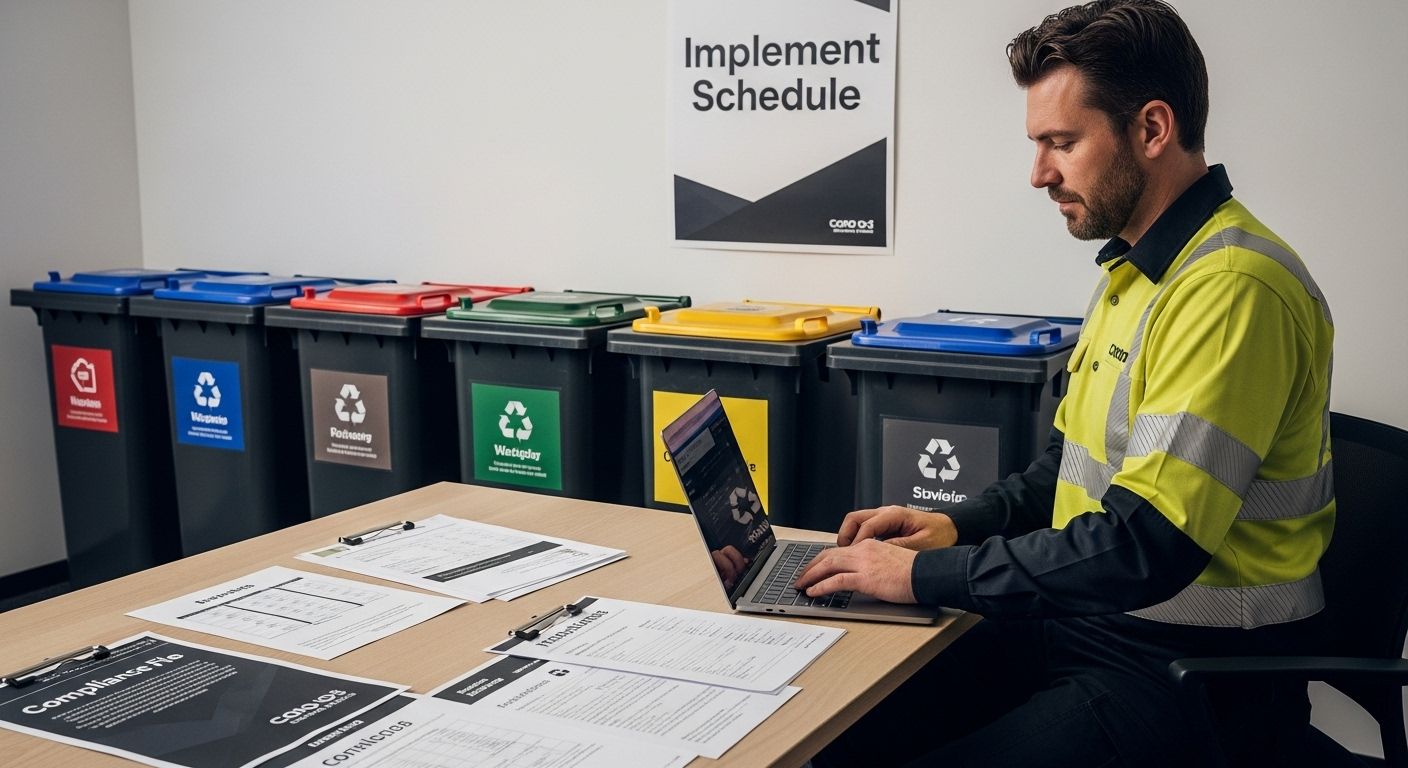
Implementing and communicating your waste collection schedule represents the critical transition point where meticulous planning transforms into operational reality. This step requires a strategic approach to ensure every team member understands their role in maintaining an efficient waste management system. The success of your schedule depends not just on technical precision, but on clear, consistent communication across your entire organisation.
Begin by hosting a comprehensive organisation-wide briefing that introduces the new waste collection schedule. This meeting should explain the rationale behind the schedule, highlight its environmental and financial benefits, and provide detailed guidance on waste segregation and disposal procedures. Discover strategies for effective waste management communication to ensure maximum engagement. Create visual aids such as colour-coded waste stream posters, easy-to-follow infographics, and digital reminders that can be displayed in key areas throughout your facility. These visual tools will serve as constant, gentle reminders of the new waste management protocols.
Develop a multi-channel communication strategy that reaches every employee, regardless of their role or department. Implement digital tools like shared calendars, mobile app notifications, and email reminders that provide real-time updates about upcoming waste collection dates. Designate waste management champions within each department who can provide local support, answer questions, and help troubleshoot any implementation challenges. Ensure these champions receive additional training to become effective advocates for your new waste collection system.
Key implementation elements should include:
- Comprehensive staff training sessions
- Visual communication materials
- Digital tracking and reminder systems
- Department-specific waste management champions
- Regular feedback and improvement mechanisms
Successful completion of this step means your entire organisation understands and is actively participating in the new waste collection schedule, creating a culture of environmental responsibility and operational efficiency.
Step 6: Review and Adjust the Schedule Regularly
Regular review and adjustment of your waste collection schedule transforms a static plan into a dynamic, responsive waste management strategy. This ongoing process ensures your approach remains aligned with changing business needs, regulatory requirements, and environmental best practices. Treating your waste collection schedule as a living document allows for continuous improvement and optimisation of your waste management efforts.
Establish a quarterly review process that systematically evaluates the performance of your waste collection schedule. Gather comprehensive data from waste transfer notes, collection frequency logs, and departmental feedback. Explore advanced waste management review techniques to enhance your evaluation process. During these reviews, analyse key performance indicators such as waste volume fluctuations, collection efficiency, compliance adherence, and associated costs. Look for patterns that might indicate opportunities for schedule refinement, such as seasonal variations in waste generation or changes in your business operations.
Create a structured approach to schedule adjustments that involves input from multiple stakeholders. Engage your waste collection provider, departmental waste management champions, and senior leadership in a collaborative review process. Develop a formal mechanism for tracking and implementing schedule modifications, ensuring that any changes are thoroughly documented and communicated across the organisation. Consider implementing digital tracking tools that can provide real-time insights into waste collection performance, enabling more agile and data-driven decision-making.
Key review and adjustment elements should include:
- Quarterly comprehensive performance reviews
- Data-driven analysis of waste collection metrics
- Collaborative modification process
- Digital performance tracking
- Continuous improvement documentation
Successful completion of this step means your waste collection schedule remains flexible, efficient, and perfectly tailored to your organisation’s evolving waste management needs, demonstrating a commitment to sustainable and responsible waste disposal practices.
Your Move to Hassle-Free Waste Collection Scheduling
Struggling to turn your waste collection plan into smooth action? If you have identified confusing regulations, rising costs, or inefficient collection routines as obstacles, you are not alone. Many UK businesses find waste management overwhelming, especially when balancing compliance, environmental responsibility, and operational efficiency. Our guidance on creating detailed waste schedules is only the first step.
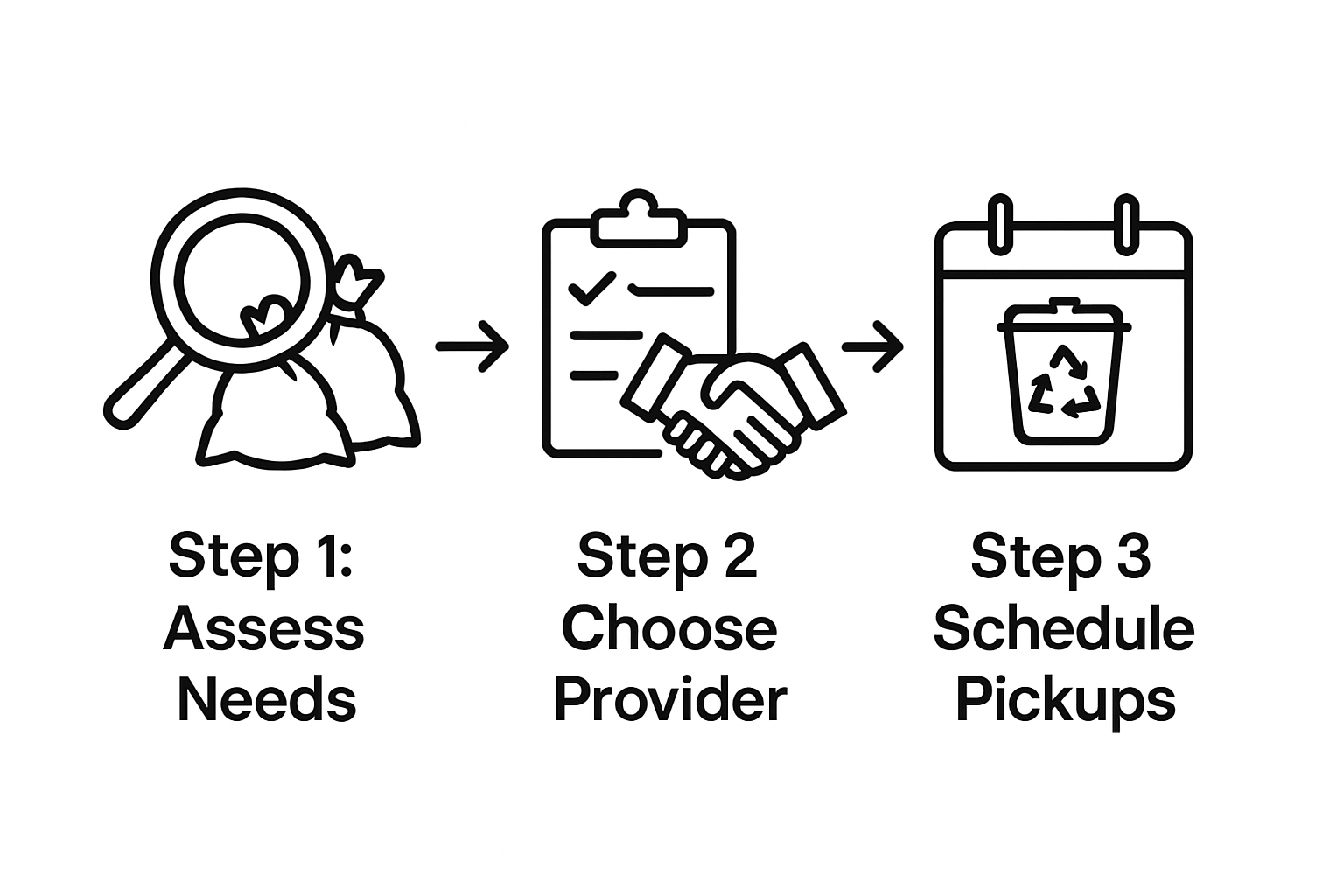
Explore how the Waste Collection Process in the UK for Businesses transforms these challenges, giving you a proven structure for managing every waste stream on time and with confidence.

Let Venture Waste Management streamline your operations. With our extensive collection network for UK businesses and a simple, three-step booking process at Venture Waste, we take scheduling, compliance, and clear communication off your checklist. Act today so your team can focus on what matters while your waste is managed by experts ready to support your business every step of the way.
Frequently Asked Questions
What are the first steps in assessing waste management needs for my business?
To begin assessing your waste management needs, gather a cross-functional team and review your current waste generation patterns. Collect documentation on waste types, volumes, collection frequencies, and disposal methods, and conduct a site walk-through to observe waste generation points.
How can I ensure my business complies with local waste management regulations?
Make sure to research local waste management regulations specific to your region by contacting your local council or environmental agency. Understand the legal requirements for your business, including guidelines for hazardous materials and recycling.
What should be included in a waste collection schedule template?
A comprehensive waste collection schedule template should include waste type categorisation, estimated volumes, collection frequencies, disposal methods, compliance tracking, and contact information for waste management providers.
How often should I review and adjust my waste collection schedule?
It is advisable to review your waste collection schedule quarterly. This allows you to evaluate performance metrics, identify patterns in waste generation, and make necessary adjustments to ensure the schedule remains efficient and compliant.


Leave a Reply
Want to join the discussion?Feel free to contribute!