

Effective waste management for healthcare in the UK 2026
Managing healthcare waste in the UK poses serious regulatory and financial challenges for facility managers. Non-compliance with HTM 07-01 and NHS Clinical Waste Strategy risks substantial fines, environmental harm, and operational disruption. This guide delivers practical, step-by-step strategies to achieve compliant, sustainable waste systems that reduce costs, meet October 2026 digital tracking mandates, and support NHS carbon reduction targets.
Table of Contents
- Understanding Healthcare Waste And Regulatory Requirements In The UK
- Prerequisites: What You Need Before Starting Effective Waste Management
- Step-By-Step Waste Segregation And Disposal Implementation
- Staff Training And Auditing For Compliance
- Troubleshooting Common Mistakes And Failure Points
- Sustainable Technologies And Alternatives To Traditional Waste Treatment
- Benefits And Expected Outcomes From Effective Waste Management
- Explore Expert Waste Management Solutions With Venture Waste
Key takeaways
| Point | Details |
|---|---|
| Understanding regulations | Compliance with HTM 07-01, NHS Clinical Waste Strategy, and HSE rules is mandatory for all UK healthcare facilities. |
| Segregation targets | Implementing NHS 20:20:60 segregation goals reduces overclassification, cuts disposal costs, and improves environmental outcomes. |
| Training and audits | Regular staff education and waste audits prevent common errors like mixing hazardous streams and improper labelling. |
| Sustainable technologies | On-site treatment methods such as pyrolysis and microwave systems cut carbon emissions up to 80% whilst lowering costs. |
| Financial benefits | Effective NHS waste strategy implementation saves approximately £11 million annually and reduces clinical waste carbon emissions by 30%. |
Understanding healthcare waste and regulatory requirements in the UK
Healthcare facilities across the UK face stringent legal obligations governing waste management. NHS clinical waste produces approximately 156,000 tonnes annually, creating significant environmental impact and disposal costs. Compliance failures result in enforcement actions, financial penalties, and reputational damage.
Multiple regulatory frameworks govern healthcare waste. Healthcare waste management must comply with infection control, environmental, transport, and health and safety legislation per HSE guidance. HTM 07-01 provides technical standards for safe handling and disposal. The NHS Clinical Waste Strategy sets ambitious sustainability targets whilst maintaining safety standards.
Healthcare waste falls into distinct categories requiring different handling protocols:
- Clinical waste: Infectious or potentially infectious materials posing infection risks
- Hazardous waste: Chemicals, pharmaceuticals, and cytotoxic substances requiring specialist treatment
- Offensive waste: Non-infectious materials unsuitable for landfill such as nappies and sanitary products
- Recyclable waste: Clean paper, cardboard, plastics, and metals that can re-enter supply chains
Facility managers hold duty of care obligations for proper waste classification, storage, transport, and disposal. Documentation must trace waste from generation through final treatment. Upcoming digital tracking mandates from October 2026 will strengthen accountability and transparency across the entire waste chain.
Prerequisites: what you need before starting effective waste management
Successful healthcare waste management requires specific infrastructure, trained personnel, and robust systems before operational implementation begins. Missing prerequisites create compliance gaps and increase risk exposure.
Essential equipment and infrastructure includes:
- Colour-coded segregation bins matching NHS waste stream classifications
- UN-approved sharps containers meeting transport safety standards
- Secure storage areas with controlled access and appropriate signage
- Spill kits and personal protective equipment for safe handling
- Compliant transport containers for off-site waste movement
Staffing and organisational readiness forms the foundation for compliance. Designate a qualified waste manager with authority to implement policies and oversee operations. All clinical and non-clinical staff handling waste require comprehensive training on segregation protocols, safety procedures, and legal requirements. Training programmes must include regular refreshers and competency assessments.
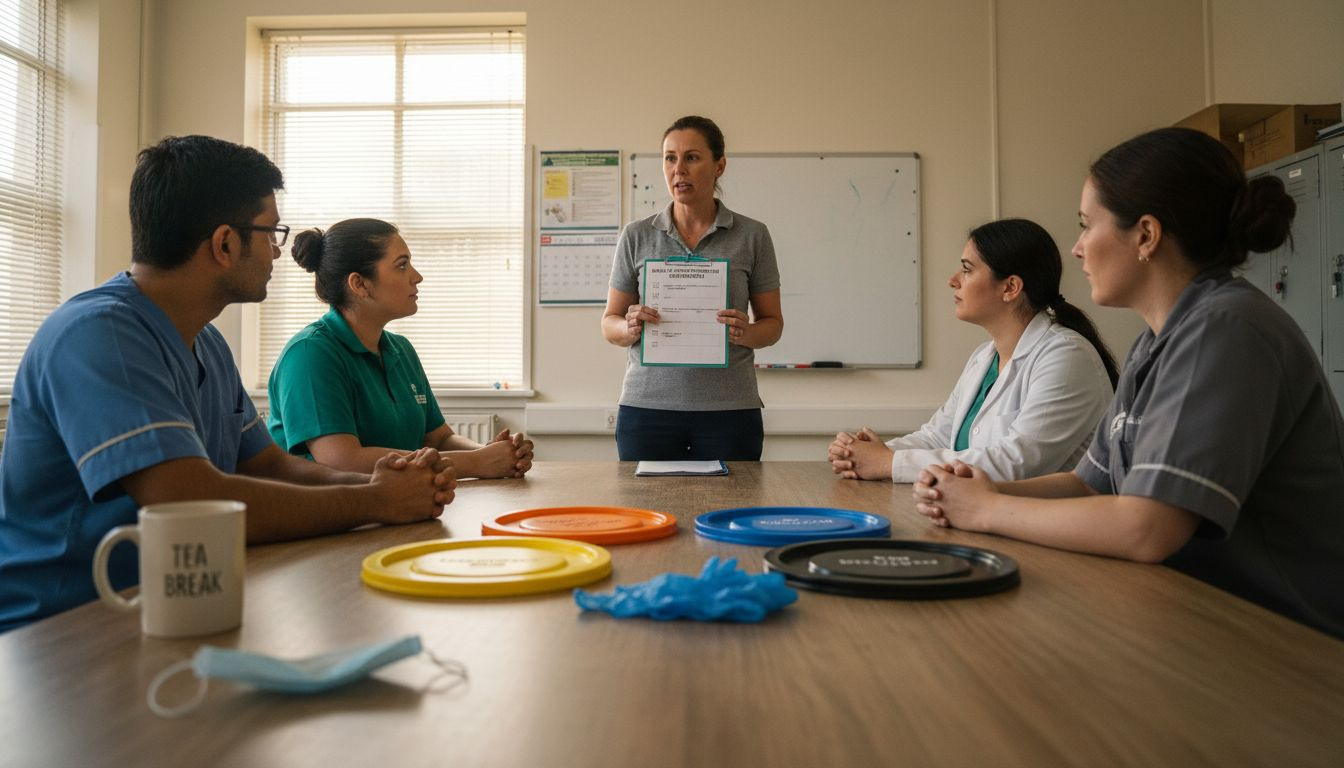
Digital infrastructure becomes legally mandatory soon. Mandatory digital waste tracking for hazardous waste becomes law in the UK from October 2026, requiring accurate, real-time monitoring of waste movements. Facilities must select and implement compliant tracking systems now to meet the deadline.
| Prerequisite category | Specific requirements | Compliance deadline |
|---|---|---|
| Physical infrastructure | Colour-coded bins, UN sharps containers, secure storage | Immediate |
| Personnel | Designated waste manager, trained staff | Immediate |
| Documentation | HTM 07-01 checklists, audit schedules, handling procedures | Immediate |
| Digital systems | Hazardous waste tracking software | October 2026 |
Pro Tip: Conduct a gap analysis against HTM 07-01 requirements before procurement to identify exactly what infrastructure and systems your facility lacks, preventing costly duplicate purchases or non-compliant equipment.
Schedule regular audits based on waste volumes. High-volume producers generating over 500 kilograms of hazardous waste annually should audit quarterly. Lower-volume facilities can extend to biannual reviews. Document all findings and corrective actions to demonstrate continuous improvement during regulatory inspections.
Establish clear waste segregation protocols with visual aids at point of generation. Signage should use simple language and colour coding to guide staff decisions instantly.
Step-by-step waste segregation and disposal implementation
Implementing compliant healthcare waste segregation requires systematic execution across assessment, infrastructure deployment, staff education, and operational monitoring. Follow this proven sequence to build robust systems.
-
Assess current waste streams: Conduct a comprehensive audit of all waste types generated across departments. Classify each stream according to NHS and HTM 07-01 categories. Document volumes, generation points, and current handling methods to establish your baseline.
-
Procure compliant infrastructure: Order colour-coded bins matching waste classifications: orange for infectious clinical waste, yellow for offensive non-hazardous waste, and appropriate recycling containers. Healthcare waste must be stored securely using specifically designed containers such as UN approved sharps and red community transport containers for safe transport and handling.
-
Deploy segregation infrastructure: Position bins at point of generation where staff make disposal decisions. Clearly label each container with acceptable waste types and visual examples. Ensure sharps containers are wall-mounted at appropriate heights in clinical areas.
-
Train all personnel: Deliver comprehensive training covering waste definitions, segregation protocols, safety procedures, and legal obligations. Use practical demonstrations with actual waste items to reinforce learning. Assess competency before allowing independent handling.
-
Implement NHS 20:20:60 targets: Aim for 20% clinical waste, 20% offensive waste, and 60% recyclable waste. This segregation ratio minimises hazardous waste volumes whilst maximising recycling and reducing disposal costs.
-
Adopt digital tracking: Select and implement a digital waste tracking system before the October 2026 deadline. Mandatory digital waste tracking for hazardous waste becomes law in the UK from October 2026, requiring accurate, real-time monitoring of waste movements. Train staff on system usage and data entry requirements.
-
Establish collection schedules: Coordinate with licensed waste carriers for regular collections matching your generation rates. Never allow waste to accumulate beyond storage capacity or time limits specified in your waste management plan.
| Waste stream | Container colour | Storage time limit | Treatment method |
|---|---|---|---|
| Infectious clinical | Orange | 72 hours | High-temperature incineration or alternative treatment |
| Offensive | Yellow/black stripe | 7 days | Energy recovery or landfill |
| Sharps | Yellow | 3 months when sealed | Incineration |
| Recyclables | Blue/clear | 14 days | Reprocessing facilities |
Pro Tip: Place small desktop sharps containers in consultation rooms and treatment areas to capture needles immediately at point of use, dramatically reducing needlestick injury risks and improving compliance.
Monitor segregation accuracy through regular spot checks and formal audits. Address errors immediately through retraining rather than punitive measures. Celebrate improvements to reinforce positive behaviours.
Partner with environmentally responsible disposal providers who demonstrate compliance with environmental permits and use sustainable treatment technologies. Verify carrier licences and treatment facility authorisations annually.
Maintain comprehensive records including waste transfer notes, consignment notes for hazardous waste, treatment certificates, and audit reports. Digital systems simplify record keeping whilst ensuring tracking compliance. Retain documentation for minimum six years to satisfy regulatory requirements.
Regularly review and refine your segregation processes based on audit findings, staff feedback, and changing clinical practices. Continuous improvement drives better outcomes over time.
Staff training and auditing for compliance
Comprehensive staff education and systematic auditing form the backbone of sustained healthcare waste compliance. Without ongoing reinforcement, even well-designed systems deteriorate through human error and changing personnel.
Effective training programmes address multiple audiences with tailored content. Clinical staff need detailed instruction on infectious waste identification and sharps safety. Portering and facilities teams require transport and storage protocols. Administrative staff must understand documentation requirements. Deliver role-specific training supplemented by general awareness sessions for all employees.
Designate waste champions within each department to provide peer support and answer daily questions. Champions should receive enhanced training and regular updates from the central waste management team. This distributed expertise model ensures help is always nearby when staff face segregation decisions.
Annual waste audits detect common failures such as incorrect segregation, overclassification, unsatisfactory storage, and improper labelling, which are critical to correct for compliance. High-risk areas like operating theatres, emergency departments, and laboratories warrant more frequent reviews.
Common audit findings include:
- Recyclable materials contaminating clinical waste streams
- Offensive waste incorrectly classified as infectious clinical waste
- Overfilled sharps containers exceeding fill lines
- Missing or illegible labels on waste containers
- Inadequate segregation training documentation
Pro Tip: Photograph non-compliance issues during audits and use these real examples in subsequent training sessions to demonstrate actual facility mistakes rather than generic scenarios, dramatically improving staff engagement and learning retention.
Address audit findings through corrective action plans with clear ownership, timelines, and verification steps. Track repeat issues to identify systemic problems requiring infrastructure changes or enhanced training. Share positive findings and improvements to maintain staff motivation.
Engage compliant waste service providers who can support your audit programme with expertise and benchmarking data from similar facilities. Many carriers offer audit services as part of collection contracts.
Document all training activities including attendance registers, training content, competency assessments, and refresher schedules. Regulatory inspectors routinely request training records to verify compliance. Digital learning management systems simplify administration whilst providing audit trails.
Troubleshooting common mistakes and failure points
Healthcare facilities repeatedly encounter predictable waste management failures. Understanding these patterns enables proactive prevention rather than reactive firefighting.
Incorrect segregation most commonly involves mixing hazardous waste with non-hazardous streams, leading to overclassification and increased disposal costs. Staff often classify offensive waste as clinical when unsure, driving unnecessary expense. Provide clear decision trees and accessible expert support to reduce uncertainty.
Overclassification wastes substantial funds. When offensive waste enters clinical waste streams, disposal costs increase threefold or more. Regular audits quantify overclassification rates and target improvement efforts. Facilities achieving NHS 20:20:60 targets demonstrate proper classification and realise significant savings.
Improper storage creates safety hazards and compliance violations. Common issues include:
- Waste storage areas lacking secure access controls
- Mixed waste types stored together without separation
- Storage exceeding temperature or time limits
- Inadequate spill containment in chemical waste areas
- Poor ventilation in waste holding areas
Labelling failures undermine traceability and compliance. Every waste container requires clear identification including waste type, generation point, and date. Missing or illegible labels prevent proper handling and treatment. Use pre-printed labels or durable markers that withstand handling and moisture.
Sharps safety remains a persistent challenge. Overfilled containers, inappropriate container types, and poor placement contribute to needlestick injuries. Mount sharps containers securely at optimal heights in all areas where sharps are used. Replace containers when two-thirds full, never at the marked fill line maximum.
Documentation gaps create regulatory exposure. Incomplete waste transfer notes, missing consignment documentation, or inadequate record retention invite enforcement action. Implement checklist systems to verify documentation completeness before waste leaves the facility.
Pro Tip: Install clear visual guides showing correct segregation examples directly above waste bins using laminated photos of common items from your facility rather than generic clip art, making decisions instant and reducing classification errors by up to 40%.
Address failures through root cause analysis rather than blaming individuals. Systemic issues require process redesign, not disciplinary action. Engage frontline staff in solution development to ensure practicality and buy-in.
Partner with experienced waste management providers who can identify issues during collections and provide expert guidance. Quality carriers act as compliance partners, not just service vendors.
Sustainable technologies and alternatives to traditional waste treatment
Innovative waste treatment technologies offer healthcare facilities sustainable alternatives to conventional high-temperature incineration whilst maintaining safety and compliance standards. These solutions dramatically reduce carbon emissions and operational costs.
Innovative on-site treatment technologies like pyrolysis, microwave treatment, and aerobic digesters reduce reliance on high-temperature incineration and cut carbon emissions by up to 80%. These systems treat clinical waste at the point of generation, eliminating transport emissions and external processing costs.
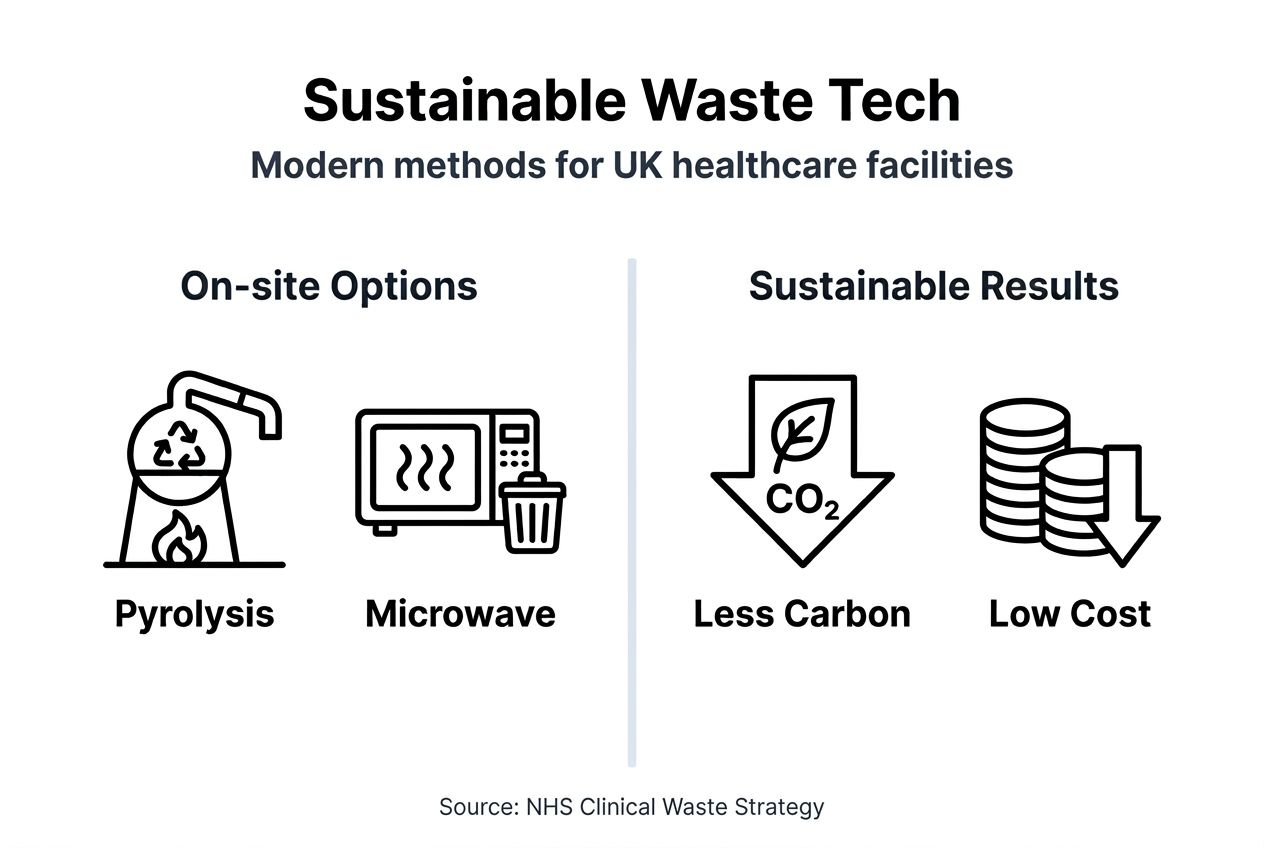
Pyrolysis systems use oxygen-free thermal decomposition to convert clinical waste into inert ash and recoverable energy. The controlled heating process destroys pathogens without combustion, producing minimal emissions compared to incineration. Capital costs are offset by reduced disposal fees and energy recovery benefits.
Microwave treatment exposes waste to high-frequency electromagnetic radiation, generating heat that sterilises materials. The process renders waste non-infectious, allowing disposal as ordinary municipal waste. Microwave systems suit medium-volume facilities seeking sustainable alternatives without major infrastructure investment.
Aerobic digestion employs biological processes to break down organic healthcare waste. Microorganisms consume waste materials under controlled conditions, producing compost and biogas. This solution works well for food waste and other biodegradable streams common in healthcare settings.
| Technology | Carbon reduction | Capital cost | Operating cost | Best suited for |
|---|---|---|---|---|
| Pyrolysis | 75-80% | High | Medium | Large hospitals |
| Microwave | 60-70% | Medium | Low | Medium facilities |
| Aerobic digestion | 50-60% | Low | Low | Organic waste streams |
| Traditional incineration | Baseline | Low | High | All waste types |
NHS framework agreements promote adoption of sustainable technologies through simplified procurement and proven supplier panels. The Sustainable Healthcare Recycling framework provides access to vetted providers offering compliant, environmentally responsible solutions.
Evaluate technology options against your specific waste profile, volumes, available space, and budget constraints. Larger facilities with high clinical waste volumes achieve faster return on investment from on-site treatment systems. Smaller facilities may benefit more from partnering with regional treatment centres using sustainable technologies.
Enhanced recycling programmes complement treatment technology upgrades. Many healthcare items previously discarded as clinical waste can be safely recycled after proper segregation and decontamination. Single-use device reprocessing programmes further reduce waste volumes whilst cutting procurement costs.
Emerging recycling innovations include advanced plastics sorting, chemical recycling of complex polymers, and artificial intelligence-powered waste characterisation. Early adopters gain competitive advantage whilst supporting NHS sustainability commitments.
Benefits and expected outcomes from effective waste management
Optimised healthcare waste management delivers substantial measurable benefits across financial performance, regulatory compliance, and environmental impact. These outcomes justify investment whilst supporting broader NHS sustainability goals.
Effective implementation of NHS Clinical Waste Strategy can yield a 30% reduction in carbon emissions from clinical waste and save £11 million annually in recurrent costs. These savings result from improved segregation, reduced overclassification, and adoption of sustainable treatment technologies.
Financial benefits extend beyond direct disposal cost reductions:
- Lower waste collection frequencies through better segregation
- Reduced regulatory compliance costs from fewer violations
- Decreased insurance premiums reflecting improved risk management
- Energy cost offsets from on-site treatment with energy recovery
- Avoided fines and enforcement action expenses
Compliance improvements reduce organisational risk and reputational exposure. Systematic waste management demonstrates due diligence during inspections. Comprehensive documentation protects against liability claims. Staff confidence increases when working within clear, compliant systems.
Environmental performance gains support NHS net zero commitments. Reduced incineration volumes lower greenhouse gas emissions. Enhanced recycling diverts materials from landfill whilst conserving natural resources. Sustainable treatment technologies minimise air and water pollution. These improvements strengthen corporate social responsibility credentials and community relationships.
Operational efficiency improves through standardised processes and clear accountability. Staff spend less time managing waste issues and compliance queries. Automated tracking systems reduce administrative burden. Predictable collection schedules optimise logistics planning.
Pro Tip: Publish quarterly waste performance metrics including segregation accuracy, recycling rates, and cost savings to maintain staff engagement and demonstrate tangible results from their compliance efforts, driving sustained behavioural change.
Patient and visitor perception benefits from visible environmental responsibility. Modern, well-managed waste systems contribute to positive facility impressions. Transparent sustainability reporting builds trust and community support.
Long-term strategic advantages include regulatory preparedness for emerging requirements, competitive positioning for sustainability-focused contracts, and organisational resilience against waste management disruptions. Facilities with mature waste programmes adapt quickly to regulatory changes like the October 2026 digital tracking mandate.
Consistent waste management practices across seasonal variations and operational changes maintain performance stability. Robust systems withstand staff turnover, facility expansions, and service changes without compliance lapses.
Explore expert waste management solutions with Venture Waste
Achieving compliant, sustainable healthcare waste management requires expert partners who understand complex regulatory requirements and operational realities. Venture Waste delivers tailored solutions supporting UK healthcare facilities from initial assessment through ongoing optimisation.
Our comprehensive hazardous waste collection services ensure safe, compliant handling of clinical, pharmaceutical, and chemical waste streams. We maintain all necessary environmental permits and transport licences whilst providing transparent documentation for your compliance records.

Expert guidance on clinical waste disposal requirements helps facilities navigate HTM 07-01, NHS Clinical Waste Strategy, and upcoming digital tracking mandates. Our team provides practical implementation support tailored to your specific operational needs and waste profile.
Access proven waste collection best practices developed through extensive healthcare sector experience. We help facilities achieve NHS 20:20:60 segregation targets, reduce disposal costs, and meet sustainability commitments whilst maintaining safety and compliance standards.
Frequently asked questions
What are the main types of healthcare waste and how should they be segregated?
Healthcare waste comprises four primary categories: clinical (infectious materials), hazardous (chemicals and pharmaceuticals), offensive (non-infectious but unsuitable for landfill), and recyclable waste. Segregate using colour-coded bins following NHS 20:20:60 targets with 20% clinical, 20% offensive, and 60% recyclable waste. Proper segregation prevents contamination, reduces disposal costs, and ensures regulatory compliance.
How does the new mandatory digital tracking affect healthcare waste management?
Digital tracking mandates require real-time electronic logging of all hazardous waste movements from generation through final treatment, effective October 2026. Facilities must implement compliant tracking systems, train staff on data entry protocols, and maintain accurate digital records accessible for regulatory inspections. Paper-based systems will no longer satisfy legal requirements after the implementation deadline.
What are the most common mistakes in healthcare waste management and how can they be avoided?
Frequent errors include mixing hazardous and non-hazardous streams, incomplete labelling, overfilled sharps containers, and inadequate storage security. Prevent these through comprehensive staff training with role-specific protocols, regular audits identifying non-compliance patterns, clear visual segregation guides at waste generation points, and partnerships with experienced compliant suppliers providing expert oversight.
How can sustainable waste treatment technologies benefit healthcare facilities?
Sustainable technologies including pyrolysis, microwave treatment, and aerobic digestion reduce carbon emissions by up to 80% compared to traditional incineration whilst lowering disposal costs. On-site systems eliminate transport emissions and external processing fees. These solutions support NHS net zero commitments, qualify for sustainability-focused contracts, and demonstrate environmental leadership. Advanced recycling practices further enhance environmental and financial performance.
Recommended
- Recycling Process in UK – 2026 Laws for Healthcare – Venture Waste
- Sustainable Waste Solutions – Enhancing UK Healthcare Compliance – Venture Waste
- Recycling Best Practices for UK Healthcare Facilities – Venture Waste
- Why Hire Waste Professionals for UK Healthcare – Venture Waste
- Rol van verpakking in afvalvermindering horeca 2026
- Systems Biology in Healthcare 2026: 70% Better Outcomes | Meelio Blog


Leave a Reply
Want to join the discussion?Feel free to contribute!