

Complete Guide to Domestic vs Commercial Waste UK
Did you know that businesses in England produced around 32.6 million tonnes of waste in 2023, more than double the volume from households? Clear rules separate domestic and commercial waste, and mix-ups can lead to costly fines or legal trouble. Knowing the difference is not just about sorting rubbish—it affects your legal duties, your costs, and how you help protect the environment across the UK.
Key Takeaways
| Point | Details |
|---|---|
| Understanding Waste Types | Distinction between domestic waste (household generated) and commercial waste (business generated) is crucial for compliance and management. |
| Legal Obligations | Waste producers must adhere to the Duty of Care, ensuring secure storage, proper documentation, and using authorized handlers. |
| Processing Differences | Domestic waste is typically collected kerbside, while commercial waste requires specialized transfer stations and processing methods. |
| Compliance Risks | Non-compliance with waste regulations can result in fines, legal repercussions, and increased operational costs for businesses. |
Table of Contents
- Defining Domestic And Commercial Waste UK
- Differences In Waste Types And Sources
- Legal Duties For Waste Producers UK Law
- Disposal, Processing, And Recycling Methods
- Compliance, Costs, And Common Pitfalls
Defining Domestic and Commercial Waste UK
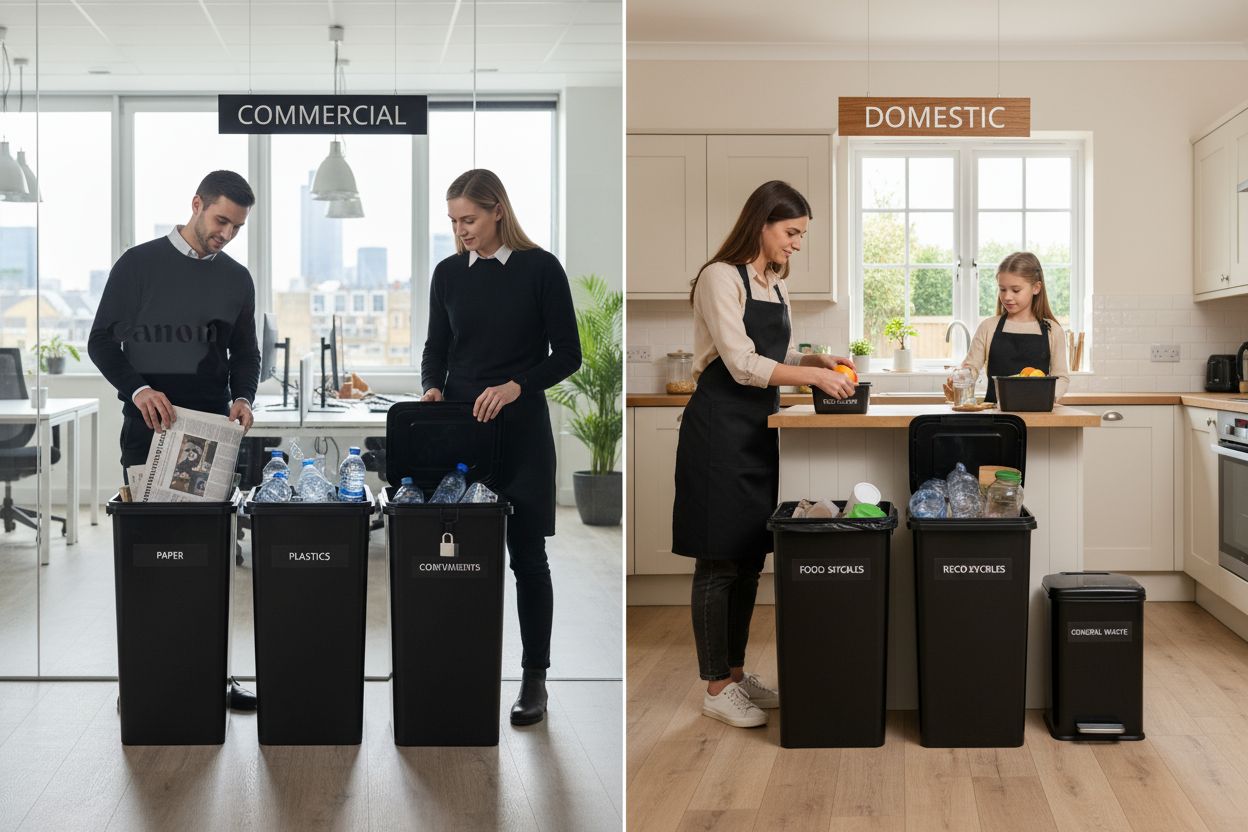
Understanding the difference between domestic waste and commercial waste in the United Kingdom is crucial for proper waste management and legal compliance. According to GOV.UK official guidance, these categories have distinct definitions that impact how waste must be handled and disposed of.
What is Domestic Waste?
Domestic waste is the waste generated by households during daily living activities. This includes typical items such as:
- Kitchen rubbish
- Garden waste
- Packaging materials
- Household recyclables
- General household items
What is Commercial Waste?
Commercial waste originates from business activities and encompasses a broader range of materials. According to GOV.UK, this includes waste generated from any commercial operation, even if part of that activity happens within a home. Commercial waste categories include:
- Office paper and packaging
- Manufacturing byproducts
- Construction debris
- Retail store waste
- Professional service waste
“Business waste is any waste that comes from a commercial activity, including waste generated from part of a home used for business purposes.” – GOV.UK Official Definition
The key distinction lies in the purpose of waste generation: domestic waste serves personal household needs, while commercial waste results from professional or business-related activities. Understanding these definitions helps businesses and homeowners segregate, manage, and dispose of their waste correctly, ensuring environmental compliance and efficient waste management practices in the UK.
If you want more details on waste management guidelines, our comprehensive guide provides additional insights for businesses navigating these regulations.
Differences in Waste Types and Sources
Commercial and household waste represent distinct categories with unique generation patterns and disposal requirements. Defra statistics reveal a significant disparity in waste volume, with commercial and industrial waste accounting for approximately 32.6 million tonnes in England in 2023, which represents about 21% of total UK waste, compared to household waste comprising roughly 14%.
Waste Generation Sources
The origins of waste differ dramatically between domestic and commercial sectors:
Domestic Waste Sources:
- Residential households
- Individual living spaces
- Personal consumption activities
Commercial Waste Sources:
- Businesses and industrial facilities
- Manufacturing plants
- Construction sites
- Offices and retail establishments
- Professional service providers
Processing and Sorting Mechanisms
Here’s a comparison of domestic and commercial waste in the UK:
| Aspect | Domestic Waste | Commercial Waste |
|---|---|---|
| Main Sources | Households Personal spaces |
Businesses Shops Industry |
| Typical Content | Kitchen rubbish Garden waste Packaging |
Office paper Construction debris Retail waste |
| Processing Location | Kerbside collection MRFs |
Transfer stations MRFs Special facilities |
| Legal Framework | Some exemptions General duty of care |
Stricter obligations Full duty of care |
| Volume (England 2023) | ~14% of UK waste | ~21% of UK waste (~32.6 million tonnes) |
| According to the Health and Safety Executive, the processing methods for these waste types also vary significantly: |
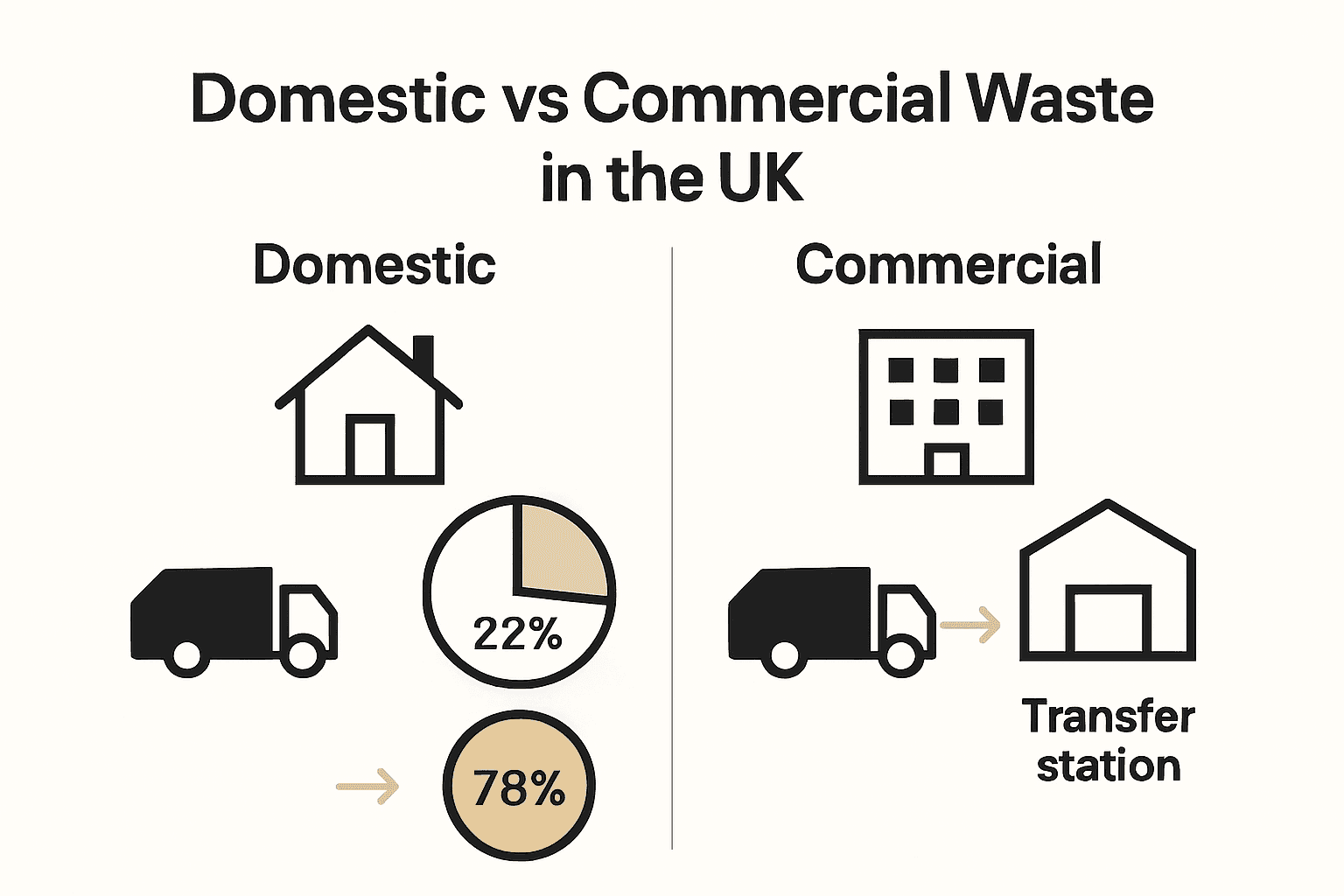
- Municipal (Household) Waste: Typically sorted at kerbside collection points or Materials Recovery Facilities (MRFs)
- Commercial/Industrial Waste: Processed through specialised transfer stations using mechanical and manual sorting techniques
“Different waste types require different processing strategies to ensure environmental compliance and resource efficiency.” – Waste Management Expert
Understanding these differences is crucial for businesses and homeowners to implement appropriate waste management strategies, reduce environmental impact, and comply with UK waste disposal regulations.
Learn more about waste sorting techniques in our comprehensive business guide to enhance your waste management approach.
Legal Duties for Waste Producers UK Law
Waste management in the United Kingdom involves specific legal responsibilities that apply to both domestic and commercial waste producers. The Environmental Protection Act 1990 establishes the Duty of Care, a critical legal framework governing waste management practices across the nation.
Key Legal Obligations
Under the Duty of Care, waste producers must adhere to several crucial requirements:
- Secure Waste Storage: Prevent waste from causing environmental harm
- Proper Transfer Documentation: Complete and maintain accurate waste transfer notes
- Authorized Waste Handlers: Transfer waste only to licensed waste management companies
- Waste Hierarchy Compliance: Prioritize waste reduction, reuse, and recycling
Specific Responsibilities
Scottish government guidance emphasizes that waste producers must:
- Separate recyclable materials
- Maintain waste security
- Document all waste transfers
- Ensure transfers occur only with authorized waste management providers
“Every waste producer has a legal responsibility to manage their waste responsibly and minimize environmental impact.”
While householders have some exemptions, businesses face more comprehensive obligations. Non-compliance can result in significant legal and financial penalties. Learn more about our general waste collection services to ensure you meet these critical legal requirements and maintain environmental compliance.
Disposal, Processing, and Recycling Methods
Waste processing in the United Kingdom involves sophisticated methods tailored to different waste categories. The Health and Safety Executive highlights that both household and commercial recyclable waste undergo comprehensive treatment at specialized facilities.
Household Waste Processing
Kerbside collection remains the primary disposal method for domestic waste. According to research, local authorities collect recyclables through:
- Separate collection bins
- Designated recycling boxes
- Scheduled collection routes
Typical household recyclables include:
- Glass
- Paper
- Plastics
- Food waste
Commercial and Industrial Waste Processing
Industrial waste management involves more complex sorting mechanisms:
- Initial sorting at transfer stations
- Manual and mechanical separation
- Specialized processing based on waste type
- Preparation for recycling or disposal
“Effective waste management requires tailored approaches for different waste streams.”
The HSE emphasizes that materials recovery facilities (MRFs) play a crucial role in processing mixed recyclables.
 These facilities use advanced techniques including:
- Mechanical sorting equipment
- Manual picking lines
- Automated separation technologies
Understanding these processes helps businesses and households contribute to more efficient waste management. Check out our comprehensive guide on WEEE waste processing to learn more about specialized waste handling techniques.
Compliance, Costs, and Common Pitfalls
Waste management compliance is not just a regulatory requirement but a critical business responsibility with significant financial and legal implications. Plymouth Council’s guidelines highlight the severe consequences of non-compliance, with potential penalties reaching up to £50,000 in fines and even potential imprisonment.
Common Compliance Mistakes
Businesses frequently encounter several critical pitfalls in waste management:
- Improper waste storage
- Using unauthorized waste carriers
- Inadequate documentation
- Incorrect waste segregation
- Neglecting waste hierarchy principles
Financial Implications
Non-compliance can result in substantial unexpected costs:
- Immediate fines up to £50,000
- Legal prosecution expenses
- Potential business reputation damage
- Increased future waste management costs
- Potential operational disruptions
“Ignorance of waste management regulations is not a legal defence.”
Proactive Compliance Strategies
To mitigate risks, businesses should:
- Maintain comprehensive waste transfer documentation
- Use only licensed waste carriers
- Implement robust waste segregation processes
- Conduct regular internal waste management audits
- Train staff on compliance requirements
Learn how to avoid business waste penalties and protect your organisation from potential financial and legal risks. Understanding and implementing proper waste management practices is not just about avoiding penalties—it’s about responsible environmental stewardship.
Make Compliance and Waste Worries a Thing of the Past
Are you struggling to keep up with the complex legal duties and separation requirements that come with handling domestic and commercial waste? The article highlighted the risk of heavy fines, the confusion over what counts as household or business waste, and the challenge of choosing the right disposal method. Many UK businesses and homeowners feel anxious about staying compliant and efficient as regulations tighten and improper handling can quickly lead to costly mistakes.
[Discover how our streamlined Waste Collection Process in the UK for Businesses 2025 can remove that uncertainty by guiding you through every legal and environmental obligation.]

Do not leave your compliance and peace of mind to chance. Partner with Venture Waste for responsible general and specialist collections, tailored guidance on waste handling, and expert support every step of the way. Visit our website at Venture Waste Management today and explore our wide-reaching waste collection network built for both households and businesses across the UK. Act now to ensure your waste is dealt with properly, securely and with total legal confidence.
Frequently Asked Questions
What is the difference between domestic and commercial waste?
Domestic waste is generated by households from everyday activities, while commercial waste originates from business operations and includes materials like office paper, construction debris, and manufacturing byproducts.
How should domestic waste be disposed of in the UK?
Domestic waste is typically collected through kerbside collection services, where households sort their waste into designated bins for recycling and general waste collection.
What are the legal responsibilities for businesses in managing commercial waste?
Businesses must adhere to the Duty of Care, which requires them to secure waste storage, provide proper transfer documentation, use authorized waste handlers, and comply with the waste hierarchy principles of reducing, reusing, and recycling waste.
What processing methods are used for commercial waste in the UK?
Commercial waste is usually processed at transfer stations, where it undergoes manual and mechanical sorting to prepare it for recycling or proper disposal, utilizing specialized facilities for different waste types.


Leave a Reply
Want to join the discussion?Feel free to contribute!