

Disposal of Chemical Containers for UK Facilities Managers
Managing hazardous chemical containers in a United Kingdom healthcare facility comes with complex challenges and strict legal duties. Every disposal decision carries implications for both regulatory compliance and environmental protection. Facilities managers must apply thorough waste classification and hazard assessment as outlined by the Environment Agency and Health and Safety Executive to avoid costly mistakes and safeguard their organisations. This step-by-step guide highlights practical actions for compliant, responsible disposal while reducing risk to people and the environment.
Table of Contents
- Step 1: Assess Container Classification And Hazards
- Step 2: Prepare Containers For Safe Transport
- Step 3: Label And Document Chemical Containers For Disposal
- Step 4: Arrange Licensed Waste Collection And Transport
- Step 5: Verify Regulatory Compliance And Final Disposal
Quick Summary
| Key Insight | Explanation |
|---|---|
| 1. Proper container classification is vital | Accurate classification prevents legal and environmental issues, ensuring safe disposal. |
| 2. Use appropriate packaging methods | Match container materials to chemical waste to avoid hazardous reactions during transport. |
| 3. Accurate labelling is essential | Proper labelling includes chemical identities and hazards to ensure safety and regulatory compliance. |
| 4. Verify carrier licensing thoroughly | Ensure selected waste carriers are licensed to avoid significant legal penalties and risks. |
| 5. Conduct complete final audits | A thorough final audit confirms compliance with regulations, mitigating potential liabilities and risks. |
Step 1: Assess container classification and hazards
Understanding how to correctly identify and classify chemical container hazards is fundamental for safe disposal. Facilities managers must methodically evaluate each container’s contents to ensure compliance with UK waste regulations.
The first critical task involves examining the physical and chemical properties of your waste containers. Begin by reviewing the safety data sheets (SDS) for each chemical, which provide comprehensive details about potential hazards. Waste Classification Technical Guidance from the Environment Agency offers definitive guidance on this process.
Key classification criteria include:
- Chemical composition
- Physical state (liquid, solid, gas)
- Potential reactivity
- Toxicity levels
- Environmental impact
For precise hazard assessment, facilities managers should systematically document:
- Exact chemical name
- Concentration percentages
- Potential interaction risks
- Temperature and pressure sensitivities
Incorrect classification can lead to significant legal and environmental consequences.
Careful documentation and professional assessment are crucial when determining waste container hazards. Understanding these nuances helps prevent potential environmental contamination and ensures regulatory compliance.
Expert recommendation: Always consult professional hazardous waste specialists when encountering complex or uncertain chemical disposal scenarios.
The following table summarises the main risks and benefits of accurate chemical waste container classification:
| Aspect | Accurate Classification | Inaccurate Classification |
|---|---|---|
| Environmental impact | Prevents contamination | Risk of pollution and harm |
| Legal consequences | Ensures regulatory compliance | Fines and legal liability |
| Worker and public safety | Reduces exposure to hazards | Increased accident risk |
| Waste management costs | Streamlines disposal processes | Higher costs and remediation |
Step 2: Prepare containers for safe transport
Preparing chemical containers for safe transport requires meticulous attention to detail and strict adherence to UK safety regulations. Facilities managers must implement comprehensive protocols to ensure chemical waste is packaged securely and transported without risk.

Start by selecting appropriate packaging and containment methods that match your specific chemical waste characteristics. This involves carefully matching container materials with chemical compositions to prevent dangerous reactions or degradation during transport.
Key preparation steps include:
- Inspect containers for structural integrity
- Clean and dry containers thoroughly
- Verify seal quality and leak prevention
- Label containers with precise hazard information
Specific packaging requirements involve:
- Using chemically resistant containers
- Ensuring airtight seals
- Applying standardised hazard warning labels
- Documenting chemical contents
Improper container preparation can result in significant environmental and safety risks.
Understanding the unique properties of each chemical waste stream is crucial. Different substances require tailored packaging approaches to maintain safety throughout transportation.
Expert recommendation: Conduct a final comprehensive safety check before transporting any chemical waste containers to mitigate potential transportation hazards.
Step 3: Label and document chemical containers for disposal
Legally documenting and labelling chemical waste containers is a critical responsibility for UK facilities managers. Precise documentation ensures safety, regulatory compliance, and creates a clear audit trail for hazardous material disposal.
Begin by understanding the chemical classification and labelling requirements that govern waste documentation. Each container must display comprehensive information about its chemical contents, potential hazards, and specific disposal instructions.
Critical labelling components include:
- Chemical name in full
- UN hazard classification number
- Concentration percentages
- Physical state of waste
- Potential reactivity indicators
Documentation process requires:
- Complete detailed safety data sheets
- Generate accurate consignment notes
- Record precise waste categorisation
- Maintain traceability records
Incomplete or inaccurate labelling can result in significant legal and environmental penalties.
Facilities managers must treat documentation as more than bureaucratic paperwork. It represents a crucial safety mechanism protecting workers, transportation personnel, and the broader environment.
Expert recommendation: Double-check all chemical container labels and documentation before final disposal to prevent potential regulatory breaches.
Step 4: Arrange licensed waste collection and transport
Arranging licensed waste collection represents a critical legal and environmental responsibility for UK facilities managers. Selecting an appropriate waste carrier requires meticulous verification and compliance with stringent regulatory standards.
Begin by verifying waste carrier licensing requirements to ensure your selected transporter meets all legal obligations. This involves conducting comprehensive checks of the carrier’s environmental permits, transportation credentials, and waste management authorisations.
Essential verification steps include:
- Check carrier’s waste licence number
- Confirm environmental agency registration
- Review transport documentation
- Validate waste disposal certificates
Documentation preparation requires:
- Prepare detailed consignment notes
- Compile comprehensive safety data sheets
- Record precise waste classification details
- Maintain traceability documentation
Selecting an unlicensed waste carrier can result in substantial legal penalties and environmental risks.
Facilities managers must approach waste transportation as a complex regulatory process requiring precision, documentation, and strict adherence to environmental protection guidelines.
Expert recommendation: Request and retain copies of all waste carrier documentation for a minimum of three years to demonstrate regulatory compliance.
Step 5: Verify regulatory compliance and final disposal
The final stage of chemical container disposal demands rigorous verification of regulatory compliance and confirmation that all legal requirements have been meticulously fulfilled. Facilities managers must conduct a comprehensive final audit to ensure complete adherence to environmental standards.
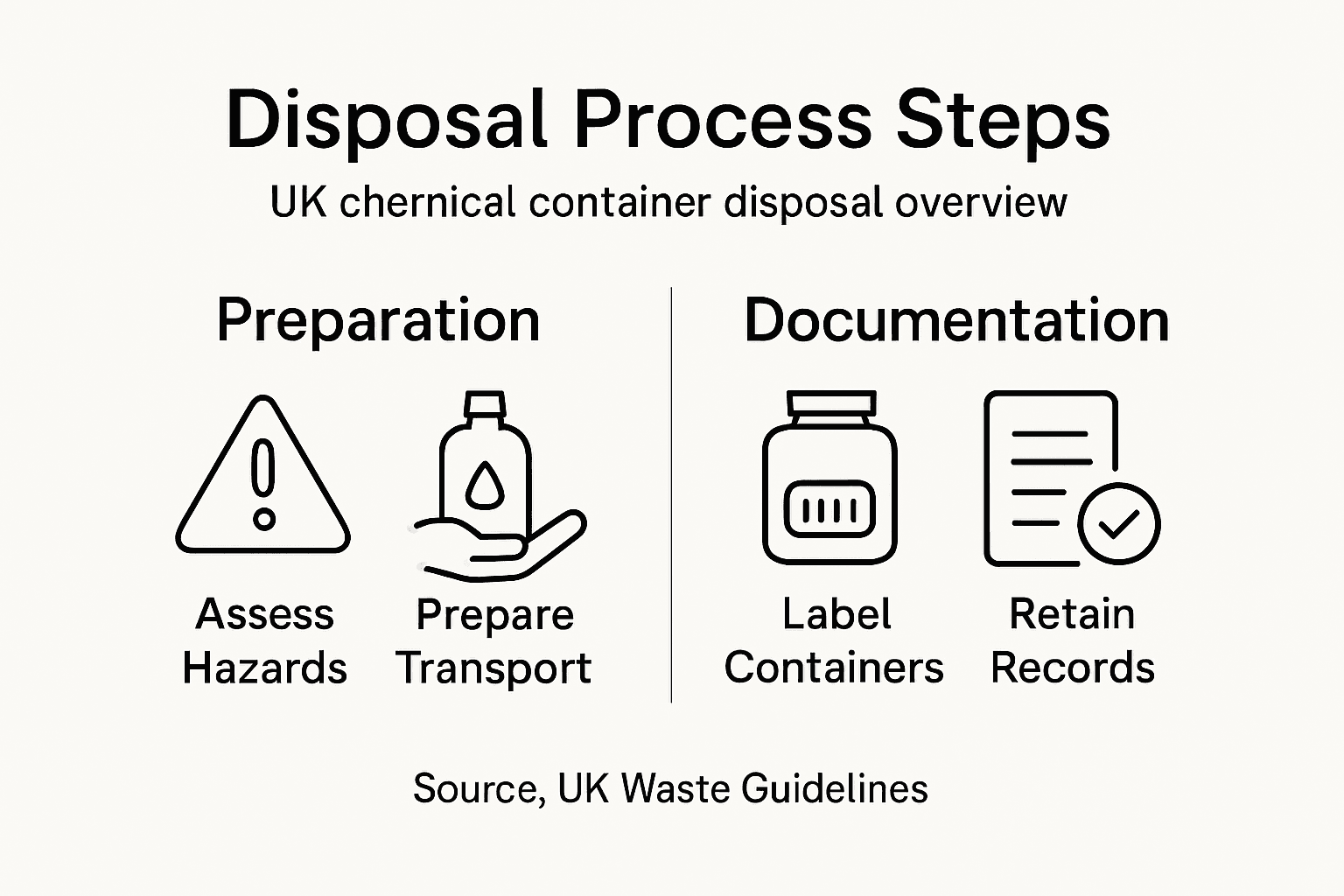
Begin by reviewing detailed waste disposal regulations to confirm your disposal process meets all statutory requirements. This involves cross-referencing your documentation, transportation records, and disposal certificates against current UK environmental legislation.
Key compliance verification elements include:
- Validate disposal facility credentials
- Check waste tracking documentation
- Review environmental permit compliance
- Confirm final destruction/treatment method
Final verification process requires:
- Audit all generated documentation
- Verify carrier and disposal site licences
- Cross-reference waste classification records
- Retain comprehensive disposal evidence
Incomplete compliance verification can result in significant legal and financial penalties.
The disposal process is not complete until every regulatory requirement has been methodically checked and documented. This final step transforms a potential environmental liability into a professionally managed waste management procedure.
Expert recommendation: Create a digital archive of all disposal documentation to provide a robust audit trail for potential future regulatory inspections.
This table provides a comparison of essential documentation and audit requirements at each disposal stage:
| Disposal Stage | Core Documentation Needed | Audit Focus |
|---|---|---|
| Initial Labelling | Safety data sheets, container labels | Chemical identity and hazards |
| Waste Transport | Consignment notes, carrier permits | Transporter licensing |
| Final Disposal | Disposal certificates, tracking logs | Full traceability and compliance |
Streamline Your Chemical Container Disposal with Expert Hazardous Waste Services
Managing hazardous chemical containers demands precision in classification, labelling and safe transport to comply with UK regulations. Facilities managers face the challenge of avoiding costly fines, environmental damage and safety risks while ensuring every step meets legal requirements. At Venture Waste, we understand these critical needs and offer tailored hazardous waste solutions that simplify your disposal process with total compliance and peace of mind.

Take control of your chemical waste management today by partnering with Venture Waste. Benefit from our streamlined three-step booking process at https://venturewaste.co.uk and access expert guidance, licensed waste collection and thorough documentation services that protect your facility and the environment. Explore our range of compliant hazardous waste handling options and secure your facility’s safety and legal standing now.
Frequently Asked Questions
What is the first step for disposing of chemical containers?
Understanding the classification and hazards of chemical containers is the first step. Assess each container’s contents by reviewing the safety data sheets to ensure compliance with waste regulations.
How can I prepare chemical containers for safe transport?
Start by ensuring that all chemical containers are structurally sound, cleaned, and securely sealed. Use appropriate packaging based on the chemical properties to minimise risks during transport.
What information is needed for labelling chemical waste containers?
Each container must be labelled with the full chemical name, UN hazard classification number, concentration percentages, physical state, and potential reactivity indicators. Ensure that all labels are clear and comply with legal requirements.
How do I verify the compliance of a waste carrier?
Verify that the waste carrier holds the necessary waste licence and check their environmental permits and transportation credentials. This ensures that you are using a compliant carrier and protects your facility from legal issues.
What steps should I take to ensure final compliance after disposal?
Conduct a thorough audit of all documentation related to disposal, including waste tracking records and disposal certificates. Confirm that all regulatory requirements have been met to avoid potential penalties.
How long should I retain documentation related to chemical waste disposal?
It is advisable to retain copies of all waste carrier documentation for a minimum of three years. This creates a robust audit trail and demonstrates compliance during potential regulatory inspections.


Leave a Reply
Want to join the discussion?Feel free to contribute!