

Confidential Waste Legislation: What UK Businesses Must Know
Confidential waste laws in the UK are tighter than ever and businesses are under real pressure to get it right. Many think a quick shred or binning the paperwork does the job. Not even close. Fines now reach up to £17.5 million for serious breaches so a single slip can cost more than most firms ever imagine.
Table of Contents
- Understanding Confidential Waste Legislation In The UK
- Key Legal Requirements For Businesses
- Industries And Waste Types Covered By The Law
- Best Practices For Compliance And Secure Disposal
Quick Summary
| Takeaway | Explanation |
|---|---|
| Understand legal obligations | UK businesses must comply with the Data Protection Act and UK GDPR for managing confidential waste. |
| Implement secure disposal methods | Use locked containers and certified services for the destruction of confidential materials to prevent unauthorized access. |
| Maintain thorough records | Detailed documentation of all disposal processes is essential for compliance and accountability. |
| Recognise sector-specific requirements | Different industries have unique confidential waste regulations that must be followed to ensure legal adherence. |
| Train staff effectively | Regular training on handling confidential materials is crucial to mitigate operational risks and maintain compliance. |
Understanding Confidential Waste Legislation in the UK
Confidential waste legislation in the United Kingdom represents a critical framework for businesses to protect sensitive information and ensure responsible waste management. The legal landscape surrounding confidential waste disposal is complex, involving multiple regulations that mandate how organisations handle potentially sensitive documents and materials.
The Legal Foundation of Confidential Waste Management
The cornerstone of confidential waste legislation in the UK is primarily governed by the Data Protection Act 2018 and the UK General Data Protection Regulation (UK GDPR). These regulations establish strict guidelines for how businesses must handle and dispose of documents containing personal or sensitive information. Learn more about our comprehensive guide on office confidential waste policies.
Businesses operating in Newcastle, Durham, and throughout the North East must adhere to these regulations, which require organisations to implement secure destruction processes for confidential documents. The legislation mandates that any materials containing personal data, financial records, or sensitive business information must be destroyed in a manner that prevents potential reconstruction or unauthorized access.
Compliance Requirements for Businesses
According to government guidelines, businesses are legally obligated to minimize waste and ensure proper disposal of confidential materials. This includes several critical requirements:
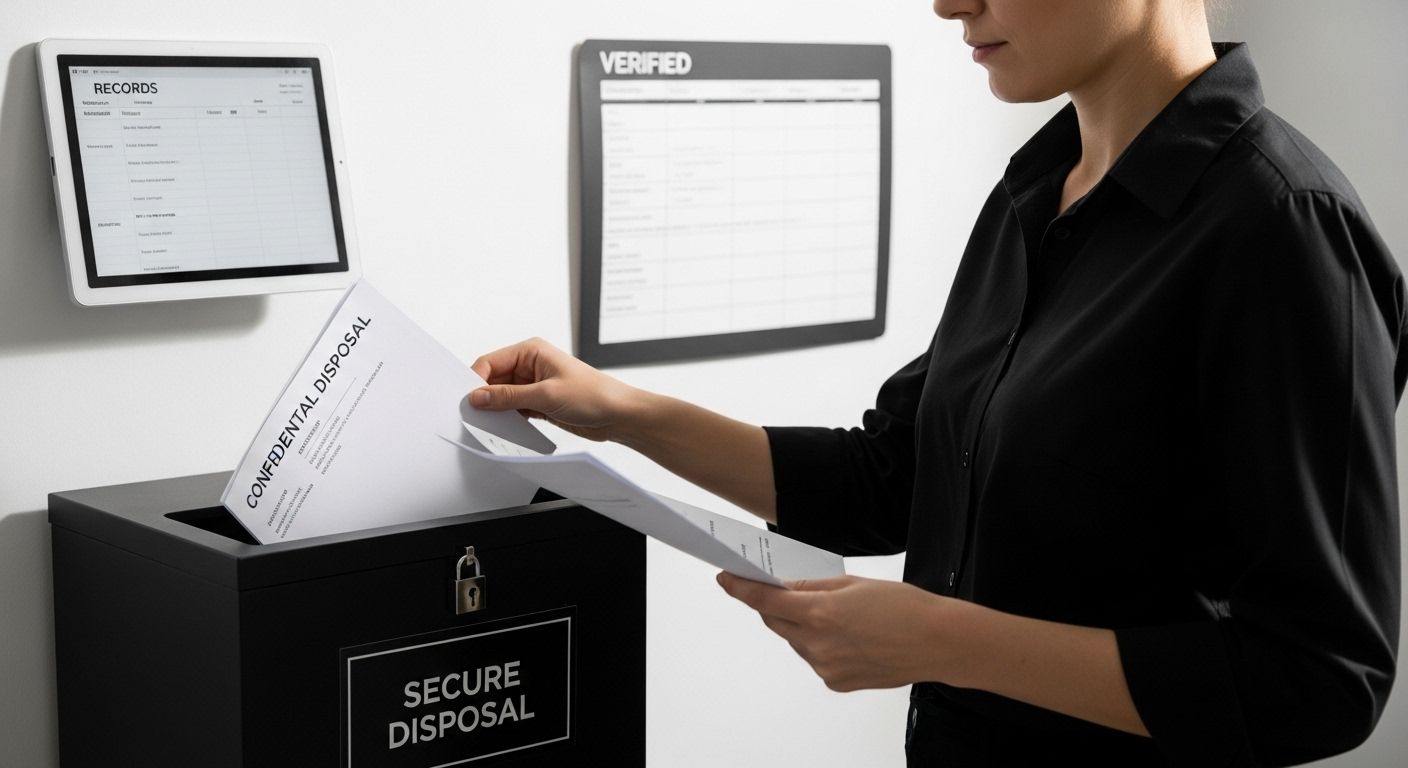
- Secure Collection: Implement locked confidential waste containers that prevent unauthorized access
- Verified Destruction: Maintain detailed records of document destruction
- Professional Disposal: Use certified waste management services specializing in confidential waste handling
The Separation of Waste (England) Regulations 2025 further emphasize the importance of proper waste management. Research from the UK government indicates that businesses must now carefully segregate different types of waste, including confidential documents, to ensure environmental compliance and information security.
Specifically for businesses in urban centres like Newcastle and Durham, this means developing robust waste management strategies that go beyond simple document shredding. Organisations must now consider the entire lifecycle of confidential waste, from initial collection to final destruction, ensuring that every step meets legal and ethical standards.
Non-compliance can result in significant penalties, including substantial financial fines and potential legal consequences. The Information Commissioner’s Office (ICO) has the authority to investigate and penalize organisations that fail to protect sensitive information adequately.
The following table summarises some of the key legal requirements for confidential waste compliance, helping businesses quickly identify their obligations under UK law.
| Legal Requirement | Description |
|---|---|
| Secure Collection | Use locked confidential waste containers to prevent unauthorised access |
| Verified Destruction | Maintain detailed records of document destruction |
| Professional Disposal | Employ certified waste management services specialising in confidential waste |
| Waste Segregation | Separate confidential materials from other waste types in line with the Separation of Waste regs |
| Staff Training | Regularly train employees on handling and disposing of confidential material |
| Systematic Documentation | Keep thorough records of all disposal processes for auditing and compliance |
| Secure Storage | Restrict access to confidential materials prior to destruction |
Businesses must recognize that confidential waste legislation is not just a legal requirement but a critical component of maintaining trust, protecting sensitive information, and demonstrating professional responsibility in an increasingly data-driven world.
Key Legal Requirements for Businesses
Confidential waste management involves complex legal obligations that UK businesses must meticulously understand and implement. The regulatory landscape demands comprehensive strategies to protect sensitive information while ensuring environmental and data protection compliance.
Comprehensive Data Protection Standards
Businesses must adhere to stringent data protection standards outlined in the Data Protection Act 2018 and UK GDPR. Learn more about secure document handling practices, which require organisations to implement robust mechanisms for handling confidential waste.
According to UK government data protection guidelines, businesses are legally obligated to:
- Secure Storage: Maintain locked and restricted access to confidential document storage areas
- Systematic Documentation: Keep detailed records of all confidential waste disposal processes
- Professional Destruction: Engage certified waste management services specializing in secure document destruction
Regulatory Compliance and Penalties
The Information Commissioner’s Office (ICO) enforces strict regulations regarding confidential waste management. Research from the ICO indicates that businesses failing to implement adequate confidential waste procedures can face significant financial penalties.
In regions like Newcastle, Durham, and across the North East, businesses must develop comprehensive waste management strategies that go beyond basic document shredding. This involves understanding the entire lifecycle of confidential materials, from initial collection to final secure destruction.
Specifically, the Separation of Waste (England) Regulations 2025 mandate precise waste segregation protocols. Government research emphasizes that businesses must carefully categorize different waste types, including confidential documents, to maintain legal and environmental compliance.
Non-compliance can result in severe consequences, including:
- Substantial financial fines
- Potential legal investigations
- Reputational damage
- Potential criminal prosecution for serious data protection breaches
Businesses must recognize that confidential waste legislation is not merely a regulatory checkbox but a critical component of maintaining organisational integrity, protecting sensitive information, and demonstrating professional responsibility in an increasingly data-driven business environment.
Industries and Waste Types Covered by the Law
Confidential waste legislation in the United Kingdom encompasses a broad spectrum of industries and waste types, recognizing the diverse and complex nature of sensitive information management across different sectors. Understanding the specific requirements for various industries is crucial for comprehensive compliance and effective waste disposal strategies.
Sector-Specific Waste Management Requirements
Learn more about waste management classifications for different business environments. The legal framework applies to multiple industries, each with unique confidential waste challenges:

- Healthcare Sector: Medical facilities must adhere to stringent regulations for disposing of patient records, medical charts, and sensitive healthcare documentation
- Financial Services: Banks, insurance companies, and financial institutions require robust destruction protocols for financial statements, customer information, and transaction records
- Legal Firms: Law practices must implement secure disposal methods for client documents, case files, and confidential legal correspondence
- Educational Institutions: Schools and universities must protect student records, academic documents, and administrative paperwork
According to government waste classification guidance, businesses must carefully categorize and handle various waste types to ensure legal compliance and environmental responsibility.
Hazardous and Sensitive Waste Categories
The UK government provides detailed guidelines for identifying and managing different waste types. Research from official sources identifies several critical waste categories that require special attention:
- Hazardous waste (including chemicals, batteries, and electronic equipment)
- Confidential paper documents
- Electronic data storage devices
- Medical and pharmaceutical waste
- Financial and legal documentation
Businesses in Newcastle, Durham, and across the North East must pay particular attention to the nuanced requirements for different waste types. The Waste Classification Technical Guidance (WM3) provides comprehensive instructions for assessing and classifying waste, ensuring that organizations can accurately identify and manage their confidential waste streams.
Non-compliance can result in significant legal and financial consequences. The regulations are designed to protect sensitive information, prevent data breaches, and ensure environmental responsibility across various industries.
Key considerations for businesses include:
The table below lists sectors that must comply with confidential waste legislation, alongside the specific types of waste they commonly manage and key disposal considerations.
| Sector | Confidential Waste Types | Disposal Considerations |
|---|---|---|
| Healthcare | Patient records, medical charts | Strict protocols, secure shredding/incineration |
| Financial Services | Bank statements, customer information | Certified document destruction |
| Legal Firms | Client files, legal correspondence | Confidential shredding, documented processes |
| Educational Institutions | Student records, academic paperwork | Restricted staff access, data retention policy |
| All Businesses | Paper docs, digital data, legal docs | Secure containers, audit trails |
- Implementing industry-specific waste management protocols
- Investing in secure destruction technologies
- Training staff on confidential waste handling procedures
- Maintaining detailed documentation of waste disposal processes
Ultimately, confidential waste legislation represents a critical framework for protecting sensitive information across diverse business environments. Organizations must develop comprehensive strategies that address the unique challenges of their specific industry while maintaining legal compliance and information security.
Best Practices for Compliance and Secure Disposal
Businesses across the United Kingdom must adopt comprehensive strategies to ensure secure confidential waste disposal and maintain rigorous compliance with data protection regulations. Implementing robust practices is crucial for mitigating risks associated with information breaches and potential legal consequences.
Developing a Comprehensive Confidential Waste Management Strategy
Explore our guide to confidential information security for comprehensive insights into protecting sensitive data. Organisations must develop a systematic approach to confidential waste management that encompasses multiple critical elements:
- Risk Assessment: Conduct thorough evaluations of potential information vulnerability points
- Staff Training: Implement mandatory training programmes on confidential waste handling
- Document Classification: Create clear protocols for categorizing and handling different types of sensitive documents
- Secure Storage: Establish restricted access areas for confidential materials before destruction
According to UK government data protection guidelines, businesses must implement multi-layered security approaches that address both physical and digital confidential waste management.
Technological and Physical Disposal Methods
Modern confidential waste disposal requires a sophisticated approach that combines technological solutions with physical destruction techniques. Research from cybersecurity experts highlights several critical practices:
- Utilising cross-cut industrial shredders capable of destroying documents into microscopic fragments
- Implementing secure digital data wiping protocols for electronic storage devices
- Deploying certified destruction services with comprehensive chain of custody documentation
- Using locked consoles and secure collection containers for confidential waste
Businesses in regions like Newcastle, Durham, and across the North East must invest in advanced destruction technologies that meet stringent regulatory standards. This includes professional-grade equipment capable of rendering both paper and digital media completely unrecoverable.
Key considerations for secure disposal include:
- Maintaining detailed audit trails of destruction processes
- Ensuring complete destruction that prevents potential data reconstruction
- Selecting certified waste management providers with proven security credentials
- Regularly updating disposal protocols to address emerging technological challenges
Non-compliance can result in significant financial penalties and reputational damage. The Information Commissioner’s Office emphasizes that businesses must demonstrate proactive approaches to information protection, not merely reactive measures.
Ultimately, successful confidential waste management requires a holistic approach that combines technological solutions, staff training, robust policies, and continuous evaluation. Organisations must view confidential waste disposal not as a mere administrative task but as a critical component of their overall information security strategy.
By implementing these best practices, businesses can effectively protect sensitive information, maintain legal compliance, and demonstrate their commitment to professional data management standards.
Frequently Asked Questions
What are the key legal obligations for businesses regarding confidential waste in the UK?
Businesses must comply with the Data Protection Act 2018 and UK GDPR, establish secure collection methods, engage certified disposal services, maintain thorough documentation of destruction processes, and implement staff training for handling confidential materials.
How can a business ensure compliance with confidential waste management regulations?
A business can ensure compliance by developing a comprehensive confidential waste management strategy that includes secure storage, systematic documentation, the use of locked containers, professional destruction services, and ongoing staff training.
What penalties can businesses face for non-compliance with confidential waste legislation?
Non-compliance can lead to substantial financial fines, legal investigations by the Information Commissioner’s Office (ICO), reputational damage, and potential criminal prosecution for serious breaches of data protection laws.
What types of waste are classified as confidential under UK law?
Confidential waste includes paper documents containing personal data, financial records, client information, medical and pharmaceutical waste, electronic data storage devices, and any other sensitive information that requires secure disposal.
Take Control of Confidential Waste Compliance Today
Struggling to keep up with complicated confidential waste legislation and worried about costly mistakes that could lead to fines or reputational risk? You are not alone. Many UK businesses are feeling overwhelmed by strict compliance standards and the pressure to handle confidential materials securely at every step. Visit our confidential waste solutions hub to explore how streamlined processes and expert support can help you stay fully compliant.

Avoid the headache and risk by partnering with a trusted waste management provider who understands every detail of legal requirements, verified document destruction and secure collection. Choose Venture Waste for fast, professional and fully compliant confidential waste services built for businesses like yours. Get started now at https://venturewaste.co.uk and make compliance effortless.


Leave a Reply
Want to join the discussion?Feel free to contribute!