

Confidential Waste FAQ: Secure UK Business Disposal in 2025
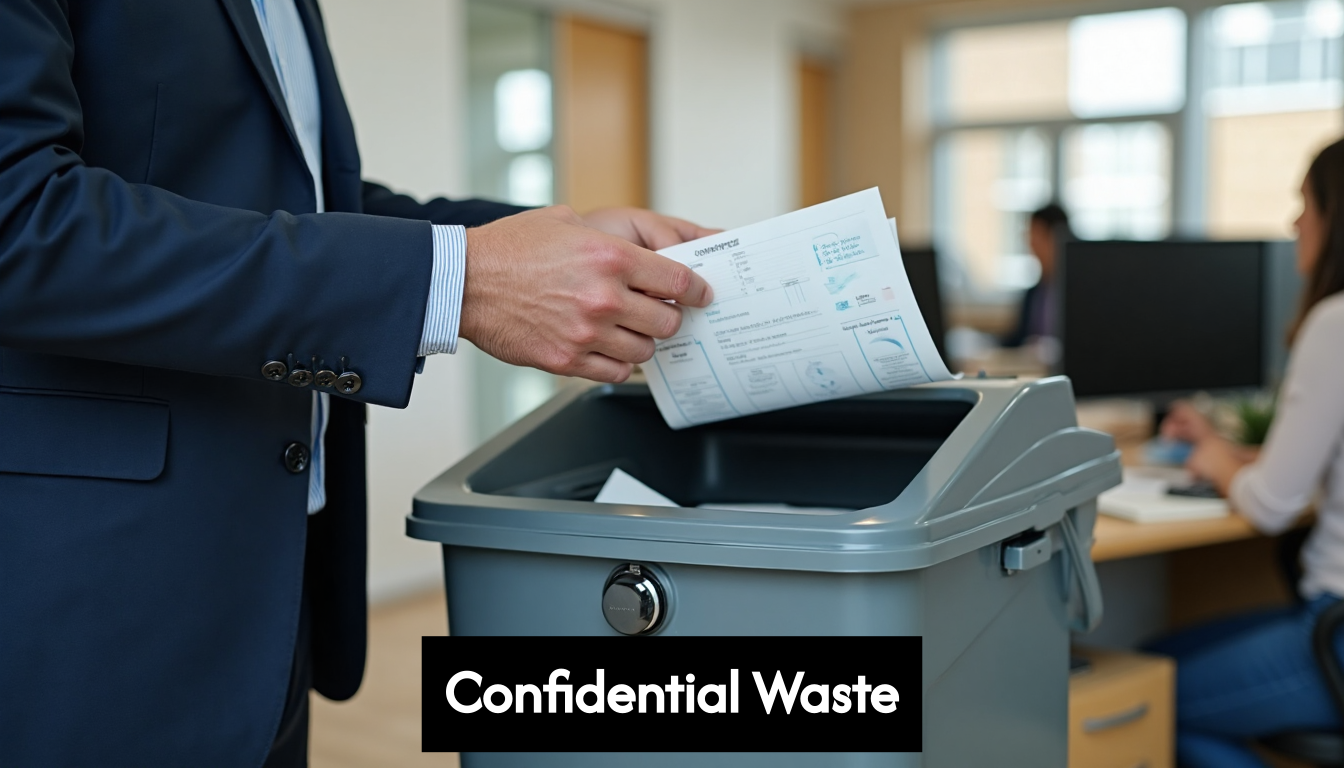
Confidential waste is no longer just about shredding a few papers at the end of the week. Every UK business faces strict new demands, with businesses employing more than 10 staff legally required to segregate confidential waste from general recyclables by 31 March 2025. Most think legal compliance is the biggest hurdle. Not so fast. The real surprise is that poor confidential waste management could actually destroy hard-earned customer trust even faster than fines or penalties. Here’s what every business needs to know before it’s too late.
Table of Contents
- What Is Confidential Waste And Why It Matters
- How To Safely Dispose Of Confidential Waste
- Who Needs Confidential Waste Services In The UK
- Common Questions On Legal And Compliance Issues
Quick Summary
| Takeaway | Explanation |
|---|---|
| Confidential waste includes sensitive information | Confidential waste covers materials like financial records, personnel files, and digital data that require secure handling to prevent unauthorized access and potential harm. |
| Legal compliance is critical | Under the Data Protection Act 2018 and GDPR, UK businesses must implement robust systems for the secure destruction of confidential materials to avoid severe penalties and reputational damage. |
| Proper disposal practices protect business integrity | Effective confidential waste management not only ensures legal compliance but also enhances business reputation and customer trust through demonstrated commitment to data protection. |
| Secure storage and destruction are essential | Establishing secure collection methods, restricted access, and using certified destruction processes like shredding and incineration ensure sensitive data is disposed of safely and in compliance with regulations. |
| Tailored strategies for different sectors | Businesses in sectors like healthcare, finance, and legal must adopt specific disposal strategies that reflect the unique regulations and challenges within their industries. |
What Is Confidential Waste and Why It Matters
Confidential waste represents a critical aspect of business information management that goes far beyond simple document disposal. It encompasses any materials containing sensitive information that could potentially cause significant harm if inappropriately disclosed or accessed by unauthorized individuals.
Understanding the Scope of Confidential Waste
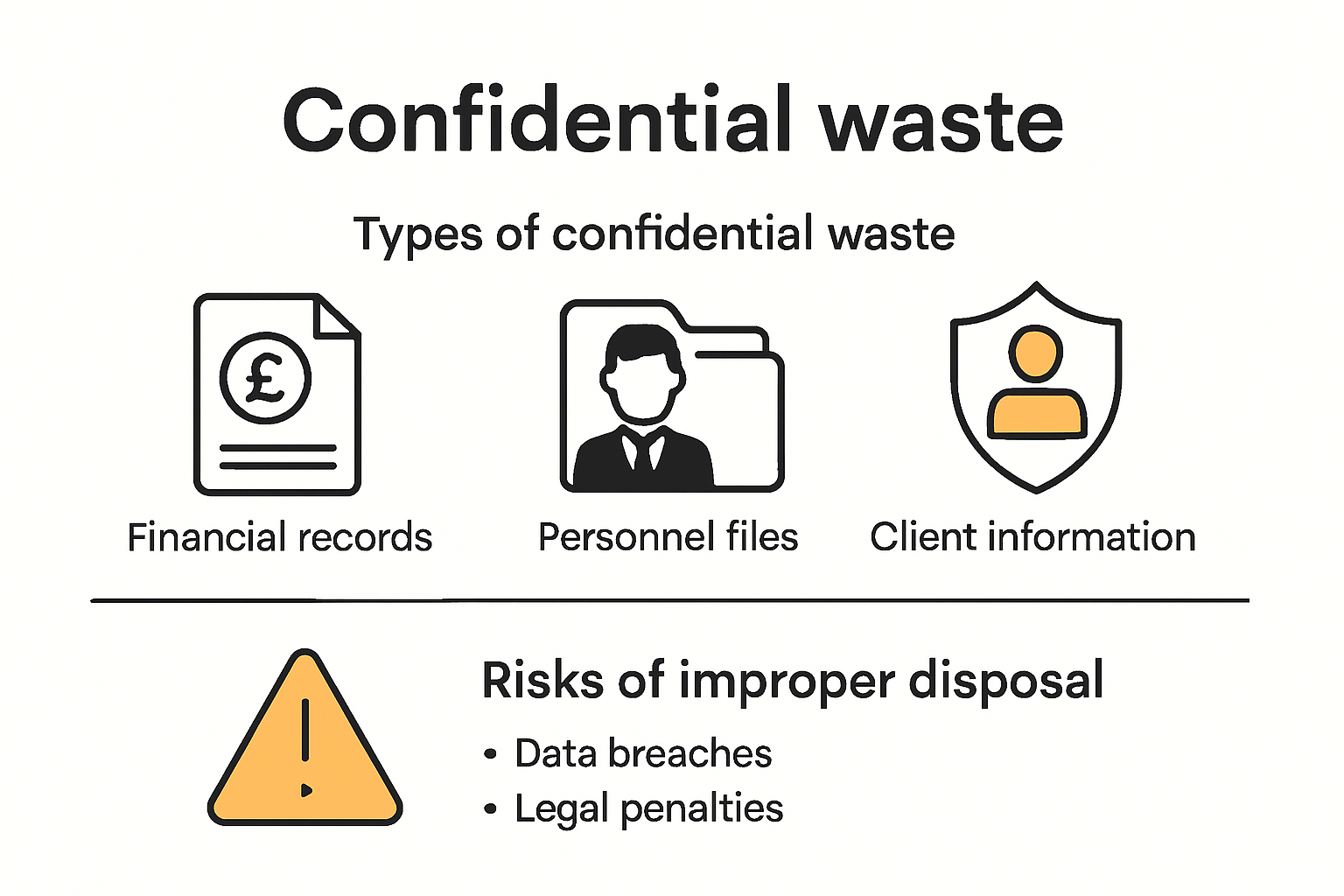
Confidential waste includes a wide range of documents and materials that contain sensitive information. These typically encompass financial records, personnel files, medical documents, legal paperwork, client information, and digital data storage devices. According to data protection experts, the potential risks associated with improper disposal can be substantial, ranging from identity theft to corporate espionage.
Businesses generate substantial volumes of confidential waste daily. This might include:
- Financial Documents: Bank statements, invoices, payroll records
- Personnel Records: Employee contracts, performance reviews, personal information
- Client Information: Customer databases, contact details, transaction histories
- Digital Media: Hard drives, USB drives, backup tapes containing electronic data
Legal and Regulatory Implications
The legal landscape surrounding confidential waste management is stringent and uncompromising. Under the Data Protection Act 2018 (which incorporates GDPR principles), UK businesses are legally obligated to ensure secure destruction of sensitive materials. Non-compliance can result in severe consequences, including substantial financial penalties, potential legal action, and significant reputational damage.
Regulatory requirements mandate that businesses implement robust processes for identifying, handling, and securely destroying confidential waste. This involves more than simply discarding documents – it requires a comprehensive approach that protects sensitive information throughout its entire disposal lifecycle.
Protecting Business Integrity
Beyond legal compliance, proper confidential waste management is fundamentally about protecting business integrity. A single data breach can devastate an organization’s reputation, erode customer trust, and potentially lead to substantial financial losses. Research on data security consistently demonstrates that businesses with rigorous confidential waste protocols are perceived as more professional and trustworthy.
Effective confidential waste management involves several key strategies:
- Implementing secure collection and storage procedures
- Using certified destruction methods
- Maintaining comprehensive documentation of disposal processes
- Training employees on proper information handling
By treating confidential waste as a critical business process rather than a mundane administrative task, organizations can significantly mitigate risks and demonstrate their commitment to data protection. Our comprehensive guide on secure disposal provides further insights into developing a robust confidential waste management strategy that aligns with best practices and legal requirements.
Ultimately, confidential waste management is not just about destroying documents – it is about safeguarding an organization’s most valuable asset: its information.
How to Safely Dispose of Confidential Waste
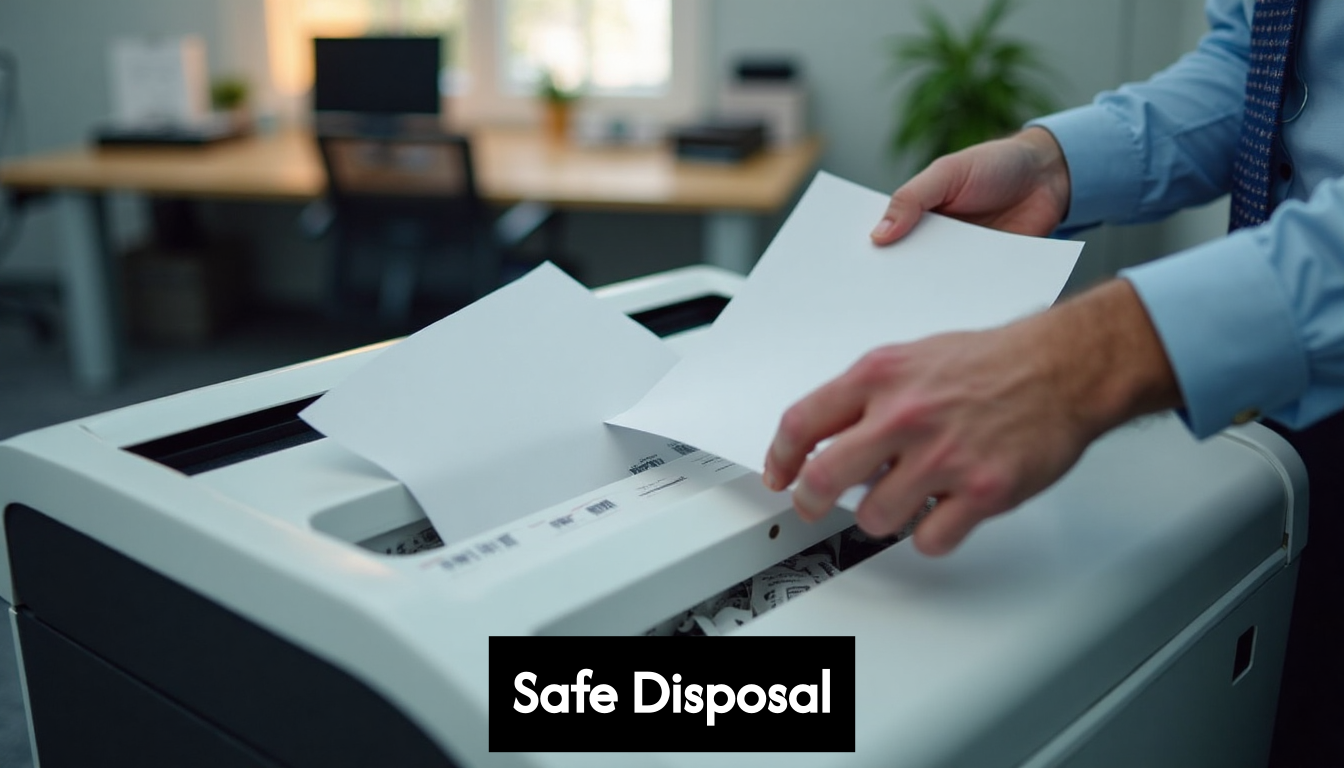
Safely disposing of confidential waste requires a strategic and systematic approach that protects sensitive information from potential unauthorized access or misuse. Businesses must implement comprehensive protocols that go beyond simple paper shredding to ensure complete data protection.
Secure Collection and Storage Procedures
The first critical step in confidential waste disposal is establishing secure collection and storage mechanisms. Organisations need dedicated, locked containers specifically designed for confidential materials. These containers should be strategically placed in controlled access areas, preventing unauthorized personnel from interacting with sensitive documents.
According to waste management regulations, businesses must maintain a clear chain of custody for confidential materials. This means tracking documents from collection through destruction, creating an auditable process that demonstrates compliance with data protection standards.
Key considerations for secure collection include:
- Restricted Access: Limit container access to authorized personnel
- Regular Monitoring: Conduct periodic checks of collection points
- Tamper-Evident Containers: Use sealed bins that show evidence of interference
Destruction Methods and Compliance
Destroying confidential waste requires more than simply tearing up documents. New recycling regulations effective from 31 March 2025 mandate specific waste stream segregation for businesses with more than 10 employees. This means confidential documents cannot be mixed with standard recycling and must undergo certified destruction processes.
Approved destruction methods include:
- Professional on-site shredding services
- Industrial cross-cut shredding that renders documents unreadable
- Certified digital media destruction for hard drives and electronic storage
- Secure incineration of highly sensitive materials
Businesses must obtain destruction certificates as proof of compliance. Our comprehensive destruction guide provides detailed insights into selecting appropriate destruction techniques.
Environmental and Legal Considerations
Confidential waste disposal is not just about data protection – it also involves environmental responsibility. The Environmental Protection Act 1990 imposes a legal duty of care on businesses to handle waste safely and responsibly. This means selecting destruction methods that minimize environmental impact while ensuring complete data security.
Key environmental strategies include:
- Partnering with certified waste management providers
- Prioritizing recycling where possible after secure destruction
- Maintaining comprehensive documentation of disposal processes
- Conducting regular staff training on waste management protocols
By adopting a holistic approach to confidential waste disposal, businesses can simultaneously protect sensitive information, comply with legal requirements, and demonstrate environmental stewardship. The goal is not just destruction, but responsible, secure, and transparent management of potentially sensitive materials.
Who Needs Confidential Waste Services in the UK
Confidential waste services are not a luxury but a critical necessity for a wide range of UK businesses and organisations. From small enterprises to large corporations, any entity that generates sensitive information requires robust confidential waste management strategies to protect data, ensure legal compliance, and maintain professional integrity.
Sectors with High Confidential Waste Generation
Multiple industries generate substantial volumes of confidential waste that demand specialized disposal services. Regulatory requirements from 31 March 2025 mandate comprehensive waste management across various sectors.
Key sectors requiring dedicated confidential waste services include:
- Healthcare Providers: Hospitals, clinics, and medical practices handling patient records
- Legal Firms: Law offices managing sensitive client documentation
- Financial Institutions: Banks, insurance companies, accounting firms with financial records
- Educational Establishments: Universities, colleges, and schools with student and staff information
- Government and Public Sector: Local councils, administrative offices with sensitive administrative documents
- Corporate Enterprises: Large and small businesses across multiple industries
Legal Obligations and Compliance Requirements
Under the Data Protection Act 2018, every organisation handling personal data is legally obligated to ensure secure disposal. This means businesses are not just recommended but required to implement robust confidential waste management protocols.
Companies with more than 10 employees face additional scrutiny. The Environmental Protection Act 1990 imposes a strict duty of care regarding waste management, making professional confidential waste services essential for legal compliance. Non-compliance can result in significant financial penalties and potential legal repercussions.
Industry-Specific Confidential Waste Considerations
Different industries have unique confidential waste challenges that require tailored disposal strategies. For instance, healthcare providers must navigate complex privacy regulations when destroying patient records, while financial institutions need methods that prevent potential financial fraud.
Specific industry considerations include:
- Healthcare: Strict GDPR and medical record protection protocols
- Finance: Complete destruction of transaction records and personal financial information
- Technology: Secure digital media destruction alongside physical document management
- Research and Development: Protection of intellectual property and research data
Businesses across these sectors must recognize that confidential waste management is not a one-size-fits-all solution. Our comprehensive industry guide offers deeper insights into sector-specific waste disposal strategies.
Effective confidential waste services are fundamental for any organisation committed to maintaining data security, legal compliance, and professional standards. By partnering with specialized waste management providers, businesses can transform a potential risk into a strategic advantage, demonstrating their commitment to responsible information handling.
Common Questions on Legal and Compliance Issues
Businesses navigating confidential waste management face a complex landscape of legal requirements and compliance challenges. Understanding the nuanced regulations is crucial for avoiding potential legal pitfalls and protecting sensitive information.
Key Legal Frameworks Governing Confidential Waste
The legal framework surrounding confidential waste disposal in the UK is comprehensive and multifaceted. According to the Information Commissioner’s Office, businesses must adhere to stringent data protection regulations that go beyond simple document disposal.
Key legal frameworks include:
- Data Protection Act 2018: Mandates secure handling of personal data
- UK GDPR: Establishes strict guidelines for information protection
- Environmental Protection Act 1990: Governs waste management and disposal procedures
- Privacy and Electronic Communications Regulations: Covers digital data protection
Businesses must demonstrate a proactive approach to data protection, maintaining comprehensive documentation of their waste management processes. This includes creating and maintaining detailed logs of all confidential waste disposal activities.
Compliance Requirements and Potential Risks
Non-compliance with confidential waste regulations can result in significant consequences. Regulatory guidance highlights the potential risks businesses face when failing to properly manage confidential waste.
Key compliance considerations include:
- Destruction Certificates: Businesses must obtain official documentation proving secure disposal
- Secure Storage: Confidential waste must be stored securely before destruction
- Contractual Obligations: Third-party waste disposal providers must meet specific legal standards
- Audit Trails: Maintaining comprehensive records of waste management processes
The potential penalties for non-compliance are substantial. Organisations can face:
- Significant financial penalties
- Reputational damage
- Potential legal action
- Loss of customer trust
Practical Compliance Strategies
Implementing a robust confidential waste management strategy requires a comprehensive approach. Our detailed compliance guide provides in-depth insights into developing an effective waste management protocol.
Practical strategies for ensuring legal compliance include:
- Conducting regular staff training on data protection
- Implementing secure collection and destruction processes
- Partnering with certified waste management providers
- Developing clear internal policies for handling sensitive information
- Regularly reviewing and updating waste management procedures
Businesses must treat confidential waste management as a critical component of their overall data protection strategy. This involves going beyond mere destruction to create a comprehensive approach that addresses legal, ethical, and security concerns.
Ultimately, successful confidential waste management is about more than avoiding penalties. It is about demonstrating a commitment to protecting sensitive information, maintaining customer trust, and upholding the highest standards of professional responsibility.
Frequently Asked Questions
What is confidential waste?
Confidential waste refers to materials containing sensitive information that must be disposed of securely to prevent unauthorized access, including financial records, personnel files, and client data.
Why is it important to manage confidential waste?
Proper management of confidential waste is essential for legal compliance under the Data Protection Act 2018 and GDPR, as well as to protect business integrity and maintain customer trust by preventing data breaches.
How should businesses dispose of confidential waste by 2025?
Businesses must segregate confidential waste from general recyclables and use certified destruction methods, such as shredding or incineration, to ensure compliance with regulations effective from 31 March 2025.
Who is required to implement confidential waste disposal practices?
All UK organisations with more than 10 employees are legally obligated to manage confidential waste according to strict guidelines, ensuring sensitive materials are handled securely throughout their lifecycle.
Ready to Take Control of Your Confidential Waste?
Feeling the pressure of new 2025 legislation or worried about accidental data leaks damaging your reputation? Many UK businesses underestimate how quickly trust and compliance can be lost from a simple mistake in document handling. Whether you need help navigating segregation rules or want certified destruction for customer files, you’re not alone. For full peace of mind, explore our confidential waste solutions tailored to your needs.

Don’t leave compliance or your credibility to chance. Join other responsible UK businesses choosing Venture Waste Management for confidential document destruction that is fast, professional, and fully accredited. Visit us now to find your simple next step and book secure confidential waste disposal before the new rules come into force.
Recommended Articles
- What Is Confidential Waste? Guide for UK Businesses 2025 – Venture Waste
- what is confidential waste Archives – Venture Waste
- Confidential Waste Risk Management: Essential Guide for UK Businesses 2025 – Venture Waste
- Truck Hire Trends: What to Expect in the Future
- Truck Hire in Gauteng: Your Ultimate Guide
- Why Hiring Trucks is Best for Your Projects


Leave a Reply
Want to join the discussion?Feel free to contribute!