

Confidential Waste Bin Types: Complete Guide UK
Over 60 percent of UK businesses have faced data security threats linked to poor confidential waste management. Sensitive documents like financial records and personnel files are magnets for information breaches if not properly handled. Choosing the right confidential waste bin helps protect your company, your clients, and your reputation. Understanding these bins and their unique features is a key step toward safer, compliant document disposal.
Table of Contents
- Defining Confidential Waste And Bin Types
- Comparing Secure Bin Types And Uses
- Key Security Features In Confidential Bins
- UK Legal Standards For Confidential Waste
- Best Practices For Bin Usage And Compliance
Key Takeaways
| Point | Details |
|---|---|
| Legal Compliance | Businesses must adhere to UK GDPR regulations and secure destruction standards to protect sensitive information. |
| Bin Selection | Choosing the right type of confidential waste bin is essential based on the sensitivity and volume of materials. |
| Security Features | Confidential waste bins should incorporate robust locking mechanisms and tamper-evident designs for maximum protection. |
| Best Practices | Implementing proper document preparation and regular maintenance is critical for effective waste management and compliance. |
Defining Confidential Waste and Bin Types
Confidential waste represents sensitive documents and materials that require secure disposal to prevent potential data breaches or information leaks. According to gov.uk, businesses have legal responsibilities to handle such waste appropriately, ensuring complete destruction and protection of sensitive information.
In the UK, confidential waste typically includes documents containing personal, financial, or corporate sensitive information such as:
- Financial records
- Medical files
- Customer databases
- Employee personnel documents
- Legal contracts
- Intellectual property documentation
When managing confidential waste, businesses must select appropriate bin types that provide maximum security and compliance. North Lincolnshire Council highlights several key bin categories designed specifically for secure waste management:
- Lockable Security Bins: Designed with robust locking mechanisms to prevent unauthorized access
- Sealed Container Units: Provide tamper-evident storage for highly sensitive documents
- Shredding Console Bins: Integrated with built-in shredding capabilities for immediate destruction
- Confidential Waste Consoles: Large-capacity units for office environments requiring frequent disposal
Understanding the nuanced requirements of confidential waste disposal is crucial. Each bin type offers different levels of security, making it essential for businesses to assess their specific needs and choose accordingly.
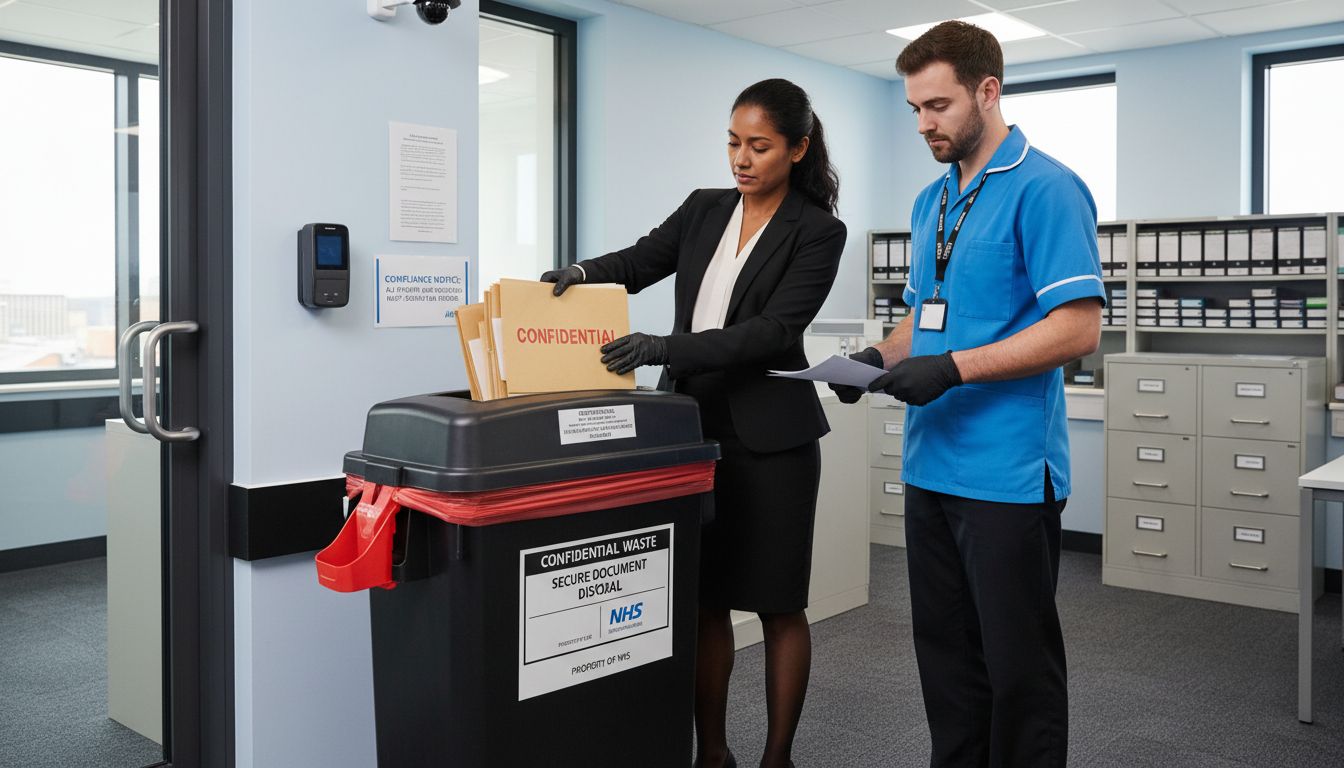 When selecting a confidential waste bin, consider factors like volume of sensitive materials, access control, and compliance with data protection regulations.
For a comprehensive understanding of secure waste management, explore our guide on confidential waste policies.
Comparing Secure Bin Types and Uses
Confidential waste bin types range from basic secure containers to advanced destruction systems, each designed to address specific security requirements for businesses across various industries. Understanding the nuanced differences between these bin types can significantly impact an organisation’s data protection strategy.
Here’s a comprehensive comparison of secure bin types:
| Bin Type | Security Level | Best Used For | Key Features |
|---|---|---|---|
| Lockable Security Bins | Medium | Office documents | – Sturdy metal construction |
- Keyed or combination locks
- Portable design |
| Sealed Container Units | High | Highly sensitive documents | – Tamper-evident seals - Industrial-grade materials
- Restricted access points |
| Shredding Console Bins | Very High | Immediate document destruction | – Built-in shredding mechanism - Direct destruction capabilities
- Prevents document reconstruction |
| Confidential Waste Consoles | Medium-High | Large volume document disposal | – High capacity - Regular collection services
- Suitable for multiple departments |
Businesses must carefully evaluate their specific needs when selecting a confidential waste bin. Factors such as document volume, sensitivity level, and frequency of disposal play crucial roles in determining the most appropriate solution.
For organisations in Newcastle, Durham, and other North East industrial centres, selecting the right confidential waste bin is more than a compliance issue – it’s a critical component of data protection strategy. The chosen bin should not only meet legal requirements but also provide robust protection against potential information breaches.

To ensure maximum security, consider How to Store Confidential Waste Safely in 2025 for comprehensive guidance on implementing an effective confidential waste management approach.
Key Security Features in Confidential Bins
Confidential waste bins represent more than simple storage containers – they are sophisticated security instruments designed to protect sensitive organisational information from potential breaches. The most advanced bins incorporate multiple layers of security mechanisms that go beyond basic containment.
Critical Security Design Elements
Key security features in confidential waste bins include:
Here’s a quick summary of key security features found in confidential waste bins:
| Security Feature | Description | Example Bin Types |
|---|---|---|
| Locking Systems | Keyed, combination, biometric access | Lockable Security Bins Sealed Container Units |
| Material Strength | Reinforced steel, tamper-resistant seals | All Bin Types |
| Destruction Methods | Built-in shredding, cross-cut tech | Shredding Console Bins |
| Access Controls | Restricted access points, staff authorisation | Sealed Container Units Confidential Waste Consoles |
- Robust Locking Mechanisms
- Keyed locks with unique serial numbers
- Combination padlock systems
- Biometric access controls
- Physical Construction
- Reinforced steel construction
- Tamper-evident seals
- Welded joint designs preventing unauthorized access
- Destruction Capabilities
- Integrated shredding mechanisms
- Cross-cut and micro-cut shredding technologies
- Automatic document destruction features
For businesses in industrial centres like Newcastle and Durham, selecting bins with comprehensive security features isn’t just about compliance – it’s about creating an impenetrable barrier against potential data theft. The right confidential waste bin acts as a critical first line of defence in information protection strategies.
Companies must evaluate security features through a multifaceted lens, considering factors such as:
- Material durability
- Access restrictions
- Destruction efficiency
- Compliance with data protection regulations
To develop a comprehensive understanding of confidential waste risk management, explore our guide on confidential waste risk management for deeper insights into protecting your organisation’s sensitive information.
UK Legal Standards for Confidential Waste
Confidential waste management in the United Kingdom is governed by a complex framework of legal standards designed to protect sensitive information and ensure responsible disposal. gov.uk outlines comprehensive guidelines that businesses must follow when handling confidential waste, emphasizing the critical nature of proper document destruction and data protection.
The key legal requirements for confidential waste disposal include:
- Data Protection Compliance
- Adherence to UK GDPR regulations
- Strict protection of personal and sensitive information
- Prevention of potential data breaches
- Secure Destruction Standards
- Mandatory complete document destruction
- Verification of destruction processes
- Maintenance of detailed disposal records
- Waste Classification
- Proper categorization of confidential waste
- Separate handling from general waste streams
- Specialized disposal methods for different document types
North Lincolnshire Council highlights that businesses operating in industrial centres like Newcastle, Durham, and the broader North East region must implement rigorous waste management protocols. These standards are not just bureaucratic requirements but essential safeguards against potential legal and financial risks.
Businesses must navigate a complex landscape of legal obligations, including:
- Compliance with Data Protection Act 2018
- Meeting UK GDPR destruction requirements
- Maintaining audit trails of document disposal
- Implementing secure storage and destruction methods
To gain a deeper understanding of the intricate legal landscape surrounding confidential waste, explore our guide on confidential waste legislation for comprehensive insights into protecting your organisation’s sensitive information.
Best Practices for Bin Usage and Compliance
Navigating confidential waste management requires a strategic approach that goes beyond simply acquiring secure bins. North Lincolnshire Council emphasizes the critical importance of implementing comprehensive best practices that ensure both legal compliance and information security.
Key Compliance Strategies
Effective confidential waste bin usage involves multiple critical practices:
- Proper Document Preparation
- Remove staples and paperclips
- Separate different document types
- Avoid overfilling bins
- Bin Placement and Access
- Position bins in secure, restricted areas
- Limit access to authorized personnel
- Implement strict sign-in/sign-out protocols
- Regular Maintenance
- Schedule consistent bin inspections
- Conduct periodic security audits
- Maintain detailed disposal logs
Sharpsmart UK highlights that different sectors – from healthcare in Newcastle to financial services in Durham – require tailored approaches to confidential waste management. The one-size-fits-all strategy simply doesn’t work when protecting sensitive information.
Businesses must develop a comprehensive compliance framework that includes:
- Staff training on proper waste disposal
- Clear written confidential waste policies
- Regular review of destruction procedures
- Documentation of all disposal activities
To streamline your confidential waste management approach, explore our guide on waste handling best practices to ensure your organisation remains compliant and secure.
Secure Your Sensitive Information with Tailored Confidential Waste Solutions
Managing confidential waste effectively can feel overwhelming given the variety of bin types and strict UK legal standards highlighted in the article. Whether you need lockable security bins, sealing containers, or shredding consoles, selecting the right solution is essential to prevent costly data breaches and stay fully compliant with data protection laws like UK GDPR. This challenge demands a reliable partner who understands your unique security needs and can simplify your confidential waste disposal journey.

At Venture Waste, we specialise in tailored confidential waste management services across the UK. Explore our confidential waste category to discover secure options designed specifically for your business needs. We emphasise legal compliance, environmental responsibility, and ease of service through a simple three-step booking process. Don’t wait until a breach puts your organisation at risk. Visit Venture Waste Management now and take control of your confidential waste disposal with confidence.
Frequently Asked Questions
What types of confidential waste bins are available for secure disposal?
Confidential waste bins include Lockable Security Bins, Sealed Container Units, Shredding Console Bins, and Confidential Waste Consoles, each designed for different security requirements and document sensitivity levels.
How do I determine which confidential waste bin is right for my business?
Choose a confidential waste bin based on factors like the volume of sensitive materials, the level of sensitivity of documents, frequency of disposal, and the required access control for authorized personnel.
What are the key security features to look for in a confidential waste bin?
Important security features include robust locking mechanisms (keyed or biometric), material strength (reinforced steel), destruction capabilities (built-in shredding), and access controls to restrict unauthorized usage.
What are the legal requirements for handling confidential waste in the UK?
UK businesses must comply with legal standards including data protection regulations, secure destruction mandates, and proper waste classification to ensure sensitive information is disposed of responsibly.


Leave a Reply
Want to join the discussion?Feel free to contribute!