

Confidential Waste Bags: Complete Guide for UK Businesses
Over £500,000 in fines can hit businesses that fail to dispose of confidential documents properly. Every organisation, whether in healthcare, finance, or legal services, faces growing pressure to protect sensitive data and comply with strict regulations. Understanding how confidential waste bags work and why they matter is not optional anymore. Get practical insight into choosing the right bags, avoiding legal trouble, and keeping your information safe from costly breaches.
Table of Contents
- What Are Confidential Waste Bags
- Types Of Confidential Waste Bags
- How Confidential Waste Bags Work
- Legal Obligations For Confidential Waste Disposal
- Risks And Compliance Implications
- Alternatives To Confidential Waste Bags
Key Takeaways
| Point | Details |
|---|---|
| Confidential Waste Bags | Essential for securely collecting and disposing of sensitive documents, ensuring protection against unauthorized access and compliance with data protection regulations. |
| Types of Bags | Available in various materials such as paper and polypropylene, with designs that include security features, tracking capabilities, and tamper-evidence to enhance confidentiality. |
| Legal Compliance | UK businesses must adhere to multiple regulations, including the Data Protection Act 2018 and GDPR, to prevent significant financial penalties and reputational damage. |
| Risk Management | Mismanagement of confidential waste can lead to severe consequences, emphasizing the need for robust protocols and employee training to mitigate data breach risks. |
What Are Confidential Waste Bags
Confidential waste bags are specialized security containers designed specifically for the secure collection and disposal of sensitive documents containing personal or business-critical information. According to n-kesteven, these bags are “used to securely collect and dispose of documents containing personal, confidential, or sensitive data, ensuring protection against accidental loss, damage, or unauthorized access”.
These purpose-built bags serve multiple critical functions for businesses handling sensitive information. Key characteristics typically include:
- Heavy-duty, tamper-evident material
- Opaque construction preventing visual document exposure
- Lockable or seal-able design preventing unauthorized access
- Standardized sizing compatible with professional document destruction processes
From legal compliance to data protection standards, confidential waste bags represent a fundamental component of responsible information management. Staff Derbyshire emphasizes their role in “preventing unauthorized access and ensuring compliance with data protection regulations”.
Businesses across sectors like healthcare, legal services, finance, and government rely on these bags to maintain strict confidentiality protocols. By implementing a systematic approach to document disposal through specialized confidential waste bags, organisations can mitigate risks of data breaches, protect sensitive information, and demonstrate commitment to professional standards of information security.
Types Of Confidential Waste Bags
Confidential waste bags represent a critical component of secure document disposal, with diverse materials and designs tailored to specific business needs. Shredall highlights that these bags come in various materials like paper and polypropylene, each engineered to securely collect sensitive documents before their ultimate destruction.
The primary types of confidential waste bags include:
- Paper Security Bags: Designed for standard office document disposal
- Polypropylene Bags: More durable and water-resistant options
- Tamper-Evident Bags: Feature unique security seals preventing unauthorized access
- Tracked Disposal Bags: Equipped with unique tracking codes for accountability
Restore provides insight into specialized bags, noting that some confidential waste bags come with security-printed features and can hold approximately 12.5kg of sensitive documents. These bags are not just containers but sophisticated tools designed to maintain strict confidentiality protocols.
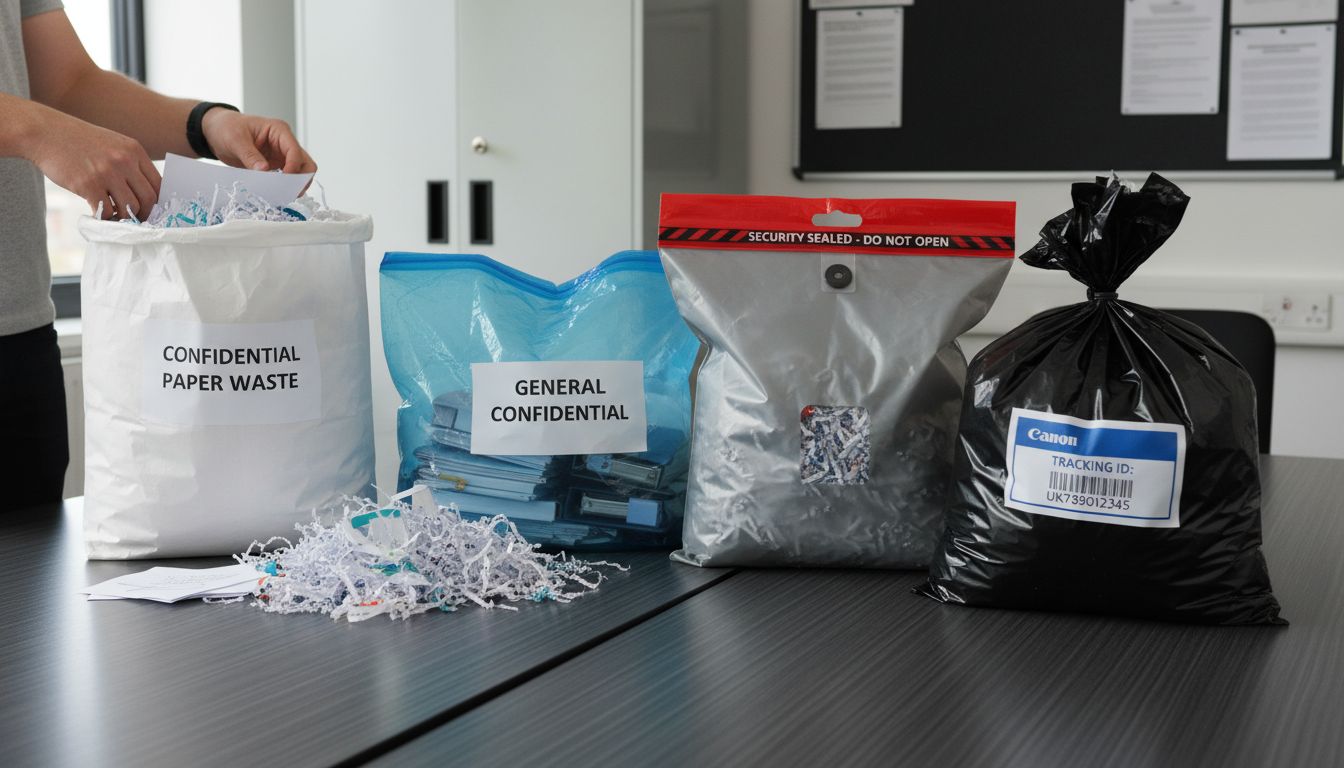
Businesses must carefully select confidential waste bags based on their specific security requirements, document volume, and industry regulations. Factors like material strength, capacity, tracking capabilities, and compliance with data protection standards play crucial roles in determining the most appropriate bag type for secure document disposal.
How Confidential Waste Bags Work
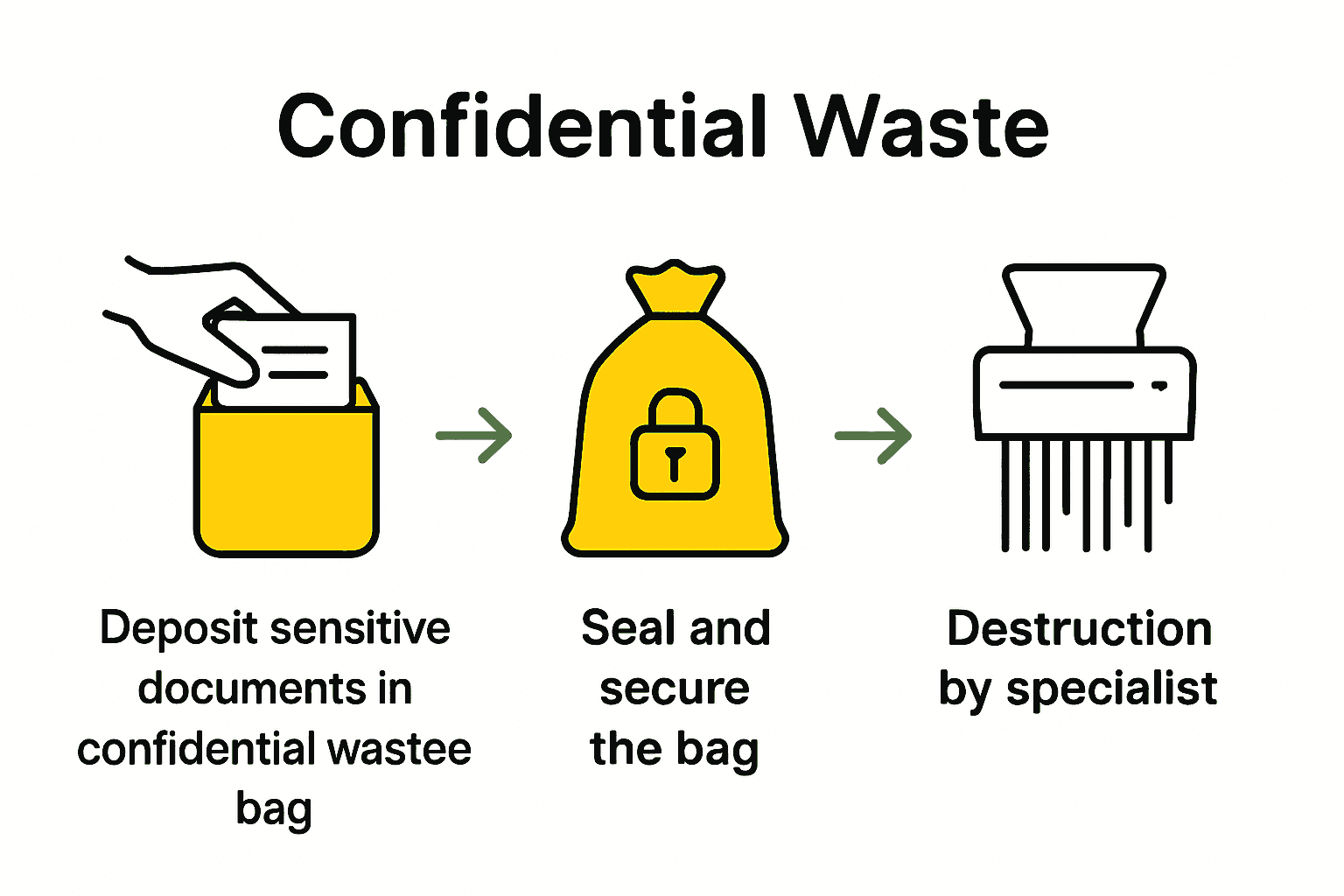
Confidential waste bags operate through a systematic process designed to ensure maximum security and compliance with data protection regulations. ELFT explains that these bags are used to collect sensitive documents, which are then securely processed through two primary methods: on-site shredding or removal by specialist contractors.
The operational workflow of confidential waste bags typically follows these key stages:
- Collection Stage: Employees deposit sensitive documents directly into designated confidential waste bags
- Secure Storage: Bags are sealed and stored in locked containers to prevent unauthorized access
- Transportation: Bags are collected by certified waste management professionals
- Destruction Process: Documents are thoroughly destroyed through industrial shredding
Unique security features enhance the bag’s functionality. These include:
- Tamper-evident seals
- Unique tracking numbers
- Opaque materials preventing visual document exposure
- Weight-rated capacities to manage document volume
Liverpool John Moores University reinforces the critical nature of this process, emphasizing that secure document disposal is not just a procedural requirement but a fundamental aspect of maintaining organizational confidentiality and legal compliance. By implementing rigorous waste bag protocols, businesses can effectively mitigate risks associated with potential data breaches and unauthorized information disclosure.
Legal Obligations For Confidential Waste Disposal
UK businesses face stringent legal requirements when managing confidential waste disposal, with multiple regulations governing how sensitive documents must be handled and destroyed. Confidential Waste Legislation underscores the critical nature of compliance with data protection frameworks that mandate secure information management.
Key legal obligations for confidential waste disposal include:
- Data Protection Act 2018: Requires businesses to protect personal information from unauthorized access
- UK GDPR Regulations: Mandates secure destruction of personal data
- Environmental Protection Act: Governs responsible waste disposal methods
- Information Commissioner’s Office (ICO) Guidelines: Provides specific standards for document destruction
Businesses must implement comprehensive waste disposal strategies that demonstrate proactive compliance. This involves:
- Maintaining detailed destruction records
- Using certified waste disposal contractors
- Implementing secure collection and destruction processes
- Conducting regular compliance audits
Why Dispose Confidentially highlights that non-compliance can result in significant financial penalties, with potential fines up to £500,000 from the ICO for serious data protection breaches. Organisations must therefore treat confidential waste disposal not just as an administrative task, but as a critical legal and ethical responsibility that protects both business interests and individual privacy rights.
Risks And Compliance Implications
Confidential waste mismanagement represents a significant risk for UK businesses, with potential consequences extending far beyond simple administrative oversights. Business Flare highlights that improper disposal of confidential waste can lead to catastrophic outcomes, including data breaches, substantial legal penalties, and irreparable damage to an organization’s reputation.
The primary risks associated with inadequate confidential waste management include:
- Financial Penalties: Potential fines up to £500,000 from regulatory bodies
- Legal Liability: Potential lawsuits from affected individuals
- Reputational Damage: Loss of client trust and potential business relationships
- Competitive Vulnerability: Risk of sensitive information falling into competitor hands
Businesses must understand the multifaceted compliance implications of confidential waste disposal. Key considerations involve:
- Implementing robust document destruction protocols
- Training employees on confidential waste handling
- Maintaining comprehensive audit trails
- Selecting certified waste management partners
Confidential Waste Risk Management emphasizes that proactive risk management is not just a legal requirement but a critical component of modern business governance. Organizations that treat confidential waste disposal as a strategic priority can effectively mitigate potential risks, protect sensitive information, and demonstrate their commitment to professional data protection standards.
Alternatives To Confidential Waste Bags
Businesses have multiple options beyond traditional confidential waste bags for managing sensitive document disposal. Imperial College highlights that alternatives like on-site shredders provide immediate and secure destruction for small document volumes, offering flexibility for organisations with varying waste management needs.
The primary alternatives to confidential waste bags include:
- Industrial Paper Shredders: Ideal for in-house document destruction
- Digital Document Management: Transitioning to paperless systems
- Secure Destruction Services: Professional on-site or off-site document elimination
- Secure Digital Archiving: Electronic storage with advanced encryption
Key considerations when selecting an alternative to confidential waste bags involve:
- Volume of sensitive documents
- Frequency of disposal requirements
- Budget constraints
- Compliance with data protection regulations
Cost of Confidential Disposal suggests that businesses should conduct a comprehensive cost-benefit analysis when evaluating disposal methods. While alternatives offer flexibility, organisations must ensure their chosen method meets stringent legal requirements, provides complete document destruction, and maintains the highest standards of data protection and confidentiality.
Secure Your Sensitive Information with Expert Confidential Waste Solutions
Handling confidential waste bags correctly is critical to protect your business from data breaches and hefty legal penalties. If you want to avoid risks like unauthorised access, reputational damage, or compliance failures, then investing in professional confidential waste disposal is essential. Understanding the importance of tamper-evident seals and secure collection processes can make all the difference in staying compliant with regulations such as the Data Protection Act 2018.

Discover how Venture Waste simplifies confidential waste management for UK businesses by offering reliable, compliant disposal services tailored to your specific needs. Explore our dedicated confidential waste Archives – Venture Waste to find practical solutions and up-to-date guidance. Act now to secure your sensitive documents with confidence and join countless other organisations that trust us for responsible, legal, and efficient confidential waste disposal. Visit venturewaste.co.uk to get started today.
Frequently Asked Questions
What are confidential waste bags?
Confidential waste bags are specialized containers used for the secure collection and disposal of sensitive documents containing personal or business-critical information. They are designed to prevent unauthorized access and ensure compliance with data protection regulations.
What types of materials are used for confidential waste bags?
Confidential waste bags are made from various materials, including paper and polypropylene. Some bags feature specialized designs like tamper-evident seals and are built to withstand specific weights, ensuring that sensitive documents are securely contained and protected.
How do confidential waste bags work for document disposal?
The process involves depositing sensitive documents into the bags, sealing them, and storing them in locked containers until they are collected by certified waste management professionals for secure destruction via industrial shredding.
What are the legal obligations for businesses regarding confidential waste disposal?
Businesses must comply with laws such as the Data Protection Act 2018 and UK GDPR regulations, which require the secure handling and destruction of personal data. This includes maintaining destruction records and using certified waste disposal contractors.


Leave a Reply
Want to join the discussion?Feel free to contribute!