

Confidential Shredding vs Pulping: Complete Guide UK
Every year, UK organisations handle billions of confidential documents, but even a single data breach can cost a business an average of £3 million. Protecting sensitive information goes far beyond just locking up papers. The choice between shredding and pulping shapes how securely your data is destroyed and impacts everything from compliance to environmental responsibility. Knowing what sets these document destruction methods apart can help you keep your information safe and avoid expensive mistakes.
Table of Contents
- Defining Confidential Shredding and Pulping
- How Shredding and Pulping Processes Work
- Legal Compliance and Security Standards UK
- Key Differences: Security, Cost, and Suitability
- Choosing the Right Method for Your Business
Key Takeaways
| Point | Details |
|---|---|
| Document Destruction Methods | Confidential shredding and pulping are essential for secure disposal of sensitive information, each serving unique volume and security needs. |
| Legal Compliance | UK businesses must comply with the Data Protection Act 2018 and GDPR, which mandate strict standards for document destruction. |
| Cost vs. Efficiency | Shredding tends to be more cost-effective for smaller volumes, while pulping is best suited for large-scale destruction. |
| Selection Criteria | Organizations should evaluate their destruction needs based on volume, budget, security sensitivity, and compliance requirements. |
Defining Confidential Shredding and Pulping
Confidential document destruction is a critical process for businesses and organisations seeking to protect sensitive information from potential misuse or data breaches. According to research from secure shredding specialists, two primary methods dominate this field: confidential shredding and pulping.
Confidential shredding involves physically cutting sensitive documents into tiny, unrecoverable pieces. As experts from Shredit UK explain, this typically uses advanced techniques like cross-cut or micro-cut shredding. These methods render documents completely unreadable by:- Breaking paper into minuscule fragments- Ensuring no complete words or sentences remain intact- Preventing potential information reconstruction
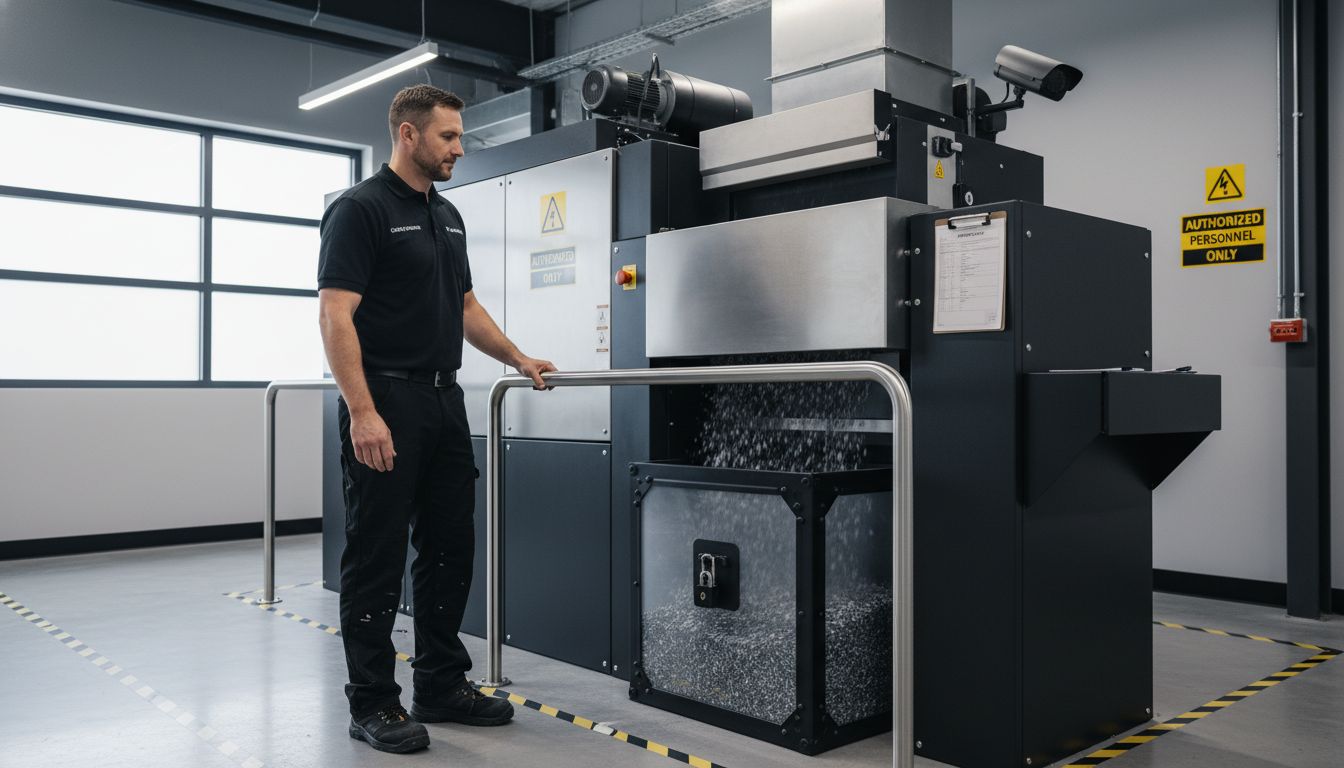
Pulping represents an alternative large-scale document destruction technique where paper documents are transformed into a liquid slurry. This industrial process effectively destroys information by completely breaking down paper fibres. Key characteristics of pulping include:- Processing massive document volumes simultaneously- Creating a paper pulp that cannot be reconstructed- Environmentally friendly recycling potential
Whether choosing shredding or pulping, organisations must prioritise secure information disposal to maintain data protection standards and comply with UK regulatory requirements. Learn more about confidential waste policies for UK businesses to ensure comprehensive document management strategies.
How Shredding and Pulping Processes Work
Document destruction involves sophisticated processes designed to ensure complete information elimination. According to ShredOnSite, secure shredding follows a meticulous workflow that guarantees confidentiality from collection to final destruction.
In the shredding process, documents undergo several critical stages:- Secure collection in locked consoles- Transportation to dedicated shredding facilities- Processing through industrial-grade shredders- Cutting documents into microscopic, unreadable fragments- Generating certificates of destruction for compliance
Pulping represents a more comprehensive document elimination method. Research from secure shredding experts reveals that this technique involves submerging paper documents in a chemical water solution. This industrial process effectively transforms documents by:- Soaking papers in specialised chemical mixtures- Breaking down paper fibres completely- Creating an unrecognisable liquid pulp- Ensuring absolute information destruction
Both methods prioritise data protection, offering businesses robust solutions for managing sensitive information.
VIDEO:video_content] [Explore our comprehensive guide on confidential waste policies to understand how these processes help maintain regulatory compliance and protect organisational data integrity.
Here’s a comparison of confidential shredding and pulping methods:
| Feature | Confidential Shredding | Pulping |
|---|---|---|
| Method | Cross-cut Micro-cut |
Chemical water solution |
| Security Level | High Unrecoverable fragments |
Very High Unrecognisable pulp |
| Volume Suitability | Small to medium batches | Large-scale destruction |
| Environmental Impact | Recyclable shreddings | Fosters paper recycling |
| Speed | Immediate processing | Batch process More time |
| Documentation | Certificates of destruction | Industrial records maintained |
| Cost Efficiency | More cost-effective Fast |
Higher for small volumes |
Legal Compliance and Security Standards UK
Data protection is a critical concern for UK businesses, with stringent legal requirements governing the secure disposal of sensitive information. According to research from Restore, organizations must navigate complex regulations that carry significant financial penalties for non-compliance.
The Data Protection Act 2018 and General Data Protection Regulation (GDPR) establish mandatory standards for confidential waste management. Key legal implications include:- Potential fines up to £3 million or 4% of annual global turnover- Strict requirements for secure document destruction- Mandatory protection of personal and sensitive data- Comprehensive audit trail maintenance
Shredall’s expert analysis highlights the British Standard BS EN 15713, which provides a comprehensive framework for secure material destruction. This standard mandates:- Rigorous employee vetting processes- Detailed documentation of destruction procedures- Clear chain of custody for confidential materials- Systematic approach to information security
Understanding waste disposal legal requirements is crucial for businesses seeking to protect themselves from potential legal risks and maintain the highest standards of data protection and confidentiality.
Key Differences: Security, Cost, and Suitability
Document destruction methods vary significantly in their approach to information security, with each technique offering unique advantages and challenges. According to Government Business insights, organizations must carefully evaluate their specific needs when selecting a destruction strategy.
Security Considerations:- On-site shredding provides immediate visual confirmation of document destruction- Allows organizations to witness the entire process- Reduces potential risks of information interception- Offers maximum transparency and immediate security assurance
Cost and Efficiency Analysis: Secure Shredding experts highlight that pulping and shredding have distinct economic implications. Shredding often proves more cost-effective and efficient, particularly for:- Smaller document volumes- Immediate destruction requirements- Lower processing time- Reduced operational costs
Suitability Factors vary based on organizational needs. Pulping excels in large-scale destruction scenarios, while shredding offers quick, precise document elimination. Learn more about compliant waste disposal strategies to determine the most appropriate method for your specific business requirements.
Choosing the Right Method for Your Business
Confidential waste management requires careful strategic planning tailored to your organization’s unique requirements. According to ShredOnSite experts, businesses must conduct a comprehensive assessment of their specific destruction needs.
Key Selection Criteria for choosing between shredding and pulping include:- Total volume of confidential documents- Budget constraints- Security sensitivity of information- Frequency of document disposal- Compliance requirements- Environmental considerations
Businesses must prioritize methods that provide robust legal compliance. As research indicates, selecting a destruction method with a clear audit trail is crucial to:- Demonstrate regulatory adherence- Protect against potential legal penalties- Maintain comprehensive documentation- Ensure complete information elimination
Explore cost-effective waste management strategies to find the most suitable confidential waste destruction approach for your specific organizational needs, balancing security, efficiency, and compliance.
Secure Your Sensitive Information with Expert Confidential Waste Solutions
Managing confidential documents is a vital challenge for businesses concerned about data protection and legal compliance. Whether you are navigating complex decisions between confidential shredding or pulping, the goal remains the same confident elimination of sensitive material without risk of exposure. At Venture Waste, we understand the critical importance of choosing the right destruction method that balances security, efficiency, and environmental responsibility.

Explore our comprehensive range of confidential document destruction services tailored to meet your unique business requirements. Discover expert guidance and reliable solutions in our confidential waste Archives – Venture Waste to ensure your compliance with UK regulations and industry best practices. Act now to safeguard your business data through our straightforward booking process and extensive UK coverage. Visit Venture Waste today to book your secure confidential waste collection and take the next step in protecting your organisation’s sensitive information.
Frequently Asked Questions
What is the difference between confidential shredding and pulping?
Confidential shredding physically cuts documents into tiny pieces, while pulping transforms paper into a liquid slurry, ensuring both methods completely destroy sensitive information.
How does the security level compare between shredding and pulping?
Shredding offers a high level of security with unrecoverable fragments, while pulping provides an even higher security level with unrecognizable pulp, making both methods effective for data protection.
What are the cost implications of shredding versus pulping?
Shredding is typically more cost-effective for smaller volumes and immediate destruction needs, whereas pulping is generally more expensive and suited for large-scale document destruction.
How do I choose the right method for my business’s document destruction needs?
Consider factors such as the total volume of documents, budget, security sensitivity, disposal frequency, compliance requirements, and environmental impact when choosing between shredding and pulping.


Leave a Reply
Want to join the discussion?Feel free to contribute!