

Master Confidential Document Shredding for Secure Disposal
Safeguarding sensitive business information is more complicated than simply tossing papers in the bin. Not all documents are equally sensitive and some records, like medical or legal files, demand rigorous security because data breaches can cost British firms an average of £3.4 million. Most people assume a quick pass through a shredder solves everything. The real challenge is that proper protection comes from a detailed process with careful planning at every step and this surprises most organisations.
Table of Contents
- Step 1: Assess Your Document Disposal Needs
- Step 2: Gather Necessary Shredding Tools and Equipment
- Step 3: Organise Documents for Shredding
- Step 4: Execute the Shredding Process Safely
- Step 5: Verify Complete Destruction of Documents
- Step 6: Dispose of Shredded Material Responsibly
Quick Summary
| Key Point | Explanation |
|---|---|
| 1. Conduct a document inventory | Assess all documents to classify their sensitivity and establish tailored disposal protocols. |
| 2. Assemble appropriate shredding tools | Gather reliable shredders and storage solutions to ensure efficient and secure document destruction. |
| 3. Organise documents systematically | Sort documents by confidentiality level to facilitate a streamlined shredding process. |
| 4. Execute shredding with safety | Follow strict safety protocols during shredding to protect workers and sensitive information. |
| 5. Verify complete destruction rigorously | Conduct thorough checks on shredded materials to ensure they cannot be reconstructed, maintaining compliance. |
Step 1: Assess Your Document Disposal Needs
Confidential document shredding requires a strategic approach that begins with comprehensive assessment. Before initiating any disposal process, businesses must carefully evaluate their specific document management requirements. This critical first step helps organisations develop a targeted and secure strategy for handling sensitive materials.
Understanding Your Document Landscape
Start by conducting a thorough inventory of all documents within your organisation. Not all documents are created equal, and recognising the varying levels of confidentiality is paramount. Medical records, financial statements, employee information, and client contracts each demand unique handling protocols. Learn more about our confidential document shredding process to understand nuanced disposal requirements.
Consider categorising documents based on sensitivity levels. Highly confidential materials like legal documents, personal identification records, and financial statements require immediate and secure destruction. Less sensitive documents might have different retention and disposal timelines. Pay close attention to regulatory requirements specific to your industry, as sectors like healthcare, finance, and legal services have stringent guidelines for document management.
Practical Assessment Strategies
To effectively assess your document disposal needs, gather your team and conduct a comprehensive audit. This involves examining current document storage practices, identifying potential security risks, and determining appropriate destruction methods. Create a detailed inventory that includes:
- Document type
- Confidentiality level
- Retention period
- Recommended disposal method
By meticulously mapping out your document landscape, you establish a foundation for a robust confidential document shredding strategy. Remember that proper assessment is not a one-time event but an ongoing process that adapts to changing regulatory environments and organisational needs. Regularly reviewing and updating your document disposal protocols ensures continuous compliance and minimises potential security vulnerabilities.
Step 2: Gather Necessary Shredding Tools and Equipment
The second crucial stage in confidential document shredding involves assembling the right tools and equipment to ensure secure and efficient document destruction. Proper preparation prevents poor performance, making this step fundamental to successful confidential waste management.
Selecting Appropriate Shredding Equipment
Choosing the right shredding equipment depends on your organisation’s specific volume and sensitivity requirements. For smaller operations in Newcastle or Durham, a cross-cut desktop shredder might suffice, while larger businesses in Sunderland or Middlesbrough may need industrial-grade shredders capable of handling substantial document volumes. Read our comprehensive guide on document disposal solutions to understand equipment nuances.
Safety considerations are paramount when selecting shredding equipment, as recommended by the Health and Safety Executive. Look for machines with automatic shut-off features, jam prevention mechanisms, and robust cutting systems that render documents completely unreadable. Professional-grade shredders should create particle sizes smaller than 5mm x 30mm to meet most data protection standards.
Beyond the shredder itself, gather essential supplementary equipment to streamline your document destruction process. Secure storage containers with lockable lids are critical for collecting documents awaiting shredding. Invest in heavy-duty disposal bags, protective gloves, and safety goggles if handling large volumes. Consider implementing a tracking system to monitor document destruction, which might include log books or digital tracking software.
Key equipment checklist for comprehensive document shredding:
- Cross-cut or micro-cut industrial shredder
- Secure lockable collection containers
- Heavy-duty disposal bags
- Protective personal equipment
- Document tracking log or software
By meticulously gathering the right tools and equipment, organisations create a robust foundation for secure confidential document disposal.
The table below outlines the essential shredding tools and equipment necessary for effective and secure confidential document destruction, along with their recommended purposes.
| Tool/Equipment | Purpose | Security/Safety Feature |
|---|---|---|
| Cross-cut or Micro-cut Shredder | Reduces documents to small particles for data protection | Automatic shut-off, jam prevention |
| Lockable Collection Container | Securely stores documents awaiting shredding | Lockable lid, restricted access |
| Heavy-duty Disposal Bags | Holds shredded material securely for transport or recycling | Tear-resistant material |
| Protective Personal Equipment | Protects staff during shredding (gloves, goggles) | Safety compliance |
| Tracking Log or Software | Monitors and records every batch of document destruction | Digital or manual audit trail |
| Remember that investing in quality shredding equipment is an investment in data protection and regulatory compliance. |
Step 3: Organise Documents for Shredding
Organising documents for confidential shredding transforms a potentially chaotic process into a systematic and secure operation. Precise organisation is your first line of defence against potential data breaches and information leakage. This step requires methodical approach and careful consideration of document sensitivity.
Begin by creating a comprehensive sorting system that categorises documents based on their confidentiality level and retention requirements. Explore our detailed guide on confidential waste management to understand nuanced classification strategies. Physical documents should be separated into distinct categories: immediate destruction, temporary retention, and permanent archival. Use colour-coded folders or designated storage containers to differentiate between these groups, ensuring clear visual separation.
According to the National Archives, organisations must develop a robust document segregation protocol. Medical records, financial statements, employee personal information, and client contracts each demand unique handling protocols. Create dedicated collection points within your workspace where staff can safely deposit documents earmarked for destruction. These collection points should be secure, lockable, and positioned away from general traffic areas to minimise potential unauthorized access.
Implement a systematic tracking mechanism to monitor document flow from collection to destruction. Each document batch should be logged with essential details including:
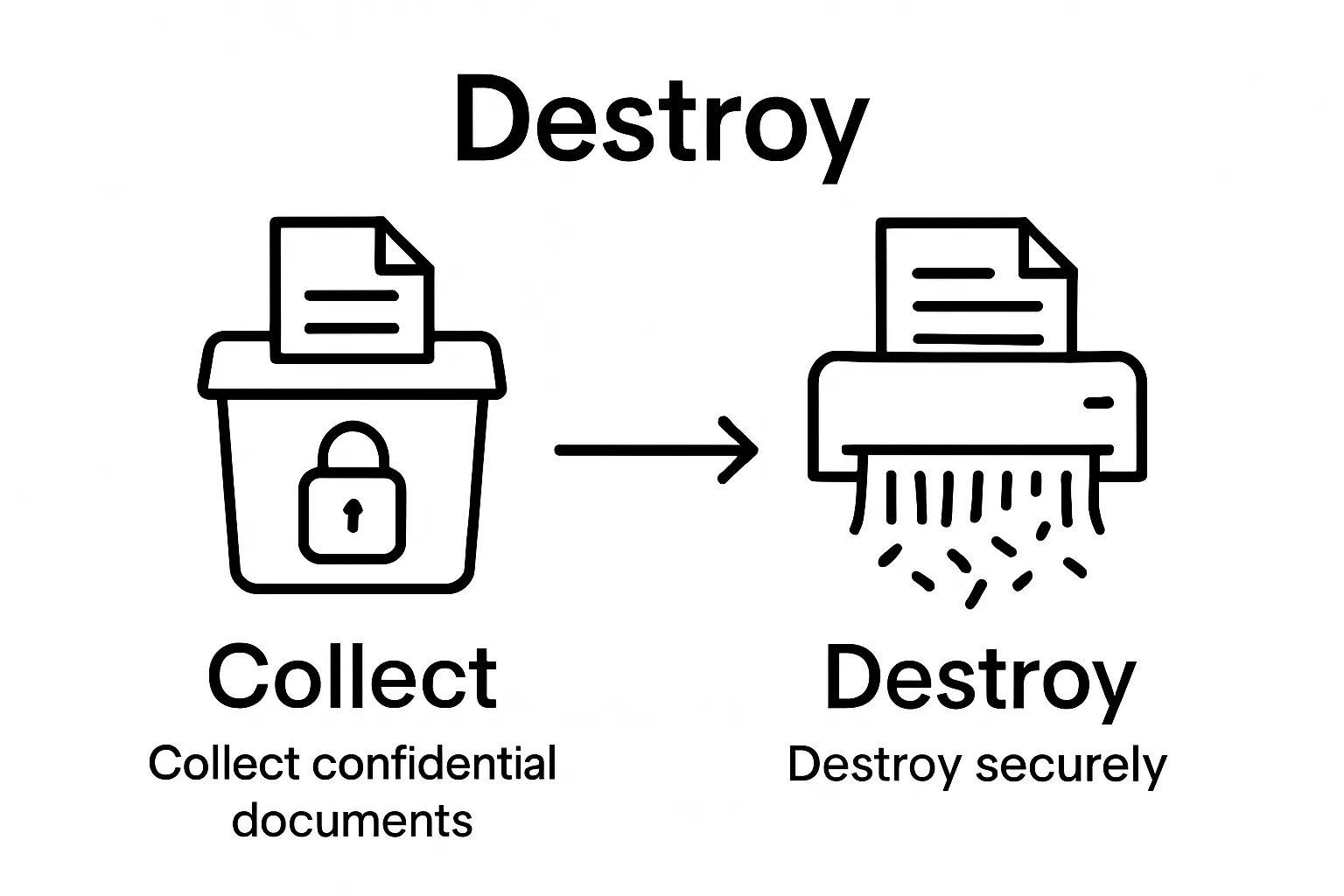
- Date of collection
- Department of origin
- Confidentiality level
- Proposed destruction date
- Staff member responsible for logging
Digital documentation can be equally complex. Ensure electronic files are securely backed up before physical destruction and consider using secure digital shredding software for comprehensive data elimination. This dual approach guarantees that both physical and digital traces of sensitive information are completely removed.
The ultimate goal of this organisational stage is creating a transparent, auditable process that provides complete visibility into your document destruction workflow. By establishing clear protocols and maintaining meticulous records, your organisation demonstrates commitment to data protection and regulatory compliance.
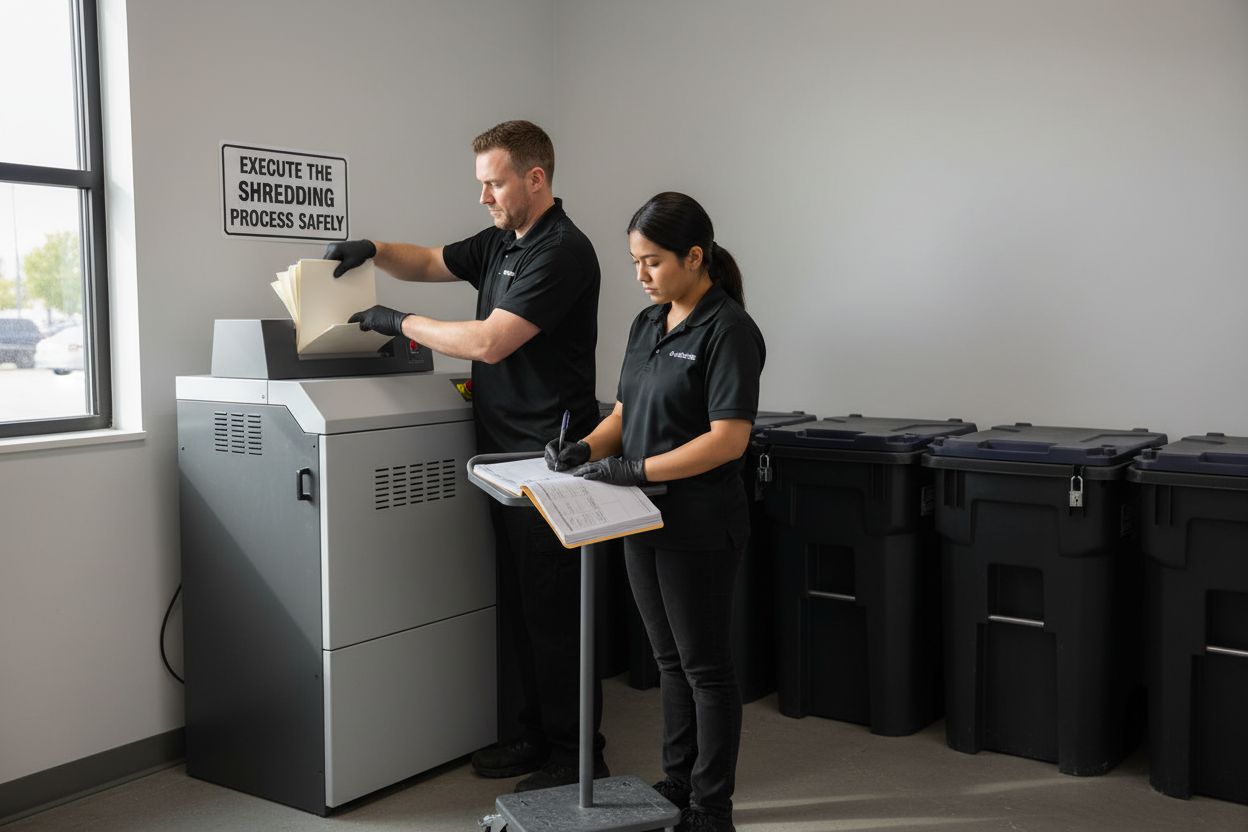
Step 4: Execute the Shredding Process Safely
Executing the confidential document shredding process requires precision, attention to detail, and a comprehensive understanding of safety protocols. Safety and security are paramount during this critical stage of document disposal. The physical act of shredding transforms sensitive materials into unreadable fragments, effectively eliminating potential data breaches.
Learn more about our secure shredding guidelines to complement your internal procedures. Begin by conducting a final document review before shredding, double-checking that all intended materials are appropriately categorised and ready for destruction. Position your shredding station in a controlled, restricted area with limited staff access to maintain confidentiality throughout the process.
According to Health and Safety Executive guidelines, staff must receive comprehensive training on equipment operation and safety protocols. Ensure all personnel understand the correct loading techniques, recognise potential equipment hazards, and know how to respond to mechanical interruptions. Wear appropriate personal protective equipment, including safety glasses and close-fitting clothing that cannot become entangled in shredding mechanisms.
When operating the shredder, follow a systematic approach to document feeding. Process documents in small, manageable batches to prevent machine overload and reduce the risk of jamming. Pay special attention to staples, paperclips, and other metal fasteners that might damage shredder blades. For digital media like hard drives or USB devices, use specialised destruction methods that guarantee complete data elimination beyond simple file deletion.
Key safety considerations during the shredding process include:
- Maintain a clear workspace around the shredding equipment
- Never attempt to clear paper jams while the machine is operational
- Disconnect power before performing any maintenance
- Keep children and unauthorised personnel away from the shredding area
- Regularly inspect equipment for signs of mechanical wear
Once the shredding is complete, immediately transfer shredded materials to secure disposal containers. Implement a verification process where multiple staff members confirm the destruction of sensitive documents. This additional layer of accountability ensures comprehensive data protection and provides an audit trail for regulatory compliance.
Step 5: Verify Complete Destruction of Documents
Verification represents the critical final stage in confidential document shredding, transforming a potentially vulnerable process into a robust security protocol. Absolute confirmation of document destruction is non-negotiable for maintaining organisational integrity and regulatory compliance.
Learn more about our secure document destruction processes to enhance your verification strategies. Comprehensive verification involves multiple layers of scrutiny, beginning with a meticulous visual inspection of shredded materials. Examine the output carefully, ensuring documents are reduced to particles small enough to prevent reconstruction. Professional-grade shredders should create fragments no larger than 5mm x 30mm, rendering document reconstruction virtually impossible.
According to the National Archives, maintaining a detailed audit trail is crucial for demonstrating due diligence. Develop a systematic documentation process that records every aspect of the destruction workflow. This documentation should include precise details such as date of destruction, volume of documents processed, department of origin, and the specific staff members involved in the shredding process.
Below is a checklist table summarising the key verification steps required to ensure complete and compliant destruction of confidential documents.
| Verification Step | Description | Responsible Party |
|---|---|---|
| Physical Fragmentation | Confirm documents are reduced to small, unreadable particles | Shredding Operative |
| Security Standards Check | Verify particle size meets required security specifications | Shredding Supervisor |
| Documentation Completion | Log date, volume, and department of destruction | Administrative Staff |
| Personnel Confirmation | Obtain a signed statement verifying completion of shredding process | Supervising Officer |
| Certificate Retention | Maintain official destruction certificates for regulatory compliance | Records Manager |
Digital verification methods can complement physical inspection. Consider implementing advanced tracking technologies that provide real-time documentation of document destruction. Some organisations use barcode scanning or digital logging systems that create an immutable record of each document’s journey from collection to complete destruction. These technological solutions offer an additional layer of transparency and accountability.
Key verification checkpoints include:
- Confirming complete physical fragmentation of documents
- Verifying particle size meets security standards
- Documenting destruction date and process
- Obtaining signed confirmation from responsible personnel
- Retaining destruction certificates for regulatory compliance
Beyond physical verification, organisations must also consider the environmental disposal of shredded materials. Partner with certified waste management providers who can guarantee secure recycling or disposal of document fragments. This approach ensures that not only are documents destroyed, but their remnants are also handled with the same level of confidentiality and professionalism as the original materials.
Step 6: Dispose of Shredded Material Responsibly
The final stage of confidential document shredding focuses on responsible disposal, transforming potentially sensitive waste into an environmentally conscious process. Proper disposal is more than simply discarding shredded materials – it represents a critical component of comprehensive data protection and environmental stewardship.
Discover why secure document disposal matters for your business and understand the broader implications of responsible waste management. Begin by segregating shredded materials based on their composition. Paper fragments can be directed towards recycling streams, while materials containing sensitive digital components require specialised handling. Organisations operating in regions like Newcastle, Durham, and Sunderland should partner with certified waste management providers who understand local environmental regulations.
According to UK government guidelines, businesses must ensure all waste is handled by authorised carriers. This means selecting waste management partners who can provide comprehensive disposal certificates and demonstrate compliance with environmental protection standards. Secure transportation of shredded materials is equally important – use locked containers and track the waste from your premises to the final disposal point.
Environmental considerations extend beyond mere disposal. Consider implementing a closed-loop recycling approach where shredded confidential documents are transformed into new paper products or alternative materials. This strategy not only protects sensitive information but also contributes to sustainable waste management practices. Some advanced waste management services offer certificates of destruction, providing additional assurance that your materials have been processed securely and responsibly.
Key responsible disposal considerations include:
- Selecting certified waste management partners
- Obtaining comprehensive disposal documentation
- Ensuring secure transportation of shredded materials
- Prioritising recycling where possible
- Maintaining a transparent audit trail
By adopting a holistic approach to document disposal, organisations demonstrate their commitment to data security, regulatory compliance, and environmental responsibility. The process of shredding and disposing of confidential materials becomes more than a routine task – it transforms into a strategic decision that protects both organisational interests and broader societal values.
Secure Your Confidential Document Shredding with Trusted Experts in the UK
Struggling to turn your document disposal knowledge into real protection for your business? Even with step-by-step guidance, many companies find that managing confidential waste can be overwhelming, putting privacy, legal compliance, and environmental responsibility at risk. The article outlined the rigorous processes needed, such as secure sorting, certified destruction, and responsible disposal—each demanding time, resources and constant vigilance to prevent costly data breaches.
Discover how simple it can be to eliminate these worries with Venture Waste’s confidential waste solutions. We take the guesswork out of secure shredding and ensure your business follows every best practice mentioned in the guide.

Let our experts handle the secure disposal of your sensitive documents from assessment to environmentally responsible recycling. Visit Venture Waste Management now to book a compliant, fully auditable shredding service. You will gain peace of mind and immediate protection from regulatory pitfalls. Don’t wait until mistakes happen—secure your confidential waste solutions today.
Frequently Asked Questions
What is the first step in confidential document shredding?
The first step is to assess your document disposal needs by conducting a thorough inventory of all documents within your organisation. This helps to evaluate the varying levels of confidentiality and establish handling protocols that align with regulatory requirements.
How should I categorise documents for shredding?
Documents should be categorised based on their confidentiality level and retention requirements. Classify them into groups such as immediate destruction, temporary retention, and permanent archival, using clear visual aids like colour-coded folders.
What tools and equipment are necessary for effective document shredding?
Essential tools include a cross-cut or micro-cut industrial shredder, secure lockable collection containers, heavy-duty disposal bags, and personal protective equipment. It’s also advisable to have a tracking system to monitor the document destruction process.
How can I verify that my documents have been completely destroyed?
Verification involves performing a visual inspection of the shredded materials to ensure they meet required particle sizes. Additionally, maintain a detailed audit trail documenting the destruction process, including destruction dates and responsible personnel involved.


Leave a Reply
Want to join the discussion?Feel free to contribute!