

Commercial Waste Management – Why Compliance Matters
Managing the sheer volume and diverse types of waste produced by healthcare and educational facilities is a constant challenge. With UK businesses generating approximately 32.6 million tonnes of commercial and industrial waste in 2023, facilities managers face mounting pressure to stay compliant with strict regulations and demonstrate environmental accountability. This overview clarifies your legal obligations, highlights the risks of misclassified waste, and offers guidance on building robust processes that protect both your organisation and the wider community.
Table of Contents
- What Commercial Waste Means For UK Businesses
- Types Of Commercial Waste Produced In Facilities
- Legal Duties And Compliance Requirements
- Risks And Financial Penalties For Non-Compliance
- Key Mistakes In Hazardous And Confidential Waste Handling
Key Takeaways
| Point | Details |
|---|---|
| Understanding Commercial Waste | Commercial waste includes all waste generated by business operations and must be classified accurately to comply with legal obligations. |
| Compliance is Crucial | Non-compliance with waste regulations can lead to significant fines, legal actions, and reputational damage. |
| Important Waste Regulations | Key regulations such as the Environmental Protection Act 1990 impose specific responsibilities on businesses regarding waste management. |
| Effective Waste Segregation | Proper segregation of waste streams mitigates contamination risks and ensures compliance with health and safety regulations. |
What Commercial Waste Means for UK Businesses
Commercial waste is any waste produced by your business operations, regardless of size or sector. This covers everything from office rubbish to specialised waste streams that need careful handling and disposal.
The scale of commercial waste in the UK is substantial. According to recent data, UK businesses generated approximately 32.6 million tonnes of commercial and industrial waste in 2023 alone. This figure reflects the cumulative impact of thousands of organisations across healthcare, education, retail, manufacturing, and service industries.
Types of Commercial Waste Your Organisation Produces
Commercial waste encompasses far more than general rubbish. Your facility likely produces several waste streams:
- General waste and office refuse
- Dry mixed recyclables
- Food waste from canteens or dining areas
- Green waste (landscaping, garden materials)
- Hazardous waste (chemicals, cleaning products)
- Clinical or pharmaceutical waste
- Confidential document waste
- Construction or bulky waste
For healthcare and educational facilities, hazardous and clinical waste streams require specialist handling and are subject to stricter regulations than standard commercial waste.
Why This Matters for Your Compliance Obligations
Proper classification of your waste streams is not optional—it directly affects your legal responsibilities. Misclassifying waste can result in significant fines and reputational damage.
Your organisation has a statutory duty to manage commercial waste responsibly and in compliance with UK environmental legislation.
When you understand what waste your facility generates, you can establish appropriate disposal methods and ensure you’re working with compliant waste management partners. This protects your organisation and demonstrates environmental accountability.
Facilities managers in healthcare and educational settings face particular scrutiny. Regulatory bodies expect these institutions to demonstrate robust waste management systems with detailed records and audit trails.
The Regulatory Framework
Your organisation must comply with several key regulations:
- Environmental Protection Act 1990
- Environmental Permitting Regulations 2016
- Duty of Care requirements
- Health and Safety at Work legislation
- Hazardous Waste Regulations 2005
Each regulation imposes specific requirements on how you classify, store, and dispose of different waste types. Non-compliance can trigger investigations from the Environment Agency or local authorities.
To help clarify legal obligations, here is a summary of key UK waste regulations and their main compliance requirements:
| Regulation | Scope | Key Compliance Requirement |
|---|---|---|
| Environmental Protection Act 1990 | All commercial waste | Duty of Care for safe, legal handling |
| Environmental Permitting Regulations 2016 | Facilities storing/disposing waste | Permits for waste management activities |
| Hazardous Waste Regulations 2005 | Hazardous waste producers | Specialist storage, consignment notes |
| Health and Safety at Work legislation | Workplace safety | Safe handling and risk assessments |
| Duty of Care requirements | All organisations | Maintain transfer records, prevent harm |
Pro tip: Document all waste streams your facility produces and assign responsibility for each type to specific team members; this creates accountability and simplifies regulatory audits.
Types of Commercial Waste Produced in Facilities
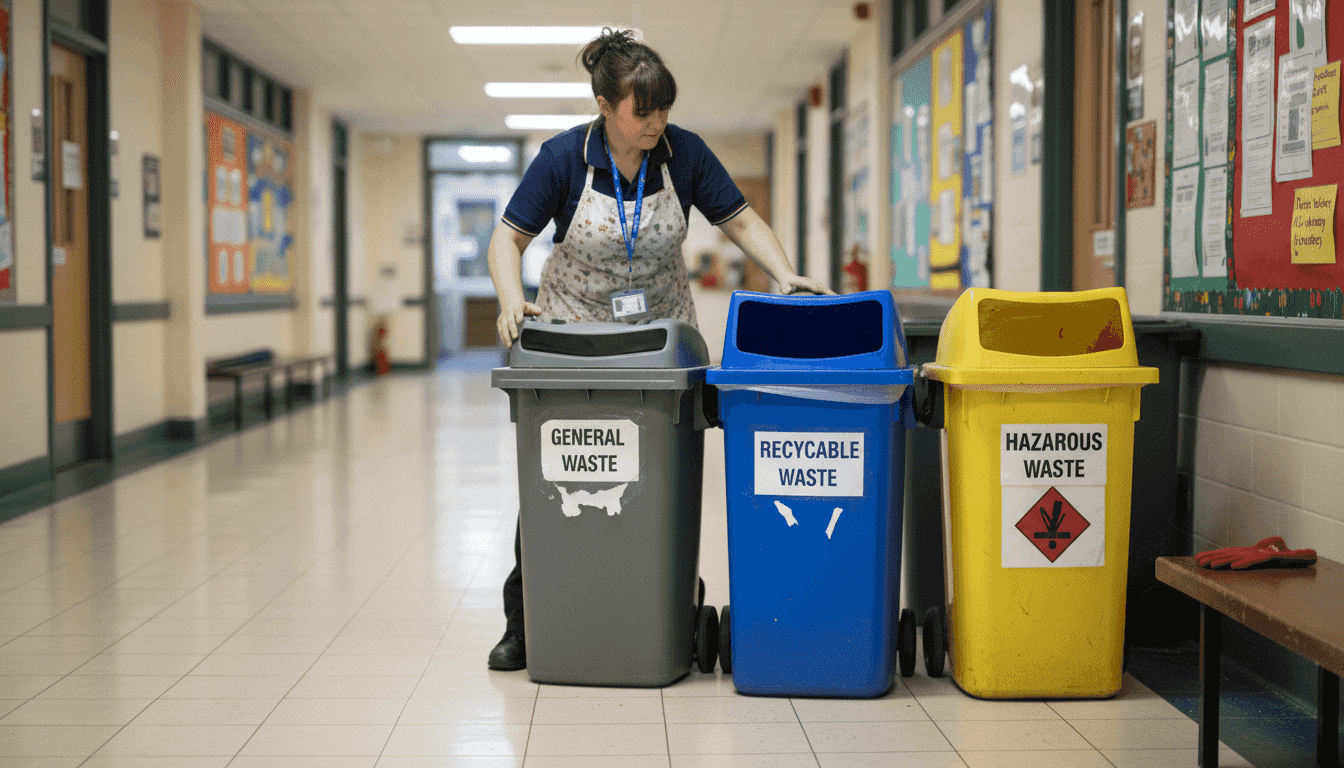
Your facility generates multiple waste streams daily, and each requires different handling procedures. Understanding what you produce is the first step towards compliant waste management and cost-effective disposal.
Facilities across the UK produce diverse waste categories. Commercial waste types range from general refuse to hazardous materials, with non-hazardous waste making up the majority of what most organisations dispose of.
Understanding Your Facility’s Waste Categories
Non-hazardous waste forms the bulk of what healthcare and educational facilities generate. This includes:
- General waste and office refuse
- Dry mixed recyclables (paper, cardboard, plastics)
- Food waste from canteens and dining facilities
- Garden or grounds waste
- Wood and metal waste
- Bulky or construction waste
Hazardous and specialist waste requires stricter control. Your facility may also produce:
- Chemical waste (cleaning products, laboratory materials)
- Clinical or pharmaceutical waste
- Radioactive waste
- Confidential document waste
Why Proper Segregation Matters
Mixing waste streams creates serious problems. When hazardous materials contaminate general waste, disposal costs spike and you risk regulatory breaches.
Proper waste segregation prevents cross-contamination and ensures each stream receives appropriate treatment.
Healthcare facilities must segregate clinical waste immediately to prevent infection risks and meet Health and Safety regulations. Educational institutions must separate confidential waste to protect student and staff information.
Hazardous Waste Considerations for Your Sector
Hazardous waste handling differs significantly from general waste. Chemical cleaning products, laboratory materials, and certain pharmaceutical waste require specialist disposal procedures to prevent environmental damage and staff exposure.
Your organisation must maintain detailed records of all hazardous waste removed from your premises. The Environment Agency can audit these records at any time, so documentation accuracy is essential.
Developing a Waste Audit
Conducting a waste audit helps you understand exactly what your facility produces and how much. This information drives better waste management decisions and identifies cost savings.
- Document each waste stream produced daily
- Measure quantities generated weekly
- Identify peak production periods
- Review segregation effectiveness
- Adjust collection schedules based on data
This data also supports your compliance reporting requirements and demonstrates due diligence to regulatory bodies.
Pro tip: Assign waste auditing responsibility to a single team member who conducts weekly checks; consistency in data collection reveals patterns and highlights areas for improvement.
Legal Duties and Compliance Requirements
Your organisation has legal obligations that go far beyond simply arranging waste collection. These duties are enforced by the Environment Agency and local authorities, with penalties ranging from substantial fines to criminal prosecution.
The foundation of UK waste law rests on the Environmental Protection Act 1990. This legislation establishes the Duty of Care framework, which places responsibility on your organisation to manage commercial waste responsibly and prevent harm to human health and the environment.
Understanding Your Duty of Care
Your Duty of Care is not optional—it’s a legal obligation. This means you must:
- Store waste safely and securely
- Prevent waste from escaping or causing nuisance
- Transfer waste only to authorised carriers
- Maintain detailed transfer documentation
- Ensure waste is disposed of at permitted facilities
- Keep records for minimum two years
Breaching your Duty of Care can result in fines up to £50,000 or unlimited fines for serious breaches. Criminal prosecution is also possible if your negligence causes environmental damage or harm.
Waste Carrier Registration Requirements
If your facility arranges waste transport or disposal, you may need to register as a waste carrier. Businesses handling waste must register with the Environment Agency in England, with equivalent requirements in Scotland, Wales, and Northern Ireland.
Failure to register as a waste carrier when required can result in substantial fines and legal action.
Registration requirements depend on your waste type and volume. Healthcare facilities transporting their own hazardous waste, for example, may require carrier registration. Educational institutions disposing of large quantities may also trigger registration obligations.
Documentation and Record-Keeping
Proper documentation proves compliance. You must maintain:
- Waste transfer notes for every collection
- Hazardous waste consignment notes (for specialist waste)
- Disposal certificates from treatment facilities
- Contracts with waste management providers
- Evidence of staff training on waste procedures
Keep these records accessible for Environment Agency inspection. Audits can occur with minimal notice, and missing documentation is treated seriously.
Working with Compliant Partners
Your waste contractor must be properly registered and licensed. Always verify they hold appropriate registrations before engaging their services.
Ask your provider for evidence of their waste carrier registration and environmental permits. This protects your organisation and ensures your waste receives legal treatment.
Pro tip: Request copies of your waste contractor’s registration certificates and liability insurance annually; store these in a dedicated compliance folder for quick access during Environment Agency inspections.
Risks and Financial Penalties for Non-Compliance
Ignoring commercial waste regulations doesn’t just expose your facility to fines. It creates genuine health hazards, environmental damage, and reputational harm that can take years to recover from.
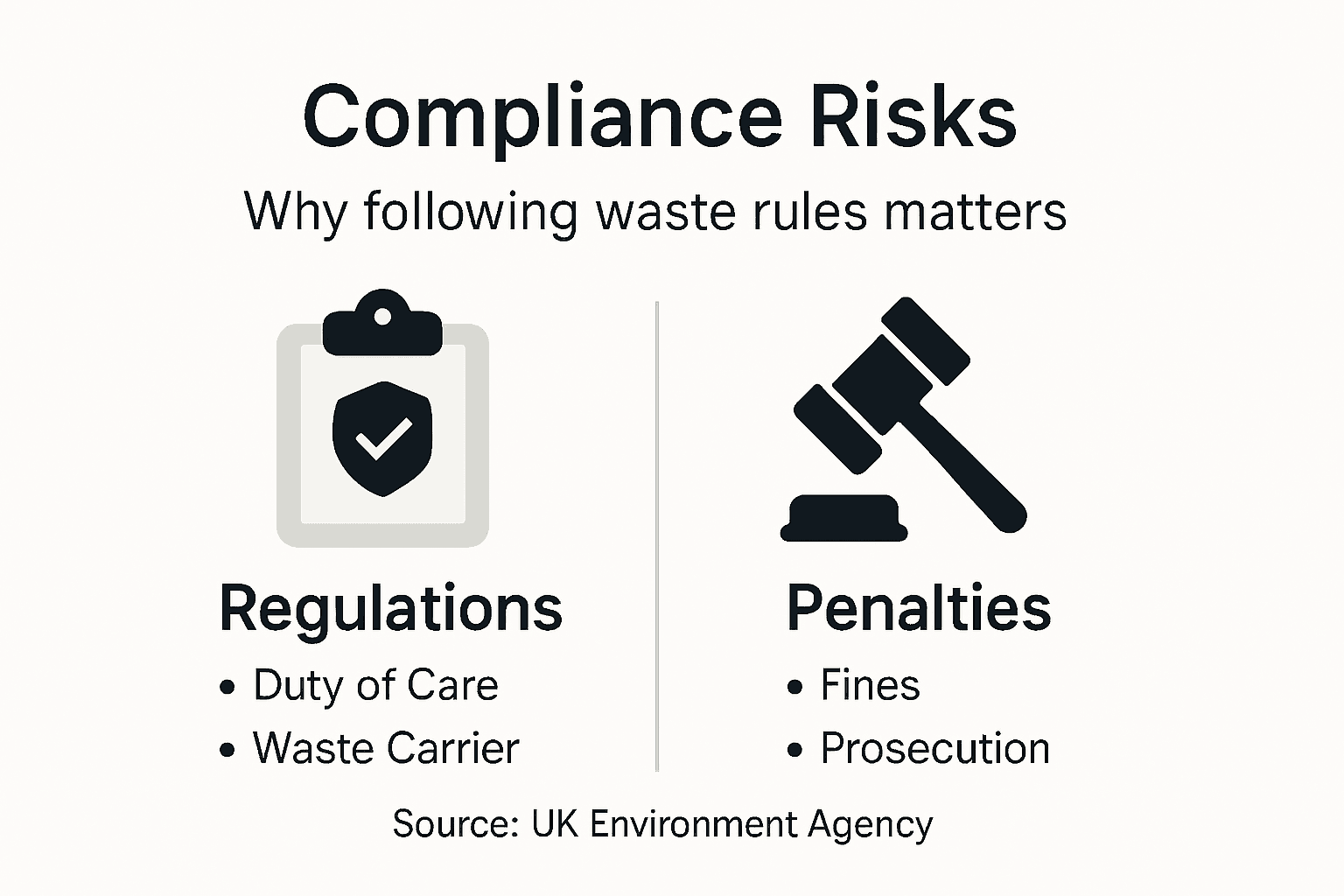
Non-compliance with waste management regulations carries serious consequences. Health hazards to workers increase significantly when proper waste control measures are absent, particularly with offensive and hazardous waste materials.
Financial Penalties and Enforcement Action
The Environment Agency and local authorities have extensive powers to penalise non-compliance. Penalties scale according to the severity of the breach and whether it was intentional or negligent.
Common financial penalties include:
- Fixed penalties up to £300 for minor breaches
- Compliance notices requiring corrective action
- Prosecution fines ranging from £5,000 to £50,000 for Duty of Care breaches
- Unlimited fines for serious environmental damage
- Criminal prosecution with potential imprisonment
These are not theoretical risks. The Environment Agency actively investigates complaints and conducts routine audits of commercial waste practices.
Operational and Reputational Risks
Beyond financial penalties, non-compliance creates operational disruption. Enforcement action can include:
- Temporary closure of waste disposal operations
- Suspension of waste handling contracts
- Mandatory staff retraining programmes
- Increased monitoring and inspection costs
- Public disclosure of enforcement action
For healthcare and educational institutions, reputational damage compounds these issues. Parents, patients, and staff expect these organisations to operate responsibly.
Health and Safety Consequences
Improper waste management creates immediate workplace hazards. Staff exposure to hazardous materials increases the risk of:
- Needle stick injuries
- Chemical exposure
- Infection transmission
- Respiratory issues
These incidents generate additional costs through worker compensation claims, sick leave, and potential HSE enforcement. Your organisation becomes liable for injuries caused by negligent waste practices.
Building a Compliance Culture
The most effective risk mitigation strategy is creating a strong compliance culture. This means:
- Implementing robust waste segregation procedures
- Training all staff on waste handling responsibilities
- Conducting regular audits of waste practices
- Maintaining comprehensive documentation
- Partnering with compliant waste contractors
These measures demonstrate due diligence if enforcement action occurs and significantly reduce the likelihood of breaches.
Pro tip: Conduct internal waste audits quarterly and document your findings; this evidence of proactive compliance shows regulators you take your obligations seriously and can reduce penalties if issues arise.
Here’s a quick comparison of risks and consequences for non-compliance versus strong compliance culture in commercial waste management:
| Approach | Financial Impact | Operational Effect | Reputation |
|---|---|---|---|
| Non-Compliance | Fines up to £50,000, unlimited for severe cases | Disruption, audits, contract suspension | Negative public perception, loss of trust |
| Strong Compliance Culture | Reduced penalty risks, cost savings | Smooth operations, fewer inspections | Demonstrated responsibility, enhanced credibility |
Key Mistakes in Hazardous and Confidential Waste Handling
Hazardous and confidential waste require specialist handling that many facilities get wrong. These mistakes create compliance breaches, data protection violations, and serious health risks for your staff.
The most critical error is treating hazardous waste casually. Failing to conduct proper risk assessments under COSHH regulations means you don’t understand what your staff are exposed to or how to protect them.
Hazardous Waste Mistakes
Hazardous materials in healthcare and educational facilities include:
- Cleaning chemicals and disinfectants
- Laboratory reagents and solvents
- Pharmaceutical waste
- Asbestos or lead-containing materials
- Aerosol cans and pressurised containers
Common handling errors include:
- Mixing incompatible chemicals in shared containers
- Storing hazardous materials near general waste
- Failing to label containers clearly
- Disposing of hazardous waste through general waste streams
- Not training staff on safe handling procedures
Each of these mistakes increases exposure risk and creates regulatory violations.
Confidential Waste Handling Failures
Confidential waste breaches expose your organisation to data protection violations. Inadequate secure storage and improper shredding are common causes of data breaches.
Under UK Data Protection Act and GDPR regulations, confidential waste must remain secure from collection through final destruction.
Frequent confidential waste mistakes include:
- Leaving sensitive documents in open bins
- Failing to use locked storage containers
- Shredding documents on-site without proper verification
- Using unvetted waste contractors
- Not maintaining destruction certificates
These errors trigger Information Commissioner’s Office investigations and substantial fines under GDPR.
Staff Training Gaps
Many facilities fail to train staff adequately on waste handling. Staff often don’t understand which waste streams require special handling or why segregation matters.
Without training, employees make mistakes that create cascading compliance problems. Induction programmes should cover hazardous waste identification, confidential document handling, and segregation procedures.
Documentation and Verification
Your facility must maintain records proving compliant handling. Hazardous waste requires:
- Risk assessments documenting chemical hazards
- Safety data sheets for all substances
- Hazardous waste consignment notes
- Contractor certifications
Confidential waste requires destruction certificates confirming secure disposal. Request these from your waste contractor and retain them for audit purposes.
Pro tip: Create a monthly checklist documenting hazardous waste risk assessments and confidential waste destruction certificates; this single document satisfies regulators and prevents costly compliance gaps.
Ensure Your Commercial Waste Compliance with Venture Waste Management
Managing commercial waste can feel overwhelming with strict legal duties, hazardous materials, and the risk of costly penalties. This article highlights common challenges such as proper waste segregation, maintaining detailed records, and working only with authorised waste carriers. These are critical to meeting your Duty of Care and avoiding fines up to £50,000 or worse. Venture Waste Management specialises in helping businesses like yours take control of these complexities. Our expert services cover everything from general waste collection to specialist hazardous waste handling and secure confidential waste destruction. We ensure your waste is managed safely and legally.

Take the stress out of compliance today. Discover how our solutions simplify your waste obligations, reduce operational risks, and demonstrate environmental responsibility. Visit Venture Waste now for seamless service and trusted support. Learn more about regulatory requirements on our regulation Archives page and find tailored services to protect your business and staff.
Act now to maintain your reputation and avoid enforcement actions. Start your compliant waste management journey with Venture Waste Management.
Frequently Asked Questions
What is commercial waste?
Commercial waste is any waste generated by business operations, including office rubbish, recyclables, food waste, and hazardous materials that require regulated disposal.
Why is waste segregation important in commercial settings?
Proper waste segregation prevents cross-contamination, ensures compliance with regulations, and improves the efficiency of waste disposal and recycling processes.
What are the legal obligations for managing commercial waste?
Businesses must comply with several regulations, including the Environmental Protection Act 1990, which mandates safe handling, storage, and disposal of waste, as well as maintaining documentation for audits.
What are the consequences of non-compliance with commercial waste regulations?
Non-compliance can lead to severe penalties, including fines up to £50,000, potential criminal prosecution, and operational disruptions that may harm the business’s reputation.
Recommended
- Understanding Waste Management Legislation Update 2025 – Venture Waste
- Facility Manager Waste Duties – Ensuring Legal Compliance – Venture Waste
- Waste Disposal Certificates: Ensuring Legal Compliance – Venture Waste
- How to Sort Waste Effectively for Legal Compliance – Venture Waste
- Repair Over Replacement: Insights for Asset Lifecycle Management – FullyOps
- Electrician & Compliance Work, Belgium


Leave a Reply
Want to join the discussion?Feel free to contribute!