

Commercial Waste Explained: What UK Businesses Face Now
Over 90 percent of British businesses face mounting pressure to manage commercial waste in strict compliance with United Kingdom regulations. For facilities managers in UK healthcare organizations, the stakes are even higher as hazardous materials and confidential documents demand meticulous attention to legal and environmental standards. This guide cuts through common confusion, offering clear insights to help you maintain compliance, avoid costly penalties, and protect your organization’s reputation.
Table of Contents
- What Commercial Waste Means in the UK
- Major Types of Commercial Waste Streams
- Legal Duties and Digital Tracking Requirements
- Waste Management Responsibilities and Financial Risks
- Key Mistakes When Handling Hazardous or Confidential Waste
Key Takeaways
| Point | Details |
|---|---|
| Understanding Commercial Waste | Commercial waste in the UK encompasses waste from various business sectors, requiring legal compliance and environmental responsibility in its management. |
| Legal Compliance Responsibilities | Businesses must proactively manage waste through strategic planning, adhering to legal responsibilities to avoid fines and reputational damage. |
| Digital Waste Tracking | The imminent transition to mandatory digital waste tracking will streamline compliance and enhance transparency in waste management practices. |
| Hazardous and Confidential Waste | Proper handling and segregation of hazardous and confidential waste are critical to mitigate legal risks and protect sensitive information. |
What Commercial Waste Means in the UK
In the United Kingdom, commercial waste represents any waste generated from business activities across multiple sectors. This includes waste produced by retail establishments, offices, construction sites, agricultural operations, and home businesses conducting professional activities. Understanding the nuanced definition is crucial for legal compliance and environmental responsibility.
According to official UK government guidelines, businesses have specific responsibilities when managing their waste. Companies must minimise waste generation through strategic planning and implement robust waste management protocols. This involves systematically sorting waste, ensuring safe storage, maintaining accurate documentation like waste transfer notes, and confirming all waste carriers are properly registered.
Commercial waste encompasses a wide range of materials, from paper and packaging to construction debris and food waste. Each category requires different handling procedures, with particular emphasis on recycling and responsible disposal. Businesses must separate recyclable materials like food waste, paper, cardboard, and dry recyclables from general waste. Special attention is required for hazardous waste streams, which demand additional regulatory compliance and specialised treatment.
The environmental and legal implications of commercial waste management are significant. Non-compliance can result in substantial fines and potential legal consequences. Businesses must stay informed about current regulations, invest in proper waste management infrastructure, and continuously evaluate their waste reduction strategies.
Pro tip: Conduct a comprehensive waste audit annually to identify opportunities for waste reduction and improve your organisation’s environmental sustainability practices.
Major Types of Commercial Waste Streams
British businesses generate multiple distinct commercial waste streams that require specialised handling and disposal strategies. These waste categories range from general office waste to industry-specific materials, each presenting unique environmental and regulatory challenges. Understanding these different waste types is essential for effective waste management and regulatory compliance.
Office and administrative waste represents a significant commercial waste stream, typically comprising paper documents, printer cartridges, electronic equipment, and packaging materials. Businesses can reduce general waste through strategic recycling and digital transformation initiatives. Sectors like healthcare, finance, and professional services generate substantial quantities of confidential documentation that require secure destruction processes.

Manufacturing and construction industries produce more complex waste streams, including metal scraps, construction debris, packaging materials, and potentially hazardous industrial waste. These sectors must implement rigorous waste segregation protocols, ensuring different materials are correctly sorted and processed. Chemical residues, timber offcuts, metallic fragments, and contaminated packaging demand specialised disposal techniques that minimise environmental impact.
Retail, hospitality, and food service businesses generate significant organic and packaging waste. These streams include food waste, cardboard packaging, plastic containers, and single-use materials. Restaurants, supermarkets, and catering businesses must develop comprehensive waste management strategies that prioritise food waste recycling, packaging reduction, and sustainable disposal methods.
Pro tip: Implement a comprehensive waste audit to precisely categorise and quantify your organisation’s different waste streams, enabling more targeted and effective waste reduction strategies.
Here’s a summary of major commercial waste streams and their business impact:
| Waste Stream | Typical Sources | Key Challenges | Business Impact |
|---|---|---|---|
| Office Waste | Admin offices, professional firms | Secure disposal of documents | Data protection compliance |
| Construction Debris | Building sites, manufacturing | Hazardous material handling | Increased regulatory oversight |
| Organic & Food Waste | Hospitality, supermarkets | High contamination and odour | Food safety and reputation |
| Industrial Hazardous | Factories, labs | Specialised storage requirements | Costly disposal procedures |
Legal Duties and Digital Tracking Requirements
Under United Kingdom law, businesses have a critical Duty of Care regarding commercial waste management that extends far beyond simple disposal. This legal framework requires organisations to take proactive steps in minimising waste generation, ensuring safe storage, and maintaining comprehensive documentation throughout the waste disposal process. Detailed compliance requirements mandate rigorous verification of waste carrier credentials and systematic tracking of waste movements.
The UK is implementing significant digital transformation in waste management, with a comprehensive Digital Waste Tracking system set to become mandatory from 2026. This revolutionary approach will replace traditional paper-based waste transfer notes, compelling businesses to maintain real-time digital records for every waste movement. The system aims to enhance traceability, improve regulatory enforcement, and provide unprecedented transparency in commercial waste management practices.
Businesses face substantial legal consequences for non-compliance, including significant financial penalties and potential criminal prosecution. Hazardous waste streams attract particularly stringent regulations, requiring businesses to implement specialised handling protocols and maintain meticulous documentation. Extended Producer Responsibility rules are becoming increasingly complex, placing greater accountability on organisations for the entire lifecycle of their waste products.
The digital tracking requirements represent a fundamental shift in waste management oversight. Organisations must invest in digital infrastructure, train staff in new reporting mechanisms, and develop robust internal systems to capture and report waste movement data accurately. This represents not just a legal obligation, but an opportunity to demonstrate environmental responsibility and operational excellence.
Pro tip: Develop a comprehensive digital waste tracking system that integrates real-time reporting, staff training, and automated compliance monitoring to stay ahead of regulatory changes.
Compare manual and digital waste tracking requirements for UK businesses:
| Method | Record Management | Compliance Risk | Long-term Benefits |
|---|---|---|---|
| Paper-based Tracking | Prone to loss/errors | Greater non-compliance risk | Limited traceability |
| Digital Tracking | Real-time, accurate | Improved regulatory accuracy | Enhances transparency, easy audits |
Waste Management Responsibilities and Financial Risks
UK businesses face increasingly complex legal responsibilities regarding waste management, with potential financial consequences that can significantly impact organisational sustainability. Comprehensive waste compliance requires businesses to meticulously track, manage, and legally dispose of their commercial waste streams, ensuring every stage of waste movement meets stringent regulatory standards.
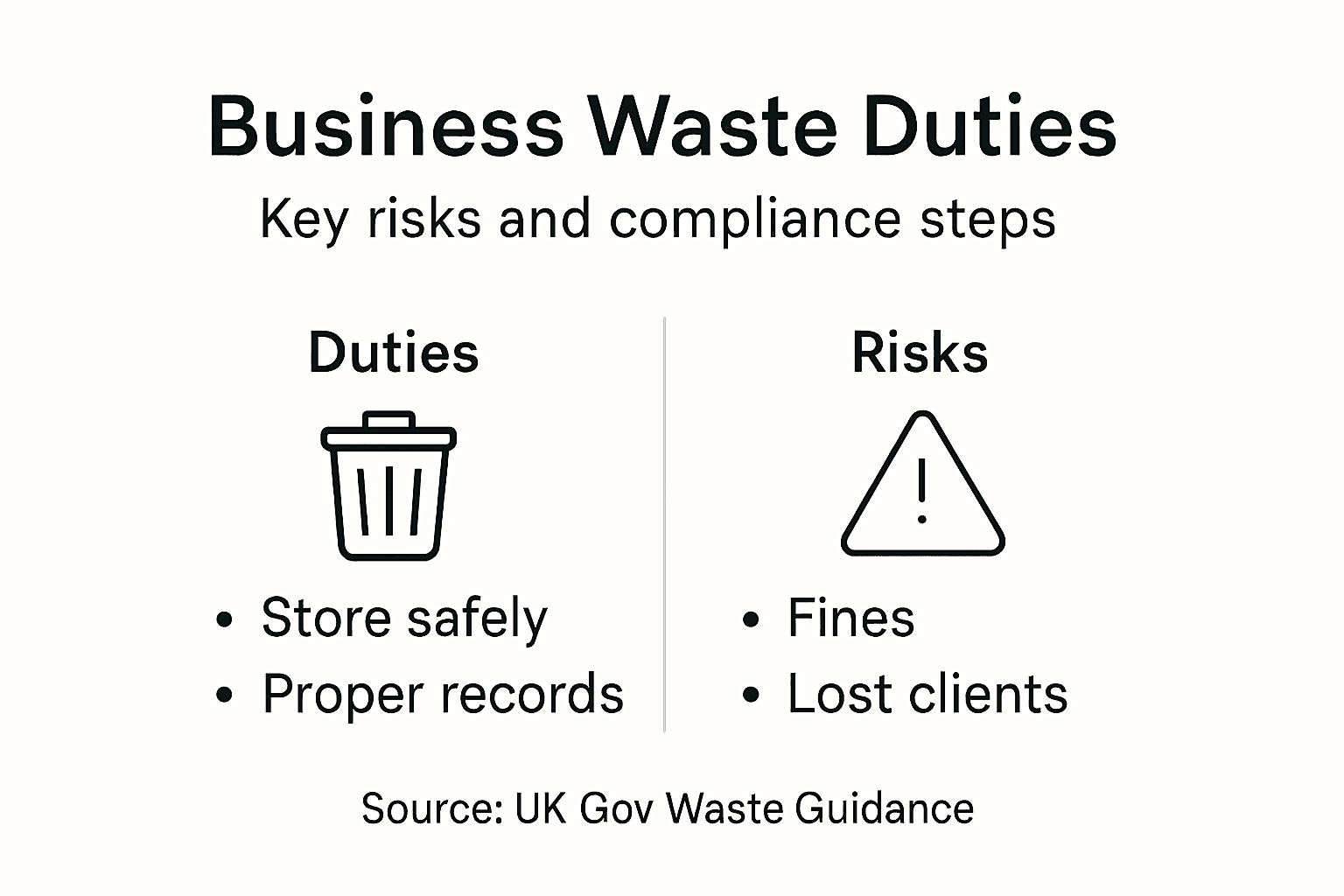
Financial risks associated with improper waste management are substantial and multifaceted. Companies can incur significant penalties for non-compliance, including hefty fines, potential prosecution, and reputational damage. Rising waste disposal fees, escalating landfill tax rates, and increasing transport costs create a challenging economic landscape for businesses. Poor waste segregation practices can trigger additional surcharges, while repeated non-compliance might result in operational licensing restrictions.
Organisations must develop robust waste management strategies that go beyond mere legal compliance. This involves implementing sophisticated waste tracking systems, training staff in proper waste handling procedures, and creating internal protocols that prioritise waste reduction and sustainable disposal. Businesses need to view waste management not as an administrative burden, but as a strategic opportunity to demonstrate environmental responsibility and potentially reduce operational expenses.
The financial implications extend beyond immediate penalties. Companies with poor waste management practices risk losing competitive advantage, alienating environmentally conscious customers, and facing increased scrutiny from regulators and stakeholders. Proactive waste management can transform potential financial risks into opportunities for cost savings, brand enhancement, and sustainable business practices.
Pro tip: Conduct quarterly waste audits and invest in staff training to proactively identify and mitigate potential compliance risks before they become costly financial liabilities.
Key Mistakes When Handling Hazardous or Confidential Waste
Business waste management involves complex challenges, particularly when dealing with hazardous and confidential waste streams. Serious compliance risks arise from improper handling, potentially exposing organisations to significant legal and financial penalties. The most critical errors include inadequate waste segregation, inappropriate storage methods, and failure to use licensed waste carriers.
Confidential waste presents unique risks beyond environmental concerns. Organisations frequently underestimate the importance of secure document destruction, risking potential data breaches that could compromise sensitive business information. Common mistakes include disposing of confidential documents in standard waste streams, failing to implement proper shredding protocols, and neglecting to maintain chain-of-custody documentation for sensitive materials.
Hazardous waste management demands exceptional precision and attention to detail. Many businesses erroneously assume standard disposal methods are sufficient for chemical, medical, or industrial waste streams. Critical errors include mixing different hazardous waste categories, using inappropriate storage containers, inadequate labelling, and employing unlicensed waste management providers. These mistakes can lead to environmental contamination, substantial regulatory fines, and potential criminal prosecution.
The consequences of mishandling hazardous or confidential waste extend far beyond immediate financial penalties. Organisations risk severe reputational damage, loss of business credentials, and potential legal action. Comprehensive staff training, robust waste management protocols, and partnerships with certified waste disposal specialists are essential to mitigate these substantial risks.
Pro tip: Develop a comprehensive waste management training programme that includes specific protocols for handling hazardous and confidential waste, ensuring all staff understand the critical importance of proper disposal procedures.
Simplify Your Commercial Waste Management with Venture Waste
Navigating the complex landscape of commercial waste can be challenging for UK businesses facing evolving regulations and the need for robust waste tracking. From hazardous materials to confidential documents, every waste stream demands specialised care and compliance. Our detailed insights on the Waste Collection Process in the UK for Businesses 2025 reveal how tailored strategies can protect your business from costly penalties and reputational harm.

Partner with Venture Waste for hassle-free waste solutions that prioritise legal compliance and environmental responsibility. Explore how our trusted Waste Collection Network in UK Serves Businesses in 2025 provides a seamless service experience. Visit Venture Waste now to take control of your commercial waste streams and ensure sustainable practices that safeguard your business future.
Frequently Asked Questions
What is considered commercial waste in the UK?
Commercial waste in the UK refers to any waste produced from business activities, including waste from retail, offices, construction sites, and home businesses. It includes a variety of materials such as paper, packaging, food waste, and construction debris.
What are the legal responsibilities of businesses regarding commercial waste management?
Businesses are legally required to minimise waste generation, ensure safe storage, maintain accurate documentation, and use registered waste carriers for disposal. Non-compliance can result in significant fines and legal issues.
How can businesses reduce their commercial waste?
Companies can reduce commercial waste by conducting waste audits, implementing recycling strategies, and transforming digital processes to minimise paper waste. Proper segregation of recyclable and hazardous materials is also essential.
What are the consequences of failing to manage hazardous waste properly?
Improper management of hazardous waste can lead to severe penalties, including hefty fines, potential criminal prosecution, environmental contamination, and reputational damage to the business.
Recommended
- Waste Management Definition for UK Businesses 2025 – Venture Waste
- Waste Management Step by Step: A Guide for UK Businesses 2025 – Venture Waste
- Waste Collection Process in the UK for Businesses 2025 – Venture Waste
- Domestic Waste Types in the UK: 2025 Guide for Businesses – Venture Waste
- How to Declutter Paperwork | Simple Neat Home


Leave a Reply
Want to join the discussion?Feel free to contribute!