

Clinical Waste Disposal Requirements for UK Businesses 2025

Clinical waste is piling up fast in UK businesses, with firms producing over 600,000 tonnes every year. You might think strict regulations would keep things straightforward and safe. Yet new 2025 rules are set to shake up everything you thought you knew about compliance and penalties. These changes are not just about more paperwork; even a small slip-up can now lead to hefty fines and business shutdowns.
Table of Contents
- Understanding Clinical Waste Types And Risks
- Complying With UK Clinical Waste Legislation
- Choosing Safe Storage And Collection Solutions
- Best Practices For Diverse Business Sectors
Quick Summary
| Takeaway | Explanation |
|---|---|
| Understand Clinical Waste Types | Familiarity with categories like infectious, pharmaceutical, sharps, and anatomical waste is essential for implementing effective disposal strategies that comply with regulations. |
| Ensure Compliance with Legislation | Adherence to regulations such as the Health and Safety at Work Act and the Separation of Waste (England) Regulations 2025 is crucial; businesses must establish robust waste segregation and detailed documentation. |
| Implement Safe Storage and Collection | Use leak-proof, puncture-resistant containers with appropriate labelling and ensure safe collection protocols, including trained personnel and specialized transport to mitigate risks. |
| Tailor Strategies for Different Sectors | Different sectors like healthcare, labs, and educational institutions require specific clinical waste management strategies that align with their unique operational challenges and regulatory requirements. |
| Conduct Regular Risk Assessments | Continuous risk assessment and staff training are vital for identifying hazards and ensuring compliance with evolving regulations while protecting public health and the environment. |
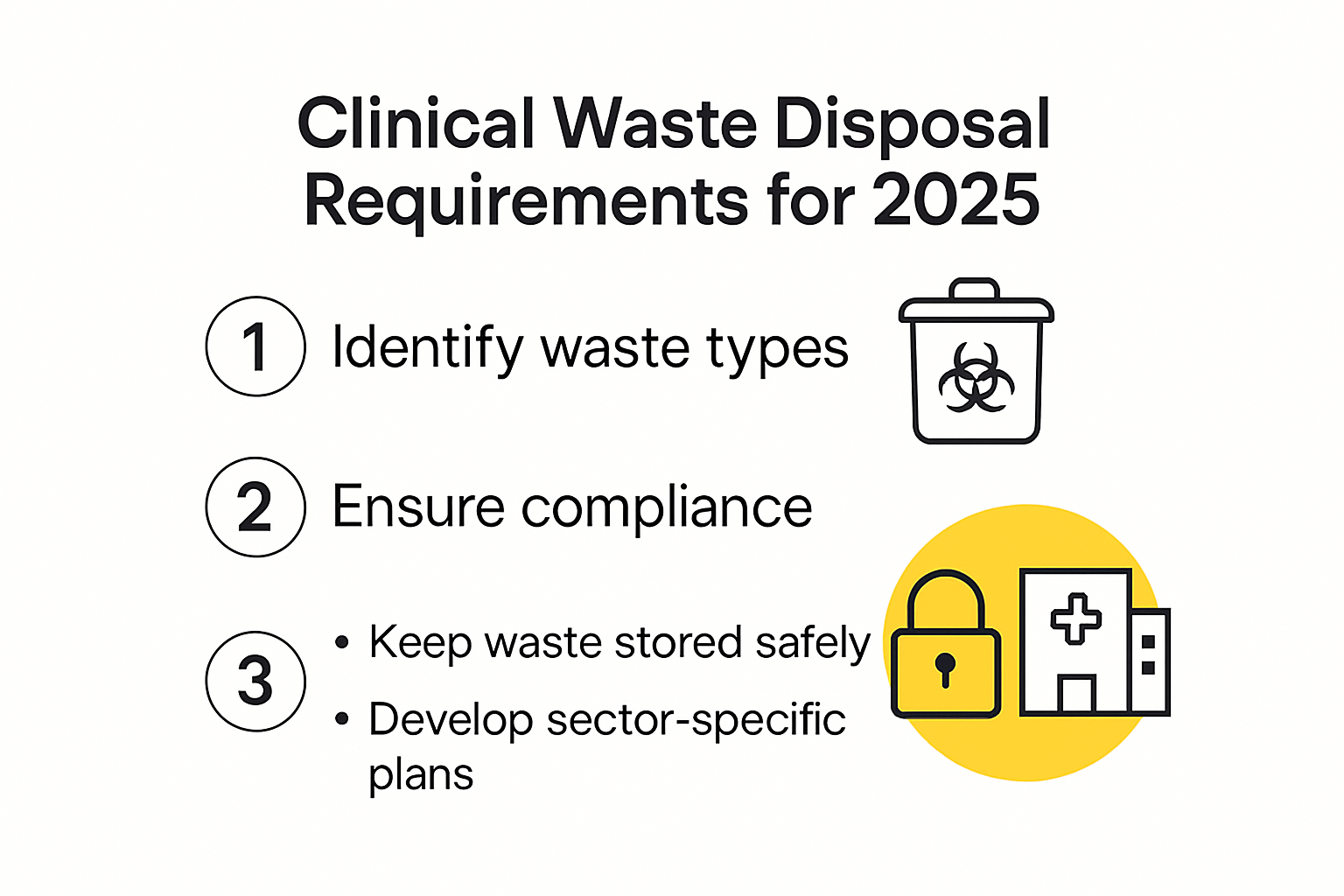
Understanding Clinical Waste Types and Risks
Clinical waste represents a complex and potentially hazardous category of materials that demands precise handling and disposal protocols. The UK regulatory framework defines clinical waste as a critical subset of healthcare and industrial waste that poses significant health and environmental risks.
Categories of Clinical Waste
Understanding the specific types of clinical waste is crucial for businesses to implement appropriate disposal strategies. Learn more about specialized waste management approaches that align with regulatory requirements.
According to the UK government’s official guidance, clinical waste can be categorized into several key classifications:
- Infectious Waste: Materials contaminated with viable pathogens that could transmit disease, including used medical equipment, contaminated personal protective equipment, and biological samples.
- Pharmaceutical Waste: Expired or unused medications, chemotherapy drugs, and other pharmaceutical compounds that require specialized disposal to prevent environmental contamination.
- Sharps Waste: Needles, scalpels, broken glass, and other potentially infectious materials that can cause puncture wounds and transmit bloodborne pathogens.
- Anatomical Waste: Human tissue, organs, body parts, and related biological materials that demand stringent handling protocols.
A summary table below organises the main clinical waste categories and their examples:
| Waste Category | Examples | Key Risks |
|---|---|---|
| Infectious Waste | Used PPE, contaminated medical equipment, biological samples | Transmission of pathogens |
| Pharmaceutical Waste | Expired drugs, unused medication, chemotherapy compounds | Environmental contamination |
| Sharps Waste | Needles, scalpels, broken glass | Injury, bloodborne pathogens |
| Anatomical Waste | Human tissue, organs, body parts | Biohazard risk, strict protocols |
Risk Assessment and Management
The NHS Clinical Waste Strategy highlights the critical importance of comprehensive risk management in clinical waste disposal. Businesses must conduct thorough risk assessments that evaluate potential hazards associated with their specific waste streams.
Key risk assessment considerations include:
- Identifying potential biological, chemical, and physical hazards
- Evaluating transmission routes for infectious agents
- Assessing environmental contamination risks
- Determining appropriate personal protective equipment requirements
Business leaders must recognize that improper clinical waste management can lead to severe consequences, including:
- Potential disease transmission
- Environmental pollution
- Legal penalties and significant financial liabilities
- Reputational damage
The National Standards of Healthcare Cleanliness 2025 emphasizes a proactive approach to waste management, recommending comprehensive training, robust documentation, and continuous improvement in waste handling procedures.
Effective clinical waste management requires a multifaceted strategy that combines rigorous protocols, employee training, specialized equipment, and compliance with evolving regulatory standards. Businesses must stay informed about current guidelines and invest in comprehensive waste management systems to protect public health and maintain environmental sustainability.
Complying With UK Clinical Waste Legislation

Navigating the complex landscape of clinical waste legislation requires businesses to adopt a comprehensive and proactive approach to regulatory compliance. The UK has established stringent legal frameworks that mandate precise waste management protocols to protect public health and environmental sustainability.
Legislative Framework and Key Regulations
Businesses must understand the intricate web of regulations governing clinical waste disposal. The Health and Safety Executive emphasizes that compliance involves adhering to multiple key legislative instruments, including:
- The Health and Safety at Work Act 1974
- Control of Substances Hazardous to Health (COSHH) Regulations
- Environmental Protection Act 1990
- Hazardous Waste Regulations 2005
- Explore advanced strategies for hazardous waste management to ensure comprehensive compliance
The Separation of Waste (England) Regulations 2025 introduce particularly critical requirements for businesses. Effective from March 31, 2025, these regulations mandate that organizations with 10 or more full-time equivalent employees must implement robust waste segregation systems.
Compliance Requirements and Documentation
Successful legislative compliance demands meticulous documentation and systematic waste management processes. According to the NHS Clinical Waste Strategy, businesses must develop comprehensive waste management plans that include:
- Detailed waste tracking and classification systems
- Regular risk assessments
- Staff training protocols
- Documented waste disposal procedures
- Environmental impact monitoring
Key documentation requirements include:
- Waste transfer notes
- Consignment notes for hazardous waste
- Comprehensive waste inventory records
- Staff training certificates
- Annual waste management reports
The following table summarises key legislative requirements and the main compliance actions businesses must take:
| Regulation / Requirement | Main Compliance Actions |
|---|---|
| Health and Safety at Work Act 1974 | Ensure safe working conditions, risk assessment |
| COSHH Regulations | Assess & control hazardous substances, staff training |
| Environmental Protection Act 1990 | Prevent pollution, safe waste disposal |
| Hazardous Waste Regulations 2005 | Proper classification, storage & transfer documentation |
| Separation of Waste (England) Regulations 2025 | Implement segregation systems (10+ FTEs), documentation |
Penalties and Enforcement
Non-compliance with clinical waste legislation can result in severe consequences. The regulatory bodies impose significant penalties for businesses failing to meet established standards:
- Substantial financial fines
- Potential legal prosecution
- Revocation of operational licenses
- Mandatory remediation requirements
- Reputational damage
Businesses must recognize that compliance is not optional but a fundamental legal and ethical responsibility. The evolving regulatory landscape demands continuous adaptation and proactive management of clinical waste disposal practices.
By implementing robust waste management systems, maintaining detailed documentation, and staying informed about legislative changes, businesses can effectively navigate the complex requirements of clinical waste disposal while protecting public health and environmental integrity.
Choosing Safe Storage and Collection Solutions
Selecting appropriate storage and collection solutions for clinical waste is a critical responsibility for businesses, requiring strategic planning, specialized equipment, and adherence to strict safety protocols. The complexity of clinical waste management demands a comprehensive approach that minimizes health risks and ensures environmental protection.
Storage Container Specifications
Proper storage begins with selecting the right containers that meet rigorous safety standards. The Health and Safety Executive provides detailed guidelines for clinical waste containment, emphasizing several key requirements:
- Containers must be leak-proof and puncture-resistant
- Color-coded systems for different waste categories
- Clear labeling indicating hazardous contents
- Secure lids to prevent accidental spillage
- Resistance to chemical degradation
The Health Technical Memorandum 07-01 recommends specific container materials and design features that enhance safety and prevent cross-contamination. Learn more about advanced waste management strategies to optimize your storage solutions.
Collection and Transportation Protocols
Safe waste collection involves a meticulously planned process that minimizes potential health risks. According to the NHS Clinical Waste Strategy, businesses must implement comprehensive transportation protocols that include:
- Scheduled collection intervals
- Specialized vehicles with sealed compartments
- Temperature-controlled transportation for sensitive materials
- Comprehensive tracking and documentation systems
- Trained personnel with appropriate personal protective equipment
Key considerations for safe collection include:
- Minimizing handling time
- Preventing cross-contamination
- Maintaining chain of custody documentation
- Ensuring secure transfer between storage and disposal sites
Risk Mitigation and Compliance
Effective risk mitigation requires a multifaceted approach that goes beyond basic storage and collection procedures. Businesses must develop robust systems that address potential hazards comprehensively:
- Conduct regular risk assessments
- Implement staff training programs
- Develop emergency response protocols
- Maintain detailed waste tracking records
- Invest in high-quality containment and transportation equipment
Non-compliance can result in significant consequences, including potential health risks, legal penalties, and reputational damage. The evolving regulatory landscape demands continuous adaptation and proactive management of clinical waste handling practices.
By investing in specialized storage solutions, implementing rigorous collection protocols, and maintaining a comprehensive risk management approach, businesses can effectively manage clinical waste while protecting public health, ensuring environmental safety, and meeting stringent regulatory requirements.
Best Practices for Diverse Business Sectors
Clinical waste management is not a one-size-fits-all approach. Different business sectors face unique challenges in managing their clinical waste, requiring tailored strategies that address specific regulatory requirements and operational constraints.
Healthcare and Medical Facilities
Healthcare settings generate the most complex clinical waste streams, demanding rigorous management protocols. The Health and Safety Executive emphasizes the critical importance of comprehensive waste segregation and handling for medical environments.
Key best practices for healthcare facilities include:
- Immediate segregation of waste at the point of generation
- Use of color-coded containment systems
- Comprehensive staff training on waste classification
- Implementation of zero-contamination protocols
- Regular internal audits of waste management procedures
The Simpler Recycling Workplace Guidelines requires healthcare facilities to separate waste streams effectively, including distinguishing between recyclable medical materials and hazardous clinical waste. Learn about advanced waste management techniques to enhance your facility’s compliance.
Industrial and Research Laboratories
Research and industrial laboratories face unique challenges in clinical waste management. According to the NHS Clinical Waste Strategy, these sectors must develop specialized waste management approaches that consider:
- Chemical compatibility of different waste streams
- Temperature-sensitive material handling
- Precise documentation of experimental waste
- Secure disposal of sensitive biological materials
- Cross-contamination prevention protocols
Critical considerations for laboratory waste management include:
- Detailed chemical composition tracking
- Neutralization of potentially hazardous materials
- Specialized containment for infectious research materials
- Comprehensive staff safety training
- Robust emergency response planning
Educational and Training Institutions
Educational institutions, including universities and vocational training centers, must implement comprehensive clinical waste management strategies that balance safety with educational requirements. The waste management approach must account for:
- Student training and safety protocols
- Varied waste streams from different departments
- Cost-effective disposal solutions
- Compliance with educational sector regulations
- Environmental sustainability considerations
Key best practices include:
- Centralized waste management coordination
- Department-specific waste handling guidelines
- Regular safety training for students and staff
- Investment in specialized waste segregation infrastructure
- Continuous monitoring and improvement of waste management systems
Across all sectors, the fundamental principles remain consistent: prioritize safety, maintain strict documentation, invest in staff training, and continuously adapt to evolving regulatory requirements. By developing sector-specific strategies that align with national guidelines, businesses can effectively manage clinical waste while protecting public health and the environment.
Frequently Asked Questions
What are the main categories of clinical waste?
Clinical waste can be categorised into four main types: infectious waste, pharmaceutical waste, sharps waste, and anatomical waste. Understanding these categories is crucial for ensuring proper disposal and compliance with regulations.
What are the compliance requirements for clinical waste disposal in the UK?
UK businesses must adhere to regulations such as the Health and Safety at Work Act, Environmental Protection Act, and the Separation of Waste (England) Regulations 2025, which necessitate robust waste segregation, documentation, and risk assessments.
What penalties can businesses face for non-compliance with clinical waste regulations?
Failure to comply with clinical waste regulations can result in substantial financial fines, legal prosecution, revocation of operational licenses, and damage to a business’s reputation.
How can businesses effectively manage clinical waste storage and collection?
Businesses should implement safe storage solutions with leak-proof, puncture-resistant containers and ensure trained personnel follow strict collection protocols, including regular risk assessments and documentation.
Simplify Your Clinical Waste Compliance for 2025 with Venture Waste
Are you worried about keeping your business safe and compliant with the new 2025 clinical waste regulations? If you are feeling pressure from complex rules about waste segregation, documentation, and safe storage, you are not alone. Many UK businesses are struggling with the thought of heavy penalties and the need for precise handling of clinical waste to avoid risks to health and reputation. Our team at Venture Waste Management understands how important it is to stay ahead of these changes, especially when dealing with sensitive materials. We help you implement robust procedures so your business never faces non-compliance or last-minute panic. For organisations needing to safely manage different waste streams, visit our confidential waste solutions page for further guidance.

Take the stress out of clinical waste disposal. Contact us today to arrange a tailored, compliant collection service, or book directly through our main waste management platform. Safeguard your workplace and organisation right now, while meeting all the new UK requirements.
Recommended
- Hazardous Waste Handling for UK Businesses: Complete 2025 Guide – Venture Waste
- hazardous waste handling Archives – Venture Waste
- Blog Archives – Venture Waste
- 7 Steps to Waste Compliance for UK Businesses in 2025 – Venture Waste
- steps to waste compliance Archives – Venture Waste
- how to reduce waste Archives – Venture Waste


Leave a Reply
Want to join the discussion?Feel free to contribute!