

Complete Guide to Bulk Waste Solutions UK
Did you know that over two million tonnes of bulky waste are discarded each year in the UK alone? From old sofas to outgrown office equipment, bulky items pile up quickly for homes and businesses. Managing these oversized objects can be confusing and expensive when handled without proper guidance. By understanding what counts as bulk waste and clearing up common myths, you can uncover smarter ways to handle, recycle, and reduce costly mistakes.
Table of Contents
- Bulk Waste Solutions Defined and Common Myths
- Types of Bulk Waste and Segregation Methods
- Collection Processes and Service Options in the UK
- Legal Requirements and Environmental Compliance
- Risks, Costs, and How to Avoid Pitfalls
Key Takeaways
| Point | Details |
|---|---|
| Bulk Waste Management | Businesses must implement specialized waste management strategies for bulk waste to minimize environmental impact and enhance resource recovery. |
| Segregation Importance | Effective waste segregation using color-coded systems enhances recycling potential and ensures compliance with disposal guidelines. |
| Legal Compliance | Adhering to waste management regulations is crucial to avoid financial penalties and environmental contamination. |
| Proactive Risk Management | Viewing waste management as a strategic investment can transform potential risks into cost-saving opportunities and bolster sustainability efforts. |
Bulk Waste Solutions Defined and Common Myths
Bulk waste represents large discarded items that exceed standard waste collection services, typically encompassing furniture, appliances, and industrial equipment too substantial for regular disposal methods. According to government guidance, these items require specialized waste management strategies beyond traditional collection approaches.
Contrary to popular misconception, bulk waste is not automatically destined for landfills. Research from environmental agencies indicates that many bulky items can be strategically recycled, repurposed, or responsibly dismantled. Waste management step by step guide demonstrates how businesses can effectively process these materials.
Key characteristics of bulk waste include:
- Significant physical dimensions
- Weight exceeding standard collection limits
- Potential for material recovery
- Requiring specialized removal techniques
Businesses encountering bulk waste must understand critical distinctions. While some materials seem unrecyclable, professional waste management services can often salvage substantial components. Electronics might contain valuable metals, furniture could be refurbished, and industrial equipment potentially disassembled for parts. The goal is minimizing environmental impact while maximizing resource efficiency.
Types of Bulk Waste and Segregation Methods
Bulk waste encompasses a diverse range of materials requiring specialized disposal strategies. According to government waste classification guidelines, these materials are typically categorized into distinct streams to optimize recycling and minimize environmental impact. Businesses must understand these categories to ensure responsible waste management.
Key types of bulk waste include:
- Furniture: Large sofas, office chairs, desks, and industrial equipment
- Appliances: Refrigerators, washing machines, commercial kitchen equipment
- Electronic Waste (WEEE): Computers, servers, telecommunications hardware
- Green Waste: Garden materials, landscaping debris, agricultural remnants
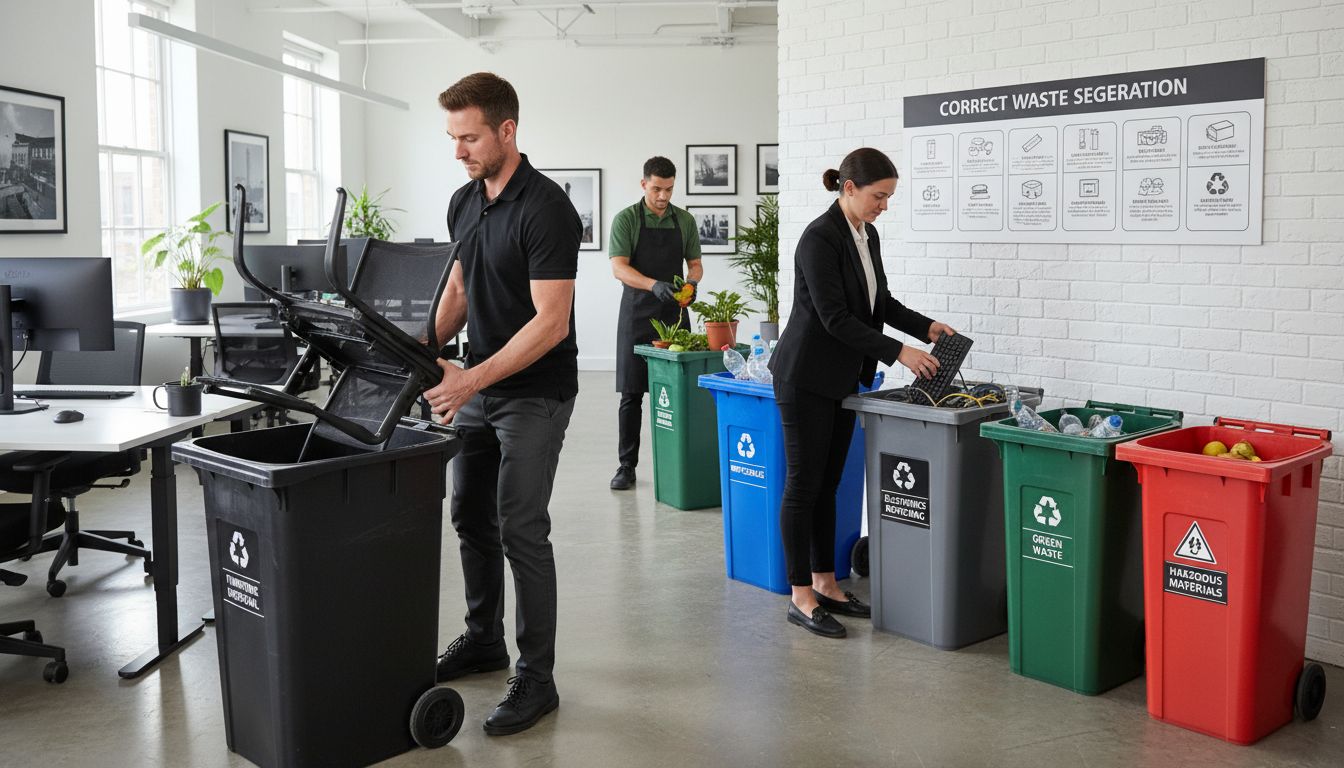
Segregation is critical for effective waste management. Waste segregation guidelines recommend using color-coded systems to streamline the sorting process. Black bins typically contain general waste, while clear or green containers are designated for recyclable materials. Hazardous waste requires specialized, clearly marked containers to prevent contamination.
Here’s a comparison of key types of bulk waste and their recommended segregation methods:
| Bulk Waste Type | Example Items | Recommended Container/Method |
|---|---|---|
| Furniture | Sofas Office desks Chairs |
Designated bulky waste bins |
| Appliances | Refrigerators Washing machines |
Clear/labelled bins for appliances |
| Electronic Waste | Computers Servers Telecom equipment |
WEEE bins Secure containers |
| Green Waste | Garden clippings Landscaping debris |
Green bins Composting containers |
| Hazardous Materials | Chemicals Asbestos Paint |
Special hazardous waste containers |
Professional waste management involves more than simple categorization. Each waste stream demands unique handling protocols. Electronics might require data destruction, furniture could be dismantled for material recovery, and green waste can often be composted. The goal is transforming what was once considered waste into valuable resources, reducing landfill dependency and supporting circular economy principles.
Collection Processes and Service Options in the UK
Bulk waste collection in the UK represents a sophisticated network of specialized services designed to manage diverse waste streams efficiently. According to health and safety waste processing guidelines, these services encompass multiple collection methods tailored to different business and municipal needs.
Collection service options vary widely across the UK, including:
- Kerbside Collection: Convenient pickup for larger items at designated points
- Scheduled Commercial Pickups: Structured waste removal for businesses
- On-Demand Services: Flexible collection for irregular or urgent waste disposal
- Specialized Waste Streams: Targeted services for electronics, hazardous materials, and industrial waste
Waste collection process for businesses typically involves comprehensive strategies that go beyond simple pickup. Materials Recycling Facilities (MRFs) play a crucial role, employing both manual sorting and advanced mechanical processing techniques. These facilities ensure that different waste types are appropriately segregated, maximizing recycling potential and minimizing environmental impact.
The most effective waste collection services offer integrated solutions that adapt to specific business needs. This means understanding each client’s unique waste profile, providing appropriate containers, establishing regular collection schedules, and ensuring compliance with environmental regulations. The ultimate goal is creating a seamless, efficient waste management system that supports both business operations and broader environmental sustainability objectives.
Legal Requirements and Environmental Compliance
Navigating the complex landscape of waste management regulations in the UK demands meticulous attention to legal frameworks and environmental protection standards. Government guidelines mandate comprehensive waste classification and disposal protocols that businesses must rigorously follow to ensure ecological responsibility and legal compliance.
Key legal requirements for waste management include:
- Precise waste categorization
- Segregation of hazardous materials
- Documentation of waste streams
- Adherence to disposal guidelines
- Maintaining audit trails
Waste disposal legal requirements emphasize the critical importance of preventing environmental contamination. Businesses must implement systematic approaches to waste handling, ensuring that hazardous and non-hazardous materials are separated and processed according to strict governmental regulations. This involves understanding complex classification systems, maintaining detailed records, and demonstrating a proactive approach to waste management.
Non-compliance can result in significant financial penalties and potential legal consequences. Effective environmental compliance is not just about avoiding fines, but about creating a responsible waste management ecosystem that minimizes ecological impact. Companies must invest in training, develop robust waste management strategies, and continuously update their practices to align with evolving environmental legislation and best practices.
Risks, Costs, and How to Avoid Pitfalls
Bulk waste management presents a complex landscape of potential financial and environmental risks that businesses must strategically navigate. Health and safety regulations highlight the critical importance of implementing comprehensive waste processing strategies that minimize both economic and ecological vulnerabilities.
Key risks associated with inadequate waste management include:
- Environmental contamination
- Significant regulatory penalties
- Increased disposal costs
- Potential legal liabilities
- Reputational damage
Hazardous waste risks demonstrate that proactive risk mitigation is far more cost-effective than reactive problem-solving. Implementing robust waste segregation protocols, investing in staff training, and developing systematic disposal processes can substantially reduce potential financial and legal challenges.
Companies must view waste management as a strategic investment rather than a mere operational expense. This means developing comprehensive waste reduction strategies, regularly auditing waste streams, and staying updated on evolving environmental regulations. By adopting a forward-thinking approach, businesses can transform potential risks into opportunities for operational efficiency, cost savings, and environmental responsibility.
Simplify Your Bulk Waste Management with Venture Waste
Managing bulk waste effectively can feel overwhelming due to the complex segregation, legal requirements, and specialised disposal methods involved. Whether you face challenges with large furniture disposal, electronic waste, or hazardous materials, understanding how to navigate the waste collection network is essential. This guide highlights common pain points such as ensuring environmental compliance and avoiding costly mistakes — challenges Venture Waste is expertly equipped to resolve.

Take control of your bulk waste solutions today by partnering with Venture Waste. Our streamlined three-step booking process removes the hassle of organising compliant and efficient full-service waste collection tailored to your business needs. Discover how How the Waste Collection Network in UK Serves Businesses in 2025 – Venture Waste can benefit you, stay updated on evolving regulations through our regulation Archives – Venture Waste, and start your journey towards responsible disposal at https://venturewaste.co.uk. Act now to ensure your bulk waste is handled legally, responsibly and without delay.
Frequently Asked Questions
What is bulk waste and why is it different from regular waste?
Bulk waste refers to large discarded items like furniture and appliances that exceed standard waste collection limits. It requires specialized disposal methods due to its significant size and potential for material recovery.
How can I effectively segregate different types of bulk waste?
Segregation of bulk waste is essential for effective management. Use color-coded bins: black for general waste, clear or green for recyclables, and special containers for hazardous materials to streamline the sorting process.
What collection service options are available for bulk waste?
Collection options for bulk waste vary and include kerbside collection, scheduled commercial pickups, on-demand services, and specialized waste streams for electronics and hazardous materials.
What are the legal requirements for bulk waste disposal?
Businesses must adhere to legal requirements including precise waste categorization, segregation of hazardous materials, maintaining documentation of waste streams, and following disposal guidelines to prevent environmental contamination.
Recommended
- Bulky Waste Removal Tips for UK Businesses in 2025 – Venture Waste
- Waste Management Step by Step: A Guide for UK Businesses 2025 – Venture Waste
- Bulky Waste Removal Tips for UK Businesses in 2025 – Venture Waste
- Master Zero Waste Grocery Shopping: A Practical Guide – naturessoulshop
- What is Waste Disposal? Understanding Its Importance and Impact – Onyx Removals


Leave a Reply
Want to join the discussion?Feel free to contribute!