

Battery Recycling UK: Legal Duties and Green Impact
Every year, british healthcare facilities discard thousands of used batteries that can leak harmful substances if not properly recycled. Strict regulations in the United Kingdom mean facilities managers must treat battery disposal with serious care to avoid legal issues and environmental damage. This guide explains how battery recycling supports compliance, protects the environment, and helps your facility contribute to a safer, more sustainable future.
Table of Contents
- What Is Battery Recycling in the UK?
- Types of Batteries and Their Disposal Methods
- Legal Responsibilities for Healthcare Facilities
- Safe Storage and Transport of Used Batteries
- Environmental Impact and Sustainability Benefits
Key Takeaways
| Point | Details |
|---|---|
| Importance of Battery Recycling | Battery recycling is essential for reducing toxic waste and recovering valuable materials in the UK. |
| Types and Collection Methods | Portable, automotive, and industrial batteries require specific recycling protocols and can be deposited at designated collection points. |
| Legal Responsibilities | Healthcare facilities must comply with strict regulations regarding battery disposal and maintain accurate records to avoid penalties. |
| Environmental Benefits | Effective battery recycling reduces carbon emissions and supports sustainability, contributing to the UK’s net zero targets. |
What Is Battery Recycling in the UK?
Battery recycling in the United Kingdom represents a critical environmental strategy focused on preventing toxic waste and recovering valuable materials from discarded power sources. This systematic process involves collecting, processing, and transforming used batteries into reusable resources while minimising ecological harm. Battery waste management requires specialised techniques to handle different battery types safely and efficiently.
The UK’s approach to battery recycling encompasses portable batteries from household and commercial sources, including common types like alkaline, lithium-ion, and rechargeable varieties. Consumers can deposit these batteries at designated collection points such as supermarkets, local recycling centres, and specialised drop-off locations. These collection networks enable convenient disposal while ensuring that potentially hazardous materials do not end up in standard waste streams.
Modern battery recycling processes in the United Kingdom focus on extracting critical raw materials through sophisticated mechanical and chemical separation techniques. Circular economy principles drive the industry, emphasising material recovery and minimising environmental impact. Sophisticated facilities can now extract valuable metals like lithium, cobalt, and nickel from spent batteries, which can be reused in manufacturing new electronic components and energy storage systems.
Pro tip: Always store used batteries in a cool, dry container before recycling to prevent potential chemical reactions and ensure safer handling.
Types of Batteries and Their Disposal Methods
Batteries in the United Kingdom are classified into three primary categories: portable, automotive, and industrial batteries, each requiring specific disposal and recycling protocols. Waste battery management demands a nuanced approach that considers the unique chemical composition and environmental impact of different battery types.
Portable batteries represent the most common variety, including household items like AA, AAA, button cell, and rechargeable lithium-ion batteries found in mobile phones and laptops. These can typically be recycled at designated collection points in supermarkets, local councils, and electronic retail stores. Automotive batteries, predominantly lead-acid types used in vehicles, require specialised handling due to their high toxic metal content. These batteries must be returned to automotive retailers, service centres, or dedicated recycling facilities that can safely extract lead and neutralise harmful chemicals.
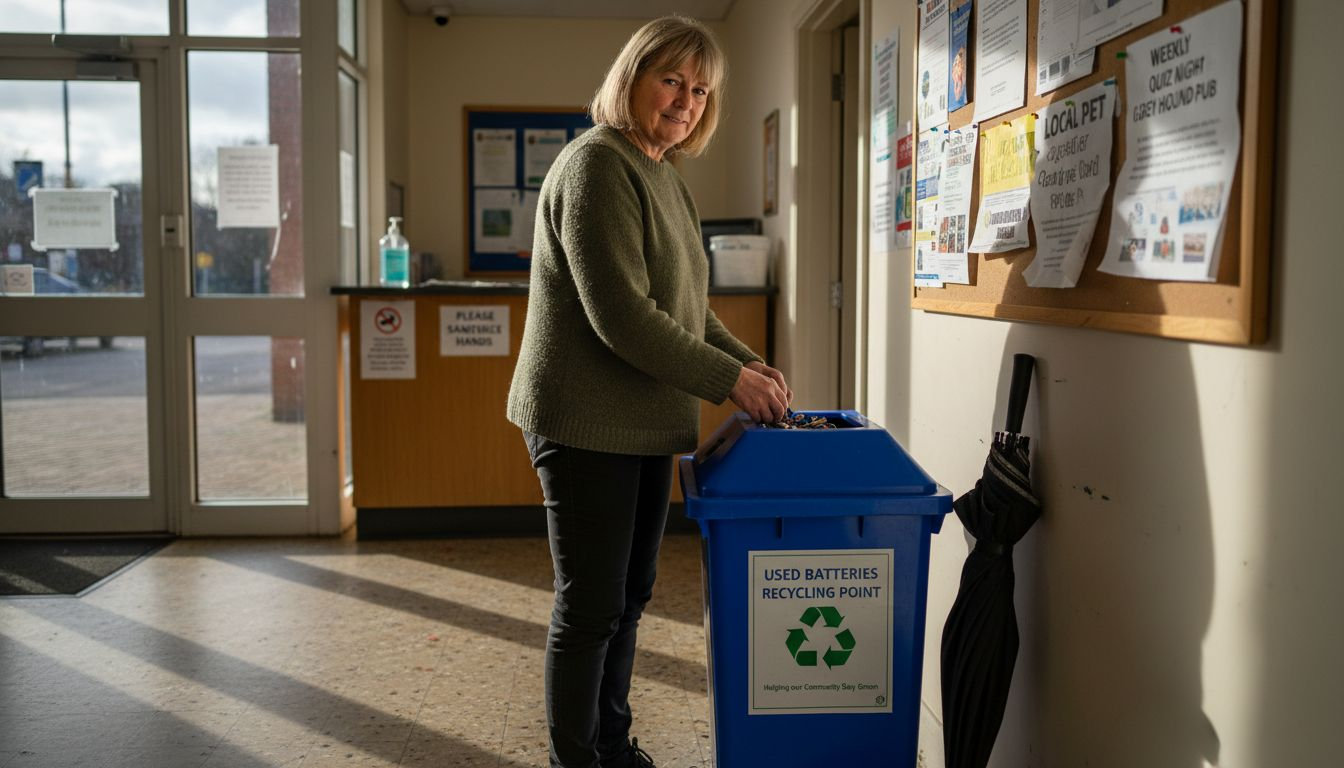
Industrial batteries, which include large-scale power storage systems and specialised equipment batteries, have the most complex recycling requirements. These batteries often contain rare and valuable metals like nickel, cobalt, and lithium, making their recovery economically and environmentally significant. Advanced recycling facilities employ sophisticated chemical and mechanical processes to separate and purify these critical materials, supporting the UK’s transition towards a more sustainable circular economy.
Here is a summary of key battery types and their recycling processes in the UK:
| Battery Type | Typical Usage | Recycling Process | Environmental Challenge |
|---|---|---|---|
| Portable | Phones, laptops, toys | Mechanical separation | Diverse chemistry requires sorting |
| Automotive | Cars, vans | Lead extraction, neutralisation | Toxic metals pose leakage risk |
| Industrial | Power grids, hospitals | Chemical separation | High volume, rare metals recovery |
Pro tip: Always check local council guidelines before disposing of batteries, as recycling protocols can vary between different regions and battery types.
Legal Responsibilities for Healthcare Facilities
Healthcare facilities in the United Kingdom face significant legal obligations regarding battery disposal and recycling, stemming from comprehensive environmental protection regulations. Battery waste regulations mandate strict protocols for managing batteries used in medical equipment, diagnostic devices, and administrative technologies.
The primary legal framework governing battery disposal includes the Waste Batteries and Accumulators Regulations 2009, which impose specific requirements on healthcare institutions. Facilities must implement robust segregation processes, ensuring batteries from medical devices are separated from general waste streams. This includes batteries from portable medical equipment, wireless monitoring devices, emergency lighting systems, and diagnostic tools. Healthcare managers are legally responsible for maintaining detailed records of battery collection, documenting the origin, type, and disposal method of each battery to demonstrate regulatory compliance.
Non-compliance with these regulations can result in substantial financial penalties and potential legal consequences. Healthcare facilities must partner with certified waste management providers specialising in medical battery recycling, ensuring that hazardous materials are processed safely and environmentally responsibly. This involves understanding the chemical composition of different battery types used within medical settings, from lithium-ion batteries in portable monitoring equipment to lead-acid batteries in backup power systems, and following precise handling and disposal guidelines.
Pro tip: Develop a comprehensive battery tracking system that logs each battery’s entry into and exit from your facility to maintain accurate compliance documentation.
Safe Storage and Transport of Used Batteries
Safe storage and transport of used batteries represent critical components of responsible waste management in the United Kingdom, with stringent legal requirements designed to protect public health and environmental safety. Waste battery regulations mandate comprehensive protocols for handling these potentially hazardous materials across various industrial and commercial sectors.
Specific storage requirements involve using non-conductive, leak-proof containers that prevent short-circuiting and potential fire risks. Batteries must be segregated by type—separating lithium, alkaline, lead-acid, and other varieties—to prevent chemical interactions and potential thermal runaway. Organisations must maintain dedicated storage areas with appropriate ventilation, temperature control, and protection from direct sunlight or extreme environmental conditions. These areas should be clearly marked, access-controlled, and equipped with appropriate fire suppression equipment to mitigate potential incidents.
Transportation of used batteries demands equally meticulous attention to safety protocols. Approved waste carriers must use specialized containers that meet strict UN packaging standards, with batteries individually wrapped or separated to prevent electrical contact. Documentation tracking the battery type, origin, and destination is mandatory, ensuring complete traceability throughout the disposal process. Companies must also train personnel in proper handling techniques, understanding the specific risks associated with different battery chemistries and implementing appropriate personal protective equipment requirements.
Pro tip: Invest in colour-coded storage containers and comprehensive staff training to ensure consistent and safe battery handling across your organisation.
Environmental Impact and Sustainability Benefits
Battery recycling emerges as a pivotal strategy for addressing environmental challenges in the United Kingdom, offering substantial benefits beyond waste management. UK battery strategy demonstrates a comprehensive approach to reducing ecological footprints while supporting sustainable industrial development. By recovering critical materials like lithium, nickel, and cobalt, the recycling process significantly diminishes the environmental degradation associated with traditional mining activities.
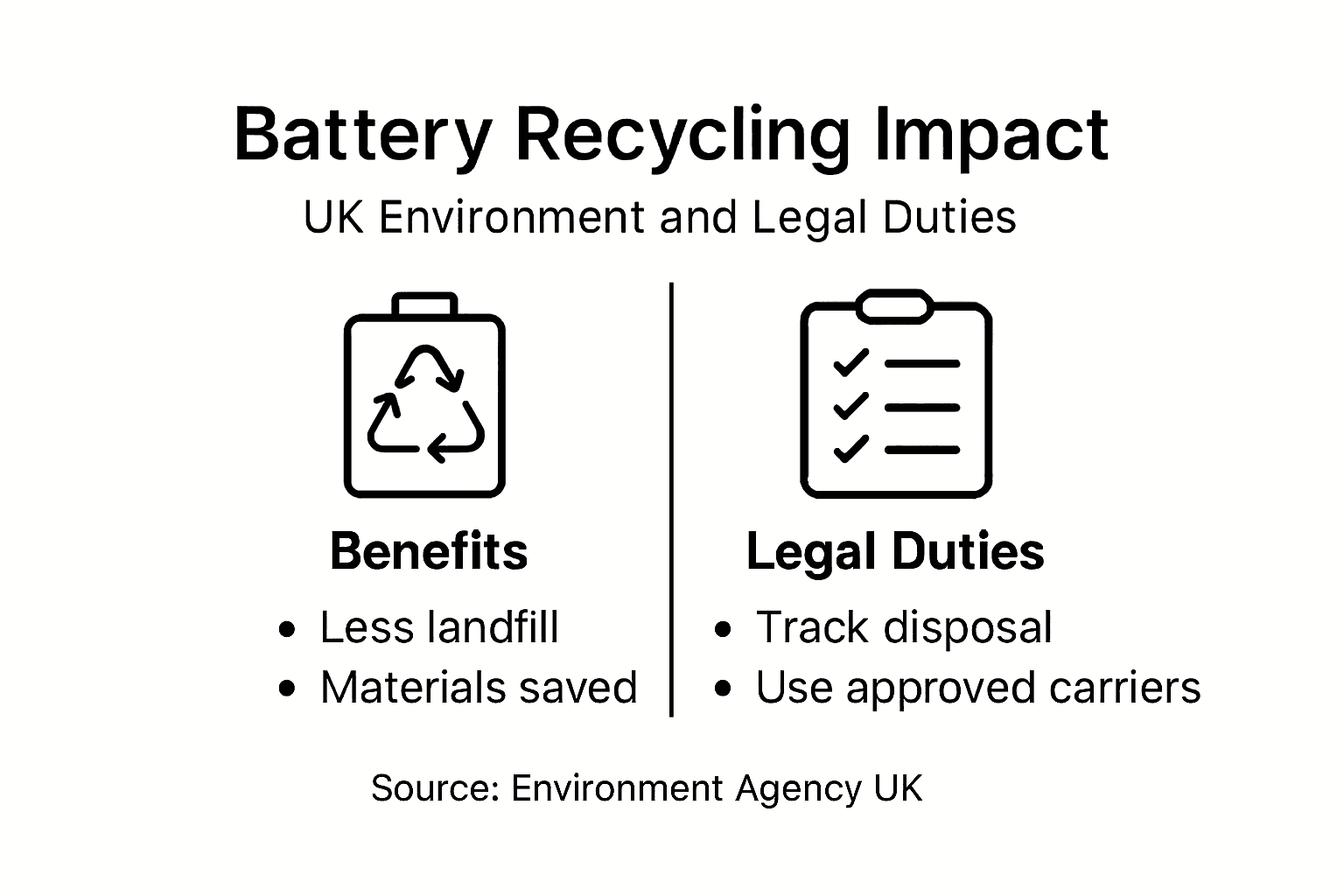
The sustainability impact extends far beyond material recovery. Advanced recycling techniques create a closed-loop supply chain that substantially reduces carbon emissions and minimises dependency on international mineral imports. Electric vehicle battery recycling, in particular, represents a critical frontier in this environmental transformation. By developing robust domestic recycling infrastructure, the United Kingdom can simultaneously address waste management challenges, support the transition to green technologies, and create economic opportunities in the emerging circular economy.
Moreover, battery recycling contributes directly to the nation’s ambitious net zero targets. Each recycled battery represents a tangible reduction in greenhouse gas emissions, preventing toxic chemicals from entering landfills and conserving natural resources. The process involves sophisticated separation technologies that extract high-value materials with minimal environmental impact, effectively transforming waste into a valuable resource for future manufacturing. This approach not only mitigates environmental harm but also positions the UK as a global leader in sustainable technological innovation.
The following table compares sustainability benefits of battery recycling methods:
| Recycling Method | Material Recovery Rate | Carbon Emission Reduction | Circular Economy Contribution |
|---|---|---|---|
| Mechanical separation | Moderate | Low to moderate | Reduces landfill contribution |
| Chemical extraction | High | High | Enables closed-loop manufacturing |
| Advanced automation | Very high | Substantial | Supports national net zero targets |
Pro tip: Conduct regular audits of your organisation’s battery disposal practices to identify opportunities for improving recycling efficiency and reducing environmental impact.
Take Control of Battery Recycling Compliance and Sustainability Today
Navigating the complex legal duties and environmental impacts of battery recycling in the UK can be overwhelming for businesses and healthcare facilities alike. From safe storage and transport requirements to recovering valuable materials and meeting the Waste Batteries and Accumulators Regulations, managing these responsibilities is crucial. Venture Waste is here to help you overcome these challenges with expert waste management solutions focused on compliance, safety, and sustainability. Learn more about practical recycling and disposal strategies by exploring our Batteries Archives and stay informed on regulatory updates with our Regulation Archives.

Make the smart choice to protect your organisation and the environment by partnering with Venture Waste. Our easy booking process and nationwide coverage mean you can manage your battery waste responsibly without hassle. Start today by visiting our website at Venture Waste and take your first step towards safer, legal, and greener battery recycling.
Frequently Asked Questions
What are the key legal responsibilities for healthcare facilities regarding battery disposal?
Healthcare facilities must comply with the Waste Batteries and Accumulators Regulations 2009, which require them to implement proper segregation of batteries from medical devices, maintain records of battery collection, and partner with certified waste management providers to ensure safe recycling.
How should used batteries be stored before recycling?
Used batteries should be stored in non-conductive, leak-proof containers, segregated by type to prevent chemical interactions. Storage areas must be well-ventilated and protected from extreme conditions, with clear markings and safety equipment available.
What sustainability benefits does battery recycling offer?
Battery recycling reduces landfill waste, conserves natural resources, and lowers carbon emissions. It supports a closed-loop supply chain, further contributing to national net zero targets and enabling the recovery of critical materials like lithium, cobalt, and nickel.
What methods are used in battery recycling processes?
Battery recycling processes typically utilise mechanical separation and chemical extraction techniques to recover valuable materials. These advanced methods significantly enhance material recovery rates and reduce environmental impacts compared to traditional mining activities.


Leave a Reply
Want to join the discussion?Feel free to contribute!