

Avoid £17.5M Fines: Legal Waste Compliance Guide UK 2025
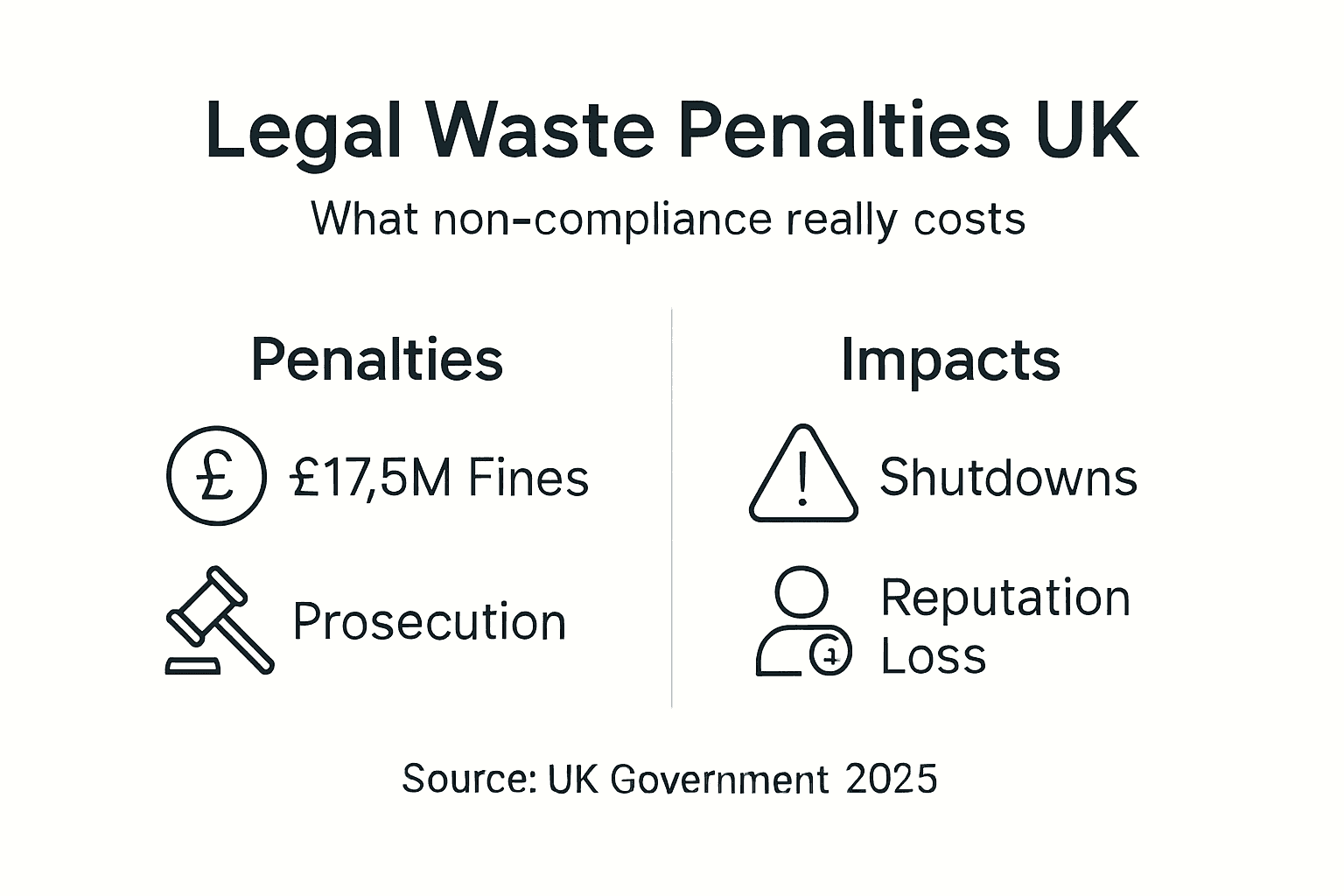
Think shredding alone makes your confidential waste disposal legal? You’re not alone, but that assumption could cost your business dearly. Many UK organisations underestimate the rigorous legal compliance requirements for hazardous and confidential waste, leaving themselves exposed to fines reaching £17.5 million for serious breaches. This guide arms you with UK-specific legal frameworks and actionable steps to achieve bulletproof waste management compliance.
Table of Contents
- Introduction To UK Waste Compliance
- Key Legal Requirements For Hazardous Waste
- Legal Framework For Confidential Waste Management
- Common Misconceptions In Legal Waste Compliance
Key Takeaways
| Point | Details |
|---|---|
| Compliance foundations | Legal waste compliance demands precise classification, secure handling protocols, and documented disposal chains. |
| Regulatory complexity | Separate UK laws govern hazardous and confidential waste, with overlapping documentation and audit requirements. |
| Non-compliance costs | Violations trigger severe fines, prosecution, and lasting reputational damage across your business operations. |
| Success factors | Certified disposal providers and comprehensive staff training form the backbone of sustainable compliance. |
Introduction to UK Waste Compliance
Understanding your legal obligations starts with recognising two distinct waste categories under UK law. Hazardous waste includes materials like asbestos, chemicals, batteries, solvents, pesticides and oils, regulated under the Hazardous Waste Regulations 2005. Confidential waste comprises documents and data requiring secure destruction under UK GDPR and the Data Protection Act 2018.
Your regulatory journey involves multiple authorities depending on location. England’s Environment Agency, Scotland’s SEPA, Wales’ Natural Resources Wales, and Northern Ireland’s NIEA each enforce compliance within their territories. These bodies monitor waste movements, audit documentation, and investigate breaches.
Two primary legal frameworks shape your compliance strategy:
- The Hazardous Waste Regulations 2005 mandating strict identification, classification, secure storage, and comprehensive documentation for hazardous materials
- The Data Protection Act 2018 establishing secure destruction standards and audit requirements for confidential information
Non-compliance consequences extend beyond financial penalties. You face potential prosecution, operational shutdowns during investigations, and environmental or data security incidents that damage customer trust permanently. The complexity demands proactive planning rather than reactive fixes.
Key Legal Requirements for Hazardous Waste
The Hazardous Waste Regulations 2005 create a comprehensive compliance framework you must navigate carefully. Your hazardous waste obligations begin the moment materials enter your premises and continue through final disposal.
Hazardous waste classification requires precise identification using European Waste Catalogue codes. Common examples include fluorescent tubes, contaminated packaging, paint residues, clinical waste, and electronic equipment containing hazardous components. Misclassification triggers immediate compliance failures.
Your Duty of Care obligations create legal responsibilities across the disposal chain:
- Producers must store waste securely, complete accurate documentation, and verify carrier licenses before handover
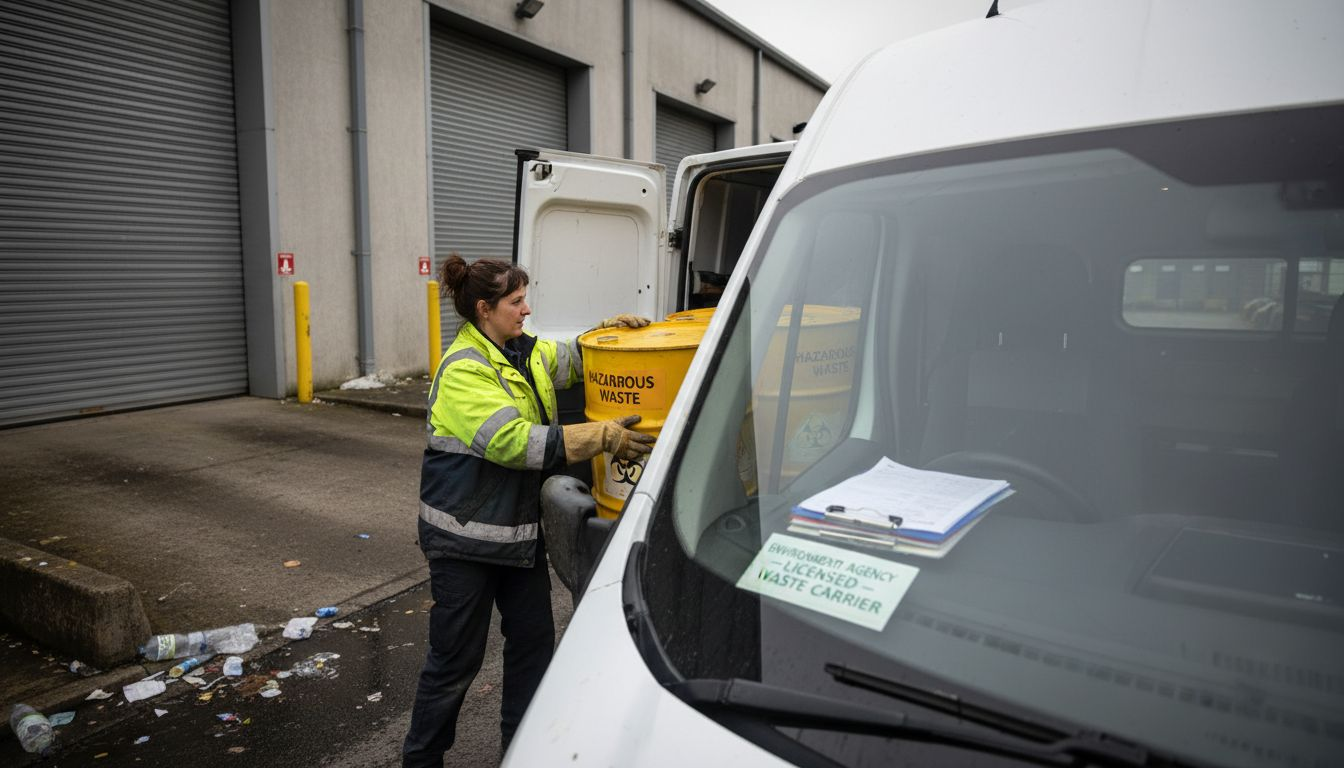
- Carriers need proper licensing, appropriate transport vehicles, and must maintain consignment note records
- Consignees require permits for treatment or disposal facilities and must complete the consignment note chain
Consignment notes form your legal audit trail. You must complete a separate consignment note for each hazardous waste movement, retain copies for three years minimum, and ensure all parties sign their sections. Missing signatures or incomplete details invalidate the entire document.
Storage requirements protect environmental and public health. Your hazardous waste storage areas need:
- Clearly labelled containers identifying contents and hazards
- Secondary containment systems preventing leaks reaching drains or ground
- Segregation preventing incompatible materials mixing
- Secure access limiting exposure to authorised personnel only
Transport demands licensed carriers with appropriate vehicle specifications. Your chosen carrier must hold a valid Environment Agency waste carrier license, use vehicles meeting hazardous waste transport standards, and follow approved routes where applicable.
Pro Tip: Create a digital compliance folder containing all waste carrier licenses, consignment note copies, and facility permits. This centralised record system saves hours during regulatory audits and demonstrates your commitment to systematic compliance.
Legal Framework for Confidential Waste Management
Confidential waste management sits squarely within data protection law. UK GDPR and the Data Protection Act 2018 require you to protect personal information throughout its lifecycle, including disposal. Failure here triggers Information Commissioner’s Office investigations and substantial penalties.
Secure destruction follows British Standard BS EN 15713, specifying destruction methods, security levels, and audit requirements. Your disposal process must render information permanently unreadable, whether through cross-cut shredding, pulping, or incineration. Simple strip shredding fails compliance tests.
Employee training forms your first defence line. Staff must understand:
- Which materials qualify as confidential waste requiring secure disposal
- Proper use of confidential waste bins placed throughout your facility
- Prohibition against mixing confidential waste with general recycling or refuse
- Incident reporting procedures when breaches occur
Secure storage containers must be lockable, clearly marked, and positioned in accessible locations encouraging staff compliance. Overfilled or damaged bins create security gaps exposing you to data breaches.
Audit trails document your entire confidential waste lifecycle. You need:
- Collection schedules showing regular, documented pickups
- Certificates of destruction from your disposal provider for each collection
- Weight records matching collected volumes to destroyed materials
- Staff training logs proving ongoing awareness programmes
Your chosen disposal provider must hold relevant certifications and provide detailed destruction certificates. These certificates prove lawful disposal during regulatory audits or following suspected data breaches. Missing certificates leave you unable to demonstrate compliance.
Pro Tip: Schedule quarterly reviews of your confidential waste procedures involving IT, facilities, and compliance teams. This cross-functional approach catches gaps before they become violations.
Common Misconceptions in Legal Waste Compliance
Several persistent myths undermine compliance efforts across UK businesses. Correcting these misconceptions prevents costly mistakes.
Shredding alone never satisfies legal requirements. While shredding forms part of destruction processes, compliance demands secure collection, certified destruction facilities, and comprehensive documentation. Your office shredder creates shredded waste still requiring secure disposal through licensed providers.
Confidential waste belongs nowhere near general recycling bins. Mixing streams creates immediate data protection breaches and contamination issues. Even shredded confidential materials require separate collection ensuring complete destruction and audit trails.
Hazardous waste classification is not a one-size-fits-all exercise. Each material type demands individual assessment using European Waste Catalogue codes. Batteries differ from solvents, which differ from contaminated packaging. Generic


Leave a Reply
Want to join the discussion?Feel free to contribute!