Nurse rolling recycling bin in hospital corridor

Recycling Process in UK – 2026 Laws for Healthcare

For facility managers in the United Kingdom’s healthcare sector, ensuring efficient waste disposal is no simple task. The introduction of Simpler Recycling legislation means healthcare facilities must now segregate plastics, paper, card, glass, metal, and food waste to meet strict compliance deadlines. This shift goes beyond everyday bin management and pushes each organisation towards sustainable healthcare practices that protect both the environment and operational budgets. Discover how smart recycling processes can transform compliance from a challenge into a measurable asset.

Table of Contents

Key Takeaways

Point Details
Healthcare Recycling Legislation The UK government mandates systematic waste segregation by 31 March 2025 for healthcare facilities to enhance recycling efficiency.
Importance of Waste Management Proper recycling is critical for minimising environmental impact and supporting sustainable healthcare practices.
Financial Risks of Non-Compliance Failure to implement recycling regulations can lead to substantial penalties, operational challenges, and reputational harm.
Staff Training Necessity Investing in comprehensive staff training on waste segregation is essential to ensure compliance with new recycling processes.

What Recycling Means in the UK Healthcare Sector

Recycling in the United Kingdom’s healthcare sector represents a sophisticated approach to responsible waste management, designed to minimise environmental impact while maintaining stringent health standards. Unlike traditional waste disposal methods, healthcare recycling involves carefully segregating and processing different types of materials generated within medical facilities.

The UK government has introduced Simpler Recycling legislation to standardise recycling processes across healthcare organisations. Starting 31 March 2025, medical facilities will be required to systematically separate waste streams, including:

  • Dry recyclables (plastics, paper, card)
  • Glass materials
  • Metal components
  • Food waste
  • General waste

This legislative approach aims to reduce plastic pollution and support the broader circular economy goals. Healthcare facilities must now view waste not as a disposal problem, but as a resource that can be effectively managed and repurposed.

The complexity of healthcare waste recycling stems from the unique challenges posed by medical environments. Contaminated materials, infectious waste, and specialised medical equipment require sophisticated sorting and processing techniques. Hospitals and clinics must now invest in comprehensive waste management strategies that balance clinical safety with environmental responsibility.

Infographic on UK healthcare recycling challenges

Healthcare Waste Categories:

The following table compares different healthcare waste types based on their handling needs and recycling potential:

Waste Type Handling Requirements Recycling Potential
Offensive waste Non-infectious, requires basic segregation Often recyclable if clean
Recyclable clinical Must be non-contaminated and sorted High, with proper sorting
Confidential waste Requires secure destruction Possible with shredding
Sharps Strict protocols, specialist containers Limited, safety priority
  • Offensive waste: Non-infectious materials that do not pose significant health risks
  • Recyclable clinical waste: Clean packaging and non-contaminated materials
  • Confidential waste: Documentation requiring secure destruction
  • Sharps: Needles, scalpels, and other potentially infectious materials

Key Recycling Objectives:

  1. Reduce overall waste volume
  2. Minimise environmental impact
  3. Lower waste management costs
  4. Support sustainable healthcare practices

Medical waste recycling is no longer optional—it’s a critical component of responsible healthcare management in the United Kingdom.

Pro tip: Invest in staff training programmes that teach proper waste segregation techniques to ensure compliance with the new recycling regulations.

Types of Recyclable Waste and Stream Separation

Healthcare facilities in the United Kingdom are now required to implement sophisticated waste segregation strategies under the new recycling regulations. These regulations mandate precise separation of different waste streams to enhance recycling efficiency and reduce environmental impact.

Primary Recyclable Waste Categories:

  • Paper and Cardboard: Must be collected separately from other dry recyclables
  • Plastics: Including packaging materials and non-contaminated medical containers
  • Metal Components: Surgical instruments, packaging, and equipment parts
  • Glass Materials: Laboratory glassware, packaging, and non-infectious containers
  • Food Waste: Requiring strict segregation from other waste streams

The complexity of waste stream separation in healthcare settings stems from multiple factors. Medical facilities must balance stringent infection control protocols with environmental sustainability requirements. Each waste category demands specific handling procedures to ensure both safety and recyclability.

Waste Separation Hierarchy:

  1. Identify waste type and potential contamination level
  2. Segregate at point of generation
  3. Use colour-coded disposal containers
  4. Document and track waste movement
  5. Prepare for specialised recycling processing

Effective waste stream separation is not just a regulatory requirement—it’s a critical component of responsible healthcare management.

Some materials require additional considerations. Contaminated items, sharps, and specialised medical equipment often need alternative disposal methods beyond standard recycling streams. Healthcare organisations must develop comprehensive waste management protocols that account for these unique challenges.

Critical Separation Considerations:

  • Infection risk assessment
  • Material recyclability
  • Potential cross-contamination prevention
  • Compliance with Environment Agency guidelines

Pro tip: Develop a comprehensive staff training programme focused on precise waste stream separation techniques to ensure regulatory compliance and minimise environmental impact.

Simpler Recycling Law: 2026 Compliance Requirements

Healthcare organisations across the United Kingdom must prepare for significant changes in waste management under the new recycling legislation. These comprehensive regulations introduce strict requirements for waste segregation and processing, fundamentally transforming how medical facilities handle their waste streams.

Key Compliance Milestones:

  • 31 March 2025: Initial implementation deadline for larger healthcare facilities
  • 31 March 2027: Extended deadline for smaller healthcare organisations
  • Mandatory separation of recyclable materials
  • Standardised waste collection protocols
  • Detailed operational documentation requirements

The Environment Act 2021 establishes a robust framework for waste management, compelling healthcare settings to develop sophisticated recycling strategies. Medical facilities must now implement systematic approaches to waste segregation, ensuring precise separation of materials to minimise environmental impact.

Mandatory Waste Separation Categories:

  1. Paper and cardboard
  2. Plastics
  3. Metal components
  4. Glass materials
  5. Food waste

Compliance is not optional—it represents a fundamental shift in environmental responsibility for healthcare organisations.

Healthcare providers must establish comprehensive internal systems that enable accurate waste tracking and segregation. This involves training staff, implementing colour-coded disposal systems, and maintaining meticulous records to demonstrate adherence to regulatory standards.

Compliance Documentation Requirements:

  • Waste stream segregation protocols
  • Staff training records
  • Waste collection and processing logs
  • Environmental impact assessments
  • Regular internal audits

Pro tip: Develop a dedicated compliance team responsible for monitoring and implementing waste segregation strategies to ensure seamless adaptation to new recycling regulations.

Implementing Recycling Processes in Healthcare Facilities

Healthcare facilities must adopt comprehensive strategies to meet increasingly stringent recycling requirements, focusing on sustainable waste management frameworks. These approaches demand sophisticated technological integration and systematic organisational change.

Key Implementation Strategies:

  • Establish clear waste segregation protocols
  • Invest in specialised recycling technologies
  • Develop staff training programmes
  • Create dedicated waste management teams
  • Implement robust tracking and documentation systems

Successful recycling implementation requires a multi-dimensional approach that goes beyond simple waste sorting. Medical facilities must integrate advanced technologies like pyrolysis and bio-digesters to process waste efficiently, reducing environmental impact and meeting regulatory standards.

Waste Stream Management Process:

  1. Conduct initial waste audit
  2. Design colour-coded disposal system
  3. Train staff on segregation techniques
  4. Install appropriate waste collection infrastructure
  5. Monitor and document waste processing
  6. Regularly review and update procedures

Effective recycling is not just a regulatory requirement—it’s a critical component of sustainable healthcare management.

Healthcare organisations must develop comprehensive documentation demonstrating their commitment to waste reduction. This involves maintaining detailed logs of waste streams, training records, and environmental impact assessments to ensure full compliance with emerging recycling regulations.

Critical Implementation Components:

  • Clear bin stream identification
  • Staff education and training
  • Contamination monitoring systems
  • Waste collection service negotiations
  • Consistent operational routines

Pro tip: Create a dedicated sustainability team with specific recycling process responsibilities to ensure seamless implementation and ongoing compliance.

Hospital team discussing recycling compliance plans

Risks of Non-Compliance and Cost Implications

Healthcare organisations face significant financial and regulatory consequences for failing to implement proper recycling processes, with the government launching a major crackdown on NHS waste to address inefficiencies and environmental challenges.

Financial Risk Categories:

  • Substantial monetary penalties
  • Loss of operational licences
  • Increased waste management costs
  • Potential legal proceedings
  • Reputational damage

Non-compliance with emerging recycling regulations can result in exponential financial burdens for healthcare facilities. These penalties extend beyond immediate fines, potentially impacting institutional budgets, operational capabilities, and long-term sustainability strategies.

Potential Cost Implications:

  1. Direct regulatory fines
  2. Increased waste disposal expenses
  3. Mandatory infrastructure upgrades
  4. Potential legal defence costs
  5. Compulsory environmental remediation

Non-compliance is not merely a regulatory risk—it represents a comprehensive threat to organisational stability and financial health.

Medical facilities must understand that waste management is no longer a peripheral concern but a critical operational requirement. The financial implications of improper waste handling can dramatically exceed the initial investment required for comprehensive recycling infrastructure.

Compliance Cost Assessment:

Here is an overview of the main cost risks and benefits associated with recycling compliance for healthcare facilities:

Aspect Cost Risk Compliance Benefit
Regulatory fines Potentially substantial Avoidance of penalties
Infrastructure upgrades May require upfront investment Long-term operational savings
Staff training Initial and ongoing costs Improved process efficiency
Waste disposal charges Higher if non-compliant Reduced waste management costs
  • Immediate implementation expenses
  • Staff training programmes
  • Technology and infrastructure investments
  • Ongoing monitoring systems
  • Documentation and reporting mechanisms

Pro tip: Conduct a comprehensive financial risk assessment to understand the potential cost of non-compliance versus the investment required for proper recycling infrastructure.

Streamline Your Healthcare Recycling Compliance with Venture Waste Management

The new 2026 laws for recycling in the UK healthcare sector require precise waste segregation and adherence to strict environmental standards. Tackling these challenges means investing in reliable waste collection and management services that safeguard patient safety while meeting legal obligations. If you want to reduce compliance risks and control costs, Venture Waste Management offers tailored solutions designed for complex medical waste streams. From secure handling of recyclable clinical waste to staff training support, we help your facility achieve effective waste separation and maintain full documentation.

https://venturewaste.co.uk

Discover how our expertise in the Waste Collection Process in the UK for Businesses 2025 – Venture Waste and How the Waste Collection Network in UK Serves Businesses in 2025 – Venture Waste can simplify compliance for your healthcare organisation. Visit Venture Waste today to book a consultation and take the first step towards sustainable and legally compliant waste management.

Frequently Asked Questions

What are the key requirements of the new recycling laws for healthcare facilities?

The new recycling laws mandate mandatory separation of recyclable materials, including paper, plastics, metal components, glass materials, and food waste. Larger healthcare facilities need to comply by 31 March 2025, with smaller organisations having until 31 March 2027.

Why is waste segregation important in healthcare recycling?

Waste segregation is crucial in healthcare recycling to ensure that different types of waste are appropriately processed. This prevents contamination, enhances recycling efficiency, and supports health and safety standards in medical environments.

What are the potential consequences of non-compliance with recycling regulations?

Non-compliance can lead to substantial monetary penalties, loss of operational licences, increased waste management costs, potential legal proceedings, and reputational damage for healthcare organisations.

How can healthcare facilities effectively implement their recycling processes?

Healthcare facilities can implement effective recycling processes by establishing clear waste segregation protocols, investing in specialised recycling technologies, developing comprehensive staff training programmes, and creating dedicated waste management teams.

Healthcare team discussing waste supplier selection

Choosing Waste Suppliers for Healthcare Compliance Success

Finding a trustworthy partner for hazardous waste disposal in large UK healthcare facilities often feels challenging when every misstep could risk safety or legal compliance. As hospitals and clinics in England must strictly follow detailed hazardous waste regulations, getting your process right from the start is crucial. This guide sets out a clear framework, highlighting key steps and compliance checks so you can select a waste supplier that ensures both safety and efficient collection for your facility.

Table of Contents

Quick Summary

Key Message Explanation
1. Identify hazardous waste types Conduct a thorough inventory to categorise waste and ensure compliance with regulations.
2. Verify supplier compliance Assess potential waste carriers for necessary certifications and operational standards for safety.
3. Evaluate service reliability Review supplier performance metrics and client references to ensure dependable waste management services.
4. Compare costs effectively Use a detailed comparison matrix to evaluate all financial aspects and ensure value for money in waste management solutions.
5. Implement ongoing performance checks Establish regular audits and monitoring strategies to maintain high standards and compliance throughout the supplier relationship.

Step 1: Define your hazardous waste requirements

Healthcare facilities must meticulously identify and categorise hazardous waste types before engaging waste suppliers. This critical first step ensures regulatory compliance and minimises potential environmental and health risks.

To effectively define your hazardous waste requirements, you’ll need a comprehensive assessment strategy. Start by conducting a thorough inventory of all waste materials generated across your healthcare facility. Healthcare waste management standards mandate precise classification of potentially dangerous substances.

Key areas to examine include:

  • Medical sharps and contaminated equipment
  • Chemical waste from laboratories
  • Pharmaceutical residues
  • Infectious biological materials
  • Radioactive diagnostic waste

Each waste category requires specific handling protocols and disposal mechanisms. Work closely with your clinical teams to document the exact volume, composition, and frequency of waste generation in each department.

Accurate waste classification is the foundation of safe and compliant healthcare waste management.

Documentation becomes crucial. Maintain detailed records of waste types, including chemical compositions, potential hazards, and recommended disposal methods. These comprehensive logs will help waste suppliers understand your specific requirements and develop tailored collection strategies.

Here is a summary comparing key hazardous waste categories relevant to healthcare facilities:

Waste Category Main Risk Typical Disposal Method
Medical sharps Needle-stick injuries Specialised sharps container
Chemical waste Toxic exposure to staff Chemical neutralisation plant
Pharmaceutical waste Contamination of environment Incineration or return schemes
Infectious materials Spread of infections Autoclave or high-temp steam
Radioactive waste Radiation hazards to humans Decay-in-storage, specialist sites

Expert tip: Consider creating a standardised waste inventory template that can be updated monthly to track changing waste profiles across different clinical departments.

Step 2: Assess supplier regulatory compliance

Ensuring your healthcare waste supplier meets rigorous regulatory standards is paramount for maintaining safety and legal compliance. This critical assessment involves a comprehensive evaluation of potential waste management partners.

Begin by requesting detailed documentation from each potential supplier. Hazardous waste disposal regulations mandate specific licensing and permit requirements that waste carriers must demonstrate. Your verification process should include examining:

  • Current waste carrier registration certificates
  • Environment Agency permits
  • Proof of professional indemnity insurance
  • Detailed waste transfer documentation protocols
  • Compliance history and environmental performance records

Thorough supplier compliance checks are your first line of defence against potential regulatory breaches.

Document verification becomes a crucial step in your selection process. Request and meticulously review each supplier’s waste management credentials, paying special attention to their track record of regulatory adherence. Cross-reference their documentation with official Environment Agency registers to confirm legitimacy.

Healthcare auditor checks waste supplier facility

Additionally, conduct site visits or request comprehensive audits to validate the supplier’s operational standards. This hands-on approach allows you to assess their waste handling procedures, safety protocols, and commitment to environmental responsibility.

Expert tip: Create a standardised compliance checklist that you can consistently apply across all potential waste management suppliers to ensure uniform and thorough assessment.

Step 3: Evaluate service reliability and coverage

Assessing a healthcare waste supplier’s service reliability requires a strategic and comprehensive approach that goes beyond surface-level promises. Your goal is to determine whether the supplier can consistently meet your facility’s complex waste management requirements.

Begin by examining the supplier’s operational capabilities across multiple dimensions. Healthcare waste management standards emphasise consistent service delivery and rigorous infection control protocols. Your evaluation should focus on:

  • Geographic service coverage
  • Response time and emergency handling capabilities
  • Fleet and transportation infrastructure
  • Technological capabilities for waste tracking
  • Contingency planning for service disruptions

Service reliability is not just about promises, but about demonstrated performance and adaptability.

Performance history becomes a critical indicator of future reliability. Request detailed service records, including:

  • Client retention rates
  • Average response times
  • Incident management documentation
  • Compliance violation history

Additionally, conduct reference checks with other healthcare providers to gain insights into the supplier’s real-world performance. Speak directly with current clients to understand their experiences with service consistency, communication, and problem resolution.

Expert tip: Request a comprehensive service level agreement that clearly defines performance metrics, response times, and specific consequences for service disruptions.

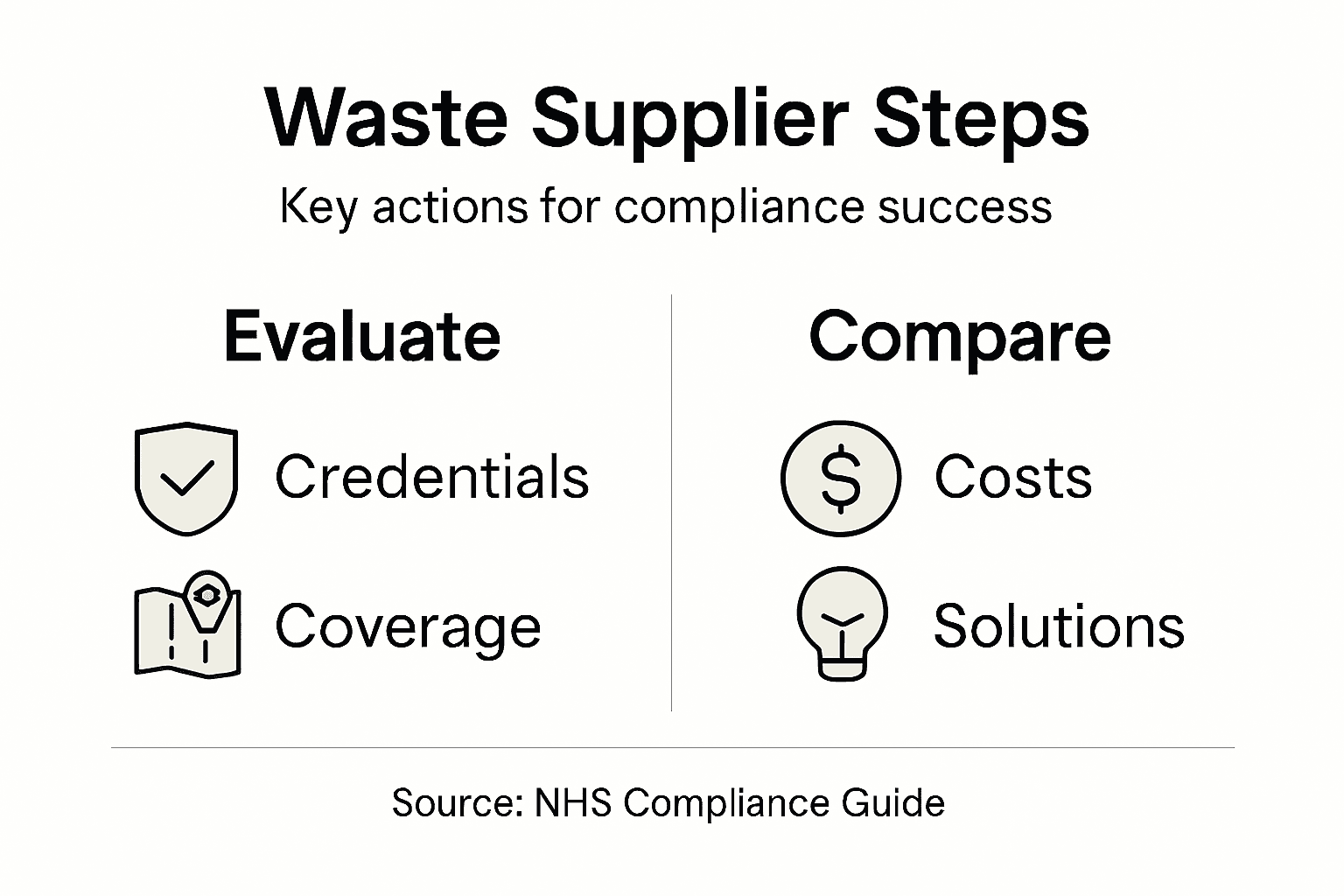
Step 4: Compare waste management solutions and costs

Navigating the complex landscape of healthcare waste management solutions requires a methodical approach to comparing both service capabilities and financial implications. Your objective is to identify a waste management partner that delivers optimal compliance while maintaining cost-effectiveness.

Healthcare waste segregation strategies are fundamental to controlling disposal expenses and ensuring regulatory compliance. Develop a comprehensive comparison matrix that evaluates potential suppliers across multiple dimensions:

  • Treatment method costs
  • Waste segregation complexity
  • Transportation and collection fees
  • Regulatory compliance expenses
  • Long-term contract pricing structures
  • Environmental impact and recycling potential

The most economical solution is not always the cheapest, but the one that minimises total lifecycle waste management costs.

Detailed cost analysis requires examining beyond surface-level pricing. Request transparent pricing breakdowns that include:

  • Base collection fees
  • Per-kilogram disposal charges
  • Additional service costs
  • Potential penalty or non-compliance fees

Consider engaging multiple suppliers to create competitive pricing scenarios. Some providers might offer volume discounts or more flexible contract terms that could significantly reduce your overall waste management expenditure.

Infographic showing steps for waste supplier selection

Expert tip: Request comprehensive three-year cost projections from each supplier to understand the true financial implications of your waste management strategy.

The following table contrasts compliance, reliability, and cost factors when evaluating waste suppliers:

Assessment Dimension What to Examine Why It Matters
Regulatory Compliance Permits, certification & audit history Legal operation & safety
Service Reliability Response time, client retention, SLAs Smooth day-to-day operations
Cost Transparency Pricing breakdown, penalty clauses Accurate budget forecasting

Step 5: Verify ongoing supplier performance

Maintaining rigorous oversight of your healthcare waste management supplier requires a systematic approach to continuous performance evaluation. Your goal is to ensure consistent compliance, quality, and reliability throughout your contractual relationship.

Healthcare waste management guidance emphasises the critical importance of regular audits and performance monitoring. Develop a comprehensive verification framework that includes:

  • Quarterly performance reviews
  • Regular waste tracking and documentation
  • Compliance audit schedules
  • Key performance indicator (KPI) measurements
  • Environmental and safety standard assessments
  • Incident response and resolution tracking

Consistent monitoring transforms supplier accountability from a reactive process to a proactive partnership.

Performance documentation is your primary tool for verification. Create a standardised evaluation template that captures critical metrics such as:

  • Collection reliability percentages
  • Waste processing accuracy
  • Compliance violation records
  • Response times for service requests
  • Environmental impact metrics

Utilise the Environment Agency’s Public Registers to cross-reference your supplier’s ongoing permit and licence status. This additional layer of verification ensures transparency and provides an independent assessment of their regulatory standing.

Expert tip: Implement a weighted scoring system in your performance reviews to objectively quantify and track supplier effectiveness across multiple dimensions.

Ensure Healthcare Waste Compliance with Trusted Partner Solutions

Choosing the right healthcare waste supplier is critical for meeting stringent regulatory compliance and maintaining environmental safety. This article highlights essential challenges such as verifying supplier permits, ensuring service reliability, and managing complex hazardous waste categories like medical sharps and pharmaceutical residues. At Venture Waste Management, we understand these concerns deeply and provide tailored waste solutions designed to simplify compliance while protecting your facility and community.

Our comprehensive UK coverage and commitment to responsible disposal are detailed in How the Waste Collection Network in UK Serves Businesses in 2025 – Venture Waste. Whether you require specialised hazardous waste handling or secure confidential waste services, explored further at confidential waste Archives – Venture Waste, we prioritise transparent operations, accurate documentation, and dependable collection schedules.

https://venturewaste.co.uk

Take control of your healthcare waste management today by partnering with a service that values your compliance needs. Visit Venture Waste Management to explore how our expertise and customer-focused procedures can safeguard your facility. Act now to ensure your waste supplier meets every regulatory and operational expectation.

Frequently Asked Questions

How do I define my hazardous waste requirements in a healthcare facility?

Accurately define your hazardous waste requirements by conducting a comprehensive assessment of all waste types generated in your facility. Create an inventory that includes details like volume, composition, and disposal methods for each waste category.

What documentation should I gather from waste suppliers before finalising a partnership?

Gather detailed documentation including waste carrier registration certificates, Environment Agency permits, and proof of professional indemnity insurance from your selected suppliers. This helps ensure they meet regulatory compliance and can provide safe waste management services.

How can I evaluate the service reliability of a healthcare waste supplier?

Evaluate a supplier’s service reliability by examining their geographic coverage, response times, and operational capabilities. Request performance history, including client retention rates and incident management documentation, to assess their reliability over time.

What financial factors should I compare when choosing waste management solutions?

Compare treatment method costs, transportation fees, and potential compliance expenses when evaluating waste management solutions. Create a comprehensive comparison matrix to identify the best balance between cost-effectiveness and compliance to ensure long-term sustainability.

How can I ensure ongoing performance from my waste management supplier?

Ensure ongoing performance by implementing a verification framework that includes quarterly performance reviews and compliance audits. Track key performance indicators (KPIs) and maintain regular communication with your supplier to address any issues proactively.

Students sorting waste into recycling bins at school

Recycling vs Landfill – How New UK Law Affects Schools

Facilities teams in schools across the United Kingdom face growing pressure to separate waste correctly and reduce what ends up in landfill. With the UK Government’s Simpler Recycling policy now defining recycling and landfill more clearly, schools must rethink old habits to meet new expectations. This guide helps facilities managers understand the crucial differences between recycling and landfill disposal while offering practical solutions for compliance, cost control and environmental leadership.

Table of Contents

Key Takeaways

Point Details
Recycling vs Landfill Schools must prioritise recycling over landfill to minimise environmental impact and adhere to UK regulations.
Legal Obligations By 2026, educational institutions will face mandatory separate waste collections and specific waste management protocols.
Cost and Process Challenges Implementing new recycling regulations entails financial investments and operational restructuring that require strategic planning.
Educational Role Schools can integrate recycling education into their curriculum, fostering a culture of sustainability among students and staff.

Recycling and landfill defined clearly

Understanding the fundamental differences between recycling and landfill disposal is essential for schools navigating the evolving waste management landscape in the United Kingdom. Government recycling policies have clarified these definitions, providing crucial guidance for educational institutions.

Recycling represents a proactive approach to waste management, involving the systematic collection and processing of specific materials for reuse. According to recent UK regulations, recyclable materials typically include:

  • Paper and cardboard
  • Plastic containers
  • Metal packaging
  • Glass bottles and jars
  • Food waste (collected separately)

In contrast, landfill disposal represents the final destination for non-recyclable waste materials that cannot be repurposed or transformed. Recycling rates in the United Kingdom demonstrate a growing commitment to reducing landfill dependency, with households achieving approximately 44% recycling rates in 2022.

To clarify the differences, here’s a comparison of recycling and landfill impacts for UK schools:

Aspect Recycling Landfill
Environmental Effect Reduces resource demand Increases pollution risk
Long-term Cost Lower disposal fees over time Higher remediation expenses
Regulatory Trend Increasing requirements Strict limitations being enforced
Educational Value Teaches sustainability Missed learning opportunity

The UK Government’s Simpler Recycling policy introduces a standardised approach, recommending four primary waste collection containers to simplify waste segregation across households and institutions. Schools play a critical role in this environmental strategy by implementing robust waste management practices that prioritise recycling over landfill disposal.

Pro tip: Develop a comprehensive waste sorting system in your school that clearly labels recycling bins and educates students about proper waste segregation techniques.

Types of recycling and landfill sites

The United Kingdom’s waste management infrastructure encompasses diverse recycling and landfill site types, each designed to address specific environmental and waste processing challenges. UK recycling collections now mandate comprehensive waste segregation strategies that distinguish between different material categories.

Recycling sites are typically categorised into several specialised processing facilities:

  • Material Recovery Facilities (MRFs) for sorting recyclable materials
  • Organic waste processing centres for food and garden waste
  • Specialist electronic waste recycling units
  • Glass and metal recycling centres
  • Plastic reprocessing plants

Landfill sites in the United Kingdom represent a more complex waste management solution, with multiple classifications based on environmental impact and waste composition. Modern landfill technologies have evolved to minimise environmental damage through advanced engineering techniques.

These landfill sites are strategically designed with sophisticated environmental protection mechanisms, including:

  • Impermeable ground liners
  • Leachate collection systems
  • Methane gas capture infrastructure
  • Comprehensive groundwater monitoring
  • Engineered containment structures

By 2027, the UK’s waste management landscape will further transform, with new regulations mandating separate collection of plastic film packaging and enhanced recycling infrastructure across local authorities.

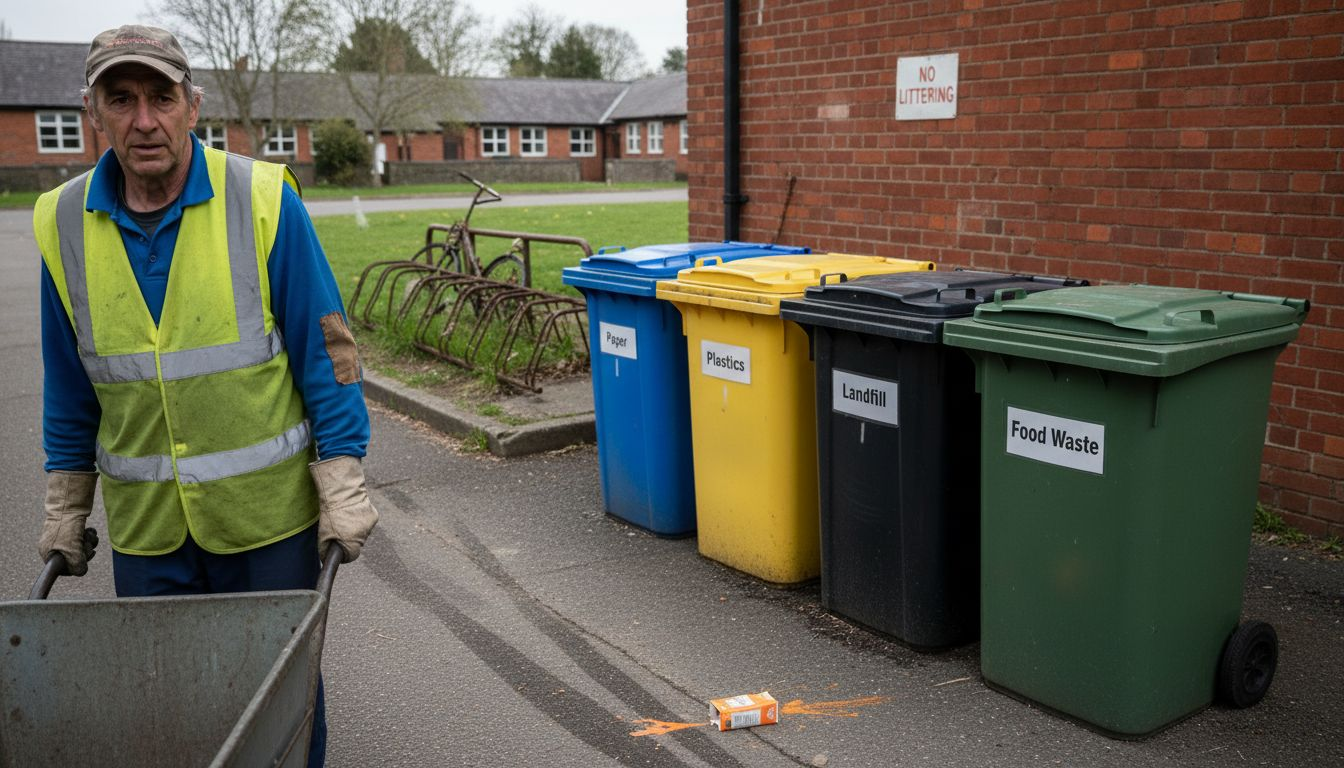
Groundskeeper pushes cart near recycling and landfill bins

Pro tip: Conduct a comprehensive waste audit in your school to identify opportunities for more effective material segregation and recycling.

Environmental and health impacts explained

The environmental consequences of waste management extend far beyond simple disposal, with profound implications for public health and ecosystem sustainability. Government waste reforms highlight the critical need to address the long-term impacts of landfill and recycling practices.

Landfill waste presents several significant environmental challenges:

  • Methane generation contributing to greenhouse gas emissions
  • Soil contamination from chemical leaching
  • Groundwater pollution through toxic waste infiltration
  • Biodiversity disruption in surrounding ecosystems
  • Air quality degradation from decomposition processes

Local government waste strategies emphasise the importance of understanding how waste management directly impacts environmental and human health. The accumulation of non-recycled materials creates a cascading effect of environmental damage, threatening both local and global ecological systems.

The health implications are equally profound. Toxic substances from improperly managed waste can enter food chains, water systems, and atmospheric cycles, potentially causing long-term health risks including:

  • Respiratory diseases from air pollution
  • Potential carcinogenic exposures
  • Water-borne illnesses
  • Compromised immune system functioning
  • Increased risk of environmental-related chronic conditions

By prioritising recycling and implementing stringent waste management protocols, schools can play a crucial role in mitigating these environmental and health risks, contributing to broader sustainability efforts and protecting community well-being.

Pro tip: Implement a comprehensive environmental education programme that demonstrates the direct connection between waste management practices and community health.

From 2026, UK educational institutions will face significant waste management regulatory changes that fundamentally transform their waste handling responsibilities. These new regulations represent a comprehensive approach to standardising recycling practices across schools and other public sector organisations.

Key legal requirements for institutions include:

  • Mandatory separate waste collections
  • Specific bin configurations for different waste types
  • Digital waste tracking protocols
  • Accurate waste segregation procedures
  • Comprehensive reporting mechanisms

Government waste management regulations stipulate precise obligations for institutions, with critical deadlines and compliance expectations. Larger educational establishments with more than 10 employees will need to implement these changes earlier, starting from 2025.

The regulatory framework introduces several critical compliance mechanisms:

  1. Separate collection of food waste
  2. Segregation of dry recyclable materials
  3. Distinct glass waste streams
  4. Clear labelling of waste containers
  5. Documented waste management procedures

Non-compliance could result in substantial financial penalties and potential legal consequences, making it imperative for schools to proactively adapt their waste management infrastructure and staff training programmes.

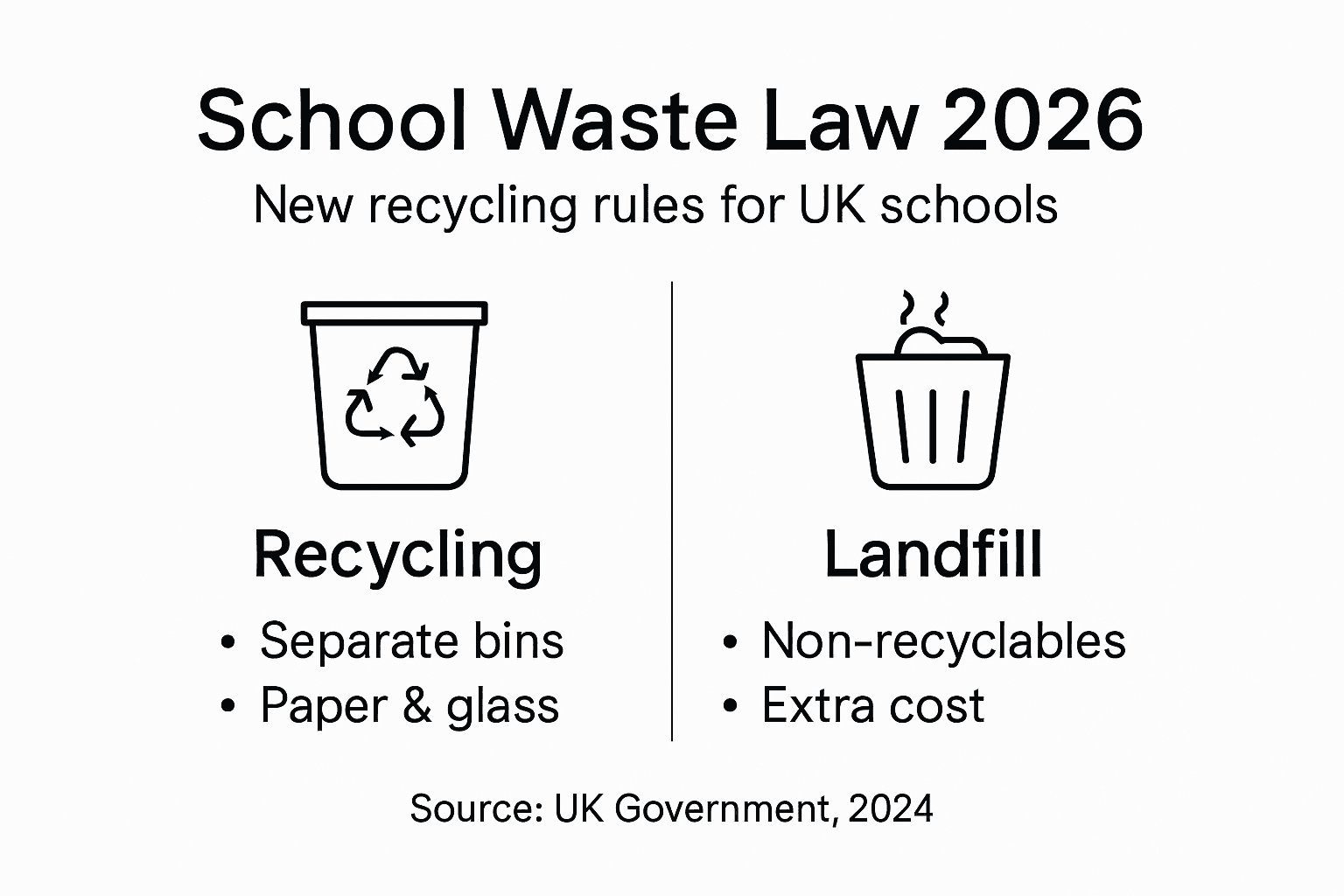
Infographic summary of UK school waste law changes

Pro tip: Conduct a comprehensive institutional waste audit now to identify and address potential compliance gaps before the 2026 regulations take effect.

Cost implications and process challenges

Schools across the United Kingdom face substantial financial and operational challenges with the implementation of new recycling regulations. These transformative waste management requirements demand significant investment and strategic planning from educational institutions.

Key financial challenges include:

  • Infrastructure upgrade costs
  • New waste collection bin investments
  • Staff training expenses
  • Potential revenue stream disruptions
  • Compliance monitoring overheads

Simpler Recycling policy updates introduce complex implementation challenges that extend beyond mere financial considerations. Institutions must navigate intricate operational transitions while maintaining educational continuity and budgetary constraints.

The process challenges are multifaceted, requiring comprehensive strategies:

  1. Redesigning existing waste management protocols
  2. Educating staff and students about new segregation requirements
  3. Developing robust tracking and reporting mechanisms
  4. Adapting procurement and supply chain practices
  5. Implementing digital waste management technologies

Moreover, schools must balance these regulatory requirements with limited financial resources, potentially necessitating creative funding solutions and phased implementation approaches to manage the transition effectively.

Here is a summary of common process and cost challenges facing schools during recycling transitions:

Challenge Type Example Potential Solution
Financial New container investments Seek local council grants
Operational Retraining staff Implement phased training sessions
Technological Digital tracking adoption Partner with IT providers
Logistical Reporting compliance Integrate reporting software

Pro tip: Develop a multi-year financial and operational transition plan that anticipates potential implementation challenges and allocates resources strategically.

Choosing recycling: practical solutions for schools

Navigating the new recycling landscape requires strategic planning and comprehensive implementation across educational institutions. Simpler Recycling guidance provides a clear framework for schools to transform their waste management approaches effectively.

Practical strategies for successful recycling implementation include:

  • Conducting comprehensive waste audits
  • Creating dedicated recycling stations
  • Developing clear visual signage
  • Implementing student training programmes
  • Establishing waste monitoring systems

Sustainability blogs recommend integrating recycling education directly into the curriculum, transforming waste management from a procedural requirement into a learning opportunity for students.

Schools can adopt a systematic approach to recycling by:

  1. Installing colour-coded waste collection points
  2. Creating student-led sustainability committees
  3. Tracking and reporting waste segregation metrics
  4. Engaging waste management providers collaboratively
  5. Implementing digital tracking technologies

Successful recycling programmes require ongoing commitment, cultural change, and a whole-school approach that empowers students and staff to become active environmental stewards.

Pro tip: Develop an engaging, interactive recycling education programme that transforms waste management from a compliance requirement into an exciting learning experience.

Take Control of Your School’s Waste Management with Venture Waste

Schools across the United Kingdom face real challenges adapting to the new recycling regulations coming into force in 2026. From mandatory separate collections to strict compliance monitoring, the shift away from landfill disposal means you need reliable waste management partners who understand your unique needs. Venture Waste offers comprehensive solutions designed to simplify this transition while ensuring full legal compliance and environmental care.

https://venturewaste.co.uk

Act now to streamline your school’s waste processes by choosing services that cover both recycling and general waste collection. Explore how our waste collection network in UK businesses adapts to evolving policies and discover practical tools like balers to improve recycling efficiency in our Baler Archives. Visit Venture Waste today to start your easy three-step booking process and ensure your school meets the new standards confidently and responsibly.

Frequently Asked Questions

What are the key differences between recycling and landfill disposal for schools?

Recycling involves the collection and processing of materials for reuse, reducing environmental impact and costs over time. In contrast, landfill disposal is the final destination for non-recyclable waste, contributing to pollution and higher long-term costs.

What types of materials are recyclable in UK schools?

Recyclable materials typically include paper, cardboard, plastic containers, metal packaging, glass bottles, jars, and food waste, which should be collected separately to promote effective waste management.

From 2026, schools will be required to implement mandatory separate waste collections, specific bin configurations, and digital waste tracking protocols, all aimed at improving recycling practices and compliance.

How can schools effectively implement recycling practices?

Schools can effectively implement recycling by conducting waste audits, creating dedicated recycling stations, developing clear signage, training students, and establishing waste monitoring systems to promote sustainability and compliance.

Coordinator auditing office waste bins

Waste Management for Offices: Improve Efficiency and Compliance

Managing office waste has never been more complex, especially with the new UK government legislation requiring clear separation of dry recyclables, food waste, and residual waste by March 2025. Facilities managers must now take a closer look at how waste is assessed and separated on-site to remain compliant and avoid operational headaches. This guidance explains each step needed to create a practical, compliant system for handling both general and confidential waste while supporting sustainability and cost control.

Table of Contents

Quick Summary

Key Takeaway Explanation
1. Conduct a thorough waste assessment Map your office’s waste streams to identify types and volumes for better management and compliance.
2. Set up effective waste separation stations Implement colour-coded bins to simplify waste sorting and ensure regulatory compliance in the workplace.
3. Coordinate regular waste collection services Establish a collection schedule that aligns with your waste production to maintain cleanliness and sustainability.
4. Ensure legal compliance and documentation Maintain accurate records of waste management processes to avoid penalties and demonstrate environmental responsibility.
5. Regularly review and optimise waste practices Continuously assess waste performance to identify improvement opportunities and adapt to changing regulations.

Step 1: Assess office waste streams and requirements

Effectively managing waste in your office begins with a comprehensive waste stream assessment. This critical first step helps you understand exactly what types of waste your organisation produces and how to handle them efficiently.

To conduct a thorough assessment, start by mapping workplace waste categories according to UK government guidelines. Your evaluation should focus on identifying and categorising different waste types:

  • General office waste (paper, packaging)
  • Electronic equipment waste
  • Confidential document waste
  • Recyclable materials
  • Food waste
  • Hazardous waste materials

Measure the volume of each waste category by conducting a week-long waste audit. This involves carefully tracking and weighing different waste types to understand your precise disposal requirements. Consider using digital tracking tools or simple spreadsheets to log your findings.

Accurate waste stream mapping is crucial for developing an effective waste management strategy that ensures legal compliance and environmental responsibility.

Once you have completed your assessment, you’ll be prepared to select appropriate waste containers, determine collection frequencies, and develop targeted waste reduction strategies.

Practical advice: Involve your team in the waste assessment process to increase awareness and encourage active participation in sustainable waste management practices.

Step 2: Implement dedicated waste separation stations

Establishing effective waste separation stations is crucial for meeting UK workplace recycling regulations and improving your organisation’s environmental performance. By creating strategically located waste collection points, you’ll streamline your waste management process and support sustainable practices.

To implement compliant waste stations, design clear waste segregation infrastructure that aligns with the 2025 workplace recycling guidelines. Your waste stations should include distinctly colour-coded and clearly labelled bins for different waste streams:

  • Blue bins: Dry recyclable materials
  • Brown bins: Food waste
  • Grey bins: Residual waste
  • White/clear bins: Confidential document disposal
  • Green bins: General office paper waste

Position these waste stations strategically throughout your workplace, ensuring easy accessibility in high-traffic areas such as kitchens, photocopying rooms, and communal spaces. Each station should feature:

  1. Clear visual signage explaining waste categories
  2. Consistent bin colours matching national standards
  3. Compact, ergonomic bin designs
  4. Separate containers for different waste types

Effective waste separation begins with making recycling simple, intuitive, and convenient for every employee.

Consider the specific waste generation points in your office and install smaller desk-side bins or department-specific collection points to encourage immediate, correct waste sorting.

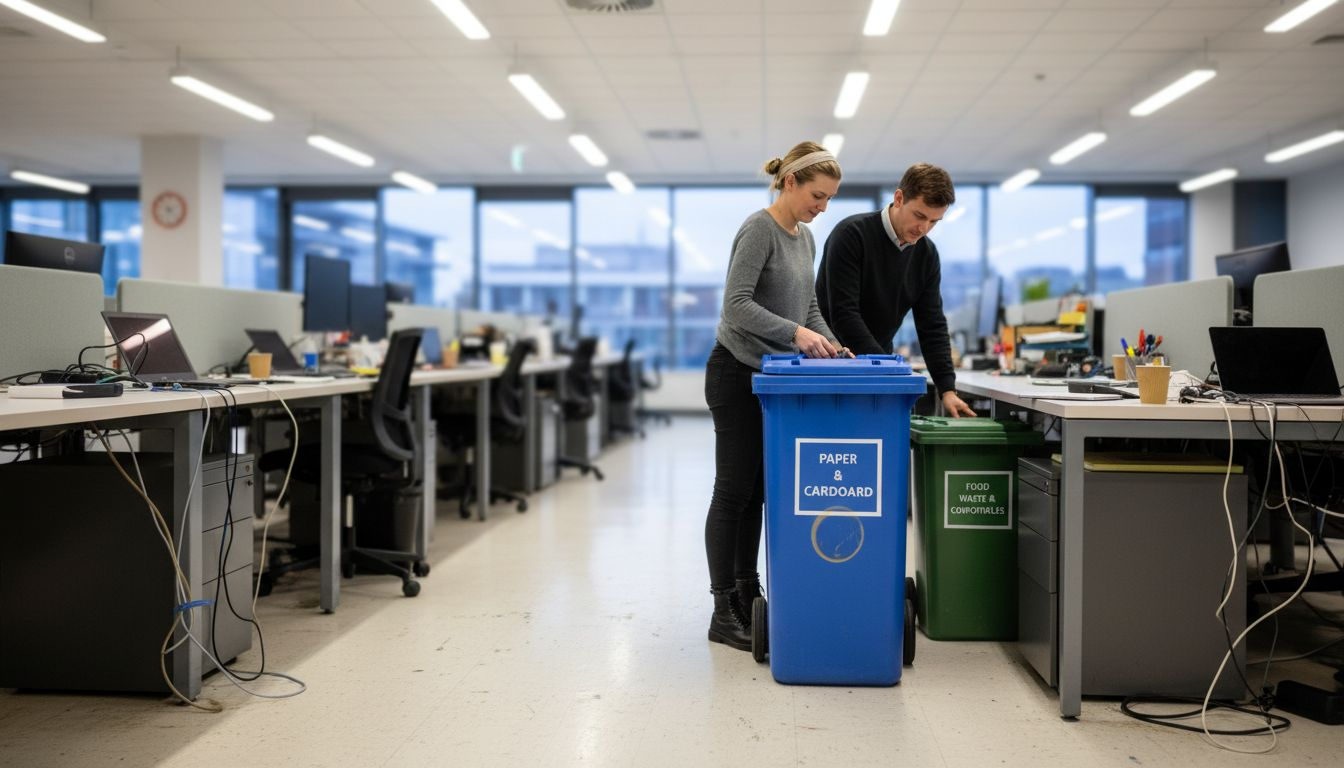
Employees setting up separation bins

Practical advice: Conduct a brief training session to familiarise staff with the new waste separation system and explain the importance of proper waste categorisation.

Here is a quick reference for colour codes and their associated office waste streams:

Bin Colour Waste Stream Typical Location
Blue Dry recyclables Kitchens, print areas
Brown Food waste Break rooms, kitchens
Grey Residual waste Common rooms, corridors
White/Clear Confidential documents Offices, admin areas
Green Office paper Meeting rooms, workstations

Step 3: Coordinate scheduled waste collection services

Successfully managing your office’s waste requires strategic planning and coordination with waste collection services. By establishing efficient collection schedules, you’ll ensure regulatory compliance and maintain a clean, sustainable workplace environment.

To develop an effective waste collection strategy, consider the following key steps:

  • Assess waste volume: Determine the quantity of waste generated by each waste stream
  • Review collection frequency: Match collection schedules to your specific waste production
  • Negotiate service agreements: Secure flexible contracts with waste management providers
  • Confirm segregation requirements: Ensure alignment with 2025 workplace recycling regulations
  • Set up digital tracking: Monitor waste collection and disposal performance

When engaging waste collection services, prepare a comprehensive brief that outlines:

  1. Exact waste stream volumes
  2. Preferred collection frequencies
  3. Specific segregation requirements
  4. Compliance with new workplace recycling regulations

Proactive waste collection coordination prevents operational disruptions and supports environmental sustainability goals.

Regularly review and adjust your waste collection arrangements to maintain operational efficiency and regulatory compliance. This might involve quarterly meetings with your waste management provider to discuss performance and potential improvements.

Practical advice: Develop a digital waste management log to track collection schedules, volumes, and compliance, enabling quick adjustments and informed decision-making.

Ensuring your office’s waste management practices meet legal standards is crucial for avoiding potential penalties and maintaining environmental responsibility. By documenting waste management processes, you’ll create a robust framework that demonstrates your commitment to regulatory compliance.

To effectively verify legal compliance, compile and maintain the following critical documentation:

  • Waste audit reports: Detailed records of waste volumes and streams
  • Collection service contracts: Formal agreements with waste management providers
  • Staff training logs: Evidence of employee waste management education
  • Waste segregation protocols: Written guidelines for proper waste handling
  • Collection and disposal receipts: Proof of proper waste management

Your compliance documentation should address key regulatory requirements:

  1. Demonstrate consistent waste stream separation
  2. Show evidence of staff training
  3. Maintain up-to-date waste management records
  4. Prepare for potential Environment Agency inspections

Legal compliance is not just about avoiding penalties, but about demonstrating your organisation’s commitment to sustainable practices.

Regularly review and update your documentation to ensure it reflects current regulations and your organisation’s waste management practices. Consider scheduling bi-annual internal audits to identify and address any potential compliance gaps.

Practical advice: Digitise your compliance documents and create a centralized, secure digital repository to ensure easy access and long-term preservation of critical waste management records.

Step 5: Review and optimise office waste practices

Transforming your office’s waste management requires a strategic and continuous approach to evaluating waste performance. By implementing a systematic review process, you’ll uncover opportunities to reduce waste, improve recycling rates, and enhance your organisation’s environmental sustainability.

Develop a comprehensive waste optimisation strategy through these key activities:

  • Conduct quarterly waste audits: Measure and analyse waste volumes
  • Track recycling percentages: Monitor progress against baseline measurements
  • Identify waste reduction opportunities: Analyse waste stream composition
  • Engage employee feedback: Understand practical challenges in waste management
  • Benchmark against industry standards: Compare performance with sector best practices

Your review process should include systematic evaluation of:

  1. Current waste generation patterns
  2. Effectiveness of existing waste separation practices
  3. Staff understanding and compliance with waste protocols
  4. Cost implications of waste management strategies

Continuous improvement in waste management is not just an environmental imperative, but a strategic business opportunity.

Regularly update your waste management approach based on audit findings, technological advancements, and changing regulatory requirements. This dynamic approach ensures your office remains adaptable and compliant.

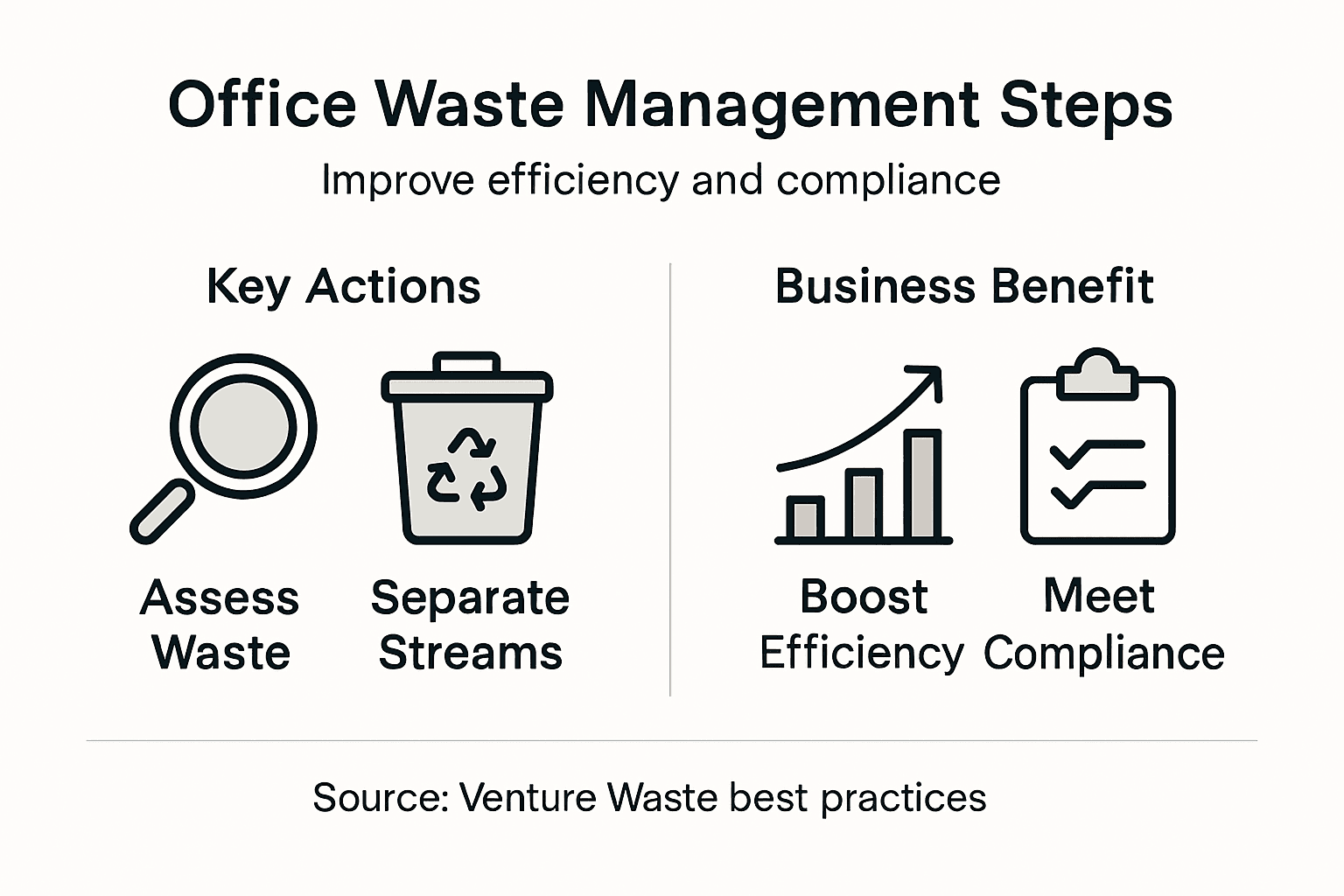
Infographic showing steps for efficient office waste

Practical advice: Create a visual dashboard to track waste management metrics, making performance data accessible and engaging for your entire team.

The following table summarises the impact of each recommended office waste management step:

Step Main Objective Business Benefit
Waste Assessment Identify and measure waste streams Informs bins, processes, and policy
Separation Stations Achieve proper waste segregation Meets regulations, boosts recycling rates
Scheduled Collection Manage collection logistics Minimises disruption, supports compliance
Legal Compliance Maintain accurate records Avoids penalties, proves responsibility
Ongoing Review Continually optimise processes Cuts waste costs, ensures adaptability

Transform Your Office Waste Management with Venture Waste

Struggling to navigate the complexities of office waste segregation and compliance with evolving UK regulations The article highlights the importance of accurate waste stream assessments and scheduled waste collections to keep your business both efficient and legally compliant. Common pain points include confusion over waste separation, meeting strict documentation requirements and adapting to new workplace recycling laws. By embracing clear waste station setups and regular reviews you take control of your environmental impact and operational costs.

https://venturewaste.co.uk

At Venture Waste, we understand these challenges and offer tailored solutions that make managing your office waste simpler and more effective. Explore our detailed Waste Collection Process in the UK for Businesses 2025 – Venture Waste page for practical insight on compliant collection scheduling. If your office handles sensitive documents, our confidential waste Archives – Venture Waste ensures secure disposal meeting legal requirements. Learn more about how the Waste Collection Network in UK Serves Businesses in 2025 – Venture Waste supports your sustainability goals.

Take the next step today by visiting https://venturewaste.co.uk to book a consultation and simplify your journey towards efficient office waste management that protects your business and the environment.

Frequently Asked Questions

How can I assess the waste streams in my office?

Start by conducting a comprehensive waste stream assessment to identify and measure different types of waste your organisation generates. Track and categorise waste over a week to understand your disposal needs and implement efficient management strategies.

What should I include in my office’s waste separation stations?

Create dedicated bins that are clearly labelled and colour-coded for each waste type, such as dry recyclables, food waste, and general office paper. Position these stations in high-traffic areas to encourage proper waste disposal and engagement from all employees.

How do I develop a collection schedule for office waste?

Review the volume and type of waste generated in your office to create an effective waste collection schedule. Coordinate with collection services to ensure regular pickups that align with your organisation’s waste production, adjusting as necessary to maintain cleanliness.

Compile key documents such as waste audit reports, collection service contracts, and staff training logs. Keep your records updated to demonstrate compliance and ensure your organisation is prepared for potential inspections.

How often should I review my office’s waste management practices?

Conduct regular reviews, ideally quarterly, of your waste management practices and strategies. This helps identify waste reduction opportunities and ensures your office adapts to any new regulations or improvements in recycling practices.

What actions can I take to improve employee participation in waste management?

Engage employees with training sessions that highlight the importance of proper waste disposal and recycling. Foster a culture of sustainability by regularly sharing updates on waste performance metrics and celebrating achievements in reducing waste.