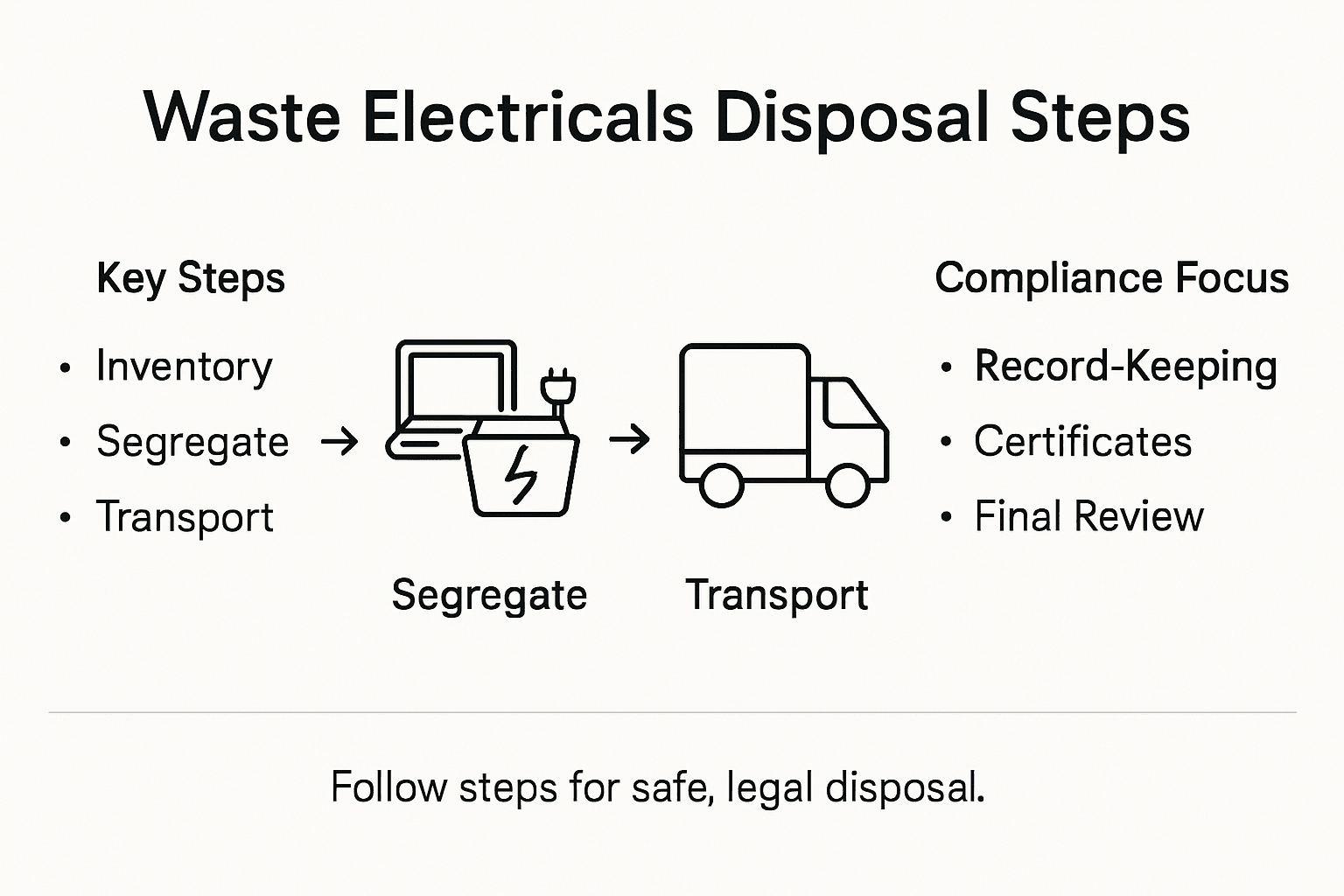
Facilities manager checks labelled hospital waste bins

Safeguarding Sensitive Waste in UK Healthcare

British healthcare facilities generate over 600,000 tonnes of medical waste every year, making secure and compliant disposal a top concern for facilities managers across the United Kingdom. With strict legislation and patient safety on the line, managing sensitive waste in a british healthcare context demands unwavering attention to detail. This guide explains the types, risks, and regulatory requirements so you can protect staff, patients, and your institution from costly mistakes.

Table of Contents

Key Takeaways

Point Details
Importance of Waste Segregation Rigorous segregation using colour-coded systems is essential to prevent cross-contamination and ensure regulatory compliance.
Regulatory Compliance Healthcare providers must adhere to stringent legal frameworks, maintaining detailed documentation throughout all stages of waste management.
Staff Training and Awareness Comprehensive training programmes are vital to educate staff on correct waste handling procedures and avoid compliance risks.
Monitoring and Accountability Implementing digital tracking systems enhances transparency and real-time monitoring, crucial for maintaining compliance.

Sensitive Waste in Healthcare Explained

Healthcare waste represents a critical area of management requiring meticulous attention across medical facilities throughout the United Kingdom. Managing healthcare wastes involves understanding the complex landscape of clinical and infectious materials that pose significant health risks if improperly handled.

Healthcare waste encompasses multiple categories, including infectious materials, pharmaceutical remnants, sharps, chemical waste, and anatomical substances. These materials demand specialised disposal protocols to prevent potential transmission of diseases and protect public health. Medical professionals must implement rigorous segregation strategies, using colour-coded packaging systems that distinguish between different waste types and ensure safe containment.

The regulatory framework governing healthcare waste management in the United Kingdom is stringent, requiring healthcare providers to follow precise guidelines for collection, transportation, treatment, and final disposal. Healthcare waste management involves comprehensive tracking mechanisms to maintain accountability and minimise environmental contamination. Healthcare facilities must maintain detailed documentation tracking each waste stream, demonstrating compliance with national health and safety legislation.

Pro tip: Implement a comprehensive staff training programme focused on waste segregation protocols to reduce cross-contamination risks and ensure regulatory compliance.

Major Types and Classification Standards

Healthcare waste in the United Kingdom is systematically classified into distinct categories to ensure precise handling and disposal protocols. Healthcare waste definition establishes two primary classifications: clinical waste and offensive waste, each with specific characterisation requirements that guide medical facilities’ waste management strategies.

The clinical waste category encompasses highly sensitive materials that pose significant infection risks. These include sharps such as needles and scalpels, contaminated materials with bodily fluids, pharmaceutical remnants, anatomical waste, and potentially infectious substances from medical procedures. Such waste requires stringent containment protocols, typically involving sealed, colour-coded containers that prevent potential cross-contamination and minimise environmental health risks.

Nurse storing clinical waste in lockable cabinet

Offensive waste represents a separate classification of medical materials that, while not inherently infectious, still demand careful disposal. This category includes non-infectious body fluids, secretions, and materials from medical settings that do not constitute high-risk biological hazards. Examples include hygiene waste, personal protective equipment without infectious contamination, and certain medical packaging materials. Healthcare facilities must implement distinct segregation and disposal processes for these different waste streams to maintain comprehensive safety standards.

Pro tip: Develop a comprehensive colour-coded waste segregation system with clear staff training to ensure immediate, accurate waste classification in clinical environments.

Here is a summary of key healthcare waste categories and their typical handling requirements:

Waste Category Main Examples Handling Requirements
Clinical Waste Sharps, contaminated dressings Sealed, colour-coded, puncture-resistant containers
Pharmaceutical Expired medicines, residue Separated from other waste, labelled
Anatomical Human tissue, body parts Discrete, leak-proof containers, labelled
Chemical Disinfectants, solvents Special storage, hazard labelling
Offensive Waste Non-infectious PPE, hygiene items Standard bags, not for infectious waste

Healthcare organisations in the United Kingdom operate within a comprehensive legal framework that mandates rigorous management of clinical waste. Statutory waste management policies establish clear responsibilities for healthcare providers, ensuring systematic approaches to waste handling that protect public health and environmental safety.

The duty of care principle underpins the UK’s regulatory approach, requiring healthcare providers to maintain accountability for waste from its initial generation through to final disposal. This legal obligation extends across multiple legislative instruments, including the Controlled Waste Regulations and the Health and Social Care Act. Healthcare organisations must demonstrate comprehensive tracking, appropriate segregation, and secure disposal of all potentially hazardous medical materials, with precise documentation evidencing each stage of waste management.

Healthcare waste management standards are comprehensively outlined in the Health Technical Memorandum 07-01 (HTM 07-01), which provides definitive guidance for NHS and independent healthcare providers. These technical standards specify detailed requirements for environmental permitting, waste segregation protocols, storage conditions, transportation mechanisms, and ultimate disposal processes. Non-compliance can result in significant legal penalties, making it imperative for healthcare facilities to maintain meticulous waste management systems that align with national regulatory expectations.

Pro tip: Develop a comprehensive internal audit system to regularly review waste management procedures and ensure ongoing compliance with current regulatory standards.

The following table compares key UK regulations relevant to healthcare waste management:

Regulation Area of Focus Compliance Requirement
Health Technical Memorandum 07-01 Segregation, disposal, storage Detailed protocols, regular auditing
Controlled Waste Regulations Classification, licencing Record keeping, legal accountability
Health and Social Care Act Duty of care, safety Tracking from creation to disposal

Essential Steps for Secure Handling and Storage

Healthcare waste management demands a systematic approach to ensure safety and compliance. Healthcare waste handling procedures require meticulous attention to detail at every stage of collection, storage, and disposal to minimise potential health risks and environmental contamination.

The first critical step involves precise waste segregation. Healthcare facilities must implement a robust colour-coded container system that allows immediate identification of different waste types. Each container must be appropriately sealed, clearly labelled, and strategically positioned to prevent cross-contamination. Specific receptacles are designated for infectious materials, sharps, pharmaceutical waste, and other sensitive categories, ensuring that potentially hazardous materials are isolated and managed with utmost care.

Waste management protocols emphasise the importance of secure storage areas with restricted access. These designated zones must be climate-controlled, pest-resistant, and completely inaccessible to unauthorized personnel. Healthcare facilities should maintain detailed logs tracking waste volume, type, and movement, creating an auditable trail that demonstrates compliance with regulatory standards. Staff training is paramount, with regular workshops ensuring that every team member understands the precise procedures for handling, storing, and documenting sensitive medical waste.

Pro tip: Implement a comprehensive digital tracking system to monitor waste handling processes, ensuring real-time accountability and immediate identification of potential compliance issues.

Common Compliance Risks and How to Avoid Them

Healthcare waste management presents numerous potential compliance challenges that can expose organisations to significant legal and health risks. Compliance risk mitigation strategies require systematic approaches to identify, prevent, and address potential regulatory breaches before they escalate.
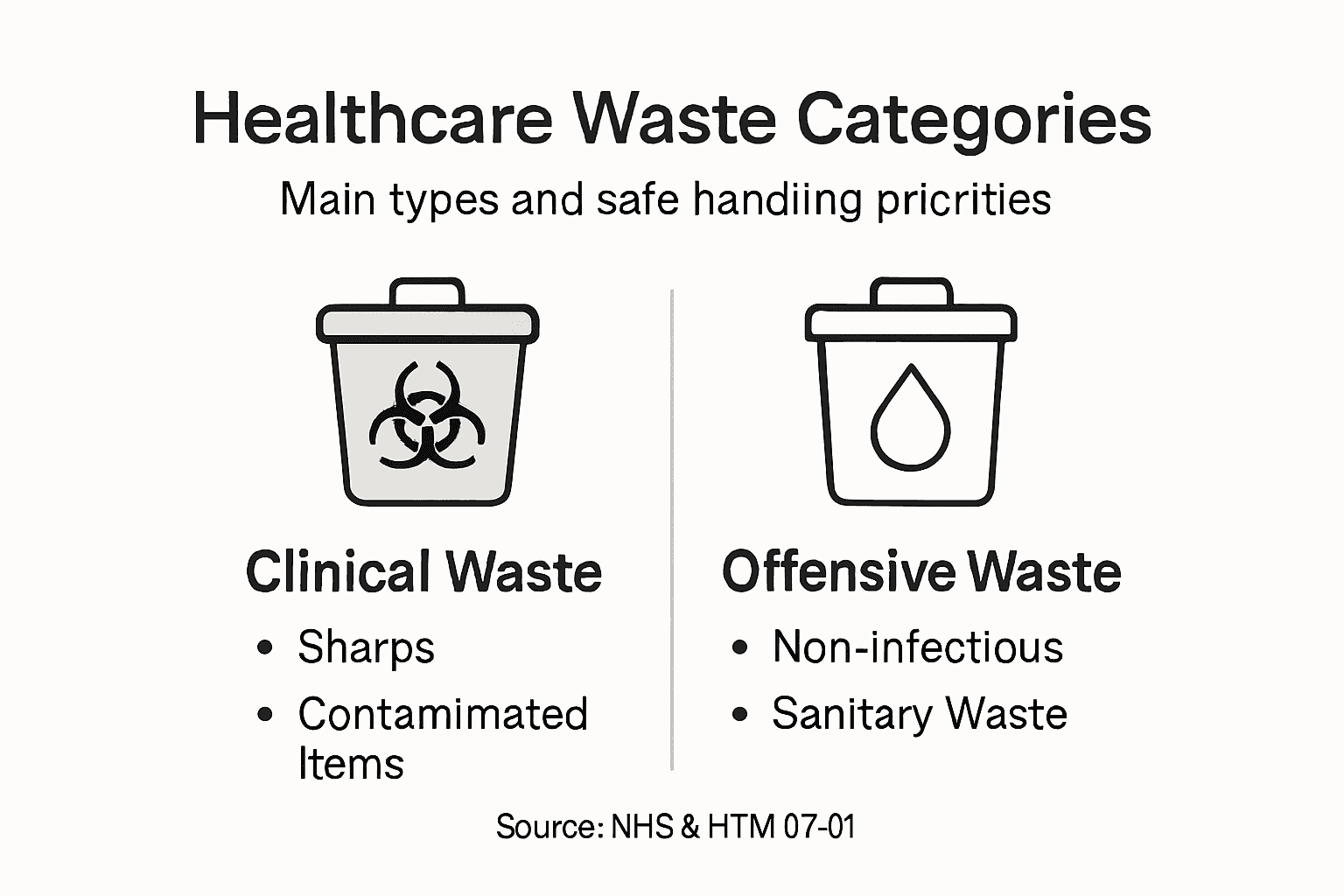
Infographic of UK healthcare waste classification

One of the most critical compliance risks involves improper waste segregation. Healthcare facilities frequently encounter challenges with mixing hazardous and non-hazardous waste streams, which can lead to serious regulatory violations. Organisations must implement comprehensive training programmes that educate staff about precise waste categorisation protocols. This includes understanding the distinct requirements for infectious materials, pharmaceutical waste, sharps, chemical remnants, and general medical waste. Clear visual guides, colour-coded containers, and regular staff assessments can significantly reduce the likelihood of inadvertent cross-contamination.

Additional compliance risks emerge from inadequate documentation and accountability mechanisms. Healthcare providers must establish robust tracking systems that document each stage of waste management, from initial generation through final disposal. This requires maintaining detailed logs that record waste type, volume, transportation routes, and disposal methods. Electronic tracking systems can provide real-time monitoring, ensuring transparency and creating an auditable trail that demonstrates regulatory adherence. Regular internal audits and third-party compliance assessments can help identify potential vulnerabilities in waste management processes before they result in significant penalties.

Pro tip: Create a dedicated compliance team responsible for continuously reviewing and updating waste management protocols, ensuring your organisation remains proactive in meeting evolving regulatory standards.

Protect Your Healthcare Facility with Expert Sensitive Waste Solutions

Managing sensitive healthcare waste means safeguarding patient safety, meeting strict legal duties, and preventing hazardous contamination. Understanding the complex classifications like clinical waste, sharps, and pharmaceutical materials demands a trusted waste provider who specialises in secure handling and compliance. At Venture Waste Management, we take the pressure off your team by offering expert services tailored to the demanding standards of UK healthcare environments.
https://venturewaste.co.uk

Take control of your facility’s waste management today with our comprehensive hazardous waste Archives – Venture Waste solutions. Our streamlined service ensures precise segregation, secure transport, and compliant disposal. Trust us to support your duty of care and reduce the risk of costly breaches. Visit Venture Waste Management now and discover how easy booking can be while protecting public health and your reputation. For sensitive information disposal, explore our confidential waste Archives – Venture Waste services and keep all sensitive materials fully secure.

Frequently Asked Questions

What are the main types of healthcare waste?

Healthcare waste is classified into several categories including clinical waste, which includes sharps and contaminated materials, and offensive waste, which comprises non-infectious items that still require careful disposal protocols.

How is healthcare waste managed in medical facilities?

Healthcare waste management involves precise segregation, following colour-coded packaging systems, secure storage, and compliance with regulatory requirements for collection, transportation, and final disposal.

Healthcare organisations are required to adhere to the duty of care principle, ensuring waste is properly handled and documented from its generation to disposal, in accordance with legislation such as the Controlled Waste Regulations and the Health and Social Care Act.

What are the common risks associated with healthcare waste management compliance?

Common risks include improper waste segregation, which can lead to regulatory violations, and inadequate documentation, which must be addressed through robust tracking systems and comprehensive staff training.

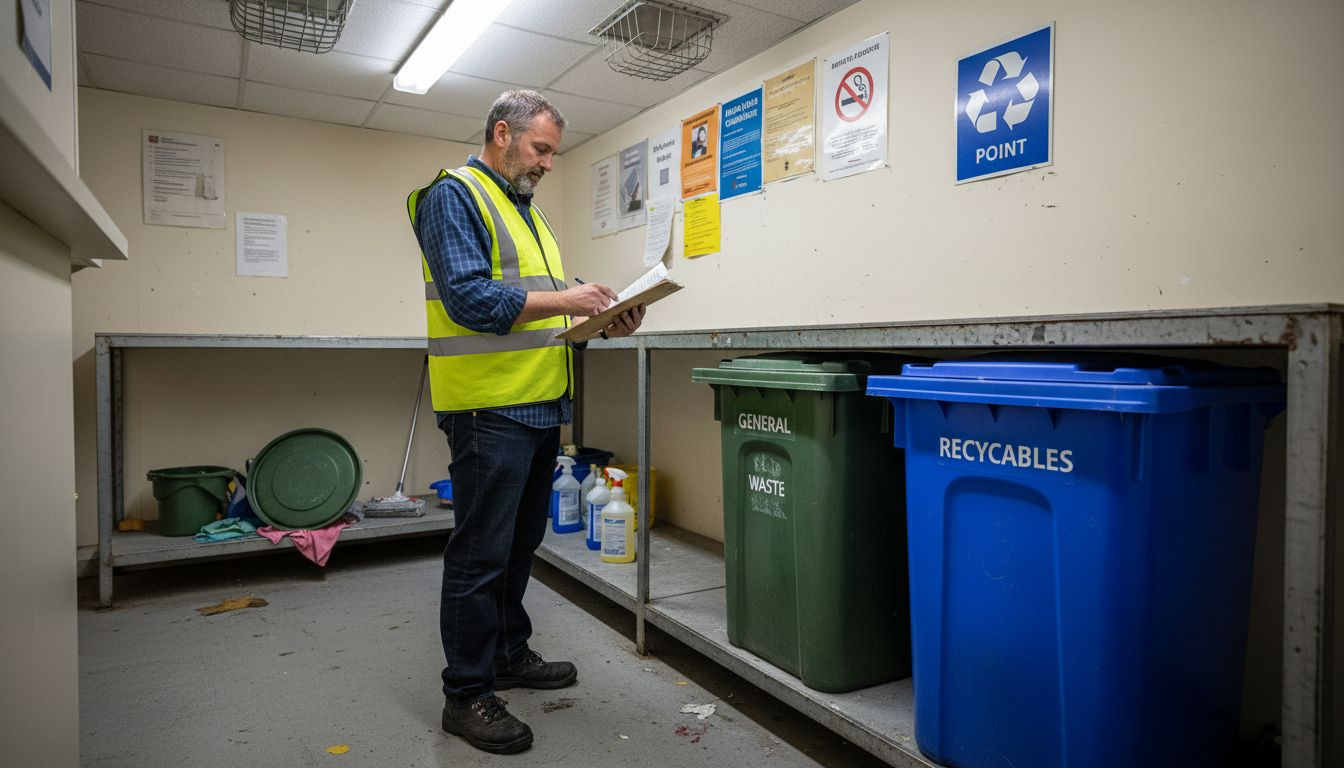
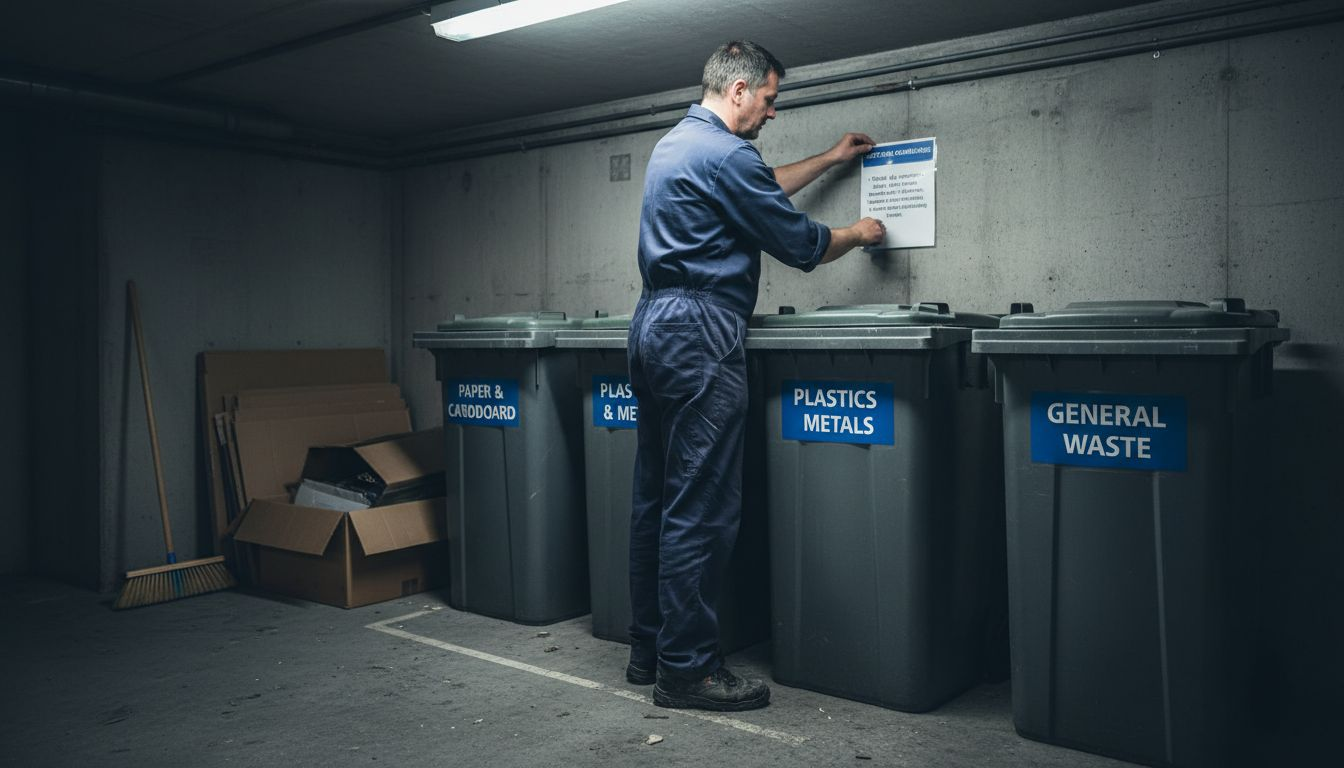
Officer assessing waste bins in hospital basement

How to Sort Waste Effectively for Legal Compliance

Across British healthcare and educational facilities, nearly 30 percent of waste ends up incorrectly sorted, risking fines and losing chances for recycling. With tighter regulations and rising sustainability goals, accurate waste management is no longer optional for facilities managers. This guide reveals practical waste sorting solutions that help British organisations stay compliant, optimise operations, and support greener communities.

Table of Contents

Quick Summary

Key Insight Explanation
1. Assess waste streams thoroughly Conduct a detailed evaluation of all waste types within your facility to understand waste composition and segregate effectively.
2. Implement clearly marked sorting stations Establish intuitive and well-signposted sorting stations in strategic locations to enhance waste separation at the point of generation.
3. Educate staff on waste separation practices Provide ongoing training and resources to ensure staff understand waste types and correct disposal methods to maintain compliance.
4. Monitor waste sorting practices regularly Conduct systematic reviews and use tracking tools to ensure compliance and identify any contamination or sorting issues.
5. Verify recycling and disposal compliance Maintain detailed records of waste management processes and conduct audits to ensure alignment with legal regulations and best practices.

Step 1: Assess waste streams on-site

Assessing waste streams represents a critical first step in ensuring legal compliance for waste management across healthcare and educational institutions. By conducting a thorough on-site evaluation, you can systematically identify and categorise different types of waste generated within your facility.

Begin your waste assessment by mapping out all waste generation points across your organisation. This involves walking through each department and documenting the specific waste types produced. For instance, a hospital might generate medical waste, paper documents, food waste from cafeterias, and packaging materials. A university could have similar diversity with laboratory chemical waste, paper recyclables, electronic equipment, and organic waste from catering facilities. Waste stream evaluation techniques help organisations understand their precise waste composition and develop targeted segregation strategies.

Once you have documented your waste streams, create a detailed inventory that categorises waste by type plastic, paper, organic, hazardous and non-hazardous materials. This inventory will become your roadmap for implementing proper sorting protocols. Use colour coded bins, clear signage, and staff training to ensure each waste type is correctly identified and separated at the point of generation.

Expert Advice: Conduct your initial waste assessment during a typical working week to capture the most accurate representation of your facility’s waste generation patterns.

Here is a summary of common waste stream types and their examples for healthcare and educational settings:

Waste Stream Type Typical Examples in Healthcare Typical Examples in Education
Medical/Hazardous Needles, bandages, chemicals Laboratory reagents, sharp objects
Paper/Cardboard Patient records, cartons Exam scripts, packaging
Organic Food scraps from cafeterias Catering waste, garden clippings
Electronic (WEEE) Discarded monitors, devices Broken computers, lab equipment
General/Residual Non-recyclable materials Mixed waste, contaminated wrappers
Plastic Disposable gloves, wrappers Bottles, containers

Step 2: Set up marked sorting stations

Establishing clearly marked sorting stations is essential for effective waste management and legal compliance in healthcare and educational facilities. Your goal is to create an intuitive waste disposal system that helps staff and visitors easily segregate different types of waste at the point of generation.

Start by implementing waste station design guidelines that align with UK regulations. This means creating distinct stations with colour coded bins for each waste stream such as glass, metal, plastic, paper, cardboard, food waste, and general residual waste. Position these stations strategically in high traffic areas like corridors, cafeterias, laboratories, and administrative spaces. Each station should feature clear visual signage explaining exactly what can be disposed of in each bin type and include pictorial guides to help reduce contamination.

Ensure your sorting stations are consistent across the entire facility. Use standardised bin colours matching national waste management guidelines red for hazardous waste, blue for paper and cardboard, green for organic materials, and black for general waste. Train your staff thoroughly on these colour codes and waste segregation protocols to maintain system integrity and legal compliance.

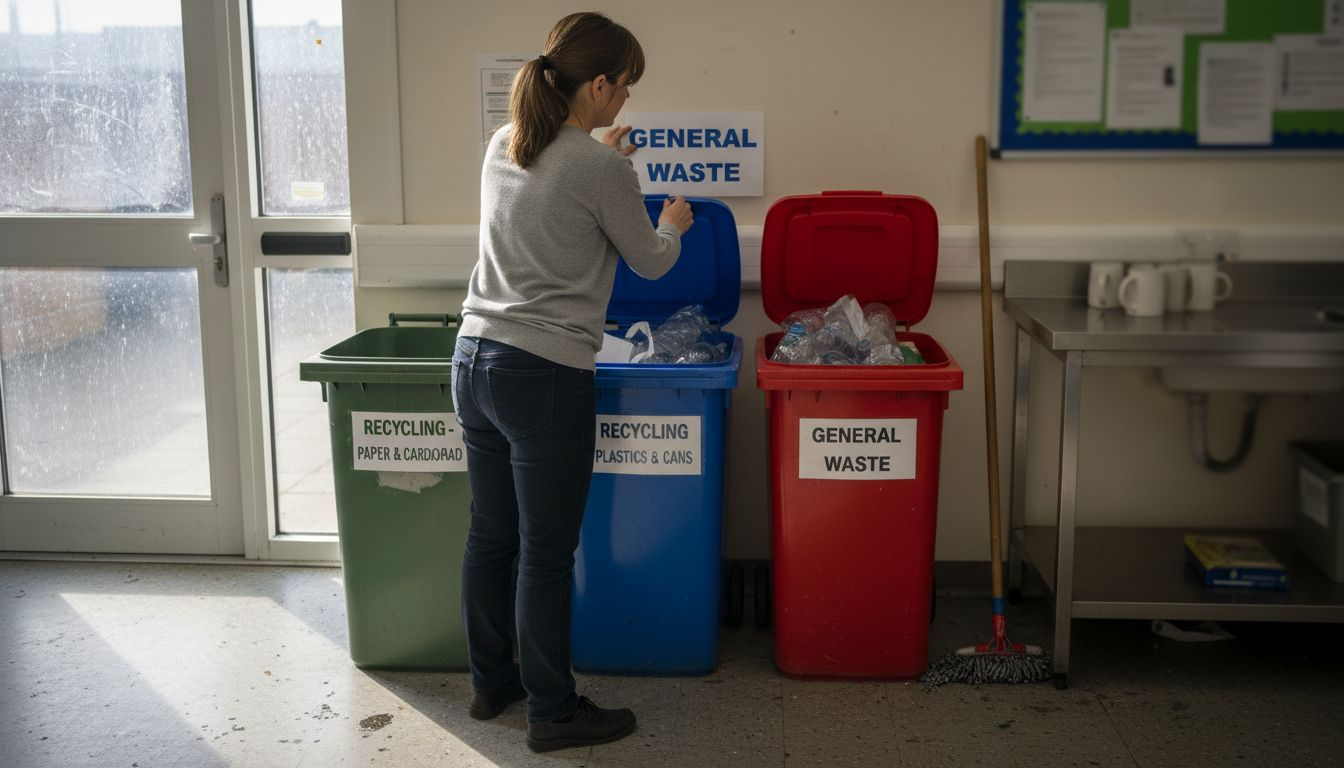
Manager arranges waste sorting bins in staff kitchen

Expert Advice: Install waste sorting guidance posters near each station to provide quick reference for correct disposal methods.

The following table compares waste bin colour codes in UK regulations and their intended contents:

Bin Colour Associated Waste Type Key Locations for Use
Red Hazardous/clinical waste Treatment rooms, laboratories
Blue Paper and cardboard Offices, lecture halls
Green Organic/food waste Kitchens, cafeterias
Black General/residual waste Corridors, public areas

Step 3: Educate staff on correct separation

Educating your staff about waste separation is crucial for maintaining legal compliance and ensuring effective waste management across your organisation. Your primary objective is to transform waste disposal from a mundane task into a systematic and environmentally responsible practice.

Staff training requirements mandate comprehensive education on waste segregation procedures. Develop a structured training programme that includes interactive workshops, visual demonstrations, and practical guidance on identifying and disposing of different waste types. Focus on explaining the purpose behind waste separation beyond mere compliance highlighting environmental benefits and the organisation’s commitment to sustainable practices. Create engaging training materials that illustrate the correct bin usage colour codes and provide real world examples of potential contamination scenarios.

Implement ongoing education strategies to maintain staff awareness. Schedule regular refresher sessions every six months and use digital platforms like internal newsletters, posters, and quick reference guides to reinforce proper waste separation protocols. Consider establishing waste champions within different departments who can provide peer support and help monitor waste disposal practices. These internal advocates can play a crucial role in maintaining high standards of waste management and ensuring consistent compliance across your facility.

Expert Advice: Conduct periodic waste sorting quizzes or challenges to keep staff engaged and reinforce learning in a fun interactive manner.

Step 4: Monitor sorting practices regularly

Regular monitoring of waste sorting practices is essential to ensure ongoing legal compliance and maintain the effectiveness of your waste management system. By implementing systematic review processes, you can identify potential issues quickly and prevent waste stream contamination.

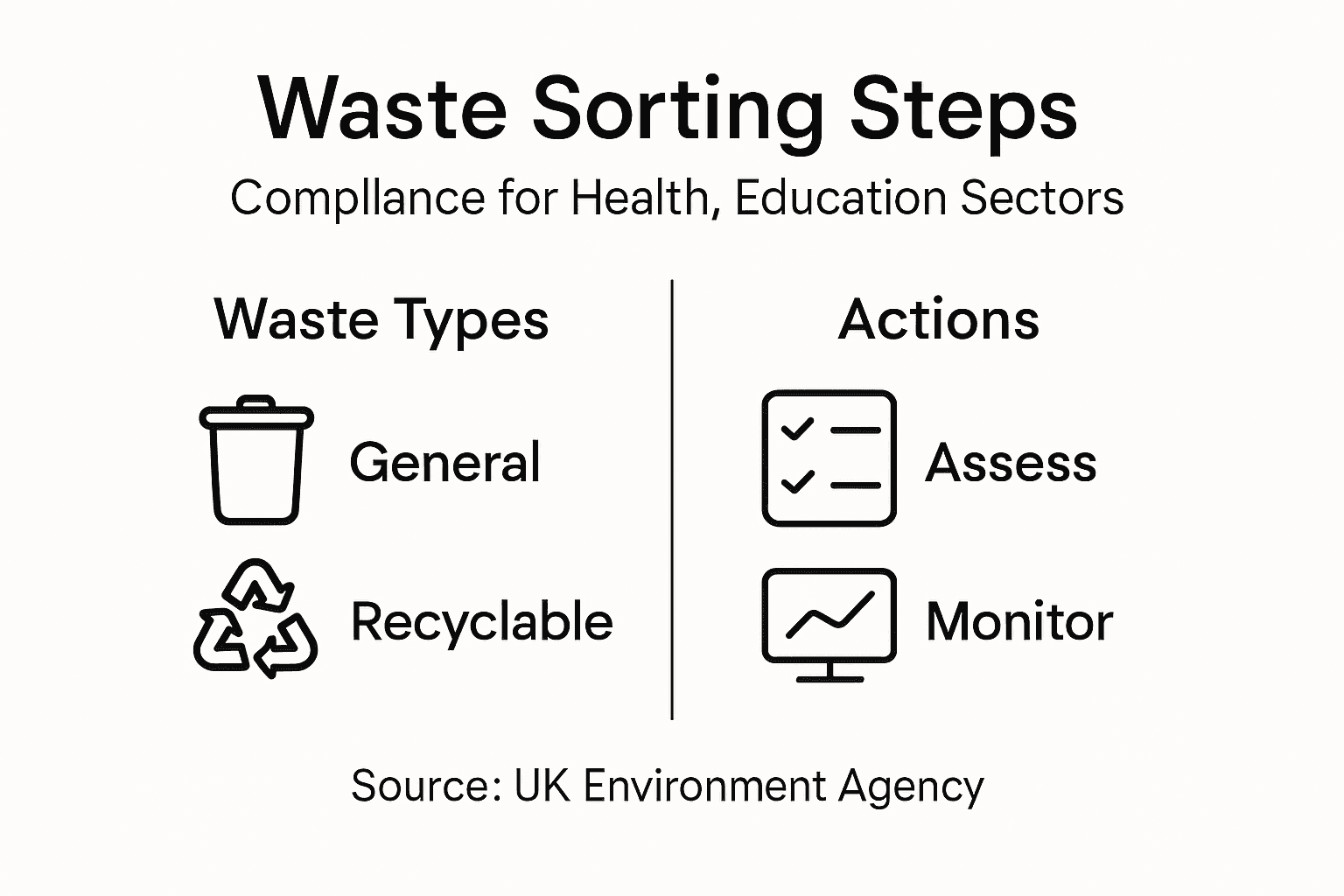
Compliance monitoring strategies recommended by the Environment Agency involve multiple assessment approaches. Develop a comprehensive monitoring programme that includes unannounced spot checks, quarterly detailed audits, and digital tracking of waste disposal practices. Create a standardised checklist that evaluates waste sorting accuracy, bin contamination levels, staff adherence to colour coding protocols, and overall waste stream segregation quality. Assign responsible team members to conduct these reviews consistently and document their findings.

Utilise digital technologies to enhance your monitoring efforts. Implement waste tracking software that allows real time recording of sorting practices, generates visual reports, and highlights areas requiring immediate attention. Consider establishing a feedback mechanism where staff can report potential sorting issues or suggest improvements. This collaborative approach not only improves waste management practices but also increases staff engagement and creates a culture of environmental responsibility.

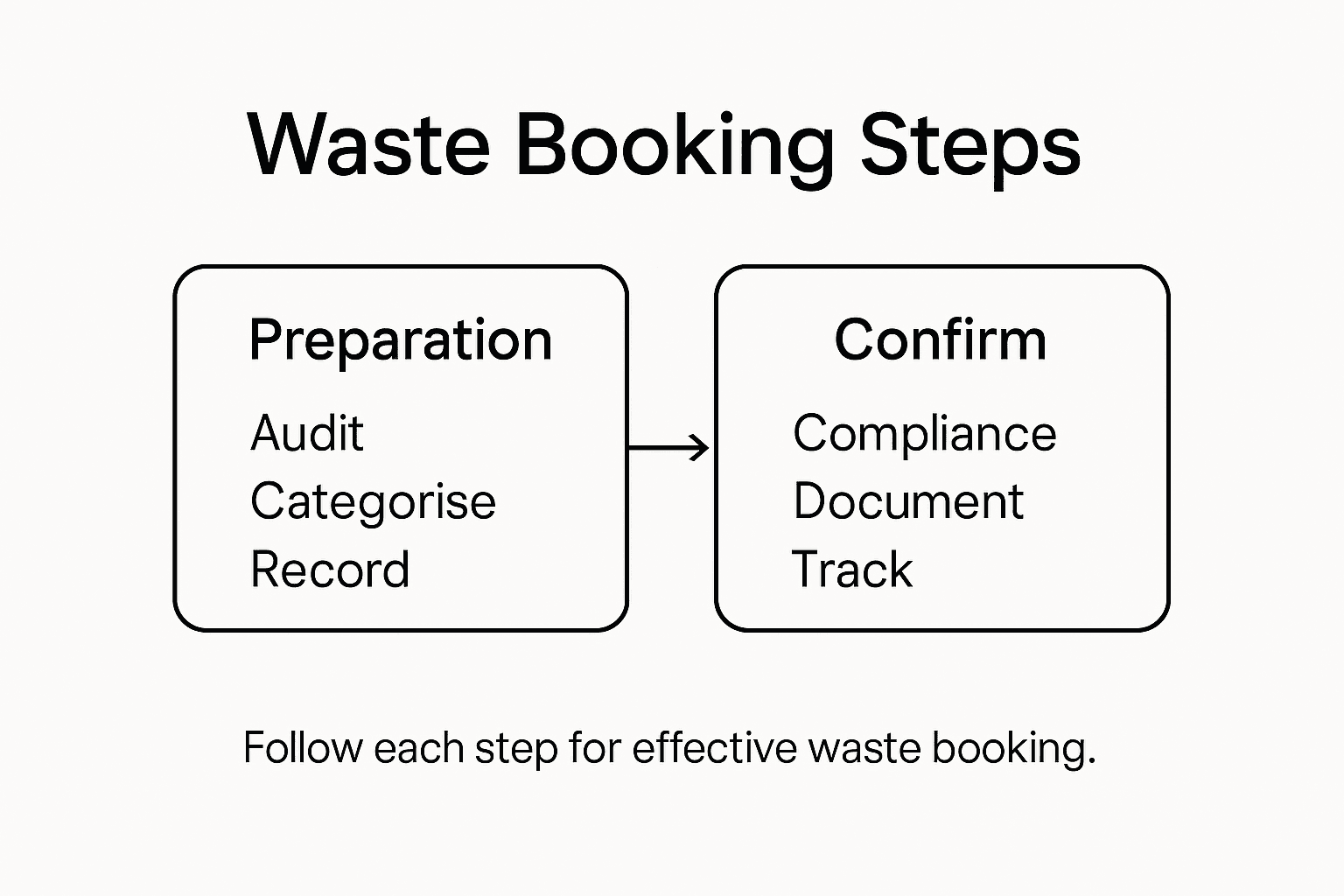
Infographic showing steps for waste sorting compliance

Expert Advice: Use random sampling techniques during monitoring to get an unbiased representation of your organisation’s waste sorting performance.

Step 5: Verify recycling and disposal compliance

Verifying recycling and disposal compliance is the final critical step in ensuring your waste management practices meet legal standards and environmental regulations. Your goal is to systematically document and validate that all waste streams are processed according to UK environmental guidelines.

Waste disposal verification protocols require businesses to maintain comprehensive documentation of their waste management processes. Develop a robust record keeping system that tracks each waste stream from collection to final disposal. This should include detailed logs documenting the type and quantity of waste, the recycling or disposal method used, and certificates from accredited waste processors. Collect and retain recycling notes, transfer documentation, and disposal receipts that demonstrate your organisation’s commitment to proper waste management.

Conduct periodic internal audits to cross reference your waste documentation with actual disposal practices. Engage independent environmental compliance auditors who can provide an objective assessment of your waste management systems. These external reviews not only help identify potential compliance gaps but also demonstrate your proactive approach to environmental responsibility. Pay special attention to hazardous waste streams, ensuring they receive appropriate specialised treatment and are tracked with extra scrutiny.

Expert Advice: Create a digital archive of all waste management documentation to ensure easy retrieval and long term preservation of compliance records.

Master Waste Sorting with Venture Waste’s Expert Solutions

Sorting waste effectively is essential for legal compliance and protecting the environment. The article highlights common challenges such as understanding diverse waste streams, setting up marked sorting stations, and educating staff to prevent contamination. If you find managing multiple waste types like hazardous materials, food scraps, or recycling confusing, you are not alone. Achieving consistent waste separation requires clear guidance paired with reliable waste collection services.

Let Venture Waste simplify your waste management today. Take advantage of our comprehensive expertise covering everything from food waste handling to navigating the waste collection process in the UK for businesses 2025. Our streamlined approach guarantees legal compliance without the complexity.

https://venturewaste.co.uk

Start transforming your waste management system now by visiting Venture Waste. Benefit from easy bookings, professional advice, and a trusted network dedicated to environmentally responsible practices. Don’t let regulatory demands overwhelm you. Act today to secure peace of mind and a cleaner workplace.

Frequently Asked Questions

Begin by conducting an on-site evaluation to identify and categorise different types of waste generated. Walk through each department, documenting waste generation points and creating an inventory of waste types such as medical, organic, and electronic waste.

What are the best practices for setting up waste sorting stations?

Establish clearly marked sorting stations with colour-coded bins for each waste stream. Position these stations in high-traffic areas and use visual signage to guide proper disposal, ensuring consistency across the facility.

How can I effectively educate my staff on waste separation?

Implement a structured training programme that includes interactive workshops and real-world examples of waste disposal scenarios. Schedule regular refresher sessions every six months to reinforce proper waste separation practices among all staff members.

What monitoring techniques should I use to ensure compliance in waste sorting?

Develop a comprehensive monitoring programme that includes unannounced spot checks and detailed quarterly audits of waste sorting practices. Use a standard checklist to assess sorting accuracy and track contamination levels consistently.

How do I verify recycling and disposal compliance in my waste management system?

Create a robust record-keeping system that tracks each waste stream from collection to final disposal. Conduct periodic internal audits and engage independent auditors to ensure all documentation aligns with actual disposal practices and meets legal standards.

Nurse sorting healthcare waste in hospital corridor

Environmentally Friendly Disposal Guide for Healthcare Waste

Nearly 90 percent of British healthcare facilities face strict legal requirements for hazardous waste management. Understanding the risk and complexity of disposal is vital because poor practice exposes staff, patients, and the environment to harm. Facilities managers navigating the UK’s ever-evolving regulations will find practical solutions and fresh approaches here for safeguarding compliance and embracing truly sustainable waste handling.

Table of Contents

Quick Summary

Key Insight Explanation
1. Conduct a comprehensive waste audit Systematically identify and categorise hazardous waste types to develop effective management strategies.
2. Implement colour coded segregation Use colour coded containers for different waste streams to minimise cross contamination risks.
3. Select compliant waste containers Ensure containers match waste types to maintain regulatory compliance and protect safety.
4. Verify legal documents thoroughly Routinely check disposal documentation against UK regulations to ensure complete legal compliance.
5. Monitor provider performance systematically Regularly assess waste management provider performance to drive sustainability and improve waste management practices.

Step 1: Assess hazardous waste types and storage needs

Healthcare facilities must systematically identify and categorise hazardous waste to ensure safe disposal and environmental protection. Understanding the specific types of waste generated is critical for developing appropriate management strategies that comply with UK regulatory standards.

The first stage involves conducting a comprehensive waste audit across different departments. This requires careful examination of waste streams including infectious materials, sharps, chemical reagents, pharmaceutical residues, and radioactive substances. Healthcare waste management guidelines recommend creating a detailed inventory that classifies each waste type according to its potential environmental and health risks. Proper segregation begins with understanding the unique characteristics of each waste stream and implementing colour coded containment systems that prevent cross contamination.

Storage requirements demand precise attention to safety protocols. Each hazardous waste category requires specific containment conditions that minimise potential environmental exposure and human health risks. Secure, sealed containers with clear labelling must be used, ensuring that incompatible waste types are never stored together. Temperature controlled storage areas with restricted access help maintain waste integrity and prevent accidental exposure.

Here’s a summary of hazardous waste types and their typical storage requirements in UK healthcare settings:

Waste Type Key Characteristics Required Storage Conditions
Infectious materials High risk of contamination Secure containers, yellow coding, sealed
Sharps Puncture risk, biohazard Rigid, puncture-proof, locked lids
Chemical reagents Toxic, reactive Chemical-resistant, segregated, ventilated
Pharmaceutical Potentially harmful drugs Sealed, labelled, temperature controlled
Radioactive waste Emits radiation Lead-lined, shielded, restricted access

Expert Tip: Implement a digital tracking system that logs waste type, generation date, and disposal pathway to streamline compliance reporting and improve overall waste management efficiency.

Step 2: Choose compliant containers for safe segregation

Selecting the appropriate waste containers is a critical step in ensuring safe healthcare waste management and preventing potential environmental or health risks. Your container selection must precisely match the specific waste type to maintain regulatory compliance and protect staff and patients.

Manager reviews healthcare waste container options

Healthcare facilities must implement comprehensive waste segregation guidelines that involve using colour coded containers designed for different waste streams. Infectious waste requires yellow bags or containers, sharps demand puncture resistant rigid containers with secure lids, while pharmaceutical waste needs specialised sealed receptacles. Each container must be clearly labelled with waste classification, generation date, and department of origin. Ensure containers are leak proof, appropriately sized for the expected waste volume, and constructed from materials resistant to potential chemical interactions.

Careful container selection involves understanding the unique properties of each waste type and matching them with appropriate containment solutions. Chemical waste containers must be chemical resistant, radioactive waste needs lead lined containers, and biological materials require sealed containers that prevent potential contamination. Always maintain separate storage areas for different waste categories and implement strict protocols for container handling and transportation.

Expert Tip: Conduct regular staff training on proper waste container selection and use colour coded signage to minimise human error in waste segregation processes.

Step 3: Arrange licensed environmentally friendly collection

Successfully managing healthcare waste requires strategic partnerships with licensed waste collection providers who understand the complex regulatory landscape of medical waste disposal. Your primary goal is to select a waste carrier that ensures environmental responsibility while maintaining strict compliance with UK healthcare waste regulations.

Sustainable healthcare waste management involves rigorous selection of licensed waste carriers who can demonstrate advanced treatment technologies and minimal environmental impact. Verify each potential waste management partner possesses current waste carrier licenses, Environmental Agency registration, and specific expertise in healthcare waste streams. Request comprehensive documentation including their waste treatment methodologies, transportation protocols, and carbon emission reduction strategies. Prioritise providers utilising innovative low emission technologies such as pyrolysis and bio digesters that support circular economy principles and align with NHS sustainability commitments.

Evaluate potential waste collection partners through a comprehensive due diligence process that extends beyond basic licensing requirements. Examine their track record of regulatory compliance, environmental certifications, technological capabilities, and demonstrated commitment to reducing healthcare waste environmental footprint. Request detailed waste audit trails, transportation manifests, and evidence of responsible final waste processing to ensure your facility maintains the highest standards of environmental stewardship.

This table contrasts licensed waste collection provider features emphasised in environmental compliance:

Provider Feature Business Impact Environmental Benefit
Valid carrier licence Regulatory compliance Reduces legal and safety risks
Advanced technologies Improved waste processing efficiency Minimises carbon emissions and pollution
Transparent audit trails Enhanced traceability and accountability Supports continuous improvement
Low-emission transport Supports NHS sustainability targets Reduces greenhouse gas emissions

Expert Tip: Negotiate waste collection contracts that include transparent reporting mechanisms and periodic environmental impact assessments to continuously improve your waste management strategy.

Ensuring complete legal compliance represents a critical responsibility for healthcare waste management teams. Your goal is to meticulously validate all documentation and confirm that every aspect of waste disposal meets stringent UK regulatory requirements.

Environmental documentation verification demands comprehensive review of waste carrier licenses, environmental permits, and disposal certificates. Healthcare facilities must systematically examine each document to confirm current validity, checking registration numbers against official Environment Agency records. Scrutinise waste transfer notes which provide a legal audit trail documenting precise waste movements from generation through final processing. Ensure documentation includes specific details such as waste classification codes, generator information, carrier details, and destination facility credentials.

Careful examination extends beyond simple paperwork verification. Cross reference waste management documentation against key regulatory frameworks including the Environmental Protection Act 1990, Hazardous Waste Regulations, and Health Technical Memorandum 07-01. Look for comprehensive evidence demonstrating full traceability including chronological waste movement records, treatment methodology descriptions, and environmental impact assessments. Request detailed certificates confirming appropriate waste stream handling and final disposal methods that align with sustainability and safety protocols.

Expert Tip: Implement a digital document management system that automatically flags approaching expiration dates for licenses and permits to maintain continuous regulatory compliance.

Step 5: Monitor waste provider performance and sustainability

Ensuring ongoing environmental accountability requires systematic and proactive monitoring of waste management providers. Your strategic approach will focus on comprehensive performance evaluation that goes beyond basic contractual compliance to drive meaningful sustainability improvements.

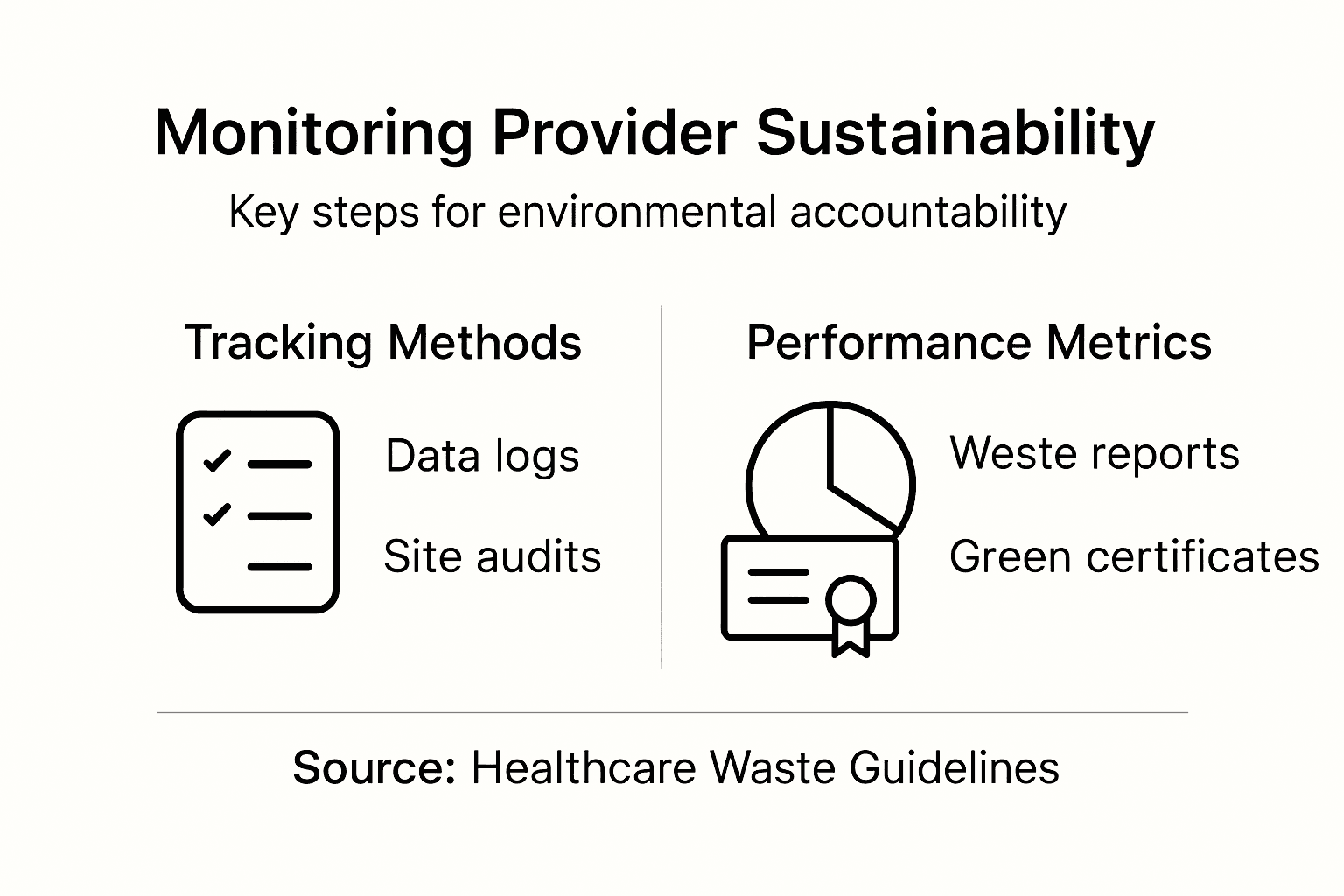
Infographic on monitoring waste provider sustainability

Sustainable healthcare waste management demands rigorous performance tracking through detailed data collection and analysis. Establish quarterly review processes that assess key performance indicators including waste volume reduction, segregation accuracy, carbon emissions, recycling rates, and adherence to sustainability targets. Request comprehensive monthly reporting that provides transparent insights into waste stream management, treatment methodologies, and environmental impact metrics. Develop standardised evaluation frameworks that compare provider performance against industry benchmarks and NHS sustainability goals.

Implement a multifaceted monitoring strategy that combines quantitative data analysis with periodic on site audits and independent environmental assessments. Create a scoring system that evaluates waste providers across multiple dimensions including technological innovation, regulatory compliance, carbon footprint reduction, and demonstrated commitment to circular economy principles. Maintain detailed documentation of performance evaluations to support continuous improvement and inform future procurement decisions.

Expert Tip: Design performance contracts with financial incentives tied directly to sustainability achievements to motivate waste providers towards more environmentally responsible practices.

Take Control of Your Healthcare Waste with Expert Support

Managing hazardous healthcare waste is a challenging responsibility that demands rigorous compliance with legal standards and a commitment to environmental protection. The risks of improper segregation, storage, and disposal can affect not only public health but also the reputation and operational efficiency of your facility. You need trusted solutions that help you implement best practices such as secure container selection, licensed collection, and continuous monitoring to achieve sustainable healthcare waste management.

Venture Waste is your partner in meeting these goals with reliable, compliant waste disposal services designed for UK healthcare settings. Explore our insights on how How the Waste Collection Network in UK Serves Businesses in 2025 supports streamlined waste journeys or discover tailored waste management equipment in our comprehensive Batteries Archives – Venture Waste. We prioritise legal compliance and environmental sustainability through clear processes that simplify your workload.

https://venturewaste.co.uk

Ready to transform your healthcare waste management and safeguard your facility? Visit Venture Waste today for expert advice and services. Take immediate action to secure safe, environmentally friendly disposal that meets UK regulations and protects your community.

Frequently Asked Questions

What types of hazardous waste do healthcare facilities typically generate?

Healthcare facilities generate various types of hazardous waste, including infectious materials, sharps, chemical reagents, pharmaceutical residues, and radioactive substances. Conduct a comprehensive waste audit in your facility to identify and categorise these waste types.

How can I ensure proper segregation of healthcare waste?

To ensure proper segregation, implement colour coded containers tailored to each waste type. For example, use yellow bags for infectious waste and puncture-proof containers for sharps to minimise contamination risks.

What are the key features to look for in waste collection providers?

When selecting waste collection providers, ensure they possess valid carrier licenses, demonstrate advanced treatment technologies, and maintain transparency in their documentation. Evaluate their track record for environmental compliance and seek providers that prioritise reducing their carbon footprint.

How can I verify compliance with disposal regulations?

You can verify compliance by meticulously reviewing all legal documentation, including waste carrier licenses and disposal certificates. Ensure that documentation includes waste classification codes and generator information, and maintain a comprehensive audit trail for all waste movements.

What are the benefits of monitoring waste provider performance?

Monitoring waste provider performance helps ensure ongoing environmental accountability and continuous improvement in waste management practices. Establish quarterly reviews of key performance indicators, such as recycling rates and carbon emissions reduction, to drive sustainability improvements.

How often should I conduct waste audits in my healthcare facility?

Conduct waste audits at least annually or more frequently if your waste streams change significantly. Regular audits help you stay compliant with regulations and identify opportunities to improve waste management efficiency.

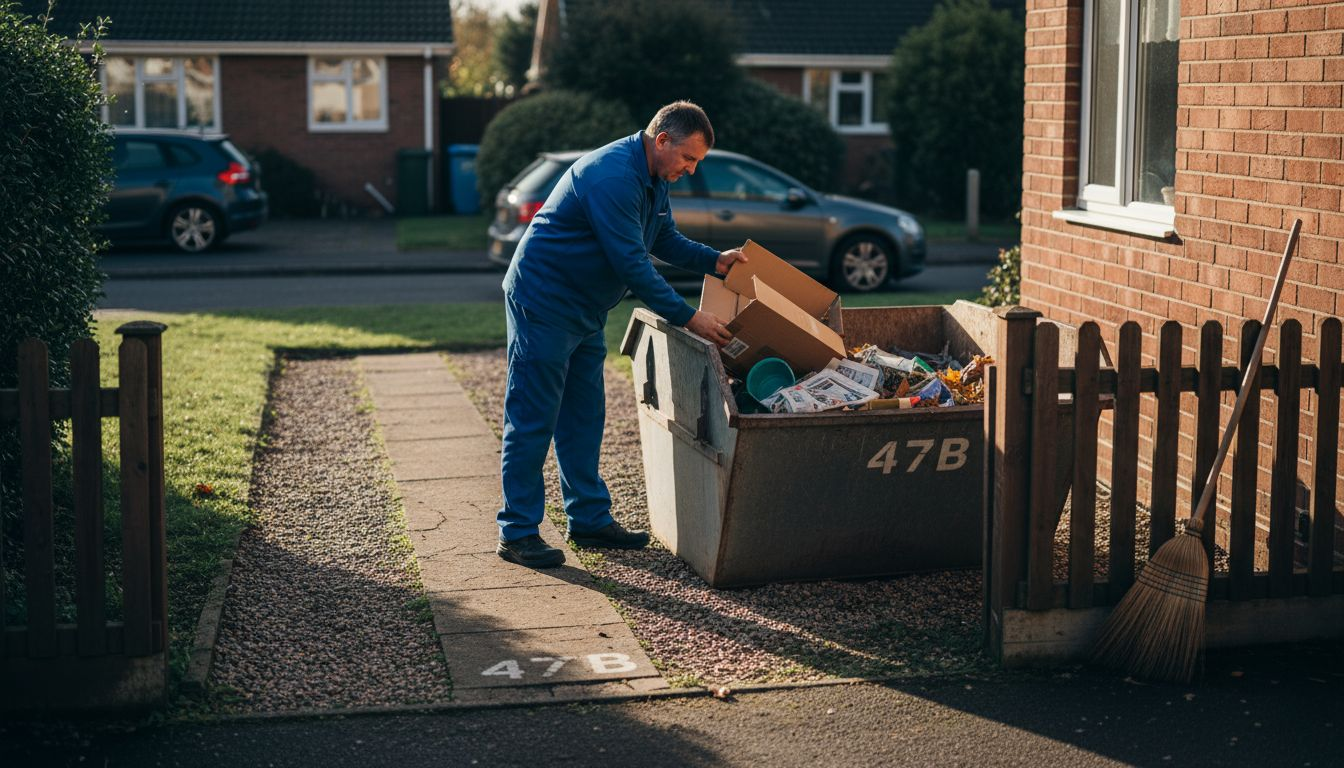
Site manager beside construction skip container

Benefits of Skip Hire for Sustainable Waste Disposal

A single missed skip hire mistake can lead to costly fines for british facilities managers responsible for commercial sites. Modern waste disposal in the United Kingdom demands strict compliance with environmental rules while handling large volumes generated by offices and retail properties. Discover how strategic skip hire not only supports regulatory standards but also enhances sustainability and tidiness across your site, helping you avoid common pitfalls and minimise unnecessary costs.

Table of Contents

Key Takeaways

Point Details
Importance of Skip Hire Skip hire is essential for effective waste management in construction and renovation projects, enabling efficient collection and disposal of substantial waste volumes.
Types and Sizes of Skips Different skip sizes are available, catering to various waste types, from small domestic projects to large commercial clearances, ensuring appropriate waste handling.
Legal and Environmental Compliance Understanding legal obligations and waste segregation is crucial for avoiding penalties and promoting sustainable waste disposal practices.
Cost Efficiency Strategies Careful planning, including selecting the right skip size and understanding local regulations, can significantly reduce costs associated with skip hire services.

What Is Skip Hire and When Is It Used?

Skip hire is a professional waste management service that provides large containerised solutions for collecting and disposing of significant quantities of waste across various industries and settings. These robust metal containers, commonly known as skips, are strategically designed to handle substantial waste volumes efficiently.

On construction sites and during renovation projects, skip hire becomes an essential waste management strategy. Construction waste management requires systematic approaches to safely collect and transport debris, materials, and unwanted items. Skips come in multiple sizes ranging from small 2-yard containers suitable for domestic clearances to large 40-yard rollonoff skips capable of handling extensive commercial or industrial waste streams.

Typical scenarios where skip hire proves invaluable include:

  • Building and renovation projects
  • Home and garden clearances
  • Commercial site demolitions
  • Landscaping and groundworks
  • Office refurbishments
  • Industrial site clean-ups

The strategic use of skips supports responsible waste disposal by enabling proper segregation and facilitating recycling efforts. Waste segregation through colour-coded skips allows different waste types to be collected separately, enhancing environmental sustainability and regulatory compliance.

Top Tip: Always assess your precise waste volume and type before selecting a skip size to optimise cost-effectiveness and ensure efficient waste management.

Types of Skips and Waste Accepted

Skip hire services offer a diverse range of container sizes and types designed to accommodate different waste management requirements. Colour-coded waste categories help businesses and contractors efficiently segregate and dispose of various waste streams while maintaining environmental compliance.

Skip containers are typically categorised by size, ranging from compact mini skips suitable for small domestic projects to large industrial roll-on/roll-off containers capable of handling substantial commercial waste volumes. Common skip sizes include:

To aid in choosing the most suitable skip, here is a comparison of skip sizes and their common uses:

Skip Size Typical Application Max. Waste Capacity
2-yard mini skip Small home projects 20-30 rubbish bags
4-yard midi skip Bathroom or kitchen remodels 30-40 rubbish bags
6-yard standard Medium construction jobs 50-60 rubbish bags
8-yard builders’ Heavy renovation or clear-outs 60-80 rubbish bags
12-40 yard roll-on Large commercial clearances 100+ rubbish bags
  • 2-yard mini skips (ideal for small home improvements)
  • 4-yard midi skips (perfect for kitchen or bathroom renovations)
  • 6-yard standard skips (suitable for medium-sized construction projects)
  • 8-yard builders’ skips (accommodating larger construction and demolition waste)
  • 12-yard and 40-yard roll-on/roll-off skips (for extensive industrial and commercial clearances)

When considering waste disposal, understanding waste acceptance regulations is crucial. Different skips are designed to handle specific waste types, with strict guidelines preventing the mixing of hazardous and non-hazardous materials. Typical waste categories include:

  • Inert waste (rubble, soil, concrete)
  • Construction and demolition debris
  • Green waste from landscaping
  • General mixed waste
  • Recyclable materials

However, certain materials are universally prohibited across all skip types, including:

  • Asbestos
  • Batteries
  • Electrical equipment
  • Toxic chemicals
  • Liquid waste
  • Medical waste
  • Tyres

Pro Tip: Always consult with your skip hire provider about specific waste restrictions and consider segregating materials before disposal to maximise recycling potential.

How Skip Hire Streamlines Waste Management

Waste management efficiency is crucial for businesses seeking to optimise their environmental responsibilities and operational costs. Improving waste management strategies through professional skip hire enables organisations to transform their approach to waste disposal, reducing complexity and environmental impact.

Skip hire services provide a systematic approach to waste collection and segregation, allowing businesses to manage different waste streams more effectively. By providing designated containers for various waste types, companies can significantly reduce the time and resources traditionally spent on waste handling. This streamlined approach offers several key advantages:

  • Centralised waste collection
  • Reduced transportation costs
  • Simplified waste tracking
  • Enhanced recycling opportunities
  • Improved site organisation and cleanliness

Comprehensive waste management solutions help organisations track waste quantities precisely, plan efficient disposal routes, and ensure strict compliance with environmental regulations. The process involves strategic placement of skip containers, enabling businesses to segregate materials at source and minimise landfill contributions.

The environmental benefits extend beyond immediate operational improvements. By implementing professional skip hire, businesses can demonstrate their commitment to sustainable practices, potentially reducing their carbon footprint and supporting broader waste reduction objectives across various industries.

Worker sorting cardboard waste into a skip

Here is a summary of how skip hire impacts business operations:

Efficiency Feature Business Impact Environmental Benefit
Centralised collection Saves staff time on waste handling Supports safe material sorting
Waste segregation Prevents regulatory breaches Reduces contamination risks
Route planning Lowers transport and disposal costs Minimises landfill dependency
Documentation Facilitates legal compliance Enables accurate recycling data

Pro Tip: Develop a comprehensive waste management plan that integrates skip hire services, focusing on material segregation and maximum recycling potential.

Environmental regulations represent a critical consideration for businesses managing waste disposal. Avoiding illegal waste dumping requires comprehensive understanding of legal obligations under the Environmental Protection Act 1990, which mandates responsible waste management practices.

The Duty of Care legislation places significant responsibilities on waste producers, requiring meticulous documentation and proper waste handling. Key legal requirements include:

  • Registering as a waste carrier
  • Maintaining accurate Waste Transfer Notes
  • Ensuring proper waste storage and transportation
  • Preventing unauthorized waste disposal
  • Demonstrating responsible waste management practices

Waste segregation strategies support environmental responsibility by enabling businesses to reduce contamination and facilitate sustainable disposal methods. Colour-coded skip systems help organisations comply with waste legislation such as the Waste Regulations 2011, promoting efficient recycling and minimising environmental impact.

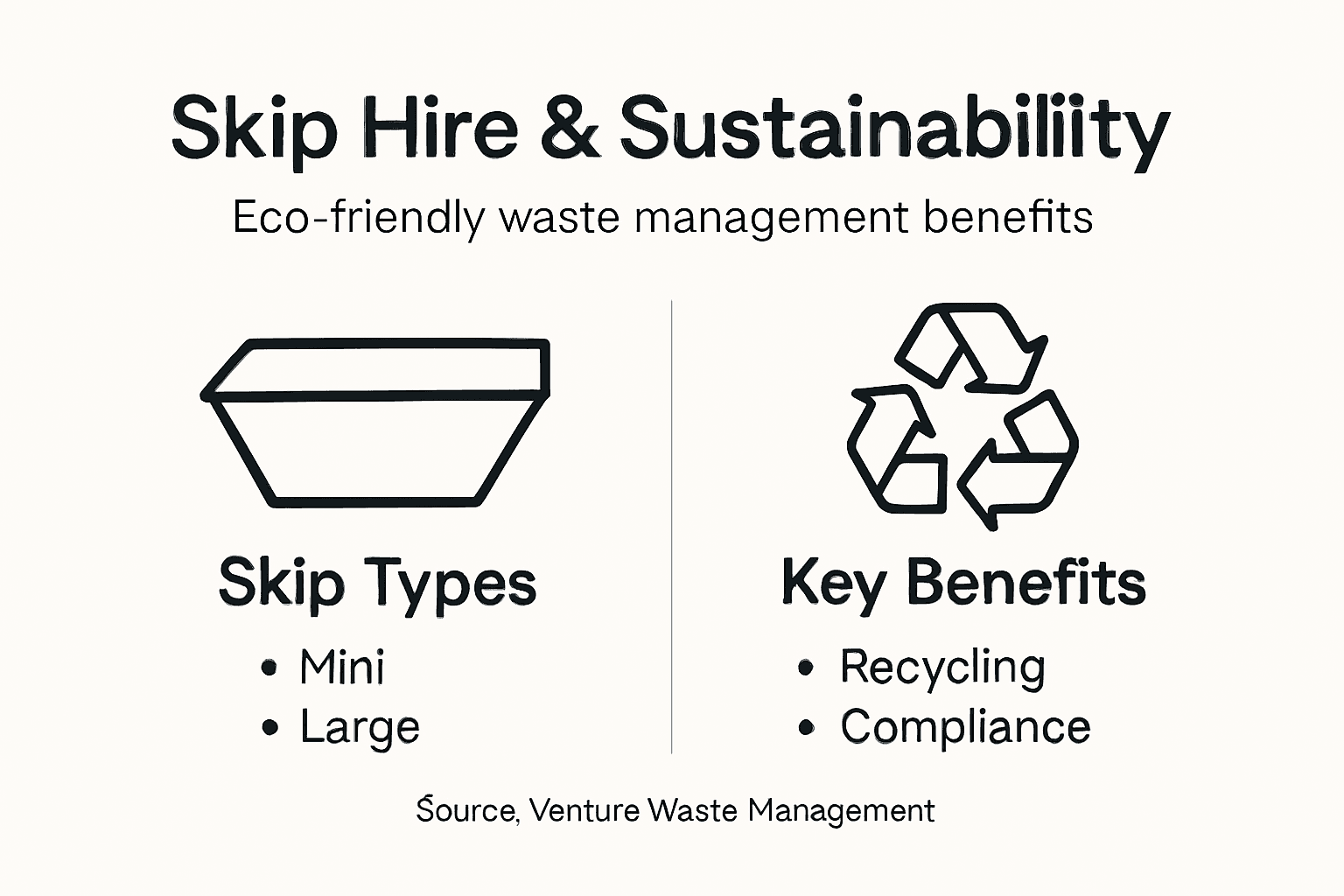
Infographic highlighting skip types and eco benefits

Non-compliance can result in substantial financial penalties, potential prosecution, and reputational damage. Businesses must therefore adopt proactive waste management approaches that prioritise legal adherence and environmental stewardship, transforming waste disposal from a regulatory requirement into a strategic opportunity for sustainability.

Pro Tip: Develop a comprehensive waste management policy that explicitly addresses legal requirements, documenting each stage of waste handling to demonstrate regulatory compliance.

Cost Efficiency and Common Mistakes to Avoid

Cost management is crucial when utilising skip hire services, with strategic planning enabling businesses to minimise expenses and maximise waste disposal efficiency. Efficient waste sorting strategies can significantly reduce disposal costs by improving recycling rates and avoiding unnecessary landfill charges.

Common mistakes that can escalate skip hire expenses include:

  • Selecting an inappropriate skip size
  • Overfilling containers beyond legal weight limits
  • Mixing prohibited waste types
  • Placing skips in unauthorised locations
  • Failing to obtain necessary permits
  • Neglecting proper waste segregation

Skip hire best practices recommend careful planning to prevent unexpected charges. Businesses should conduct thorough waste volume assessments, understand local regulations, and collaborate closely with waste management providers to optimise cost efficiency.

Potential financial risks associated with improper skip hire can include additional collection fees, contamination penalties, and potential legal sanctions. By implementing a systematic approach to waste management, organisations can transform skip hire from a potential expense into a strategic cost-saving mechanism.

Pro Tip: Request a detailed quote upfront and clarify all potential additional charges to prevent unexpected expenses during skip hire.

Boost Your Sustainable Waste Disposal with Expert Skip Hire Solutions

Managing substantial waste volumes during construction or renovation projects can feel overwhelming. The article highlights challenges such as choosing the right skip size, segregating waste correctly, and adhering to environmental regulations. These pain points make efficient waste disposal seem complicated and costly. With terms like “colour-coded waste segregation” and “legal compliance” emphasised, it is clear that businesses require reliable support to minimise contamination risks and maximise recycling potential.

Venture Waste Management offers professional skip hire services designed to simplify these challenges. Whether you need a small mini skip for domestic clearances or a larger builders’ skip for industrial waste, our solutions promote responsible disposal and compliance with UK regulations. Discover how our streamlined waste collection process can save you time and reduce environmental impact. Explore our general waste collection options and see how skip hire blends seamlessly with complete waste management strategies. For specialised waste streams, check our food waste management solutions that complement sustainable disposal efforts.

https://venturewaste.co.uk

Take control of your waste disposal today by partnering with Venture Waste. Visit our website at Venture Waste to book your skip hire service easily and benefit from expert guidance every step of the way. Make your next project greener and more efficient now.

Frequently Asked Questions

What are the primary benefits of using skip hire for waste disposal?

Skip hire provides centralised waste collection, improves recycling opportunities, reduces transportation costs, and helps businesses comply with environmental regulations.

How do I choose the right skip size for my waste disposal needs?

Assess your waste volume and type before selecting a skip size. A 2-yard mini skip is ideal for small home projects, while larger projects may require an 8-yard or even a 40-yard roll-on/roll-off skip.

What types of waste can be disposed of using skips?

Common waste categories accepted in skips include inert waste (rubble, soil), construction and demolition debris, green waste, general mixed waste, and recyclables. However, materials like asbestos, batteries, and medical waste are prohibited.

How does skip hire contribute to sustainable waste management?

Skip hire supports sustainable waste management by enabling proper waste segregation, promoting recycling, and ensuring compliance with environmental regulations, which reduces landfill contributions and helps manage waste more efficiently.

Manager handling commercial waste bins outside UK office

Commercial Waste Explained: What UK Businesses Face Now

Over 90 percent of British businesses face mounting pressure to manage commercial waste in strict compliance with United Kingdom regulations. For facilities managers in UK healthcare organizations, the stakes are even higher as hazardous materials and confidential documents demand meticulous attention to legal and environmental standards. This guide cuts through common confusion, offering clear insights to help you maintain compliance, avoid costly penalties, and protect your organization’s reputation.

Table of Contents

Key Takeaways

Point Details
Understanding Commercial Waste Commercial waste in the UK encompasses waste from various business sectors, requiring legal compliance and environmental responsibility in its management.
Legal Compliance Responsibilities Businesses must proactively manage waste through strategic planning, adhering to legal responsibilities to avoid fines and reputational damage.
Digital Waste Tracking The imminent transition to mandatory digital waste tracking will streamline compliance and enhance transparency in waste management practices.
Hazardous and Confidential Waste Proper handling and segregation of hazardous and confidential waste are critical to mitigate legal risks and protect sensitive information.

What Commercial Waste Means in the UK

In the United Kingdom, commercial waste represents any waste generated from business activities across multiple sectors. This includes waste produced by retail establishments, offices, construction sites, agricultural operations, and home businesses conducting professional activities. Understanding the nuanced definition is crucial for legal compliance and environmental responsibility.

According to official UK government guidelines, businesses have specific responsibilities when managing their waste. Companies must minimise waste generation through strategic planning and implement robust waste management protocols. This involves systematically sorting waste, ensuring safe storage, maintaining accurate documentation like waste transfer notes, and confirming all waste carriers are properly registered.

Commercial waste encompasses a wide range of materials, from paper and packaging to construction debris and food waste. Each category requires different handling procedures, with particular emphasis on recycling and responsible disposal. Businesses must separate recyclable materials like food waste, paper, cardboard, and dry recyclables from general waste. Special attention is required for hazardous waste streams, which demand additional regulatory compliance and specialised treatment.

The environmental and legal implications of commercial waste management are significant. Non-compliance can result in substantial fines and potential legal consequences. Businesses must stay informed about current regulations, invest in proper waste management infrastructure, and continuously evaluate their waste reduction strategies.

Pro tip: Conduct a comprehensive waste audit annually to identify opportunities for waste reduction and improve your organisation’s environmental sustainability practices.

Major Types of Commercial Waste Streams

British businesses generate multiple distinct commercial waste streams that require specialised handling and disposal strategies. These waste categories range from general office waste to industry-specific materials, each presenting unique environmental and regulatory challenges. Understanding these different waste types is essential for effective waste management and regulatory compliance.

Office and administrative waste represents a significant commercial waste stream, typically comprising paper documents, printer cartridges, electronic equipment, and packaging materials. Businesses can reduce general waste through strategic recycling and digital transformation initiatives. Sectors like healthcare, finance, and professional services generate substantial quantities of confidential documentation that require secure destruction processes.

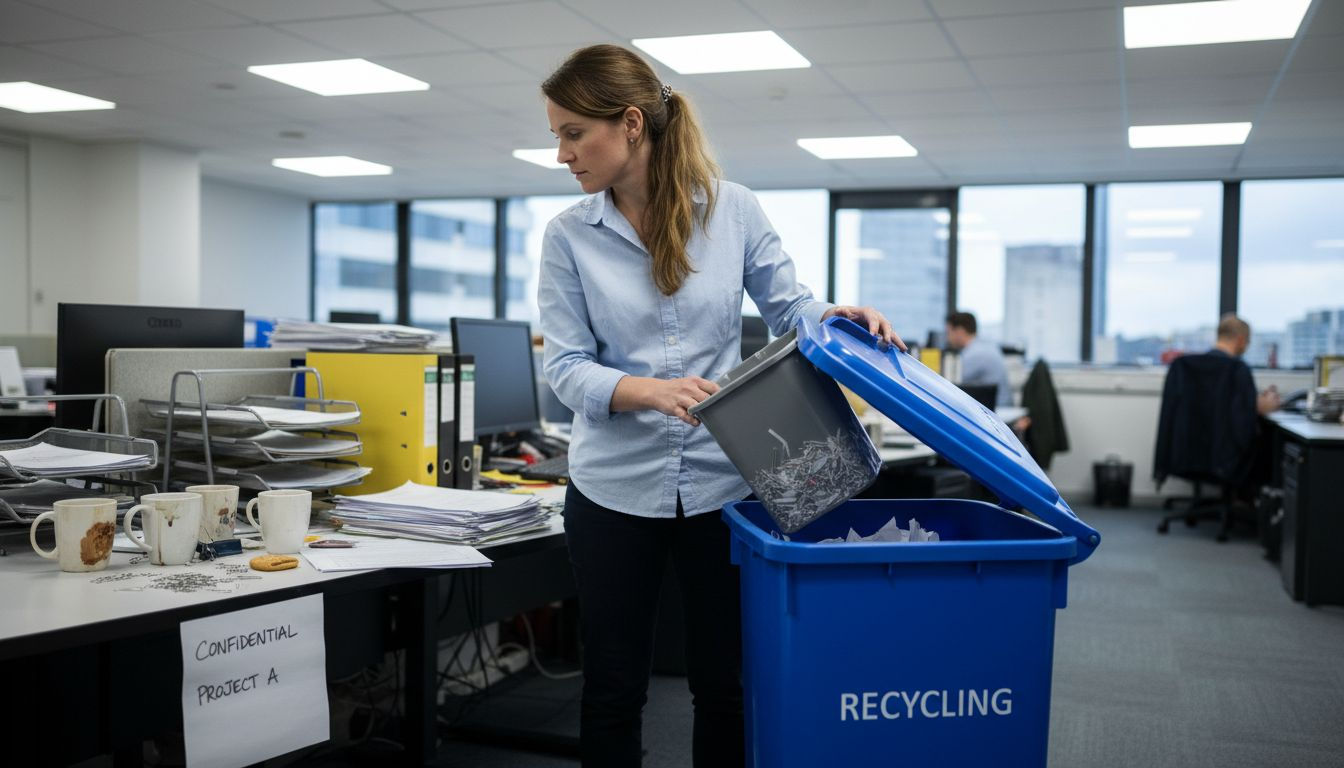
Office worker sorting paper waste into bin

Manufacturing and construction industries produce more complex waste streams, including metal scraps, construction debris, packaging materials, and potentially hazardous industrial waste. These sectors must implement rigorous waste segregation protocols, ensuring different materials are correctly sorted and processed. Chemical residues, timber offcuts, metallic fragments, and contaminated packaging demand specialised disposal techniques that minimise environmental impact.

Retail, hospitality, and food service businesses generate significant organic and packaging waste. These streams include food waste, cardboard packaging, plastic containers, and single-use materials. Restaurants, supermarkets, and catering businesses must develop comprehensive waste management strategies that prioritise food waste recycling, packaging reduction, and sustainable disposal methods.

Pro tip: Implement a comprehensive waste audit to precisely categorise and quantify your organisation’s different waste streams, enabling more targeted and effective waste reduction strategies.

Here’s a summary of major commercial waste streams and their business impact:

Waste Stream Typical Sources Key Challenges Business Impact
Office Waste Admin offices, professional firms Secure disposal of documents Data protection compliance
Construction Debris Building sites, manufacturing Hazardous material handling Increased regulatory oversight
Organic & Food Waste Hospitality, supermarkets High contamination and odour Food safety and reputation
Industrial Hazardous Factories, labs Specialised storage requirements Costly disposal procedures

Under United Kingdom law, businesses have a critical Duty of Care regarding commercial waste management that extends far beyond simple disposal. This legal framework requires organisations to take proactive steps in minimising waste generation, ensuring safe storage, and maintaining comprehensive documentation throughout the waste disposal process. Detailed compliance requirements mandate rigorous verification of waste carrier credentials and systematic tracking of waste movements.

The UK is implementing significant digital transformation in waste management, with a comprehensive Digital Waste Tracking system set to become mandatory from 2026. This revolutionary approach will replace traditional paper-based waste transfer notes, compelling businesses to maintain real-time digital records for every waste movement. The system aims to enhance traceability, improve regulatory enforcement, and provide unprecedented transparency in commercial waste management practices.

Businesses face substantial legal consequences for non-compliance, including significant financial penalties and potential criminal prosecution. Hazardous waste streams attract particularly stringent regulations, requiring businesses to implement specialised handling protocols and maintain meticulous documentation. Extended Producer Responsibility rules are becoming increasingly complex, placing greater accountability on organisations for the entire lifecycle of their waste products.

The digital tracking requirements represent a fundamental shift in waste management oversight. Organisations must invest in digital infrastructure, train staff in new reporting mechanisms, and develop robust internal systems to capture and report waste movement data accurately. This represents not just a legal obligation, but an opportunity to demonstrate environmental responsibility and operational excellence.

Pro tip: Develop a comprehensive digital waste tracking system that integrates real-time reporting, staff training, and automated compliance monitoring to stay ahead of regulatory changes.

Compare manual and digital waste tracking requirements for UK businesses:

Method Record Management Compliance Risk Long-term Benefits
Paper-based Tracking Prone to loss/errors Greater non-compliance risk Limited traceability
Digital Tracking Real-time, accurate Improved regulatory accuracy Enhances transparency, easy audits

Waste Management Responsibilities and Financial Risks

UK businesses face increasingly complex legal responsibilities regarding waste management, with potential financial consequences that can significantly impact organisational sustainability. Comprehensive waste compliance requires businesses to meticulously track, manage, and legally dispose of their commercial waste streams, ensuring every stage of waste movement meets stringent regulatory standards.

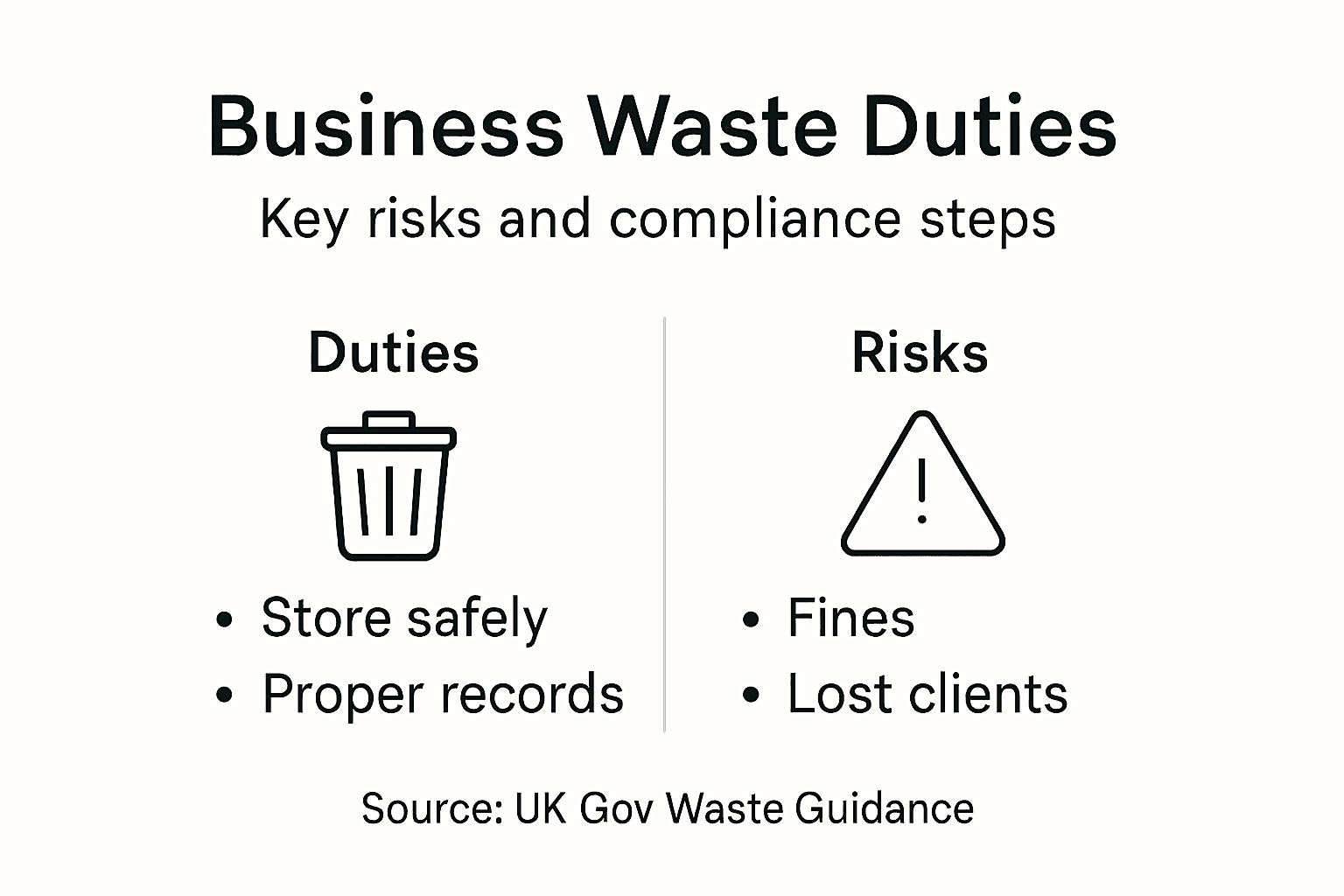
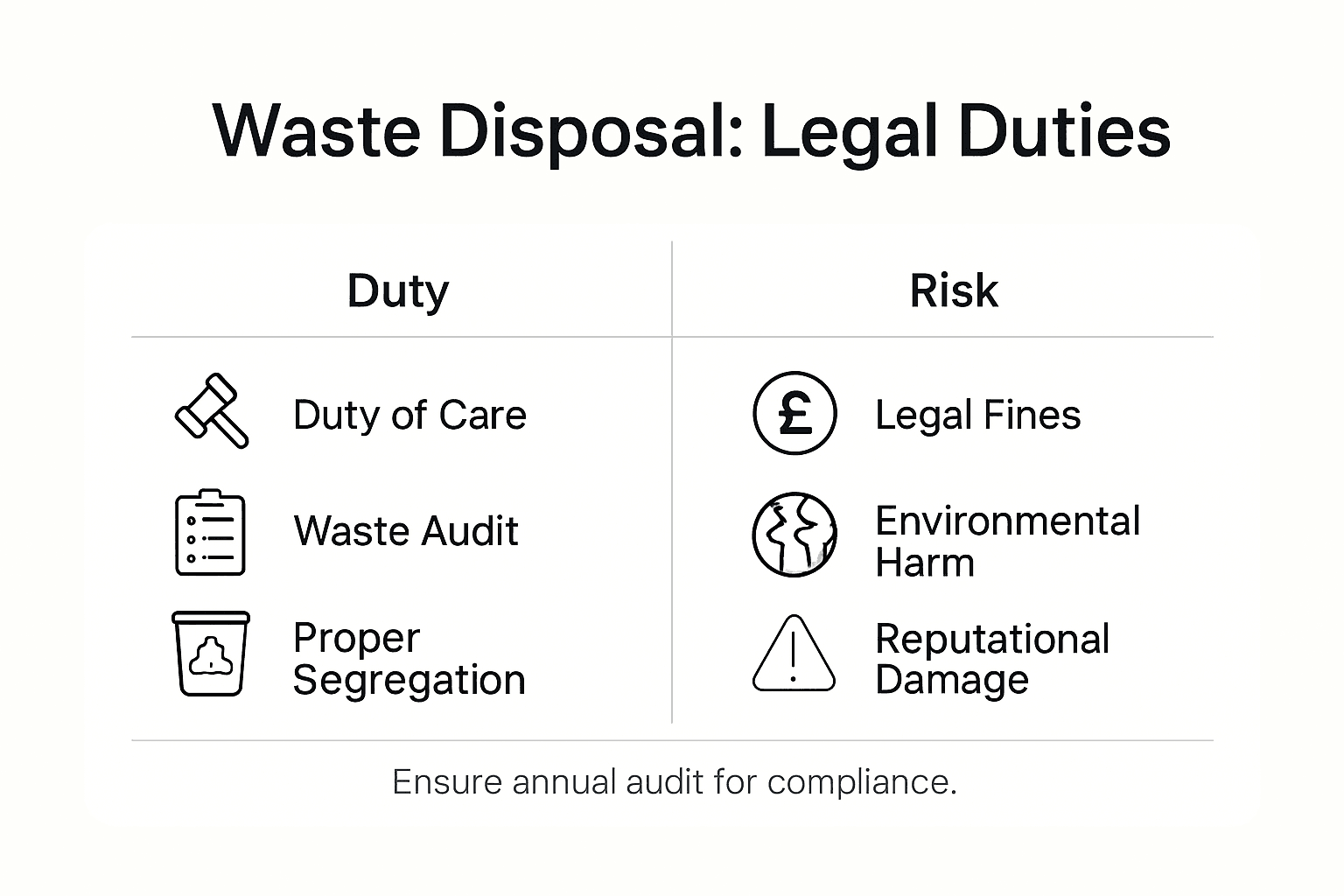
Infographic of UK waste management duties and risks

Financial risks associated with improper waste management are substantial and multifaceted. Companies can incur significant penalties for non-compliance, including hefty fines, potential prosecution, and reputational damage. Rising waste disposal fees, escalating landfill tax rates, and increasing transport costs create a challenging economic landscape for businesses. Poor waste segregation practices can trigger additional surcharges, while repeated non-compliance might result in operational licensing restrictions.

Organisations must develop robust waste management strategies that go beyond mere legal compliance. This involves implementing sophisticated waste tracking systems, training staff in proper waste handling procedures, and creating internal protocols that prioritise waste reduction and sustainable disposal. Businesses need to view waste management not as an administrative burden, but as a strategic opportunity to demonstrate environmental responsibility and potentially reduce operational expenses.

The financial implications extend beyond immediate penalties. Companies with poor waste management practices risk losing competitive advantage, alienating environmentally conscious customers, and facing increased scrutiny from regulators and stakeholders. Proactive waste management can transform potential financial risks into opportunities for cost savings, brand enhancement, and sustainable business practices.

Pro tip: Conduct quarterly waste audits and invest in staff training to proactively identify and mitigate potential compliance risks before they become costly financial liabilities.

Key Mistakes When Handling Hazardous or Confidential Waste

Business waste management involves complex challenges, particularly when dealing with hazardous and confidential waste streams. Serious compliance risks arise from improper handling, potentially exposing organisations to significant legal and financial penalties. The most critical errors include inadequate waste segregation, inappropriate storage methods, and failure to use licensed waste carriers.

Confidential waste presents unique risks beyond environmental concerns. Organisations frequently underestimate the importance of secure document destruction, risking potential data breaches that could compromise sensitive business information. Common mistakes include disposing of confidential documents in standard waste streams, failing to implement proper shredding protocols, and neglecting to maintain chain-of-custody documentation for sensitive materials.

Hazardous waste management demands exceptional precision and attention to detail. Many businesses erroneously assume standard disposal methods are sufficient for chemical, medical, or industrial waste streams. Critical errors include mixing different hazardous waste categories, using inappropriate storage containers, inadequate labelling, and employing unlicensed waste management providers. These mistakes can lead to environmental contamination, substantial regulatory fines, and potential criminal prosecution.

The consequences of mishandling hazardous or confidential waste extend far beyond immediate financial penalties. Organisations risk severe reputational damage, loss of business credentials, and potential legal action. Comprehensive staff training, robust waste management protocols, and partnerships with certified waste disposal specialists are essential to mitigate these substantial risks.

Pro tip: Develop a comprehensive waste management training programme that includes specific protocols for handling hazardous and confidential waste, ensuring all staff understand the critical importance of proper disposal procedures.

Simplify Your Commercial Waste Management with Venture Waste

Navigating the complex landscape of commercial waste can be challenging for UK businesses facing evolving regulations and the need for robust waste tracking. From hazardous materials to confidential documents, every waste stream demands specialised care and compliance. Our detailed insights on the Waste Collection Process in the UK for Businesses 2025 reveal how tailored strategies can protect your business from costly penalties and reputational harm.

https://venturewaste.co.uk

Partner with Venture Waste for hassle-free waste solutions that prioritise legal compliance and environmental responsibility. Explore how our trusted Waste Collection Network in UK Serves Businesses in 2025 provides a seamless service experience. Visit Venture Waste now to take control of your commercial waste streams and ensure sustainable practices that safeguard your business future.

Frequently Asked Questions

What is considered commercial waste in the UK?

Commercial waste in the UK refers to any waste produced from business activities, including waste from retail, offices, construction sites, and home businesses. It includes a variety of materials such as paper, packaging, food waste, and construction debris.

Businesses are legally required to minimise waste generation, ensure safe storage, maintain accurate documentation, and use registered waste carriers for disposal. Non-compliance can result in significant fines and legal issues.

How can businesses reduce their commercial waste?

Companies can reduce commercial waste by conducting waste audits, implementing recycling strategies, and transforming digital processes to minimise paper waste. Proper segregation of recyclable and hazardous materials is also essential.

What are the consequences of failing to manage hazardous waste properly?

Improper management of hazardous waste can lead to severe penalties, including hefty fines, potential criminal prosecution, environmental contamination, and reputational damage to the business.

Manager positions recycling bins in office

Recycle More at Work: Boost Workplace Sustainability Easily

Over half of British office workers admit they are confused by workplace recycling rules. As corporate sustainability targets rise, facilities managers play a vital role in shaping better habits and reducing unnecessary waste across the United Kingdom. This guide breaks down proven ways to build a workplace recycling system that actually works, helping organisations tackle compliance challenges while inspiring everyone in the office to make smarter daily choices.

Table of Contents

Quick Summary

Key Point Explanation
1. Assess existing recycling bins Evaluate current recycling bins to identify gaps and opportunities for improvement in your organisation’s recycling efforts.
2. Categorise office waste streams Recognise and separate waste categories like paper, plastic, and electronic waste to comply with regulations and enhance recycling efficiency.
3. Create targeted recycling stations Design colour-coded recycling stations tailored to each department’s waste patterns, enhancing convenience and compliance in waste disposal.
4. Engage staff with training Develop structured training and persistent reminders to cultivate a culture of sustainability and motivate employees in recycling initiatives.
5. Monitor recycling rates regularly Implement a tracking system to analyse recycling performance, which aids in identifying improvements and demonstrates commitment to sustainability.

Step 1: Assess existing workplace recycling bins

Evaluating your workplace’s current recycling infrastructure is the foundational first step towards boosting sustainability efforts. By understanding what systems are already in place, you can identify gaps and opportunities for improvement in your recycling strategy.

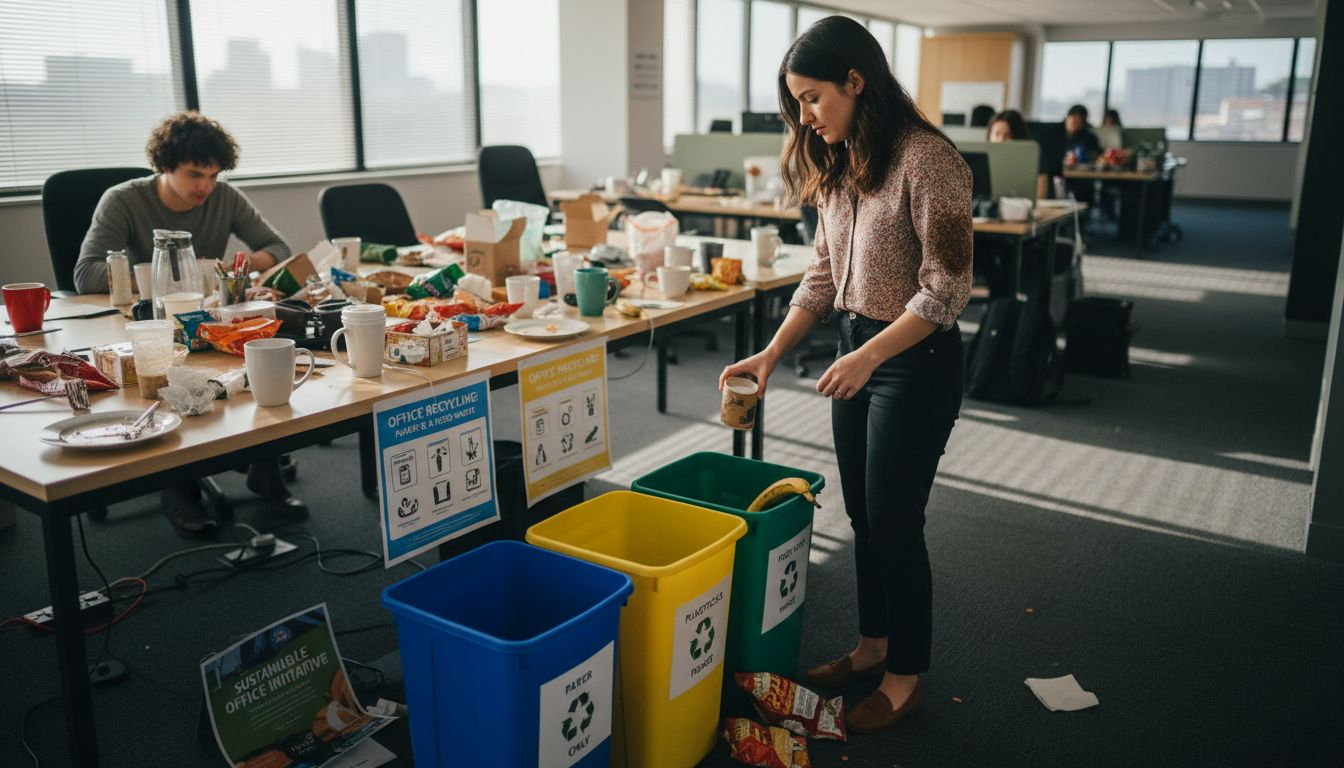
Start by conducting a comprehensive visual audit of all existing recycling bins across your office spaces. Walk through each department, including communal areas like kitchens, meeting rooms, and workstations. Carefully observe the current bin placement, labelling, and usage patterns. Take note of whether bins are clearly marked, strategically located, and if employees are actually using them correctly. Many organisations discover that despite having recycling bins, staff often lack clear guidance on proper waste segregation.

As you inspect the bins, pay special attention to the recycling practices currently employed by UK businesses. Determine if your current bins accommodate different material types such as paper, plastics, glass, and electronic waste. Check for contamination issues where non recyclable items might be mixed in with recyclable materials, which can compromise entire waste streams.

Expert Suggestion: Create a simple colour coded system or use pictorial guides near bins to help staff instantly understand which items belong in each container.

Step 2: Identify and separate common office waste streams

Understanding and categorising your office waste streams is crucial for effective recycling and environmental compliance. This step will help you create a systematic approach to managing different types of workplace waste.

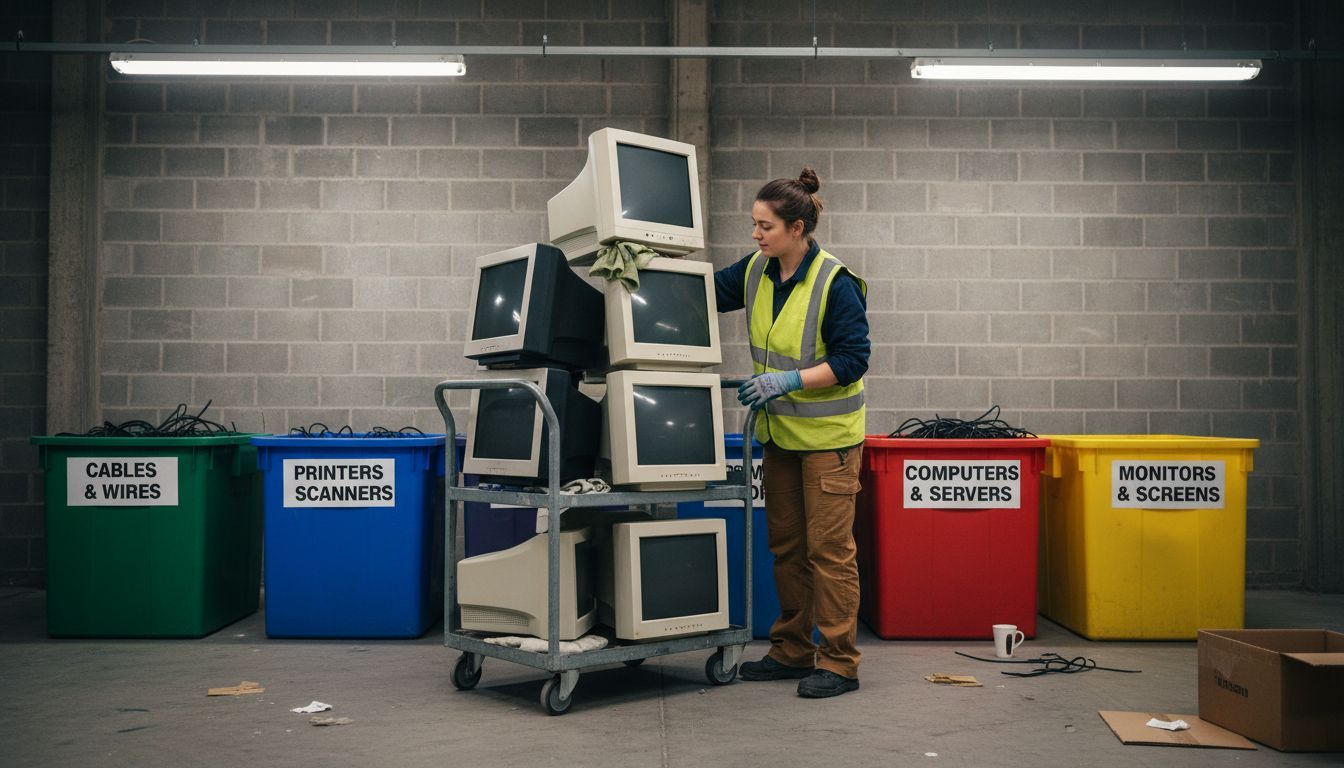
Begin by recognising the primary waste categories generated in your workplace. These typically include paper and cardboard, plastic packaging, electronic waste, food waste, and confidential documents. New European Union regulations mandate precise waste stream segregation, which means businesses must now implement more rigorous waste separation protocols. For paper waste, set up dedicated bins for clean white office paper, newspapers, magazines, and cardboard. Plastic waste should be collected separately ensure packaging is clean and dry before disposal. Electronic waste like old computers, printers, and mobile devices require special handling and should be stored in designated secure containers for professional recycling.

Staff sort office waste at recycling bins

The England Simpler Recycling reforms effective March 2026 require businesses to separate ‘recycling relevant waste’ onsite before collection. This means creating clear, colour coded stations for different waste types with explicit signage indicating exactly what can be deposited in each bin. Consider creating a visual guide near waste stations to help employees understand proper sorting techniques.

Here is a summary of common office waste streams and their recommended disposal approaches:

Waste Stream Recommended Disposal Method Common Risks
Paper and Cardboard Separate clean, dry materials Contamination by food
Plastics Clean and dry before recycling Mixed with general waste
Electronic Waste Designated secure containers Data security issues
Food Waste Dedicated compost or food bins Attracting pests
Confidential Documents Secure shredding and collection Privacy breaches

Expert Suggestion: Train a small group of enthusiastic employees as ‘recycling champions’ who can help monitor and improve waste segregation practices across your organisation.

Step 3: Implement targeted recycling stations across departments

Creating strategically placed recycling stations tailored to different workplace departments will significantly improve your organisation’s waste management efforts. This approach ensures that each area receives specialised recycling infrastructure matching its unique waste generation patterns.

European recycling industry priorities emphasise the importance of dedicated recycling infrastructure that serves specific departmental needs. Start by mapping out your workplace and identifying distinct waste streams for each department. The marketing team might generate more paper waste, while the IT department will have electronic waste. Design colour coded stations with clear signage that indicates precisely what can be deposited. For instance, blue bins for paper, green for general recyclables, and secure grey containers for confidential documents and electronic equipment.

Consider the physical layout of your office when positioning these stations. Place them in high traffic areas like near photocopiers, kitchen spaces, and meeting rooms to encourage maximum usage. The Derby City Council’s waste management initiatives demonstrate how targeted station placement can dramatically improve recycling rates by making disposal convenient and intuitive for employees.

Expert Suggestion: Create visual infographics demonstrating correct waste sorting techniques and display them prominently near each recycling station to reinforce proper disposal practices.

Step 4: Engage staff through training and visible reminders

Successfully transforming your workplace recycling requires more than just infrastructure strategic staff engagement is the critical element that turns good intentions into lasting environmental practice. Your goal is to create a culture of sustainability that motivates employees to participate actively in recycling efforts.


NHS case studies demonstrate how comprehensive staff engagement programs positively influence workplace recycling cultures. Begin by developing a structured training programme that explains not just how to recycle but why it matters. This should include interactive workshops explaining waste streams, environmental impact, and your organisation’s specific recycling protocols. Consider creating short digital modules that employees can complete at their own pace, ensuring the training feels accessible rather than burdensome. Visual aids like infographics, short videos, and practical demonstrations will help reinforce key messages and make the information more digestible.

The University of St Andrews provides an excellent framework for mandatory sustainability training that can inspire your approach. Complement your training with persistent visual reminders strategically placed throughout the workplace. Install clear informative posters near recycling stations, use digital screen displays in communal areas, and incorporate recycling tips into regular internal communications. Encourage departmental competitions or recognition programmes that celebrate teams achieving outstanding recycling performance to maintain ongoing motivation.

Expert Suggestion: Rotate your visual reminders and training content quarterly to prevent information fatigue and keep sustainability messaging fresh and engaging.

The following table highlights features and business impact of staff engagement strategies for workplace recycling:

Engagement Method Key Feature Likely Impact
Structured Training Explains recycling rationale Boosts participation
Visual Reminders Posters, digital displays Reinforces behaviours
Recognition Schemes Rewards high-performing teams Improves motivation
Recycling Champions Peer-led monitoring Sustains good habits

Step 5: Monitor recycling rates and optimise processes

Tracking your workplace recycling performance is essential for understanding the effectiveness of your sustainability initiatives and identifying areas for continuous improvement. By implementing systematic monitoring strategies, you can transform raw data into actionable insights that drive meaningful environmental progress.

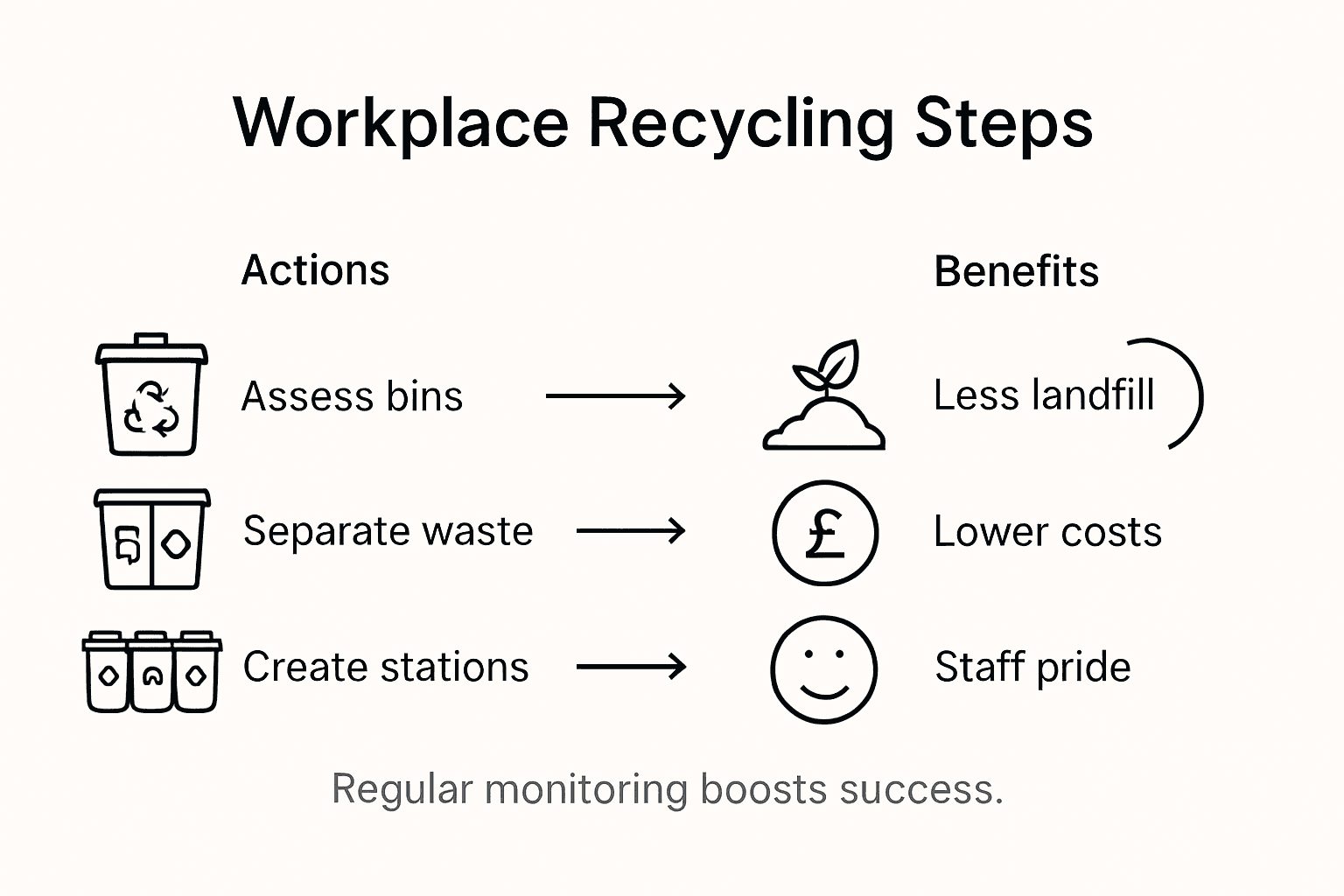
Infographic showing workplace recycling process

The UK government encourages voluntary monitoring and reporting for waste management processes, emphasising the importance of collecting accurate recycling data. Develop a comprehensive tracking system that captures key metrics such as total waste generated, recycling rates per department, contamination levels, and waste diversion from landfill. Implement digital tools or spreadsheets to record weekly or monthly data, allowing you to visualise trends and measure progress against your sustainability targets.

Methods for tracking recycling program effectiveness include developing participation rates, conducting staff surveys, and monitoring material capture rates. Schedule quarterly review meetings to analyse your recycling performance, discuss challenges, and brainstorm improvements. Consider creating visual dashboards that display recycling achievements to motivate staff and maintain transparency. By regularly reviewing and adapting your approach, you can continuously refine your workplace recycling strategy and demonstrate tangible environmental commitment.

Expert Suggestion: Implement a digital dashboard that automatically updates recycling statistics and provides real time visual feedback to keep staff engaged and informed about your sustainability progress.

Take Control of Your Workplace Recycling with Venture Waste

Improving workplace recycling can feel overwhelming when faced with the challenges of organising waste streams effectively and engaging staff sustainably. This article highlights the importance of tailored recycling stations, clear waste segregation, and ongoing monitoring to truly boost your office’s environmental impact. At Venture Waste, we understand these pain points and provide comprehensive solutions that align perfectly with your goals for legal compliance and efficient waste management.

https://venturewaste.co.uk

Choose from our trusted services including confidential waste disposal to securely handle sensitive materials, or explore how our streamlined waste collection process supports UK businesses in maintaining high recycling standards. Act now to transform your workplace sustainability efforts with our expert support and easy three-step booking system available at Venture Waste. Start reducing contamination and improving recycling rates today by partnering with a provider that puts your environmental commitment first.

Frequently Asked Questions

How can I assess my workplace’s existing recycling bins?

To assess your workplace’s current recycling bins, conduct a visual audit of their placement, labelling, and usage patterns. Walk through each department and communal areas, taking note of any gaps in guidance or contamination issues.

What are the common waste streams in an office, and how should I separate them?

Common office waste streams include paper and cardboard, plastic packaging, electronic waste, food waste, and confidential documents. Identify these categories and implement designated bins for each type, ensuring clear signage and colour coding for ease of use.

How can I create effective recycling stations for different departments?

To create effective recycling stations, map out the unique waste generation patterns of each department. Position colour-coded bins in high-traffic areas like near photocopiers or kitchens to encourage employees to recycle more efficiently.

What strategies can engage staff in recycling efforts?

Engage staff with structured training programmes that explain both how to recycle and why it matters. Complement this training with visual reminders and recognition schemes to motivate and sustain good recycling habits.

How do I monitor and optimise my workplace recycling rates?

To monitor workplace recycling rates, develop a tracking system that captures key metrics like total waste generated and recycling rates per department. Schedule quarterly reviews to analyse performance, discuss challenges, and refine strategies for continuous improvement.

UK council workers at recycling site

Waste Partnerships in the UK: Ensuring Compliance and Sustainability

Over eighty percent of british facilities managers now rank sustainable waste management as a top operational concern. With tightening UK regulations and ever-greater pressure for environmental responsibility, finding the right waste partnership can make a real difference to healthcare and educational institutions. This overview demystifies what makes effective british waste partnerships work, highlighting ways to raise compliance, support eco-friendly goals, and keep day-to-day operations running smoothly.

Table of Contents

Key Takeaways

Point Details
Importance of Collaboration Waste partnerships enhance resource management and sustainability through collaboration between public, private, and third sectors.
Types of Partnerships Various partnership models, including Public Private Partnerships and Inter-Local Authority Partnerships, offer unique advantages for effective waste management.
Operational Framework Successful partnerships require strategic planning, resource pooling, and risk sharing to navigate complex operational challenges.
Legal Compliance Needs Adherence to regulations, such as the Extended Producer Responsibility, is crucial for effective waste partnership operation and environmental sustainability.

Defining Waste Partnerships in the UK Context

Waste partnerships in the United Kingdom represent sophisticated collaborative networks between public, private, and third sector organisations designed to address complex waste management challenges. These strategic alliances go beyond traditional disposal approaches, focusing on comprehensive resource management, sustainability goals, and collective environmental responsibility.

At their core, waste partnerships involve strategic collaboration between neighbouring local authorities to develop integrated waste solutions. For instance, the Western Riverside Waste Authority demonstrates how multiple London boroughs can work together to prevent waste generation, enhance resource efficiency, and reduce greenhouse gas emissions. These partnerships are critical in adapting to evolving national legislation and local environmental targets.

The effectiveness of waste partnerships stems from their ability to pool resources, share expertise, and develop innovative approaches to waste management. By creating cross-sector networks, these partnerships enable local governments, private waste management companies, and environmental organisations to develop more comprehensive and sustainable waste management strategies. This collaborative approach allows for shared investment in infrastructure, joint research initiatives, and coordinated policy implementation across different regional contexts.

Pro tip: When exploring potential waste partnerships, prioritise organisations with aligned environmental objectives and complementary operational capabilities to maximise collaborative potential.

Types of Waste Partnerships and Key Differences

Waste partnerships in the United Kingdom represent sophisticated collaborative models designed to address complex environmental management challenges. These partnerships encompass multiple structures, each with unique characteristics and strategic objectives that contribute to more effective waste management and resource utilisation.

Public Private Partnerships (PPPs) are particularly significant in the UK waste management landscape. These collaborative arrangements between local government bodies and private companies aim to stimulate infrastructure investment and reduce landfill usage. PPPs differ from traditional procurement methods by establishing long-term contracts that secure private sector funding and expertise for waste management infrastructure projects.

The partnership models can be categorised into several key types:- Inter-Local Authority Partnerships: Collaborations between neighbouring councils to share waste management resources and infrastructure- Cross-Sector Partnerships: Involving public agencies, private waste management companies, and environmental organisations- Municipal-Private Sector Partnerships: Direct collaborations between city councils and waste management enterprises- Research and Innovation Partnerships: Networks focused on developing sustainable waste management technologies and strategies

Each partnership type offers unique advantages, with variations in operational scope, contract structures, and strategic objectives. The most effective partnerships leverage complementary strengths, combining public sector regulatory oversight with private sector efficiency and innovation.

Infographic comparing UK waste partnership types

Here’s a comparison of common waste partnership models in the UK and their main strategic advantages:

Partnership Model Strategic Focus Key Benefit
Inter-Local Authority Partnership Shared infrastructure Reduced operational costs
Cross-Sector Partnership Multi-organisation input Broader expertise pool
Municipal-Private Sector Direct business alliance Enhanced service efficiency
Research & Innovation Partnership Technology advancement Discovery of new solutions

Pro tip: When developing waste partnerships, carefully assess potential partners’ environmental goals, operational capabilities, and long-term strategic alignment to ensure meaningful and sustainable collaboration.

How Waste Partnerships Operate in Practice

Waste partnerships in the United Kingdom represent intricate collaborative mechanisms that transform theoretical sustainability goals into practical waste management solutions. These partnerships navigate complex operational landscapes, balancing regulatory requirements, environmental objectives, and economic considerations.

At their core, these partnerships coordinate waste collection, disposal, and infrastructure management through structured implementation strategies. They must manage critical aspects such as service aggregation, contract negotiations, and regulatory compliance while maintaining operational continuity during administrative transitions.

Managers reviewing waste collection reports

The operational framework of waste partnerships typically involves several key strategic elements:- Collaborative Planning: Developing shared waste management strategies- Resource Pooling: Combining financial and technological resources- Risk Sharing: Distributing potential challenges across partnership members- Performance Monitoring: Establishing clear metrics and accountability mechanisms- Technological Integration: Implementing shared digital platforms for tracking and reporting

Successful waste partnerships require sophisticated governance models that balance local authority oversight with private sector efficiency. This approach enables more dynamic, responsive waste management systems that can quickly adapt to changing environmental regulations and community needs.

Pro tip: Develop clear, measurable key performance indicators that align with both environmental sustainability goals and operational efficiency metrics to ensure meaningful partnership outcomes.

Waste partnerships in the United Kingdom operate within a complex legal framework that demands rigorous adherence to national environmental regulations and sustainability objectives. These partnerships must navigate an intricate landscape of legal requirements designed to transform waste management practices and minimise environmental impact.

The legal landscape is defined by comprehensive mandates, including the Extended Producer Responsibility (EPR) scheme and consistent waste collection requirements. These regulations impose significant obligations on producers, local authorities, and waste management entities, compelling them to meet specific recycling targets, provide standardised collection services, and contribute to the funding of waste management infrastructure.

Key legal compliance standards encompass several critical dimensions:- Waste Hierarchy Adherence: Prioritising waste prevention, reuse, and recycling- Waste Separation Requirements: Implementing strict categorisation protocols- Reporting and Documentation: Maintaining transparent records of waste management activities- Environmental Impact Mitigation: Demonstrating measurable reduction in ecological footprint- Regulatory Consultation: Engaging with government waste prevention programmes

Successful waste partnerships must continuously evolve their operational strategies to align with the Resources and Waste Strategy, which emphasises sustainable resource management and environmental protection. This requires proactive engagement with changing legislative frameworks and a commitment to exceeding minimal compliance standards.

The following table highlights essential legal compliance areas and their impact on UK waste partnerships:

Compliance Area Purpose Impact on Partnership
Waste Hierarchy Prioritise reuse and recycling Drives sustainability
Reporting Protocols Recordkeeping and transparency Improves accountability
EPR Mandates Producer responsibility Stimulates innovation
Impact Mitigation Reduce ecological footprint Boosts public trust

Pro tip: Develop a comprehensive compliance tracking system that anticipates regulatory changes and integrates legal requirements into daily operational workflows.

Risk Management, Costs, and Common Pitfalls

Waste partnerships in the United Kingdom face increasingly complex financial and operational challenges that demand sophisticated risk management strategies. The evolving landscape of environmental regulations and infrastructure requirements creates a multifaceted environment where strategic planning becomes crucial for sustainable success.

Parliamentary analyses have revealed significant risks associated with waste partnership financing models, highlighting potential financial vulnerabilities. These include challenges such as overreliance on private sector financing, inadequate cost-benefit evaluations, and potential operational inefficiencies that can lead to substantial financial and legal complications.

Key risk management considerations include:- Financial Modelling: Developing robust, transparent financial projections- Contract Negotiation: Establishing clear, comprehensive partnership agreements- Contingency Planning: Creating flexible strategies for unexpected challenges- Performance Monitoring: Implementing rigorous evaluation mechanisms- Technology Investment: Selecting scalable, adaptable technological solutions

Successful waste partnerships must adopt a proactive approach to risk mitigation, recognising that comprehensive planning and continuous adaptation are essential for navigating the complex regulatory and economic landscape of waste management. This requires a holistic view that balances financial constraints with environmental objectives and operational efficiency.

Pro tip: Conduct regular, comprehensive risk assessments that incorporate financial, regulatory, and technological factors to create a dynamic and resilient waste management strategy.

Streamline Your UK Waste Partnership Compliance with Venture Waste

Managing waste partnerships requires navigating complex legal obligations and operational challenges while striving for sustainability and efficiency. If your organisation aims to meet stringent compliance standards, leverage innovative waste collection methods, and reduce environmental impact, Venture Waste Management offers practical solutions designed for today’s regulatory landscape. Discover how our expert services align perfectly with the demands of inter-authority waste collaborations and public-private initiatives to deliver reliable, compliant waste management.

https://venturewaste.co.uk

Explore our insights into How the Waste Collection Network in UK Serves Businesses in 2025 alongside a detailed overview of the Waste Collection Process in the UK for Businesses 2025 to understand the full scope of compliance and sustainability measures. Visit Venture Waste Management today and take the next step towards a fully compliant, environmentally responsible, and efficient waste partnership solution tailored to your needs.

Frequently Asked Questions

What are waste partnerships?

Waste partnerships in the UK are collaborative networks among public, private, and third sector organisations aimed at managing waste sustainably and effectively.

Waste partnerships adhere to legal frameworks by following regulations such as the Extended Producer Responsibility (EPR) scheme, ensuring proper waste categorisation, and maintaining transparent reporting practices.

What types of waste partnerships exist in the UK?

The main types of waste partnerships include Public Private Partnerships (PPPs), Inter-Local Authority Partnerships, Cross-Sector Partnerships, Municipal-Private Sector Partnerships, and Research and Innovation Partnerships.

What are the key benefits of forming a waste partnership?

Key benefits include shared resources, combined expertise, innovative waste management strategies, reduced costs, and improved environmental sustainability.

Facilities manager records electronics disposal in office

Waste Electricals Disposal: A Step-by-Step Compliance Guide

Managing waste electricals in british hospitals and schools comes with growing pressure to meet strict regulatory standards and support sustainability. With UK households storing over 880 million unused electrical items, facilities managers face a real challenge in keeping their sites safe, compliant, and environmentally responsible. This guide walks you through practical steps for sorting, documenting, and disposing of electrical waste to help your organisation achieve full legal compliance and reduce environmental impact at every stage.

Table of Contents

Quick Summary

Essential Insight Detailed Explanation
1. Conduct a thorough inventory Accurately document all electrical items to assess their disposal needs and identify potential hazards.
2. Segregate items for collection Organise different types of electrical equipment into distinct zones to improve recycling efficiency.
3. Choose compliant disposal services Engage only with authorised providers to ensure legal compliance and environmental responsibility.
4. Verify and retain documentation Keep detailed records of all waste transfers to maintain a transparent audit trail for future reference.
5. Monitor final processing Track the disposal lifecycle to confirm responsible recycling and handling of hazardous materials.

Step 1: Assess waste electricals and identify disposal needs

Assessing waste electrical equipment represents a critical first step in responsible disposal. Your primary goal is understanding exactly what electrical items you have and determining their appropriate recycling or disposal pathway.

Begin by conducting a comprehensive inventory of all electrical items across your facility. This means carefully documenting every plug-powered or battery-operated device from computers and printers to kitchen appliances and maintenance equipment. Research indicates that UK households alone hold 880 million unused electrical items, highlighting the significant potential for proper waste management. Pay special attention to items that might contain hazardous components like batteries or electronic circuits.

Classify each electrical item into specific categories based on size, condition, and potential recyclability. Small items like mobile phones, tablets, and personal electronics often have different disposal requirements compared to larger white goods such as refrigerators or industrial machinery. Consider factors like age, functionality, and potential for component recovery. Some electrical equipment might be suitable for refurbishment or direct reuse, while others will require specialist recycling processes.

Expert Tip: Create a digital spreadsheet to track all electrical waste, recording details like device type, serial number, condition, and proposed disposal method for streamlined management.

Here is a summary of key categories for electrical waste management:

Device Category Common Items Hazards Present Disposal Considerations
Small Electronics Phones, tablets, cameras Batteries, circuits Suitable for refurbishment
Large Appliances Refrigerators, ovens Refrigerants, metals Require specialist recycling
IT Equipment Computers, printers Data storage, batteries Data wiping, specialised handling
Maintenance Tools Power tools, chargers Batteries, metals Remove batteries, recycle parts

Step 2: Prepare and segregate electrical items for collection

Preparing and segregating electrical waste is a crucial phase in ensuring efficient and environmentally responsible disposal. Your objective is to organise electrical items systematically to facilitate safe recycling and minimise contamination.

Start by creating distinct collection zones for different types of electrical equipment. Practical guidance recommends sorting cables and electrical items carefully to improve recycling efficiency, which means separating items by categories such as small electronics, large appliances, batteries, and computer equipment. Remove batteries from devices whenever possible, as these often require specialised handling. Group items by material composition and potential recyclability sorting plastics, metals, and electronic components separately to streamline the subsequent recycling processes.

Ensure all electrical items are clean and free from additional non electrical attachments before collection. Check each item for damage or contamination that might compromise recycling potential. Documentation is key prepare an inventory listing each item with details like type, condition, and proposed disposal method. This systematic approach not only simplifies collection but also provides valuable tracking for your waste management records.

Worker segregates and cleans waste electricals

Expert Tip: Create colour coded containers or clearly labelled zones for different electrical waste categories to prevent accidental mixing and streamline your segregation process.

Step 3: Select compliant disposal services and arrange transport

Selecting the right disposal service is crucial for ensuring legal compliance and environmental responsibility when managing waste electrical equipment. Your primary objective is to identify and engage with authorised waste management providers who meet stringent regulatory requirements.

The UK’s Waste Electrical and Electronic Equipment (WEEE) Regulations mandate that businesses use only authorised collectors and contractors registered with environmental regulators. Begin by thoroughly researching potential waste disposal services specialising in electrical equipment. Look for providers with valid waste carrier licences and proven experience in handling electronic waste. Request detailed documentation including their environmental permits, waste transfer certifications, and specific expertise in processing different categories of electrical items.

Carefully evaluate potential service providers by examining their recycling processes, environmental credentials, and compliance records. Request comprehensive quotes that outline collection methods, transportation protocols, and final disposal or recycling strategies. Ensure the chosen service provides comprehensive documentation for each stage of waste management, including detailed waste transfer notes and certificates of destruction. Confirm their commitment to environmentally responsible practices and their ability to provide transparent reporting on the final disposition of your electrical waste.

Expert Tip: Always request and retain copies of waste transfer documentation for at least three years to maintain a robust audit trail and demonstrate your organisation’s commitment to legal compliance.

The table below compares authorised and unauthorised disposal service providers:

Feature Authorised Providers Unauthorised Providers
Legal Compliance Fully regulated, certified May lack permits, illegal
Documentation Provided Waste notes, destruction certificates Poor, incomplete records
Environmental Practices Transparent recycling Unknown, often negligent
Audit Trail Reliability Robust and traceable Risk of lost records

Verifying documentation represents the final critical checkpoint in your waste electrical equipment disposal process. Your primary goal is to create an ironclad audit trail that demonstrates your organisation’s commitment to legal and environmental standards.

Infographic with disposal steps and compliance keys

Designated collection facilities must maintain comprehensive records documenting the quantities, types, and transfers of waste electrical equipment, ensuring transparency throughout the disposal journey. Systematically review all documentation generated during the waste management process, including waste transfer notes, certificates of destruction, and compliance scheme registrations. Cross reference these documents against your initial inventory to confirm every electrical item has been properly accounted for and processed according to UK regulatory requirements.

Pay meticulous attention to the details within your documentation. Verify that each waste transfer note includes precise information such as the type and weight of electrical equipment, the dates of transfer, and the specific authorisation numbers of the waste carriers and treatment facilities involved. Retain these documents securely for a minimum of three years, as they serve as crucial evidence of your legal compliance. By maintaining a comprehensive and accurate documentation system, you protect your organisation from potential regulatory penalties and demonstrate your commitment to responsible waste management.

Expert Tip: Create a digital archive with multiple backup copies of all waste management documentation to ensure you can quickly retrieve records if required by environmental regulators.

Step 5: Monitor final processing and confirm safe disposal

Monitoring the final processing of waste electrical equipment ensures your organisation maintains the highest standards of environmental responsibility and regulatory compliance. Your critical objective is to track and verify the complete disposal lifecycle of electrical waste.

Authorised facilities must implement rigorous management systems to track material flows and confirm that recycling or disposal meets stringent regulatory standards. Request comprehensive processing reports from your waste management provider that detail the exact treatment methods used for each category of electrical equipment. These reports should include precise documentation of material segregation, component recovery rates, and confirmation of environmentally sound disposal techniques.

Carefully scrutinise the final processing documentation to ensure hazardous materials have been appropriately handled and that recycling targets have been met. Verify the credentials of the treatment facilities, checking their environmental permits and compliance records. Pay particular attention to how different electrical components are processed specifically looking for evidence of responsible material recovery, safe handling of toxic substances, and adherence to UK waste management regulations. By maintaining this level of oversight, you demonstrate your commitment to sustainable waste management and protect your organisation from potential environmental and legal risks.

Expert Tip: Establish a quarterly review process to audit and cross check waste processing reports against your original electrical equipment inventory to ensure complete and transparent disposal tracking.

Simplify Your Waste Electricals Disposal with Expert Support

Proper disposal of waste electricals requires careful assessment, segregation, and compliance to avoid legal risks and environmental harm. If you seek a reliable partner to guide you through responsible recycling and meet all UK regulations, Venture Waste is here to help. With specialised knowledge in handling WEEE Waste and electrical components like Batteries, we ensure your electrical equipment is managed safely and transparently from start to finish.

https://venturewaste.co.uk

Take control of your compliance journey today by choosing Venture Waste for expert disposal services tailored to your needs. Visit our website at Venture Waste to book your collection and benefit from streamlined processes, full audit trails, and peace of mind that your waste electricals are handled responsibly now.

Frequently Asked Questions

What is the first step in waste electricals disposal?

Begin by conducting a comprehensive inventory of all electrical items in your facility. This will help you understand what items you have and their appropriate disposal pathways.

How should I segregate electrical items for disposal?

Create distinct collection zones for various types of electrical equipment. Sort items by category—such as small electronics, large appliances, and batteries—to streamline the recycling process and avoid contamination.

What should I look for when selecting a waste disposal service?

Choose authorised waste disposal services that are registered with environmental regulators. Ensure they provide documentation such as waste transfer notes and certificates of destruction for compliance and transparency.

How can I verify the documentation for my electrical waste disposal?

Review all generated documents, including waste transfer notes and certificates, to ensure they match your initial inventory. Retain these records securely for a minimum of three years to demonstrate compliance with waste management regulations.

What actions should I take to monitor the final processing of my electrical waste?

Request comprehensive processing reports from your waste management provider. These reports should detail treatment methods and ensure that hazardous materials are handled safely while meeting recycling targets.

Manager sorting waste compliance documents office

Responsible Disposal: Protecting Health, Legal Compliance

Most british institutions face rising pressures to dispose of waste safely while meeting strict legal requirements. Navigating the maze of environmental regulations and public health standards has become a central challenge for facilities managers in United Kingdom healthcare and educational sectors. With costly penalties for non-compliance affecting thousands each year, this guide gives you practical solutions and dispels common myths around responsible waste disposal, helping you protect your organisation and the environment.

Table of Contents

Key Takeaways

Point Details
Responsible Disposal Responsible waste disposal emphasises systematic management, prioritising environmental protection and resource efficiency.
Waste Types Understanding the different types of waste, such as household, commercial, and hazardous, is essential for effective disposal strategies.
Legal Compliance Organisations must adhere to waste management regulations to avoid legal repercussions and promote sustainability.
Improper Handling Risks Improper waste management poses risks including environmental contamination, public health hazards, and financial penalties.

Responsible Disposal Defined and Common Myths

Responsible waste disposal represents a strategic approach to managing discarded materials that prioritises environmental protection, public health, and legal compliance. At its core, this concept goes far beyond simply throwing items away, instead focusing on systematic management that minimises potential harm and maximises resource efficiency. Academic research on consumer waste practices reveals that responsible disposal involves comprehensive strategies for reducing, reusing, and recycling unwanted goods.

Numerous myths surround waste disposal that can impede effective environmental management. One prevalent misconception is that all waste management processes are equally sustainable or that recycling requires minimal effort. In reality, responsible disposal demands careful sorting, understanding complex recycling guidelines, and recognising the potential environmental consequences of improper waste handling. Professional resources highlighting recycling misconceptions demonstrate how consumer misunderstandings can significantly compromise waste management efficacy.

Key characteristics of responsible disposal include:

  • Systematic waste categorisation
  • Understanding material composition
  • Adhering to local and national waste regulations
  • Minimising environmental contamination
  • Prioritising reduction and reuse strategies

Businesses and individuals must recognise that responsible disposal is not merely a regulatory requirement but a critical environmental and social responsibility. Proper waste management protects public health, conserves natural resources, and contributes to broader sustainability objectives.

Expert Tip: Always research your local waste management guidelines and invest time in properly sorting different waste categories to maximise recycling effectiveness.

Main Types of Waste in UK Facilities

Waste management in the United Kingdom involves handling numerous complex waste streams across different sectors. Comprehensive research on waste categorisation reveals multiple primary waste types that require distinctive disposal strategies. These categories include household, commercial, industrial, and specialised waste materials, each demanding unique handling protocols to ensure environmental protection and regulatory compliance.

The primary waste types encountered in UK facilities can be systematically divided into several key classifications:

  • Household Waste: Comprising everyday materials like paper, plastics, glass, and organic substances
  • Commercial Waste: Generated by businesses, including office materials and packaging
  • Industrial Waste: Produced during manufacturing processes, often requiring specialised disposal
  • Hazardous Waste: Materials containing potentially dangerous chemical or biological components

Detailed recycling guidelines highlight the complexity of waste sorting, particularly noting that local councils have varying regulations about acceptable recyclable materials. For instance, certain items like black plastic or broken glass might be excluded from standard recycling collections, emphasising the critical need for precise waste categorisation and disposal strategies.

Understanding these waste types is crucial for facilities managers, environmental professionals, and organisations seeking to minimise their environmental footprint. Proper waste segregation not only ensures legal compliance but also contributes significantly to resource conservation and sustainable waste management practices across the United Kingdom.

Worker updating waste bin facility signage

To clarify the differences between key UK waste types, see this summary:

Waste Type Main Sources Typical Disposal Challenge Example Materials
Household Homes/residential areas Mixed items with unclear recycling labels Food waste, plastics
Commercial Offices/retail sectors High volume of packaging Cardboard, old equipment
Industrial Factories/workshops Need for specialised treatment facilities Scrap metal, chemicals
Hazardous Hospitals/labs/industry Legal compliance and risk of contamination Solvents, batteries

Pro Tip: Develop a comprehensive waste audit system that tracks and categorises different waste streams, enabling more effective and targeted disposal strategies.

Waste management regulations in the United Kingdom represent a complex legal framework designed to protect environmental and public health interests. The comprehensive legal landscape governing waste disposal encompasses multiple critical legislative instruments, including the Environmental Protection Act 1990, the Waste Framework Directive, and the Landfill Directive. These regulations establish clear legal responsibilities for businesses, local authorities, and individual waste producers.

Key legal duties for organisations include:

  • Duty of Care: Ensuring waste is handled, transported, and disposed of responsibly
  • Licensing Requirements: Obtaining appropriate permits for waste collection and disposal
  • Record Keeping: Maintaining detailed documentation of waste management processes
  • Compliance Monitoring: Regular assessment of waste handling practices
  • Environmental Impact Mitigation: Minimising potential ecological harm

National waste management strategies emphasise the importance of sustainable resource use and waste reduction. Organisations must navigate increasingly stringent regulations that prioritise recycling, waste prevention, and environmentally responsible disposal methods. Non-compliance can result in significant financial penalties, legal prosecution, and reputational damage.

Infographic of legal duties and risks in waste disposal

Understanding these legal obligations is crucial for facilities managers, environmental professionals, and business leaders. The regulatory landscape continues to evolve, with increasing emphasis on circular economy principles and sustainable waste management practices across all sectors of UK industry.

The following table highlights the business impact of legal waste management duties:

Legal Duty Business Outcome Risk if Ignored
Duty of Care Maintains compliance Legal prosecution
Licensing Authorised waste handling Fines or suspension of services
Record Keeping Traceable waste streams Gaps in accountability
Compliance Monitoring Early risk identification Costly regulatory breaches
Impact Mitigation Reduced environmental harm Reputational damage

Pro Tip: Conduct annual comprehensive legal audits of your waste management practices to ensure ongoing compliance and identify potential improvement areas.

Risks of Improper Waste Handling

Waste mismanagement poses significant threats to environmental and public health across the United Kingdom. The pervasive issue of illegal waste disposal highlights the serious consequences of neglecting proper waste handling protocols, particularly through practices like fly-tipping that create substantial environmental and societal challenges.

The primary risks associated with improper waste handling include:

  • Environmental Contamination: Potential pollution of soil, water systems, and ecosystems
  • Public Health Hazards: Direct exposure to harmful chemical and biological substances
  • Legal Consequences: Substantial financial penalties and potential criminal prosecution
  • Economic Impact: Increased local government expenditure and community cleanup costs
  • Reputational Damage: Negative perception for businesses and organisations

Legal frameworks emphasise the critical nature of responsible waste management, highlighting potential risks such as environmental contamination and significant legal penalties. Organisations must understand that improper waste handling extends beyond immediate environmental concerns, potentially resulting in long-term health risks and substantial financial repercussions.

Facilities managers, environmental professionals, and business leaders must recognise that waste management is not merely a regulatory requirement but a fundamental responsibility to protect public health, preserve environmental integrity, and maintain organisational reputation.

Pro Tip: Implement a comprehensive waste tracking system that documents every stage of waste handling, ensuring transparent and accountable disposal practices.

Best Practice Roles and Compliance Steps

Effective waste management requires a strategic approach that engages multiple stakeholders and establishes clear organisational responsibilities. The UK government’s comprehensive waste prevention programme outlines specific roles and compliance steps designed to promote resource efficiency and sustainable waste practices across different sectors.

Key roles and responsibilities for waste compliance include:

  • Senior Management: Establishing organisational waste management policies
  • Environmental Managers: Developing and implementing waste reduction strategies
  • Facilities Teams: Executing daily waste segregation and disposal protocols
  • Employees: Participating in waste reduction and recycling initiatives
  • External Waste Management Partners: Supporting technical compliance and specialised disposal

Compliance steps organisations must undertake involve a comprehensive, systematic approach:

  1. Conduct thorough waste audits
  2. Develop detailed waste management policies
  3. Train staff on proper waste handling procedures
  4. Implement robust tracking and documentation systems
  5. Regularly review and update waste management practices

Businesses must transition from viewing waste management as a regulatory obligation to recognising it as a critical component of corporate environmental responsibility. This shift requires continuous learning, adaptability, and a commitment to sustainable resource utilisation across all operational levels.

Pro Tip: Create a dedicated internal waste management committee that meets quarterly to review compliance, assess improvement areas, and drive organisational sustainability goals.

Take Control of Responsible Disposal with Venture Waste Management

Navigating the complex challenges of responsible waste disposal calls for expertise you can trust. If you want to ensure full legal compliance while protecting public health and the environment, Venture Waste Management offers tailored solutions designed for UK businesses and households. Our services cover everything from hazardous waste handling to confidential document destruction, supporting your efforts to meet strict regulatory duties and implement effective waste segregation strategies.

https://venturewaste.co.uk

Choose a partner who understands the critical importance of waste categorisation and reduction as highlighted in the article. Explore our confidential waste services for secure disposal needs or learn more about the latest developments in the sector through How the Waste Collection Network in UK Serves Businesses in 2025. Start streamlining your waste compliance today by visiting our homepage at Venture Waste and book your tailored collection with ease.

Frequently Asked Questions

What is responsible waste disposal?

Responsible waste disposal involves a strategic approach to managing discarded materials that prioritises environmental protection, public health, and legal compliance. It encompasses systematic waste categorisation, reducing, reusing, and recycling unwanted goods.

Why is it important to understand local waste management guidelines?

Understanding local waste management guidelines is crucial because recycling regulations vary by locality. Proper sorting and disposal according to these guidelines maximises recycling effectiveness and minimises environmental contamination.

What are the main types of waste in facilities?

The main types of waste include household waste, commercial waste, industrial waste, and hazardous waste. Each type requires unique handling protocols to ensure proper disposal and compliance with regulations.

Businesses must ensure responsible handling and disposal of waste, obtain necessary permits, maintain documentation of waste management practices, and regularly assess compliance with local and national waste regulations.

Office manager reviews waste booking process

Master the Waste Management Booking Process Step-by-Step

Compliance failures cost british healthcare organisations millions each year, yet many facilities managers still battle daily challenges separating hazardous and confidential waste. With strict UK regulations and rising scrutiny, clear processes make the difference between safe, cost-effective disposal and costly errors. This practical guide explains every step needed to organise waste management bookings and maintain full peace of mind, so your british facility stays compliant and operational.

Table of Contents

Quick Summary

Key Insight Explanation
1. Conduct a thorough waste audit Categorise waste to understand types and volumes, aiding proper disposal and compliance with local regulations.
2. Choose a licensed waste management provider Verify credentials to ensure lawful disposal and assess their capabilities in addressing your specific waste needs.
3. Submit accurate online booking requests Enter precise waste details to facilitate effective service scheduling and prevent issues during collection.
4. Confirm compliance and documentation Review booking details, ensuring all records are accurate and in line with regulatory requirements.
5. Track waste collection progress Maintain clear communication with your waste provider to ensure timely and efficient waste removal operations.

Step 1: Gather essential waste information

Gathering essential waste information serves as the critical first stage in effectively managing your waste disposal requirements. This process involves understanding the specific types of waste your organisation generates and determining the appropriate waste streams for proper segregation and disposal.

To begin, conduct a comprehensive audit of your waste production. This means categorising your waste according to the UK government’s standardised waste collection streams. These categories typically include residual waste, food waste, paper and cardboard, and dry recyclables. By meticulously documenting the volume and type of waste your business generates, you create a foundational understanding that will streamline your entire waste management booking process.

Carefully record details such as waste quantities, material types, potential hazardous components, and frequency of waste generation. This information will help waste management professionals provide tailored collection services that meet your specific requirements. Accurate documentation not only ensures compliance with local regulations but also enables more efficient and cost-effective waste disposal strategies.

Top Tip: Photograph and log different waste streams during your initial audit to create a visual reference for future waste segregation efforts.

This table summarises the main UK waste streams and their business considerations:

Waste Stream Example Materials Handling Needs Business Consideration
Residual Waste Non-recyclable packaging General disposal required Ensure minimal contamination
Food Waste Leftovers, expired goods Sealed, leak-proof containers Prevent odours, ensure regular pick-up
Paper & Cardboard Office paper, boxes Dry storage, flat-packing Maximise recycling value
Dry Recyclables Plastics, metals, glass Rinsing, separate bins Improve recycling performance

Step 2: Select appropriate waste management services

Selecting the right waste management services is a critical decision that can significantly impact your organisation’s environmental compliance and operational efficiency. This step requires careful consideration of your specific waste disposal needs and the capabilities of potential service providers.

Officer checks provider credentials at table

The first priority is to identify licensed waste carriers who meet stringent regulatory standards. This means thoroughly verifying each provider’s credentials through the Environment Agency to ensure lawful and responsible waste disposal. Look for suppliers who can demonstrate expertise in handling your specific waste types, whether they are general waste, recyclable materials, or specialised hazardous waste streams. Pay close attention to their ability to provide secure storage, transportation, and appropriate disposal methods that align with current environmental regulations.

Consider factors beyond basic disposal, such as the provider’s commitment to sustainability, their recycling rates, reporting capabilities, and flexibility in service delivery. Request detailed quotes and service agreements that clearly outline collection frequencies, waste stream management processes, and any additional support services. By conducting a comprehensive evaluation of potential waste management partners, you can select a service that not only meets your legal obligations but also supports your broader environmental and operational goals.

Top Tip: Request waste audits and compliance documentation from potential service providers to ensure they can meet your specific organisational waste management requirements.

Here is a quick reference to evaluate and select a compliant waste management provider:

Criteria Why It Matters Example Verification Method
Regulatory Compliance Avoid legal penalties Check Environment Agency register
Service Flexibility Match business needs Assess collection frequency
Sustainability Efforts Enhance environmental image Review recycling rates
Transparent Reporting Track performance Request regular documentation

Step 3: Submit your booking request online

Submitting your waste management booking request online is a straightforward process designed to simplify your waste disposal arrangements. This crucial step transforms all the preparatory work you have completed into actionable service scheduling, connecting your business with professional waste management solutions.

Begin by navigating to the waste management company’s online booking platform. Carefully input all the detailed waste information you gathered during your initial audit, ensuring accuracy in waste type, volume, and collection frequency. Most online booking systems will guide you through a structured form that requires specific details about your waste streams, including general waste, recyclables, and any specialised or hazardous materials. Take your time to complete each section thoroughly, as precise information helps waste management professionals prepare appropriately for your collection.

Review all entered information meticulously before submission. Double check contact details, waste quantities, and preferred collection dates to prevent any potential scheduling complications. Some online platforms may offer instant quotes or immediate confirmation, while others might require manual review by their customer service team. Regardless of the system, maintain copies of your booking confirmation for your internal records and future reference.

Top Tip: Create a dedicated email folder for waste management communications to keep all booking confirmations and service correspondence organised and easily accessible.

Step 4: Confirm booking details and compliance

Confirming your waste management booking details represents the final critical checkpoint in ensuring a smooth and legally compliant waste disposal process. This step transforms your initial planning into a validated, actionable service arrangement that meets both your operational needs and regulatory requirements.

Thoroughly review all aspects of the booking, paying close attention to specific compliance requirements outlined in UK waste collection regulations. Verify that the waste carrier is fully licensed, the collection dates align with your operational schedule, and all waste types have been accurately documented. Carefully examine the waste transfer notes to ensure they comprehensively capture the nature, volume, and specific handling requirements of your waste streams. These documents are not merely administrative formalities but legal records that demonstrate your organisation’s commitment to responsible waste management.

Maintain meticulous records of all booking confirmations, waste transfer documentation, and communication with the waste management provider. The UK’s Duty of Care regulations require businesses to retain these documents for at least two years, providing a clear audit trail of your waste disposal practices. This documentation serves multiple purposes protects your organisation legally, supports environmental reporting, and demonstrates your commitment to sustainable waste management practices.

Top Tip: Create a dedicated digital folder with backup copies of all waste management documentation to ensure quick access and protection against potential document loss.

Step 5: Arrange collection and track progress

Arranging waste collection and effectively tracking its progress ensures your waste management process runs smoothly and efficiently. This critical stage transforms your carefully planned booking into a real world waste disposal solution that minimises disruption to your business operations.

Infographic showing five-step waste booking overview

Prepare your waste collection area meticulously according to waste management logistics guidance. Ensure the designated collection point is easily accessible, clear of obstructions, and safely prepared for waste removal. Confirm the exact location with your waste management provider and verify that any specific requirements such as access restrictions, parking arrangements, or site safety protocols are clearly communicated. Most modern waste management companies offer digital tracking systems that provide real time updates on collection status, allowing you to monitor the progress of your waste disposal from scheduling through to final removal.

Maintain open communication channels with your waste management provider throughout the collection process. Save contact information for your assigned waste management representative and be prepared to provide any additional information or assistance that might be required during the collection. By staying proactive and responsive, you can help ensure a smooth, efficient waste removal process that meets both your operational needs and environmental responsibilities.

Top Tip: Create a digital reminder in your workflow management system to follow up on waste collection status and confirm successful completion of the service.

Take Control of Your Waste Management Journey Today

Managing waste bookings can be complicated when juggling regulatory compliance, waste segregation, and service coordination. This guide to mastering the waste management booking process highlights the core challenges many businesses face such as verifying licensed carriers, submitting accurate waste details, and tracking collections effectively. These pain points often lead to delays, fines, or inefficient waste disposal if not handled properly. At Venture Waste, we understand these hurdles and provide tailored solutions that simplify each step, from waste audits to confirmed collections, ensuring your business stays compliant while minimising environmental impact.

https://venturewaste.co.uk

Ready to make your waste management booking seamless and stress free Visit our Waste Collection Process in the UK for Businesses 2025 – Venture Waste page to explore how our expert services align with the UK’s strict waste regulations Discover specialised support for challenging waste types including food waste through our food waste Archives – Venture Waste or deepen your understanding of regulatory requirements via our regulation Archives – Venture Waste. Start your booking now with confidence at https://venturewaste.co.uk and transform your waste management practices today.

Frequently Asked Questions

How can I gather essential waste information for my business?

Start by conducting a comprehensive audit of your waste production to understand the types and volumes of waste generated. Categorise your waste according to the standardised waste collection streams, and log important details such as material types and potential hazardous components to streamline your waste management process.

What should I look for when selecting waste management services?

Identify licensed waste carriers with regulatory compliance and expertise in handling your specific waste types. Examine their sustainability practices, reporting capabilities, and service flexibility to ensure they align with your operational needs and environmental goals.

How do I submit a booking request for waste management services online?

Navigate to your chosen waste management provider’s online platform and fill in the detailed waste information you gathered during your audit. Ensure accuracy in waste type, volume, and collection frequency, and review your entries carefully before submission to avoid scheduling issues.

What steps should I take to confirm my booking details and compliance?

Thoroughly review your booking confirmation, ensuring that all waste types and collection dates are accurate, and verify that the waste carrier is licensed. Retain all waste transfer documents as they are vital for legal compliance and demonstrate your commitment to responsible waste management.

How can I prepare for the waste collection process effectively?

Ensure your waste collection area is accessible and free of obstructions before the scheduled pick-up. Communicate any specific requirements to your waste management provider, and utilise digital tracking systems to monitor the collection status for a smooth disposal process.

What can I do to track the progress of my waste collection?

Maintain open communication with your waste management provider and save their contact information for follow-up questions. Set reminders in your workflow management system to check on the collection status and confirm successful completion of the service.