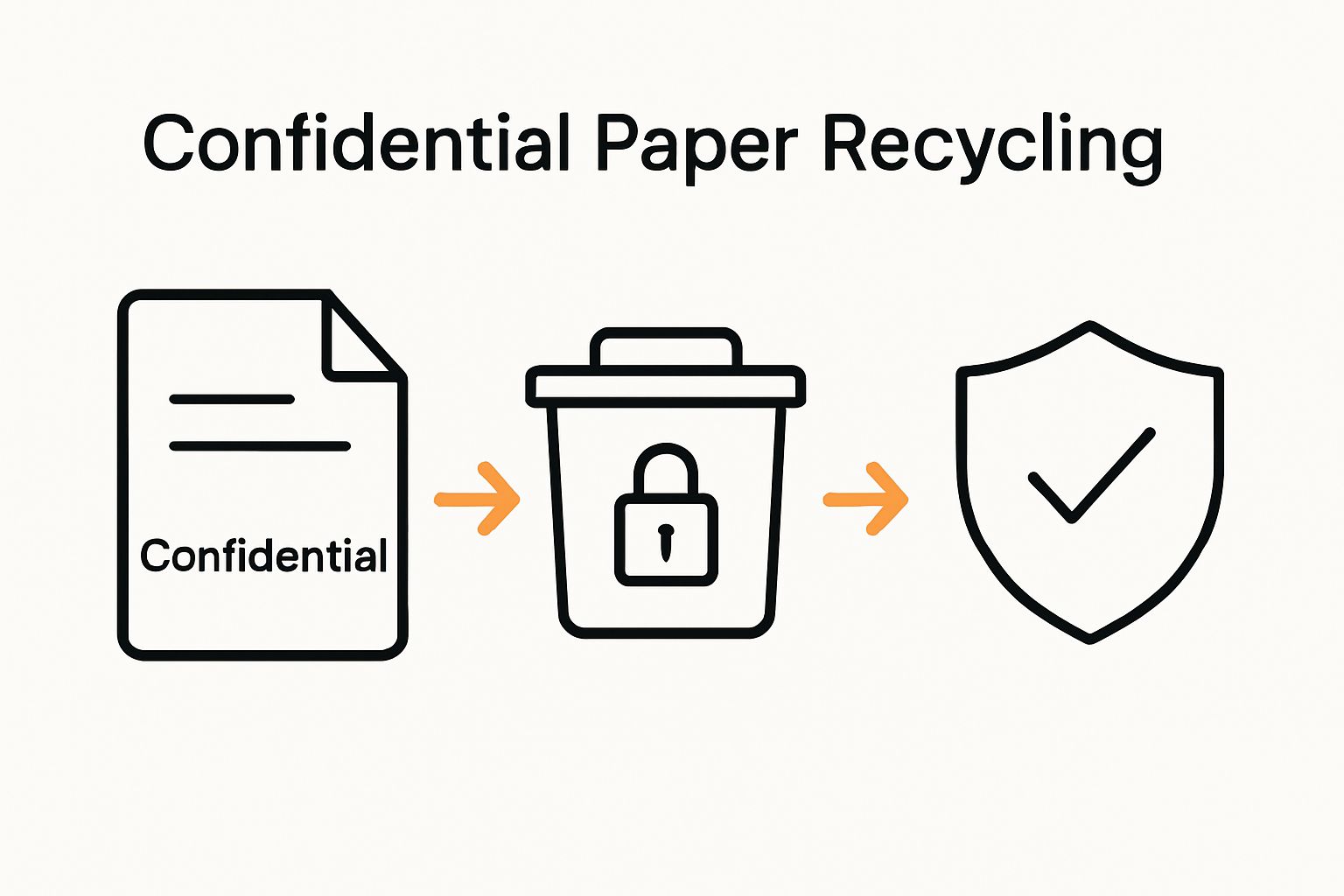
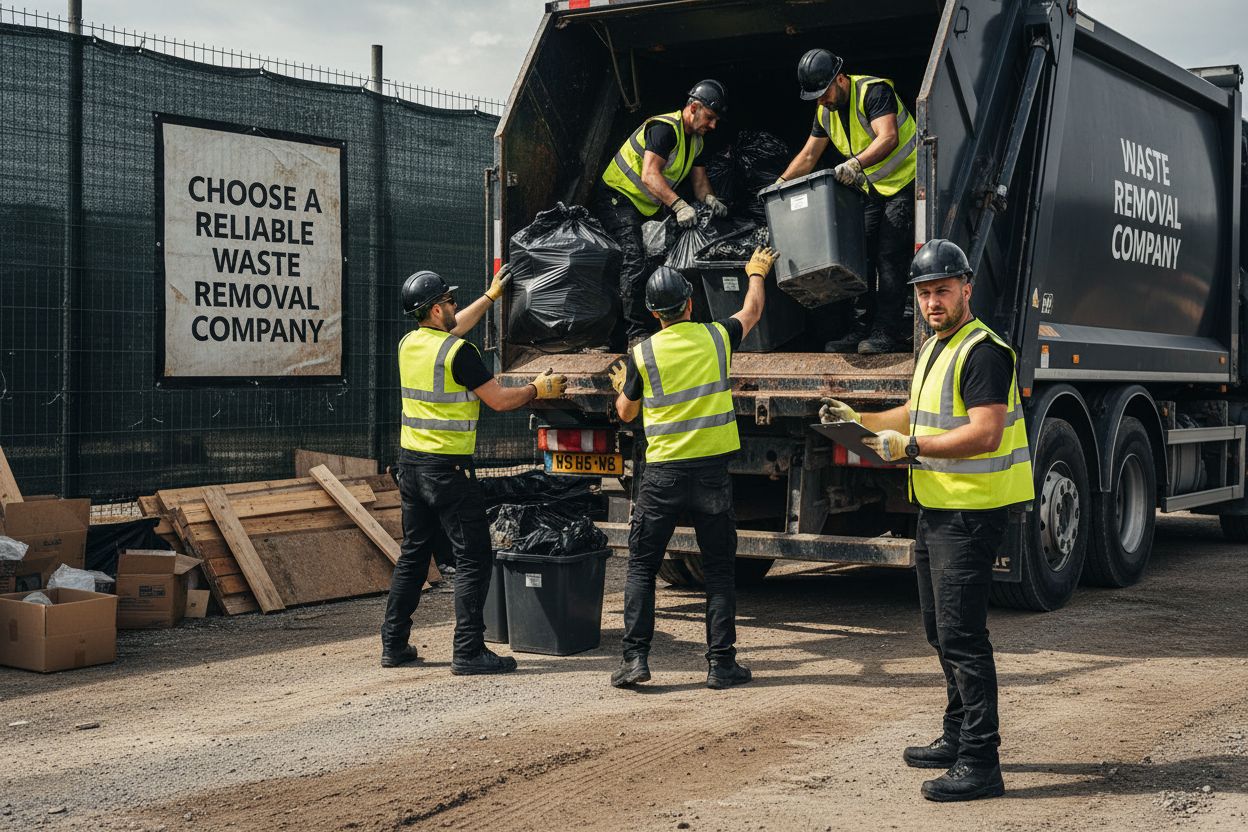
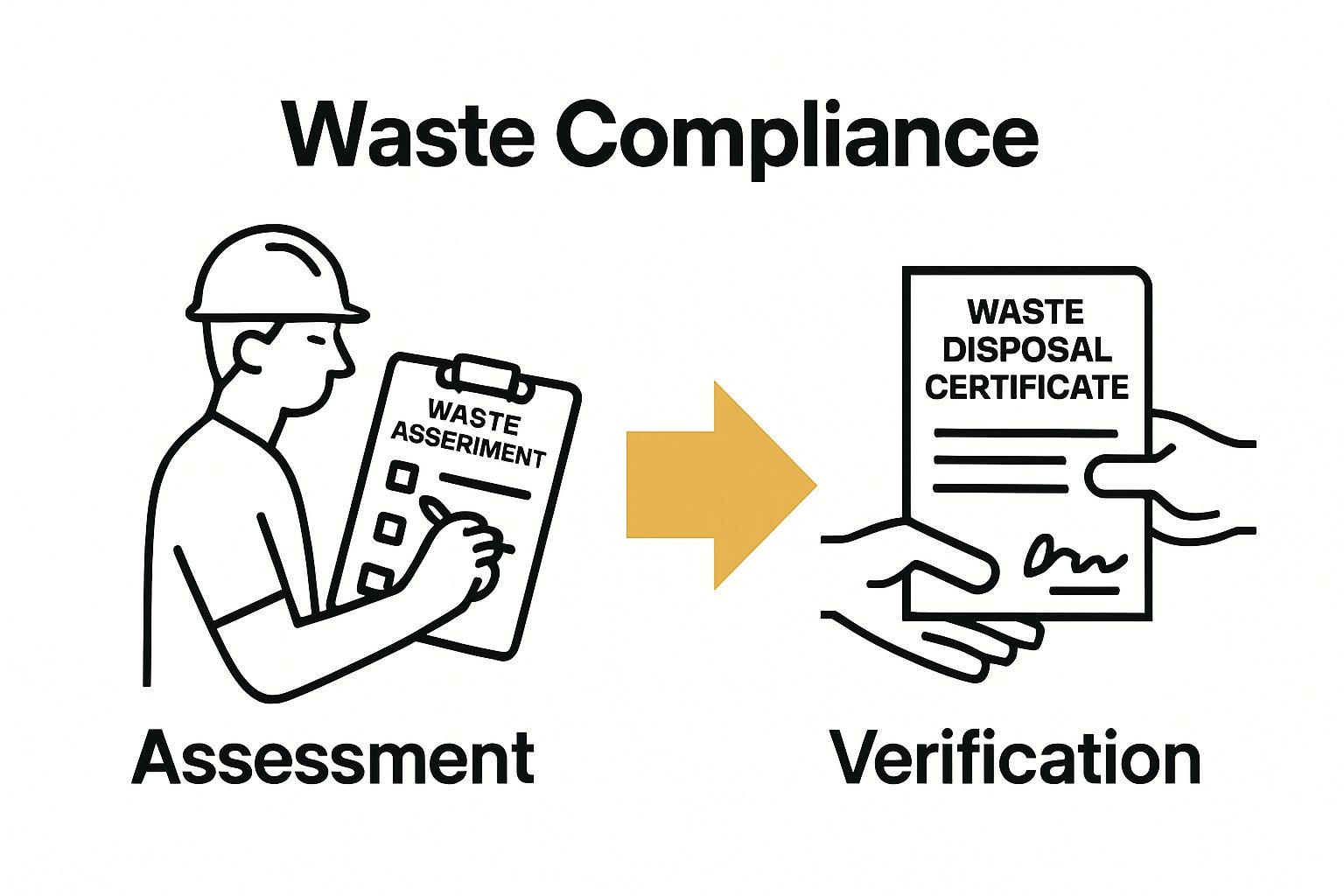
waste industry UK facility

Understanding Waste Industry Updates 2025: Key Changes

Waste management sits at the heart of every community, keeping our cities cleaner and safer while shaping entire industries. You might expect the biggest impact comes from landfill reduction or recycling statistics, but the real surprise is how the waste sector generates thousands of jobs and drives significant economic growth in the UK. Rather than a hidden system working in the background, waste management is now leading the way in environmental innovation and transforming how businesses think about their future.

Table of Contents

Quick Summary

Takeaway Explanation
Enhanced waste segregation is mandatory in 2025 Businesses must implement stricter waste categorisation to meet new regulatory requirements and minimise landfill usage.
Adopt Extended Producer Responsibility principles Companies will be held accountable for their product packaging and end-of-life waste management, driving sustainable practices.
Technological advancements improve waste processing Innovations like AI and waste-to-energy systems increase recycling efficiency and reduce environmental impact.
Consumer demand shapes sustainable practices Growing environmental consciousness among consumers compels businesses to adopt more responsible waste management strategies.
Focus on circular economy is vital Embracing circular economy principles allows businesses to transform waste into valuable resources, improving sustainability and profitability.

What is the Waste Industry and Its Importance?

The waste industry represents a critical infrastructure sector responsible for managing and processing discarded materials across multiple economic and environmental domains. According to UK government regulations, this complex system encompasses comprehensive waste management strategies that protect public health, preserve environmental sustainability, and support circular economic principles.

Understanding Waste Management Fundamentals

Waste management involves a sophisticated network of processes designed to collect, transport, process, recycle, and safely dispose of materials generated by businesses, households, and industrial sectors. The industry operates through multiple interconnected stages, ensuring that waste materials are handled responsibly and efficiently.

Key components of the waste industry include:

  • Collection and transportation of diverse waste streams
  • Sorting and processing of recyclable and non-recyclable materials
  • Advanced recycling technologies and infrastructure
  • Waste-to-energy conversion systems
  • Environmental compliance and regulatory management

Environmental and Economic Significance

The waste industry plays a pivotal role in addressing significant environmental challenges. By implementing strategic waste management practices, businesses and municipalities can dramatically reduce landfill volumes, minimise greenhouse gas emissions, and conserve critical natural resources. Moreover, the sector contributes substantially to the UK economy, generating substantial employment opportunities and supporting innovative circular economy initiatives.

Businesses seeking comprehensive waste management solutions can read our guide on optimising waste strategies to understand how responsible waste handling can simultaneously reduce environmental impact and operational costs.

The waste industry continues to evolve, driven by technological advancements, regulatory changes, and increasing environmental consciousness. From Newcastle to Manchester, waste management companies are developing sophisticated solutions that transform how organisations approach waste disposal, recycling, and resource recovery.

Key Changes in Waste Management Regulations for 2025

The waste management landscape in the United Kingdom is undergoing significant regulatory transformations in 2025, driven by environmental sustainability goals and evolving legislative frameworks. According to Environment Agency guidelines, these changes will fundamentally reshape how businesses approach waste disposal and resource management.

Enhanced Waste Segregation Requirements

Starting in 2025, businesses will face more stringent waste segregation protocols. The new regulations mandate a more granular approach to waste categorisation, requiring organisations to implement more sophisticated sorting mechanisms. Key changes include:

  • Mandatory separation of different waste streams at source
  • Enhanced tracking and reporting of waste composition
  • Stricter penalties for improper waste disposal practices
  • Increased emphasis on recyclable material recovery

These requirements aim to reduce landfill volumes and promote a more circular economic model, compelling businesses to invest in advanced waste management infrastructure.
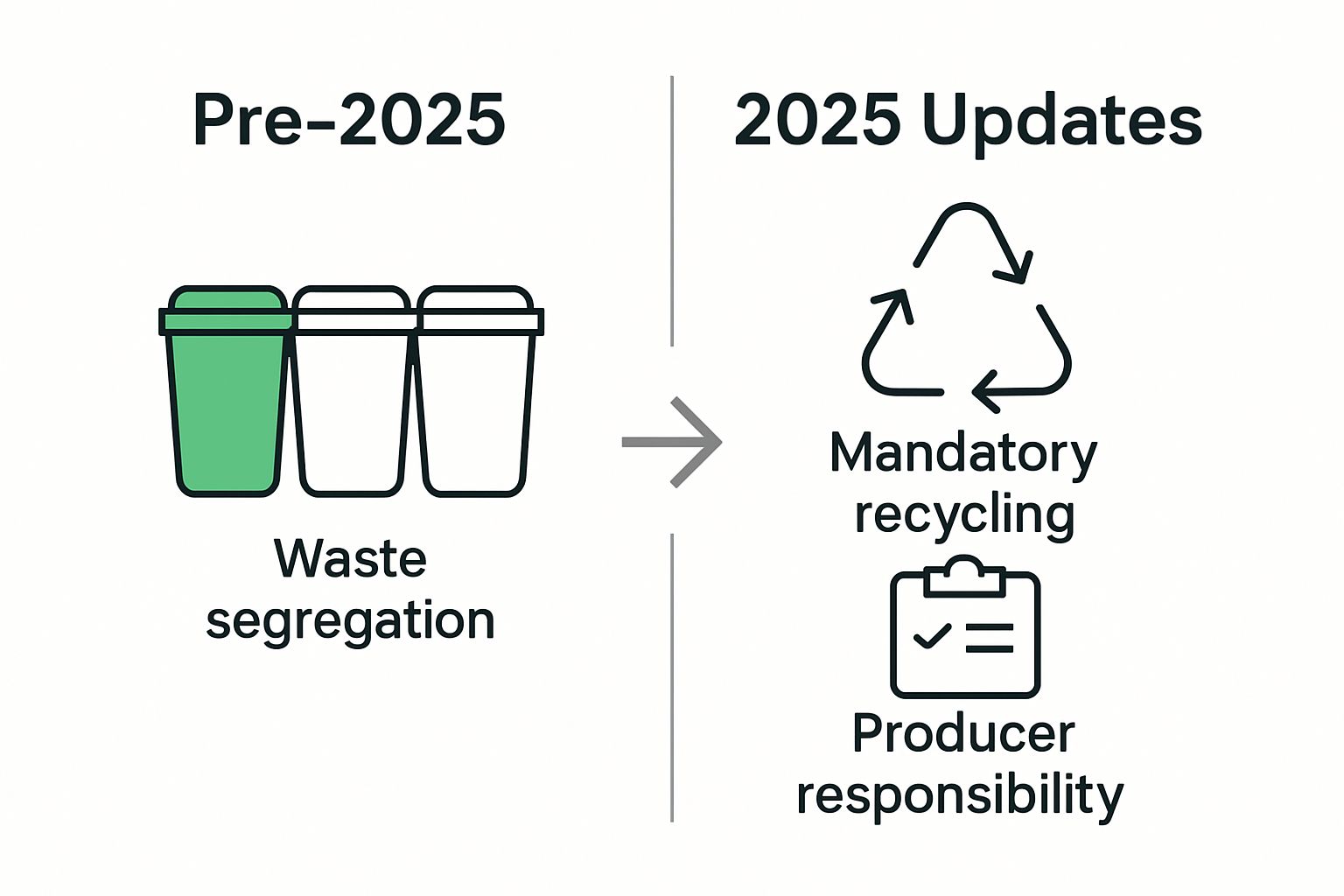
Infographic comparing UK waste regulations before and after 2025

Expanded Producer Responsibility Framework

The updated regulatory environment introduces a comprehensive Extended Producer Responsibility (EPR) model.

This framework shifts significant responsibility onto manufacturers and importers for the entire lifecycle of their products, including post-consumer waste management. Companies will now be financially and operationally accountable for the environmental impact of their product packaging and materials.

Learn more about navigating these complex waste management challenges, businesses must proactively adapt their waste strategies to remain compliant and environmentally responsible.

From Newcastle’s industrial parks to Manchester’s commercial districts, organisations across the UK will need to reassess their waste management approaches. The 2025 regulations represent a pivotal moment in sustainable waste management, demanding innovative solutions and a commitment to environmental stewardship.

Below is a comparison table outlining the regulatory changes in waste management for 2025 and how they impact UK businesses.

Regulatory Change Key Requirement Impact on Businesses
Enhanced Waste Segregation Mandatory separation of waste streams at source Investment in advanced sorting and stricter internal protocols
Stricter Tracking and Reporting Precise logging of waste composition Implementation of tracking systems and increased admin workload
Tougher Penalties for Non-compliance Higher fines for improper disposal Greater operational risk and need for compliance training
Increased Emphasis on Recyclables Focus on recovering recyclable materials Expansion of recycling programmes and infrastructure
Extended Producer Responsibility (EPR) Financial and operational responsibility for product end-of-life Packaging redesign and broader lifecycle planning

Emerging Technologies in Waste Processing and Disposal

The waste management sector is experiencing a technological revolution, with innovative solutions transforming traditional disposal methods. According to recent environmental research, cutting-edge technologies are enabling more sustainable, efficient, and environmentally friendly waste processing strategies.

Advanced Waste-to-Energy Conversion

Waste-to-energy technologies have emerged as a critical breakthrough in sustainable waste management. These sophisticated systems convert non-recyclable waste materials into electricity, heat, and alternative fuels, dramatically reducing landfill dependency and generating renewable energy. Key innovations include:

  • Plasma gasification technologies
  • Advanced incineration with enhanced emissions control
  • Biochemical conversion systems
  • Modular waste-to-energy processing units

These technologies represent a significant leap forward in circular economy principles, transforming waste from an environmental liability into a potential energy resource.

Artificial Intelligence and Robotics in Waste Sorting

Artificial intelligence and robotic technologies are revolutionising waste sorting processes. Machine learning algorithms and advanced robotics can now identify and segregate waste materials with unprecedented accuracy, reducing human error and increasing recycling efficiency. Intelligent sorting systems can process multiple waste streams simultaneously, identifying complex material compositions and contamination levels in real-time.

Explore our comprehensive guide on secure waste disposal solutions to understand how technological innovations are reshaping waste management practices.

From Newcastle’s industrial complexes to Manchester’s commercial centres, these emerging technologies are setting new standards in waste processing. The integration of artificial intelligence, advanced materials science, and sustainable engineering is creating a more responsive, efficient waste management ecosystem that promises significant environmental and economic benefits.

The following table presents key emerging technologies in waste processing and their benefits, summarising how innovation is reshaping traditional waste management approaches.

Technology Type Description Key Benefits
Plasma Gasification Converts waste into synthetic gas using high temperatures Reduces landfill use, generates renewable energy
Advanced Incineration Uses advanced emissions control for waste combustion Safe energy recovery, lower pollution levels
Biochemical Conversion Systems Utilises biological processes to generate energy from waste Reduces organic waste, produces biofuels
AI and Robotic Sorting Automated systems that sort waste using artificial intelligence Increases sorting accuracy, reduces human error
Modular Waste-to-Energy Units Compact plants for on-site waste energy conversion Flexible deployment, localised energy supply

Understanding Sustainable Practices in Waste Management

According to environmental sustainability research, sustainable waste management represents a comprehensive approach that goes beyond traditional disposal methods, focusing on reducing environmental impact and maximising resource efficiency. This holistic strategy encompasses multiple interconnected practices designed to minimise waste generation and promote circular economic principles.

Circular Economy and Waste Reduction Strategies

Sustainable waste management prioritises waste prevention and resource conservation. Organisations are increasingly adopting strategies that transform waste from an environmental burden into a valuable resource. Key sustainable practices include:

  • Implementing comprehensive waste auditing processes
  • Designing products with end-of-life recyclability in mind
  • Developing closed-loop manufacturing systems
  • Promoting repair, reuse, and refurbishment initiatives
  • Investing in innovative recycling technologies

These approaches fundamentally reimagine waste as a potential resource rather than a disposal challenge, encouraging businesses to rethink traditional linear consumption models.
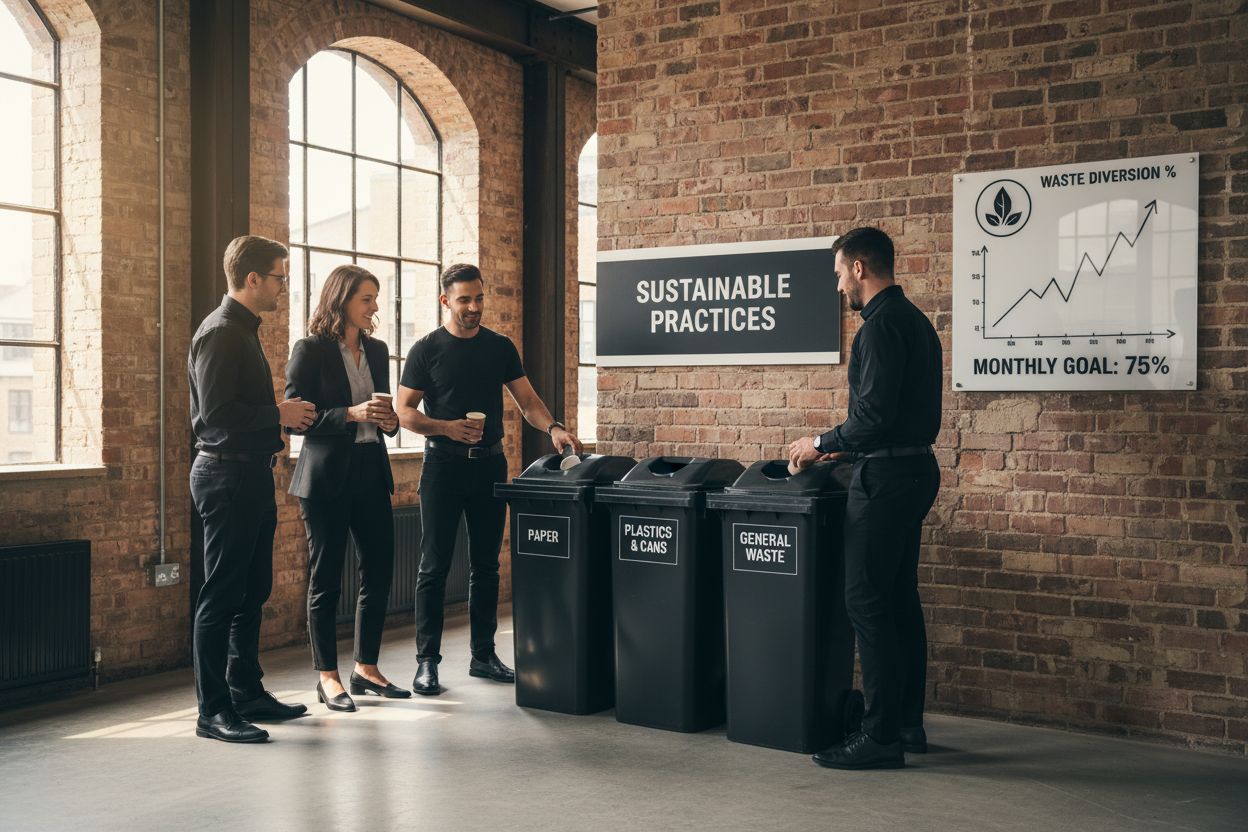
business sustainable waste management

Resource Recovery and Waste Valorisation

Advanced sustainable practices focus on extracting maximum value from waste streams. Resource recovery techniques transform previously discarded materials into new products, energy sources, or raw materials. This approach not only reduces environmental impact but also creates economic opportunities across various industrial sectors.

Explore practical waste reduction strategies for UK businesses to understand how organisations can implement sustainable waste management practices effectively.

From Newcastle’s manufacturing facilities to Manchester’s commercial enterprises, businesses are recognising that sustainable waste management is no longer optional but a critical component of responsible corporate environmental stewardship. The integration of innovative technologies, circular economy principles, and strategic waste reduction approaches is reshaping how organisations perceive and manage their waste streams.

According to consumer behaviour research, consumer choices are increasingly driving transformative changes in waste management practices. The evolving environmental consciousness among UK consumers is fundamentally reshaping how businesses approach waste generation, recycling, and sustainable product design.

Consumer-Driven Waste Reduction Dynamics

Modern consumers are no longer passive participants in waste generation but active agents of environmental change. They are demanding more sustainable products, transparent supply chains, and responsible waste management practices from businesses. Key consumer behaviour trends include:

  • Preference for products with minimal packaging
  • Growing interest in circular economy principles
  • Increased demand for recyclable and biodegradable materials
  • Active participation in community recycling programmes
  • Willingness to pay premium for environmentally responsible products

Consumer expectations are driving businesses to redesign their product lifecycles, moving away from traditional linear consumption models towards more sustainable, circular approaches.

Environmental Consciousness and Purchase Decisions

Consumers are increasingly making purchasing decisions based on a company’s environmental credentials. This shift is compelling businesses to integrate sustainability into their core strategic planning, recognising that environmental responsibility is now a critical competitive differentiator.

Explore our comprehensive guide on waste management strategies to understand how consumer behaviour is reshaping waste management approaches.

From Newcastle’s urban neighbourhoods to Manchester’s suburban communities, consumers are signalling a clear message: sustainable waste management is no longer optional but an essential expectation. Businesses that fail to adapt to these changing consumer preferences risk losing market share and brand reputation in an increasingly environmentally conscious marketplace.

Seamlessly Keep Up with 2025 Waste Changes for Your Business

Navigating the shifting landscape of waste regulations in 2025 can feel overwhelming. Many businesses are worried about stricter segregation laws, more robust compliance needs and the pressure to update internal waste processes. In particular, the new requirements for waste segregation and extended producer responsibility highlight just how important it is to have a reliable, compliant waste partner. For UK companies feeling the strain, working with a service that already understands the detailed waste collection network in 2025 offers valuable peace of mind.
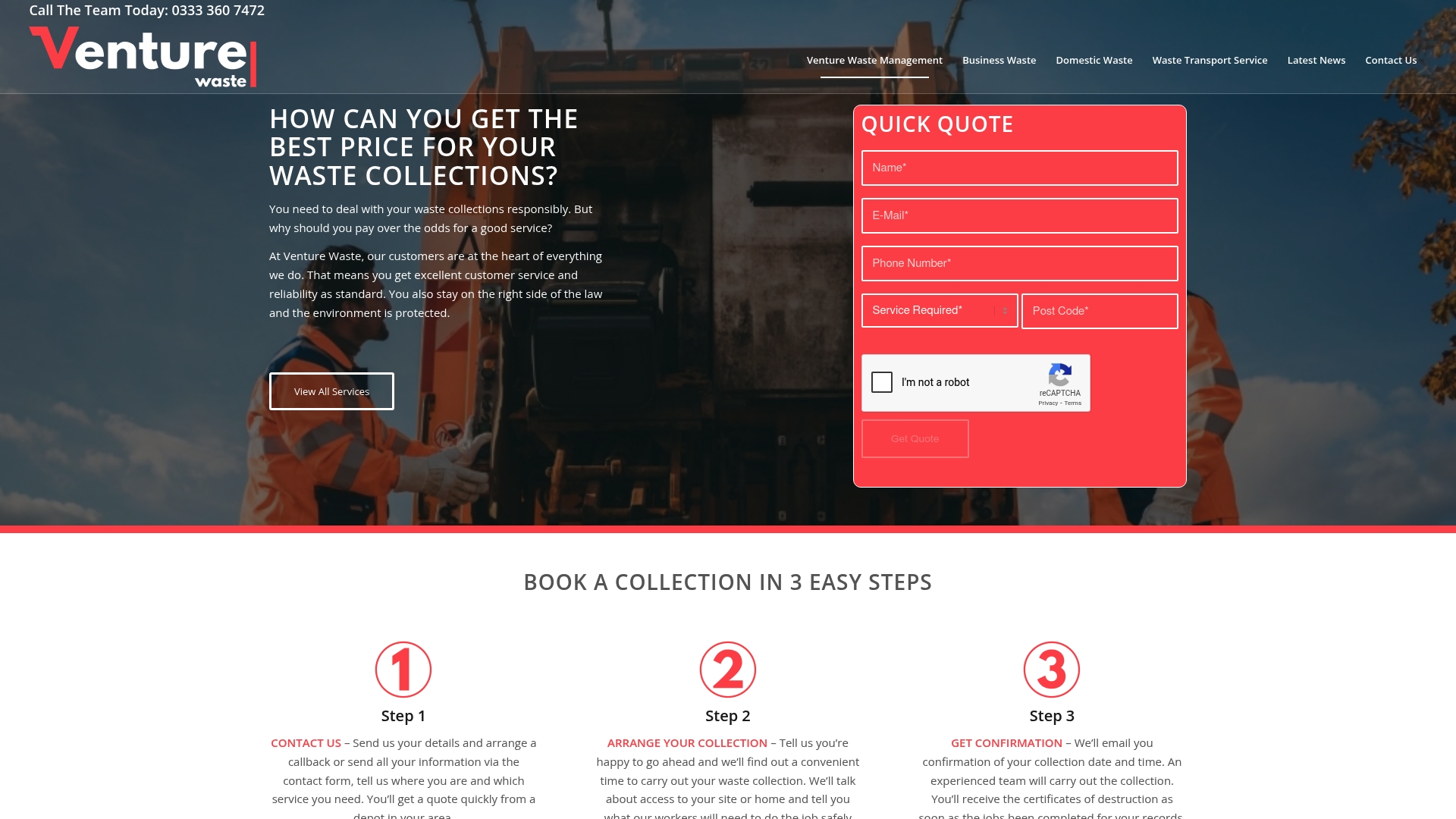
https://venturewaste.co.uk

Ready to simplify your transition and avoid costly mistakes? Explore our expert waste collection process for UK businesses in 2025 and benefit from a three-step booking system designed for full legal compliance and environmental excellence. Act now by visiting Venture Waste Management and ensure your business is prepared, protected and ahead of the latest waste industry updates.

Frequently Asked Questions

What are the key changes in waste management regulations for 2025?

The key changes include enhanced waste segregation requirements and an expanded Producer Responsibility framework. Businesses will need to separate waste streams at the source and be accountable for the entire lifecycle of their products. Assess your current waste practices and plan to implement these changes by 2025.

How can businesses prepare for enhanced waste segregation requirements?

Businesses can prepare by investing in advanced sorting technologies and comprehensive training for staff on waste categorisation. Start by auditing your current waste management processes to identify areas that need improvement before the regulations take effect.

What measures will be implemented to ensure compliance with the new regulations?

To ensure compliance, businesses must establish stricter tracking and reporting systems for waste composition and follow mandatory sorting protocols. Develop a compliance checklist to monitor these requirements and train your team on proper procedures within the next six months.

How does the Extended Producer Responsibility (EPR) framework affect manufacturers?

The EPR framework requires manufacturers to take financial and operational responsibility for the waste generated from their products. This means implementing systems to manage waste and promote recyclability. Begin assessing your product designs and packaging to align with EPR guidelines early.

What role does technology play in the future of waste management?

Technology is transforming waste management through advanced waste-to-energy systems and AI-driven sorting mechanisms. Explore investing in these technologies to enhance efficiency and minimise landfill dependency, aiming for a 20% reduction in waste sent to landfills within the next year.

How can businesses foster a culture of sustainability in response to consumer behaviour?

Businesses can foster a culture of sustainability by designing products with recyclability in mind and engaging consumers in waste reduction initiatives. Launch awareness programmes that educate both employees and customers on sustainable practices to strengthen your market position and reputation.

hazardous waste disposal companies hero header image

Best Hazardous Waste Disposal Companies – Expert Comparison 2025

Finding the right waste management partner can feel overwhelming with so many options out there. Different companies promise fast pickups, detailed recycling, or simple booking but which actually deliver on convenience, reliability, and sustainability The best choice depends on more than just taking your rubbish away. Service range, response time, documentation, and community values all play a part. See how the top names stack up when it comes to helping both homes and businesses manage their waste with less stress and more peace of mind.

Table of Contents

Venture Waste Management

Product Screenshot

At a Glance

Venture Waste Management is a practical, locally rooted waste partner that serves both businesses and households across the UK. The site presents a clear suite of services — from hazardous and confidential waste to skip hire and recycling — and centres user experience on a simple three‑step booking process. If you need reliable collections backed by compliance documentation and local depots for fast response, Venture Waste is a strong, trustworthy choice.

Core Features

Venture Waste Management combines a wide range of waste services with straightforward customer processes and compliance support. The website highlights general waste, hazardous waste, confidential document destruction, recycling and skip hire, plus UK‑wide coverage supported by local depots. A fast quote and booking flow runs in three steps — contact, arrangement and confirmation — and collections are followed by certificates of destruction so you have an auditable trail. The site also offers industry news, tailored service descriptions for business and domestic clients, a newsletter to share best practice, testimonials and social links to reinforce credibility.

Pros

  • Comprehensive service range: Venture Waste covers general, hazardous, confidential and recycling streams plus skip hire, so you can consolidate multiple waste needs with one supplier.
  • Reliable scheduling and customer care: The company emphasises excellent customer service and dependable collection windows, making it easier to plan operations.
  • UK coverage with local depots: Broad national reach combined with local depots ensures quicker turnarounds and regional knowledge.
  • Transparent documentation: Certificates of destruction after collection provide legal and audit-ready evidence of responsible disposal.
  • B2B and B2C focus: Dedicated offerings for both businesses and households mean services are tailored to different operational needs and compliance requirements.

Cons

  • Quote‑based pricing only: Specific prices are not published online, so you must request a quote to get costs.

Who It’s For

Venture Waste Management is built for organisations and homeowners who want dependable, compliant waste removal across a variety of streams. Facilities managers, small and medium enterprises, healthcare settings, educational sites and construction firms that need hazardous, confidential or regular general waste collections will find the service well matched to their needs. It also suits householders seeking reliable skip hire or garden waste removal.

Unique Value Proposition

Venture Waste’s strength lies in combining national coverage with local depot responsiveness, a clear three‑step booking flow, and compliance-first documentation. That mix is particularly valuable for businesses that must prove lawful disposal — the certificates of destruction create an auditable chain of custody. The website’s tailored service descriptions, industry news and newsletter show an emphasis on ongoing guidance and environmental responsibility, setting Venture Waste apart from providers that treat collections as one‑off transactions rather than part of a compliance and sustainability programme.

Real World Use Case

A Durham business needing regular general and confidential waste collections can book via the three‑step process, rely on local depot scheduling for quick pickups, and receive certificates of destruction for audit and regulatory records.

Pricing

Quote‑based; quotes provided upon contact.

Website: https://venturewaste.co.uk

Biffa

Product Screenshot

At a Glance

Biffa is a long-established UK waste management company that combines traditional collection services with modern recycling and monitoring solutions. With over 100 years of experience, it is positioned to serve businesses, local authorities and larger organisations seeking sustainability and regulatory compliance. Expect tailored service designs and an emphasis on turning waste into resources, though you will need to request a quote for specific pricing.

Core Features

Biffa provides end-to-end waste collection and disposal services alongside recycling and resource recovery programmes. It promotes sustainable waste management and circular-economy partnerships, including work on plastics packaging and other innovations. Operationally, Biffa offers data-driven tools such as internet-connected bins and waste monitoring technology to improve route efficiency and recycling performance. Services are adaptable by client size and sector, from SMEs to local authorities.

Pros

  • Deep industry experience: Biffa brings more than a century of waste-management know-how that supports reliable operational delivery.
  • Tailored service options: The company offers customised solutions designed to meet the needs of different client sizes and sectors.
  • Sustainability focus: Biffa emphasises recycling and resource recovery, helping customers reduce environmental impact.
  • Innovative monitoring tools: Smart bin technology and data-led recycling campaigns provide practical insights to improve collections and recycling rates.
  • Ability to work at scale: Biffa has experience with local authorities and large organisations, so it can handle complex or high-volume contracts.

Cons

  • No published pricing: Specific costs are not listed on the website, meaning you must contact Biffa for a bespoke quote.
  • Service availability can vary: Offerings and service levels may depend on your location and organisational size, which could require negotiation and clarification.
  • Service complexity for first-time buyers: As a service-based provider rather than a retail product, understanding all costs and service elements often takes direct discussion and time.

Who It’s For

Biffa is best suited to UK businesses and public-sector organisations that need a professional, scalable waste-management partner with a strong sustainability agenda. If you run a restaurant chain, a factory, a school or a council service and want both collection capacity and recycling expertise, Biffa is appropriate. It is less useful for individuals seeking off-the-shelf pricing or single small-scale lifts without a prior conversation.

Unique Value Proposition

Biffa’s unique value lies in combining deep, long-term operational experience with modern sustainability and monitoring tools. That mix allows customers to move beyond simple disposal to measurable recycling outcomes and circular-economy projects, supported by data from smart bins and targeted recovery programmes.

Real World Use Case

A restaurant chain partners with Biffa to manage kitchen and packaging waste across multiple sites. Biffa installs smart bins, monitors fill patterns, optimises collection routes and runs recycling campaigns to raise diversion rates—reducing landfill waste, improving compliance and lowering total waste costs over time.

Pricing

Not specified; contact Biffa for a quote.

Website: https://biffa.co.uk

Wastecare

Product Screenshot

At a Glance

Wastecare provides broad, compliant waste management services across the UK with a clear emphasis on sustainability and safety. Its strengths lie in licensed recycling, full traceability and sector-specific solutions that suit healthcare, construction and manufacturing. Pricing details are not published, so you should expect to request a quote before committing. Overall, Wastecare is a solid choice if you need regulated, traceable disposal rather than a low-cost, off-the-shelf provider.

Core Features

Wastecare’s core capabilities include nationwide waste collection, recycling and recovery for hazardous, electronic and general waste, plus industrial container rental and bulk waste recovery. The service supports multiple sectors — from hospitality and retail to utilities and healthcare — and highlights licensed recycling with full traceability. In short, Wastecare combines collection logistics with waste recovery processes and sector-tailored handling to keep your compliance and sustainability goals aligned.

Pros

  • Comprehensive service range: Wastecare covers collection, recycling, recovery and container rental, so you can centralise multiple waste streams with one supplier.
  • Strong sustainability focus: Their services emphasise environmentally responsible disposal and recovery, which helps you meet company ESG targets.
  • Full traceability for waste disposal: Licensed processes and traceability reduce regulatory risk and make audits straightforward.
  • Wide sector coverage: Specialised offerings for healthcare, construction, hospitality and more mean their teams understand your sector’s specific rules and risks.
  • Licensed and compliant recycling: Licensed recycling operations give you confidence that hazardous and electronic waste are handled to regulatory standards.

Cons

  • Pricing not published: The website does not specify costs, so you must request a bespoke quote to compare value.
  • Lack of contractual detail online: Specific service terms, turnaround times and contractual commitments are not detailed publicly, which can make procurement slower.
  • Potential sector dependency: While sector focus is a strength, it may limit flexibility for organisations with unusual or niche waste types that fall outside their core sectors.

Who It’s For

Wastecare suits businesses and organisations that prioritise compliance and environmental responsibility over the lowest price. If you manage hazardous, electronic or industrial waste and need licensed recycling with end-to-end traceability, Wastecare is well matched to your needs. Facilities managers, compliance officers and procurement teams in manufacturing, healthcare, construction and large retail operations will find the service most relevant.

Unique Value Proposition

Wastecare’s unique value lies in combining nationwide logistics with licensed recycling and documented traceability, delivered through sector-aware services. That mix reduces regulatory exposure while supporting sustainability targets — a clear selling point for regulated industries that must demonstrate lawful and responsible disposal practices.

Real World Use Case

A manufacturing firm turns to Wastecare to manage hazardous waste and byproducts. Wastecare supplies suitable containers, schedules nationwide collection and routes materials into licensed recycling and recovery streams, documenting each step so the manufacturer can demonstrate compliance and lower its environmental footprint.

Pricing

Not specified on the website; quote-based pricing is required and you should contact Wastecare for a tailored proposal.

Website: https://wastecare.co.uk

Durham Waste

Product Screenshot

At a Glance

Durham Waste is a UK-based waste management company focused on sustainable disposal and recycling for homes and businesses. They emphasise responsible handling, offer free quotes, fast setup, free bin delivery and flexible collection services including commercial wheelie bins. Their strength lies in a broad service range and practical recycling options, though detailed pricing and bin-size information are not published online. Overall, they are a solid local option if you value hands-on recycling support and education.

Core Features

Durham Waste provides comprehensive collection for multiple waste streams, covering general rubbish and specific streams such as cardboard, paper, glass, plastics and foam recycling. They offer specialised clinical waste handling and separate services for garden waste composting. Food waste is managed via composting or anaerobic digestion to produce energy, demonstrating a preference for recovery over landfill. The service package also includes free bin delivery, flexible collection schedules and customer-focused waste-reduction education to help clients reduce volumes at source.

Pros

  • Focused on sustainability and recycling: Durham Waste prioritises recycling and composting routes, which helps reduce landfill and supports circular waste practices.
  • Experienced and reliable service provider: The company presents a long-standing reputation, suggesting dependable collection and day-to-day operations.
  • Wide range of solutions for residential and commercial clients: They cover household collections, commercial wheelie bins and services for events and organisations, making them versatile for different needs.
  • Provides additional education and waste reduction tips: Durham Waste offers guidance that helps you cut waste and improve recycling performance over time.
  • Flexible collection options and free initial quotes: You can request a free quote and benefit from fast setup and complimentary bin delivery to get services running quickly.

Cons

  • Pricing not published online: Specific prices are not provided on the website, so you must request a quote to understand exact costs and budgeting implications.
  • Limited bin capacity details: The site lacks clear information on bin sizes or capacity options, which complicates planning for larger premises or varying waste volumes.
  • No explicit certifications listed: While the company states environmental commitments, the website does not detail specific certifications or recognised standards to verify those claims.

Who It’s For

Durham Waste is best for homeowners, small to medium businesses, local restaurants and community organisations in the Durham area seeking a reliable and environmentally responsible waste partner. Facilities managers who need flexible collections, practical recycling routes and on-site advice will find the service particularly useful.

Unique Value Proposition

Durham Waste combines multi-stream collection with a clear sustainability focus—recycling, composting and clinical-waste handling—plus educational support. The inclusion of free bin delivery and fast setup reduces friction when switching providers, making it a convenient single-supplier option for businesses aiming to improve recycling performance.

Real World Use Case

A local restaurant uses Durham Waste to manage and separate food waste, cardboard and general refuse. Food waste is diverted to composting or anaerobic digestion while recyclable packaging is collected separately, cutting landfill contributions and simplifying the kitchen’s waste routines and reporting.

Pricing

Quote-based — free quotes and initial consultations are available to establish costs and service frequency.

Website: https://durhamwaste.co.uk

Waste Management Services Comparison

This table provides a comprehensive comparison of various UK waste management services, detailing their features, pros, cons, and usability for informed decision-making.

Service Provider Core Features Pros Cons Pricing
Venture Waste Nationwide coverage, local depots, comprehensive waste services, compliance Reliable scheduling, B2B and B2C focus, transparent documentation, decades of experience Quote-based pricing only Quote-based
Biffa End-to-end waste management, sustainability focus, monitoring technology Deep industry experience, tailored services, smart bin technology No published pricing, service availability can vary Quote-based
Wastecare Nationwide services, licensed recycling, traceable disposal Full traceability, strong sustainability focus, wide sector coverage Pricing not published, lack of online contractual detail Quote-based
Durham Waste Sustainable disposal, recycling focus, free quotes Sustainability focus, flexible collection options, wide range of solutions Pricing not published, limited bin capacity details Quote-based

A local restaurant uses Durham Waste to manage and separate food waste, cardboard and general refuse. Food waste is diverted to composting or anaerobic digestion while recyclable packaging is collected separately, cutting landfill contributions and simplifying the kitchen’s waste routines and reporting.

Website: https://durhamwaste.co.uk

Struggling with Hazardous Waste Compliance? Solve It with Confidence Now

Choosing the best hazardous waste disposal provider is about more than ticking a box. If you are worried about regulatory exposure, unclear disposal paperwork or unsafe handling, you are not alone. Many businesses face pressure to stay compliant and environmentally responsible, while also managing costs and time. Did you know that improper hazardous waste disposal can lead to heavy fines or even business closure? Reliability, transparent documentation and a simple booking process are crucial. For insights on lawful practices and industry standards, explore our hazardous waste guidance and stay informed with our regulation updates.

https://venturewaste.co.uk

Do not leave your compliance or reputation to chance. Get guaranteed, audit-ready hazardous waste collections with full legal documentation and clear local support. Experience our fast three-step booking for peace of mind and secure your compliant disposal today at Venture Waste Management. Request your quote now and keep your business protected from risk.

Frequently Asked Questions

What is hazardous waste and why does it require special disposal?

Hazardous waste refers to waste that poses substantial or potential threats to public health or the environment. It requires special disposal methods to minimize risks associated with exposure, contamination, and regulatory compliance.

How can businesses ensure compliance when disposing of hazardous waste?

Businesses can ensure compliance by partnering with certified hazardous waste disposal companies that provide the necessary documentation and adhere to local regulations. It’s essential to stay informed about waste classification and disposal guidelines.

What types of services do hazardous waste disposal companies typically offer?

Hazardous waste disposal companies typically offer services such as waste collection, transportation, treatment, recycling, and disposal of various hazardous materials, including chemicals, medical waste, and electronic waste.

How can I determine the right hazardous waste disposal company for my needs?

To determine the right hazardous waste disposal company, evaluate their experience, service offerings, compliance record, customer testimonials, and pricing structures. Additionally, consider their ability to manage specific types of hazardous waste relevant to your operations.

UK waste collection

Complete Guide to Domestic vs Commercial Waste UK

Did you know that businesses in England produced around 32.6 million tonnes of waste in 2023, more than double the volume from households? Clear rules separate domestic and commercial waste, and mix-ups can lead to costly fines or legal trouble. Knowing the difference is not just about sorting rubbish—it affects your legal duties, your costs, and how you help protect the environment across the UK.

Key Takeaways

Point Details
Understanding Waste Types Distinction between domestic waste (household generated) and commercial waste (business generated) is crucial for compliance and management.
Legal Obligations Waste producers must adhere to the Duty of Care, ensuring secure storage, proper documentation, and using authorized handlers.
Processing Differences Domestic waste is typically collected kerbside, while commercial waste requires specialized transfer stations and processing methods.
Compliance Risks Non-compliance with waste regulations can result in fines, legal repercussions, and increased operational costs for businesses.

Table of Contents

Defining Domestic and Commercial Waste UK

Understanding the difference between domestic waste and commercial waste in the United Kingdom is crucial for proper waste management and legal compliance. According to GOV.UK official guidance, these categories have distinct definitions that impact how waste must be handled and disposed of.

What is Domestic Waste?

Domestic waste is the waste generated by households during daily living activities. This includes typical items such as:

  • Kitchen rubbish
  • Garden waste
  • Packaging materials
  • Household recyclables
  • General household items

What is Commercial Waste?

Commercial waste originates from business activities and encompasses a broader range of materials. According to GOV.UK, this includes waste generated from any commercial operation, even if part of that activity happens within a home. Commercial waste categories include:

  • Office paper and packaging
  • Manufacturing byproducts
  • Construction debris
  • Retail store waste
  • Professional service waste

“Business waste is any waste that comes from a commercial activity, including waste generated from part of a home used for business purposes.” – GOV.UK Official Definition

The key distinction lies in the purpose of waste generation: domestic waste serves personal household needs, while commercial waste results from professional or business-related activities. Understanding these definitions helps businesses and homeowners segregate, manage, and dispose of their waste correctly, ensuring environmental compliance and efficient waste management practices in the UK.

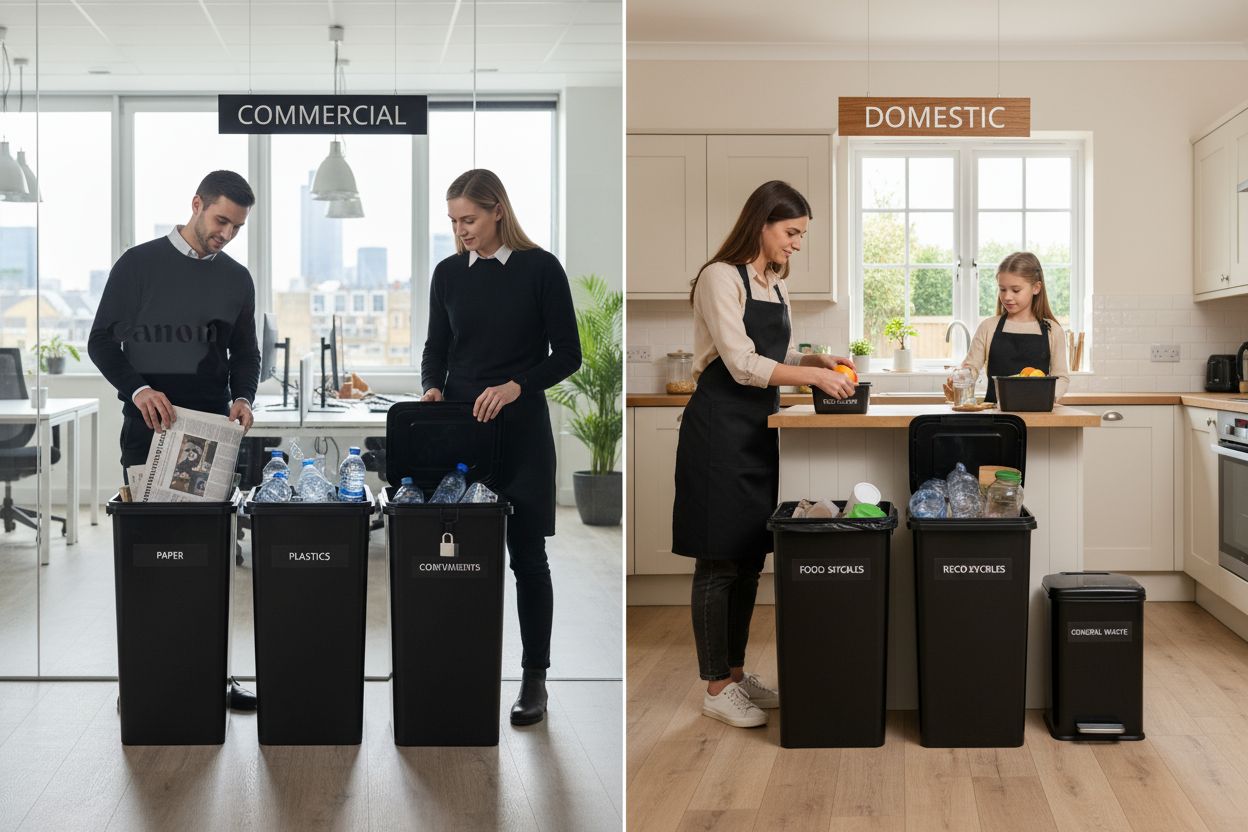
commercial domestic waste

If you want more details on waste management guidelines, our comprehensive guide provides additional insights for businesses navigating these regulations.

Differences in Waste Types and Sources

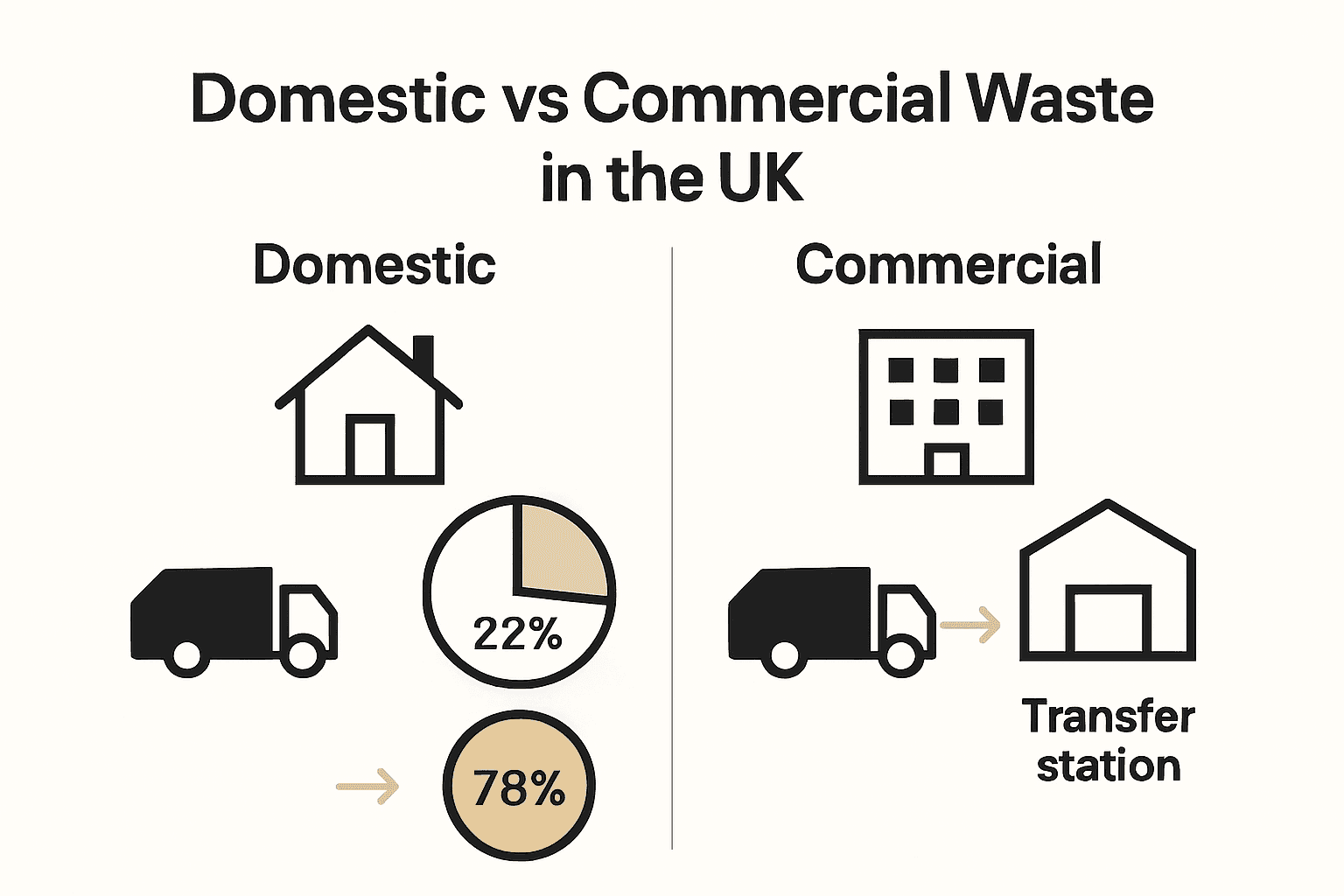
Commercial and household waste represent distinct categories with unique generation patterns and disposal requirements. Defra statistics reveal a significant disparity in waste volume, with commercial and industrial waste accounting for approximately 32.6 million tonnes in England in 2023, which represents about 21% of total UK waste, compared to household waste comprising roughly 14%.

Waste Generation Sources

The origins of waste differ dramatically between domestic and commercial sectors:

Domestic Waste Sources:

  • Residential households
  • Individual living spaces
  • Personal consumption activities

Commercial Waste Sources:

  • Businesses and industrial facilities
  • Manufacturing plants
  • Construction sites
  • Offices and retail establishments
  • Professional service providers

Processing and Sorting Mechanisms

Here’s a comparison of domestic and commercial waste in the UK:

Aspect Domestic Waste Commercial Waste
Main Sources Households
Personal spaces
Businesses
Shops
Industry
Typical Content Kitchen rubbish
Garden waste
Packaging
Office paper
Construction debris
Retail waste
Processing Location Kerbside collection
MRFs
Transfer stations
MRFs
Special facilities
Legal Framework Some exemptions
General duty of care
Stricter obligations
Full duty of care
Volume (England 2023) ~14% of UK waste ~21% of UK waste (~32.6 million tonnes)
According to the Health and Safety Executive, the processing methods for these waste types also vary significantly:
  • Municipal (Household) Waste: Typically sorted at kerbside collection points or Materials Recovery Facilities (MRFs)
  • Commercial/Industrial Waste: Processed through specialised transfer stations using mechanical and manual sorting techniques

“Different waste types require different processing strategies to ensure environmental compliance and resource efficiency.” – Waste Management Expert

Understanding these differences is crucial for businesses and homeowners to implement appropriate waste management strategies, reduce environmental impact, and comply with UK waste disposal regulations.

Learn more about waste sorting techniques in our comprehensive business guide to enhance your waste management approach.

Waste management in the United Kingdom involves specific legal responsibilities that apply to both domestic and commercial waste producers. The Environmental Protection Act 1990 establishes the Duty of Care, a critical legal framework governing waste management practices across the nation.

Under the Duty of Care, waste producers must adhere to several crucial requirements:

  • Secure Waste Storage: Prevent waste from causing environmental harm
  • Proper Transfer Documentation: Complete and maintain accurate waste transfer notes
  • Authorized Waste Handlers: Transfer waste only to licensed waste management companies
  • Waste Hierarchy Compliance: Prioritize waste reduction, reuse, and recycling

Specific Responsibilities

Scottish government guidance emphasizes that waste producers must:

  1. Separate recyclable materials
  2. Maintain waste security
  3. Document all waste transfers
  4. Ensure transfers occur only with authorized waste management providers

“Every waste producer has a legal responsibility to manage their waste responsibly and minimize environmental impact.”

While householders have some exemptions, businesses face more comprehensive obligations. Non-compliance can result in significant legal and financial penalties. Learn more about our general waste collection services to ensure you meet these critical legal requirements and maintain environmental compliance.

Disposal, Processing, and Recycling Methods

Waste processing in the United Kingdom involves sophisticated methods tailored to different waste categories. The Health and Safety Executive highlights that both household and commercial recyclable waste undergo comprehensive treatment at specialized facilities.

Household Waste Processing

Kerbside collection remains the primary disposal method for domestic waste. According to research, local authorities collect recyclables through:

  • Separate collection bins
  • Designated recycling boxes
  • Scheduled collection routes

Typical household recyclables include:

  • Glass
  • Paper
  • Plastics
  • Food waste

Commercial and Industrial Waste Processing

Industrial waste management involves more complex sorting mechanisms:

  1. Initial sorting at transfer stations
  2. Manual and mechanical separation
  3. Specialized processing based on waste type
  4. Preparation for recycling or disposal

“Effective waste management requires tailored approaches for different waste streams.”

The HSE emphasizes that materials recovery facilities (MRFs) play a crucial role in processing mixed recyclables.

Infographic comparing domestic and commercial waste sources, volumes, and collection methods in the UK. These facilities use advanced techniques including:

  • Mechanical sorting equipment
  • Manual picking lines
  • Automated separation technologies

Understanding these processes helps businesses and households contribute to more efficient waste management. Check out our comprehensive guide on WEEE waste processing to learn more about specialized waste handling techniques.

Compliance, Costs, and Common Pitfalls

Waste management compliance is not just a regulatory requirement but a critical business responsibility with significant financial and legal implications. Plymouth Council’s guidelines highlight the severe consequences of non-compliance, with potential penalties reaching up to £50,000 in fines and even potential imprisonment.

Common Compliance Mistakes

Businesses frequently encounter several critical pitfalls in waste management:

  • Improper waste storage
  • Using unauthorized waste carriers
  • Inadequate documentation
  • Incorrect waste segregation
  • Neglecting waste hierarchy principles

Financial Implications

Non-compliance can result in substantial unexpected costs:

  1. Immediate fines up to £50,000
  2. Legal prosecution expenses
  3. Potential business reputation damage
  4. Increased future waste management costs
  5. Potential operational disruptions

“Ignorance of waste management regulations is not a legal defence.”

Proactive Compliance Strategies

To mitigate risks, businesses should:

  • Maintain comprehensive waste transfer documentation
  • Use only licensed waste carriers
  • Implement robust waste segregation processes
  • Conduct regular internal waste management audits
  • Train staff on compliance requirements

Learn how to avoid business waste penalties and protect your organisation from potential financial and legal risks. Understanding and implementing proper waste management practices is not just about avoiding penalties—it’s about responsible environmental stewardship.

Make Compliance and Waste Worries a Thing of the Past

Are you struggling to keep up with the complex legal duties and separation requirements that come with handling domestic and commercial waste? The article highlighted the risk of heavy fines, the confusion over what counts as household or business waste, and the challenge of choosing the right disposal method. Many UK businesses and homeowners feel anxious about staying compliant and efficient as regulations tighten and improper handling can quickly lead to costly mistakes.

[Discover how our streamlined Waste Collection Process in the UK for Businesses 2025 can remove that uncertainty by guiding you through every legal and environmental obligation.]

https://venturewaste.co.uk

Do not leave your compliance and peace of mind to chance. Partner with Venture Waste for responsible general and specialist collections, tailored guidance on waste handling, and expert support every step of the way. Visit our website at Venture Waste Management today and explore our wide-reaching waste collection network built for both households and businesses across the UK. Act now to ensure your waste is dealt with properly, securely and with total legal confidence.

Frequently Asked Questions

What is the difference between domestic and commercial waste?

Domestic waste is generated by households from everyday activities, while commercial waste originates from business operations and includes materials like office paper, construction debris, and manufacturing byproducts.

How should domestic waste be disposed of in the UK?

Domestic waste is typically collected through kerbside collection services, where households sort their waste into designated bins for recycling and general waste collection.

Businesses must adhere to the Duty of Care, which requires them to secure waste storage, provide proper transfer documentation, use authorized waste handlers, and comply with the waste hierarchy principles of reducing, reusing, and recycling waste.

What processing methods are used for commercial waste in the UK?

Commercial waste is usually processed at transfer stations, where it undergoes manual and mechanical sorting to prepare it for recycling or proper disposal, utilizing specialized facilities for different waste types.

document shredding assessment

Master Confidential Document Shredding for Secure Disposal

Safeguarding sensitive business information is more complicated than simply tossing papers in the bin. Not all documents are equally sensitive and some records, like medical or legal files, demand rigorous security because data breaches can cost British firms an average of £3.4 million. Most people assume a quick pass through a shredder solves everything. The real challenge is that proper protection comes from a detailed process with careful planning at every step and this surprises most organisations.

Table of Contents

Quick Summary

Key Point Explanation
1. Conduct a document inventory Assess all documents to classify their sensitivity and establish tailored disposal protocols.
2. Assemble appropriate shredding tools Gather reliable shredders and storage solutions to ensure efficient and secure document destruction.
3. Organise documents systematically Sort documents by confidentiality level to facilitate a streamlined shredding process.
4. Execute shredding with safety Follow strict safety protocols during shredding to protect workers and sensitive information.
5. Verify complete destruction rigorously Conduct thorough checks on shredded materials to ensure they cannot be reconstructed, maintaining compliance.

Step 1: Assess Your Document Disposal Needs

Confidential document shredding requires a strategic approach that begins with comprehensive assessment. Before initiating any disposal process, businesses must carefully evaluate their specific document management requirements. This critical first step helps organisations develop a targeted and secure strategy for handling sensitive materials.

Understanding Your Document Landscape

Start by conducting a thorough inventory of all documents within your organisation. Not all documents are created equal, and recognising the varying levels of confidentiality is paramount. Medical records, financial statements, employee information, and client contracts each demand unique handling protocols. Learn more about our confidential document shredding process to understand nuanced disposal requirements.

Consider categorising documents based on sensitivity levels. Highly confidential materials like legal documents, personal identification records, and financial statements require immediate and secure destruction. Less sensitive documents might have different retention and disposal timelines. Pay close attention to regulatory requirements specific to your industry, as sectors like healthcare, finance, and legal services have stringent guidelines for document management.

Practical Assessment Strategies

To effectively assess your document disposal needs, gather your team and conduct a comprehensive audit. This involves examining current document storage practices, identifying potential security risks, and determining appropriate destruction methods. Create a detailed inventory that includes:

  • Document type
  • Confidentiality level
  • Retention period
  • Recommended disposal method

By meticulously mapping out your document landscape, you establish a foundation for a robust confidential document shredding strategy. Remember that proper assessment is not a one-time event but an ongoing process that adapts to changing regulatory environments and organisational needs. Regularly reviewing and updating your document disposal protocols ensures continuous compliance and minimises potential security vulnerabilities.

Step 2: Gather Necessary Shredding Tools and Equipment

The second crucial stage in confidential document shredding involves assembling the right tools and equipment to ensure secure and efficient document destruction. Proper preparation prevents poor performance, making this step fundamental to successful confidential waste management.

Selecting Appropriate Shredding Equipment

Choosing the right shredding equipment depends on your organisation’s specific volume and sensitivity requirements. For smaller operations in Newcastle or Durham, a cross-cut desktop shredder might suffice, while larger businesses in Sunderland or Middlesbrough may need industrial-grade shredders capable of handling substantial document volumes. Read our comprehensive guide on document disposal solutions to understand equipment nuances.

Safety considerations are paramount when selecting shredding equipment, as recommended by the Health and Safety Executive. Look for machines with automatic shut-off features, jam prevention mechanisms, and robust cutting systems that render documents completely unreadable. Professional-grade shredders should create particle sizes smaller than 5mm x 30mm to meet most data protection standards.

Beyond the shredder itself, gather essential supplementary equipment to streamline your document destruction process. Secure storage containers with lockable lids are critical for collecting documents awaiting shredding. Invest in heavy-duty disposal bags, protective gloves, and safety goggles if handling large volumes. Consider implementing a tracking system to monitor document destruction, which might include log books or digital tracking software.

Key equipment checklist for comprehensive document shredding:

  • Cross-cut or micro-cut industrial shredder
  • Secure lockable collection containers
  • Heavy-duty disposal bags
  • Protective personal equipment
  • Document tracking log or software

By meticulously gathering the right tools and equipment, organisations create a robust foundation for secure confidential document disposal.

The table below outlines the essential shredding tools and equipment necessary for effective and secure confidential document destruction, along with their recommended purposes.

Tool/Equipment Purpose Security/Safety Feature
Cross-cut or Micro-cut Shredder Reduces documents to small particles for data protection Automatic shut-off, jam prevention
Lockable Collection Container Securely stores documents awaiting shredding Lockable lid, restricted access
Heavy-duty Disposal Bags Holds shredded material securely for transport or recycling Tear-resistant material
Protective Personal Equipment Protects staff during shredding (gloves, goggles) Safety compliance
Tracking Log or Software Monitors and records every batch of document destruction Digital or manual audit trail
Remember that investing in quality shredding equipment is an investment in data protection and regulatory compliance.

Step 3: Organise Documents for Shredding

Organising documents for confidential shredding transforms a potentially chaotic process into a systematic and secure operation. Precise organisation is your first line of defence against potential data breaches and information leakage. This step requires methodical approach and careful consideration of document sensitivity.

Begin by creating a comprehensive sorting system that categorises documents based on their confidentiality level and retention requirements. Explore our detailed guide on confidential waste management to understand nuanced classification strategies. Physical documents should be separated into distinct categories: immediate destruction, temporary retention, and permanent archival. Use colour-coded folders or designated storage containers to differentiate between these groups, ensuring clear visual separation.

According to the National Archives, organisations must develop a robust document segregation protocol. Medical records, financial statements, employee personal information, and client contracts each demand unique handling protocols. Create dedicated collection points within your workspace where staff can safely deposit documents earmarked for destruction. These collection points should be secure, lockable, and positioned away from general traffic areas to minimise potential unauthorized access.

Implement a systematic tracking mechanism to monitor document flow from collection to destruction. Each document batch should be logged with essential details including:

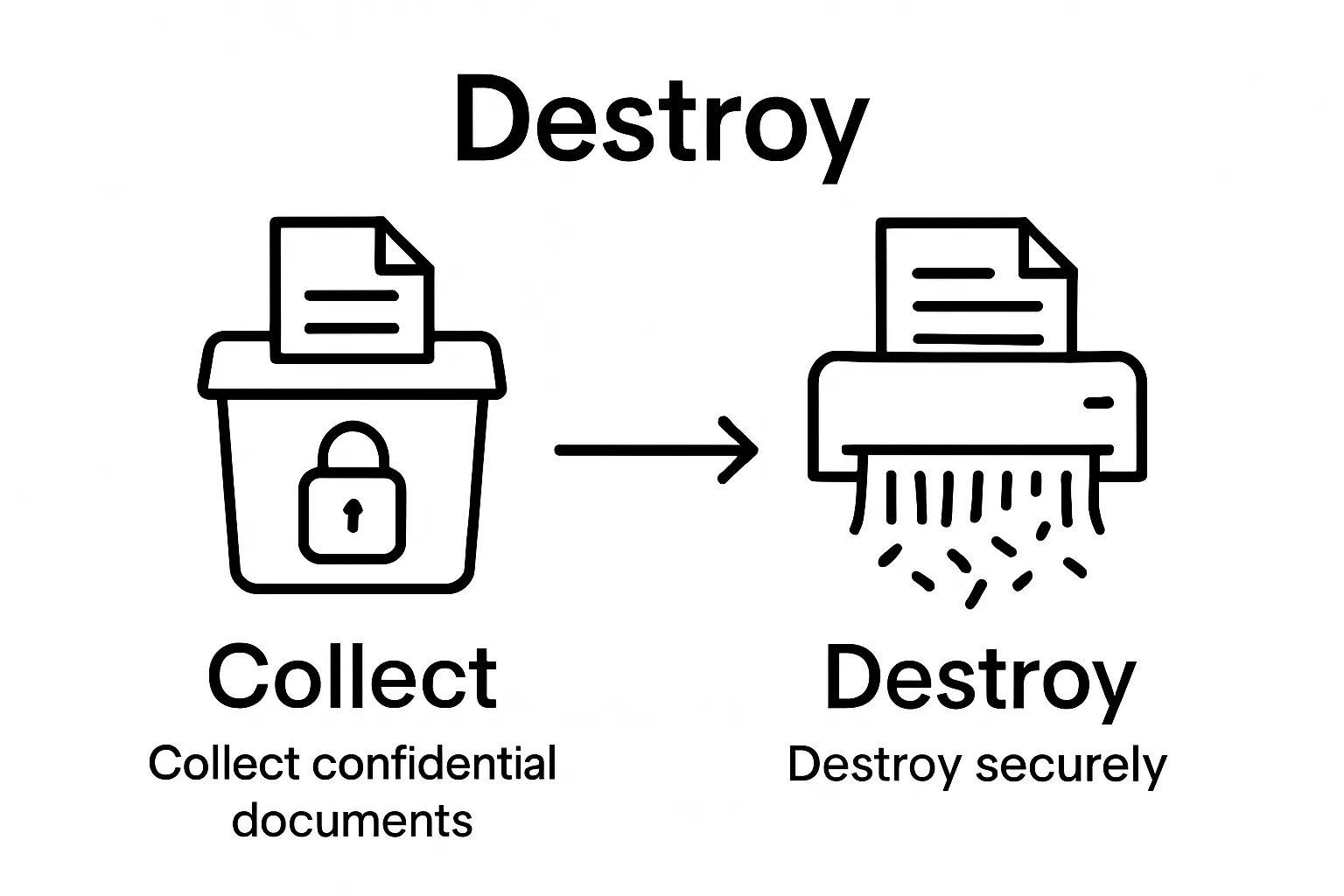
Infographic shows locked bin collecting documents, arrow, then shredder destroying pages

  • Date of collection
  • Department of origin
  • Confidentiality level
  • Proposed destruction date
  • Staff member responsible for logging

Digital documentation can be equally complex. Ensure electronic files are securely backed up before physical destruction and consider using secure digital shredding software for comprehensive data elimination. This dual approach guarantees that both physical and digital traces of sensitive information are completely removed.

The ultimate goal of this organisational stage is creating a transparent, auditable process that provides complete visibility into your document destruction workflow. By establishing clear protocols and maintaining meticulous records, your organisation demonstrates commitment to data protection and regulatory compliance.

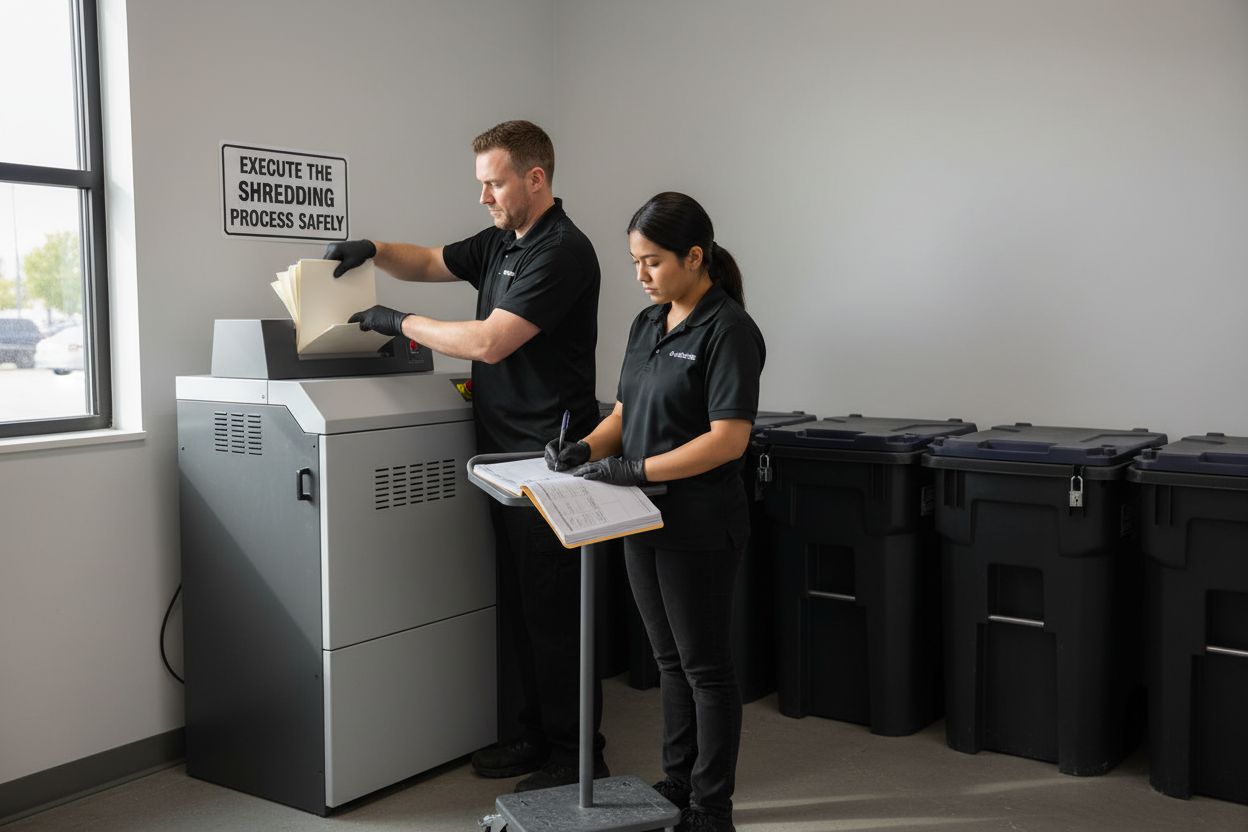
Step 4: Execute the Shredding Process Safely

Executing the confidential document shredding process requires precision, attention to detail, and a comprehensive understanding of safety protocols. Safety and security are paramount during this critical stage of document disposal. The physical act of shredding transforms sensitive materials into unreadable fragments, effectively eliminating potential data breaches.

Learn more about our secure shredding guidelines to complement your internal procedures. Begin by conducting a final document review before shredding, double-checking that all intended materials are appropriately categorised and ready for destruction. Position your shredding station in a controlled, restricted area with limited staff access to maintain confidentiality throughout the process.

According to Health and Safety Executive guidelines, staff must receive comprehensive training on equipment operation and safety protocols. Ensure all personnel understand the correct loading techniques, recognise potential equipment hazards, and know how to respond to mechanical interruptions. Wear appropriate personal protective equipment, including safety glasses and close-fitting clothing that cannot become entangled in shredding mechanisms.

When operating the shredder, follow a systematic approach to document feeding. Process documents in small, manageable batches to prevent machine overload and reduce the risk of jamming. Pay special attention to staples, paperclips, and other metal fasteners that might damage shredder blades. For digital media like hard drives or USB devices, use specialised destruction methods that guarantee complete data elimination beyond simple file deletion.

Key safety considerations during the shredding process include:

  • Maintain a clear workspace around the shredding equipment
  • Never attempt to clear paper jams while the machine is operational
  • Disconnect power before performing any maintenance
  • Keep children and unauthorised personnel away from the shredding area
  • Regularly inspect equipment for signs of mechanical wear

Once the shredding is complete, immediately transfer shredded materials to secure disposal containers. Implement a verification process where multiple staff members confirm the destruction of sensitive documents. This additional layer of accountability ensures comprehensive data protection and provides an audit trail for regulatory compliance.

safe document shredding

Step 5: Verify Complete Destruction of Documents

Verification represents the critical final stage in confidential document shredding, transforming a potentially vulnerable process into a robust security protocol. Absolute confirmation of document destruction is non-negotiable for maintaining organisational integrity and regulatory compliance.

Learn more about our secure document destruction processes to enhance your verification strategies. Comprehensive verification involves multiple layers of scrutiny, beginning with a meticulous visual inspection of shredded materials. Examine the output carefully, ensuring documents are reduced to particles small enough to prevent reconstruction. Professional-grade shredders should create fragments no larger than 5mm x 30mm, rendering document reconstruction virtually impossible.

According to the National Archives, maintaining a detailed audit trail is crucial for demonstrating due diligence. Develop a systematic documentation process that records every aspect of the destruction workflow. This documentation should include precise details such as date of destruction, volume of documents processed, department of origin, and the specific staff members involved in the shredding process.

Below is a checklist table summarising the key verification steps required to ensure complete and compliant destruction of confidential documents.

Verification Step Description Responsible Party
Physical Fragmentation Confirm documents are reduced to small, unreadable particles Shredding Operative
Security Standards Check Verify particle size meets required security specifications Shredding Supervisor
Documentation Completion Log date, volume, and department of destruction Administrative Staff
Personnel Confirmation Obtain a signed statement verifying completion of shredding process Supervising Officer
Certificate Retention Maintain official destruction certificates for regulatory compliance Records Manager

Digital verification methods can complement physical inspection. Consider implementing advanced tracking technologies that provide real-time documentation of document destruction. Some organisations use barcode scanning or digital logging systems that create an immutable record of each document’s journey from collection to complete destruction. These technological solutions offer an additional layer of transparency and accountability.

Key verification checkpoints include:

  • Confirming complete physical fragmentation of documents
  • Verifying particle size meets security standards
  • Documenting destruction date and process
  • Obtaining signed confirmation from responsible personnel
  • Retaining destruction certificates for regulatory compliance

Beyond physical verification, organisations must also consider the environmental disposal of shredded materials. Partner with certified waste management providers who can guarantee secure recycling or disposal of document fragments. This approach ensures that not only are documents destroyed, but their remnants are also handled with the same level of confidentiality and professionalism as the original materials.

Step 6: Dispose of Shredded Material Responsibly

The final stage of confidential document shredding focuses on responsible disposal, transforming potentially sensitive waste into an environmentally conscious process. Proper disposal is more than simply discarding shredded materials – it represents a critical component of comprehensive data protection and environmental stewardship.

Discover why secure document disposal matters for your business and understand the broader implications of responsible waste management. Begin by segregating shredded materials based on their composition. Paper fragments can be directed towards recycling streams, while materials containing sensitive digital components require specialised handling. Organisations operating in regions like Newcastle, Durham, and Sunderland should partner with certified waste management providers who understand local environmental regulations.

According to UK government guidelines, businesses must ensure all waste is handled by authorised carriers. This means selecting waste management partners who can provide comprehensive disposal certificates and demonstrate compliance with environmental protection standards. Secure transportation of shredded materials is equally important – use locked containers and track the waste from your premises to the final disposal point.

Environmental considerations extend beyond mere disposal. Consider implementing a closed-loop recycling approach where shredded confidential documents are transformed into new paper products or alternative materials. This strategy not only protects sensitive information but also contributes to sustainable waste management practices. Some advanced waste management services offer certificates of destruction, providing additional assurance that your materials have been processed securely and responsibly.

Key responsible disposal considerations include:

  • Selecting certified waste management partners
  • Obtaining comprehensive disposal documentation
  • Ensuring secure transportation of shredded materials
  • Prioritising recycling where possible
  • Maintaining a transparent audit trail

By adopting a holistic approach to document disposal, organisations demonstrate their commitment to data security, regulatory compliance, and environmental responsibility. The process of shredding and disposing of confidential materials becomes more than a routine task – it transforms into a strategic decision that protects both organisational interests and broader societal values.

Secure Your Confidential Document Shredding with Trusted Experts in the UK

Struggling to turn your document disposal knowledge into real protection for your business? Even with step-by-step guidance, many companies find that managing confidential waste can be overwhelming, putting privacy, legal compliance, and environmental responsibility at risk. The article outlined the rigorous processes needed, such as secure sorting, certified destruction, and responsible disposal—each demanding time, resources and constant vigilance to prevent costly data breaches.

Discover how simple it can be to eliminate these worries with Venture Waste’s confidential waste solutions. We take the guesswork out of secure shredding and ensure your business follows every best practice mentioned in the guide.

https://venturewaste.co.uk

Let our experts handle the secure disposal of your sensitive documents from assessment to environmentally responsible recycling. Visit Venture Waste Management now to book a compliant, fully auditable shredding service. You will gain peace of mind and immediate protection from regulatory pitfalls. Don’t wait until mistakes happen—secure your confidential waste solutions today.

Frequently Asked Questions

What is the first step in confidential document shredding?

The first step is to assess your document disposal needs by conducting a thorough inventory of all documents within your organisation. This helps to evaluate the varying levels of confidentiality and establish handling protocols that align with regulatory requirements.

How should I categorise documents for shredding?

Documents should be categorised based on their confidentiality level and retention requirements. Classify them into groups such as immediate destruction, temporary retention, and permanent archival, using clear visual aids like colour-coded folders.

What tools and equipment are necessary for effective document shredding?

Essential tools include a cross-cut or micro-cut industrial shredder, secure lockable collection containers, heavy-duty disposal bags, and personal protective equipment. It’s also advisable to have a tracking system to monitor the document destruction process.

How can I verify that my documents have been completely destroyed?

Verification involves performing a visual inspection of the shredded materials to ensure they meet required particle sizes. Additionally, maintain a detailed audit trail documenting the destruction process, including destruction dates and responsible personnel involved.

cost effective waste management

Understanding Cost Effective Waste Management Solutions

Businesses across the North East are searching for ways to cut costs without harming their green ambitions. The idea that waste management is always a financial drain simply does not add up. In fact, new research shows companies can cut waste management costs by up to 30 percent with smarter strategies. Hidden inside the bins and skips is a chance for firms to shrink expenses and lift their reputation at the same time.

Table of Contents

Quick Summary

Takeaway Explanation
Implement waste minimisation strategies Reducing waste at its source is key to cost effective management and sustainability.
Adopt data-driven management practices Use comprehensive data collection to track waste generation and identify improvement areas.
Integrate advanced sorting technologies Invest in equipment to enhance recycling and resource recovery, maximising the value obtained from waste.
Explore revenue from recyclables Selling recyclables can create new revenue streams, transforming waste into a potential income source.
Emphasise compliance with regulations Proactive waste management helps avoid penalties and builds a positive corporate reputation.

What is Cost Effective Waste Management?

Cost effective waste management represents a strategic approach to handling waste that balances environmental responsibility with economic efficiency. At its core, this concept involves minimising waste generation, optimising disposal processes, and reducing overall expenditure associated with waste handling.

Understanding the Core Principles

Cost effective waste management goes beyond simply reducing expenses. It encompasses a holistic methodology that considers the entire waste lifecycle from generation to final disposal. Businesses in Newcastle, Sunderland, and other North East industrial centres are increasingly recognising that smart waste management can simultaneously decrease environmental impact and reduce operational costs.

The fundamental principles include:

  • Waste Minimisation: Reducing waste generation at the source
  • Resource Recovery: Extracting maximum value from waste materials
  • Efficient Disposal: Selecting the most economical and environmentally responsible disposal methods

Economic and Environmental Benefits

Businesses implementing cost effective waste management strategies can realise significant advantages. Practical strategies for waste reduction demonstrate how organisations can transform waste from a financial burden into a potential resource. According to research from WRAP UK, companies can reduce waste management costs by up to 30% through strategic planning and innovative approaches.

By integrating advanced sorting techniques, exploring recycling opportunities, and investing in efficient waste handling technologies, organisations can create a more sustainable and financially prudent waste management framework.

The following table summarises the main financial and environmental benefits outlined in the article, highlighting how cost effective waste management strategies create value for businesses.

Benefit Explanation
Reduced Disposal Costs Minimising waste volume directly leads to lower removal expenses
Lower Raw Material Expenditure Efficient resource recovery decreases the need for new material purchases
Revenue from Selling Recyclables Generating additional income by selling recyclable materials
Avoidance of Environmental Fines Proactive compliance reduces risk of penalties and legal issues
Enhanced Sustainability Credentials Demonstrates environmental responsibility to customers, investors, and regulators

Why Cost Effective Waste Management Matters for Businesses

Cost effective waste management has emerged as a critical strategic priority for businesses across various sectors, transcending traditional environmental considerations to become a fundamental aspect of financial and operational efficiency.

Financial Implications and Cost Savings

Businesses in the North East, from manufacturing facilities in Sunderland to tech companies in Newcastle, are discovering that intelligent waste management can significantly impact their bottom line. How UK Businesses Can Save Money on Waste Management in 2025 highlights the potential for substantial financial benefits through strategic waste reduction.

Key financial advantages include:

  • Reduced Disposal Costs: Minimising waste volume directly decreases waste removal expenses
  • Lower Raw Material Expenditure: Efficient resource recovery reduces the need for new material purchases
  • Potential Revenue Generation: Selling recyclable materials can create additional income streams

Regulatory Compliance and Reputation Management

Modern businesses face increasing environmental regulations and stakeholder expectations. According to research from the Environment Agency, companies that proactively manage waste can avoid significant penalties and enhance their corporate reputation.

Beyond financial considerations, cost effective waste management demonstrates a commitment to sustainable practices. This approach not only mitigates environmental risks but also positions businesses as responsible corporate citizens, potentially attracting environmentally conscious customers and investors.

By integrating comprehensive waste management strategies, organisations can transform what was once considered an operational expense into a strategic opportunity for innovation, efficiency, and long term sustainability.

Core Principles of Cost Effective Waste Management

Cost effective waste management is built upon a comprehensive framework of strategic principles that enable organisations to transform waste from a financial burden into a potential resource. These principles go beyond simple disposal strategies and encompass a holistic approach to resource utilisation and environmental responsibility.

Waste Hierarchy and Strategic Prioritisation

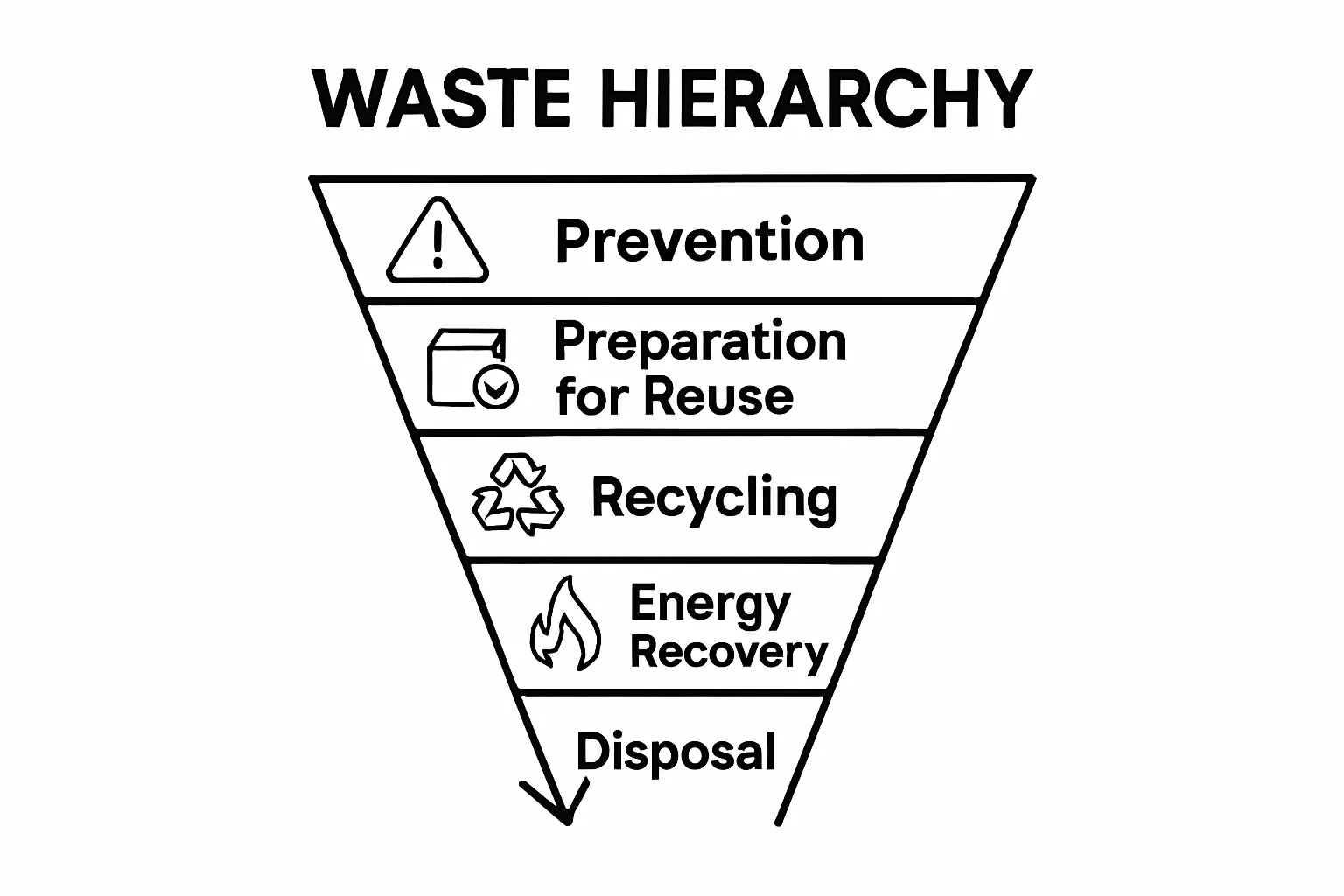
Effective Waste Minimisation Strategies for UK Businesses 2025 emphasises the critical importance of understanding the waste hierarchy. This principle ranks waste management options from most to least environmentally preferred, guiding businesses towards more sustainable practices.

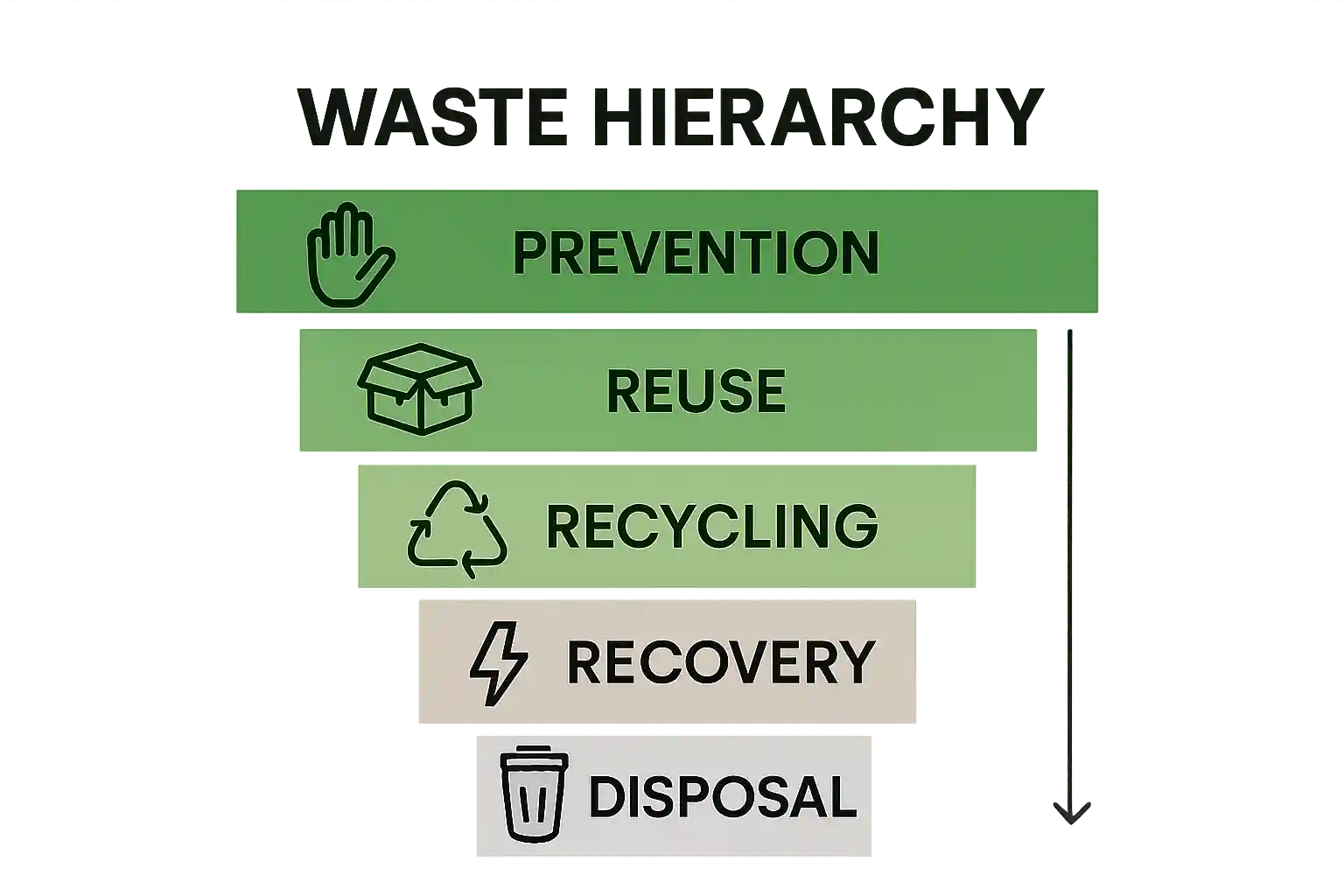
The waste hierarchy prioritises actions in the following order:

To help distinguish the various options within the waste hierarchy, the table below provides an overview of each stage and its role in cost effective waste management.

Stage Description Environmental Preference
Prevention Reducing waste at its source before it is created Most Preferred
Reuse Using items again for the same or new purposes 2
Recycling Processing waste into new materials or products 3
Recovery Extracting energy from waste that cannot be recycled 4
Disposal Final and least desirable option; landfill or incineration Least Preferred

Waste hierarchy visual with five coloured levels and icons

  • Prevention: Reducing waste generation at the source
  • Reuse: Finding alternative uses for materials before disposal
  • Recycling: Converting waste materials into new products
  • Recovery: Extracting energy from waste that cannot be recycled
  • Disposal: The final and least preferred option for waste management

Data-Driven Waste Management Approach

According to research from the Waste and Resources Action Programme (WRAP), successful cost effective waste management relies heavily on comprehensive data collection and analysis. Businesses must develop robust monitoring systems that track waste generation, identify inefficiencies, and measure the financial and environmental impact of their waste management strategies.

This data-driven approach allows organisations to:

  • Identify specific waste streams and their associated costs
  • Develop targeted reduction and recycling strategies
  • Measure the economic and environmental benefits of waste management initiatives

By embracing these core principles, businesses can create a more sustainable, efficient, and financially responsible approach to waste management that delivers tangible benefits for both the organisation and the environment.

How Cost Effective Waste Management Works in Practice

Implementing cost effective waste management requires a strategic and systematic approach that transforms theoretical principles into tangible operational practices. This involves creating comprehensive frameworks that integrate technological solutions, organisational processes, and environmental considerations.

Waste Auditing and Analysis

The practical implementation begins with a thorough waste audit. Businesses in industrial regions like Newcastle and Sunderland must first understand their current waste generation patterns, identifying specific types and volumes of waste across different operational areas. Practical approaches to saving money on waste management demonstrate how detailed analysis can reveal significant opportunities for improvement.

Key components of a comprehensive waste audit include:

  • Quantitative Measurement: Precisely tracking waste volumes and types
  • Cost Tracking: Calculating current waste management expenditures
  • Waste Stream Mapping: Identifying origin points and potential reduction opportunities

Technological and Operational Interventions

According to research from the Department for Environment, Food and Rural Affairs (DEFRA), successful waste management requires a multi-faceted intervention strategy. This involves implementing technologies and processes that enable more efficient resource utilisation.

Practical interventions might include:

  • Installing advanced sorting and segregation equipment
  • Developing internal recycling programmes
  • Investing in compaction and processing technologies
  • Creating closed-loop waste management systems

By systematically applying these principles, organisations can transform waste management from a purely operational cost centre into a strategic opportunity for resource efficiency, environmental responsibility, and potential financial gain.

Case Studies of Successful Cost Effective Waste Management

Real-world examples demonstrate the transformative potential of strategic waste management across various industries. These case studies illustrate how organisations can achieve significant financial and environmental benefits through innovative approaches to waste reduction and resource recovery.

Manufacturing Sector Innovations

In the North East, manufacturing businesses have pioneered remarkable waste management strategies. Practical waste reduction strategies for UK businesses highlight how targeted interventions can drive substantial improvements.

A notable example from a manufacturing facility in Newcastle revealed:

  • Initial Waste Audit: Identified multiple inefficient waste streams
  • Implementation Strategy: Introduced advanced sorting technologies
  • Result: 40% reduction in waste disposal costs within 18 months

Hospitality and Retail Sector Transformations

According to research from WRAP UK, the hospitality sector has made significant strides in waste management. A prominent hotel chain in the North East demonstrated exceptional results by implementing comprehensive waste management protocols.

Key achievements included:

  • Developing comprehensive food waste recycling programmes
  • Implementing digital tracking systems for waste generation
  • Partnering with local agricultural businesses to convert food waste into compost
  • Reducing overall waste disposal costs by approximately 35%

These case studies underscore the potential for businesses to transform waste management from a cost centre into a strategic opportunity for environmental and economic innovation.

resource recovery waste

Ready to Unlock True Cost Savings with Smarter Waste Management?

Businesses across the UK are searching for effective ways to cut costs while maintaining compliance and environmental responsibility. The article highlighted the struggle to minimise waste, control disposal expenses, and comply with ever-changing regulations. If you are concerned about rising waste handling fees or are unsure how to optimise your resource recovery, now is the ideal time to take control. Discover how the Waste Collection Network in the UK for Businesses bridges these gaps and delivers tailor-made solutions for commercial and domestic needs.

https://venturewaste.co.uk

Choose a proven partner that handles every detail from general waste collection to secure document destruction. Venture Waste will help you create measurable savings and sustainable results. Visit Venture Waste Management today to discover our straightforward booking process and see how you can benefit from cost effective waste management without compromising compliance or service quality. Book your waste solution now and turn a challenge into your next competitive edge.

Frequently Asked Questions

What is cost effective waste management?

Cost effective waste management is a strategic approach that balances environmental responsibility with economic efficiency by minimising waste generation, optimising disposal processes, and reducing costs associated with waste handling.

Why is cost effective waste management important for businesses?

It is important as it can lead to significant financial savings, ensure regulatory compliance, enhance corporate reputation, and demonstrate a commitment to sustainable practices, turning waste management from a cost burden into a strategic opportunity.

What are the core principles of cost effective waste management?

The core principles include waste minimisation, resource recovery, efficient disposal methods, waste hierarchy prioritisation, and a data-driven management approach to track and analyse waste generation and costs.

How can businesses implement cost effective waste management strategies?

Businesses can implement these strategies through comprehensive waste audits, adopting advanced sorting and recycling technologies, creating internal recycling programmes, and investing in efficient resource utilisation practices.

waste management legislation update

Understanding Waste Management Legislation Update 2025

Waste management legislation shapes every step from bin to landfill and yet many businesses underestimate its reach. Over 300,000 waste-related prosecutions have taken place in the past decade across the UK. Most firms expect a few forms or inspections, but miss the real story. The biggest change is how these regulations force companies to see waste as a resource rather than just a problem to get rid of.

Table of Contents

Quick Summary

Takeaway Explanation
Waste management legislation is essential for businesses. Regulations ensure proper handling of waste, protecting public health and the environment.
Compliance creates operational transformation opportunities. Businesses must adapt strategies to meet legislative standards, promoting sustainability and efficiency.
Waste hierarchy prioritises waste management practices. Emphasises reducing, reusing, and recycling over disposal, aiding environmental conservation.
Non-compliance can lead to significant penalties. Businesses face financial repercussions and potential legal actions for failing to adhere to regulations.
Waste classification enhances accountability and tracking. Proper documentation of waste types ensures appropriate handling, reducing environmental risks.

What is Waste Management Legislation?

Waste management legislation represents a complex framework of legal regulations designed to control, monitor, and standardise how waste is handled across various industries in the United Kingdom. Comprehensive guidelines from the UK government establish critical standards for waste production, transportation, treatment, and disposal, ensuring environmental protection and public health safety.

The Purpose and Scope of Waste Management Laws

These legislative frameworks serve multiple crucial objectives. They aim to:

  • Minimise environmental contamination
  • Protect human health and ecological systems
  • Create standardised waste management protocols
  • Establish clear accountability for waste producers
  • Promote sustainable waste handling practices

Waste management legislation applies across diverse sectors including manufacturing, healthcare, construction, retail, and service industries. These regulations mandate specific responsibilities for businesses regarding waste generation, segregation, transportation, and ultimate disposal.

The UK’s waste management legislative landscape is primarily structured around several key regulations, including the Environmental Protection Act 1990 and Waste (England and Wales) Regulations 2011. These laws outline comprehensive requirements for waste producers, carriers, and processors.

Businesses must adhere to strict guidelines that cover waste classification, tracking, reporting, and environmentally responsible disposal methods.

Below is an overview of the main components and mechanisms of waste management legislation in the UK, providing a clear breakdown for better understanding.

Component / Mechanism Description
Mandatory Waste Registration Businesses must register as waste producers and obtain relevant licences for waste handling.
Documentation of Waste Movements Detailed records of all waste movements are required to ensure traceability and compliance.
Waste Classification All waste must be categorised to determine appropriate handling, treatment, and disposal methods.
Waste Hierarchy Adherence Regulations prioritise prevention, reuse, recycling, energy recovery, with disposal as the last resort.
Environmental Impact Assessments Regular assessments must be undertaken to evaluate the potential effects of waste on the environment.
Compliance Audits and Inspections Periodic audits and inspections are conducted by authorities to ensure legal compliance.
Enforcement and Penalties Non-compliance may lead to financial penalties, legal action, or suspension of waste management permits.

Key legal components include mandatory waste registration, proper documentation of waste movements, adherence to disposal hierarchy principles (prevention, preparation for reuse, recycling, energy recovery, and disposal), and implementing robust waste management systems that minimise environmental impact.

Why Waste Management Legislation Matters

Waste management legislation plays a pivotal role in protecting the environment, public health, and economic sustainability. Comprehensive government research highlights the critical importance of structured waste regulation in creating a responsible and efficient waste management ecosystem.

Environmental Protection and Sustainability

These legislative frameworks are fundamental in addressing significant environmental challenges. By implementing strict waste management regulations, the UK aims to:

  • Reduce pollution and contamination of natural ecosystems
  • Minimise greenhouse gas emissions from improper waste disposal
  • Promote circular economy principles
  • Protect biodiversity and natural habitats
  • Conserve finite natural resources

Waste management legislation ensures that businesses and organisations adopt sustainable practices, moving beyond traditional disposal methods towards more environmentally conscious waste handling strategies.

Economic and Social Implications

Beyond environmental benefits, waste management legislation drives significant economic and social advantages. Explore our comprehensive waste management business guide to understand the broader implications.

Regulatory frameworks create economic opportunities by:

  • Encouraging innovation in waste processing technologies
  • Creating new job markets in recycling and waste management sectors
  • Reducing long-term environmental cleanup costs
  • Promoting resource efficiency and cost-effective waste strategies

Moreover, these regulations protect public health by ensuring proper handling of potentially hazardous materials, preventing contamination of water sources, soil, and air, and reducing risks associated with improper waste disposal.

How Waste Management Regulations Work

Waste management regulations function as a comprehensive governance system designed to control and monitor waste generation, handling, and disposal across various sectors. The Environmental Permitting Regulations establish a structured framework that ensures businesses comply with stringent environmental protection standards.

Regulatory Compliance Mechanisms

The operational structure of waste management regulations involves multiple interconnected components that work together to create a robust waste control system:

  • Mandatory registration and licensing for waste producers
  • Regular environmental impact assessments
  • Strict documentation and tracking requirements
  • Comprehensive waste classification systems
  • Periodic compliance audits and inspections

Businesses must navigate these requirements carefully, demonstrating their commitment to responsible waste management through detailed record-keeping and adherence to prescribed waste handling protocols.

Enforcement and Accountability

Regulatory bodies employ various mechanisms to ensure compliance and penalise violations. Learn more about waste management compliance steps to understand the intricate process.

Key enforcement strategies include:

  • Substantial financial penalties for non-compliance
  • Potential legal actions against repeat offenders
  • Suspension or revocation of waste management permits
  • Mandatory corrective action plans
  • Public reporting of environmental violations

These regulations create a comprehensive system that encourages businesses to adopt environmentally responsible waste management practices, balancing economic considerations with ecological preservation. By establishing clear guidelines and potential consequences, waste management regulations drive continuous improvement in how organisations handle and dispose of their waste.

Key Concepts in Waste Management Legislation

Waste management legislation encompasses several fundamental principles that guide environmental protection and sustainable waste handling practices. Research from the Department for Environment, Food and Rural Affairs highlights the critical interconnected concepts that form the backbone of modern waste management regulations.

Waste Hierarchy and Prioritisation

The waste hierarchy represents a pivotal concept in waste management legislation, establishing a clear priority system for waste handling:

  • Prevention of waste generation
  • Preparation for reuse
  • Recycling
  • Energy recovery
  • Disposal as the final option

This hierarchical approach encourages businesses to minimise waste production and prioritise more sustainable management strategies.

The table below summarises the key priorities of the waste hierarchy as outlined by UK legislation, highlighting their order and main objectives.

Priority Level Description Primary Objective
1. Prevention Avoiding the creation of waste at source Minimise waste generation
2. Preparation for Reuse Cleaning or repairing to allow products to be reused Extend product lifespan
3. Recycling Processing waste into new materials or products Recover resources from waste
4. Energy Recovery Converting waste into usable energy (e.g., electricity) Utilise waste for energy production
5. Disposal Reserved for waste that cannot be reused or recycled Safe final disposal with minimal impact

Five-step waste hierarchy pyramid infographic By implementing these principles, organisations can significantly reduce their environmental impact and move towards more circular economic models.
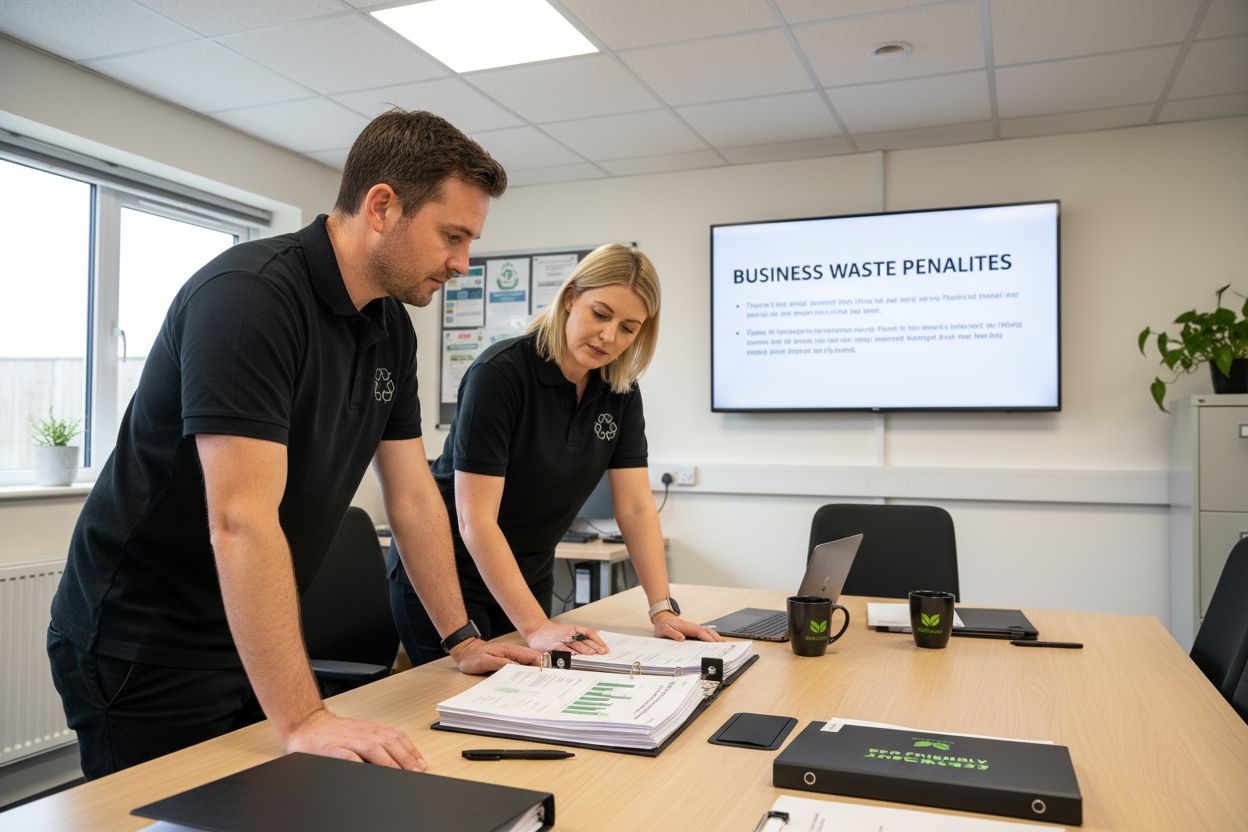
Waste Classification and Tracking

Precise waste classification is another critical concept in waste management legislation. Find out more about waste disposal regulations to understand the nuanced approach to waste management.

Key classification principles include:

  • Identifying waste types and potential environmental risks
  • Establishing clear documentation requirements
  • Implementing robust tracking mechanisms
  • Determining appropriate handling and disposal methods
  • Ensuring transparency in waste management processes

These classification systems enable regulatory bodies to monitor waste streams effectively, ensuring that different types of waste receive appropriate treatment and minimising potential environmental contamination. By mandating comprehensive documentation and tracking, legislation creates accountability and promotes responsible waste management across various industrial sectors.

The Impact of Legislation on Businesses and Practices

Waste management legislation fundamentally transforms how businesses approach resource utilisation and environmental responsibility. Resources and Waste Strategy for England demonstrates the comprehensive approach to reshaping business practices through regulatory frameworks.

Operational and Strategic Transformation

Businesses across various sectors must fundamentally redesign their operational strategies to comply with evolving waste management regulations:

  • Implementing comprehensive waste reduction programmes
  • Redesigning product lifecycle and packaging
  • Investing in sustainable technology and infrastructure
  • Developing internal waste management training
  • Creating circular economy business models

These changes require significant investment and strategic planning, compelling organisations to view waste not as a disposal challenge but as a potential resource for innovation and efficiency.

Financial and Competitive Implications

Understand how to avoid potential business waste penalties to mitigate regulatory risks and financial impacts.

The legislative landscape creates both challenges and opportunities for businesses:

  • Potential financial penalties for non-compliance
  • Tax incentives for sustainable waste management
  • Competitive advantages through environmental leadership
  • Enhanced corporate reputation and stakeholder trust
  • Access to green investment and funding opportunities

Companies that proactively adapt to these regulatory changes can transform compliance from a cost centre into a strategic advantage, positioning themselves as environmentally responsible market leaders.

waste penalties business compliance

Stay Ahead with Compliant Waste Solutions for 2025

Feeling uncertain about the latest updates in waste management legislation for 2025? Navigating new legal requirements can be overwhelming for any business, especially when compliance is crucial and penalties are at stake. Many organisations now face the challenge of adjusting to revised waste classification, tracking, and disposal protocols. The updated regulations demand not only awareness but also immediate implementation to avoid fines and safeguard your reputation. Our Waste Collection Process in the UK for Businesses 2025 page breaks down every step, helping you align your practices seamlessly with the new rules.

https://venturewaste.co.uk

Act before non-compliance puts your business at risk. Take the smart route towards full legal alignment and responsible waste handling today. Visit Venture Waste Management now to discover easy booking, ongoing compliance support, and comprehensive waste solutions designed for UK businesses. Confident progress is just a click away—plan the next step and secure your compliance for 2025.

Frequently Asked Questions

What is the purpose of waste management legislation?

Waste management legislation aims to minimise environmental contamination, protect human health and ecosystems, standardise waste management protocols, ensure accountability for waste producers, and promote sustainable waste handling practices.

What are the key components of waste management regulations in the UK?

Key components include mandatory waste registration, documentation of waste movements, strict guidelines for waste classification, periodic compliance audits, and adherence to a waste disposal hierarchy that prioritises prevention, reuse, recycling, energy recovery, and disposal.

How do businesses ensure compliance with waste management legislation?

Businesses ensure compliance by registering as waste producers, conducting regular environmental assessments, maintaining detailed records of waste management practices, and adhering to the classification and tracking requirements set out in the regulations.

What are the economic implications of waste management legislation for businesses?

Waste management legislation can create economic opportunities by encouraging innovation in waste processing technologies, creating new job markets in recycling and waste management, and promoting resource efficiency, which can lead to cost-effective waste strategies.

waste collection efficiency

Understanding Efficiency in Waste Collection Practices

Waste collection is often seen as a routine, unremarkable part of keeping cities like Newcastle and Durham clean. Yet studies reveal that smart routing can cut fuel usage by up to 30 percent, completely reshaping what efficient waste management really means. The real surprise is that focusing on these hidden efficiency gains does more than just save money—it unlocks genuine environmental benefits and a sharper competitive edge for businesses.

Table of Contents

Quick Summary

Takeaway Explanation
Efficiency reduces waste collection costs Streamlining operations minimises expenses on fuel and maintenance for vehicles.
Implement advanced technology for routing Using smart algorithms and GPS can optimise collection routes, saving time and costs.
Measure performance continuously Regularly track metrics like waste collected per vehicle to refine strategies and improve efficiency.
Stay compliant to avoid penalties Efficient waste management prevents regulatory issues and reduces the risk of financial fines.
Prioritise recycling for revenue Effective waste sorting increases the potential income from recyclable materials, benefiting businesses financially.

What is Efficiency in Waste Collection?

Efficiency in waste collection represents a strategic approach to managing municipal and commercial waste disposal processes with maximum productivity and minimal resource expenditure. According to research from the OECD, this concept involves optimising the entire waste management cycle to reduce operational costs while maintaining high-quality service delivery.

Understanding Core Components

Waste collection efficiency encompasses several critical dimensions that organisations must consider. These include:

  • Resource Utilisation: Minimising fuel consumption and vehicle operating expenses
  • Route Optimisation: Planning collection routes that reduce travel distances and time
  • Labor Management: Ensuring workforce productivity and effective task allocation

In regions like Newcastle and Durham, where urban waste management challenges are complex, these efficiency strategies become particularly crucial. Local authorities and waste management companies must continuously adapt their approaches to handle increasing waste volumes while maintaining environmental standards.

Performance Measurement Techniques

Measuring waste collection efficiency involves comprehensive analytical approaches.

Visual comparison of key waste collection efficiency metrics Research evaluating municipal waste systems suggests organisations should track multiple performance indicators such as:

  • Total waste collected per vehicle
  • Operational costs per tonne of waste
  • Time spent on collection routes
  • Fuel consumption rates
  • Percentage of waste successfully recycled

By implementing sophisticated tracking mechanisms, waste management services like our UK wide general waste collection can continuously improve operational effectiveness.

The following table summarises key performance indicators used to measure waste collection efficiency, providing a concise overview of each metric and its focus.

Performance Indicator Description
Total waste collected per vehicle Measures productivity, assessing collection efficiency
Operational costs per tonne of waste Examines cost-effectiveness of collection and transport
Time spent on collection routes Evaluates route planning and workforce efficiency
Fuel consumption rates Tracks resource usage and environmental impact
Percentage of waste successfully recycled Assesses effectiveness of sorting and sustainability efforts
This approach not only reduces environmental impact but also provides significant economic advantages for businesses and municipalities seeking streamlined waste management solutions.

Why Efficiency in Waste Collection Matters for Businesses

Business waste management is not merely an operational necessity but a strategic opportunity for organisational improvement and financial optimization. Research from McKinsey & Company highlights that efficient waste collection represents a critical pathway for businesses to reduce operational costs and enhance environmental sustainability.

Financial Implications of Waste Management

Inefficient waste collection directly impacts a company’s bottom line. Businesses that fail to streamline their waste management processes can experience significant financial drawbacks:

  • Unnecessary Transportation Costs: Poorly planned collection routes increase fuel consumption and vehicle maintenance expenses
  • Regulatory Non-Compliance Penalties: Ineffective waste management can result in substantial legal fines
  • Missed Recycling Opportunities: Lack of efficient sorting and collection reduces potential revenue from recyclable materials

In industrial regions like Newcastle and Durham, where manufacturing and logistics sectors are prominent, waste collection efficiency becomes even more critical for maintaining competitive economic advantages.

Environmental and Reputational Benefits

Modern consumers and stakeholders increasingly evaluate businesses based on their environmental responsibility. Environmental Protection UK research indicates that companies demonstrating robust waste management practices can significantly enhance their corporate reputation.

Businesses that prioritize efficient waste collection not only reduce their carbon footprint but also signal a commitment to sustainable practices. This approach can lead to:

  • Improved brand perception
  • Potential tax incentives for green initiatives

By understanding how UK businesses can save money on waste management, organisations can transform waste collection from a mundane operational task into a strategic advantage that delivers tangible economic and environmental benefits.

How Efficiency in Waste Collection Works in Practice

Practical waste collection efficiency transforms theoretical concepts into tangible operational strategies that businesses can implement immediately. According to research from the Waste and Resources Action Programme, successful implementation requires a multifaceted approach combining technological innovation, strategic planning, and continuous performance monitoring.

Technological Integration and Route Optimization

Modern waste collection efficiency relies heavily on advanced technological solutions.

Smart routing algorithms and GPS tracking systems enable waste management companies to:

  • Minimise fuel consumption by calculating shortest collection routes
  • Reduce vehicle wear and tear through precise navigation
  • Real-time track and adjust collection schedules dynamically

In regions like Newcastle and Durham, where urban landscapes present complex logistical challenges, these technological interventions become particularly crucial. Local waste management services can dramatically improve operational performance by leveraging data-driven insights and intelligent route planning.

Performance Monitoring and Continuous Improvement

Implementing efficiency in waste collection is not a one-time event but a continuous process of measurement and refinement. Key performance indicators help organisations understand and improve their waste management strategies:

  • Waste-to-Vehicle Ratio: Measuring total waste collected per vehicle
  • Collection Time Efficiency: Tracking time spent on collection routes
  • Operational Cost Analysis: Evaluating expenses against waste management outcomes

Businesses seeking comprehensive waste management solutions can explore how the UK waste collection network serves businesses, understanding that efficiency is about creating sustainable, adaptable systems that evolve with technological and environmental requirements. By embracing these advanced approaches, organisations can transform waste collection from a routine operational task into a strategic advantage that delivers both economic and environmental benefits.

Key Concepts of Effective Waste Management

Effective waste management transcends simple disposal, representing a comprehensive approach to resource utilisation and environmental stewardship. According to the Department for Environment, Food & Rural Affairs (DEFRA), successful waste management requires a strategic framework that addresses collection, processing, and sustainable disposal.

Waste Hierarchy and Resource Prioritisation

The fundamental principle of modern waste management is the waste hierarchy, which establishes a priority sequence for managing waste materials:

  • Prevention: Reducing waste generation at the source
  • Reuse: Finding alternative uses for materials before disposal
  • Recycling: Converting waste into new products
  • Recovery: Extracting energy from non-recyclable waste
  • Disposal: Final waste management option when no other alternatives exist

In industrial areas like Newcastle and Durham, where manufacturing and logistics generate significant waste streams, understanding and implementing this hierarchy becomes crucial for sustainable operations.

This table outlines the main stages of the waste hierarchy, highlighting the definition and primary aim of each stage within the modern waste management framework.

Stage Definition Primary Aim
Prevention Reducing waste generation at the source Minimise the amount of waste created
Reuse Finding alternative uses for materials before disposal Extend product lifespan and reduce waste
Recycling Converting waste into new products Recover materials for further use
Recovery Extracting energy from non-recyclable waste Harness value before final disposal
Disposal Final management when no other alternatives exist Safely eliminate unusable waste

Integrated Waste Management Systems

Modern waste management requires holistic, integrated approaches that combine technological innovation with strategic planning. Key components of these systems include:

  • Advanced sorting technologies
  • Real-time waste tracking systems
  • Data-driven decision-making processes
  • Collaborative partnerships between businesses, local authorities, and waste management providers

For businesses seeking comprehensive waste management strategies, understanding these integrated systems is paramount. By adopting a proactive, systematic approach, organisations can transform waste from a potential environmental liability into a resource with potential economic and ecological value.

waste management office

Real-World Examples of Efficient Waste Collection Systems

Efficient waste collection systems represent sophisticated approaches that transform traditional waste management practices across various sectors. Research from the Chartered Institution of Wastes Management demonstrates how innovative strategies can dramatically improve operational performance and environmental sustainability.

Municipal Waste Management Innovations

Several UK cities have developed groundbreaking waste collection models that serve as benchmarks for efficiency. In regions like Newcastle and Durham, local authorities have implemented advanced strategies:

  • Smart Bin Technology: Sensors that monitor waste levels and optimize collection routes
  • Automated Sorting Systems: Reducing manual labour and increasing recycling accuracy
  • Geospatial Tracking: Real-time monitoring of waste collection vehicles

These technological interventions enable municipalities to reduce operational costs while improving environmental outcomes, demonstrating how data-driven approaches can revolutionize waste management practices.

Industrial Sector Waste Collection Strategies

Manufacturing and industrial sectors have developed sophisticated waste management systems that prioritize both economic and environmental considerations. Key approaches include:

  • Integrated waste stream analysis
  • Circular economy principles
  • Collaboration between waste producers and recycling facilities
  • Advanced material recovery techniques

Understanding the differences between general waste and recycling becomes crucial for businesses seeking to implement these advanced waste collection systems. By adopting comprehensive, technology-enabled approaches, organisations can transform waste from a cost centre into a potential resource, driving both economic efficiency and environmental responsibility.

Unlock Real Efficiency in Your Waste Collection

Are you searching for ways to cut unnecessary costs and streamline your waste management processes? The article you just read highlights the critical importance of route optimisation, labour management, and technology-driven solutions. Inefficiency in these areas results in higher operational expenses, environmental impact, and lost recycling opportunities. With How the Waste Collection Network in UK Serves Businesses in 2025, Venture Waste tackles these challenges directly, offering a network-driven approach to smarter, more sustainable waste management for both businesses and households.

https://venturewaste.co.uk

Transform complex waste collection into a seamless experience. Book your waste collection in three simple steps and join organisations already improving efficiency, compliance, and sustainability. Act today by visiting Venture Waste Management’s website or explore the full Waste Collection Process for UK Businesses. Make waste collection work for you now.

Frequently Asked Questions

What does efficiency in waste collection mean?

Efficiency in waste collection refers to optimising waste management processes to improve productivity and reduce resource expenditure, ensuring high-quality service delivery while minimising costs.

How can businesses measure waste collection efficiency?

Businesses can measure waste collection efficiency by tracking performance indicators such as total waste collected per vehicle, operational costs per tonne, time spent on collection routes, fuel consumption rates, and recycling rates.

What are the financial implications of inefficient waste management?

Inefficient waste management can lead to unnecessary transportation costs, regulatory fines, and missed opportunities for recycling revenue, which can negatively impact a company’s bottom line.

What are some practical strategies for improving waste collection efficiency?

Practical strategies for improving waste collection efficiency include using smart routing algorithms, integrating GPS tracking systems, establishing key performance indicators, and continuously monitoring operational performance.

confidential paper recycling

Master Confidential Paper Recycling for Businesses

Secure document disposal is more than just shredding a few sheets at the office. Administrative departments, finance, HR, and legal teams together generate the largest volume of confidential paperwork in any business environment. It sounds like a logistical nightmare to sort and recycle it all safely. Yet, most companies overlook one fact. The key to protecting sensitive information and meeting strict regulations often starts with a simple yet thorough assessment of your everyday paper waste. The process is easier and more reliable than you might think.

Table of Contents

Quick Summary

Key Point Explanation
1. Assess Your Paper Waste Conduct a detailed audit of all paper documents to understand the volume, type, and sensitivity of paper materials in your organisation.
2. Choose a Secure Recycling Service Select a recycling partner with certifications such as BS7858 and ISO 9001 to ensure information security and compliance with regulations.
3. Prepare Documents for Recycling Segregate confidential materials, remove non-paper elements, and establish secure collection points to protect sensitive information before disposal.
4. Schedule Collections Efficiently Establish a clear collection schedule that aligns with your document generation patterns, ensuring secure transport and proper documentation.
5. Verify Disposal Methods Request and review destruction certificates to ensure compliance with data protection regulations and maintain a clear audit trail for disposed documents.

Step 1: Assess Your Current Paper Waste

Confidential paper recycling begins with a comprehensive assessment of your current waste streams, a critical first step for businesses across Newcastle, Durham, and the broader North East region. Understanding your paper waste profile enables targeted, efficient recycling strategies that protect sensitive information while reducing environmental impact.

To conduct a thorough waste assessment, start by performing a detailed audit of all paper documents generated within your organisation. This process involves meticulously tracking the volume, type, and sensitivity of paper materials across different departments. Administrative offices, finance teams, human resources, and legal departments typically produce the most confidential documentation requiring secure handling.

Map out your paper waste generation by collecting data on monthly document volumes, identifying which materials contain sensitive information. Consider consulting our guide on how to recycle printer’s waste for additional insights into managing printed materials. Pay special attention to documents containing personal identifiable information, financial records, client details, and internal strategic communications.

Your assessment should categorise paper waste into distinct groups:

  • Confidential documents requiring secure destruction
  • General office paper suitable for standard recycling
  • Sensitive materials needing specialised disposal protocols

Successful completion of this step means having a clear, documented understanding of your organisation’s paper waste composition, enabling more strategic recycling and information protection approaches. By systematically evaluating your current waste streams, you create a foundation for implementing robust confidential paper recycling practices that safeguard both your business’s sensitive information and environmental responsibilities.

Step 2: Choose a Secure Recycling Service

Selecting a secure recycling service represents a critical decision in your confidential paper recycling strategy, requiring careful evaluation of potential providers to ensure complete information protection and regulatory compliance. Businesses across Newcastle and the North East must prioritise services that demonstrate robust security protocols and comprehensive destruction capabilities.

Certification and compliance are paramount when choosing a confidential paper recycling partner. Look for providers holding recognised accreditations such as BS7858 and ISO 9001, which indicate rigorous security screening and quality management standards. These certifications signal a commitment to professional information handling and demonstrate the company’s capability to manage sensitive document destruction with the highest level of integrity.

When evaluating potential recycling services, request detailed information about their destruction processes. Seek providers offering secure on-site shredding or locked consignment services, which minimise the risk of information interception during transportation and disposal. Learn more about confidential waste management to understand the nuanced requirements of secure document handling.

Key criteria for selecting a confidential paper recycling service include:

  • Provision of secure, tamper-proof collection containers
  • Documented chain of custody for all collected materials
  • Transparent destruction reporting and certification
  • Compliance with Data Protection Act and GDPR regulations

Careful vendor selection transcends merely finding a recycling provider; it involves partnering with a trusted organisation that understands the intricate balance between environmental responsibility and information security. By thoroughly investigating potential services and their security credentials, businesses can develop a confidential paper recycling strategy that protects sensitive information while supporting sustainable waste management practices.

Successful completion of this step means identifying a recycling partner who can provide comprehensive, secure, and legally compliant document destruction services tailored to your specific organisational needs.

Step 3: Prepare Paper for Recycling

Preparing paper for confidential recycling requires a systematic approach that balances information security with environmental responsibility. Businesses must implement a strategic process that ensures sensitive documents are appropriately sorted, processed, and readied for secure destruction and recycling across Newcastle and the North East region.

Effective paper preparation begins with comprehensive document segregation. Create distinct collection streams for different types of confidential materials, distinguishing between highly sensitive documents requiring immediate secure destruction and standard office paper suitable for conventional recycling. This initial sorting prevents potential information breaches and streamlines the recycling workflow.

Implement a clear organisational protocol for document handling. Remove plastic elements like paperclips, staples, and plastic covers from documents before recycling. While small metal fasteners can typically remain, larger plastic components must be manually separated to ensure recycling quality. Explore our guide on cardboard recycling practices for additional insights into effective waste management strategies.

Establish secure collection points within your organisation where confidential documents can be deposited safely. These collection areas should feature lockable containers that prevent unauthorized access and maintain document integrity until secure collection. Critical considerations include controlling access, monitoring collection points, and maintaining a clear chain of custody.

Key preparation steps include:

  • Removing non-paper materials from documents
  • Segregating documents by sensitivity level
  • Using designated secure collection containers
  • Maintaining a log of collected materials

Successful document preparation protects sensitive information while facilitating efficient recycling processes. By implementing a structured approach to paper preparation, businesses can simultaneously address data protection requirements and environmental sustainability goals. The ultimate objective is creating a seamless, secure workflow that transforms potentially vulnerable paper waste into a responsible recycling opportunity.

prepare paper recycling

Step 4: Schedule Collection or Drop-off

Scheduling confidential paper recycling collection represents a critical junction in your waste management strategy, bridging the gap between careful preparation and secure disposal. Businesses across Newcastle and the broader North East region must approach this step with precision and strategic planning to ensure seamless, secure document handling.

Timing and coordination are paramount when arranging confidential paper recycling services. Contact your selected recycling provider to establish a collection schedule that aligns with your organisation’s specific needs and document generation patterns. Some businesses benefit from regular, scheduled collections, while others might require more flexible, on-demand services depending on their document volume and sensitivity.

When scheduling, provide your recycling partner with detailed information about the anticipated volume of confidential documents, special handling requirements, and any specific security protocols your organisation demands. Learn more about efficient waste collection scheduling to optimise your approach and ensure smooth logistics.

Businesses have two primary collection options: scheduled recurring collections or one-time drop-off services. Recurring collections work best for organisations generating consistent volumes of confidential documents, providing regular, predictable disposal cycles. One-time drop-off services suit companies with sporadic document destruction needs or those managing significant document clear-outs.

The following table summarises the two primary options for confidential paper recycling collection, making it easier to compare their suitability for different business needs.

Collection Option Description Best for Key Considerations
Scheduled Recurring Regular collection at set intervals (weekly, monthly, etc.) Organisations with consistent document volumes Predictable schedule, ongoing contract
One-Time Drop-Off Single, ad hoc disposal for occasional or bulk clear-outs Businesses with sporadic or large-scale needs Flexible, may require advance booking

Key considerations for collection scheduling include:

  • Confirming precise collection/drop-off times
  • Ensuring secure transportation arrangements
  • Verifying chain of custody documentation
  • Understanding destruction and recycling confirmation processes

Successful collection scheduling requires clear communication with your recycling service provider. Confirm all logistical details, including access points, security protocols, and documentation requirements. By meticulously planning your confidential paper recycling collection, you transform a potentially complex process into a streamlined, secure workflow that protects sensitive information while supporting environmental sustainability goals.

Step 5: Verify Proper Disposal Method

Verifying the proper disposal method is the final critical checkpoint in your confidential paper recycling journey, ensuring that sensitive documents are destroyed securely and environmentally responsibly. Businesses across Newcastle and the North East must approach this step with meticulous attention to detail and a commitment to comprehensive information protection.

Requesting and carefully reviewing destruction certificates represents the cornerstone of verification. These official documents provide tangible proof that your confidential documents have been processed through secure, compliant destruction channels. Each certificate should detail the date of destruction, volume of materials processed, and specific method used, creating a clear audit trail for your organisation’s information management practices.

Three-step diagram showing confidential document, secure bin, and certified disposal

Learn more about hazardous waste regulations to understand the broader context of document disposal compliance. Professional recycling services should provide comprehensive documentation that demonstrates adherence to data protection regulations, including GDPR requirements and industry-specific confidentiality standards.

Digital and physical verification methods are equally important. Request video evidence of the destruction process for highly sensitive materials, and maintain digital records of all disposal certificates. Some advanced recycling services offer real-time tracking and documentation, allowing businesses to monitor their confidential document disposal process from collection through complete destruction.

Key verification steps include:

  • Obtaining and storing destruction certificates
  • Confirming compliance with data protection regulations
  • Verifying the recycling process meets environmental standards
  • Maintaining a comprehensive audit trail of document disposal

Successful verification transforms confidential paper recycling from a potential risk into a strategic business process. By implementing rigorous verification protocols, organisations protect sensitive information, demonstrate corporate responsibility, and contribute to sustainable waste management practices. The ultimate goal is creating a transparent, secure disposal workflow that provides peace of mind and meets the highest standards of information protection.

Step 6: Maintain Record of Disposal

Maintaining comprehensive records of confidential paper disposal is a critical final step in your recycling process, serving as both a legal requirement and a strategic business protection mechanism. For organisations across Newcastle and the North East, meticulous documentation ensures compliance, demonstrates corporate responsibility, and provides a robust audit trail for potential future review.

Digital and physical record-keeping strategies are essential for effective documentation. Create a systematic approach that captures all relevant details about each confidential paper disposal event. This includes recording the date of collection, volume of documents destroyed, certification numbers, and the specific destruction method employed. These records should be stored securely, with both digital and physical backups to prevent potential information loss.

Explore our guide on GDPR compliant waste disposal to understand the comprehensive requirements for maintaining disposal documentation. Implement a standardised template or digital tracking system that captures consistent information across all disposal events, ensuring uniformity and ease of future reference.

Retention periods are crucial in record maintenance. Most regulatory guidelines recommend maintaining disposal records for a minimum of two to three years, though some industries may require longer retention periods. Consider developing a structured filing system that categorises disposal records by date, department, and sensitivity level, enabling quick retrieval and comprehensive organisational oversight.

This checklist table organises the key requirements for successful record-keeping of confidential paper disposal, ensuring ongoing compliance and audit readiness.

Requirement Description Importance
Store Destruction Certificates Securely archive digital and physical copies Legal compliance, audit trail
Centralised Document Management System Maintain records in an organised, secure location Easier retrieval, improved oversight
Consistent Documentation Protocols Use a standardised template for each disposal event Uniformity, reduces errors
Regular Review and Updates Periodically audit and improve record-keeping processes Ongoing compliance, process integrity
Adhere to Retention Periods Keep records for minimum 2-3 years, or as required Regulatory requirement

Key record maintenance considerations include:

  • Storing digital and physical copies of destruction certificates
  • Creating a centralised, secure document management system
  • Implementing consistent documentation protocols
  • Regularly reviewing and updating record-keeping processes

Successful record maintenance transforms confidential paper recycling from a routine administrative task into a strategic governance mechanism. By developing a robust, systematic approach to documentation, businesses protect themselves legally, demonstrate environmental responsibility, and create a transparent waste management workflow that builds trust with stakeholders and regulatory bodies.

Ready to Transform Your Confidential Paper Recycling?

If securing sensitive business data while embracing environmental responsibility feels like an ongoing challenge, you are not alone. Many companies struggle with issues like proper document sorting, choosing a trustworthy recycling partner, and ensuring compliant disposal. At Venture Waste, we make confidential document destruction easy and worry-free. Discover how our confidential waste solutions address your exact concerns about chain of custody, legal compliance, and peace of mind during every step of the recycling process.

https://venturewaste.co.uk

Act now to protect your business’s reputation and simplify your processes. Book our confidential recycling services today through Venture Waste Management and experience a seamless, secure, and fully compliant approach from initial assessment to final destruction. Find the right solution from North East leaders in confidential waste management and let your business focus on what matters most.

Frequently Asked Questions

What is the first step in confidential paper recycling for businesses?

The first step is to assess your current paper waste by conducting a thorough audit of all paper documents generated within your organisation, categorising them based on their sensitivity and need for secure destruction.

How do I choose a secure recycling service for confidential documents?

Select a recycling service that holds certifications such as BS7858 and ISO 9001, offers secure on-site shredding or locked consignment, and complies with data protection regulations like the Data Protection Act and GDPR.

What should I do to prepare paper documents for recycling?

Prepare paper for recycling by segregating documents according to their sensitivity, removing non-paper materials like staples and plastic covers, and placing them in secure, lockable collection containers.

How can I ensure the proper disposal of my confidential documents?

Verify proper disposal by requesting destruction certificates from your recycling provider, ensuring compliance with data protection regulations, and maintaining a comprehensive audit trail to confirm the secure destruction of sensitive materials.

construction waste removal assessment

Efficient Construction Waste Removal: Step-by-Step Guide

Construction waste can pile up quickly on project sites across Newcastle and the North East. A single large building job can generate several tonnes of mixed debris before anyone even realises. Most people think managing all that waste is just about hiring a skip and letting someone else handle the mess. Actually, the hardest part is working through strict local rules and getting the waste properly sorted right from day one.

Table of Contents

Quick Summary

Key Point Explanation
1. Conduct a thorough waste assessment Assess your project’s waste types and volumes to strategise efficient removal and recycling opportunities.
2. Understand local disposal regulations Familiarise yourself with local guidelines for waste management to avoid penalties and legal issues.
3. Choose a reputable waste removal partner Selecting a qualified waste removal company ensures compliance and effective management of construction debris.
4. Schedule waste collection strategically Develop a flexible schedule for waste pickups to maintain site efficiency and prevent disruptions.
5. Verify compliance and documentation Keep detailed records of waste disposal processes to prove compliance and uphold environmental responsibility.

Step 1: Assess Your Construction Waste Needs

Effective construction waste removal begins with a thorough assessment of your specific project’s waste management requirements. In Newcastle and across the North East, construction sites generate substantial volumes of waste materials that demand strategic planning and careful evaluation. Understanding the precise composition and quantity of waste is crucial for developing an efficient removal strategy.

Your initial assessment should encompass a comprehensive survey of all potential waste streams generated during your construction project. This involves systematically identifying different material types such as concrete, timber, metal, plastics, and mixed debris. Contractors working in urban areas like Durham or Sunderland often encounter complex waste profiles that require detailed categorisation. Professional waste audits can help determine exact volumes and characteristics, enabling more precise waste management planning.

Learn more about construction waste assessment techniques and develop a strategic approach tailored to your project’s unique requirements. Consider creating a detailed waste inventory that documents expected materials, estimated quantities, and potential recycling or repurposing opportunities. Key factors to evaluate include:

  • Total anticipated waste volume
  • Material diversity and segregation potential
  • Potential for on-site material reuse
  • Recycling and disposal requirements

Engaging with professional waste management specialists early in your project timeline allows for more accurate waste predictions and more sustainable disposal strategies. They can provide expert guidance on waste classification, segregation methods, and compliance with local environmental regulations. By investing time in a meticulous waste assessment, construction teams can significantly reduce disposal costs, minimise environmental impact, and streamline their overall waste management process.

Step 2: Identify Local Waste Disposal Regulations

Navigating the complex landscape of construction waste disposal regulations requires meticulous attention to detail and a comprehensive understanding of local and national guidelines. In the North East, regions like Newcastle, Durham, and Sunderland each have specific waste management protocols that construction projects must strictly adhere to. Failing to comply with these regulations can result in significant financial penalties and potential legal complications.

The initial step in identifying appropriate waste disposal regulations involves contacting your local council’s environmental health department. Each local authority in the UK has distinct requirements for waste segregation, transportation, and disposal. Learn about critical waste compliance steps to ensure your construction project meets all necessary legal standards. Construction managers must obtain detailed documentation outlining permissible waste streams, mandatory recycling quotas, and specific disposal methods for different material types.

Careful documentation is paramount when managing construction waste regulations. Your waste management strategy should include comprehensive records of waste generation, tracking, and disposal. These records serve multiple purposes: demonstrating regulatory compliance, enabling potential waste reduction strategies, and providing evidence of responsible environmental management. Contractors must maintain detailed logs that specify the type and volume of waste produced, transportation details, and final disposal destinations.

Key verification criteria for successful regulatory compliance include:

  • Obtaining valid waste carrier licenses
  • Maintaining accurate waste transfer documentation
  • Demonstrating proper waste segregation practices
  • Providing evidence of responsible disposal methods

Consultation with professional waste management experts can provide invaluable guidance through this complex regulatory environment. They can help interpret local council requirements, recommend appropriate disposal strategies, and ensure your construction project remains fully compliant with current environmental regulations. By proactively understanding and implementing these guidelines, construction teams can effectively manage their waste while minimising potential legal and financial risks.

Step 3: Choose a Reliable Waste Removal Company

Selecting the right waste removal company is a critical decision that can significantly impact your construction project’s efficiency, cost-effectiveness, and environmental responsibility. In the North East, where construction activities are robust across cities like Newcastle, Durham, and Sunderland, finding a waste management partner that understands local regulations and environmental standards is paramount. The ideal waste removal company should offer comprehensive services that align with your specific project requirements.

Explore waste management solutions for North East businesses to understand the key factors in selecting a reliable partner. When evaluating potential waste removal companies, contractors must conduct thorough due diligence. This involves examining the company’s waste carrier license, checking their environmental credentials, and reviewing their track record of handling construction waste in similar project scales and contexts. Professional waste management firms should provide transparent documentation demonstrating their compliance with local and national waste disposal regulations.

Your selection process should include comprehensive discussions with potential waste removal partners about their specific capabilities. This means drilling down into their expertise with construction waste streams, understanding their recycling rates, and confirming their ability to handle the diverse materials your project will generate. Advanced waste management companies offer more than simple collection services; they provide strategic advice on waste reduction, material segregation, and potential recycling opportunities that can lower your overall disposal costs.

Key verification criteria for selecting a waste removal company include:

  • Valid waste carrier license and environmental credentials
  • Proven experience in construction waste management
  • Comprehensive waste tracking and reporting systems
  • Demonstrated commitment to recycling and sustainable disposal practices

Beyond technical capabilities, consider the company’s communication style and responsiveness. A reliable waste removal partner will be proactive in providing updates, offering recommendations, and adapting to your project’s evolving waste management needs. By investing time in selecting the right waste removal company, construction teams can ensure smoother project execution, reduce potential compliance risks, and contribute to more sustainable waste management practices.

waste removal company truck

Step 4: Schedule Waste Collection and Removal

Scheduling construction waste collection and removal requires strategic planning and precise coordination to ensure smooth project operations. In bustling construction sites across the North East, from Newcastle to Sunderland, effective waste management timing can significantly impact project efficiency and cost-effectiveness. Timely waste removal prevents site congestion, maintains safety standards, and supports continuous workflow.

Discover efficient waste collection scheduling techniques to optimise your construction waste management strategy. Contractors must develop a comprehensive waste collection schedule that aligns with project milestones and anticipated waste generation. This involves communicating clearly with your chosen waste removal company about expected waste volumes, specific material types, and potential fluctuations in waste production throughout different project phases.

Professional waste management requires proactive communication and detailed planning. Construction managers should establish a flexible collection schedule that can adapt to project dynamics. This might involve weekly collections for consistent waste streams and on-demand services for sudden large-volume waste generation periods. Advanced planning helps prevent unexpected site disruptions and ensures continuous waste management without compromising project timelines.

Key considerations when scheduling waste collection include:

  • Identifying peak waste generation periods
  • Matching collection frequencies with project construction stages
  • Allowing buffer time for unexpected waste volume increases
  • Maintaining clear communication channels with waste removal providers

Successful waste collection scheduling involves more than simply arranging pickups. It requires a holistic approach that considers site logistics, material segregation requirements, and potential environmental constraints. By developing a robust, flexible waste removal strategy, construction teams can minimise site disruption, reduce potential safety risks, and maintain an organised, efficient working environment. Regular reviews and adjustments to the waste collection schedule ensure ongoing alignment with project progression and waste management objectives.

Step 5: Verify Compliance and Final Disposal

The final stage of construction waste removal involves rigorous verification and documentation to ensure legal compliance and environmental responsibility. In the North East, from Newcastle to Sunderstone, construction projects must demonstrate meticulous waste management practices that meet stringent regulatory standards. Comprehensive documentation serves as your project’s legal shield and environmental commitment.

Explore essential steps to waste compliance to understand the critical elements of proper waste verification. Contractors must carefully review all waste transfer documentation, ensuring each load is accompanied by a detailed waste transfer note that comprehensively records the type, quantity, and final destination of construction waste. These documents are not merely paperwork but legal records that prove responsible waste management and protect your business from potential environmental infractions.

Careful verification extends beyond paperwork to physical inspection and tracking. Construction managers should conduct thorough reviews of waste disposal receipts, cross-referencing them with initial waste assessment documents from earlier project stages. This process involves confirming that waste has been processed through approved facilities, with a particular focus on recycling rates and proper handling of potentially hazardous materials. Professional waste management teams typically provide detailed reports that outline the entire waste journey, from collection to final disposal or recycling.

Key verification criteria for final waste disposal include:

  • Complete and accurate waste transfer documentation
  • Confirmation of disposal at licensed waste management facilities
  • Verification of recycling percentages and waste stream processing
  • Alignment with initial waste assessment and project environmental goals

Successful compliance verification requires a proactive and systematic approach. Construction teams should maintain a comprehensive archive of all waste management documentation, creating a transparent record of their environmental responsibility. By implementing these rigorous verification processes, contractors not only meet legal requirements but also demonstrate a commitment to sustainable construction practices that go beyond mere regulatory compliance.

Below is a checklist table to help ensure that all verification steps for compliance and final waste disposal are thoroughly covered at the end of your construction project.

Verification Item Description Completion Status
Waste transfer documentation Ensure all waste deliveries have detailed, accurate transfer notes [ ]
Licensed facility confirmation Confirm that waste is disposed of at authorised facilities [ ]
Recycling percentage verification Check and record reported recycling rates for collected waste [ ]
Documentation archive Maintain an organised archive of all compliance records and waste receipts [ ]
Alignment with initial assessment Cross-check final disposal against the original waste assessment plan [ ]

Simple diagram showing waste assessment and compliance document handover

Ready for Hassle-Free Construction Waste Removal in the North East?

Managing construction waste is more complicated than ever. The step-by-step guide showed how crucial it is to assess your specific waste streams, adhere to strict local regulations, and keep detailed records to stay legally compliant. If you are struggling with unpredictable waste volumes, unsure about correct documentation, or worried about unnecessary project delays, you are not alone. Reliable support and local expertise mean fewer headaches and regulatory risks for your project. For those needing answers on specific waste challenges, our Batteries waste solutions page tackles specialised issues that many sites overlook.

https://venturewaste.co.uk

Take control of your construction site today by choosing a partner committed to transparent compliance and smooth removal services. Visit Venture Waste Management to book trustworthy waste collection or browse our tailored construction waste management services for fast, responsible results. Your efficient and fully compliant site is just a click away—secure your solution now before delays cause unnecessary costs or legal complications.

Frequently Asked Questions

What steps should I take to assess my construction waste needs?

Effective assessment involves a thorough survey of potential waste streams, identifying types of materials (like concrete, timber, or metals), and estimating their quantities for efficient waste management planning.

How can I ensure compliance with local waste disposal regulations?

Engage with your local council’s environmental health department to understand specific waste segregation and disposal requirements. Maintain accurate records of waste generation, tracking, and disposal to demonstrate compliance.

What criteria should I consider when selecting a waste removal company?

Key factors include verifying the company’s waste carrier license, their experience in handling construction waste, their recycling rates, and their commitment to sustainable practices and regulatory compliance.

How do I effectively schedule waste collection during a construction project?

Develop a comprehensive schedule aligned with project milestones, establish flexible collection timings to adapt to changing waste volumes, and maintain regular communication with your waste removal provider to avoid disruptions.

WEEE recycling County Durham

7 Benefits of Choosing Local WEEE Recycling Services in County Durham

Most businesses across County Durham are now facing strict rules about disposing of their old electronic equipment. New guidelines are not just advisory anymore, because non-compliance with WEEE regulations can result in significant financial penalties and even legal action. Many still assume it’s all just red tape, but choosing local recycling options actually unlocks economic and environmental wins that most companies have yet to discover.

Table of Contents

Quick Summary

Takeaway Explanation
Understand local WEEE regulations Businesses must comply with WEEE laws to avoid penalties and ensure proper disposal of electronic waste.
Choose local recycling services Partnering with nearby providers reduces carbon emissions and supports the local economy through shorter transport routes.
Support economic growth via recycling Engaging local recycling services creates jobs and encourages technological innovation within the community.
Opt for tailored recycling solutions Customised services offer flexibility that fits specific operational needs and ensures effective waste management.
Prioritise hazardous waste disposal Professional handling of toxic materials in electronic waste is essential for environmental safety and compliance.

1: Understand Local WEEE Recycling Regulations

Navigating the complex landscape of Waste Electrical and Electronic Equipment (WEEE) recycling regulations in County Durham requires a strategic approach. Businesses across Newcastle, Durham, Sunderland, and surrounding areas must comprehend the intricate legal framework governing electronic waste disposal to ensure environmental compliance and sustainable practices.

Local WEEE recycling regulations are designed to protect the environment and promote responsible waste management. According to Durham County Council, businesses have specific obligations when disposing of electronic equipment. These regulations mandate proper collection, treatment, and recycling of electrical waste to minimise environmental impact.

Key regulatory considerations for businesses include:

  • Proper Segregation: Separate different types of electronic waste for appropriate recycling
  • Authorised Disposal: Use licensed waste carriers and recycling facilities
  • Documentation: Maintain accurate records of electronic waste disposal

Understanding these regulations is crucial for businesses in the North East. Non-compliance can result in significant financial penalties and potential legal consequences. Companies must stay informed about current WEEE waste management requirements and read more about WEEE waste guidelines to ensure they meet all necessary standards.

The regulations cover a wide range of electronic equipment, from office computers and telecommunications devices to industrial machinery. Businesses must implement systematic approaches to track, manage, and responsibly recycle their electronic waste, contributing to a more sustainable regional waste management ecosystem.

2: Reduce Carbon Footprint with Local Options

Choosing local WEEE recycling services in County Durham offers businesses a strategic opportunity to significantly reduce their carbon footprint. By partnering with regional waste management providers, organisations can minimise transportation emissions and support sustainable waste management practices in the North East.

According to Local Government Association research, localised waste management can dramatically decrease carbon emissions compared to distant transportation routes. This approach aligns perfectly with regional sustainability goals for Newcastle, Durham, Sunderland, and surrounding communities.

Key carbon reduction benefits include:

  • Reduced Transportation Emissions: Shorter travel distances for waste collection
  • Support for Local Green Economies: Investing in regional recycling infrastructure
  • Minimised Waste Transportation Carbon Impact: Lower fuel consumption and vehicle emissions

Businesses can achieve substantial environmental improvements by selecting local WEEE recycling partners. Proximity-based recycling means less fuel consumption, reduced vehicle emissions, and a more efficient waste management process. These strategies directly contribute to lowering organisational carbon footprints.

Furthermore, companies can explore waste reduction strategies that complement their local recycling efforts. By implementing comprehensive waste management approaches, businesses demonstrate environmental responsibility while achieving tangible sustainability outcomes for the North East region.

3: Support the County Durham Economy

Local WEEE recycling services play a pivotal role in strengthening the economic landscape of County Durham, offering substantial benefits beyond environmental sustainability. By engaging with regional waste management providers, businesses contribute directly to the local economic ecosystem, creating jobs and supporting innovation across Newcastle, Durham, Sunderland, and surrounding areas.

According to UK government research, investment in local recycling infrastructure generates significant economic opportunities. Local WEEE recycling services create employment across multiple sectors, including waste collection, processing, and technical refurbishment.

Key economic advantages include:

  • Job Creation: Generating employment in waste management and recycling sectors
  • Skills Development: Training opportunities in green technology and sustainable practices
  • Local Business Support: Keeping economic value within the regional supply chain

Businesses choosing local WEEE recycling services demonstrate a commitment to regional economic development. This approach supports small and medium enterprises, encourages technological innovation, and helps build a robust circular economy within County Durham.

Furthermore, companies can explore waste reduction strategies that not only reduce environmental impact but also contribute to economic resilience. By investing in local recycling infrastructure, businesses become active participants in Durham’s sustainable economic growth, creating a positive cycle of environmental stewardship and economic prosperity.

4: Access Tailored Services for Business Needs

Businesses across County Durham require flexible and customised WEEE recycling solutions that address their unique operational requirements. Local recycling services offer comprehensive, adaptable approaches designed to meet the specific waste management challenges faced by organisations in Newcastle, Durham, Sunderland, and surrounding areas.

According to UK government guidance, businesses have access to specialized waste collection facilities that can handle diverse electronic equipment needs. Tailored service models enable companies to select recycling solutions precisely matched to their volume, frequency, and technical specifications.

Key service customisation features include:

  • Flexible Collection Schedules: Adaptable pickup times matching business operational patterns
  • Specialised Equipment Handling: Technical expertise for complex electronic waste streams
  • Confidential Data Destruction: Secure processing of sensitive electronic devices

Local WEEE recycling providers understand the nuanced requirements of different industry sectors. Whether managing IT equipment from corporate offices, medical technology from healthcare facilities, or industrial machinery from manufacturing plants, these services offer targeted solutions that ensure efficient, compliant, and secure electronic waste management.

Businesses can explore on-site shredding options to further enhance their waste management strategies. By selecting local providers with deep regional knowledge, organisations can benefit from responsive, professionally tailored electronic waste recycling services that align perfectly with their operational needs and sustainability goals.

5: Ensure Proper Disposal of Hazardous Materials

Proper disposal of hazardous materials within electrical and electronic equipment is crucial for protecting environmental and human health across County Durham. Local WEEE recycling services provide specialised expertise in managing potentially dangerous components found in technological waste from businesses in Newcastle, Durham, Sunderland, and surrounding regions.

According to Health and Safety Executive guidance, electronic waste contains multiple hazardous substances that require professional handling. Toxic materials such as mercury, lead, cadmium, and arsenic demand careful, regulated processing to prevent environmental contamination and potential health risks.

Key hazardous material management considerations include:

  • Precise Material Identification: Systematic screening of electronic equipment
  • Controlled Extraction: Safe removal of dangerous chemical components
  • Specialised Treatment Protocols: Advanced processing techniques for toxic materials

Businesses engaging local WEEE recycling services benefit from comprehensive hazard management strategies. These professionals understand the intricate technical requirements for neutralising and safely disposing of potentially harmful substances present in electronic waste streams.

Furthermore, companies can explore detailed hazardous waste disposal guidelines to enhance their understanding of responsible waste management. By partnering with local experts, organisations demonstrate commitment to environmental safety, regulatory compliance, and sustainable waste handling practices that protect both human health and ecological systems.

6: Gain Expert Advice from Local Professionals

Local WEEE recycling professionals in County Durham provide businesses with invaluable expertise tailored to the unique waste management challenges facing organisations in Newcastle, Durham, Sunderland, and surrounding regions. Professional guidance ensures companies navigate complex regulatory landscapes while implementing sustainable electronic waste management strategies.

According to UK Government guidance, regional waste management experts offer critical insights into effective WEEE disposal practices. These professionals understand the intricate local regulatory frameworks and technological requirements specific to electronic waste recycling.

Key advantages of consulting local experts include:

  • Regulatory Compliance: Detailed knowledge of current WEEE legislation
  • Technical Understanding: Specialised insights into electronic waste streams
  • Customised Waste Management: Strategies tailored to specific business needs

Local professionals bring deep regional knowledge that extends beyond generic waste management approaches. They can provide comprehensive assessments of an organisation’s electronic waste profile, recommend optimal recycling strategies, and ensure businesses remain compliant with evolving environmental regulations.

Businesses can learn more about waste management strategies to supplement the expert advice received from local WEEE recycling professionals. By leveraging local expertise, companies can develop robust, efficient, and environmentally responsible electronic waste management systems that protect both their operational interests and the broader ecological environment.

7: Foster Community Responsibility in Waste Management

Local WEEE recycling services in County Durham play a critical role in developing broader community environmental consciousness. By establishing transparent, accessible waste management practices, these services encourage businesses and residents across Newcastle, Durham, Sunderland, and surrounding regions to become active participants in sustainable waste reduction initiatives.

According to UK government collection guidelines, designated collection facilities are instrumental in promoting community engagement with electronic waste recycling. Responsible waste management requires collaborative efforts from businesses, local authorities, and individual citizens.

Key community responsibility strategies include:

  • Public Education: Raising awareness about electronic waste impact
  • Transparent Recycling Processes: Demonstrating responsible waste handling
  • Collaborative Environmental Solutions: Encouraging collective sustainability efforts

Businesses that prioritise local WEEE recycling services contribute to a larger cultural shift towards environmental stewardship. These organisations serve as role models, illustrating how responsible waste management can simultaneously address ecological concerns and support local economic development.

Companies can explore comprehensive waste compliance strategies to further enhance their community leadership in sustainability. By demonstrating commitment to proper electronic waste disposal, organisations help cultivate a regional ethos of environmental responsibility that extends far beyond individual business practices.

Below is a comprehensive table summarising the main benefits and outcomes of choosing local WEEE recycling services in County Durham, as discussed throughout the article.

Benefit/Topic Key Points & Outcomes
Compliance with Local WEEE Regulations Ensures businesses meet legal obligations, avoid penalties, and protect the environment by adhering to proper procedures.
Reduced Carbon Footprint Minimises transport distances for waste, lowering vehicle emissions and supporting greener local waste management.
Economic Support for County Durham Creates jobs, encourages skills development, and sustains the local business supply chain and green innovation.
Tailored Recycling Services Provides flexible, customised solutions for varied business needs, including secure data destruction and adaptable schedules.
Safe Hazardous Material Disposal Guarantees professional handling and treatment of toxic components, reducing environmental and health risks.
Access to Local Expertise Offers guidance tailored to local regulations, ensuring compliance and optimal electronic waste management practices.
Fostering Community Responsibility Encourages business leadership and community engagement in sustainable and responsible waste management efforts.

Make the Smart Switch to Local WEEE Recycling in County Durham

If you are struggling to keep up with complex electronic waste regulations or worry about the environmental harm from improper disposal, you are not alone. Businesses in County Durham often feel the pressure of meeting strict legal obligations while wanting to reduce their carbon footprint and protect their community.

Boost your confidence and achieve regulatory peace of mind by visiting our regulation resources to see how easy it is to comply with local WEEE recycling laws. Get real solutions that protect your business and the planet.

https://venturewaste.co.uk

Take your next step towards responsible waste management with Venture Waste Management. Book a local collection today and make your compliance and sustainability goals a reality. Now is the time to secure your company’s reputation and contribute to a cleaner, greener County Durham. Explore our tailored support for businesses and see the local difference for yourself.

Frequently Asked Questions

What are the local WEEE recycling regulations businesses need to be aware of?

Businesses must understand regulations related to proper segregation, authorised disposal through licensed carriers, and maintaining documentation for electronic waste disposal.

How can local WEEE recycling services help reduce carbon emissions?

Local WEEE recycling services minimise transportation emissions by reducing travel distances for waste collection, supporting local green economies, and leading to lower fuel consumption and vehicle emissions.

What are the economic benefits of choosing local WEEE recycling services?

Utilising local WEEE recycling services contributes to job creation, skills development, and supports local businesses by keeping economic value within the regional supply chain.

Why is proper disposal of hazardous materials in electronic waste important?

Proper disposal of hazardous materials is vital for preventing environmental contamination and protecting human health, as electronic waste can contain toxic substances that require specialised handling.