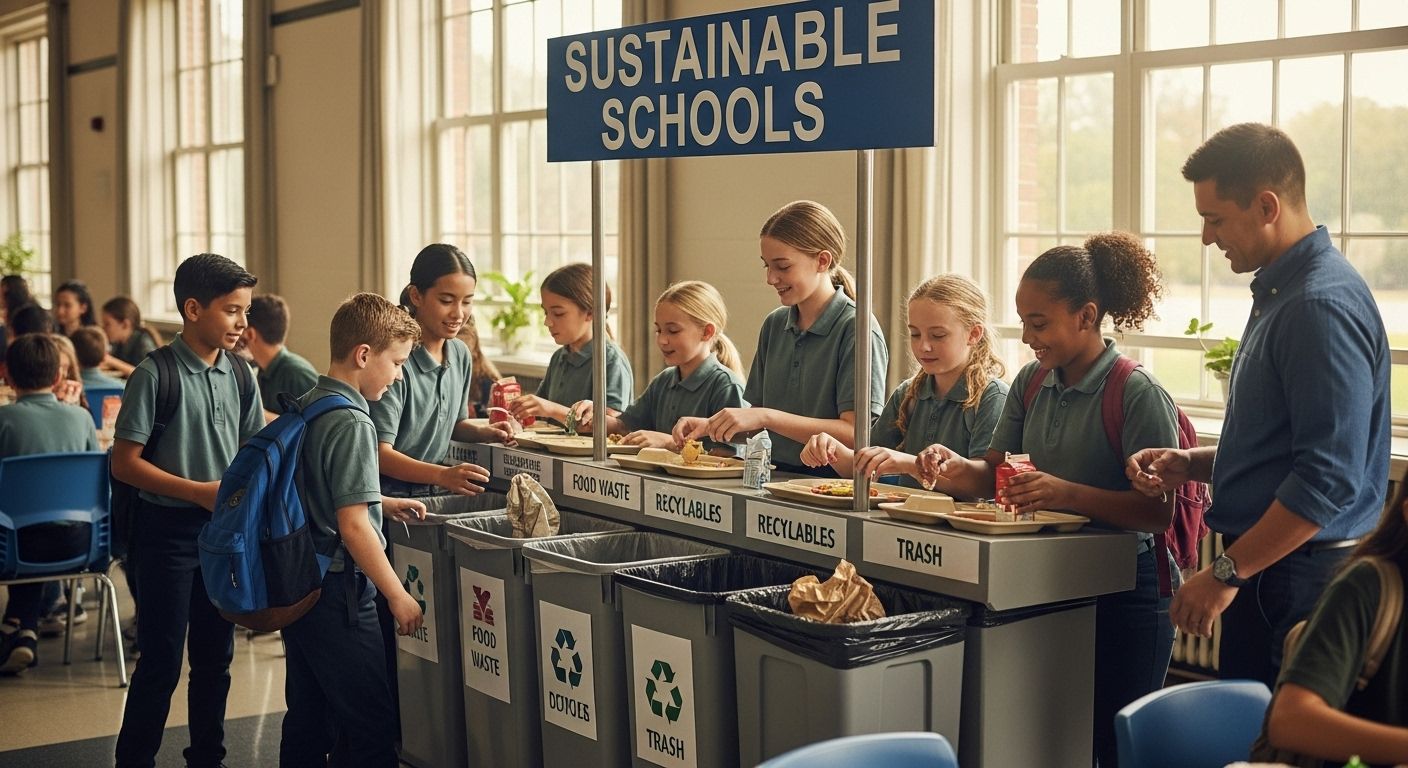
waste assessment business booking

Essential Waste Collection Booking Tips for Businesses

Sorting out business waste feels like a never-ending chore and yet the cost of ignoring it can quickly spiral out of control. Many companies are surprised when they discover that accurate waste audits can cut overall disposal costs by up to 30 percent. Most think that booking waste collection is all about paperwork and bins but the real secret is in the preparation – get it right and waste management becomes far simpler and cheaper than you might expect.

Table of Contents

Quick Summary

Key Point Explanation
1. Conduct a thorough waste assessment Evaluate all waste types and volumes generated to inform collection strategies and cost-effectiveness.
2. Research local waste collection providers Identify service providers with experience in your specific area and waste streams to ensure compliance and effective management.
3. Compare quotes and service details comprehensively Assess not just costs but also service quality, environmental commitments, and additional support services offered.
4. Prepare documentation before scheduling Gather necessary waste data and operational details to facilitate an efficient scheduling process with your provider.
5. Review service quality regularly Continuously assess the performance of your waste management provider to ensure efficiency and compliance with standards.

Step 1: Evaluate Your Waste Management Needs

Successful waste collection begins with a thorough and strategic evaluation of your business’s waste management requirements. This critical first step involves understanding the volume, types, and frequencies of waste your organisation generates, which directly impacts the efficiency and cost-effectiveness of your waste disposal strategy.

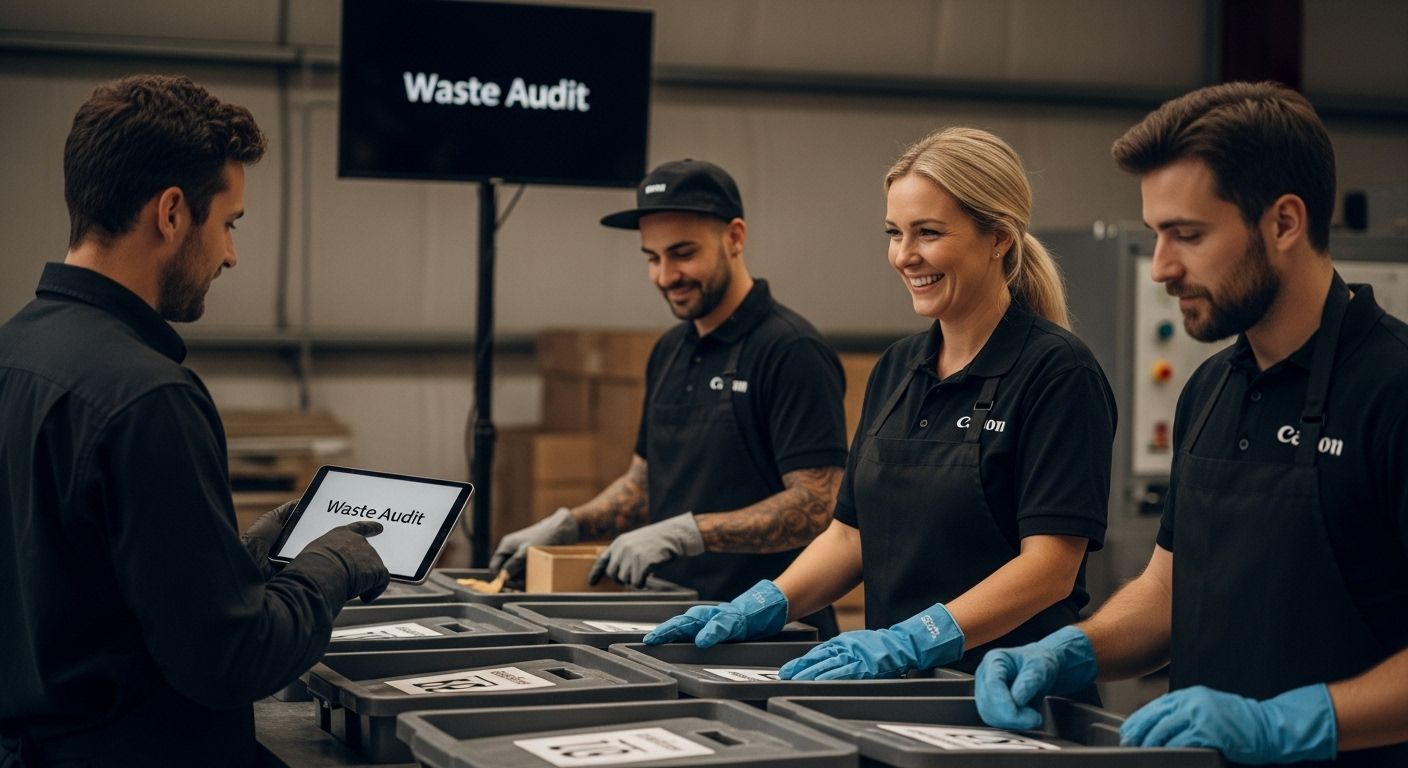
Starting your waste management assessment requires a comprehensive audit of your current waste production. Walk through your facility and catalogue the different waste streams you generate. Manufacturing businesses in Newcastle might find industrial waste volumes differ significantly from retail establishments in Durham. Consider documenting the types of waste such as general waste, recyclables, hazardous materials, electronic equipment, or confidential documentation. Quantifying your waste accurately helps determine the most appropriate collection frequency and container sizes.

To conduct an effective waste evaluation, businesses should gather specific data points about their waste generation. Track the approximate weight or volume of waste produced weekly or monthly. Consider seasonal variations that might impact waste production. For instance, a restaurant in Sunderland might generate more food waste during peak tourist seasons, while an office in Newcastle might have consistent paper waste throughout the year. This data becomes crucial when selecting the right waste collection scheduling approach.

Your waste assessment should also include a detailed review of current disposal practices. Examine how different waste types are currently managed, stored, and separated. Are recyclable materials being correctly segregated? Are hazardous waste streams handled according to regulatory requirements? A meticulous review ensures not just compliance, but also potential cost savings through more efficient waste management strategies.

Verification of your waste management evaluation involves confirming you have:

  • Documented all waste streams produced
  • Measured approximate waste volumes
  • Identified potential areas for waste reduction
  • Assessed current waste handling and storage practices

By completing this comprehensive assessment, you establish a solid foundation for the subsequent steps in optimising your waste collection booking process.
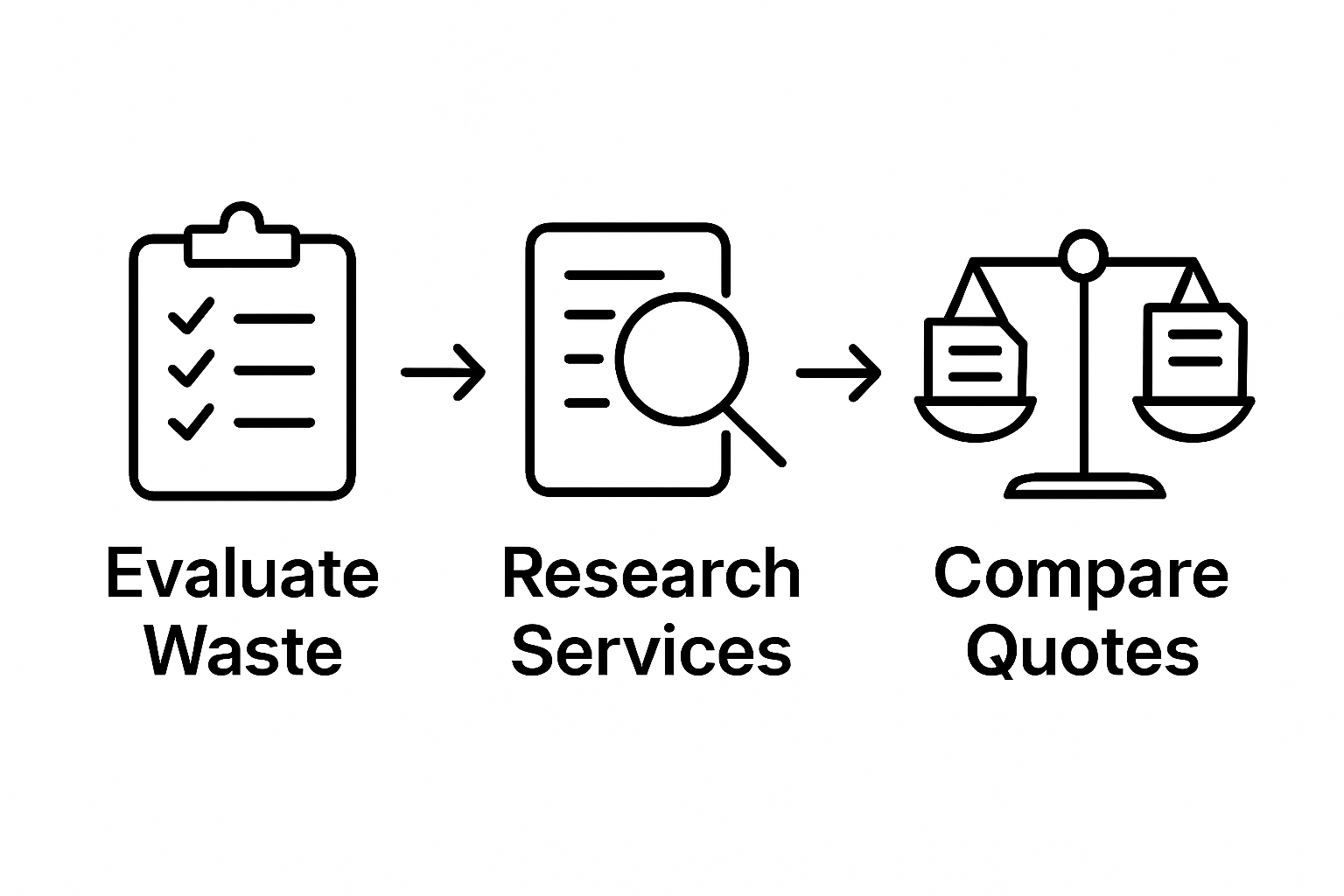
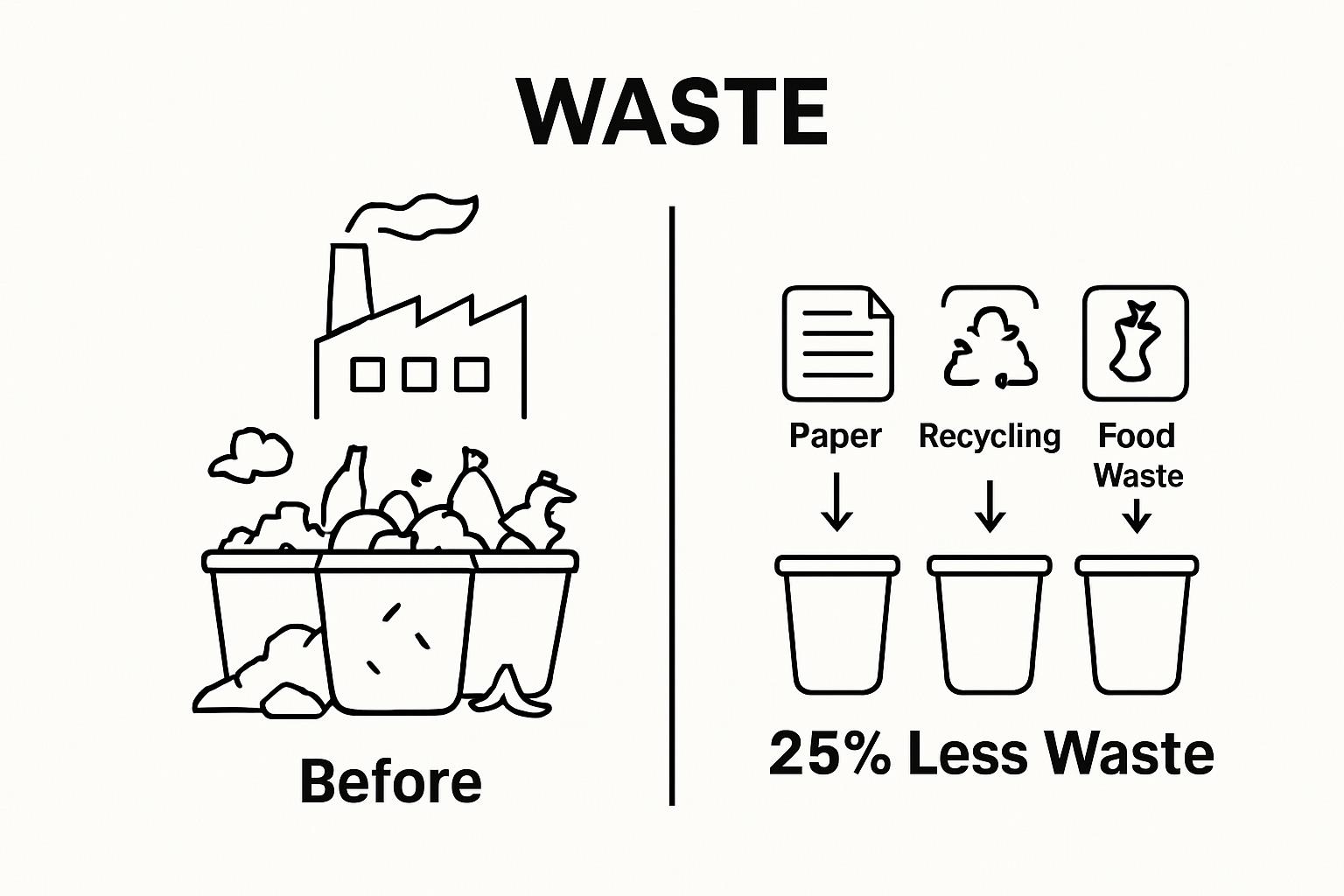
Infographic showing three-step business waste collection workflow

Step 2: Research Waste Collection Services in Your Area

Researching waste collection services requires a systematic approach to identify providers that align with your specific business waste management requirements. This crucial step involves investigating local waste management companies, understanding their service offerings, and evaluating their capabilities to handle your unique waste streams.

Begin by compiling a comprehensive list of waste collection providers operating in your region. Focus on companies serving specific areas like Newcastle, Durham, Sunderland, and surrounding North East locations. Local waste management companies often understand regional regulations and environmental requirements better than national providers. Prioritize providers with proven experience in handling waste types similar to your business’s waste streams.

Utilize multiple research channels to gather information about potential waste collection services. Online directories, local business associations, and industry recommendations can provide valuable insights. Contact local environmental agencies for registered waste management providers. Telephone consultations and email inquiries allow you to ask detailed questions about their service capabilities, collection frequencies, pricing structures, and compliance certifications. Learn more about navigating the waste collection network to make an informed decision.

When evaluating waste collection services, consider several critical factors beyond basic collection. Assess their environmental credentials, recycling capabilities, and commitment to sustainable waste management practices. Some providers offer additional services like waste auditing, recycling consultancy, and comprehensive waste reduction strategies. Request detailed service quotes and compare them carefully, looking beyond price to understand the full range of support each provider offers.

Verification of your research involves confirming you have:

  • Identified multiple waste collection service providers
  • Gathered comprehensive service information
  • Compared pricing and service capabilities
  • Checked environmental credentials and compliance certifications

By conducting thorough research, you position your business to select a waste collection service that meets your operational needs and environmental responsibilities.

Step 3: Compare Quotes and Service Levels

Comparing waste collection service quotes represents a critical decision-making phase where businesses transform their initial research into a strategic partnership. This step requires meticulous attention to detail, balancing cost considerations with service quality and comprehensive waste management capabilities.

Begin by organizing the quotes you have collected into a systematic comparison framework. Create a comprehensive spreadsheet that captures key pricing details, service frequencies, container provisions, and additional support offerings. While price is important, it should not be the sole determining factor. A slightly more expensive service might provide superior environmental reporting, more flexible collection schedules, or advanced waste segregation support that could generate long-term operational efficiencies.

Carefully examine the quote details beyond the headline pricing. Look for nuanced service elements such as environmental compliance certifications, recycling rates, and additional support services. A waste management provider serving businesses in Newcastle or Durham might offer unique regional advantages, such as specialised handling for industrial or commercial waste streams. Learn about optimising your waste collection scheduling to ensure you select a provider aligned with your operational rhythms.

Engaging directly with potential service providers can reveal valuable insights not immediately apparent from written quotes. Schedule consultative discussions to understand the full scope of their capabilities. Ask probing questions about their approach to waste reduction, recycling strategies, and how they can support your specific business needs. Some providers might offer complementary waste audits or sustainability consultations that add significant value beyond basic collection services.

Verification of your quote comparison involves confirming you have:

  • Documented and compared all quote details
  • Assessed service levels beyond pricing
  • Conducted direct discussions with providers
  • Evaluated long-term value and support capabilities

By conducting a thorough, methodical comparison, you position your business to select a waste collection service that delivers optimal value, compliance, and operational support.

Step 4: Schedule Your Waste Collection Appointment

Scheduling your waste collection appointment marks the transition from planning to execution, transforming your waste management strategy into a tangible service arrangement. This critical step requires careful coordination and clear communication with your selected waste management provider to ensure seamless waste disposal operations.

Prepare all necessary documentation and waste information before initiating the booking process. Gather the detailed waste assessment from your earlier evaluation, including precise volumes, types of waste streams, and any specific handling requirements. Having this information readily available streamlines the scheduling conversation and demonstrates your business’s preparedness. Contact your chosen waste management provider during their standard business hours, preferably via both telephone and email to establish a comprehensive communication trail.

During the booking conversation, be prepared to discuss specific logistical details that will impact your collection schedule. Explain your business’s operational rhythms, preferred collection times, and any site-specific access considerations. Businesses in urban areas like Newcastle or Durham might have unique parking or loading restrictions that could affect waste collection logistics. Explore efficient waste collection scheduling strategies to optimize your arrangement. Request a confirmation of the agreed collection schedule in writing, ensuring you have a formal record of the arrangement.

Pay close attention to the provider’s guidelines regarding waste preparation. Different waste streams might require specific segregation, containment, or labeling protocols. Confirm the exact specifications for container placement, accessibility, and any preparatory steps your team must complete before collection. Some providers offer additional guidance or training to help businesses maintain compliance with waste management regulations.

Verification of your waste collection appointment involves confirming you have:

  • Scheduled a definitive collection date and time
  • Received written confirmation of service details
  • Understood waste preparation requirements
  • Clarified any site-specific collection logistics

By meticulously scheduling your waste collection, you establish a reliable, efficient waste management process that supports your business’s operational needs and environmental responsibilities.

Step 5: Prepare Your Waste for Collection

Preparing waste for collection represents a critical compliance and logistical process that directly impacts the efficiency of your waste management strategy. This step transforms your theoretical waste management plan into practical, actionable preparation that ensures smooth collection and adherence to regulatory requirements.

Waste segregation is fundamental to effective collection preparation. Carefully separate different waste streams according to your waste management provider’s specifications and current environmental regulations. Different materials require distinct handling protocols. Recyclable materials like paper, cardboard, plastics, and metals should be cleanly sorted and free from contamination. For businesses in urban areas like Newcastle or Durham, understanding precise segregation requirements can significantly streamline the collection process. Learn more about improving your waste segregation techniques to enhance your waste management approach.

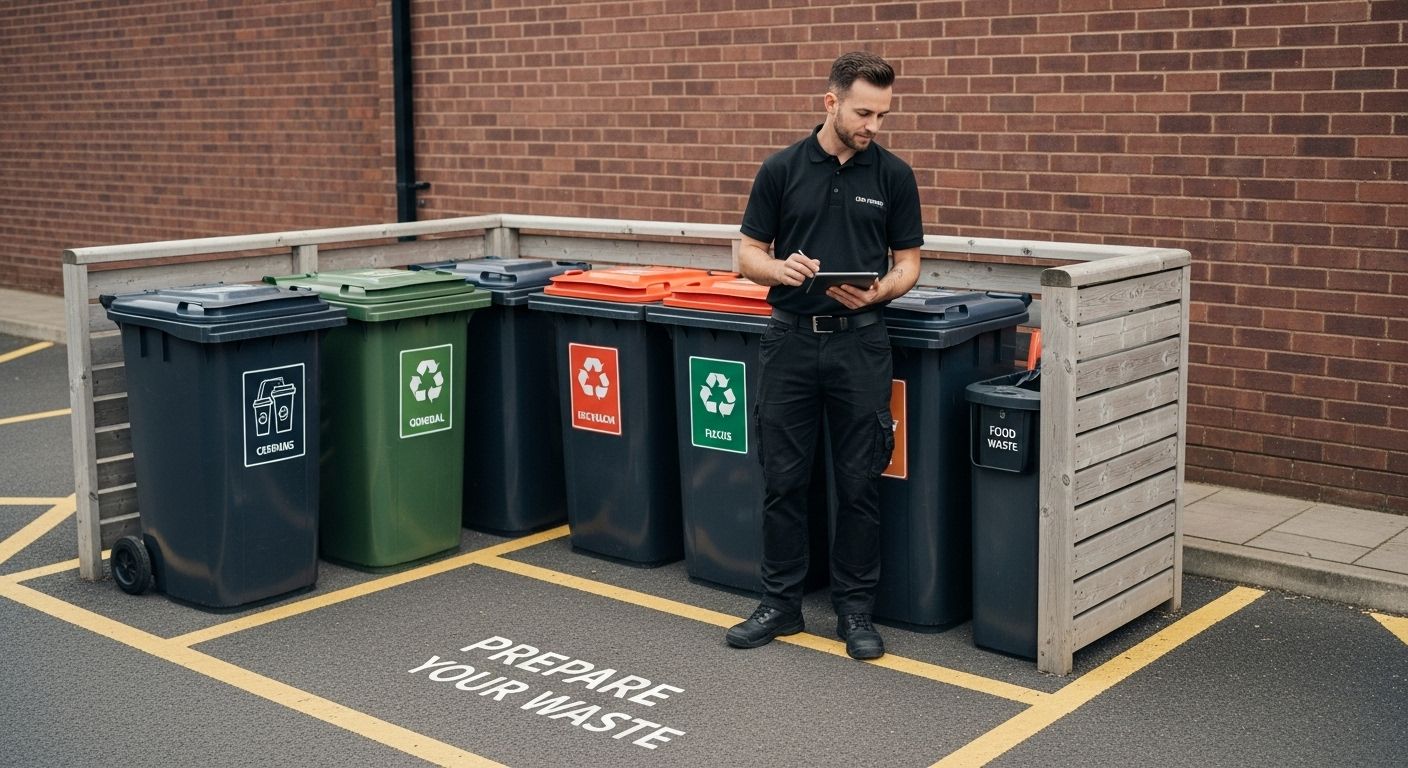
Container selection and preparation play a crucial role in successful waste collection. Choose appropriate containers that match the volume and type of waste your business generates. Ensure containers are clean, undamaged, and clearly labeled with the specific waste type they contain. For businesses handling multiple waste streams, consider color-coded or distinctly marked containers to prevent cross-contamination. Position containers in an easily accessible location that allows waste collection vehicles convenient and safe access. Consider potential obstacles like narrow entrances, parking restrictions, or site-specific logistical challenges that might impact collection.

Pay special attention to any hazardous or special waste materials that require unique handling procedures. Electronic waste, batteries, chemical residues, and confidential documents often need specific containment and disposal protocols. Consult your waste management provider about their requirements for these sensitive waste streams. Some providers offer specialized guidance or additional support for managing complex waste types.

Verification of your waste preparation involves confirming you have:

  • Correctly segregated all waste streams
  • Selected appropriate containers
  • Labeled containers clearly and accurately
  • Positioned containers for easy collection access
  • Addressed any special waste handling requirements

By meticulously preparing your waste for collection, you demonstrate professional responsibility and contribute to more efficient, environmentally conscious waste management.

Below is a checklist table to help verify that all necessary steps and criteria for preparing business waste collection have been met.

Verification Step Description Completion Status
Waste streams documented All types of waste produced are identified and recorded
Waste volumes measured Approximate weekly or monthly waste volumes are determined
Areas for waste reduction identified Potential ways to minimise waste are considered
Waste handling and storage assessed Current practices for storing and managing waste are reviewed
Waste segregated correctly Waste is sorted into appropriate streams according to regulations
Appropriate containers selected Suitable, undamaged and labelled containers are used for each waste type
Collection date and time scheduled A definitive appointment is arranged with a written confirmation from the provider
Site-specific logistics clarified Details such as access, parking, and collection points are addressed
Documentation prepared and accessible All required documents, including waste transfer notes and service agreements, are ready

waste preparation collection booking

Step 6: Confirm Collection and Review Service Quality

Confirming waste collection and critically reviewing service quality represents the final pivotal stage in your waste management process. This step transforms your initial booking into a continuous improvement opportunity, ensuring that your chosen waste management provider consistently meets your business’s operational and environmental requirements.

Documentation serves as the cornerstone of effective waste collection verification. Immediately after each collection, meticulously review the waste transfer documentation provided by your service provider. These critical documents should detail the precise types and quantities of waste collected, ensuring transparency and legal compliance. For businesses operating in regions like Newcastle or Durham, maintaining comprehensive records becomes essential for potential environmental audits or regulatory inspections. Explore strategies for efficient waste collection documentation to streamline your record-keeping processes.

Establish a systematic approach to evaluating your waste collection service’s performance. Develop a comprehensive assessment framework that considers multiple dimensions of service quality. Examine factors such as collection punctuality, waste handling practices, communication effectiveness, and alignment with your initial service agreement. Pay particular attention to how well the provider manages different waste streams, adheres to agreed collection schedules, and responds to any unique operational requirements your business might have. Regular performance reviews allow you to proactively address potential issues and maintain high-quality waste management standards.

Maintain open communication channels with your waste management provider. Schedule periodic review meetings to discuss service performance, explore potential improvements, and address any emerging challenges. These conversations provide an opportunity to refine your waste management strategy, discuss evolving regulatory requirements, and potentially negotiate more tailored service arrangements. Consider requesting detailed environmental impact reports that demonstrate the provider’s commitment to sustainable waste management practices.

Verification of your collection and service quality review involves confirming you have:

  • Collected and filed all waste transfer documentation
  • Conducted a comprehensive service performance assessment
  • Maintained ongoing communication with the service provider
  • Identified potential areas for service improvement
  • Ensured continued legal and environmental compliance

By diligently confirming collection details and continuously reviewing service quality, you establish a robust, responsive waste management process that supports your business’s operational efficiency and environmental responsibilities.

Ready to Simplify Your Waste Collection Booking Process?

Struggling to organise efficient waste collection for your business can leave you worrying about compliance, missed pickups, and hidden costs. This article has highlighted key steps such as assessing your waste streams, comparing service levels, and maintaining regulatory records. At Venture Waste, we understand that seamless booking and dependable service are crucial for business owners facing tight schedules and strict legal requirements. Our expertise in managing general waste, hazardous items, confidential documents, and tailored recycling means we can support your needs from the first audit all the way through to compliant collection. Discover how the Waste Collection Process in the UK for Businesses 2025 is being transformed for simplicity and peace of mind when you partner with a trusted provider.
https://venturewaste.co.uk

Take control of your waste management today. Visit Venture Waste to experience our smooth three-step booking process and to access practical resources, customer testimonials, and updates on regulatory changes. Do not let uncertainty around waste collection hold your business back. Secure a compliant and efficient solution now—because your waste management should just work.

Frequently Asked Questions

How can I evaluate my business’s waste management needs?

To evaluate your waste management needs, conduct a comprehensive audit of your waste production, documenting the types and volumes of waste generated, as well as current disposal practices and potential areas for waste reduction.

What factors should I consider when researching waste collection services?

When researching waste collection services, consider their experience in handling your specific waste types, service offerings, pricing, environmental credentials, and compliance certifications to ensure they align with your business needs.

How do I compare quotes from different waste collection providers?

To compare quotes, create a spreadsheet capturing pricing details, service frequencies, and additional support offerings. Focus not only on price but also on the overall value, including service quality and compliance with environmental regulations.

What steps should I take to prepare my waste for collection?

To prepare your waste for collection, segregate different waste streams according to regulations, select appropriate containers, ensure they are clearly labelled, and position them in accessible locations for collection.

ethical waste disposal business teamwork

Understanding Ethical Waste Disposal for Businesses

Ethical waste disposal shapes how businesses protect the environment and meet evolving legal expectations. Across the UK, over 200 million tonnes of waste are produced every year and most of it never sees a second life. That sounds bleak, but the real turning point comes when you realise ethical disposal is not just about cutting waste. It is a powerful way for companies to save money, spark innovation, and build trust in ways that ordinary rubbish removal never could.

Table of Contents

Quick Summary

Takeaway Explanation
Prevent waste generation first Focus on reducing waste before it starts, which is crucial for sustainable management.
Follow legal requirements strictly Businesses must comply with all regulations to avoid fines and penalties related to waste disposal.
Enhance corporate reputation through sustainability Adopt ethical waste practices to improve public perception and attract eco-conscious consumers.
Utilise waste management hierarchy Implement strategies like reduction, reuse, and recycling to minimise environmental impact.
Leverage technology for tracking waste Use digital systems to monitor waste completion, ensuring compliance and enhancing efficiency.

What is Ethical Waste Disposal and Its Principles?

Ethical waste disposal represents a comprehensive approach to managing discarded materials that prioritises environmental protection, legal compliance, and responsible business practices. At its core, this approach goes beyond merely removing waste and focuses on minimising environmental impact while adhering to sustainable principles.

Understanding the Core Principles

Ethical waste disposal is fundamentally grounded in a set of critical principles that guide responsible waste management. Our comprehensive guide on waste management outlines these key considerations:

  • Prevention First: Reducing waste generation before it occurs
  • Responsible Handling: Ensuring safe and environmentally conscious disposal methods
  • Legal Compliance: Meeting all regulatory requirements for waste management
  • Transparency: Maintaining clear documentation and accountability throughout the disposal process

According to the Environmental Protection Agency, waste management should follow a hierarchical approach that prioritises environmental sustainability. This means businesses should first attempt to reduce waste generation, then explore recycling and reuse options, and only consider disposal as a final alternative.

Environmental and Business Implications

Ethical waste disposal is not just an environmental responsibility but also a strategic business decision. Companies that implement robust waste management practices can:

  • Reduce operational costs associated with waste removal
  • Enhance corporate reputation and demonstrate environmental stewardship
  • Mitigate potential legal risks and environmental penalties
  • Contribute to broader sustainability goals

In the North East region, cities like Newcastle and Durham are increasingly recognising the importance of ethical waste disposal, with local businesses setting exemplary standards in responsible waste management. By adopting a holistic approach that considers environmental, legal, and economic factors, organisations can transform waste from a potential liability into an opportunity for sustainable innovation.

Why is Ethical Waste Disposal Important for Businesses?

Ethical waste disposal transcends regulatory compliance, representing a critical strategic approach that directly impacts a business’s operational efficiency, financial performance, and long-term sustainability. By implementing responsible waste management practices, organisations can transform potential environmental challenges into opportunities for innovation and competitive advantage.

Business leaders must understand the substantial risks associated with improper waste disposal. Learn more about confidential disposal strategies that protect both environmental and corporate interests. According to the Environmental Protection Agency, businesses can face significant legal and financial penalties for non-compliance, including:

  • Substantial monetary fines ranging from thousands to millions of pounds
  • Potential legal proceedings and criminal prosecution
  • Mandatory remediation costs
  • Reputational damage and loss of business credibility

Environmental and Social Responsibility

Modern businesses are increasingly evaluated not just on financial performance, but on their environmental stewardship. Ethical waste disposal demonstrates a commitment to sustainable practices that resonates with environmentally conscious consumers, investors, and stakeholders. Companies that prioritise responsible waste management can:

  • Reduce carbon footprint and environmental impact
  • Enhance corporate social responsibility profile
  • Attract environmentally aware customers and investors
  • Contribute to broader sustainability goals

In cities like Newcastle and Durham, local businesses are setting exemplary standards by integrating ethical waste disposal into their core operational strategies. By viewing waste management as a strategic asset rather than a mere compliance requirement, organisations can unlock significant value, reduce operational costs, and position themselves as forward-thinking, responsible corporate entities.

Key Concepts and Regulations in Ethical Waste Disposal

Ethical waste disposal involves navigating a complex landscape of regulatory requirements, environmental standards, and strategic management principles. Understanding these key concepts is crucial for businesses seeking to implement responsible and compliant waste management practices.

Regulatory Framework and Classification

Check out our detailed waste management guidelines to comprehend the intricate regulatory environment. According to the Environmental Protection Agency, businesses must understand their waste generation classification, which determines specific legal obligations:

  • Very Small Quantity Generators: Less than 100 kg hazardous waste monthly
  • Small Quantity Generators: Between 100 and 1,000 kg hazardous waste monthly
  • Large Quantity Generators: 1,000 kg or more hazardous waste monthly

Each category carries distinct reporting, storage, transportation, and disposal requirements that businesses must meticulously follow to ensure legal compliance and environmental responsibility.

Below is a table comparing the different categories of hazardous waste generators and their key legal obligations as described in the regulatory framework section.

Category Monthly Hazardous Waste Generated Key Legal Obligations
Very Small Quantity Generators Less than 100 kg Minimal reporting, small-scale storage requirements
Small Quantity Generators 100 – 1,000 kg Standard reporting, designated storage and transport
Large Quantity Generators 1,000 kg or more Extensive reporting, strict disposal and storage rules

Waste Management Hierarchy

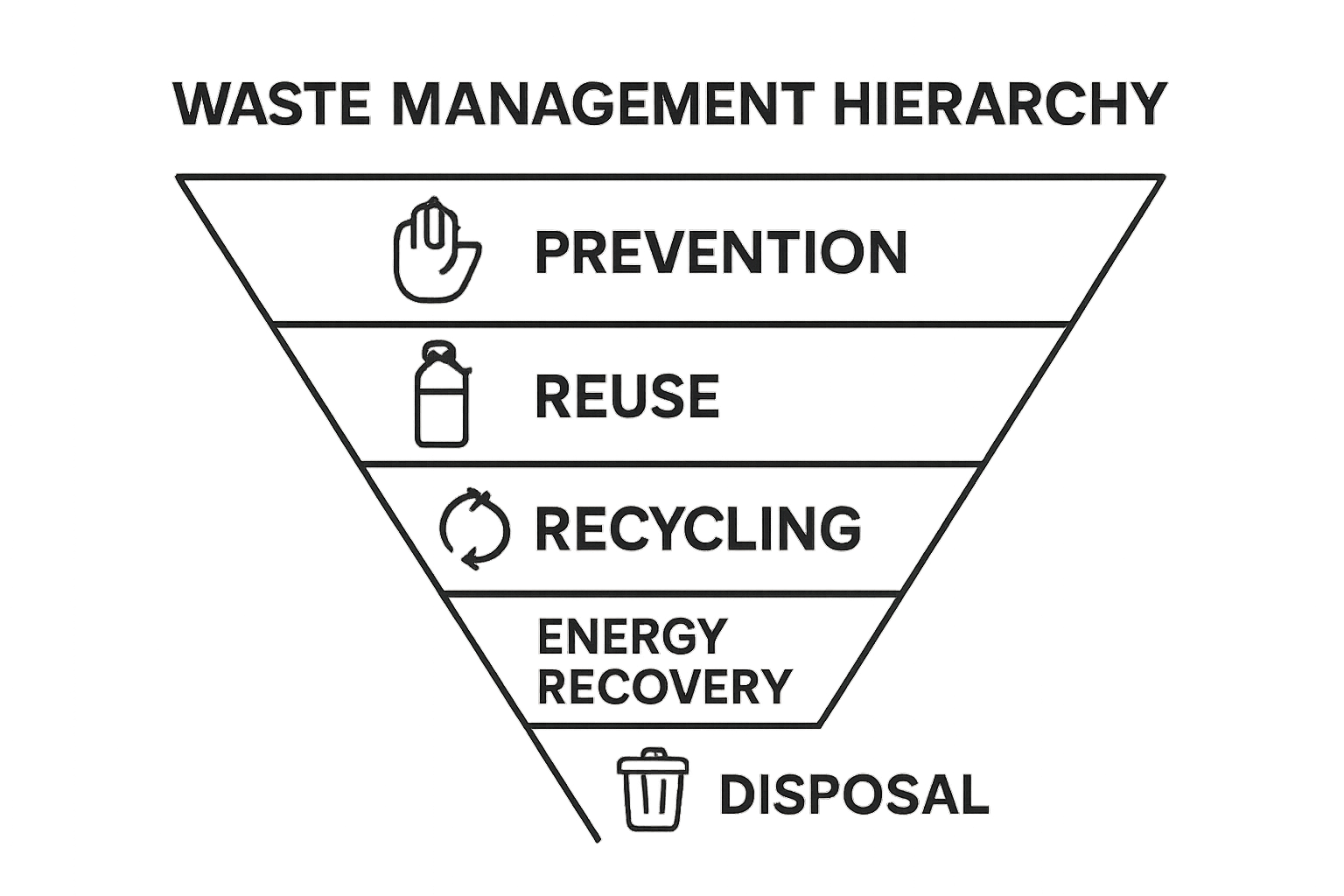
The waste management hierarchy provides a strategic framework for ethical waste disposal, prioritising methods from most to least environmentally preferred:

  • Prevention: Reducing waste generation at source
  • Reuse: Finding alternative uses for materials
  • Recycling: Processing materials into new products
  • Energy Recovery: Generating energy from waste
  • Disposal: Final, least preferred option

Businesses in Newcastle, Durham, and across the North East are increasingly adopting this hierarchy as a core principle of sustainable operations. By understanding and implementing these strategies, organisations can significantly reduce their environmental footprint while potentially reducing operational costs.

The following table outlines the waste management hierarchy, providing a quick reference to the most and least preferred methods for managing business waste ethically.

Hierarchy Level Description Environmental Preference
Prevention Reducing waste generation at source Most Preferred
Reuse Finding alternative uses for materials Highly Preferred
Recycling Processing materials into new products Preferred
Energy Recovery Generating energy from waste Less Preferred
Disposal Final treatment or landfill Least Preferred

Layered hierarchy showing prevention, reuse, recycling, energy recovery, disposal with icons

Implementing ethical waste disposal is not just about compliance, but about creating a responsible, forward-thinking approach to resource management that benefits both the business and the broader environment.

How Ethical Waste Disposal Works in Real-World Applications

Ethical waste disposal transitions from theoretical principles to practical implementation through systematic processes, technological solutions, and strategic organisational approaches. Understanding its real-world application requires examining how businesses integrate sustainable waste management into their daily operations.

Technological and Operational Strategies

Explore our comprehensive waste management strategies that demonstrate practical implementation. According to the Environmental Protection Agency, modern waste management relies on sophisticated electronic tracking systems that enable businesses to:

  • Monitor waste generation volumes precisely
  • Track waste from origin through final disposal
  • Ensure compliance with regulatory requirements
  • Generate accurate documentation for legal purposes

In practice, this means businesses can now create digital manifests that provide real-time insights into their waste streams, enabling more informed decision-making and transparent reporting.

Practical Implementation Frameworks

Businesses in the North East, particularly in industrial centres like Newcastle and Durham, are developing comprehensive waste management frameworks that include:

  • Waste Auditing: Systematic assessment of waste generation patterns
  • Segregation Protocols: Implementing robust sorting mechanisms
  • Continuous Improvement: Regular review and refinement of waste management strategies
  • Staff Training: Ensuring organisational understanding of ethical waste practices

These frameworks transform waste disposal from a passive administrative task into a proactive strategic initiative. By treating waste as a resource rather than a burden, organisations can identify opportunities for reduction, reuse, and potential revenue generation through innovative recycling and repurposing strategies.

Challenges and Innovations in Ethical Waste Disposal

The landscape of ethical waste disposal is continuously evolving, presenting businesses with complex challenges and unprecedented opportunities for technological and strategic innovation. Understanding these dynamics is crucial for organisations seeking to develop robust, sustainable waste management practices.

Technological and Infrastructure Challenges

Discover solutions to waste management obstacles that are transforming the industry. According to the Environmental Protection Agency, significant infrastructure investments are required to modernise waste management systems:

  • Limited recycling infrastructure
  • High contamination rates in waste streams
  • Insufficient end-market development for recycled materials
  • Inconsistent data collection and measurement techniques

These challenges demand innovative approaches that go beyond traditional waste disposal methods, requiring substantial technological and strategic investments from businesses.

Emerging Innovations and Strategic Approaches

Businesses in the North East, particularly in industrial hubs like Newcastle and Durham, are pioneering innovative waste management strategies that address these challenges:

  • Digital Tracking Systems: Real-time waste stream monitoring
  • Circular Economy Models: Redesigning product lifecycles for minimal waste
  • Advanced Recycling Technologies: Developing more efficient material recovery processes
  • AI-Driven Waste Sorting: Implementing machine learning for precise waste categorisation

By embracing these innovations, organisations can transform waste management from a compliance requirement into a strategic opportunity for resource efficiency, cost reduction, and environmental stewardship.

waste audit business warehouse

Discover a Smarter Way to Ethical Waste Disposal for Your Business

Struggling with the challenges of ethical waste disposal and the pressure to comply with growing environmental and legal expectations? If reducing risk, ensuring compliance, and enhancing your green credentials resonate with your business goals, you are not alone. Many companies face these same hurdles, especially when it comes to handling sensitive materials and meeting regulatory standards. Our tailored services, highlighted in the confidential waste and WEEE Waste solutions, are built for businesses that value ethical practices. We make responsible waste management straightforward and transparent.

https://venturewaste.co.uk

Take control of your business’s waste responsibilities now. Visit Venture Waste Management to explore our easy three-step booking system and see how our reliable collection, secure destruction, and regulatory guidance can help your operations not just meet but exceed ethical standards. Make a change today and set your business apart as an industry leader in sustainable waste management.

Frequently Asked Questions

What is ethical waste disposal?

Ethical waste disposal is a comprehensive approach to managing discarded materials that prioritises environmental protection, legal compliance, and responsible business practices, aiming to minimise environmental impact and adhere to sustainable principles.

Why is ethical waste disposal important for businesses?

Ethical waste disposal is crucial for businesses as it not only ensures legal compliance and avoids penalties but also enhances corporate reputation, reduces operational costs, and demonstrates commitment to sustainability, which can attract environmentally conscious consumers and investors.

What are the key principles of ethical waste disposal?

The key principles of ethical waste disposal include waste prevention, responsible handling, legal compliance, and transparency throughout the waste management process, ensuring that businesses follow sustainable practices that minimise environmental impact.

How can businesses implement ethical waste disposal strategies?

Businesses can implement ethical waste disposal strategies by conducting waste audits, establishing segregation protocols, adopting continuous improvement practices, and providing staff training on responsible waste management, enabling them to treat waste as a resource rather than a burden.

baled waste transport facility

Transporting Baled Waste: Challenges for Operators

Baled waste has become the backbone of efficient waste management, with some bales reaching densities over 10 pounds per cubic foot and dramatically cutting down on transport costs. Most people think packing waste into neat cubes solves every logistical headache. Strange as it sounds, those tightly packed bales often create more headaches than loose rubbish ever did, introducing hidden risks and unforeseen challenges for anyone moving them.

Table of Contents

Quick Summary

Takeaway Explanation
Baled waste improves transport efficiency Baled waste reduces volume and enhances logistics, making transportation easier and more cost-effective.
Proper securement is essential Ensuring that baled waste is secured during transport prevents spillage and maintains compliance with safety regulations.
Weight distribution is critical Correctly managing weight distribution across vehicle axles is necessary to meet transport regulations and avoid penalties.
Waiting times impact operational costs Extended waiting periods at facilities increase fuel and labour costs, affecting overall transport efficiency.
Messy materials pose safety risks Improperly secured waste materials can lead to accidents and environmental contamination, necessitating strict containment practices.

Understanding Baled Waste and its Transport Needs

Baled waste represents a crucial component in modern waste management strategies, transforming loose, unmanageable materials into compact, transportable units. These compressed blocks simplify handling, reduce transportation costs, and improve overall waste management efficiency across various industries.

What Exactly is Baled Waste?

Baled waste consists of materials compressed and tightly bound into rectangular or cuboid shapes using specialised machinery called balers. These machines apply significant pressure to consolidate waste materials like cardboard, plastics, paper, textiles, and certain industrial materials into dense, uniform packages. The primary objective is to create manageable units that can be easily stored, transported, and processed for recycling or disposal.

Key characteristics of baled waste include:

  • Standardised dimensions for efficient stacking and transportation
  • Reduced volume compared to loose waste materials
  • Enhanced potential for recycling and material recovery
  • Improved logistics and storage management

Transport Challenges for Waste Operators

Transporting baled waste presents unique challenges that require careful planning and execution. Selecting the right transportation method becomes critical in ensuring safe, compliant, and cost-effective waste movement.

According to the Federal Motor Carrier Safety Administration, operators must ensure baled waste is firmly secured during transportation. This involves using appropriate tiedowns, preventing material spillage, and maintaining the structural integrity of the bales throughout transit. Failure to comply with these regulations can result in significant penalties and potential environmental contamination.

The complexity of transporting baled waste lies not just in physical transportation but in understanding the nuanced requirements of different waste types, regulatory compliance, and environmental considerations. Waste management professionals must continuously adapt their strategies to address these multifaceted challenges effectively.

The Challenges Faced by Standard Transport Operators

Transporting baled waste presents a complex landscape of operational challenges that extend far beyond simple material movement. Standard transport operators encounter multiple intricate hurdles when managing these compressed waste packages, requiring sophisticated logistics and compliance strategies.

Weight Distribution and Vehicle Constraints

One of the primary challenges involves precise weight management and vehicle configuration. Understanding transport regulations becomes crucial in navigating these constraints. According to the Federal Highway Administration, transport operators must meticulously balance payload weights across vehicle axles to comply with strict interstate trucking regulations.

Key weight management considerations include:

  • Maximum gross vehicle weight limitations
  • Single and tandem axle weight restrictions
  • Precise cargo weight distribution requirements
  • Vehicle structural load-bearing capacities

Cargo Securement and Material Integrity

Ensuring baled waste remains stable during transportation represents another significant operational challenge. Operators must implement robust securement techniques that prevent material shifting, potential spillage, and structural compromise. The Federal Motor Carrier Safety Administration mandates stringent cargo immobilization standards, requiring transport professionals to use appropriate tiedowns and containment methods.

Specific securement challenges encompass:

  • Preventing lateral and vertical cargo movement
  • Maintaining bale structural integrity during transit
  • Mitigating potential environmental contamination risks
  • Complying with complex regulatory frameworks

These multifaceted challenges demand transport operators possess comprehensive technical knowledge, meticulous planning capabilities, and adaptable logistical strategies. Success requires continuous training, investment in specialized equipment, and a proactive approach to understanding evolving waste management regulations.

Below is a table comparing the key challenges faced by standard transport operators when transporting baled waste. This summary helps clarify how operational complexity extends beyond basic logistics.

Challenge Description Regulatory/Operational Requirement
Weight Distribution Ensuring even, legal weight spread across axles Comply with gross vehicle/axle weight limitations
Vehicle Constraints Operating within vehicle structural load capacities Avoid exceeding manufacturer and legal limits
Cargo Securement Preventing movement, spillage, and bale damage during transit Appropriate tiedowns and immobilisation standards
Material Integrity Maintaining the structure of compressed bales throughout handling and transport Mitigate environmental and injury risks
Regulatory Compliance Navigating complex, sometimes overlapping legal frameworks Fulfil safety and transport laws
Specialised Equipment and Training Requiring investment in both advanced kit and ongoing staff education Sustain long-term compliance and safety

Impact of Waiting Times on Waste Transport Efficiency

Waiting times represent a critical yet often overlooked factor in waste transport logistics, dramatically influencing operational costs, environmental sustainability, and overall transportation efficiency. These seemingly minor delays can compound into significant economic and operational challenges for waste management professionals.

Economic and Operational Implications

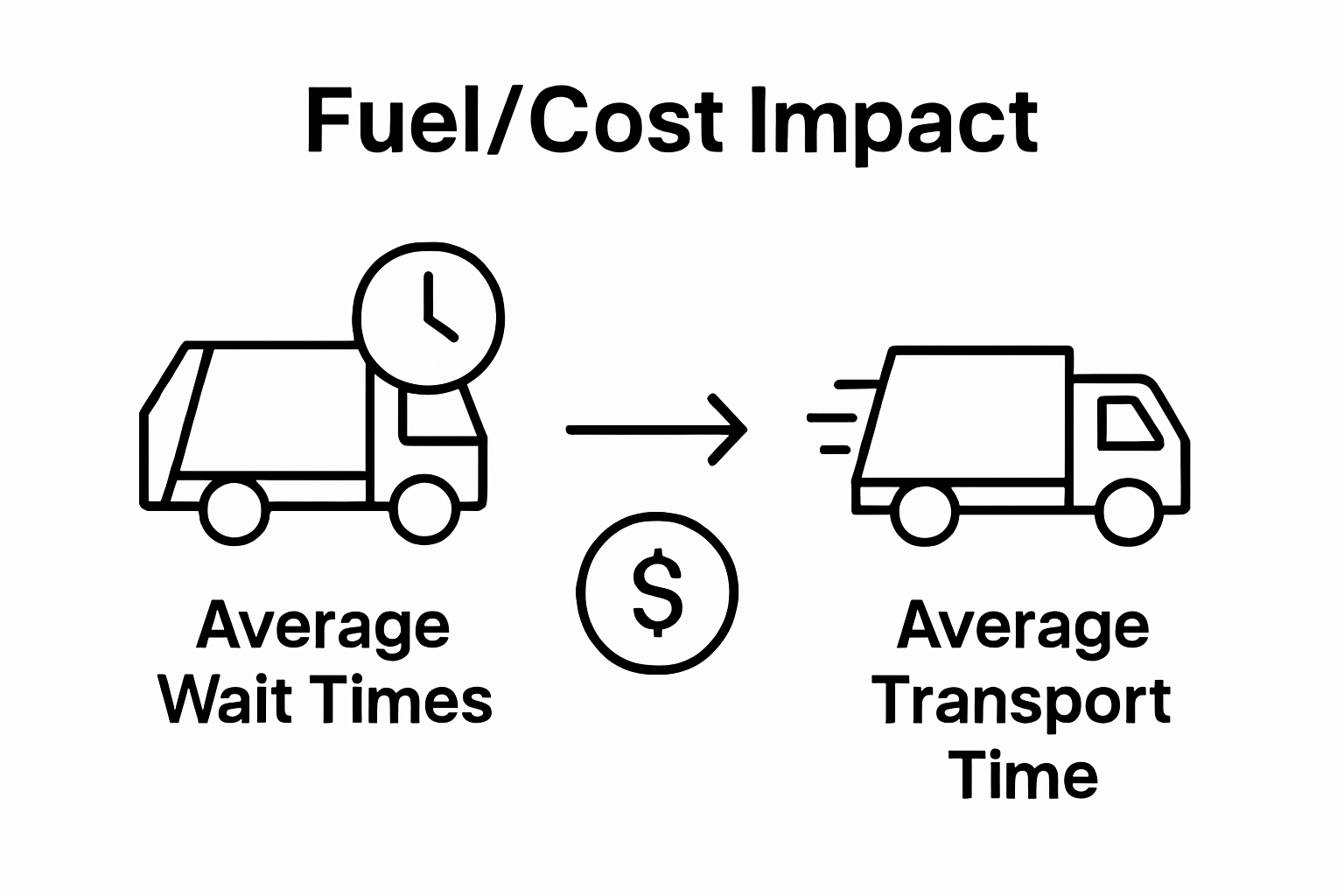
Optimising transport logistics becomes paramount when understanding the cascading effects of prolonged waiting periods. According to research published in waste management journals, the average waste collection vehicle spends substantial time queuing at transfer facilities, with visit durations ranging from 2 to 111 minutes and an average of 16.4 minutes per facility.

Key economic impacts of extended waiting times include:

  • Increased fuel consumption during idle periods
  • Higher labour costs due to extended operational hours
  • Reduced vehicle utilisation and productivity
  • Increased maintenance expenses from prolonged engine running

Systemic Challenges in Waste Transfer Facilities

Waiting times are not merely a logistical inconvenience but symptomatic of broader systemic challenges within waste management infrastructure. Multi-stage processes such as weighing, documentation, and material sorting contribute to these delays, creating bottlenecks that impede efficient waste transportation.

Primary systemic challenges encompass:

  • Complex administrative procedures
  • Inadequate facility infrastructure
  • Limited simultaneous processing capabilities
  • Inconsistent waste stream management protocols

These waiting times represent more than lost minutes; they symbolise inefficiencies that ripple through the entire waste management ecosystem.

The following table summarises the economic and operational impacts of waiting times at waste transfer facilities. This overview supports understanding of how even minor delays can accumulate significant costs and inefficiencies.

Impact Area Description Example/Result
Fuel Consumption Increased due to idling during queueing periods Higher fuel costs, greater emissions
Labour Costs Extra driver hours required for prolonged waits Increased operational expenditure
Vehicle Utilisation Vehicles unavailable for other tasks while waiting Reduced fleet productivity
Maintenance Expenses Engine and equipment wear from extended idling Increased maintenance and repair costs
Environmental Impact More emissions from idling and extended operating times Negative effect on sustainability targets

Comparison of waste truck waiting and transport times with cost impact

Transport operators must continuously innovate, leveraging technology and strategic planning to minimise these operational friction points and enhance overall transportation efficiency.

Consequences of Messy Materials in Transport Logistics

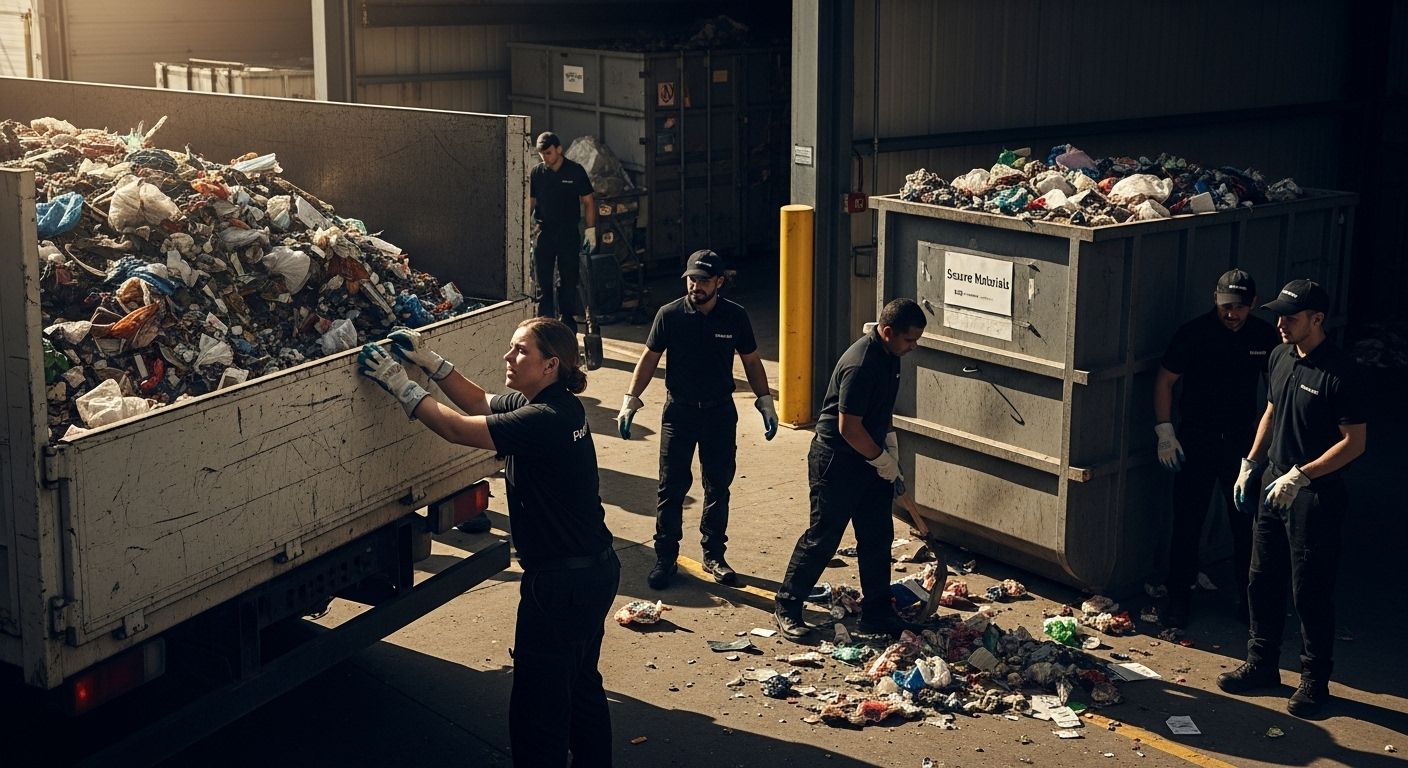
Messy and improperly secured waste materials represent a significant risk factor in transportation logistics, potentially causing catastrophic operational, safety, and environmental challenges. These seemingly minor logistical oversights can escalate into complex problems with far-reaching implications for waste management professionals.

Safety Risks and Potential Hazards

Ensuring proper waste containment becomes critically important when understanding potential transportation risks. According to research from the Washington State Fatality Assessment and Control Evaluation, unstable material transportation can lead to fatal accidents, with documented cases of truck drivers being crushed by falling bales during unloading processes.

Key safety risks associated with messy materials include:

  • Potential for sudden material displacement during transit
  • Increased risk of worker injury during loading and unloading
  • Compromised vehicle stability and handling
  • Higher likelihood of road debris incidents

Environmental and Regulatory Implications

Beyond immediate safety concerns, messy and uncontrolled waste materials pose significant environmental risks. Loose or improperly secured materials can create substantial contamination risks, potentially leading to spillage, pollution, and violations of transportation regulations.

Primary environmental and regulatory challenges encompass:

  • Potential soil and water contamination from material spillage
  • Risk of introducing hazardous substances into ecosystems
  • Non-compliance with waste transportation regulations
  • Increased environmental cleanup and remediation costs

These consequences underscore the critical importance of meticulous waste management practices. Transport operators must invest in robust containment strategies, continuous staff training, and advanced material handling technologies to mitigate the multifaceted risks associated with messy and uncontrolled waste materials.

messy waste transport truck cleanup

How Our Solutions Improve Baled Waste Transport

Effective waste transport solutions represent a critical junction between operational efficiency, safety compliance, and environmental responsibility. By implementing strategic approaches, waste management professionals can transform complex logistical challenges into streamlined, reliable processes.

Advanced Bale Preparation Techniques

Optimising waste material handling starts with precision bale creation. According to industry specifications from the Institute of Scrap Recycling Industries, maintaining a minimum bale density of 10 lb/ft³ significantly enhances transportation efficiency and material integrity.

Key bale preparation strategies include:

  • Ensuring consistent material compression
  • Maintaining uniform bale dimensions
  • Implementing rigorous quality control checks
  • Utilising advanced compaction technologies

Comprehensive Cargo Securement Solutions

Transport safety hinges on robust cargo management protocols. The Federal Motor Carrier Safety Administration mandates stringent securement requirements, necessitating comprehensive strategies that go beyond basic containment.

Critical securement considerations encompass:

  • Developing custom tiedown configurations
  • Implementing edge protection mechanisms
  • Creating stability frameworks for different waste types
  • Designing load distribution methodologies

These solutions transcend traditional transportation approaches, offering waste management operators a holistic strategy that addresses safety, regulatory compliance, and operational efficiency. By integrating advanced technologies and strategic planning, we transform the challenging landscape of baled waste transport into a predictable, manageable process.

Overcome Baled Waste Transport Barriers with Venture Waste

Struggling with unpredictable waiting times, weight distribution challenges, and the risk of messy materials disrupting your baled waste transport? You are not alone. As highlighted in our article, operators must juggle strict regulations, securement issues, and safety hazards every single day. It takes more than basic planning to stay compliant and efficient. Explore our comprehensive guidance and solutions within our Baler Archives for proven strategies on handling and transporting baled materials the right way.

https://venturewaste.co.uk

Why settle for uncertainty when you can partner with specialists who understand every detail of baled waste movement? Let Venture Waste simplify your next collection. Our user-friendly platform at Venture Waste Management offers fully compliant, cost-effective transport across the UK. Ready to avoid delays, secure your loads, and protect your operation? Visit our site now or discover how the waste collection network serves businesses like yours. Act now for tailored support and reliable results.

Frequently Asked Questions

What is baled waste and why is it important in waste management?

Baled waste consists of materials compressed into compact, transportable units, making them easier to handle, store, and transport. This process enhances recycling and material recovery while improving overall waste management efficiency.

What challenges do operators face when transporting baled waste?

Operators encounter several challenges including weight distribution and vehicle constraints, cargo securement and maintaining material integrity, and compliance with various regulatory requirements during transit.

How can waiting times affect the efficiency of waste transport?

Waiting times can lead to increased fuel consumption, higher labour costs, and reduced vehicle utilisation. These delays result in significant economic impacts and can hinder overall operational efficiency in waste management.

What safety risks are associated with transporting baled waste?

Transporting baled waste poses safety risks such as the potential for material displacement during transit, increased likelihood of worker injury during loading and unloading, and potential environmental contamination due to improperly secured materials.

factory waste sorting

Effective Factory Waste Reduction Strategies for 2025

Factories across the North East churn out massive amounts of industrial, packaging, and chemical waste every week, yet most management teams are still unsure how much is actually leaving their sites. That might sound shocking. In some audits, waste volumes have been found to exceed 20 percent of a facility’s raw material input. People often focus on recycling as the solution, but the real impact begins when you understand and cut the waste before it ever reaches the bin.

Table of Contents

Quick Summary

Key Point Explanation
1. Assess waste generation accurately Gather detailed documentation to understand total waste volumes and specific waste types produced in your factory.
2. Categorise waste streams effectively Distinguish between hazardous and non-hazardous waste to identify reduction opportunities and ensure proper handling.
3. Develop a strategic waste reduction plan Create a cross-functional team to implement realistic goals targeting specific waste streams for measurable results.
4. Implement systematic waste minimisation practices Focus on high-impact interventions, including process redesign and employee training, to reduce waste effectively.
5. Monitor and adjust waste reduction efforts Establish comprehensive metrics to track progress and adapt strategies continuously for improved waste management.

Step 1: Assess Your Current Waste Generation Levels

Understanding your factory’s current waste generation is the foundational cornerstone of any effective waste reduction strategy. Before implementing transformative changes, you need a crystal clear picture of exactly what waste your organisation is producing, where it originates, and in what quantities.

To begin this assessment, gather comprehensive documentation from across your production departments. This means collecting waste records, production logs, disposal invoices, and environmental management reports. Precision is key. You want granular data that reveals not just total waste volumes, but specific waste streams like industrial scrap, packaging materials, chemical residues, and electronic waste.

Conducting a Detailed Waste Audit

Your waste audit should be methodical and systematic. Start by mapping out each production zone and identifying waste generation points. In manufacturing facilities around Newcastle and Durham, successful audits typically involve physically tracking and categorising waste at source. This means physically measuring and recording waste from:

  • Production line remnants
  • Packaging materials
  • Offcut and surplus materials
  • Chemical and liquid waste
  • Electronic and mechanical waste components

Utilise digital tracking tools and specialised waste management software to record precise measurements. Learn more about efficient waste tracking methods to streamline your assessment process.

The goal is not just quantification but understanding the root causes of waste generation. Analyse each waste stream critically. Are these waste volumes a result of inefficient processes, outdated machinery, poor inventory management, or design limitations? Your initial assessment should provide insights that go beyond mere numbers, offering a strategic view of potential improvement areas.

Successful completion of this step means having a comprehensive waste profile that includes total waste volumes, waste type percentages, monetary value of waste, and preliminary recommendations for reduction strategies. This foundational assessment will directly inform your subsequent waste minimisation efforts, ensuring targeted and effective interventions across your factory’s operational landscape.

This table provides a step-by-step overview of the key stages in the factory waste reduction process, along with their main objectives and expected outcomes.

Step Main Objective Expected Outcome
1. Assess Waste Generation Gather detailed records and audit waste output Comprehensive profile of waste types and volumes
2. Identify and Evaluate Waste Types Categorise waste by type and risk Detailed waste stream characterisation for targeted action
3. Develop Action Plan Set targets, assign responsibilities, and prioritise tactics Realistic, measurable goals and a strategic roadmap
4. Implement Practices Apply high-impact interventions and staff engagement Practical waste minimisation across all operations
5. Monitor & Measure Track progress and gather data on reduction efforts Continuous data-driven assessment and adjustment
6. Review & Adjust Critically analyse performance and incorporate feedback Ongoing improvement and increased efficiency

Step 2: Identify and Evaluate Waste Types

After completing your initial waste generation assessment, the next critical phase involves meticulously categorising and understanding the specific types of waste your factory produces. This step transforms raw data into actionable insights that will drive targeted waste reduction strategies.

Comprehensive waste classification requires a systematic approach that goes beyond basic categorisation. You will need to distinguish between hazardous and non-hazardous waste streams, understanding their environmental impact, disposal requirements, and potential for recycling or repurposing.

Waste Stream Characterisation

Begin by conducting a detailed inventory of waste types generated across different production zones. In manufacturing facilities throughout the North East, from Newcastle’s industrial parks to Durham’s engineering workshops, waste streams typically encompass several key categories:

  • Solid industrial waste
  • Chemical and liquid residues
  • Electronic and technological waste components
  • Packaging materials
  • Organic production remnants

Explore our comprehensive waste management guide to understand complex waste categorisation processes. Each waste type requires specific handling protocols and presents unique opportunities for reduction or sustainable management.

Consider engaging a professional environmental consultant who can provide advanced waste stream analysis. They will help you understand the chemical composition, potential environmental risks, and regulatory compliance requirements associated with each waste type. Critical evaluation means looking beyond volume and examining the broader implications of your waste generation.

Successful completion of this step involves creating a detailed waste profile that not only lists waste types but also provides insights into their origin, potential reduction strategies, and environmental impact. This comprehensive understanding sets the foundation for developing targeted waste minimisation interventions that are both environmentally responsible and economically beneficial for your organisation.

Step 3: Develop a Waste Reduction Action Plan

Transforming your waste assessment insights into a strategic action plan requires careful planning, commitment, and a systematic approach. This critical stage bridges the gap between understanding your current waste generation and implementing meaningful reduction strategies across your factory operations.

Effective waste reduction planning demands a holistic perspective that considers technical feasibility, economic practicality, and environmental impact. Your action plan should be both ambitious and realistic, targeting specific waste streams with tailored interventions that can deliver measurable results.

Strategic Intervention Development

Commence by establishing a dedicated cross-functional waste reduction team representing production, environmental management, procurement, and finance departments. This collaborative approach ensures comprehensive strategy development. In manufacturing facilities across Newcastle and Durham, successful teams typically create detailed implementation roadmaps that include specific goals, timelines, and responsible personnel for each waste reduction initiative.

Your action plan should incorporate multiple strategic approaches:

  • Process redesign to minimise waste generation
  • Material substitution with more sustainable alternatives
  • Equipment upgrades for improved efficiency
  • Employee training and engagement programs
  • Recycling and circular economy integration

Explore our detailed site waste management guide to understand comprehensive planning methodologies. Quantifiable targets are essential. Set clear, measurable objectives such as reducing specific waste streams by defined percentages within predetermined timeframes.

Each intervention requires thorough cost benefit analysis. Consider not just direct disposal expenses, but potential savings from reduced material consumption, improved operational efficiency, and enhanced environmental credentials. Your action plan should balance immediate financial considerations with long term sustainability goals, creating a roadmap that delivers both economic and environmental value for your organisation.

factory waste action plan

Step 4: Implement Waste Minimisation Practices

With a comprehensive action plan in place, the next crucial phase involves translating strategic intentions into tangible waste reduction practices. This step demands a methodical approach that addresses waste minimisation across multiple operational dimensions, transforming theoretical strategies into practical, impactful interventions.

Systematic implementation requires a multifaceted strategy targeting every aspect of your production ecosystem. Begin by prioritising interventions that offer the most significant waste reduction potential, focusing on high-impact areas identified during your earlier waste stream assessment.

In manufacturing facilities throughout the North East, successful waste minimisation typically involves targeted modifications across production processes. Consider implementing lean manufacturing principles that streamline operations and inherently reduce material waste. This might involve redesigning production workflows, optimising machinery settings, and introducing more precise inventory management techniques that minimise surplus material generation.

Your waste minimisation practices should encompass several key strategies:

  • Precise material procurement and inventory control
  • Production process reengineering
  • Equipment calibration and maintenance
  • Staff training and engagement programmes
  • Technology integration for waste tracking

Discover practical waste reduction strategies tailored for industrial environments. Employee engagement is critical. Develop comprehensive training programmes that educate staff about waste reduction techniques, creating a culture of sustainability that extends beyond management directives.

Technological solutions play a pivotal role in waste minimisation.

Before and after factory waste reduction comparison visual

Invest in advanced monitoring systems that provide real-time insights into waste generation, enabling rapid identification and correction of inefficiencies. These digital tools transform waste management from a reactive to a proactive discipline, allowing continuous improvement and precision targeting of waste reduction efforts.

This table summarises common waste minimisation strategies mentioned in the article, highlighting their focus areas and key benefits for factory environments.

Strategy Focus Area Key Benefit
Precise Material Procurement Inventory management Reduces surplus and over-ordering
Production Process Reengineering Workflow design Minimises scrap and operational inefficiencies
Equipment Calibration & Maintenance Machinery performance Lowers material loss due to faults
Staff Training Programmes Employee engagement Increases awareness and compliance
Technology Integration Digital monitoring and tracking Enables real-time waste data and rapid response

Step 5: Monitor and Measure Waste Reduction Efforts

Effective waste reduction is not a one-time event but a continuous improvement process that demands rigorous tracking, analysis, and adaptation. This critical step transforms your waste minimisation strategy from a static plan into a dynamic, responsive system that evolves with your factory’s operational landscape.

Establishing comprehensive measurement frameworks requires developing precise, quantifiable metrics that capture the nuanced aspects of waste generation and reduction. In manufacturing facilities across Newcastle and Durham, successful monitoring approaches integrate both quantitative data collection and qualitative performance assessment.

Implement a robust tracking system that captures waste generation volumes, types, and reduction progress across different production zones. Digital waste management platforms can provide real-time insights, enabling immediate identification of inefficiencies and rapid intervention. These technological solutions transform waste tracking from a retrospective exercise into a proactive management tool.

Key performance indicators for waste reduction monitoring should include:

  • Total waste volume per production cycle
  • Percentage reduction in specific waste streams
  • Cost savings from waste minimisation efforts
  • Recycling and repurposing rates
  • Compliance with environmental regulations

Explore strategies for effective waste management tracking that can be tailored to your specific operational context. Regular comprehensive reviews are essential. Schedule quarterly waste reduction performance assessments that bring together cross-functional teams to analyse data, celebrate achievements, and strategically recalibrate waste minimisation approaches.

Successful monitoring extends beyond numerical data. Cultivate a culture of continuous improvement where employees are actively engaged in waste reduction efforts, providing ground-level insights that complement statistical tracking. By creating a holistic, data-driven approach to waste management, your factory can transform waste reduction from a compliance requirement into a strategic competitive advantage.

Step 6: Review and Adjust Strategies for Continuous Improvement

Continuous improvement represents the cornerstone of sustainable waste reduction, transforming your initial strategy from a static plan into a dynamic, evolving approach that adapts to changing operational landscapes. This final step ensures your waste minimisation efforts remain agile, responsive, and progressively more effective over time.

Strategic review processes demand a holistic perspective that goes beyond simple numerical analysis. In manufacturing facilities across Newcastle and Durham, successful organisations adopt a comprehensive approach that integrates quantitative data with qualitative insights from frontline employees and emerging technological innovations.

Establish a structured periodic review mechanism that systematically evaluates your waste reduction performance. These reviews should not merely track progress but critically examine the underlying processes, technological constraints, and potential opportunities for radical improvement. Implement a framework that encourages cross-functional collaboration, allowing perspectives from production, environmental management, procurement, and financial departments to contribute to strategic refinement.

Key elements of your continuous improvement approach should include:

  • Quarterly performance assessment meetings
  • Comprehensive data analysis of waste reduction metrics
  • Employee feedback and suggestion mechanisms
  • Benchmarking against industry best practices
  • Investment in emerging waste reduction technologies

Explore advanced waste management improvement strategies to enhance your organisational capabilities. Adaptability is crucial. Recognise that waste reduction is not a destination but a perpetual journey of incremental and sometimes transformative improvements.

Successful continuous improvement requires creating an organisational culture that views waste reduction as a collective responsibility. Develop reward mechanisms that acknowledge and celebrate innovative waste minimisation ideas from employees at all levels. By embedding a mindset of constant refinement, your factory can develop a resilient, proactive approach to waste management that delivers sustained environmental and economic benefits.

Take the Next Step in Factory Waste Reduction

You have just explored a step-by-step blueprint for reducing factory waste in 2025, but tackling these challenges alone can be overwhelming. Many UK manufacturers find that waste audits, targeted minimisation, and ongoing compliance place heavy demands on time and resources. If you are seeking confidence in your compliance, easier reporting, or want to adopt innovative solutions such as responsible hazardous waste handling and streamlined recycling, your next move is crucial. The Waste Collection Process in the UK for Businesses 2025 page walks you through each action with clarity, so you can stay ahead of tightening regulations and sustainability pressures.

https://venturewaste.co.uk

Why wait while inefficiency costs you money and increases your environmental risk? For a seamless transition from planning to real-world results, explore our comprehensive business waste services. Or, if your operations could benefit from further network insights, see how the UK Waste Collection Network supports continuous improvement. Act today to lock in smarter waste reduction, strengthen your compliance, and help build a greener, more resilient factory environment. Your next step to an effortless waste strategy starts now.

Frequently Asked Questions

What is the first step in developing waste reduction strategies for a factory?

Understanding your current waste generation levels is crucial. This involves assessing the types and quantities of waste your factory produces by gathering waste records and conducting a detailed waste audit.

How can we categorise the types of waste generated in a manufacturing facility?

Waste can be classified into several categories such as hazardous and non-hazardous waste, including solid industrial waste, chemical residues, electronic waste, and packaging materials. Each category requires specific handling and management protocols.

What should be included in a waste reduction action plan?

A waste reduction action plan should include clearly defined goals, timelines, responsible personnel, and specific strategies such as process redesign, material substitution, and employee training programmes. It should aim for quantifiable targets for waste minimisation.

How can we measure the effectiveness of waste reduction efforts in our factory?

Implement a robust tracking system to monitor waste generation volumes and evaluate progress against set targets. Key performance indicators, such as percentage reductions in waste streams and cost savings from minimisation efforts, should be regularly assessed.

battery types human interaction

Understanding Batteries, Waste Batteries and Their Hazards

Batteries power everything from your morning alarm to giant factory machines and they come in more varieties than you might expect. Most people toss away used batteries without a second thought. Yet over 3 billion batteries are thrown out each year in the UK alone. That sounds convenient but it hides a dangerous reality about toxic waste and lost resources you would not want to ignore.

Table of Contents

Quick Summary

Takeaway Explanation
Understand battery types for informed use Knowledge of battery types aids in choosing the right one for specific applications and ensuring responsible disposal.
Prioritise rechargeable batteries for sustainability Opting for rechargeable batteries reduces environmental pollution and waste, offering a cost-effective energy solution.
Proper battery disposal prevents contamination Following safe disposal methods avoids toxic metals leaching into soil and water, protecting the environment.
Engage in battery recycling to conserve resources Recycling batteries allows recovery of valuable materials, reducing the need for new resource extraction and promoting sustainability.
Be aware of battery hazards and safety Understanding the risks associated with battery types helps in implementing safe handling, storage, and disposal practices.

What Are the Different Types of Batteries and Their Uses?

Batteries are essential energy storage devices that power countless electronic devices and machines across various sectors. Understanding the different battery types helps businesses and individuals make informed decisions about energy consumption, waste management, and environmental responsibility.

Primary Batteries: Single Use and Disposable

Primary batteries, commonly known as single-use batteries, are designed for one-time use and cannot be recharged. These batteries are prevalent in numerous household and industrial applications. According to the United States Environmental Protection Agency, primary batteries include several key types:

  • Alkaline Batteries: Standard batteries used in remote controls, toys, and small electronic devices
  • Zinc-Carbon Batteries: Economical options for low-drain devices like wall clocks and basic electronic equipment
  • Button Cell Batteries: Specialised batteries used in watches, hearing aids, and medical devices

These batteries typically contain metals like zinc, manganese dioxide, and carbon, which generate electrical energy through chemical reactions. While convenient, they pose significant environmental challenges when disposed of improperly.

Rechargeable Batteries: Sustainable Energy Storage

Rechargeable batteries offer a more sustainable alternative to single-use options. These batteries can be charged and reused multiple times, reducing waste and providing cost-effective energy solutions. Common rechargeable battery types include:

  • Lithium-Ion Batteries: Used in smartphones, laptops, electric vehicles, and power tools
  • Nickel-Metal Hydride (NiMH): Commonly found in digital cameras, cordless phones, and renewable energy storage systems
  • Nickel-Cadmium (NiCd): Traditionally used in power tools and emergency lighting

Rechargeable batteries represent a more environmentally conscious approach to energy storage, allowing multiple charge cycles before requiring replacement.

Specialized Battery Technologies

Beyond standard consumer batteries, specialized battery technologies serve critical industrial and technological needs. These include lead-acid batteries in automotive systems, gel cell batteries in medical equipment, and advanced lithium polymer batteries in aerospace applications.

Understanding battery types is crucial for effective waste management, energy efficiency, and environmental protection. Each battery type presents unique characteristics, performance capabilities, and disposal requirements that businesses and individuals must consider carefully.

The following table compares primary, rechargeable, and specialised battery types, highlighting their main uses, chemical composition, and typical hazards for easy reference and comparison.

Battery Type Common Uses Main Chemical Composition Key Hazards
Alkaline (Primary) Remote controls, toys, clocks Zinc, manganese dioxide, carbon Mercury/heavy metals contamination
Zinc-Carbon (Primary) Wall clocks, basic electronics Zinc, carbon, manganese dioxide Environmental pollution
Button Cell (Primary) Watches, hearing aids, medical devices Lithium, silver oxide, other metals Toxicity if swallowed
Lithium-Ion (Rechargeable) Smartphones, laptops, electric vehicles Lithium, cobalt, nickel, manganese Fire risk, chemical burns
Nickel-Metal Hydride (Recharge) Digital cameras, cordless phones, energy storage Nickel, metal hydride Chemical risks, less severe than NiCd
Nickel-Cadmium (Rechargeable) Power tools, emergency lighting Nickel, cadmium Cadmium toxicity, carcinogenic
Lead-Acid (Specialised) Automotive, back-up power systems Lead, sulphuric acid Lead toxicity, acid burns

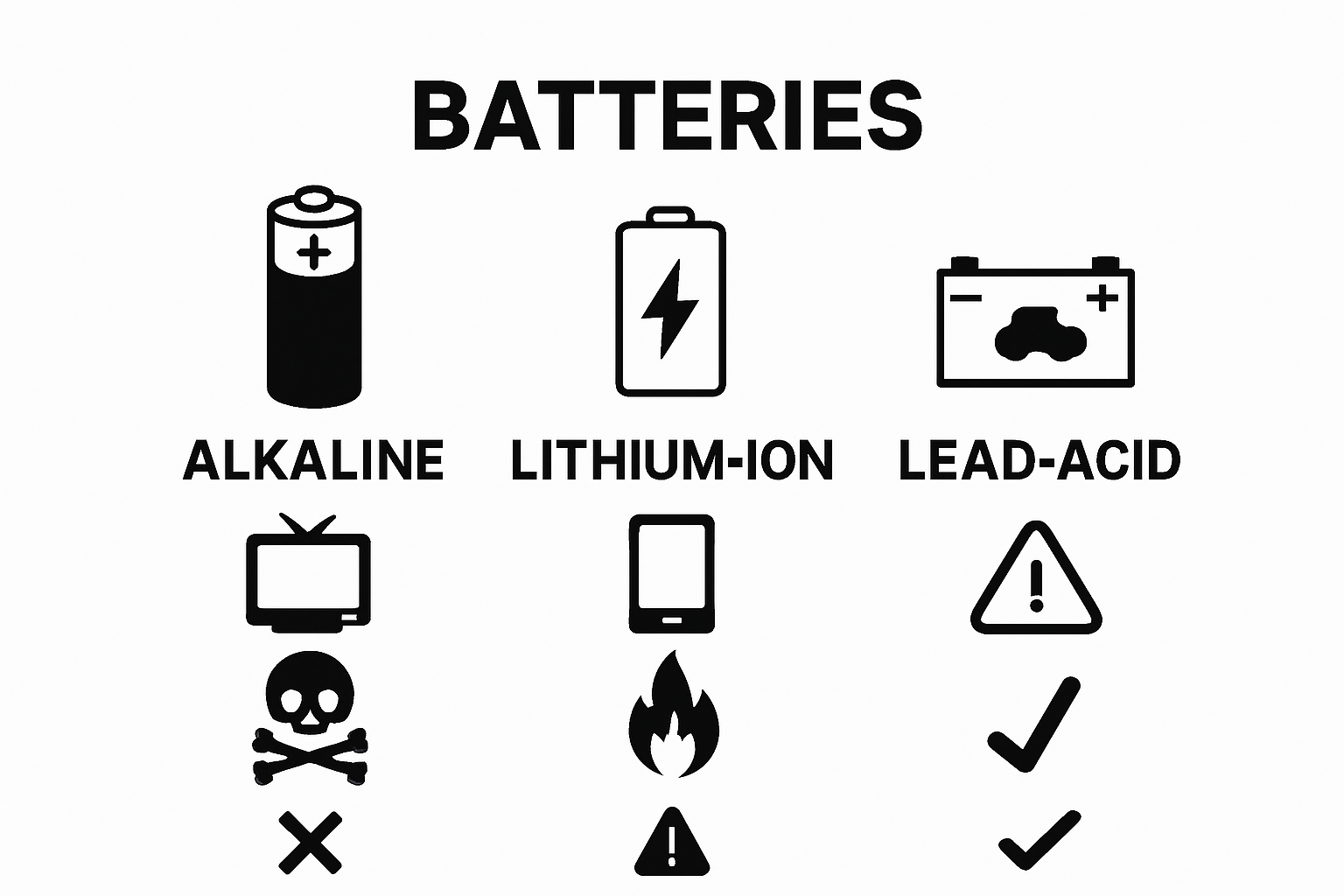
Infographic compares hazards and recycling status for three battery types

Understanding the Hazards Associated with Each Battery Type

Batteries, while essential in modern technology, present significant environmental and health risks that demand careful management and understanding. Each battery type carries unique hazards related to chemical composition, potential environmental impact, and safety considerations.

Chemical Composition and Toxicity Risks

Different battery types contain various toxic metals and chemicals that can pose substantial environmental and health risks. According to the Occupational Safety and Health Administration, exposure to these materials can lead to serious health complications:

  • Lead Batteries: Contain inorganic lead dust that can cause neurological damage, anemia, and reproductive health issues
  • Lithium-Ion Batteries: Contain volatile electrolytes that may cause chemical burns and potential fire hazards
  • Nickel-Cadmium Batteries: Include cadmium, a known carcinogenic metal that can cause significant kidney and bone damage

Understanding these chemical risks is crucial for implementing proper handling, storage, and disposal protocols. Learn more about managing hazardous waste risks to protect both human health and the environment.


Environmental Impact and Contamination Potential

Improper battery disposal can lead to severe environmental contamination. When batteries are discarded in standard waste streams, toxic metals can leach into soil and groundwater, causing long-term ecological damage. Different battery types present varying levels of environmental risk:

  • Alkaline Batteries: Contain mercury and other heavy metals that can contaminate water systems
  • Lithium Batteries: Risk spontaneous combustion and chemical leakage when damaged
  • Lead-Acid Batteries: Potential for significant soil and water pollution if not recycled correctly

Safety and Handling Considerations

Beyond chemical risks, batteries present physical safety challenges. Improper storage, charging, or handling can result in fires, explosions, and personal injury. Electric vehicle and hybrid car batteries, for instance, require specialized handling to prevent high-voltage shock hazards and potential thermal runaway events.

Businesses and individuals must prioritize proper battery management, including safe storage, regulated charging practices, and professional disposal services. Understanding these hazards is the first step towards responsible battery usage and environmental stewardship.

The Importance of Recycling Waste Batteries for the Environment

Battery recycling is a critical environmental strategy that reduces waste, conserves natural resources, and minimises potential ecological harm. By implementing comprehensive recycling processes, businesses and individuals can significantly mitigate the environmental impact of battery disposal.

Resource Conservation and Material Recovery

Recycling batteries enables the recovery of valuable metals and materials that would otherwise be lost in landfill waste. According to the United States Environmental Protection Agency, battery recycling helps prevent the release of hazardous substances while simultaneously conserving critical raw materials:

  • Metal Extraction: Recovering metals like lithium, cobalt, and nickel from used batteries
  • Reduced Mining Impact: Decreasing the need for new mineral extraction
  • Energy Conservation: Lower energy consumption compared to primary metal production

Learn more about our battery disposal solutions to support sustainable waste management practices.

Environmental Protection and Pollution Prevention

Improper battery disposal poses significant environmental risks. When batteries are discarded in standard waste streams, they can release toxic chemicals and heavy metals that contaminate soil and water systems. Effective recycling prevents these potential environmental hazards:

  • Groundwater Protection: Preventing lead, mercury, and cadmium from leaching into water sources
  • Soil Preservation: Reducing heavy metal contamination in agricultural and natural landscapes
  • Ecosystem Safety: Minimising risks to plant and animal life through responsible waste management

Economic and Circular Economy Benefits

Battery recycling extends beyond environmental advantages, contributing to broader economic and industrial sustainability. The process supports a circular economy model by transforming waste into valuable resources. Recycled battery materials can be reused in manufacturing new electronic components, reducing the demand for virgin materials and creating economic opportunities in the recycling sector.

Businesses and individuals play a crucial role in this environmental stewardship by choosing responsible battery disposal methods and supporting comprehensive recycling programmes. Each recycled battery represents a step towards a more sustainable and resource-efficient future.

What Can Be Recycled from Waste Batteries and How It Works

Battery recycling represents a sophisticated process of material recovery and environmental preservation, transforming potentially hazardous waste into valuable resources. Understanding the intricate methods of battery recycling is crucial for businesses and individuals committed to sustainable waste management practices.

Material Recovery and Extraction Techniques

According to the United States Environmental Protection Agency, battery recycling involves complex processes designed to extract and recover valuable materials. Different battery types require specific recycling methodologies:

  • Lithium-Ion Batteries: Recover lithium, cobalt, nickel, and manganese
  • Lead-Acid Batteries: Extract lead, plastic casings, and sulfuric acid
  • Nickel-Cadmium Batteries: Reclaim nickel, cadmium, and steel components

Learn more about our specialised battery disposal solutions to understand comprehensive recycling strategies.

Recycling Methodologies

Three primary recycling techniques are employed in battery material recovery:

  • Mechanical Processing: Involves shredding batteries, separating materials through physical sorting techniques
  • Pyrometallurgical Methods: Uses high-temperature processes to extract metals through thermal treatment
  • Hydrometallurgical Techniques: Employs chemical solutions to dissolve and separate metallic components

Each method targets specific battery compositions, ensuring maximum material recovery while minimising environmental impact.

This table summarises the major battery recycling methodologies discussed, including the key processes involved and their typical applications.

Recycling Method Key Process Description Typical Battery Types
Mechanical Processing Shredding and physically sorting materials Most household batteries
Pyrometallurgical Methods High-temperature thermal metal extraction Lead-acid, some lithium-ion
Hydrometallurgical Techniques Chemical dissolution to separate metal components Lithium-ion, nickel-cadmium

Environmental and Economic Implications

Battery recycling transcends waste management, representing a critical component of the circular economy. By recovering rare metals and reducing the demand for virgin material extraction, recycling processes contribute significantly to resource conservation. The recovered materials find applications in manufacturing new batteries, electronics, and industrial components, creating a sustainable loop of material utilisation.

Businesses engaging in comprehensive battery recycling not only mitigate environmental risks but also contribute to a more sustainable industrial ecosystem, transforming potential waste into valuable economic resources.

Key Concepts in Battery Disposal and Recycling Practices

Effective battery disposal and recycling require comprehensive understanding of complex environmental and regulatory frameworks. Businesses and organisations must navigate intricate processes to ensure responsible waste management and minimise potential ecological harm.

Regulatory Compliance and Waste Classification

According to the United States Environmental Protection Agency, battery disposal involves critical regulatory considerations:

  • Hazardous Waste Categorisation: Different battery types require specific handling protocols
  • Legal Reporting Requirements: Documentation of waste streams and disposal methods
  • Transportation Restrictions: Special handling for batteries containing toxic materials

Discover more about electronic waste regulations to ensure comprehensive compliance.

Collection and Segregation Strategies

Successful battery recycling depends on robust collection and segregation practices. Organisations must implement systematic approaches to separate different battery chemistries:

  • Colour-Coded Collection Containers: Distinguishing battery types for precise recycling
  • Staff Training Programmes: Educating personnel on proper waste identification
  • Dedicated Storage Areas: Preventing cross-contamination during temporary storage

Environmental Risk Mitigation

Battery disposal extends beyond mere waste management, representing a critical environmental protection strategy. Proper practices prevent potential contamination of soil, water systems, and broader ecological networks. Advanced recycling techniques transform potential environmental hazards into valuable resource recovery opportunities.

Businesses must view battery disposal not as an administrative burden, but as a fundamental responsibility towards environmental sustainability. By implementing rigorous disposal practices, organisations contribute to a circular economy model that minimises waste and maximises resource efficiency.

battery disposal recycling human

Make Battery Waste Management Simple, Safe and Responsible

Are you worried about the safety and environmental hazards of storing or disposing of used batteries? This article has shown how improper battery disposal can release hazardous chemicals, threaten water supplies and harm your compliance standards. The risks are real but you are not alone in facing them. Take the guesswork out of hazardous battery management with our support. Learn more about different battery types and safe disposal with our detailed Batteries Archives.

https://venturewaste.co.uk

Act now to protect your business and the environment. With Venture Waste Management you get tailored battery collection and responsible recycling solutions, all in line with UK regulations. Discover our fast and easy waste collection process and experience peace of mind when it comes to handling, transporting and recycling your batteries. Book your service today and keep your organisation compliant and your local community safe.

Frequently Asked Questions

What are the different types of batteries and their common uses?

Batteries are classified into primary (single-use) and rechargeable types. Primary batteries include alkaline batteries for household items, zinc-carbon batteries for low-drain devices, and button cells for watches. Rechargeable batteries, like lithium-ion and nickel-metal hydride, are used in smartphones, laptops, and electric vehicles.

What hazards are associated with different battery types?

Different batteries pose various hazards. Lead-acid batteries can release toxic lead, lithium-ion batteries may cause chemical burns or fires, and nickel-cadmium batteries contain cadmium, a known carcinogen. Proper handling and disposal of these batteries are essential to mitigate health risks.

Why is recycling batteries important for the environment?

Recycling batteries conserves natural resources by recovering valuable metals and materials, reduces pollution by preventing hazardous materials from contaminating soil and water, and supports a circular economy by reintroducing these materials back into use, thereby decreasing the need for virgin material extraction.

What recycling methods are used for waste batteries?

Common recycling methods include mechanical processing, which shreds batteries and sorts materials; pyrometallurgical methods, which use high temperatures to extract metals; and hydrometallurgical techniques, which employ chemical solutions to separate metallic components. Each method is tailored to maximise material recovery while minimising environmental impact.

school recycling classroom

Understanding Waste Management in Schools: A Thorough Explanation

Schools across the UK produce mountains of waste each year and in some institutions, this can reach hundreds of kilograms per week from just paper and food alone. Most people think this is just a problem for the janitor and a few bins. But these heaps of rubbish are actually being turned into powerful teaching tools that shape the next generation’s attitudes on sustainability.

Table of Contents

Quick Summary

Takeaway Explanation
Implement waste segregation systems Clear segregation points for recycling and disposal enhance efficiency in waste management.
Integrate waste education in curriculum Teaching students about waste management fosters responsibility and ecological awareness among young learners.
Adopt technological solutions Using smart waste tracking and sorting technologies improves data management and reduces overall waste generation.
Encourage preventive waste measures Promote practices like paperless communication and bulk purchases to significantly cut down on waste produced by schools.
Collaborate with the school community Engaging administrators, teachers, and students in waste management creates a unified approach to sustainable practices.

What is Waste Management in Schools?

Waste management in schools represents a comprehensive approach to systematically handling, reducing, and responsibly disposing of waste generated within educational environments. This process involves strategic planning, implementation of recycling programmes, and educational initiatives designed to minimise environmental impact and promote sustainable practices.

Understanding the Scope of School Waste

Educational institutions generate significant quantities of waste across multiple categories. These typically include:

Infographic showing school waste categories—paper, organic, electronic—with matching bins.

  • Paper and cardboard from classroom materials
  • Food waste from cafeterias and lunch areas
  • Electronic waste from computer laboratories and administrative offices
  • Packaging materials from school supplies
  • Plastic waste from various institutional activities

The complexity of waste management in schools extends beyond mere disposal, requiring nuanced strategies that balance practical waste reduction with environmental responsibility.

Below is a table summarising the main categories of waste produced within schools and their typical sources, providing a clear overview of waste streams to manage.

Waste Category Typical Sources in Schools
Paper and Cardboard Classroom materials, administrative offices
Food Waste Cafeterias, lunchboxes, staff rooms
Electronic Waste Computer labs, offices, IT equipment
Packaging Materials School supplies, deliveries, procurement
Plastic Waste Bottles, packaging, various activities
Hazardous Materials Laboratories, art rooms, cleaning supplies
General Waste Mixed residual waste from daily activities

Environmental and Educational Significance

Waste management in schools serves dual purposes: practical waste reduction and environmental education. By implementing robust waste management systems, schools can simultaneously reduce their ecological footprint and teach students critical sustainability skills. According to research published by ERIC, effective waste management programmes can transform educational spaces into living laboratories of environmental learning.

Schools in regions like Newcastle, Durham, and other North East educational institutions are increasingly recognising the importance of comprehensive waste management strategies. These approaches not only minimise landfill contributions but also cultivate a culture of environmental consciousness among students and staff.

Successful waste management in schools requires collaborative efforts involving administrators, teachers, students, and waste management professionals, creating a holistic approach to sustainable institutional practices.

Why is Waste Management Significant in Educational Institutions?

Waste management holds profound importance in educational institutions, extending far beyond simple rubbish disposal. It represents a critical intersection of environmental responsibility, financial management, and student education that shapes institutional sustainability and future societal attitudes.

This table compares the environmental, educational, and financial benefits of implementing waste management systems in schools, supporting understanding of why these programmes are significant.

Benefit Type Explanation Example Outcome
Environmental Reduces landfill use, conserves resources, lowers carbon footprint Less waste sent to landfill, greater recycling rates
Educational Integrates sustainability into curriculum and daily routines Students gain practical skills and environmental awareness
Financial Reduces disposal costs, enables more efficient resource utilisation, potential revenue Lower waste management bills, possible earnings from recycling
Social Builds a culture of environmental responsibility among staff and students School-wide environmental initiatives, peer-led programmes

Environmental Impact and Resource Conservation

Educational institutions generate substantial waste volumes that can significantly impact local environmental ecosystems. By implementing strategic waste management practices, schools can:

  • Reduce landfill contributions
  • Minimise carbon footprint
  • Conserve natural resources
  • Demonstrate ecological leadership

In regions like Newcastle and Durham, schools are increasingly recognising their potential to drive meaningful environmental change through responsible waste strategies. Explore our comprehensive waste management solutions tailored for educational settings.

Educational and Social Learning Opportunities

Waste management transcends technical processes, serving as a powerful educational platform. According to research from the U.S. Environmental Protection Agency, schools can transform waste management into an interactive learning experience that cultivates environmental consciousness among students.

By integrating waste reduction, recycling, and sustainability principles into curriculum and daily operations, educational institutions can nurture a generation of environmentally responsible citizens. Students learn practical skills such as waste segregation, understanding recycling processes, and recognising the broader ecological implications of their individual actions.

Financial and Operational Benefits

Beyond environmental considerations, effective waste management offers substantial financial advantages for educational institutions. Systematic waste reduction strategies can lead to significant cost savings through reduced disposal expenses, more efficient resource utilisation, and potential revenue generation from recyclable materials.

Schools that adopt comprehensive waste management approaches not only contribute to environmental preservation but also demonstrate fiscal responsibility and forward-thinking institutional management.

How Waste Management Systems Function in Schools

Waste management systems in educational institutions represent sophisticated, multifaceted approaches designed to systematically handle, reduce, and repurpose institutional waste. These systems integrate technological infrastructure, policy frameworks, and educational strategies to create comprehensive waste management solutions.

Infrastructure and Waste Segregation

Effective waste management begins with robust infrastructure and strategic segregation. Schools typically implement dedicated waste collection points with clearly labelled receptacles for different waste categories:

  • Recyclable materials (paper, cardboard, plastics)
  • Organic waste for composting
  • Electronic waste
  • General non-recyclable waste
  • Hazardous materials requiring specialised disposal

Learn about our step-by-step waste management guidance tailored for institutional environments.

Operational Monitoring and Reporting

Successful waste management systems rely on continuous monitoring and data-driven insights. According to research from the U.S. Environmental Protection Agency, schools implement tracking mechanisms to:

  • Measure total waste generation
  • Calculate recycling rates
  • Identify waste reduction opportunities
  • Assess environmental impact

In regions like Newcastle and Durham, educational institutions are increasingly adopting digital tracking tools that provide real-time waste management analytics, enabling more precise and responsive environmental strategies.

Educational Integration and Cultural Transformation

Beyond technical infrastructure, waste management systems function as dynamic educational platforms. They transform waste handling from a purely operational task into an interactive learning experience that cultivates environmental consciousness.

Schools integrate waste management principles directly into curriculum, teaching students about resource conservation, recycling processes, and individual environmental responsibility. This approach ensures that waste management becomes more than a procedural activity—it becomes a fundamental aspect of institutional culture and student development.

Key Concepts and Strategies for Effective Waste Management in Schools

Effective waste management in schools demands a holistic approach that integrates strategic planning, technological solutions, and educational initiatives. These strategies go beyond traditional waste disposal methods, focusing on comprehensive environmental stewardship and sustainable institutional practices.

Waste Reduction and Prevention Strategies

Preventative waste management represents the most efficient approach for educational institutions. Proactive waste reduction involves implementing systematic strategies that minimise waste generation from the outset:

  • Encouraging digital documentation and paperless communication
  • Promoting reusable water bottles and lunch containers
  • Implementing bulk purchasing to reduce packaging waste
  • Designing procurement policies that prioritise sustainable products
  • Establishing school-wide recycling and composting programmes

Discover advanced waste minimisation techniques tailored for institutional environments.

Technological and Infrastructural Interventions

Modern waste management in schools leverages technological solutions to enhance efficiency and tracking. According to research from waste management experts, institutions are increasingly adopting innovative approaches:

  • Smart waste sorting technologies
  • Digital waste tracking systems
  • Automated recycling stations
  • Data analytics for waste pattern identification
  • IoT-enabled waste management infrastructure

In regions like Newcastle and Durham, schools are pioneering technological interventions that transform waste management from a logistical challenge into a data-driven, sustainable practice.

Educational and Cultural Transformation

Ultimately, successful waste management transcends technical solutions. It requires fundamental cultural shifts that embed sustainability principles into institutional DNA. Schools must create comprehensive educational programmes that:

  • Integrate waste management into curriculum
  • Develop student leadership in sustainability
  • Create peer-led environmental initiatives
  • Provide practical skills in waste segregation
  • Foster a culture of environmental responsibility

By transforming waste management from an administrative task to an educational opportunity, schools can nurture environmentally conscious future generations.

school cafeteria waste sorting

Bring Sustainable Waste Solutions to Your School Today

Managing waste in schools is not just about getting rid of rubbish. It means protecting the environment, teaching students valuable habits and saving money. If your school is struggling with too much paper, leftover food or confusing recycling rules, you are not alone. Many institutions face challenges balancing practical waste reduction with building a strong culture of environmental responsibility. The right guidance makes all the difference in transforming waste management into a positive learning opportunity for students and staff.

Learn more about the waste collection process for schools

https://venturewaste.co.uk

Do not let school waste control your day. Act now and move towards a cleaner, greener future for your campus. Venture Waste Management offers easy-to-use solutions, from general waste and recycling to confidential document destruction and specialist support for educational settings. With coverage across the UK and a commitment to compliance, we handle your waste responsibly so you can focus on what matters most – education. Book your tailored waste collection through our quick online process at Venture Waste Management and show your staff and students how small changes can make a big difference. If you want to discover more about how the national waste network can benefit your school, visit our waste collection network guide now.

Frequently Asked Questions

What is waste management in schools?

Waste management in schools is a systematic approach to handling, reducing, and disposing of waste generated in educational environments. It includes recycling programmes and educational initiatives aimed at minimising environmental impact and promoting sustainable practices.

Why is waste management significant in educational institutions?

Waste management is crucial in educational institutions as it addresses environmental responsibility, financial management, and provides educational opportunities for students to learn about sustainability, thus shaping future societal attitudes.

How can schools implement effective waste management systems?

Schools can implement effective waste management systems by setting up robust infrastructure for waste segregation, monitoring waste generation, using digital tracking tools, and integrating waste management principles into the curriculum to foster an environmentally conscious culture.

What are some strategies for waste reduction in schools?

Some effective strategies for waste reduction in schools include encouraging digital documentation, promoting reusable lunch containers, bulk purchasing to reduce packaging waste, and implementing comprehensive recycling and composting programmes.