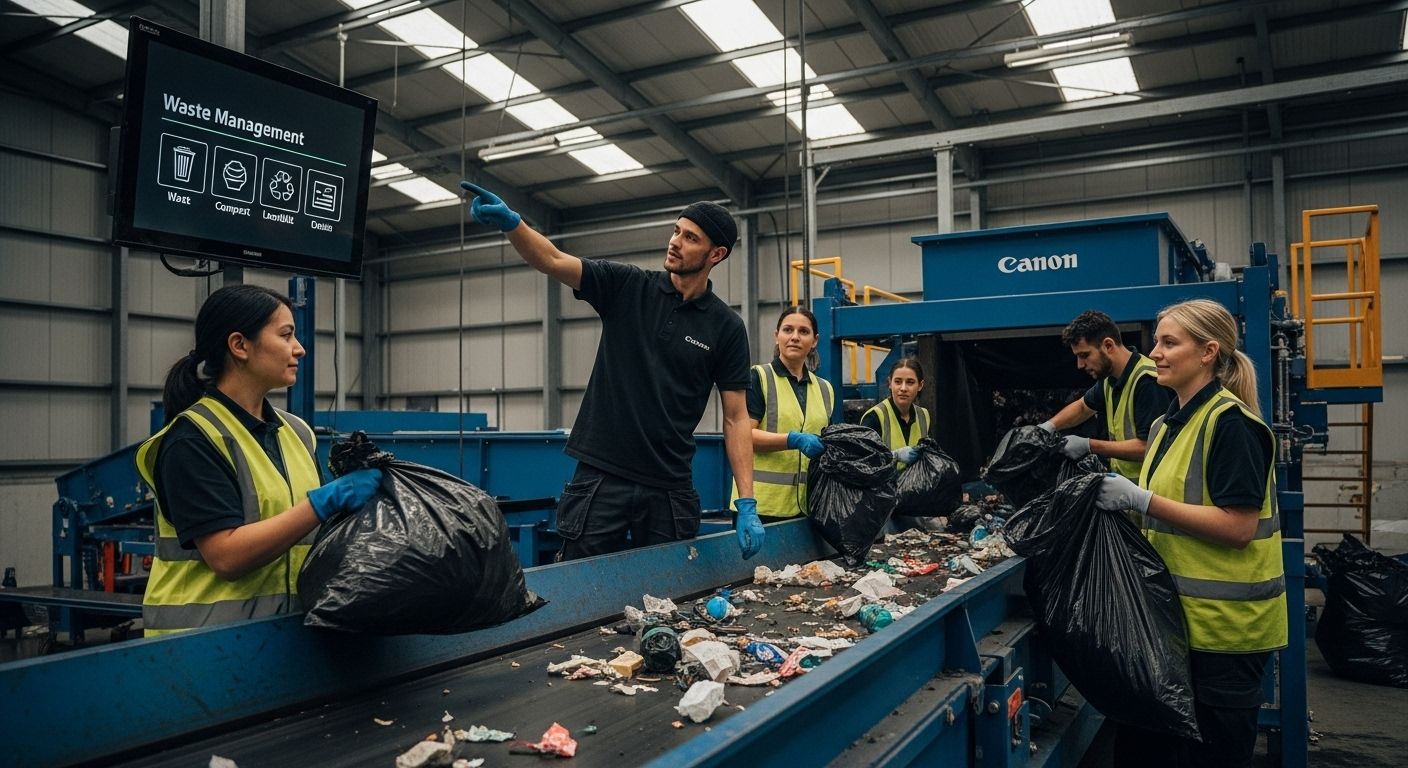
corporate social responsibility waste

Understanding Corporate Social Responsibility Waste Management

Corporate waste might seem like just mountains of rubbish needing removal, and many see it as an unavoidable cost of doing business. Yet, what actually happens to that waste is shaping reputations and bottom lines in ways most never expect. Companies that embrace corporate social responsibility in waste management are discovering that reducing waste can cut operational costs significantly and attract customers who care about sustainability.

Table of Contents

Quick Summary

Takeaway Explanation
Adopt proactive waste reduction strategies Companies should minimize waste at the source through innovative design and operational practices.
Implement robust recycling and reuse programs Establish comprehensive plans to recycle materials and find alternative uses to enhance sustainability.
Develop transparent waste management reporting Regularly report on waste practices to demonstrate accountability and commitment to CSR principles.
Invest in innovative waste reduction technologies Leverage new technologies to reduce waste generation and improve resource efficiency in operations.
View waste as a resource for economic opportunity Recognize that effective waste management can lower costs and create new revenue streams through recycling and resource recovery.

Defining Corporate Social Responsibility Waste

Corporate Social Responsibility (CSR) waste management represents a strategic approach where businesses take comprehensive accountability for their environmental impact, focusing specifically on waste generation, reduction, and sustainable disposal. This approach goes beyond mere legal compliance, embedding environmental stewardship into the core operational philosophy of an organisation.

The Core Principles of CSR Waste Management

CSR waste management is fundamentally about recognising that businesses have a broader responsibility towards environmental sustainability. Companies adopting this approach understand that waste is not just a byproduct to be discarded, but a critical resource that requires thoughtful management. The key principles include:

  • Minimising waste generation through proactive design and operational strategies
  • Implementing comprehensive recycling and reuse programmes
  • Ensuring transparent reporting of waste management practices
  • Investing in innovative waste reduction technologies

Strategic Approaches to Responsible Waste Management

Businesses in the North East, from Newcastle to Durham, are increasingly adopting sophisticated CSR waste management strategies. According to the UK government’s waste management guidelines, these strategies involve a holistic approach that considers the entire lifecycle of materials and products.

Organisations now recognise that effective waste management is not just an environmental imperative but also a significant economic opportunity. By reducing waste, companies can lower operational costs, enhance their brand reputation, and contribute to a more sustainable economic model.

For those seeking a comprehensive understanding of waste management processes, our step-by-step business guide provides detailed insights into implementing robust CSR waste strategies that align with both environmental goals and business objectives.

The Importance of Waste Management in Business

Waste management has transformed from a simple operational necessity to a critical strategic function that directly impacts a business’s financial performance, environmental footprint, and corporate reputation. In the contemporary business landscape, effective waste management is no longer optional but a fundamental responsibility that influences long-term sustainability and economic viability.

Economic Implications of Waste Management

Business waste management represents a significant economic opportunity. Companies that implement robust waste reduction strategies can substantially decrease operational costs. By minimising waste generation, organisations reduce disposal expenses, raw material purchases, and potential environmental compliance penalties.

Key economic benefits include:

  • Reduced waste disposal costs
  • Lower raw material procurement expenses
  • Enhanced operational efficiency
  • Potential revenue from recycling and material recovery

Environmental and Regulatory Compliance

With increasingly stringent environmental regulations, businesses must proactively manage their waste streams. Research from the UK government’s waste management guidelines emphasises that organisations must develop comprehensive waste management strategies to meet legal requirements and contribute to national sustainability goals.

Companies in industrial regions like Newcastle, Sunderland, and Durham are recognising that waste management is not just about compliance, but about demonstrating environmental leadership. By adopting advanced waste management practices, businesses can differentiate themselves in competitive markets and appeal to environmentally conscious consumers and investors.

For businesses seeking practical strategies to optimise their waste management approach while saving money on waste disposal, understanding the comprehensive benefits of strategic waste management is crucial.

How Corporate Social Responsibility Shapes Waste Policies

Corporate Social Responsibility (CSR) has emerged as a powerful catalyst in transforming waste management policies, driving businesses beyond traditional regulatory compliance towards more proactive and sustainable environmental strategies. The evolution of waste policies is now intrinsically linked to corporate ethical commitments and environmental stewardship.

Policy Development and Strategic Frameworks

Corporate waste policies are no longer passive compliance documents but dynamic strategic frameworks that reflect an organisation’s commitment to environmental sustainability. These policies are increasingly shaped by CSR principles, which demand transparency, accountability, and continuous improvement in waste management practices.

Key elements influencing policy development include:

  • Stakeholder expectations and environmental consciousness
  • Long-term sustainability goals
  • Economic incentives for waste reduction
  • Reputational risks associated with poor waste management

Regulatory Influence and Corporate Adaptation

According to research exploring sustainable corporate waste management, businesses are developing innovative waste policies that extend beyond traditional legal requirements. Companies in industrial regions like Newcastle and Durham are recognising that effective waste management is a strategic differentiator in competitive markets.

Businesses are increasingly viewing waste not as a disposal challenge but as a potential resource, driving policy innovations that promote circular economy principles. This shift encourages comprehensive waste management solutions that balance environmental responsibility with economic pragmatism.

Key Concepts in Effective Waste Management

Effective waste management transcends simple disposal, representing a sophisticated approach to resource conservation, environmental protection, and sustainable business practices. Understanding the fundamental concepts enables organisations to transform waste from a problematic byproduct into a strategic opportunity for innovation and economic efficiency.

Hierarchy of Waste Management

The waste management hierarchy provides a systematic framework for prioritising waste reduction strategies.
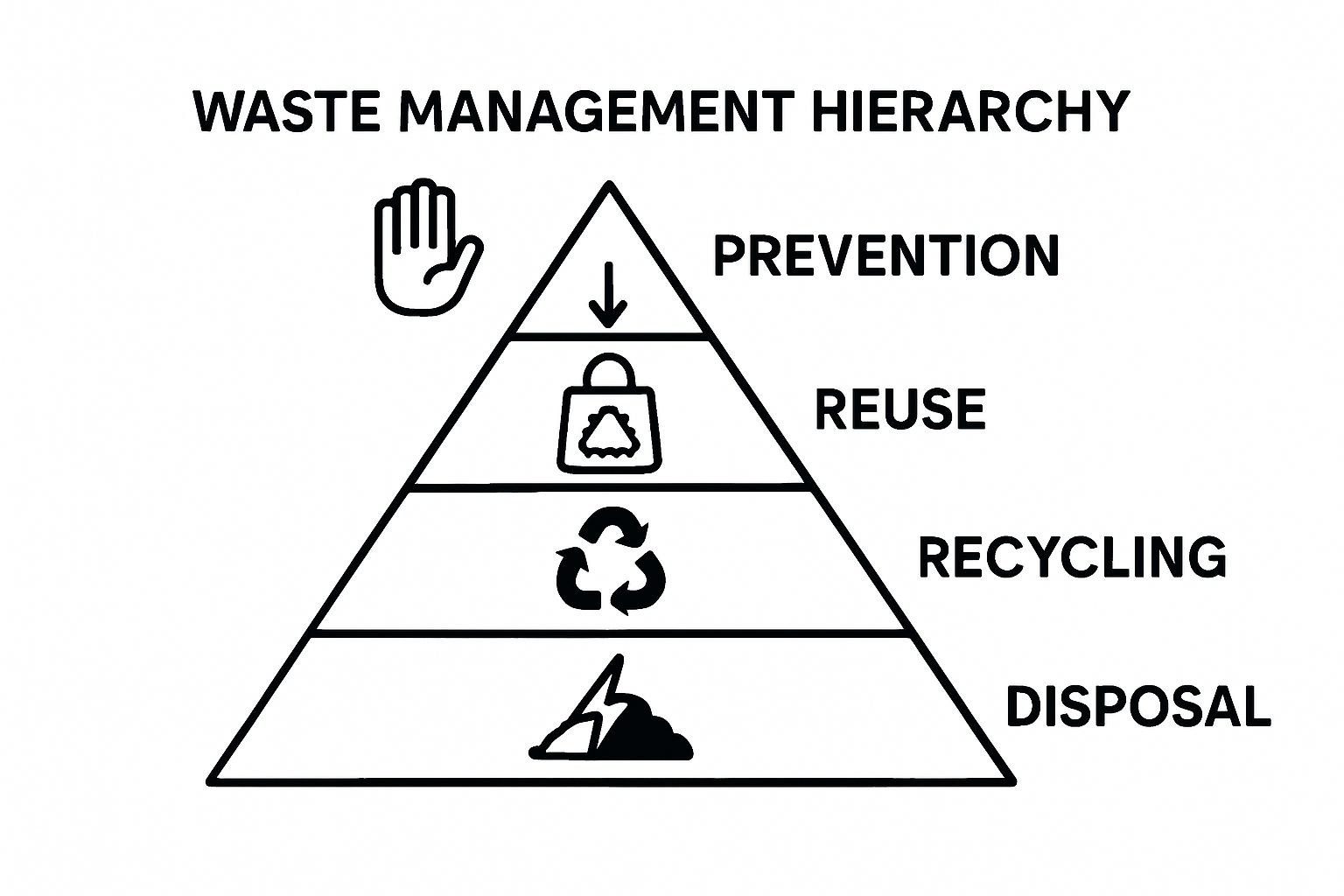
Waste management hierarchy pyramid with icons This hierarchical approach guides businesses in making environmentally responsible decisions about waste handling, emphasising prevention and minimisation before considering alternative disposal methods.

Below is a comparison table outlining each stage of the waste management hierarchy and its core aim, supporting clearer understanding of responsible waste handling priorities.

Stage Aim
Prevention Reduce waste generation at the source
Reuse Find alternative purposes for materials before disposal
Recycling Convert waste materials into new products
Recovery Extract energy or value from waste
Disposal Final option when no other alternatives exist

The core principles of the waste management hierarchy include:
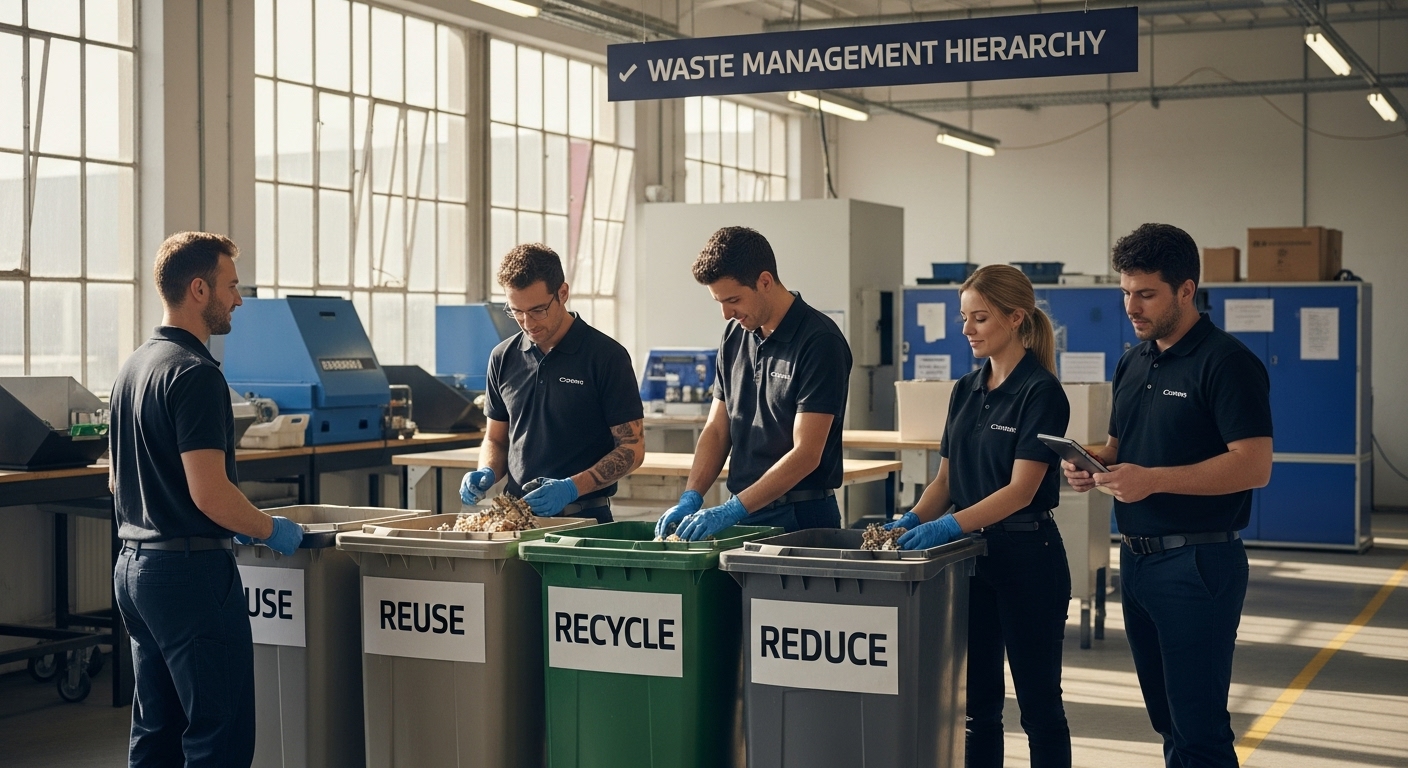
waste management hierarchy, recycling

  • Prevention: Reducing waste generation at the source
  • Reuse: Finding alternative purposes for materials before disposal
  • Recycling: Converting waste materials into new products
  • Recovery: Extracting energy or value from waste
  • Disposal: Final option when no other alternatives exist

Resource Efficiency and Circular Economy

Modern waste management integrates the concept of a circular economy, where resources are kept in use for as long as possible. Research from waste management experts demonstrates that businesses can significantly reduce environmental impact by redesigning products and processes to minimise waste generation.

In industrial regions like Newcastle and Durham, companies are pioneering innovative approaches to how to reduce waste, transforming waste management from a cost centre into a potential revenue stream and competitive advantage.

Real-World Examples of Corporate Social Responsibility Waste

Corporate Social Responsibility (CSR) waste management is not merely a theoretical concept but a practical approach demonstrated by forward-thinking organisations across various sectors. These real-world examples showcase how businesses are transforming waste management from a compliance requirement into a strategic opportunity for environmental and economic innovation.

Manufacturing and Industrial Sector Innovations

Companies are developing groundbreaking strategies to reduce, reuse, and recycle waste materials, turning potential environmental challenges into opportunities for efficiency and sustainability. In the North East, manufacturers are pioneering circular economy approaches that minimise waste generation and maximise resource utilisation.

Notable strategies include:

  • Implementing closed-loop manufacturing processes
  • Developing alternative uses for industrial byproducts
  • Creating new revenue streams from waste materials
  • Redesigning product lifecycles to reduce waste generation

Technology and Electronic Waste Management

Technology companies are at the forefront of innovative waste management practices. The UK government’s Resources and Waste Strategy highlights the importance of electronic waste (WEEE) management as a critical component of corporate environmental responsibility.

Businesses are increasingly recognising the strategic importance of responsible electronic waste management. For organisations seeking detailed guidance on managing electronic waste, our comprehensive WEEE waste management guide provides invaluable insights into transforming waste challenges into sustainable solutions.

Transform Your CSR Waste Management into a Business Advantage

If your organisation is grappling with the challenges of responsible waste management, you are not alone. Many businesses struggle to minimise waste, maintain compliance, and adopt sustainable practices while balancing operational costs. As discussed in this article, effective corporate social responsibility waste management goes far beyond simple disposal. It is about proactive strategies, clear waste collection processes, and aligning your practices with the latest waste collection network standards that support both the environment and your bottom line.
https://venturewaste.co.uk

Now is the time to act and put your CSR commitments into practice. Start streamlining your business waste with the experts at Venture Waste Management. Discover our step-by-step waste collection process for UK businesses and be confident you are fully compliant, cost-efficient, and protecting the environment. Visit our site now to see how simple and effective responsible waste management can be for your business.

Frequently Asked Questions

What is Corporate Social Responsibility (CSR) in waste management?

Corporate Social Responsibility in waste management refers to the commitment of businesses to manage their waste generation and disposal sustainably, aiming to reduce environmental impact while complying with regulations.

What are the core principles of CSR waste management?

The core principles include minimising waste generation, implementing recycling and reuse programmes, ensuring transparency in reporting practices, and investing in innovative waste reduction technologies.

How can businesses benefit economically from effective waste management?

Effective waste management can lead to reduced disposal costs, lower procurement expenses for raw materials, enhanced operational efficiency, and potential revenue from recycling and material recovery.

What role does the waste management hierarchy play in CSR strategies?

The waste management hierarchy prioritises waste management strategies, focusing on prevention and minimisation first, followed by reuse, recycling, recovery, and disposal, guiding companies in making environmentally responsible decisions.

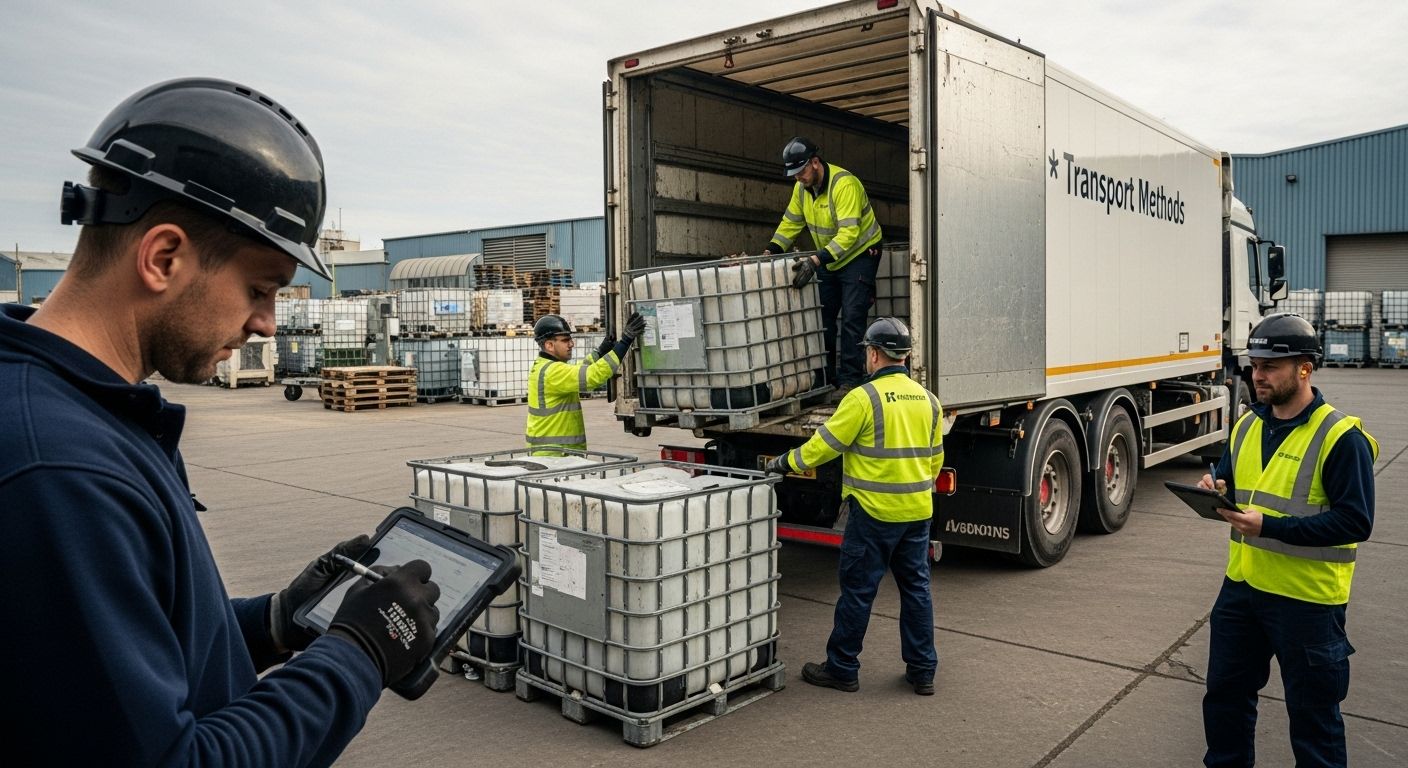
Understanding Responsible Waste Transport in the UK

waste segregation workplace

Understanding the Importance of Waste Segregation

Waste segregation might seem straightforward. Separate your rubbish and help the environment, right? Yet proper segregation can boost recycling rates by as much as 60 percent while cutting environmental contamination dramatically. Most people focus only on the sorting part and overlook the ripple effect this simple act has on business costs, compliance, and even corporate reputation.

Table of Contents

Quick Summary

Takeaway Explanation
Proper waste segregation enhances recycling rates. Separating waste at disposal boosts recycling efforts and reduces landfill use, helping protect the environment.
Segregation can lower disposal costs for businesses. By identifying recyclable materials, companies can decrease expenses associated with waste disposal.
Hazardous waste requires special handling. Businesses must implement strict protocols for hazardous materials to prevent environmental contamination and comply with regulations.
Sustainable practices improve corporate reputation. Companies engaging in effective waste management can enhance their public image and attract environmentally conscious customers.
Education is vital for effective waste sorting. Providing clear guidelines and educational resources ensures individuals and businesses consistently implement proper waste separation techniques.

What is Waste Segregation and Its Basics?

Waste segregation represents a critical environmental management strategy that transforms how societies handle rubbish and recyclable materials. At its core, waste segregation is the systematic process of separating different types of waste into distinct categories at the point of disposal, enabling more efficient recycling, treatment, and disposal processes.

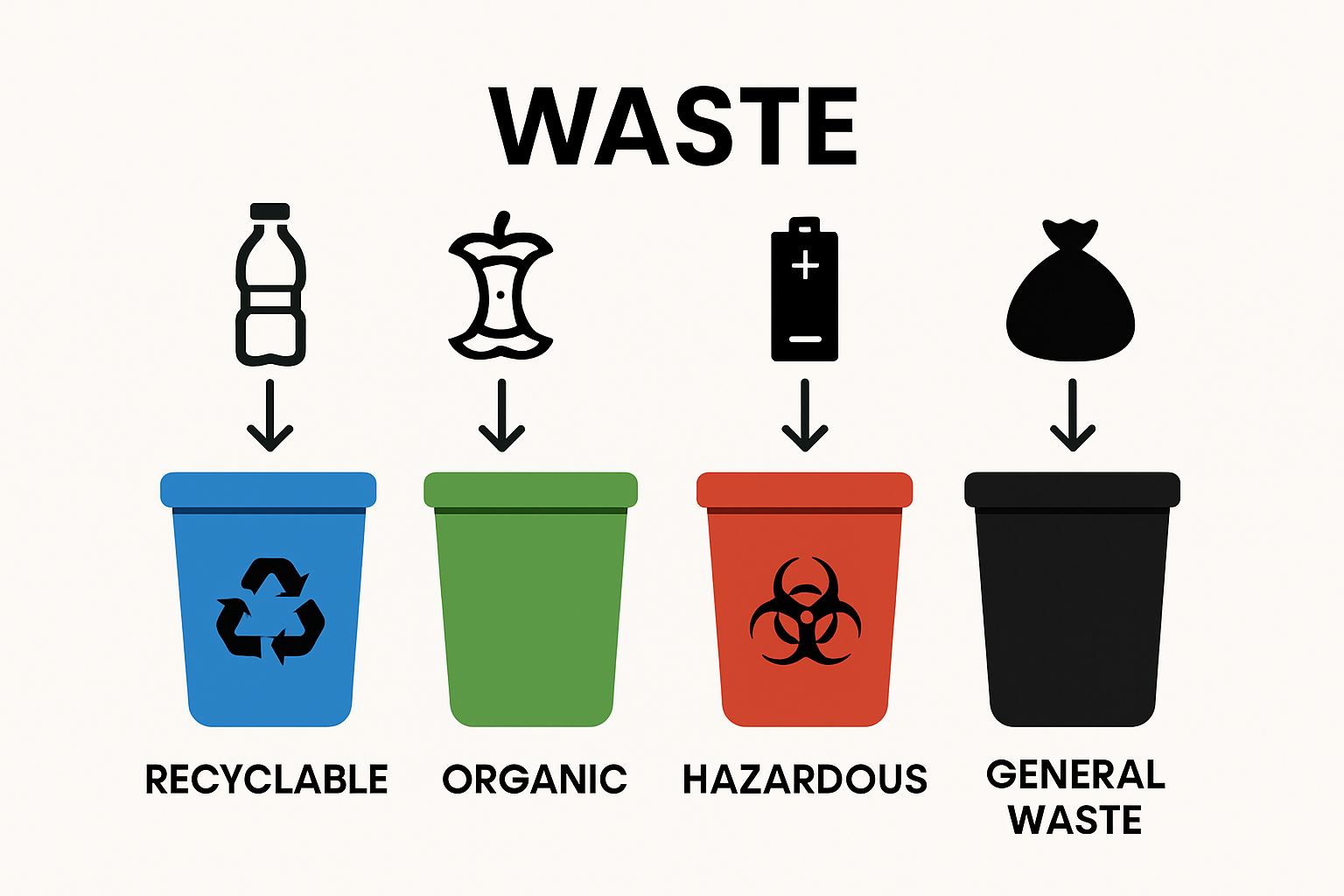
Below is a table organising the main categories of waste and their examples, helping clarify distinctions for effective waste segregation.

Waste Category Typical Examples Special Considerations
Recyclable Materials Paper, cardboard, plastics, glass, metal items Must be clean and free from contamination
Organic Waste Food scraps, garden trimmings, biodegradable materials Suitable for composting or anaerobic digestion
Hazardous Waste Chemicals, batteries, electronic equipment Requires specialised handling and disposal
General Waste Non-recyclable items Sent to landfill; minimised where possible

Understanding Waste Categories

Effective waste segregation involves recognising and separating waste into specific groups. These typically include:

  • Recyclable Materials: Paper, cardboard, plastics, glass, and metal items that can be processed and reused
  • Organic Waste: Food scraps, garden trimmings, and biodegradable materials suitable for composting
  • Hazardous Waste: Chemicals, batteries, electronic equipment, and other potentially harmful substances requiring specialised disposal
  • General Waste: Non-recyclable items that must be sent to landfills

According to research from ResearchGate, proper waste segregation can significantly increase recycling rates and dramatically reduce environmental contamination.

The Practical Implementation

Implementing waste segregation requires infrastructure, education, and individual commitment. Businesses and households must have clearly marked bins, understand waste categorisation rules, and consistently apply separation principles. Newcastle and Durham, like many cities across the North East, have been pioneering comprehensive waste management programmes that emphasise segregation at source.

For businesses looking to improve their waste management practices, our comprehensive waste management guide provides detailed insights into effective waste handling strategies. By understanding and implementing proper waste segregation, organisations can reduce their environmental footprint, potentially lower disposal costs, and contribute to a more sustainable future.

Why Waste Segregation Matters for Businesses

For modern businesses, waste segregation is not just an environmental responsibility but a strategic operational approach that offers substantial economic and reputational benefits. In an era of increasing environmental consciousness, companies that demonstrate robust waste management practices position themselves as responsible corporate citizens.

Economic and Compliance Benefits

Businesses implementing effective waste segregation strategies can realise significant financial advantages. By separating waste streams, organisations can:

  • Reduce Disposal Costs: Minimise landfill waste and associated disposal fees
  • Generate Revenue: Sell recyclable materials to specialised recycling companies
  • Avoid Regulatory Penalties: Comply with environmental regulations and prevent potential fines
  • Improve Operational Efficiency: Streamline waste management processes

According to The National Archives, organisational practices that maintain clear documentation and systematic approaches demonstrate professional management.

Environmental and Reputation Management

Beyond financial considerations, waste segregation significantly impacts a company’s environmental footprint and public perception. Businesses in Newcastle, Durham, and across the North East are increasingly recognising that sustainable waste management is not optional but essential.

Our comprehensive guide on reducing business waste offers detailed strategies for organisations looking to enhance their environmental credentials. By implementing robust waste segregation practices, businesses can showcase their commitment to sustainability, potentially attracting environmentally conscious customers and investors.

How Waste Segregation Works in Different Settings

Waste segregation is not a uniform process but a nuanced approach that varies significantly across different organisational environments. Each sector requires tailored strategies to effectively manage and separate waste streams, reflecting the unique characteristics of their operational context.

This table compares how waste segregation is implemented across different sectors, providing a clear overview of unique requirements in each setting.

Sector/Setting Key Waste Types Managed Distinctive Practices or Challenges
Industrial/Manufacturing Production waste, hazardous materials, recyclables Strict protocols for hazardous waste
Healthcare/Specialist Infectious, pharmaceutical, sharps, medical waste Precise categorisation, health risk management
General Business/Offices General waste, recyclables, organic waste Employee education, clear bin labelling
Households General waste, recyclables, organic waste Consistency in sorting, local council guidelines

Industrial and Manufacturing Environments

In industrial settings, waste segregation becomes a complex and critical operational requirement. Manufacturing facilities generate diverse waste types that demand sophisticated separation techniques:

  • Production Waste: Metal offcuts, plastic remnants, and manufacturing byproducts
  • Hazardous Materials: Chemical residues, contaminated equipment, and potentially dangerous substances
  • Recyclable Industrial Materials: Clean metal, plastic, and electronic components
  • General Industrial Waste: Non-recyclable materials from production processes

According to UK Environment Agency guidelines, businesses must implement strict protocols to prevent hazardous waste mixing, ensuring safe disposal and environmental protection.

Healthcare and Specialist Facilities

Healthcare environments represent some of the most complex waste segregation scenarios. Medical facilities must categorise waste with exceptional precision to manage potential health risks:

  • Infectious Waste: Materials contaminated with biological hazards
  • Pharmaceutical Waste: Expired or unused medications
  • Sharp Objects: Needles, scalpels, and medical instruments
  • General Medical Waste: Non-hazardous materials like packaging

Our comprehensive waste collection guide provides detailed insights into managing complex waste streams across different sectors. By understanding specific segregation requirements, organisations can create safer, more efficient waste management systems that protect both human health and the environment.

Key Concepts and Types of Waste in Segregation

Waste segregation demands a comprehensive understanding of different waste categories, their characteristics, and potential environmental impacts. By recognising the nuanced nature of waste streams, organisations can develop more effective and sustainable waste management strategies.

Waste Classification Framework

The waste classification system provides a structured approach to identifying and managing different waste types. Understanding these classifications is crucial for proper segregation and disposal:

Infographic showing four main waste segregation categories with icons

  • Hazardous Waste: Materials containing substances that pose significant risks to human health or the environment
  • Non-Hazardous Waste: Materials that do not present immediate environmental or health dangers
  • Inert Waste: Materials that do not undergo significant physical, chemical, or biological transformations
  • Recyclable Waste: Materials that can be processed and reused in manufacturing

According to UK Environment Agency guidelines, businesses must implement strict protocols to prevent mixing different waste types, ensuring safe and responsible disposal.

Practical Waste Segregation Principles

Effective waste segregation goes beyond simple categorisation. It requires a holistic approach that considers the entire waste lifecycle, from generation to final disposal. Organisations in Newcastle, Durham, and across the North East must develop robust systems that:

  • Identify waste streams accurately
  • Provide appropriate containment and labelling
  • Ensure safe transportation and processing
  • Minimise environmental contamination

Our comprehensive waste management guide offers in-depth insights into developing effective waste segregation strategies. By understanding the intricate details of waste classification, businesses can transform their approach to waste management, contributing to a more sustainable and environmentally responsible future.

Real-World Impacts of Effective Waste Segregation

Waste segregation transcends theoretical concepts, delivering tangible environmental, economic, and social benefits that reshape how organisations approach resource management. By implementing systematic waste separation, businesses can create meaningful positive change across multiple dimensions.

Environmental Transformation

Effective waste segregation directly contributes to environmental preservation and sustainability. The practical implications include:

  • Reduced Landfill Pressure: Minimising non-recyclable waste sent to landfills
  • Lower Carbon Emissions: Decreasing energy consumption through efficient recycling processes
  • Resource Conservation: Enabling material recovery and reducing raw material extraction
  • Ecosystem Protection: Preventing contamination of soil, water, and natural habitats

Businesses across Newcastle, Durham, and the North East are witnessing how strategic waste management can substantially mitigate environmental degradation.

Economic and Social Benefits

Beyond environmental impact, waste segregation generates significant economic advantages. Companies that prioritise comprehensive waste management strategies often experience:

  • Cost Savings: Reduced waste disposal expenses
  • Revenue Generation: Selling recyclable materials
  • Enhanced Corporate Reputation: Demonstrating environmental responsibility
  • Compliance with Regulatory Standards: Avoiding potential financial penalties

Our comprehensive guide on reducing waste provides deeper insights into transforming waste management from a compliance requirement to a strategic business opportunity. By understanding and implementing robust waste segregation practices, organisations can simultaneously address environmental challenges and create economic value.

industrial waste segregation uk

Unlock the Full Potential of Waste Segregation with Venture Waste

Are you striving to master effective waste segregation in your business or home but facing issues like unclear processes, regulatory concerns, or the risk of environmental harm? The article highlighted the importance of separating hazardous, recyclable, and confidential materials, showing how complex waste management can be. Many companies struggle with understanding the right steps and ensuring every type of waste receives the correct treatment. This can lead to higher costs, compliance penalties, and a bigger environmental footprint.

See how our Waste Collection Process in the UK for Businesses 2025 transforms confusion into confidence with clear, simple, and compliant waste handling methods for every category.

https://venturewaste.co.uk

Take control of your waste streams today. Join forces with Venture Waste Management and experience a straightforward three-step booking system that ensures legal compliance and environmental care from start to finish. Do not let uncertainty hold your business back. Explore our waste collection network now for a custom solution tailored to your needs.

Frequently Asked Questions

What is waste segregation?

Waste segregation is the process of separating different types of waste into distinct categories at the point of disposal to enable more efficient recycling, treatment, and disposal.

Why is waste segregation important for businesses?

Waste segregation is essential for businesses as it reduces disposal costs, generates revenue from recyclables, ensures compliance with regulations, and improves operational efficiency while also enhancing environmental responsibility and public perception.

What are the main categories of waste in segregation?

The main categories of waste in segregation include recyclable materials (paper, plastics, glass), organic waste (food scraps), hazardous waste (chemicals, batteries), and general waste (non-recyclable items).

How can businesses implement effective waste segregation practices?

Businesses can implement effective waste segregation by providing clearly marked bins, educating staff on waste categorisation rules, and developing systematic approaches to ensure consistent and accurate waste separation.

waste segregation audit

How to Segregate Waste Effectively for Your Business

Most businesses think sorting waste is as simple as tossing paper in one bin and plastics in another. Yet, companies that conduct detailed waste audits often uncover hidden costs and inefficiencies, with some businesses saving up to 20 percent on disposal fees after reassessment. Many overlook that effective waste segregation is not just about compliance and neatness. It is the driving force that can actually save money, sharpen business practices, and set you apart in environmental responsibility.

Table of Contents

Quick Summary

Key Point Explanation
1. Assess Current Waste Practices Conduct a comprehensive audit to identify waste types and volumes across your operations.
2. Categorise Waste Types Classify your waste into specific categories to ensure proper handling and compliance with regulations.
3. Create Clear Segregation Stations Set up colour-coded waste stations with clear signage in high-traffic areas for effective sorting.
4. Train Staff on Procedures Implement engaging training to educate employees about waste segregation and its importance.
5. Regularly Monitor and Audit Establish a routine for audits to assess and improve waste management practices continuously.

Step 1: Assess Your Current Waste Management Practices

Understanding your current waste management practices is the foundational step towards creating an effective waste segregation strategy for your business. This initial assessment provides critical insights into your existing waste streams, helping you identify opportunities for improvement and more sustainable disposal methods.

Begin by conducting a comprehensive waste audit across all areas of your business operations. This involves carefully documenting the types and quantities of waste generated by different departments. Manufacturing facilities in Newcastle might track industrial waste differently from office environments in Durham, but the core principles remain consistent. Walk through each workspace systematically, noting waste categories such as:

  • Paper and cardboard
  • Electronic equipment
  • Organic waste
  • Hazardous materials
  • Recyclable plastics
  • General mixed waste

Utilise detailed recording methods that capture not just the volume of waste, but also its current disposal route. Take photographs, create spreadsheets, and interview department managers to gain a holistic understanding of your waste generation patterns. Pay special attention to waste volumes during peak business periods and identify any inconsistencies in current waste handling practices.

Analyse the financial and environmental implications of your current waste management approach. Calculate the total waste disposal costs and examine how much waste is currently being sent to landfill versus being recycled or repurposed. This analysis will help you understand the potential cost savings and environmental benefits of implementing a more strategic waste segregation system.

Below is a summary table outlining the main business waste types to help you clarify handling requirements and legal considerations at a glance.

Waste Type Common Examples Special Handling Requirement
Recyclable Materials Paper, cardboard, plastics, metals Follow recycling collection schedules
Electronic Waste Computers, printers, cables Process under WEEE regulations
Organic Waste Food scraps, coffee grounds Contain in separate food waste bins
Hazardous Materials Chemicals, batteries, cleaning agents Use certified containment and disposal
General Mixed Waste Non-recyclable packaging, dirty wrappers Dispose as landfill or residual waste
Confidential Document Waste Shredded paperwork, sensitive files Secure disposal via confidential waste service

To support your assessment, explore our comprehensive guide on waste management strategies that can help businesses optimise their waste disposal processes. The goal of this initial step is to create a clear, detailed snapshot of your current waste management landscape, providing the foundation for developing a more efficient and sustainable waste segregation strategy.

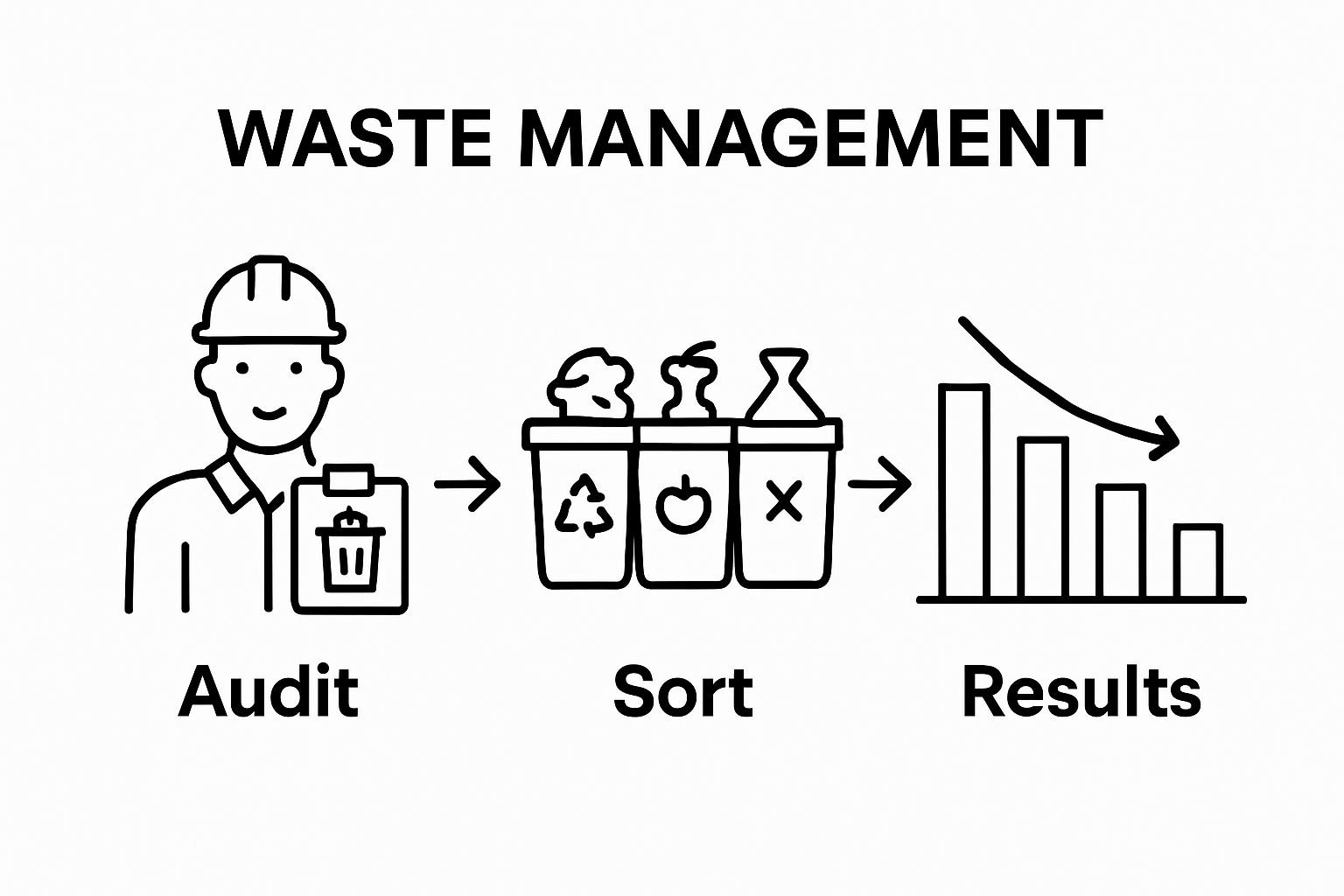
Three-step waste segregation process with audit, sorting bins, and reduced waste chart

Step 2: Identify Types of Waste to Segregate

Identifying the specific types of waste your business generates is crucial for developing an effective waste segregation strategy. This step transforms your initial waste audit into a targeted approach for responsible waste management. Different industries and sectors produce unique waste streams that require specialised handling and disposal methods.

Start by categorising your waste into primary groups that reflect both regulatory requirements and environmental considerations. Waste types are not uniform across businesses, and understanding the nuanced differences is key to proper segregation. Manufacturing facilities in Sunderland might generate significantly different waste compared to office environments in Newcastle, but the fundamental classification principles remain consistent.

Classify your waste into these critical categories:

  • Recyclable materials (paper, cardboard, plastics, metals)
  • Electronic waste (WEEE regulations apply)
  • Organic waste
  • Hazardous materials
  • General mixed waste
  • Confidential document waste

Carefully document each waste type’s specific characteristics, including potential environmental impact and legal disposal requirements. Consider the physical properties, potential for contamination, and recycling potential of each waste stream. Some materials require specialised handling due to environmental or safety regulations. For instance, electronic equipment must be processed according to WEEE regulations, while chemical waste demands stringent containment and disposal protocols.

Learn more about waste classification for businesses to ensure you’re following the most up-to-date guidelines. By meticulously identifying and categorising your waste, you create a foundation for more efficient, environmentally responsible waste management. The goal is not just compliance, but developing a comprehensive approach that minimises environmental impact and potentially reduces disposal costs.

The following table provides an overview of each waste segregation step, its aim, and a key action to implement at your business.

Step Purpose Key Action
Assess Current Waste Practices Identify waste volumes and inefficiencies Conduct a detailed waste audit
Identify Types of Waste to Segregate Ensure correct handling and regulatory compliance Catalogue all major waste types
Set Up Waste Segregation Stations Facilitate effective on-site sorting Install labelled, colour-coded waste bins
Train Staff on Segregation Procedures Achieve accurate and consistent waste sorting Deliver hands-on staff training
Monitor and Audit Waste Segregation Maintain quality and identify ongoing improvements Institute regular inspections and reviews
Adjust and Improve Your Management Strategy Increase cost savings and sustainability Analyse results and update practices accordingly

Step 3: Set Up Waste Segregation Stations

Creating effective waste segregation stations is a critical step in transforming your waste management strategy from theoretical planning to practical implementation. These dedicated areas will serve as the central hub for sorting and managing different waste streams throughout your business premises.

Design your segregation stations with clarity and accessibility in mind. Colour-coded containers are essential for quick and intuitive waste sorting. Each station should feature clearly labelled bins with distinct colours representing different waste categories. For instance, blue might represent recyclable paper, green for organic waste, red for hazardous materials, and black for general waste. Position these stations strategically in high-traffic areas like break rooms, office spaces, production floors, and near waste collection points.

Ensure each segregation station includes comprehensive signage that provides clear, visual guidance on proper waste disposal. These instructions should be simple enough for employees to understand at a glance. Consider creating laminated infographics that demonstrate exactly which items belong in each bin, including common examples and potential contamination warnings. This visual approach helps reduce sorting errors and promotes consistent waste management practices.

Consider the specific needs of different workplace areas:

  • Manufacturing zones require robust, industrial-grade segregation containers
  • Office environments need sleek, space-efficient waste stations
  • Kitchens and break areas need separate food waste and recycling bins
  • Outdoor areas should have weather-resistant waste collection points

Explore our comprehensive guide to waste compliance for additional insights into setting up effective waste management systems. By creating well-designed, user-friendly segregation stations, you transform waste management from a challenging task into an intuitive, integrated part of your business operations. Regular training and clear communication will ensure your employees understand and embrace these new waste sorting practices.

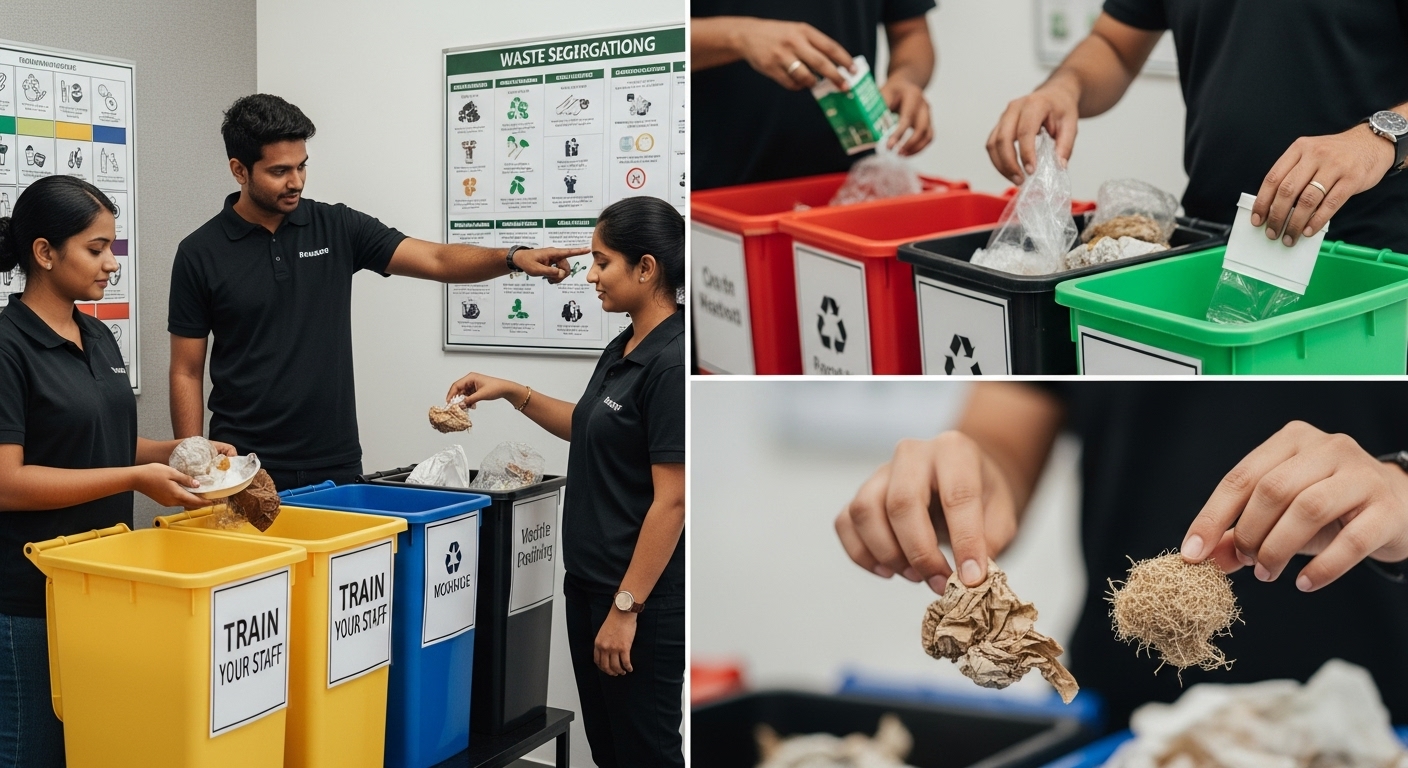
Step 4: Train Your Staff on Segregation Procedures

Training your staff on waste segregation procedures is the critical bridge between establishing waste management systems and achieving successful implementation. This step transforms your carefully designed segregation stations from static infrastructure into a dynamic, functional process driven by knowledgeable employees.

Comprehensive staff training goes beyond simple instruction – it requires a multifaceted approach that combines theoretical knowledge with practical demonstrations. Begin by developing a structured training programme that explains the ‘why’ behind waste segregation, not just the ‘how’. Employees are more likely to engage when they understand the environmental and economic implications of proper waste management. Use real-world examples from businesses in Newcastle, Durham, and across the North East to make the training relatable and contextually relevant.

Design your training to be interactive and engaging. Instead of traditional lecture-style presentations, incorporate hands-on workshops where employees can practice sorting waste in simulated scenarios. Create opportunities for staff to ask questions, share observations, and discuss potential challenges they might encounter in their specific work areas. Visual aids are particularly effective – use colour-coded charts, infographics, and short demonstration videos that clearly illustrate correct waste segregation techniques.

Your training should cover these key areas:

  • Detailed explanation of waste categories
  • Correct use of colour-coded segregation stations
  • Potential contamination risks
  • Environmental and financial impacts of proper waste management
  • Specific procedures for their department or work area

Discover our comprehensive guide to workplace waste compliance for additional training resources. To verify the effectiveness of your training, implement a simple assessment process. This could include practical sorting tests, quick quizzes, or observation of waste handling practices in the weeks following the training. Regular refresher sessions will help maintain high standards of waste segregation and keep environmental awareness at the forefront of your team’s daily operations.

staff waste segregation training

Step 5: Monitor and Audit Waste Segregation Processes

Monitoring and auditing your waste segregation processes transforms your initial efforts into a continuously improving system. This critical step ensures that your carefully designed waste management strategy remains effective, identifying potential improvements and maintaining high standards of environmental responsibility.

Regular and systematic audits are the cornerstone of successful waste management. Develop a comprehensive monitoring schedule that includes both planned inspections and random spot checks across different departments and waste segregation stations. These audits should assess not just the physical placement of waste, but the entire process from generation to final disposal. Implement a digital tracking system that allows you to record waste volumes, contamination rates, and segregation accuracy. This data becomes your roadmap for continuous improvement, helping you identify patterns and address potential issues before they become significant problems.

Engage employees actively in the monitoring process. Create a culture of accountability where staff are encouraged to report segregation challenges or suggest improvements. Develop a simple reporting mechanism that makes it easy for team members to provide feedback or flag potential issues. Visual performance indicators can be particularly motivating – consider creating dashboard displays that show departmental waste segregation performance, turning compliance into a collaborative challenge.

Key audit focus areas include:

  • Accuracy of waste sorting at source
  • Contamination rates in different waste streams
  • Compliance with colour-coded segregation guidelines
  • Effectiveness of staff training
  • Alignment with environmental regulations

Discover our step-by-step guide to waste compliance for additional monitoring strategies. Success is measured not just by immediate compliance, but by your ability to adapt and improve your waste management processes continuously. Quarterly comprehensive reviews will help you track progress, identify trends, and demonstrate your commitment to sustainable waste management practices across your business.

Step 6: Adjust and Improve Your Waste Management Strategy

Adjusting and improving your waste management strategy is an ongoing process that transforms initial efforts into a dynamic, responsive system. This final step ensures your waste segregation approach remains flexible, efficient, and aligned with evolving environmental regulations and business needs.

Data-driven improvements are the key to successful waste management. Review the comprehensive audit results collected during your monitoring phase, looking beyond simple compliance to identify deeper opportunities for waste reduction and efficiency. Analyse patterns in waste generation, segregation accuracy, and potential contamination sources. Consider the unique challenges faced by different departments within your business. A manufacturing area in Newcastle might require different strategies compared to an office environment in Durham, highlighting the importance of tailored approach.

Implement a continuous improvement cycle that goes beyond basic waste segregation. Look for opportunities to reduce waste generation entirely, exploring options like circular economy principles, material reuse, and innovative recycling techniques. Engage with waste management experts, attend industry seminars, and stay informed about emerging technologies and regulatory changes. Technology can be a powerful ally in this process, with digital tracking systems and advanced sorting technologies offering unprecedented insights into waste management processes.

Consider these critical improvement focus areas:

  • Reducing overall waste generation
  • Identifying alternative recycling methods
  • Exploring circular economy opportunities
  • Minimising contamination in waste streams
  • Enhancing staff training and engagement

Learn more about saving money through effective waste management to understand the financial benefits of a refined strategy. Success is measured not just by compliance, but by your ability to continuously adapt, innovate, and demonstrate environmental leadership. Regular strategic reviews will help you transform waste management from a regulatory requirement into a competitive advantage for your business.

Transform Your Waste Segregation Strategy Into Action for Your Business

Struggling to put the waste segregation steps into practice at your workplace? Many UK businesses face confusion over correct sorting, worry about compliance, and feel the pressure of rising waste costs. The article has guided you through effective waste segregation, but the true challenge lies in ongoing implementation and keeping your processes up to date. This is where a trusted partner makes the difference. Dive deeper into real solutions by reviewing our Waste Collection Process in the UK for Businesses 2025 for step-by-step guidance tailored to your workplace. Our expertise covers everything from general recyclables to confidential document handling, backed by seamless booking and strict legal compliance.

https://venturewaste.co.uk

Ready to improve your waste segregation and stay compliant with the latest regulations? Visit Venture Waste Management today and discover personalised support for sorting, collecting, and disposing of every waste type your business manages. Start now so you can lower your disposal costs and enjoy the peace of mind that comes from working with industry leaders. Book your next collection or find out how our complete solutions fit your needs.

Frequently Asked Questions

What are the essential steps to segregate waste effectively in a business?

To segregate waste effectively, start with an assessment of your current waste management practices. Identify the types of waste generated, set up designated segregation stations with clear signage, and train your staff on proper procedures. Regularly monitor and audit the process to make continuous improvements.

How can I train my staff on waste segregation procedures?

Develop a structured training programme that explains the importance of waste segregation, complete with hands-on workshops and visual aids. Ensure training covers the different waste categories, proper use of segregation stations, and the financial and environmental impacts of correct waste disposal.

What types of waste should businesses segregate?

Businesses should segregate waste into categories such as recyclable materials (paper, cardboard, plastics, metals), electronic waste, organic waste, hazardous materials, general mixed waste, and confidential document waste. Proper classification ensures compliance with legal requirements and supports environmentally responsible practices.

How can I monitor the effectiveness of my waste segregation processes?

Implement a monitoring schedule that includes systematic audits and random checks across departments. Use digital tracking systems to record waste volumes and contamination rates. Engage employees in the monitoring process, fostering a culture of accountability to enhance overall segregation accuracy.

waste hierarchy UK office

Understanding the Waste Hierarchy UK: A Clear Guide

Waste management is no longer just about getting rid of rubbish. In the UK, the waste hierarchy now shapes how every business and local authority handles the stuff we throw away. Surprising as it sounds, some UK companies are saving thousands of pounds each year simply by following these simple guidelines. While most see compliance as a box-ticking exercise, the real story is how the hierarchy can actually turn wasted materials into valuable resources and even give firms a competitive edge.

Table of Contents

Quick Summary

Takeaway Explanation
Prioritise waste prevention Focus on reducing waste generation as the top strategy for sustainability.
Implement recycling practices Convert waste materials into new products to maximise resource recovery and reduce costs.
Align with regulatory requirements Comply with the Waste (England and Wales) Regulations to avoid legal penalties.
Transform waste into a resource View waste as an opportunity for innovation and resource recovery to improve operational efficiency.
Tailor strategies to your sector Adapt waste management practices to meet specific industry needs for effective waste reduction and recycling.

What is the Waste Hierarchy and Its Key Principles?

The waste hierarchy represents a fundamental framework for managing waste in the UK, offering a strategic approach to minimising environmental impact and promoting sustainable resource management. Developed under European Union guidelines and now incorporated into UK legislation, this concept ranks waste management options from most to least preferred, guiding businesses and organisations towards more responsible waste disposal practices.

Defining the Waste Hierarchy

At its core, the waste hierarchy establishes a prioritised system for handling waste materials. The primary goal is to reduce waste generation and maximise resource efficiency by encouraging actions that prevent waste creation and promote materials’ highest possible value retention. According to Environment Agency, the hierarchy provides a standardised approach to waste management across industries.

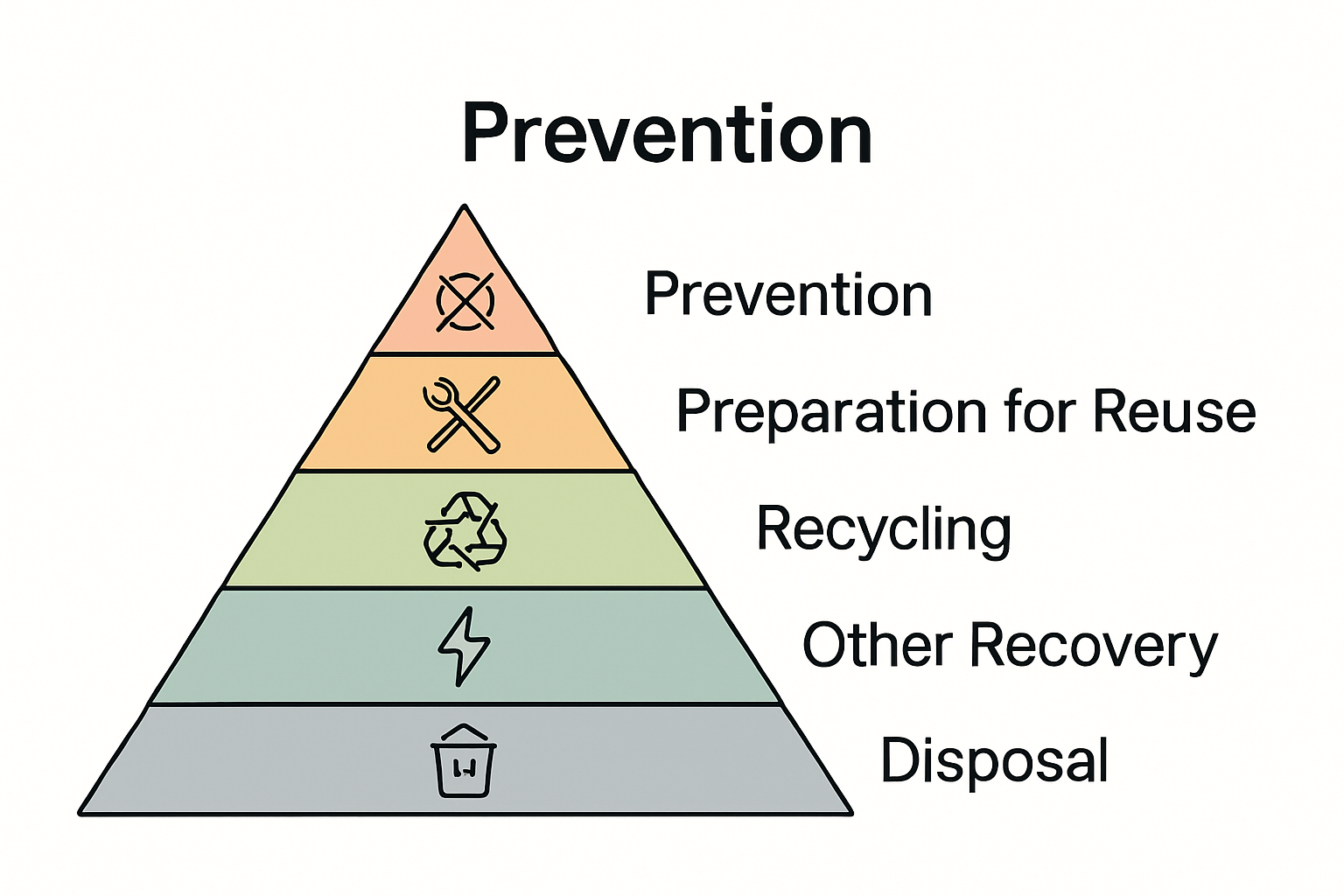
The waste hierarchy follows a clear ranking of waste management strategies

Below is a summary table outlining the five levels of the UK waste hierarchy, their descriptions, and preferred use, as discussed in the article.

Level Description Preferred Use
Prevention Reducing waste before it is created Most preferred
Preparation for Reuse Checking, cleaning, or repairing items to extend their usability Highly preferred
Recycling Converting waste materials into new products Preferred
Other Recovery Recovering energy through processes such as incineration Less preferred
Disposal Landfill or permanent elimination of waste materials Least preferred

Five-level waste hierarchy UK pyramid infographic:

  • Prevention: The most preferred option, focusing on reducing waste generation before it occurs
  • Preparation for Reuse: Checking, cleaning, or repairing items to extend their functional lifecycle
  • Recycling: Converting waste materials into new products or raw materials
  • Other Recovery: Including energy recovery through processes like incineration
  • Disposal: The least preferred option, involving landfill or permanent elimination of waste materials

Key Principles and Environmental Impact

The waste hierarchy is not merely a theoretical concept but a practical approach to environmental stewardship. By prioritising waste prevention and promoting circular economy principles, businesses can significantly reduce their carbon footprint and contribute to national sustainability goals. WRAP UK highlights that implementing waste hierarchy principles can lead to substantial resource conservation and economic benefits for organisations across various sectors.

Businesses in regions like Newcastle, Durham, and Sunderland can leverage these principles to develop more sustainable waste management strategies, demonstrating environmental responsibility while potentially reducing operational costs through more efficient resource utilisation. Check out our comprehensive guide on managing business waste for more detailed insights into practical implementation.

Why the Waste Hierarchy Matters for Businesses in the UK

The waste hierarchy represents more than just an environmental guideline for UK businesses. It is a strategic framework that directly impacts operational efficiency, financial performance, and corporate sustainability. By understanding and implementing these principles, organisations can transform waste management from a cost centre into a value-generating opportunity.

Economic and Regulatory Significance

For businesses across the UK, the waste hierarchy is not optional but a critical compliance requirement. The UK House of Commons Library emphasises that adherence to these principles is fundamental to national waste policy. Companies that proactively engage with waste hierarchy strategies can benefit from significant economic advantages:

  • Reduced Waste Disposal Costs: Lower landfill taxes and waste management expenses
  • Potential Revenue Streams: Generating income through recycling and resource recovery
  • Enhanced Corporate Reputation: Demonstrating environmental responsibility

Strategic Business Benefits

Implementing the waste hierarchy goes beyond regulatory compliance. Modern businesses recognise waste as a strategic resource that can be managed for competitive advantage. By prioritising waste prevention and recycling, organisations can reduce raw material costs, minimise environmental impact, and align with circular economy principles.

Businesses in industrial regions like Newcastle, Sunderland, and Durham can particularly benefit from these strategies. Learn more about effective waste minimisation techniques that can transform waste management from an operational challenge into a strategic opportunity.

Moreover, the waste hierarchy encourages businesses to think systematically about resource utilisation. This approach not only reduces environmental footprint but also drives innovation in product design, manufacturing processes, and supply chain management. Companies that embed these principles can create more resilient, efficient, and future-focused business models.

How the Waste Hierarchy Influences Waste Management Practices

The waste hierarchy fundamentally transforms how businesses approach waste management, shifting from a reactive disposal model to a proactive resource management strategy. By establishing a clear framework for handling waste materials, organisations can systematically reduce environmental impact while optimising operational efficiency.

Operational Implementation Strategies

Implementing the waste hierarchy requires a comprehensive approach to waste management. The Waste (England and Wales) Regulations 2011 mandates that businesses prioritise waste prevention and resource efficiency. This regulatory requirement compels organisations to develop structured waste management practices that align with the hierarchy’s principles

:

  • Waste Prevention Planning: Designing processes to minimise waste generation
  • Resource Mapping: Identifying potential waste streams and recovery opportunities
  • Continuous Improvement: Regularly reviewing and optimising waste management strategies

Transforming Waste into a Strategic Asset

Businesses are increasingly viewing waste not as a disposal challenge but as a potential resource. The waste hierarchy encourages organisations to explore innovative approaches to waste management. For instance, manufacturing companies in regions like Newcastle and Durham can redesign production processes to reduce material waste, implement recycling programmes, and explore opportunities for material recovery.

Explore our comprehensive guide on domestic waste management to understand how different waste types can be strategically managed.

The hierarchy’s influence extends beyond immediate operational practices. It drives a cultural shift towards more sustainable business models, encouraging companies to think holistically about resource utilisation, circular economy principles, and long-term environmental responsibility. By embedding these principles into their core business strategies, organisations can achieve significant economic and environmental benefits.

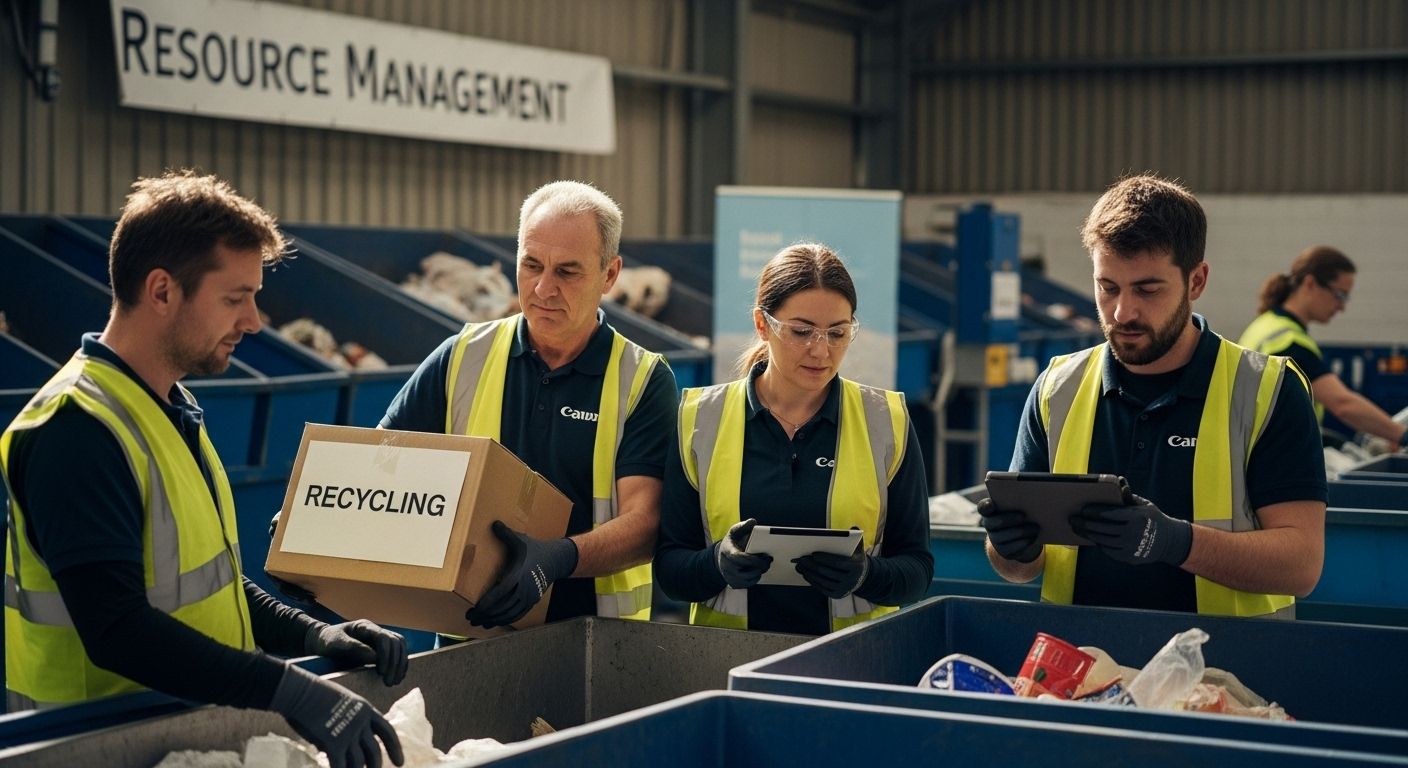
UK recycling facility teamwork

Understanding the Practical Applications of the Waste Hierarchy

Practical implementation of the waste hierarchy transforms theoretical environmental principles into actionable business strategies. By providing a structured framework for waste management, organisations can systematically approach resource utilisation, moving beyond traditional disposal methods towards more sustainable practices.

Sector-Specific Implementation Approaches

The UK Department for Environment, Food & Rural Affairs emphasises that waste hierarchy principles must be tailored to specific industry contexts. Different sectors require unique approaches to effectively reduce, reuse, and recycle waste:

  • Manufacturing: Redesigning production processes to minimise material waste
  • Hospitality: Implementing food waste reduction and composting programmes
  • Construction: Prioritising material reuse and selective demolition techniques
  • Retail: Developing packaging reduction and recycling strategies

Technological and Operational Innovations

Modern businesses are integrating advanced technologies to support waste hierarchy implementation. Organisations in industrial regions like Newcastle and Durham are leveraging digital tracking systems, machine learning, and data analytics to optimise waste management processes. These technological interventions enable precise waste stream analysis, helping companies identify opportunities for waste reduction and resource recovery.

Learn more about effective waste segregation techniques to enhance your organisation’s waste management strategy.

The practical application of the waste hierarchy extends beyond immediate environmental benefits. By adopting these principles, businesses can achieve significant cost savings, improve operational efficiency, and develop a reputation for corporate social responsibility.

The following table compares how key business sectors in the UK apply the waste hierarchy to their operations, highlighting the main waste management focus for each sector.

Sector Main Approach Example Application
Manufacturing Redesign processes to minimise waste Material waste reduction
Hospitality Food waste reduction and composting Implementing kitchen compost schemes
Construction Prioritise material reuse and selective demolition Reusing bricks and fixtures
Retail Packaging reduction and recycling strategies Sustainable packaging initiatives

The waste hierarchy is more than an environmental concept in the UK. It represents a comprehensive legal and regulatory framework designed to transform how organisations approach waste management, creating a structured approach to resource utilisation and environmental protection.

Legislative Foundations

The Waste (England and Wales) Regulations 2011 establishes the critical legal foundation for waste management practices across the United Kingdom. These regulations mandate a systematic approach to waste handling, emphasising prevention and resource efficiency as primary objectives:

  • Mandatory Compliance: Legal requirement for businesses to follow waste hierarchy principles
  • Hierarchical Prioritisation: Clear legal ranking of waste management strategies
  • Reporting Obligations: Regular documentation and assessment of waste management practices

Regulatory Implications for Businesses

The legal framework transforms waste management from an optional practice to a mandatory corporate responsibility. Businesses across industrial regions like Newcastle, Durham, and Sunderland must integrate these principles into their operational strategies. The regulations require organisations to demonstrate proactive approaches to waste reduction, highlighting the shift from traditional disposal methods to strategic resource management.

Explore our comprehensive guide on managing hazardous waste types to understand the nuanced legal requirements for different waste categories.

These legal frameworks extend beyond mere compliance. They represent a broader governmental strategy to drive environmental sustainability, reduce landfill dependency, and create economic opportunities through more efficient resource utilisation. By embedding these principles into national policy, the UK aims to position itself as a leader in sustainable waste management practices.

Turn Your Waste Hierarchy Knowledge Into Action Today

Understanding the waste hierarchy is essential, but knowing what to do with this information is what brings real change. Many businesses struggle with implementing the clear steps of the hierarchy, from prevention and reuse to legally compliant disposal. The challenge lies in converting theory into daily practice, keeping your operations cost-effective, and meeting all legal requirements. This is where our tailored waste collection process for UK businesses in 2025 makes the difference.

https://venturewaste.co.uk

Let Venture Waste Management handle your waste responsibly and efficiently. Our straightforward booking system turns your commitment to the waste hierarchy into real action, whether you need help with regular waste, hazardous items, or confidential waste disposal. Visit Venture Waste Management now and experience expert support for every stage of your waste journey. Book your collection and start making an environmental impact today.

Frequently Asked Questions

What is the waste hierarchy?

The waste hierarchy is a framework that ranks waste management options from most to least preferred, guiding businesses on how to minimise waste and promote sustainable resource management.

Why is the waste hierarchy important for businesses in the UK?

The waste hierarchy is crucial as it helps businesses reduce waste disposal costs, enhance their corporate reputation, and comply with regulatory requirements, transforming waste management into a value-generating opportunity.

How can businesses implement the waste hierarchy effectively?

Businesses can implement the waste hierarchy by developing waste prevention strategies, conducting resource mapping, and regularly reviewing waste management practices to ensure continuous improvement.

What are the different levels of the waste hierarchy?

The waste hierarchy comprises five levels: Prevention, Preparation for Reuse, Recycling, Other Recovery (including energy recovery), and Disposal, which is the least preferred option.

business waste audit

How to Arrange Waste Collection for Your Business

Sorting your business waste can feel overwhelming for most managers. Many are surprised to discover that waste disposal rules in the UK are tightening for over 5 million businesses by 2025. But the biggest shock is just how much money and hassle you can save with a proper waste collection strategy from the start.

Table of Contents

Quick Summary

Key Point Explanation
1. Evaluate waste disposal needs thoroughly Conduct a comprehensive audit of waste types and volumes to inform a precise waste management strategy.
2. Research local waste collection providers Compile a list of local services, assessing their certifications and capabilities in handling your specific waste streams.
3. Compare pricing and services carefully Create a detailed spreadsheet to evaluate provider offerings, focusing on both costs and additional service features.
4. Schedule and set up collection logistics Confirm details with your chosen provider, agreeing on frequencies, collection times, and specific waste logistics.
5. Communicate processes to staff effectively Develop clear guidelines and training sessions to ensure staff understand and comply with the new waste management procedures.

Step 1: Evaluate Your Waste Disposal Needs

Successfully arranging waste collection begins with a thorough and strategic evaluation of your business’s specific waste disposal requirements. This crucial initial step helps you understand the volume, type, and complexity of waste your organisation generates, enabling you to design a precise and cost-effective waste management strategy.

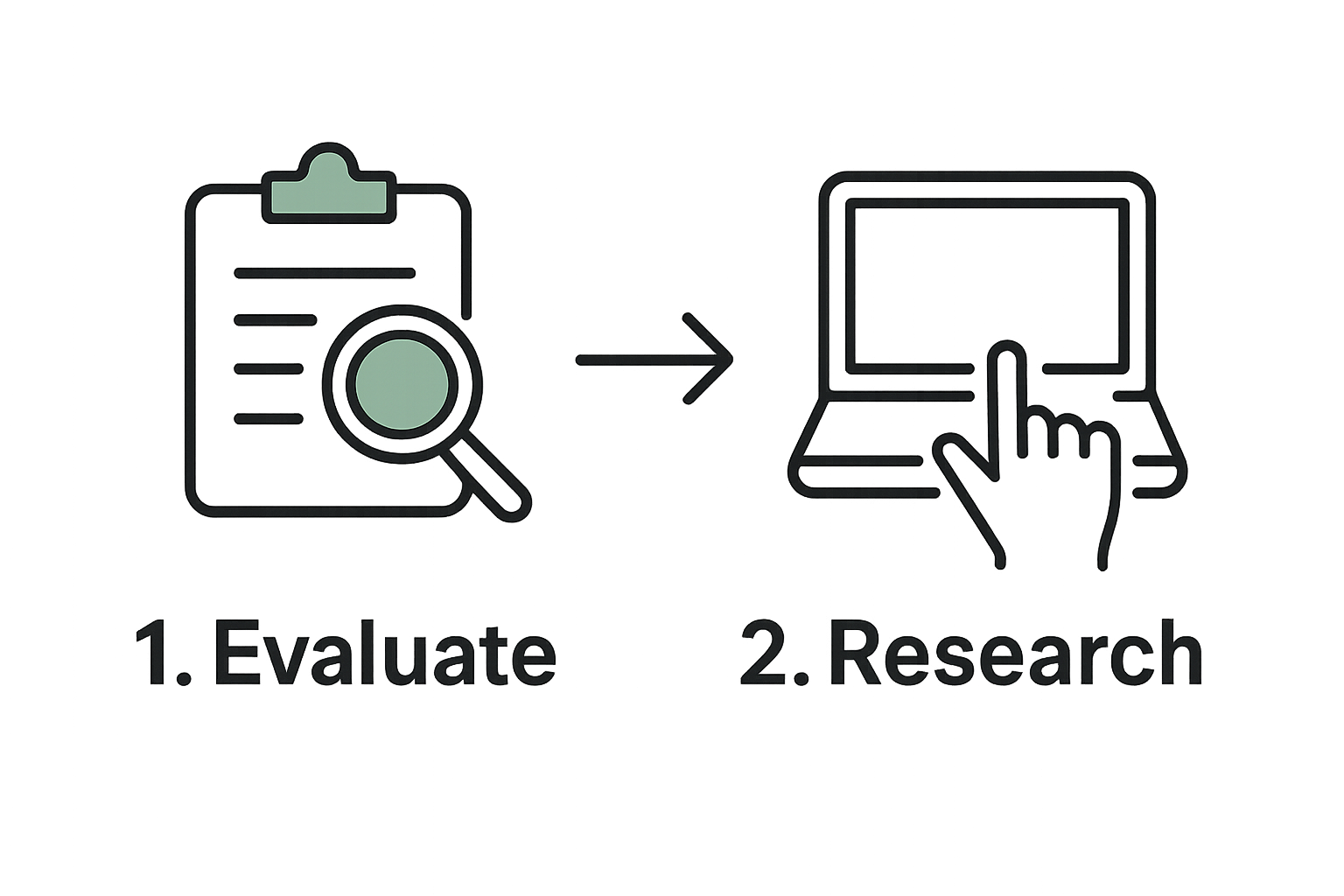
Two-step process: evaluate needs and research services illustrated with icons

Starting your waste disposal assessment requires a comprehensive audit of your current waste production. Walk through each area of your business systematically, documenting the types and quantities of waste generated. This might include general waste, recyclable materials, electronic equipment, confidential documents, or potentially hazardous substances. Pay special attention to waste streams that are unique to your industry, such as manufacturing byproducts, medical waste, or construction debris.

Your evaluation should consider several key factors that influence waste collection needs. Volume is critical consider not just current waste production, but potential future increases during peak periods or business expansion. Frequency of collection depends on waste type some materials require more immediate removal for health and safety reasons, while others can be stored longer. Environmental regulations also play a significant role, particularly for businesses generating specialized or potentially harmful waste streams.

To support your strategic planning, explore our comprehensive guide to waste management compliance, which provides deeper insights into regulatory requirements. Document your findings meticulously, creating a clear inventory that will serve as the foundation for selecting appropriate waste collection services.

To help you quickly understand the key tasks in arranging waste collection for your business, here is a step overview with focus, typical effort, and main confirmation point for each stage.

Step Main Focus Typical Effort Key Confirmation Point
Evaluate waste disposal needs Audit waste types, volumes, and business areas Moderate Comprehensive waste inventory documented
Research local services Identify and assess providers, check credentials Moderate to High Shortlist of qualified providers with service proposals
Compare pricing and services Analyse costs, frequencies, and service features High Clear side-by-side comparison enabling informed decision
Schedule and set up Agree logistics, collection times, and locations Low to Moderate Signed service agreement and detailed collection schedule
Communicate to staff Provide guidance, training, and resources Moderate Staff briefed, materials shared, champions appointed
Monitor and adjust Track performance, review, and refine approach Ongoing Regular data reviewed, adjustments made as needed

Step 2: Research local Waste Collection Services

After meticulously evaluating your waste disposal needs, the next critical step is identifying and researching appropriate waste collection services that align precisely with your business requirements. This research phase demands a strategic approach to ensure you select a provider capable of meeting your specific waste management challenges.

Begin your investigation by compiling a comprehensive list of local waste management companies operating in your region. Newcastle, Durham, and surrounding North East areas offer numerous waste collection providers, but not all will meet your exact specifications. Contact local councils and environmental agencies to obtain recommendations and verify the credentials of potential waste collection services. Look for providers registered with the Environment Agency, which confirms they are authorized waste carriers legally permitted to collect and transport commercial waste.

As you narrow down potential services, conduct thorough comparator assessments. Examine each provider’s capabilities in handling your specific waste streams, their collection frequency options, environmental credentials, and pricing structures. Request detailed quotes and service agreements that outline exactly what is included. Pay close attention to additional services like waste segregation, recycling options, and documentation processes. Some providers offer comprehensive solutions that go beyond basic collection, including waste auditing, compliance reporting, and sustainability consulting.

Learn more about navigating the UK waste collection network to understand the nuanced landscape of commercial waste management. Your research should ultimately produce a shortlist of 3-4 potential providers who demonstrate the expertise, reliability, and flexibility required to support your business’s waste management strategy.

Below is a comparison table summarising aspects to consider when evaluating waste collection service providers, reflecting information discussed in the research and comparison steps.

Criteria What to Check Why It Matters
Accreditation Registered with Environment Agency Ensures legal and compliant service
Waste stream specialism Capable of handling your waste types Enables proper disposal and segregation
Collection frequencies Offers suitable timing options Aligns with your business operations
Environmental credentials Demonstrates sustainability practices Supports environmental responsibility
Price transparency Detailed breakdown of all charges Prevents hidden costs
Additional services Auditing, recycling, compliance reporting Adds extra value and support
Service flexibility Can adapt to changing business needs Ensures long-term suitability

Step 3: Compare Pricing and Services Offered

Comparing pricing and services represents the most critical juncture in your waste collection strategy, where detailed analysis transforms your research into a practical solution. This step requires meticulous examination of each potential provider’s offerings to ensure you secure the most appropriate and cost-effective waste management approach for your business.

Initiate your comparison by creating a comprehensive spreadsheet that systematically documents each provider’s pricing structure, collection frequencies, additional services, and contractual terms. Look beyond the initial quoted price and scrutinize the nuanced details that could significantly impact your long-term waste management expenses. Consider factors such as bin rental costs, collection frequency charges, potential additional fees for specialized waste streams, and any potential volume-based discounts. Some providers might offer more attractive pricing for businesses in specific regions like Newcastle, Durham, or the broader North East area, so regional specificity can play a crucial role in your decision-making process.

Explore our comprehensive guide to waste service selection to gain deeper insights into evaluating waste management proposals. Your comparison should extend beyond monetary considerations to include service reliability, environmental credentials, and compliance capabilities. Examine each provider’s approach to waste segregation, recycling percentages, and documentation processes. Request detailed service level agreements that clearly outline response times, replacement of damaged bins, and procedures for handling unexpected waste management challenges. Pay particular attention to providers who demonstrate flexibility and can adapt their services to your business’s changing waste production patterns. A successful comparison will result in a clear, side-by-side evaluation that highlights the strengths and potential limitations of each waste collection service, enabling you to make an informed decision that balances cost-effectiveness with comprehensive waste management solutions.

Step 4: Schedule Waste Collection and Setup

Scheduling waste collection transforms your research and comparison into a concrete waste management strategy, marking a pivotal moment in establishing an efficient disposal system for your business. This critical step involves transforming theoretical plans into practical, actionable arrangements that ensure consistent and compliant waste removal.

Initiate the scheduling process by directly contacting your selected waste management provider to discuss precise collection logistics. Determine the optimal collection frequency based on your previous waste volume assessment, considering factors such as waste type, business operations, and storage capacity. Some businesses in Newcastle and Durham might require weekly collections, while others with lower waste production could manage fortnightly pickups. During this conversation, confirm specific details like collection times, access requirements for waste vehicles, and the exact location where bins or containers will be positioned.

Learn more about optimizing waste collection scheduling to streamline your waste management approach. Establish a clear written agreement that outlines all collection parameters, including start dates, collection frequencies, types of waste to be collected, and pricing structures. Request documentation confirming the waste carrier’s environmental credentials and legal compliance. Verify that your chosen provider can accommodate any specialized waste streams identified during your initial evaluation. A successful scheduling setup will result in a comprehensive service agreement, clear communication channels with your waste management provider, and a structured plan that ensures consistent, efficient waste removal tailored precisely to your business’s unique requirements. Confirm your setup is complete by obtaining a written service contract, understanding the collection schedule, and having a designated contact for any future waste management queries or adjustments.

Step 5: Communicate the Process to Staff

Effective communication of your new waste collection strategy is fundamental to ensuring successful implementation across your organisation. This crucial step transforms your carefully planned waste management approach from a theoretical concept into a practical, everyday reality that requires understanding and cooperation from every team member.

Begin by developing a comprehensive communication plan that clearly articulates the new waste disposal procedures. Create visual and written guidance materials that explain the rationale behind the waste management changes, detailing how each staff member can contribute to the new system. Consider developing easy-to-understand infographics, concise written guidelines, and brief training sessions that break down complex waste segregation requirements into simple, actionable steps. These materials should specifically highlight the types of waste your business generates, the correct segregation methods, and the designated collection points for different waste streams.

Discover practical strategies for waste communication to enhance staff engagement and compliance. Schedule a comprehensive staff briefing where you can personally explain the new waste collection processes, answering questions and addressing potential concerns. This meeting should emphasize not just the operational aspects of waste management, but also the broader environmental and economic benefits of your new approach. Consider appointing waste management champions within different departments who can provide ongoing support and guidance, helping to embed the new practices into your organisational culture. A successful communication strategy will result in staff who understand their roles, feel motivated to participate, and can confidently implement the new waste collection procedures across all levels of the business. Verify the effectiveness of your communication by conducting a follow-up survey, observing waste segregation practices, and gathering feedback to ensure comprehensive understanding and compliance.

waste management staff training

Step 6: Monitor and Adjust Waste Collection Practices

Monitoring and adjusting your waste collection practices represents the final, ongoing phase of creating an effective waste management strategy. This critical step ensures your initial efforts continue to deliver optimal results, allowing your business to remain responsive to changing waste production patterns, regulatory requirements, and operational needs.

Implement a systematic tracking mechanism to record and analyse your waste collection data comprehensively. This involves maintaining detailed logs of waste volumes, collection frequencies, segregation effectiveness, and associated costs. Consider developing a digital spreadsheet or utilising waste management software that enables you to track key performance indicators such as total waste generated, recycling rates, and disposal expenses. Regular analysis of these metrics will help you identify trends, potential inefficiencies, and opportunities for improvement. Engage with your waste collection provider periodically to review performance, discussing any observations or challenges you’ve noticed during your monitoring process.

Explore advanced strategies for waste collection optimization to refine your approach continually. Your monitoring should extend beyond numerical data to include qualitative assessments of staff compliance, ease of waste segregation, and overall operational impact. Schedule quarterly review meetings with key staff members to gather feedback, understand practical challenges, and collaboratively develop solutions. Be prepared to make incremental adjustments to your waste collection strategy, whether that involves modifying collection frequencies, updating staff training materials, or negotiating revised terms with your waste management provider. A successful monitoring approach will result in a dynamic, responsive waste management system that consistently meets your business’s changing requirements, supports environmental sustainability goals, and maintains cost-effectiveness. Verify the effectiveness of your monitoring by tracking continuous improvements in waste reduction, recycling rates, and operational efficiency.

Ready to Make Waste Collection Effortless for Your Business?

Many businesses face the frustration of complex regulations, unclear pricing, and inefficient processes when trying to organise reliable waste collection. If the thought of tackling compliance, managing multiple waste streams, or ensuring responsible disposal is overwhelming, you are not alone. Our article showed that a clear evaluation, expert advice, and trusted local support can make all the difference. Simplify your journey further with our in-depth resource How the Waste Collection Network in UK Serves Businesses in 2025 and see how seamless waste strategies are transforming businesses like yours.

https://venturewaste.co.uk

Transform your waste management today. With Venture Waste Management you can access step-by-step support, guaranteed legal compliance, and a simple three-step booking process. Do not wait for avoidable costs or compliance risks to add stress. Explore our full commercial waste collection solution and take control of your business’s waste now.

Frequently Asked Questions

How do I evaluate my business’s waste disposal needs?

To evaluate your waste disposal needs, conduct a thorough audit of the types and volumes of waste your business generates, paying attention to specific waste streams unique to your industry. Consider factors like future waste increases, collection frequency, and any environmental regulations that may apply.

What should I look for when researching waste collection services?

When researching waste collection services, compile a list of local providers, verify their credentials, and assess their capabilities in handling your specific waste types. Examine their pricing structures, service agreements, and any additional services they offer, such as waste auditing or recycling options.

How can I compare pricing and services for waste collection?

Create a spreadsheet to systematically document each provider’s pricing, collection frequencies, and additional services. Look beyond the initial quoted price to include bin rental costs and any potential fees for specialized waste streams, ensuring you understand the full scope of each proposal.

What steps should I take to communicate new waste collection processes to my staff?

Develop a comprehensive communication plan that includes visual and written guides outlining the new waste procedures. Conduct staff briefings to explain the changes, appoint waste management champions in your organisation, and encourage feedback to ensure understanding and compliance.

waste disposal FAQs

Understanding Waste Disposal FAQs: A Clear Guide

Waste disposal shapes how our cities stay clean and protects the health of every community. Even so, few people realise that in the UK there is a plan to double resource productivity and eliminate avoidable waste by 2050. Most imagine waste disposal as a simple bin collection service, but the truth is it has become one of the most important responsibilities for both businesses and households, with massive impacts on our environment and economy.

Table of Contents

Quick Summary

Takeaway Explanation
Effective waste disposal protects public health. Proper waste management reduces disease transmission and safeguards community well-being, thus crucial for public health standards.
Know your waste categories for proper handling. Understanding types like hazardous, clinical, and electronic waste ensures compliance and effective disposal strategies tailored to each category.
Stay compliant with legal waste management regulations. Businesses must adhere to waste classification and handling laws to avoid penalties and foster responsible waste practices.
Prioritise recycling and resource recovery over disposal. Following the waste hierarchy helps minimize environmental impact by promoting methods like recycling instead of relying solely on landfill disposal.
Utilise advanced disposal methods for complex wastes. Tailoring disposal techniques according to waste type—such as composting or specialized recycling—ensures environmental safety and sustainability.

What is Waste Disposal and Why is it Important?

Waste disposal represents a critical process of managing and eliminating materials that are no longer useful or have reached the end of their functional lifecycle. At its core, waste disposal involves collecting, transporting, processing, recycling, and safely disposing of various types of waste materials to minimise environmental impact and maintain public health standards.

Understanding the Fundamental Concepts

Waste disposal goes beyond simple rubbish removal. It encompasses a comprehensive system designed to handle different categories of waste responsibly. In the UK, waste management is governed by strict environmental regulations that aim to reduce landfill usage, promote recycling, and minimise ecological harm. Explore our comprehensive guide to waste management to understand the intricate processes involved.

The primary objectives of effective waste disposal include:

  • Protecting public health by preventing disease transmission
  • Minimising environmental contamination
  • Conserving natural resources through recycling and reuse
  • Reducing greenhouse gas emissions from waste decomposition

Environmental and Economic Implications

Proper waste disposal is not just an environmental necessity but also an economic imperative. According to the UK government’s Resources and Waste Strategy, the nation aims to double resource productivity and eliminate avoidable waste by 2050. This ambitious goal underscores the critical role of sophisticated waste management techniques.

Businesses and organisations play a pivotal role in this strategy. By implementing robust waste disposal practices, they can significantly reduce their carbon footprint, comply with legal requirements, and contribute to a more sustainable future. Waste disposal is no longer just a logistical task but a fundamental responsibility towards environmental stewardship.

From industrial waste in Newcastle’s manufacturing sectors to clinical waste in Durham’s healthcare facilities, every type of waste requires specialised handling. The complexity of waste disposal demands professional expertise, advanced technologies, and a commitment to environmental protection.

Types of Waste and Their Impact on the Environment

Understanding the diverse landscape of waste is crucial for effective environmental management. Waste types vary significantly, each presenting unique challenges and potential environmental consequences that demand specialised handling and disposal strategies.

Below is a table comparing the main types of waste identified in the article, helping clarify their definitions and typical sources.

Waste Type Definition Typical Sources
General Waste Non-hazardous materials no longer needed Offices, homes, and commercial sites
Hazardous Waste Materials posing significant risks to health or environment Industrial sites, chemical processes
Clinical Waste Potentially infectious materials requiring special handling Healthcare facilities, laboratories
Industrial Waste Byproducts from manufacturing or industrial activities Factories, manufacturing plants
Electronic Waste Discarded electrical and electronic equipment (WEEE) Offices, households, electronics shops

Categorising Waste: A Comprehensive Overview

Waste can be broadly classified into several key categories, each requiring distinct management approaches. Learn more about domestic waste classifications to understand the nuanced complexities of waste management.

The primary waste categories include:

Infographic showing main types of waste: general, hazardous, clinical, industrial, electronic

  • General Waste: Non-hazardous materials typically from offices, homes, and commercial establishments
  • Hazardous Waste: Materials posing significant risks to human health and environment
  • Clinical Waste: Potentially infectious materials from healthcare settings
  • Industrial Waste: Byproducts from manufacturing and industrial processes
  • Electronic Waste (WEEE): Discarded electrical and electronic equipment

Environmental Implications and Impact

According to the UK government’s waste management guidelines, different waste types have varying environmental footprints. Hazardous waste, for instance, can contaminate soil, water sources, and pose severe health risks if not managed correctly. Industrial waste from manufacturing hubs in Newcastle and chemical processing plants in Durham can release toxic substances, potentially causing long-term ecological damage.

The environmental impact extends beyond immediate contamination. Improper waste disposal contributes significantly to greenhouse gas emissions, particularly from landfills where organic waste decomposes and releases methane. Electronic waste contains toxic materials like lead, mercury, and cadmium, which can leach into groundwater and cause substantial environmental degradation.

Businesses play a critical role in mitigating these environmental risks. By understanding waste categorisation, implementing robust segregation processes, and partnering with professional waste management services, organisations can substantially reduce their ecological footprint and contribute to a more sustainable future.

The Waste Disposal Process: How it Works

The waste disposal process is a sophisticated, multi-stage system designed to manage different types of waste efficiently and environmentally responsibly. It involves several critical stages that transform discarded materials from potential environmental hazards into managed resources.

The following table summarises the typical stages of the waste disposal process for clearer understanding of the journey from collection to final disposal.

Stage Description
Initial Collection & Segregation Waste is identified, categorised, and separated for correct handling and compliance
Processing & Treatment Waste is treated or processed using methods such as recycling, composting, or incineration
Final Disposal Residual waste is either sent to landfill or used in energy recovery as a last resort

Initial Collection and Segregation

Waste management begins with systematic collection and segregation, a fundamental step that determines the subsequent handling process. Explore our detailed guide to waste segregation techniques to understand the nuanced approaches businesses can adopt. The initial stage involves:

  • Identifying and categorising different waste types
  • Separating recyclable materials from general waste
  • Ensuring hazardous materials are isolated and handled separately
  • Documenting waste streams for regulatory compliance

Processing and Treatment Techniques

According to the UK government’s waste management guidelines, different waste types require specialised processing methods. Industrial and commercial waste undergo complex treatment processes designed to minimise environmental impact:

  • Recycling: Materials like paper, plastic, metal, and glass are sorted, cleaned, and transformed into new products
  • Composting: Organic waste is decomposed under controlled conditions, creating nutrient-rich soil amendments
  • Incineration: Non-recyclable waste is burned at high temperatures, generating energy and reducing waste volume
  • Landfill Management: Residual waste is deposited in carefully engineered sites with environmental protection measures

Each treatment method serves a specific purpose, balancing waste reduction, resource recovery, and environmental protection. Businesses in manufacturing hubs like Newcastle and chemical processing centres in Durham must adhere to strict regulations, ensuring their waste disposal practices meet environmental standards and minimise ecological disruption.

The complexity of waste disposal demands continuous innovation, investment in advanced technologies, and a commitment to sustainable waste management practices that transform potential environmental challenges into opportunities for resource conservation and circular economy development.

Waste disposal is not merely an operational task but a complex legal responsibility that businesses must navigate carefully. The regulatory landscape surrounding waste management is intricate, demanding comprehensive understanding and meticulous compliance to avoid significant financial and environmental consequences.

Businesses have a fundamental legal duty to manage waste responsibly, which extends far beyond simple disposal. Discover the comprehensive legal requirements for waste management to ensure your organisation remains fully compliant. According to the UK government’s waste management guidelines, this duty encompasses several critical requirements:

  • Ensuring waste is stored securely
  • Preventing environmental contamination
  • Transferring waste only to authorized carriers
  • Maintaining accurate waste transfer documentation
  • Implementing proper waste segregation practices

Waste Classification and Compliance Frameworks

Effective waste management requires precise understanding of waste categorisation and associated legal frameworks. Different waste types trigger specific regulatory requirements, particularly for hazardous materials. Businesses must be aware of:

  • Hazardous Waste Regulations: Strict protocols for handling potentially dangerous materials
  • Environmental Protection Act: Comprehensive guidelines for waste management and disposal
  • Waste (England and Wales) Regulations: Specific requirements for waste segregation and treatment
  • WEEE Regulations: Special considerations for electronic and electrical equipment waste

From manufacturing facilities in Newcastle to research laboratories in Durham, organisations must develop robust waste management strategies that align with these complex legal requirements. Non-compliance can result in substantial penalties, including significant financial fines and potential legal prosecution.

waste disposal compliance

The regulatory landscape continues toevolve, with increasing emphasis on sustainable practices, circular economy principles, and environmental protection. Businesses must remain proactive, continuously updating their waste management approaches to meet emerging legal standards and demonstrate environmental responsibility.

Choosing the Right Waste Disposal Methods for Your Business

Selecting appropriate waste disposal methods is a strategic decision that requires careful consideration of environmental impact, legal requirements, and operational efficiency. Businesses must develop nuanced approaches that balance regulatory compliance with sustainable practices.

Understanding the Waste Hierarchy

Effective waste management follows a structured hierarchy that prioritizes prevention and resource conservation. Explore advanced liquid waste disposal strategies to optimize your waste management approach. According to the UK government’s waste management guidelines, businesses should consider the following strategic approach:

  • Prevention: Minimizing waste generation at source
  • Reuse: Finding alternative purposes for materials
  • Recycling: Transforming waste into new products
  • Recovery: Extracting energy or value from waste
  • Disposal: Final option when no other methods are viable

Tailoring Disposal Methods to Specific Waste Types

Different waste streams demand specialized disposal techniques. Industrial and commercial waste require sophisticated management strategies that go beyond traditional disposal methods. Key considerations include:

  • Hazardous Waste: Requires specialized containment and treatment processes
  • Electronic Waste: Demands precise recycling and component recovery techniques
  • Organic Waste: Potential for composting or anaerobic digestion
  • Liquid Waste: Requires careful treatment and potential chemical neutralization

Businesses in diverse sectors across the North East, from manufacturing facilities in Newcastle to research centres in Durham, must develop comprehensive waste management strategies that align with environmental regulations and industry best practices. The most effective approach combines multiple disposal methods, prioritizing waste reduction and resource recovery over traditional disposal techniques.

Successful waste management is not a static process but a dynamic approach that requires continuous evaluation, adaptation, and investment in emerging technologies. Businesses must remain agile, regularly assessing their waste streams and exploring innovative disposal methods that minimize environmental impact while maintaining operational efficiency.

Make Waste Disposal Simple and Secure with Venture Waste

Are you still unsure about the best way to manage your business or domestic waste? The article on waste disposal FAQs has highlighted just how confusing regulations, compliance, and sustainable disposal processes can feel. Many readers share this problem: understanding what to do with confidential or hazardous waste, how to stay compliant, and how to ensure environmental standards are not just met but exceeded. If questions about secure collection, legal responsibility, or the right waste solution for your needs are keeping you up at night, you are not alone. Our Waste Collection Process in the UK for Businesses page breaks down each step so you can feel confident about your choices from start to finish.

https://venturewaste.co.uk

Do not let uncertainty put you at risk of non-compliance or costly mistakes. Choose Venture Waste Management for professional, hassle-free, and fully compliant waste solutions. Book a service tailored to your needs in just three steps and see why businesses and homeowners trust us for secure collection, confidential waste handling, and expert guidance. Visit our website now to get started and take control of your waste management today.

Frequently Asked Questions

What are the main types of waste?

Waste can be classified into several main types, including general waste, hazardous waste, clinical waste, industrial waste, and electronic waste (WEEE). Each type requires specific handling and disposal methods to ensure safety and environmental protection.

Why is proper waste disposal important for businesses?

Proper waste disposal is crucial for businesses to protect public health, minimise environmental contamination, and comply with legal regulations. It also helps to conserve natural resources and reduce greenhouse gas emissions associated with waste decomposition.

What steps are involved in the waste disposal process?

The waste disposal process typically includes initial collection, segregation of different waste types, processing and treatment (such as recycling or composting), and finally, safe disposal, either through landfilling or energy recovery methods.

In the UK, businesses have a legal duty of care regarding waste management. This includes ensuring waste is stored securely, transferred only to authorised carriers, maintaining accurate waste documentation, and properly segregating different types of waste to prevent contamination.

waste permits UK office

Understanding Waste Permits in the UK

Waste permits might sound like paperwork reserved for large factories, yet they play a vital part in daily business right across the UK. Every year, the Environment Agency issues thousands of these permits to regulate waste and prevent pollution on a national scale. Most think of permits as dull legal hurdles, but the real surprise is how they act as a shield, protecting not just the environment but also your business from hefty fines and damage to your reputation.

Table of Contents

Quick Summary

Takeaway Explanation
Obtain waste permits for compliance Businesses must secure permits before engaging in waste management to meet legal obligations.
Non-compliance has serious consequences Operating without permits can lead to fines, legal actions, and reputational damage.
Permits ensure environmental protection Waste permits help prevent pollution and regulate emissions, benefiting public health and ecosystems.
Different permit types cater to needs Businesses can choose from Standard Rules, Bespoke Permits, or Exempt Registrations based on their activities.
Monitoring and compliance are crucial Continuous assessment and adherence to permit conditions are mandatory to avoid penalties and ensure responsible waste management.

What are Waste Permits and Their Purpose?

Waste permits are critical regulatory documents that control and manage waste management activities across the United Kingdom, ensuring environmental protection and responsible waste handling. Explore waste management guidelines demonstrate that these permits represent a comprehensive legal framework designed to prevent pollution and regulate industrial and commercial waste disposal practices.

Understanding the Core Definition

A waste permit is an official authorization issued by the Environment Agency that grants businesses permission to handle, treat, store, or dispose of specific types of waste. These permits are not merely bureaucratic documents but sophisticated regulatory tools that set precise conditions for waste management operations. They function as a legal contract between the waste producer and regulatory authorities, outlining strict environmental protection standards.

Key Environmental Protection Mechanisms

Waste permits serve multiple critical functions in protecting the environment and public health:

  • Pollution Prevention: Establishes clear guidelines to minimise environmental contamination
  • Emissions Control: Sets stringent limits on waste-related air, water, and land emissions
  • Compliance Monitoring: Creates a structured approach for tracking and verifying waste management practices

Businesses operating in Newcastle, Sunderland, Durham, and across the North East must obtain these permits before engaging in waste-related activities. The permits ensure that waste management processes adhere to national environmental standards, protecting local ecosystems and communities.

Regulatory Framework and Implications

According to UK Government Environmental Guidelines, operating without a required waste permit can result in significant legal consequences, including substantial fines and potential criminal prosecution. The environmental permitting regime, established in 2007, consolidated previous waste management regulations to create a more streamlined and effective regulatory approach.

For businesses in the UK, understanding and obtaining the appropriate waste permits is not optional but a legal requirement that demonstrates environmental responsibility and commitment to sustainable waste management practices.

Why Waste Permits Matter for Businesses in the UK

Waste permits are not just bureaucratic requirements but essential legal instruments that protect businesses, the environment, and public health. In an era of increasing environmental consciousness, these permits represent a critical mechanism for responsible waste management across various industrial sectors.

Businesses operating without appropriate waste permits face significant legal and financial risks. Understand potential business waste penalties reveal that non-compliance can result in substantial fines, potential legal prosecution, and serious reputational damage. The Environment Agency has the power to impose penalties ranging from hundreds to potentially thousands of pounds for violations, making permit compliance a critical financial consideration for businesses.

Environmental and Operational Benefits

Waste permits provide numerous strategic advantages for businesses beyond mere legal compliance:

  • Risk Mitigation: Systematically reduces environmental and operational risks
  • Regulatory Clarity: Provides clear guidelines for waste management practices
  • Operational Efficiency: Streamlines waste handling and disposal processes

Companies in industrial regions like Newcastle, Sunderland, and Durham particularly benefit from these structured approaches, ensuring their waste management practices meet rigorous national standards.

Stakeholder and Reputation Management

According to UK Government Environmental Guidelines, obtaining and maintaining waste permits demonstrates a company’s commitment to environmental responsibility. Modern consumers and corporate partners increasingly evaluate businesses based on their environmental credentials. A valid waste permit signals professional integrity, environmental stewardship, and a proactive approach to sustainable business practices.

Moreover, waste permits help businesses systematically track, manage, and improve their waste reduction strategies, transforming regulatory compliance into a competitive advantage. By embracing these requirements, companies can showcase their dedication to environmental protection while simultaneously optimizing their operational processes.

How Waste Permits Work in the Regulatory Framework

Waste permits operate within a sophisticated regulatory ecosystem designed to ensure comprehensive environmental protection and responsible waste management across various industrial sectors. Explore detailed waste disposal guidelines demonstrates the complex mechanisms that govern these critical regulatory instruments.

Permit Classification and Risk Assessment

The regulatory framework categorizes waste permits based on the potential environmental impact and risk level of different business activities. The Environment Agency employs a tiered system that classifies permits into distinct categories:

  • Standard Rules Permits: Designed for low-risk, common waste management activities with predefined operational conditions
  • Bespoke Permits: Customized for complex or high-risk operations requiring detailed, site-specific environmental management strategies
  • Exempt Registrations: Low-impact activities that require registration but do not necessitate full permit documentation

Businesses in industrial regions like Newcastle, Durham, and Sunderland must carefully evaluate their specific waste management processes to determine the appropriate permit classification.

Application and Compliance Process

According to UK Government Environmental Guidelines, the waste permit application process involves comprehensive documentation and rigorous assessment. Operators must submit detailed environmental impact assessments, demonstrating their capacity to manage waste while minimizing potential environmental risks. The Environment Agency conducts thorough reviews, evaluating:

  • Proposed waste handling procedures
  • Potential environmental contamination risks
  • Technological and operational safeguards
  • Waste treatment and disposal methodologies

Ongoing Monitoring and Enforcement

Waste permits are not static documents but dynamic regulatory instruments requiring continuous compliance. The Environment Agency implements regular inspections and assessments to ensure businesses maintain the prescribed environmental standards. Non-compliance can result in enforcement actions ranging from improvement notices to permit revocation and significant financial penalties.

The regulatory framework thus serves as a proactive mechanism, encouraging businesses to integrate environmental responsibility into their core operational strategies rather than treating it as a mere bureaucratic requirement.

Key Types of Waste Permits and Their Applications

Waste permits represent a nuanced regulatory framework with multiple classifications designed to address the diverse environmental management needs of businesses across different sectors. Learn about waste management strategies illuminates the complexity of these critical environmental compliance instruments.

Standard Rules Permits

Standard Rules Permits are engineered for businesses with predictable, low-risk waste management activities. These permits provide a streamlined approach for organizations operating within well-defined environmental parameters. Characteristics of Standard Rules Permits include:

  • Predefined Conditions: Comprehensive set of standardized environmental management requirements
  • Quick Processing: Faster application and approval mechanisms
  • Lower Complexity: Suitable for routine waste handling operations

Typical industries utilizing Standard Rules Permits include small manufacturing facilities, local recycling centres, and waste transfer stations in regions like Newcastle, Durham, and Sunderland.

Bespoke Permits

Bespoke Permits represent the most comprehensive and customized waste management authorization mechanism. According to UK Government Environmental Guidelines, these permits are essential for complex industrial operations with unique environmental challenges. They require extensive documentation and detailed environmental impact assessments.

Key features of Bespoke Permits include:

  • Site-Specific Requirements: Tailored environmental management strategies
  • Comprehensive Risk Assessment: Detailed evaluation of potential environmental impacts
  • Rigorous Monitoring: Continuous compliance tracking and reporting obligations

Exempt Registrations

Exempt Registrations provide a lightweight regulatory mechanism for low-impact waste management activities. While these registrations do not require full permit documentation, businesses must still comply with basic environmental protection standards. These are typically applicable to:

  • Small-scale waste recycling operations
  • Minimal waste generation activities
  • Community-based waste management initiatives

Businesses must carefully evaluate their specific waste management processes to determine the most appropriate permit classification, ensuring both regulatory compliance and environmental responsibility.

Below is a comparison table outlining the three main types of waste permits available for businesses in the UK, highlighting their core features and typical uses.

Type of Permit Main Features Typical Application
Standard Rules Permit Predefined conditions, quick processing, lower complexity Routine, low-risk activities; small manufacturing, recycling centres
Bespoke Permit Site-specific requirements, detailed risk assessment, rigorous monitoring Complex or high-risk operations; tailored management for unique sites
Exempt Registration Basic registration, lightweight regulation, no full permit required Low-impact activities; small-scale or community initiatives

Three types of UK waste permits compared visually

Waste permit compliance represents a critical intersection between environmental responsibility and legal obligation for businesses across the United Kingdom. Learn about avoiding potential business waste penalties underscores the significant financial and operational risks associated with regulatory non-adherence.

Compliance Requirements and Monitoring

Companies must demonstrate meticulous adherence to their specific waste permit conditions through comprehensive documentation and proactive environmental management. The Environment Agency implements rigorous monitoring mechanisms to ensure businesses maintain prescribed standards:

  • Regular Reporting: Detailed documentation of waste handling processes
  • Internal Audits: Systematic self-assessment of environmental management practices
  • External Inspections: Unannounced assessments by regulatory authorities

Businesses operating in industrial regions like Newcastle, Durham, and Sunderland must maintain exceptionally detailed records demonstrating consistent compliance with permit specifications.

Penalty Structures and Enforcement

According to UK Government Environmental Guidelines, non-compliance with waste permit regulations can trigger escalating enforcement actions. The penalty framework is designed to proportionately address violations based on their severity and potential environmental impact:

  • Improvement Notices: Formal directives requiring specific corrective actions
  • Financial Penalties: Substantial fines ranging from hundreds to thousands of pounds
  • Criminal Prosecution: Potential legal proceedings for significant or repeated violations

Mitigation and Risk Management

Successful waste permit compliance demands a proactive approach to environmental management. Businesses can mitigate risks by:

  • Implementing robust internal monitoring systems
  • Investing in continuous staff training
  • Maintaining transparent communication with regulatory authorities
  • Developing comprehensive waste management strategies

The regulatory framework ultimately aims to encourage businesses to view environmental compliance not as a bureaucratic burden, but as an integral component of responsible operational management.

This table summarises the compliance requirements and corresponding enforcement measures relating to waste permits, supporting businesses in understanding potential actions for non-compliance.

Compliance Requirement Monitoring Approach Enforcement Action if Breached
Detailed waste reporting Regular documentation submission Improvement notice issued
Internal environmental audits Scheduled self-assessment Financial penalties imposed
Adherence to permit conditions Unannounced external inspections Criminal prosecution for severe/repeated breaches

waste compliance UK warehouse By understanding and anticipating regulatory requirements, companies can transform potential penalties into opportunities for improving their environmental performance and corporate reputation.

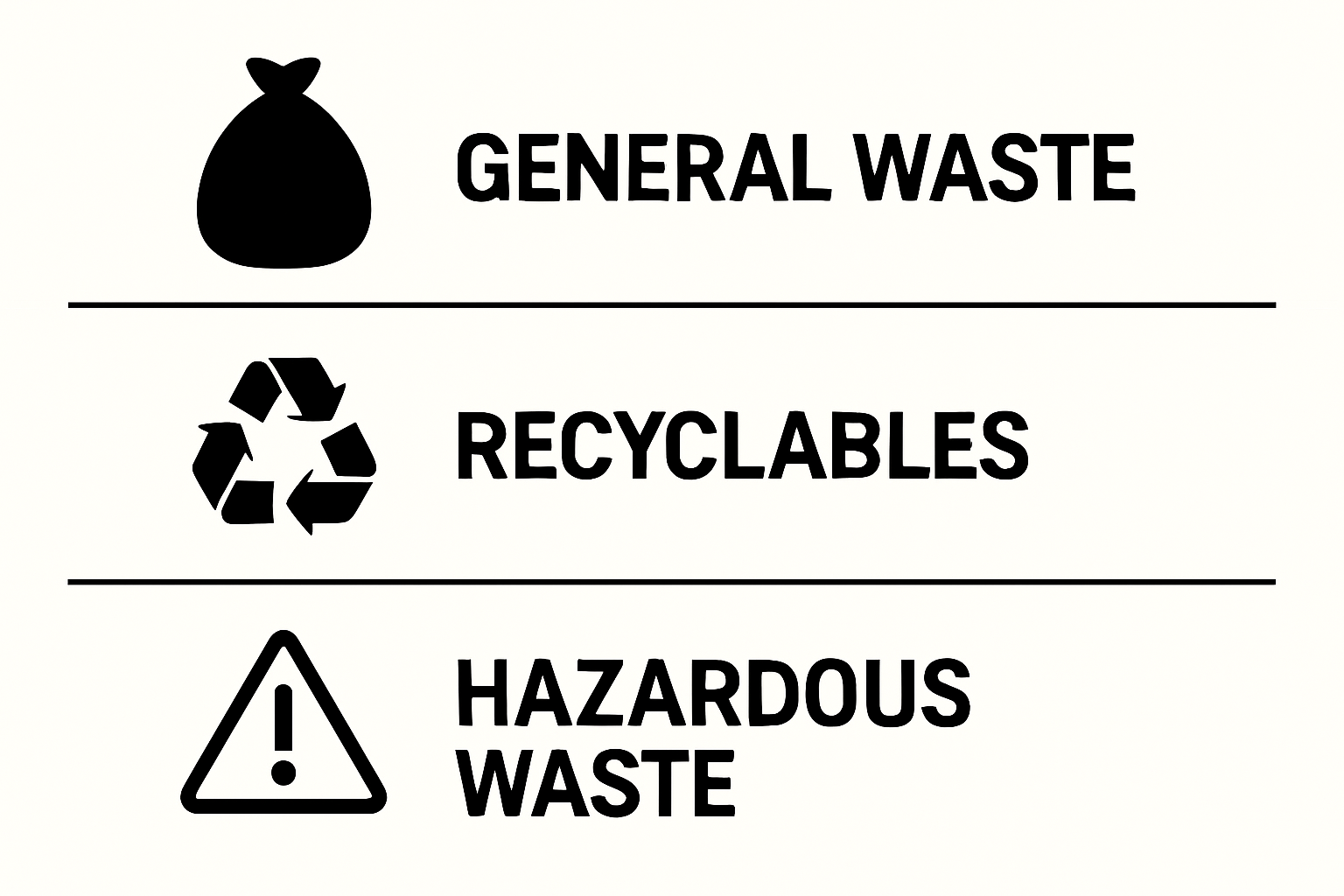
Take the Stress Out of Waste Permits and Compliance

Struggling to navigate the complexities of waste permits in the UK? Many businesses feel overwhelmed by confusing regulations, fear costly penalties, and worry about staying compliant as rules evolve. If the idea of missing a crucial environment agency deadline or mismanaging your permit documentation makes you anxious, you are not alone. Our dedicated Waste Collection Process in the UK for Businesses 2025 guide offers step-by-step support to keep your compliance effortless and fully up to date.

https://venturewaste.co.uk

Let Venture Waste Management turn permit confusion into peace of mind. With a streamlined three-step booking process, personalised advice, and industry-leading waste disposal, we handle the details so you can focus on what matters. Protect your business from fines and safeguard the environment today. Start by exploring how our collection network supports you or visit Venture Waste Management to book your compliant waste solution now.

Frequently Asked Questions

What is a waste permit in the UK?

A waste permit is an official authorization issued by the Environment Agency that allows businesses to handle, treat, store, or dispose of specific types of waste, ensuring compliance with environmental regulations.

Why do businesses need waste permits?

Businesses need waste permits to comply with legal requirements, prevent pollution, and manage waste responsibly. Operating without a permit can lead to severe financial penalties and legal consequences.

What are the different types of waste permits?

There are three main types of waste permits: Standard Rules Permits for low-risk operations, Bespoke Permits for complex activities requiring tailored management strategies, and Exempt Registrations for low-impact waste management activities that require basic registration.

How does the application process for a waste permit work?

The application process involves submitting detailed documentation, including environmental impact assessments, to the Environment Agency. They review the submission to ensure compliance with environmental standards before issuing a permit.

general waste office disposal

What is General Waste? Understanding Its Role in Waste Management

Every day in the UK, businesses and households send mountains of rubbish into general waste bins. General waste makes up the largest proportion of waste that ends up in landfill across the country. Now, you might expect most of this to be carefully sorted or recycled by default. The reality is much grimmer. What lands in general waste could easily have a second life yet most of it goes straight to landfill or incineration, making effective waste management more urgent than ever.

Table of Contents

Quick Summary

Takeaway Explanation
Understand what constitutes general waste General waste includes non-recyclable materials like contaminated paper and food-soiled containers, necessitating effective waste management strategies.
Acknowledge environmental impacts of waste Poor management leads to greenhouse gas emissions, higher landfill volumes, and resource depletion, making effective disposal crucial for sustainability.
Implement targeted waste reduction strategies Tailored methods in different sectors, like digital document management in offices, can significantly decrease general waste generated.
Recognise regulatory compliance importance Adhering to waste management regulations is not just a legal obligation; it also enhances a company’s reputation and can reduce costs.
Maximise resource recovery opportunities Proper waste management opens avenues for resource recovery, contributing to a circular economy and minimizing environmental harm.

Defining General Waste: Characteristics and Categories

General waste represents the most common category of waste produced by businesses, households, and commercial establishments across the United Kingdom. Understanding its composition, characteristics, and management requirements is crucial for effective waste disposal strategies.

What Constitutes General Waste?

General waste, often referred to as residual waste, encompasses materials that cannot be recycled or repurposed and are typically destined for landfill or incineration. Unlike segregated recyclable materials, general waste includes a diverse range of non-hazardous items that do not meet specific recycling criteria. Explore our comprehensive guide on waste management to understand the broader context of waste classification.

Three icons comparing general, recyclable, hazardous waste

Typical components of general waste include:

  • Packaging materials that are not easily recyclable
  • Contaminated paper and cardboard
  • Mixed plastic items
  • Food-soiled containers
  • Non-recyclable composite materials

Characteristics and Environmental Impact

General waste presents significant environmental challenges due to its mixed composition and limited recyclability. According to the Environment Agency’s National Packaging Waste Database, these materials often contribute substantially to landfill volumes and greenhouse gas emissions.

Key characteristics that define general waste include:

  • Low sorting potential
  • High contamination levels
  • Minimal immediate recycling value
  • Requirement for specialised disposal methods

Businesses and organisations must recognise that while general waste cannot be directly recycled, responsible management can help minimise its environmental footprint through advanced waste processing techniques such as energy recovery and controlled landfill strategies.

Below is a table summarising the typical characteristics of general waste to aid understanding of its environmental implications.

Characteristic Description
Low sorting potential Difficult to separate out recyclable elements due to mixed and contaminated materials
High contamination levels Often contains food or liquid residues, making recycling unviable
Minimal immediate recycling value Cannot be processed by standard recycling facilities and must be specially disposed
Specialised disposal required Necessitates landfill or incineration for safe and compliant management
Contributes to landfill volume Largely ends up in landfill, occupying significant space
Compound environmental footprint Releases methane and other greenhouse gases, further exacerbating climate concerns

The Importance of Managing General Waste Effectively

Managing general waste effectively is a critical responsibility for businesses, local authorities, and organisations across the United Kingdom. The strategic approach to waste disposal goes far beyond mere compliance, representing a significant opportunity to reduce environmental impact and create sustainable operational practices.

Environmental and Economic Implications

Proper general waste management delivers substantial environmental and economic benefits. By implementing sophisticated waste handling strategies, organisations can significantly reduce their carbon footprint and contribute to national sustainability goals. Our comprehensive guide to general waste collection provides deeper insights into effective waste management techniques.

The environmental implications of poor waste management are profound:

  • Increased greenhouse gas emissions
  • Higher landfill volumes
  • Greater resource depletion
  • Potential contamination of soil and water systems

Regulatory Compliance and Strategic Advantages

According to the UK Government’s Resources and Waste Strategy, effective waste management is not just an environmental imperative but a legal requirement. Organisations that proactively manage their general waste can unlock significant strategic advantages, including reduced disposal costs, enhanced corporate reputation, and potential tax incentives.

Key strategic benefits include:

  • Reduced waste disposal expenses
  • Improved organisational sustainability credentials
  • Enhanced compliance with environmental regulations
  • Potential for resource recovery and circular economy participation

Businesses that view general waste management as a strategic opportunity rather than a mere administrative task are better positioned to navigate increasingly stringent environmental regulations and demonstrate corporate social responsibility.

The Environmental Impact of General Waste and its Management

General waste represents a significant environmental challenge, with far-reaching consequences for ecosystem health, resource consumption, and climate change mitigation.

Understanding the intricate relationship between waste generation and environmental degradation is crucial for developing sustainable management strategies.

Carbon Emissions and Climate Implications

The disposal of general waste contributes substantially to greenhouse gas emissions, particularly through landfill decomposition and incineration processes. Our comprehensive guide to waste management explores the complex dynamics of waste-related carbon footprints. According to the Department for Environment, Food & Rural Affairs (DEFRA), general waste management plays a critical role in national carbon reduction strategies.

Key environmental challenges associated with general waste include:

  • Methane generation from landfill decomposition
  • Direct carbon emissions from waste transportation
  • Energy-intensive waste processing methods
  • Loss of potential material recovery opportunities

Resource Depletion and Ecosystem Disruption

The improper management of general waste accelerates resource depletion and disrupts natural ecosystem balances. Materials discarded as general waste often represent lost opportunities for material recovery, circular economy participation, and sustainable resource utilisation.

Significant environmental impacts encompass:

  • Increased extraction of virgin raw materials
  • Habitat destruction from resource extraction
  • Potential soil and water contamination
  • Disruption of natural material cycles

Organisations and individuals must recognise that effective waste management transcends mere disposal, representing a critical intervention point for environmental conservation and sustainable development.

How General Waste is Collected, Transported, and Disposed Of

The process of managing general waste involves a complex network of collection, transportation, and disposal mechanisms designed to minimise environmental impact and maximise efficiency. Understanding these intricate systems is crucial for businesses and local authorities seeking responsible waste management solutions.

Collection Methodologies

General waste collection varies depending on the source and volume of waste generated. Our UK-wide general waste collection service offers comprehensive insights into different collection strategies. Local authorities and private waste management companies employ multiple approaches to gather general waste, ranging from residential kerbside collections to commercial bulk waste removal.

Key collection methods include:

  • Scheduled municipal collections
  • On-demand commercial waste pickup
  • Centralised waste disposal centres
  • Specialised skip and container services
  • Mobile waste collection units

Transportation and Logistics

Once collected, general waste requires careful transportation to processing or disposal facilities. According to the House of Commons Library research, waste transportation is strictly regulated to ensure environmental safety and compliance with national waste management standards.

Critical transportation considerations encompass:

  • Licensed waste carrier certification
  • Route optimization for fuel efficiency
  • Sealed containment to prevent spillage
  • Tracking and documentation of waste movements
  • Compliance with environmental protection regulations

The final stage involves disposing of general waste through methods such as landfill deposition or energy recovery, with increasing emphasis on minimising environmental consequences and maximising resource efficiency.

waste management facility

Best Practices: Reducing General Waste in Various Sectors

Reducing general waste requires targeted strategies tailored to specific industry contexts, recognising that waste generation and management vary significantly across different organisational environments. Implementing comprehensive waste reduction approaches demands nuanced understanding and sector-specific interventions.

Commercial and Office Sector Strategies

Office environments generate substantial general waste through paper, packaging, and disposable materials. Our comprehensive guide to waste reduction provides detailed insights into minimising organisational waste streams. Effective strategies focus on creating systematic approaches that fundamentally transform waste generation patterns.

Key waste reduction techniques include:

  • Digital document management
  • Implementing comprehensive recycling programmes
  • Encouraging reusable office supplies
  • Minimising single-use packaging
  • Promoting a paperless workplace culture

Healthcare and Industrial Sector Approaches

According to UK government workplace waste guidelines, sectors with complex waste streams must develop sophisticated segregation and reduction methodologies. Healthcare and industrial environments face unique challenges in waste management, requiring specialized approaches that balance regulatory compliance with environmental responsibility.

Critical waste reduction considerations encompass:

  • Implementing strict waste segregation protocols
  • Investing in reusable medical/industrial equipment
  • Developing circular economy principles
  • Training staff in waste minimisation techniques
  • Adopting advanced waste processing technologies

Successful waste reduction transcends mere disposal, representing a strategic approach to resource management that delivers environmental and economic benefits across diverse organisational contexts.

This table compares general waste reduction strategies across commercial, office, healthcare, and industrial sectors as described in the article.

Sector Key Waste Reduction Strategies
Commercial/Office Digital document management, comprehensive recycling programmes, reusable office supplies, paperless workplace culture
Healthcare Strict waste segregation, reusable medical equipment, staff training in minimisation, advanced processing technologies
Industrial Segregation protocols, investment in reusable equipment, circular economy principles, technological waste reduction efforts

Take Control of General Waste with a Smarter, Simpler Solution

Tired of managing unpredictable waste streams, high landfill costs, or struggling to stay compliant with the latest UK regulations? If you are facing difficulties sorting and disposing of general waste effectively, you are not alone. Poor handling of general waste can lead to unnecessary expenses, legal risks, and negative environmental impact for your business. Now is the perfect time to transform these challenges into opportunities. Discover how our Waste Collection Process for Businesses in the UK brings clarity and control to every stage, from collection to compliant disposal.

https://venturewaste.co.uk

Take the next step toward dependable, hassle-free waste management. Book with Venture Waste Management and experience a streamlined, three-step booking process backed by a trusted nationwide network. For industry news, best practices, and further solutions tailored to your sector, visit our Waste Collection Network in the UK. Do not let general waste become a business burden. Act now for a cleaner, compliant future.

Frequently Asked Questions

What is general waste?

General waste, also known as residual waste, refers to materials that cannot be recycled or repurposed, typically destined for landfill or incineration. It includes a variety of non-hazardous items that do not meet specific recycling criteria.

What are the key characteristics of general waste?

General waste is characterised by its low sorting potential, high contamination levels, minimal immediate recycling value, and the need for specialised disposal methods.

How does general waste impact the environment?

The improper management of general waste contributes to significant environmental challenges, including increased greenhouse gas emissions, higher landfill volumes, and potential contamination of soil and water systems.

What are some effective strategies for managing general waste?

Effective general waste management strategies include implementing recycling programmes, encouraging the use of reusable items, and developing waste reduction techniques tailored to specific sectors, such as commercial or healthcare.

waste audit assessment best practices

Waste Transport Best Practices for Effective Disposal

Waste management might sound dull, but every business in the North East produces more than 1.8 million tonnes of commercial and industrial waste each year. Most think waste transport is just about hauling rubbish from one spot to another and moving on. The reality is much trickier, because what gets missed in all this shifting is how a careful strategy can save thousands and slash environmental risk at the same time.

Table of Contents

Quick Summary

Key Point Explanation
1. Assess current waste practices Evaluate your existing waste management to identify inefficiencies and environmental risks. Document types and quantities of waste effectively to improve strategies.
2. Identify waste types precisely Categorise waste carefully to ensure compliance with regulations and prepare appropriate handling and disposal protocols for each type of waste.
3. Select proper transport methods Choose transport methods matching waste characteristics to maximise safety, compliance, and efficiency during waste movement.
4. Ensure legal compliance Understand and follow legal regulations for waste transport, including necessary permits and documentation to avoid potential penalties.
5. Implement comprehensive safety measures Develop and enforce safety protocols including training and proper equipment to protect personnel and the environment during waste handling.

Step 1: Assess Your Current Waste Management Practices

Understanding your current waste management practices is the critical foundation for developing an effective waste transport strategy. This initial assessment provides a comprehensive snapshot of your organisation’s existing waste generation, handling, and disposal processes. By conducting a thorough evaluation, businesses can identify inefficiencies, potential environmental risks, and opportunities for optimisation.

Begin by performing a comprehensive waste audit across all operational areas. This involves meticulously documenting the types, quantities, and current disposal methods of waste generated by your organisation. In Newcastle and surrounding North East industrial zones, businesses often overlook the nuanced variations in waste streams that can significantly impact disposal efficiency. Walk through each department or production area, noting everything from paper waste in administrative sections to industrial byproducts in manufacturing zones.

Key assessment elements should include:

  • Total waste volume generated weekly
  • Waste categorisation (hazardous, recyclable, general)
  • Current disposal routes and contractors
  • Existing waste segregation practices
  • Transportation and handling mechanisms

Documentation is paramount during this process. Create detailed records that capture not just quantities, but also the environmental and potential financial implications of your current waste management approach. Dive deeper into waste segregation strategies to refine your understanding of proper waste categorisation.

Consider engaging a professional waste management consultant who can provide an objective, expert perspective on your current practices. These specialists can identify hidden inefficiencies and recommend tailored improvements specific to your industry and operational context. They will help you understand complex regulatory requirements and potential cost-saving opportunities in waste transport and disposal.

Successful completion of this assessment means having a clear, comprehensive document that maps your organisation’s entire waste journey. This baseline will become the foundation for developing more sustainable, cost-effective waste transport best practices in subsequent steps of your waste management transformation.

Step 2: Identify Types of Waste for Transport

Precisely identifying and categorising waste types is fundamental to developing a robust waste transport strategy. This critical step ensures compliance with legal regulations, promotes environmental safety, and enables appropriate handling and disposal protocols. Different waste categories require distinct transport methods, protective measures, and specialised disposal techniques.

Waste classification involves understanding the specific characteristics and potential risks associated with each waste stream. In the North East industrial regions, businesses frequently encounter diverse waste types ranging from commercial packaging to complex industrial byproducts. Companies must meticulously document each waste category, considering its physical properties, chemical composition, and potential environmental impact.

Key waste categories to consider include:

  • General commercial waste
  • Hazardous chemical waste
  • Electronic and electrical equipment waste
  • Construction and demolition debris
  • Biological and medical waste
  • Recyclable materials

To effectively categorise waste, organisations should invest time in detailed documentation and consultation with waste management professionals. Explore our comprehensive guide on waste management for UK businesses to gain deeper insights into proper waste identification techniques.

Special attention must be given to hazardous waste streams. These materials require stringent documentation, specialised transport containers, and adherence to strict regulatory guidelines. Chemical waste, medical waste, and electronic equipment often fall into this category and demand expert handling. Businesses should maintain comprehensive records detailing waste origin, composition, potential risks, and recommended disposal methods.

Successful waste identification involves collaboration between operational teams, environmental specialists, and waste transport contractors. By developing a systematic approach to waste categorisation, organisations can streamline their transport processes, minimise environmental risks, and demonstrate a commitment to responsible waste management practices.

Below is a summary table comparing key waste types and their associated transport and handling requirements, helping to clarify distinctions for effective planning.

Waste Type Main Characteristics Typical Handling and Transport Requirements
General commercial waste Non-hazardous, mixed refuse Standard bins, regular collection routines
Hazardous chemical waste Flammable, toxic, corrosive Special sealed containers, trained staff, strict protocols
Electronic and electrical waste Contains metals, components Secure collection, avoid breakage, specialist recycling
Construction and demolition debris Heavy, bulky Robust skips, segregation for recycling where possible
Biological and medical waste Infectious, sharp items Medical-grade containers, clear labelling, quick removal
Recyclable materials Paper, plastics, metals Clean, uncontaminated, separate containers

Step 3: Choose Appropriate Transport Methods

Selecting the right waste transport methods is a pivotal decision that directly impacts environmental safety, regulatory compliance, and operational efficiency. This step requires careful consideration of waste characteristics, transportation regulations, and the specific logistical challenges faced by businesses across different sectors.

Transportation methodology begins with understanding the unique requirements of each waste stream. Different waste types demand specialised containers, handling protocols, and transportation vehicles to ensure safe and legal movement. In the North East industrial corridor, businesses must navigate complex regulatory landscapes that vary from manufacturing facilities in Newcastle to agricultural operations in rural Northumberland.

Critical transport considerations include:

  • Container specifications matching waste type
  • Vehicle selection based on waste volume and characteristics
  • Compliance with environmental protection regulations
  • Route planning to minimise environmental impact
  • Safety equipment and protective measures

Hazardous waste requires particularly meticulous transport planning. Special sealed containers, restricted transportation routes, and highly trained personnel become essential. Chemical waste might need temperature-controlled vehicles, while electronic waste demands specialised handling to prevent potential environmental contamination. Learn more about efficient waste collection scheduling to optimise your transport strategy.

Companies must also invest in proper documentation and tracking systems. Each waste transport operation requires comprehensive manifests detailing waste origin, composition, destination, and handling instructions. Digital tracking technologies now enable real-time monitoring of waste movements, providing unprecedented transparency and accountability in the transportation process.

Successful waste transport method selection demonstrates a commitment to environmental responsibility. By carefully matching waste characteristics with appropriate transportation strategies, businesses can minimise risks, reduce potential environmental impacts, and ensure compliance with stringent UK waste management regulations.

waste transport loading process The goal is not just moving waste from one location to another, but doing so with maximum safety, efficiency, and environmental consciousness.
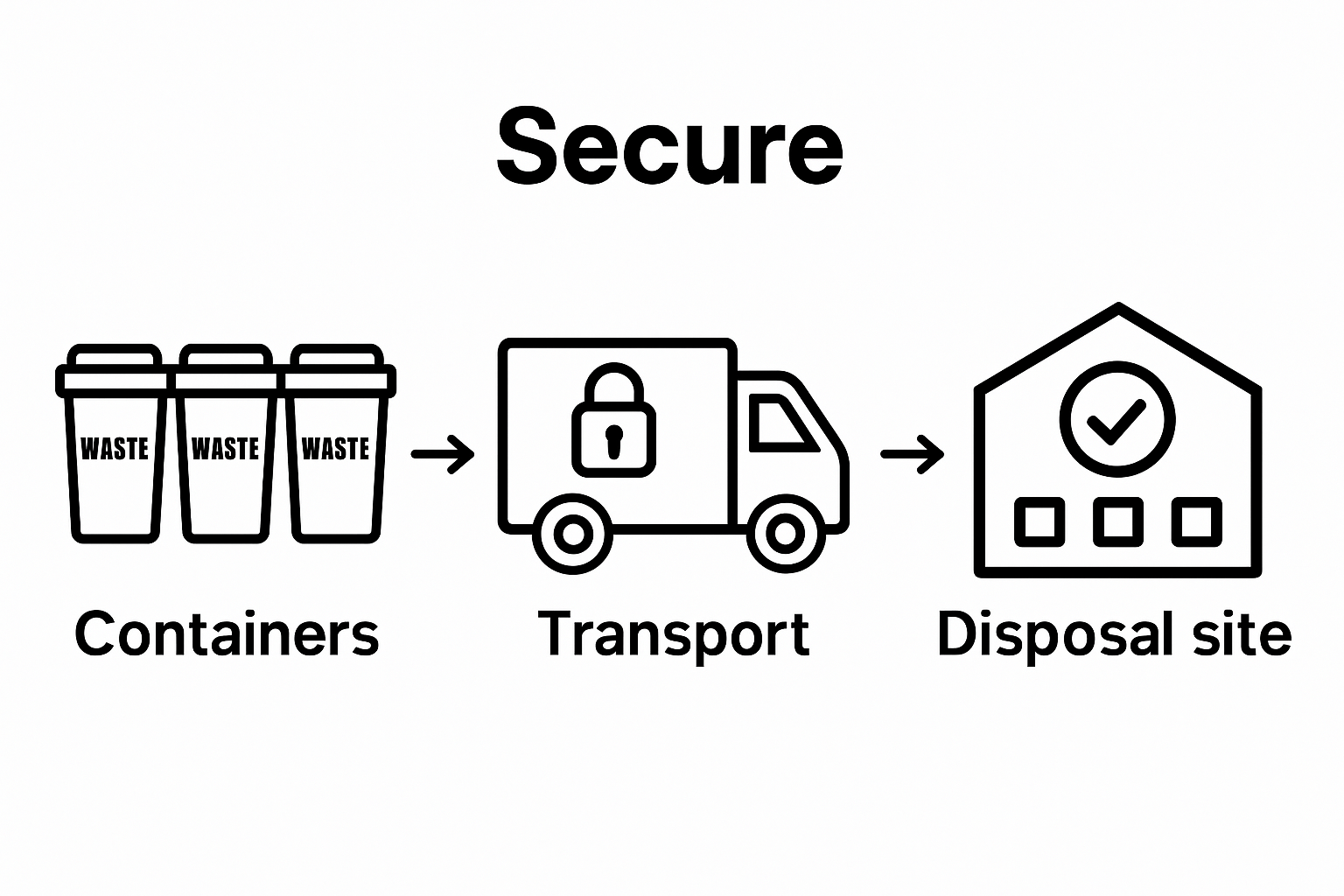
Waste transport step-by-step icon sequence

Navigating the complex landscape of legal and environmental regulations is crucial for responsible waste transport. This step ensures that your organisation not only meets statutory requirements but also demonstrates a commitment to sustainable waste management practices. Compliance protects your business from potential legal repercussions and contributes to broader environmental conservation efforts.

Understanding regulatory frameworks is fundamental to effective waste management. Businesses must familiarise themselves with multiple layers of legislation, including local council regulations, national environmental protection standards, and specific industry-specific waste disposal guidelines. In the North East region, companies ranging from Newcastle manufacturing plants to rural agricultural operations must adhere to stringent waste transport protocols.

Key regulatory compliance elements include:

  • Obtaining necessary waste transport permits
  • Maintaining accurate waste transfer documentation
  • Implementing proper waste tracking systems
  • Ensuring employee safety and training
  • Adhering to environmental protection standards

Careful documentation becomes your primary defence against potential regulatory challenges. Each waste transport operation requires comprehensive records detailing waste origin, composition, transportation route, and final disposal method. Explore our comprehensive guide to waste compliance for UK businesses to gain deeper insights into meeting regulatory requirements.

Special attention must be given to hazardous waste streams. These materials demand additional documentation, specialized handling protocols, and strict adherence to transportation guidelines. Businesses must invest in ongoing staff training, ensuring that every team member understands the legal implications of waste transport and disposal.

Successful regulatory compliance involves more than merely following rules. It represents a proactive approach to environmental stewardship, demonstrating your organisation’s commitment to responsible waste management. By meticulously documenting processes, investing in continuous education, and staying informed about evolving regulations, businesses can transform compliance from a legal obligation into a competitive advantage.

The following checklist table provides a quick way to verify your organisation is covering all regulatory compliance essentials during waste transport operations.

Compliance Requirement Description Verification Complete (Yes/No)
Waste transport permits Obtain appropriate permits for each waste type
Accurate waste transfer documentation Record origin, type, quantity, destination, and handler details
Waste tracking system Implement digital or paper-based tracking for all movements
Staff safety training Ensure all staff receive up-to-date regulatory compliance instruction
Environmental protection adherence Follow all relevant national and local environmental regulations

Step 5: Implement Safety Measures for Transport

Implementing comprehensive safety measures during waste transport is critical to protecting personnel, environmental resources, and organisational reputation. This step transforms theoretical safety protocols into practical, actionable strategies that mitigate potential risks associated with waste movement and handling.

Safety begins with thorough personnel preparation and specialised equipment selection. Companies must invest in rigorous training programmes that equip staff with the knowledge and skills necessary to handle different waste streams safely. In the North East industrial corridor, businesses ranging from chemical manufacturers in Teesside to agricultural operations in rural Northumberland must develop nuanced safety approaches tailored to their specific waste transportation challenges.

Essential safety implementation elements include:

  • Personal protective equipment specifications
  • Emergency response protocol development
  • Vehicle and container safety standards
  • Staff training and certification requirements
  • Risk assessment and mitigation strategies

Specialised protective gear becomes paramount when transporting hazardous materials. Chemical-resistant suits, respiratory protection, and appropriate gloves are not optional extras but fundamental safety requirements. Transportation vehicles must be equipped with spill containment kits, fire suppression equipment, and communication devices to ensure rapid response to potential incidents. Explore our comprehensive waste handling safety guidelines to enhance your organisational safety protocols.

Regular safety audits and continuous staff training represent the cornerstone of effective safety implementation. These processes ensure that safety protocols evolve alongside changing regulatory landscapes and emerging technological innovations. Businesses must develop a culture of safety consciousness, where every team member understands their role in preventing potential environmental and personal risks during waste transport operations.

Successful safety measure implementation transcends mere regulatory compliance. It demonstrates an organisation’s commitment to protecting its workforce, surrounding communities, and environmental ecosystems. By prioritising comprehensive safety strategies, businesses transform waste transport from a potential hazard into a responsible, controlled operational process.

Step 6: Evaluate and Improve Waste Transport Processes

Continuous evaluation and improvement form the backbone of an effective waste transport strategy. This critical step transforms historical data and operational insights into actionable improvements, ensuring that waste management practices remain dynamic, efficient, and responsive to evolving environmental and regulatory landscapes.

Performance measurement requires a systematic and comprehensive approach. Businesses must develop robust monitoring mechanisms that capture multiple dimensions of waste transport operations. In the North East industrial corridor, companies from Newcastle’s manufacturing sectors to Sunderland’s logistics firms must embrace data-driven assessment techniques that go beyond superficial compliance metrics.

Key evaluation elements to consider include:

  • Waste transport efficiency metrics
  • Environmental impact assessments
  • Cost-effectiveness analysis
  • Regulatory compliance tracking
  • Staff safety performance indicators

Digital technologies now provide unprecedented opportunities for detailed process analysis. Advanced tracking systems enable real-time monitoring of waste movement, allowing businesses to identify inefficiencies, potential risks, and opportunities for optimization. Explore our guide to efficient waste collection scheduling to understand how technology can transform waste management processes.

Regular internal audits become crucial in maintaining and enhancing waste transport protocols. These comprehensive reviews should involve cross-functional teams, incorporating perspectives from operational staff, environmental specialists, and financial analysts. By creating a holistic evaluation framework, businesses can uncover subtle improvements that might otherwise remain hidden.

Successful process improvement is not a one-time event but a continuous journey of refinement. Organizations must cultivate a culture of perpetual learning, where feedback is welcomed, data is rigorously analyzed, and incremental enhancements are consistently implemented. This approach transforms waste transport from a routine operational task into a strategic opportunity for environmental stewardship and operational excellence.

Transform Your Waste Transport with Venture Waste Management

Struggling to keep your waste transport both compliant and efficient? The complexities of assessing your waste streams, handling hazardous materials, and navigating constant regulatory changes can feel overwhelming. If process gaps, missed documentation, or safety worries are slowing your business, you are not alone. Many organisations face these same issues, but effective solutions are within reach. Discover how the modern Waste Collection Process in the UK for Businesses 2025 can eliminate uncertainty and ensure your waste disposal runs smoothly from start to finish.

https://venturewaste.co.uk

Now is the best time to streamline your approach and safeguard your operations. Venture Waste offers full-circle support—expert guidance on waste audits, legal compliance, and robust transport solutions. Our local teams handle everything from hazardous collections to confidential destruction, all tailored specifically for your needs. Step beyond theory and partner with a service that values your goals. Take control with one easy booking at Venture Waste Management or explore the Waste Collection Network in UK Serves Businesses in 2025 for proven results across every sector. Do not let inefficient waste management slow you down—get started today and secure peace of mind for your business.

Frequently Asked Questions

What are the key steps to assess current waste management practices?

Begin your assessment with a comprehensive waste audit, documenting waste types, quantities, and disposal methods across all operational areas. This will help identify inefficiencies and opportunities for optimisation.

How do I identify different types of waste for transport?

Systematically categorise your waste streams by understanding their characteristics and potential risks. This includes general commercial waste, hazardous waste, electronic waste, and more, ensuring proper handling and regulatory compliance.

What transport methods are suitable for handling hazardous waste?

Hazardous waste requires specialised containers and vehicles, as well as safety measures like sealed containers and trained personnel. Ensure your transport methods comply with environmental protection regulations to safeguard against potential risks.

Stay informed about local and national regulations regarding waste transport. Obtain necessary permits, maintain accurate documentation, and invest in training for employees on safety and compliance requirements.