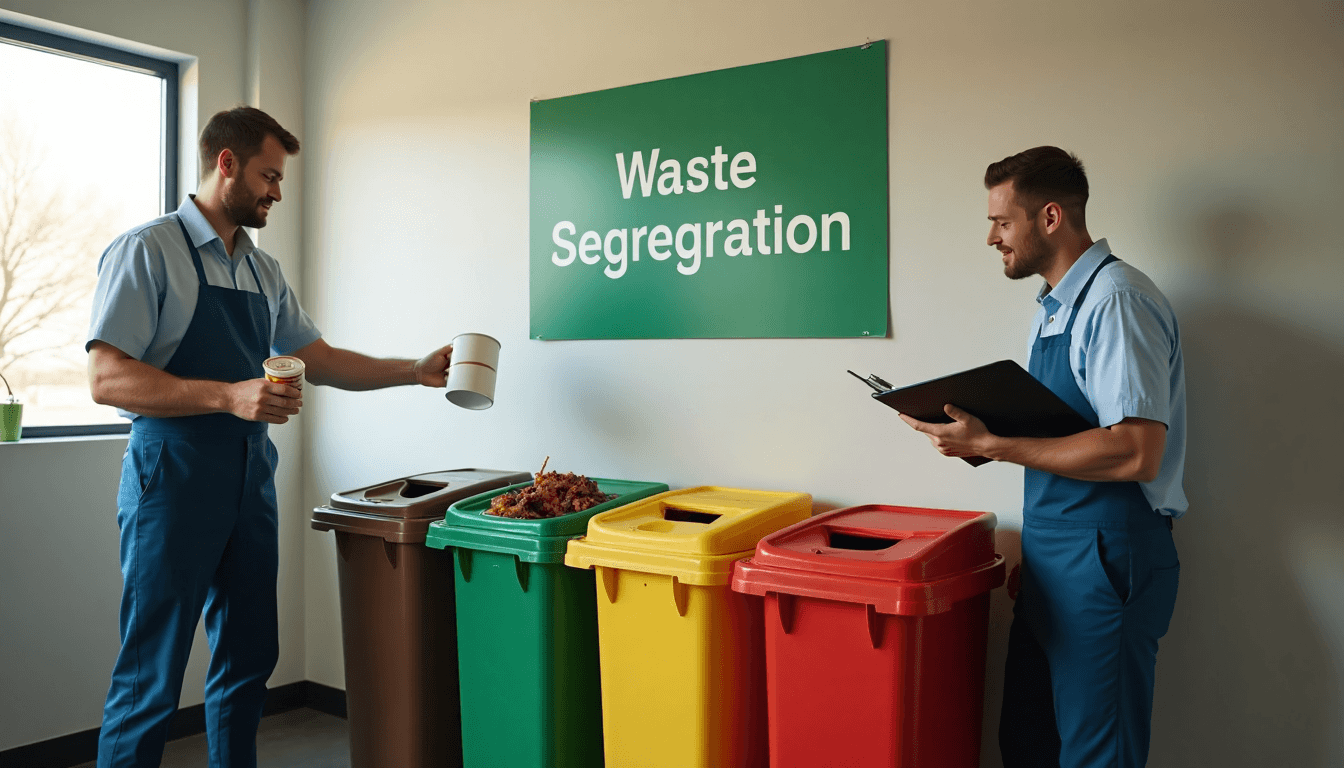
Office workers sorting waste into color-coded bins under compliance poster

Waste Management News UK 2025: What Businesses Need to Know

UK businesses are facing major changes in 2025, with stricter waste rules coming into force. You might expect yet more bureaucracy and headaches, but one regulation really stands out. From 31 March 2025, every company with 10 or more employees must separate waste into three categories or risk penalties—a shift set to affect thousands of workplaces. The surprise is that this overhaul could also unlock cost savings and sustainability gains for firms ready to adapt.

Table of Contents

Quick Summary

Takeaway Explanation
Mandatory Waste Separation From 31 March 2025, businesses in England with 10 or more employees must separate waste into three categories: dry recyclables, food waste, and general waste. Micro-enterprises have until 31 March 2027 to comply.
Digital Waste Tracking System A new digital system will be implemented by April 2026 to replace paper tracking of waste, offering real-time monitoring and improving compliance and environmental insights.
Deposit Return Scheme From 1 October 2027, a deposit return scheme for single-use drink containers will be introduced, impacting manufacturers and retailers in their waste management duties.
Sector-Specific Challenges Different industries, including manufacturing, hospitality, and healthcare, will face unique implementation challenges and must adjust their waste management practices accordingly.
Selecting Waste Management Companies Businesses should conduct thorough due diligence when choosing waste management partners, focusing on legal compliance, industry accreditation, and comprehensive service evaluation.

Infographic showing new UK waste management rules and timelines for businesses

Latest UK Waste Management Updates 2025

The UK waste management landscape is undergoing significant transformations in 2025, with new regulations and policies set to reshape how businesses approach waste disposal and environmental responsibility. These updates reflect the government’s commitment to creating a more sustainable and circular economy.

Mandatory Waste Separation Requirements

Starting 31 March 2025, businesses in England face critical changes in waste management practices. Learn more about compliance strategies for these new regulations. According to the Separation of Waste (England) Regulations 2025, companies with 10 or more employees must now separate their waste into three distinct categories:

  • Dry Recyclables: Including plastic, metal, glass, paper, and cardboard
  • Food Waste: Dedicated collection for organic materials
  • General Waste: Remaining non-recyclable materials

Micro-enterprises with fewer than 10 employees will have until 31 March 2027 to implement these waste separation protocols. This regulatory shift aims to significantly improve recycling rates and reduce landfill waste across the UK business sector.

Digital Waste Tracking System

The UK government is revolutionizing waste management tracking with a comprehensive digital platform. The Environmental Protection Agency has announced the postponement of the Digital Waste Tracking system from April 2025 to April 2026. This advanced system will replace traditional paper-based waste tracking, providing real-time data on waste generation, handling, and disposal.

Key benefits of the digital tracking system include:

  • Enhanced Transparency: Real-time monitoring of waste streams
  • Improved Compliance: Easy verification of waste management practices
  • Environmental Insights: Comprehensive data for policy development

Deposit Return Scheme for Drinks Containers

Another significant update is the Deposit Scheme for Drinks Containers (England and Northern Ireland) Regulations 2025. Effective 1 October 2027, this scheme will cover single-use drinks containers made of aluminium, PET plastic, and steel, with capacities between 150ml and 3 litres.

Businesses will need to adapt to this new system, which aims to reduce packaging waste and encourage recycling. Manufacturers, distributors, and retailers will play a crucial role in implementing these new deposit return mechanisms.

These updates represent a significant shift in the UK’s approach to waste management. Businesses must stay informed and proactively adjust their waste handling practices to ensure compliance and contribute to national environmental goals. Staying ahead of these regulations will not only help avoid potential penalties but also demonstrate corporate social responsibility and commitment to sustainable practices.

Here is a table summarising the key waste management policy changes and their implementation dates for quick reference:

Regulation/Policy What Changes Who Is Affected Implementation Date
Waste Separation Requirements Separate into recyclables, food, general waste Businesses with 10+ employees 31 March 2025
Waste Separation for Micro-enterprises Exempt until 2027 Businesses with <10 employees 31 March 2027
Digital Waste Tracking System Replace paper tracking with digital All businesses generating waste April 2026
Deposit Return Scheme for Drinks Containers Deposit on PET, aluminium, steel containers Manufacturers, distributors, retailers 1 October 2027

How New Laws Affect Business Waste Disposal

The evolving landscape of waste management regulations in the UK is set to fundamentally transform how businesses approach waste disposal. These legislative changes are not merely administrative updates but represent a comprehensive strategy to drive environmental sustainability and operational efficiency across various sectors.

Warehouse staff review compliance dashboard next to recycling bins

Businesses must now navigate a complex regulatory environment that demands precise waste management protocols. Explore our comprehensive compliance guide to understand these intricate requirements. According to UK government guidelines, the new regulations fundamentally alter how organizations must handle their waste streams.

Key legal implications include:

  • Mandatory Waste Separation: Businesses with 10 or more employees must categorize waste into distinct streams
  • Strict Reporting Requirements: Enhanced documentation and tracking of waste disposal processes
  • Potential Financial Penalties: Non-compliance could result in significant financial sanctions

Sector-Specific Implementation Challenges

Different industries will experience unique challenges in implementing these new waste management regulations. The Environmental Protection Agency highlights that manufacturing, hospitality, healthcare, and retail sectors will need to make substantial operational adjustments.

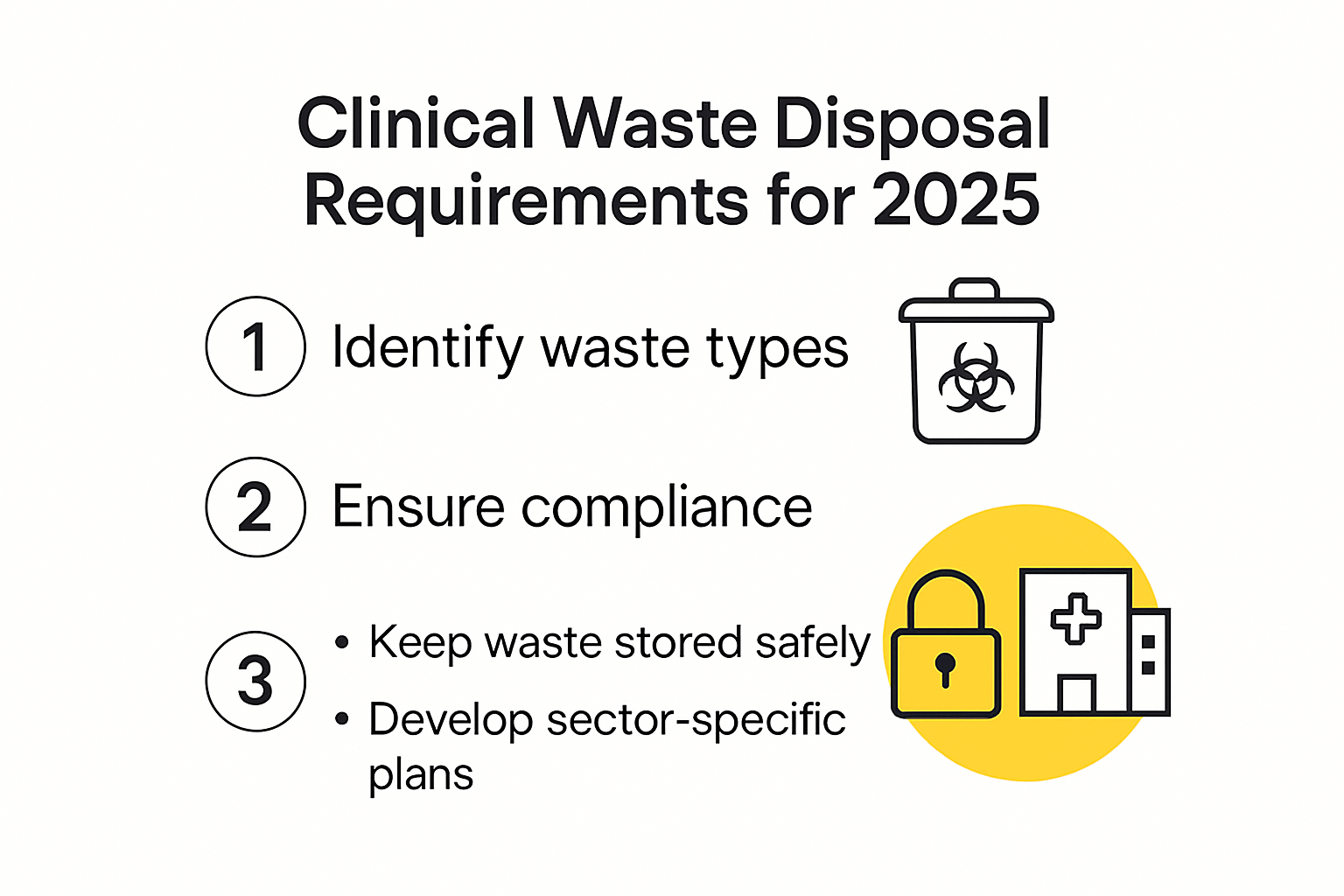
Manufacturing businesses must redesign their waste collection infrastructure, while hospitality establishments will need to implement more rigorous food waste separation protocols. Healthcare facilities face particularly complex challenges due to the specialized nature of their waste streams, requiring meticulous sorting and disposal mechanisms.

Economic and Environmental Implications

These legislative changes are not just about compliance but represent a broader shift towards a circular economy. According to government economic assessments, the new regulations are expected to drive significant economic and environmental benefits.

Potential outcomes include:

  • Reduced Landfill Waste: Estimated 20% reduction in waste sent to landfills
  • Cost Savings: Long-term operational efficiencies through better waste management
  • Enhanced Corporate Reputation: Demonstrated commitment to environmental sustainability

Below is a summary table outlining key sector-specific waste management challenges and focus areas, to help businesses quickly identify areas requiring special attention:

Sector Main Challenge Waste Management Focus Area
Manufacturing Redesigning collection infrastructure Separation & handling of production waste
Hospitality Implementing rigorous food waste protocols Food waste segregation & recycling
Healthcare Complex/specialised waste stream management Meticulous sorting & compliant disposal
Retail Operational adjustments for packaging waste Packaging recovery & recycling processes
Micro-Enterprise Deferred implementation, capacity planning Future compliance readiness

Businesses must proactively adapt to these regulatory changes. This involves not just compliance but a fundamental reimagining of waste management strategies. Those who view these regulations as opportunities for innovation and efficiency will be best positioned to thrive in this new environmental landscape. Investing in staff training, upgrading waste management infrastructure, and developing comprehensive waste reduction strategies will be critical for success.

Special Requirements for Hazardous and Confidential Waste

Handling hazardous and confidential waste demands unprecedented precision and adherence to stringent regulatory frameworks in 2025. Businesses across various sectors must navigate complex legal requirements that go far beyond standard waste management practices.

Classification and Handling Protocols

Check out our comprehensive hazardous waste disposal guide for detailed insights. According to the Waste Duty of Care Code of Practice, organizations are legally obligated to provide accurate waste descriptions during transfer. This involves meticulously classifying waste, detailing its precise quantity and inherent characteristics, and ensuring safe transportation by authorized personnel.

Key classification requirements include:

  • Precise Waste Categorization: Detailed documentation of waste composition
  • Risk Assessment: Comprehensive evaluation of potential environmental and health hazards
  • Specialized Handling Procedures: Specific protocols for different hazardous materials

Sector-Specific Waste Management Strategies

Different industries face unique challenges in managing hazardous and confidential waste. The NHS Clinical Waste Strategy provides a compelling example of sector-specific waste management. Healthcare providers are now required to implement comprehensive strategies that dramatically reduce waste volumes and carbon emissions.

Industry-specific considerations include:

  • Healthcare: Stringent protocols for medical waste disposal
  • Manufacturing: Complex chemical waste management
  • Technology: Secure disposal of electronic and confidential data storage devices
  • Legal and Financial Services: Comprehensive confidential document destruction

The following table compares the requirements and strategies for managing hazardous and confidential waste across several key sectors, making it easier to understand their distinct needs:

Sector Type of Waste Managed Key Compliance/Strategy
Healthcare Clinical, infectious, hazardous Stringent protocols, carbon impact reduction
Manufacturing Chemical, production, hazardous Complex chemical handling, specialised disposal
Technology Electronic, confidential data storage Secure data/device destruction
Legal & Financial Services Confidential documents/paper Certified destruction procedures, privacy compliance

Compliance and Technological Innovation

The Separation of Waste (England) Regulations 2025 introduce nuanced exemptions for waste collection and management. While micro-firms receive temporary relief until March 31, 2027, larger organizations must immediately implement sophisticated waste management systems.

Emerging technological solutions are transforming hazardous and confidential waste management:

  • Advanced Tracking Systems: Real-time monitoring of waste streams
  • Secure Destruction Technologies: Enhanced confidentiality protection
  • Sustainable Disposal Mechanisms: Environmentally responsible waste processing

Businesses must recognize that managing hazardous and confidential waste is no longer a peripheral administrative task but a critical component of corporate responsibility. The regulatory landscape demands not just compliance, but a proactive approach to waste management that prioritizes environmental protection, data security, and organizational risk mitigation. Organizations that invest in robust waste management infrastructure and stay ahead of regulatory changes will not only avoid potential legal complications but also demonstrate significant corporate leadership in sustainability and responsible business practices.

Choosing Reliable Waste Management Companies in the UK

Selecting the right waste management partner is crucial for businesses navigating the complex regulatory landscape of 2025. The choice of a waste management company can significantly impact a company’s environmental compliance, operational efficiency, and corporate reputation.

Learn about essential waste management selection criteria before making your decision. According to the UK Environment Agency, businesses must conduct thorough due diligence when selecting a waste management provider. This includes verifying the company’s registration as a licensed waste carrier through the public register.

Key verification steps include:

  • Waste Carrier License: Confirm current registration status
  • Environmental Permits: Check for valid operational permits
  • Compliance History: Review past regulatory compliance records
  • Insurance Coverage: Verify comprehensive liability insurance

Industry Accreditation and Professional Standards

Professional bodies play a critical role in establishing industry standards. The Chartered Institution of Wastes Management (CIWM) represents the pinnacle of professional expertise in waste management. Similarly, the Environmental Services Association (ESA) provides additional credibility and industry representation.

Businesses should look for waste management partners that demonstrate:

  • Professional Memberships: Active participation in recognized industry associations
  • Continuous Training: Evidence of ongoing staff development
  • Technological Innovation: Investment in advanced waste management technologies
  • Sustainability Credentials: Proven commitment to environmental best practices

Comprehensive Service Evaluation

Beyond legal compliance, businesses must assess the holistic capabilities of potential waste management partners. This involves a multi-dimensional evaluation of service offerings, technological capabilities, and strategic alignment with organizational sustainability goals.

Critical evaluation criteria include:

  • Waste Stream Diversity: Ability to handle multiple waste types
  • Reporting and Transparency: Comprehensive waste tracking and documentation
  • Recycling and Recovery Rates: Demonstrated commitment to circular economy principles
  • Cost-Effectiveness: Competitive pricing without compromising quality
  • Geographic Coverage: Ability to serve your specific operational locations

Below is a checklist-style table summarising due diligence criteria for selecting a waste management company, allowing businesses to easily verify essential aspects during the evaluation process:

Criterion Why It Matters Check/Status
Waste Carrier License Legal authority to transport waste
Environmental Permits Permission to operate waste facilities
Compliance History Assures reliability and trust
Insurance Coverage Financial protection against incidents
Professional Memberships Industry recognition & up-to-date skills
Technological Capabilities Efficient, transparent waste management
Sustainability Credentials Supports corporate sustainability goals

Choosing a waste management company in 2025 requires a strategic approach that goes beyond traditional vendor selection. Businesses must view this partnership as a critical component of their environmental responsibility and operational efficiency. The right waste management partner will not only ensure legal compliance but also contribute to your organization’s broader sustainability objectives.

The landscape of waste management is rapidly evolving, with increasing emphasis on technological innovation, environmental protection, and circular economy principles. Companies that invest time in selecting a robust, forward-thinking waste management partner will position themselves at the forefront of sustainable business practices. Remember, your waste management partner is more than a service provider they are a critical ally in your environmental stewardship journey.

Frequently Asked Questions

What are the new waste separation requirements for businesses in the UK starting in 2025?

From 31 March 2025, businesses in England with 10 or more employees must separate their waste into three categories: dry recyclables, food waste, and general waste.

How will the digital waste tracking system change waste management in the UK?

By April 2026, the digital waste tracking system will replace paper tracking, allowing for real-time monitoring and improved compliance, enhancing transparency and environmental insights in waste management practices.

What is the Deposit Return Scheme for drinks containers, and when will it be implemented?

The Deposit Return Scheme for single-use drinks containers will be introduced on 1 October 2027. It will require manufacturers, distributors, and retailers to implement mechanisms for collecting deposits on specific containers, thus encouraging recycling and reducing packaging waste.

What are the implications for businesses that fail to comply with the new waste management regulations?

Non-compliance with the new waste management regulations can lead to potential financial penalties, increased scrutiny from regulators, and damage to a company’s reputation, emphasizing the importance of adhering to these evolving environmental standards.

Stay Ahead of 2025 Waste Management Regulations With Venture Waste

Are you facing the pressure of new waste separation laws and stricter compliance in 2025? Unclear government guidelines and worries about penalties can make these transitions stressful. This is especially true for businesses managing complex waste streams and searching for trusted support. You deserve an easier path to full compliance, improved efficiency and peace of mind. Discover practical solutions and legal insights by visiting our regulation expertise hub.

https://venturewaste.co.uk

Let Venture Waste help your business tackle waste challenges confidently. Our services cover everything from general and hazardous waste to secure document destruction. Enjoy a simple three-step booking process, quality service and a commitment to compliance—right across the UK. Act now to protect your organisation from legal risks and unlock cost savings. Start your compliance journey today at Venture Waste Management.

Employees sorting office waste at labeled bins near window

How the Waste Collection Network in UK Serves Businesses in 2025

Employees sorting office waste at labeled bins near window

Business waste rules in the UK are changing fast. By 31 March 2025, every business with more than 10 employees must separate dry recyclables, food and general waste by law. Here is where most companies get caught out. The true surprise is not just the strictness of the rules but the scale of penalties and damage to reputation for anyone who ignores them. Staying ahead on these changes might just turn what looks like a compliance headache into a real competitive edge.

Table of Contents

Quick Summary

Takeaway Explanation
Mandatory Waste Separation From 31 March 2025, businesses must implement strict waste separation for dry recyclables, food waste, and general waste.
Legal Responsibilities Under the Environmental Protection Act 1990, businesses must ensure proper waste segregation, document waste disposal processes, and prevent environmental contamination.
Selecting a Waste Partner Choose a waste collection partner that demonstrates regulatory compliance, advanced technical capabilities, and a commitment to sustainability to navigate upcoming regulations successfully.
Consequences of Non-Compliance Failing to meet waste management regulations can lead to financial penalties, legal enforcement actions, and damage to business reputation.
Proactive Approach to Compliance Treat waste management regulations as opportunities for sustainability, operational efficiency, and corporate responsibility rather than mere compliance hurdles.


Overview of the Waste Collection Network in UK

The waste collection network in the UK represents a complex and evolving system designed to manage businesses’ waste disposal requirements efficiently and sustainably. As the regulatory landscape transforms, businesses face increasingly stringent requirements for responsible waste management and environmental compliance.

Key Components of the UK Waste Collection Infrastructure

The waste collection network encompasses a sophisticated ecosystem of services, regulations, and infrastructure that support businesses across various sectors. Explore our comprehensive waste management solutions that address the intricate needs of modern enterprises.

From 31 March 2025, significant changes will reshape how businesses handle waste. According to the UK government’s Resources and Waste Strategy, businesses must implement strict waste separation protocols. This legislation mandates that all businesses in England separate specific waste streams, including:

  • Dry Recyclables: Plastic, metal, glass, paper, and cardboard must be collected separately
  • Food Waste: Dedicated collection streams for organic waste
  • General Waste: Remaining non-recyclable materials

To clarify the new waste stream requirements from March 2025, the following table summarises which materials must be separated and how they should be managed.

Waste Stream Examples Required Management
Dry Recyclables Plastic, metal, glass, paper, cardboard Separate collection
Food Waste Organic waste from kitchens/food sites Separate collection
General Waste Non-recyclables (e.g., contaminated items) Regular collection

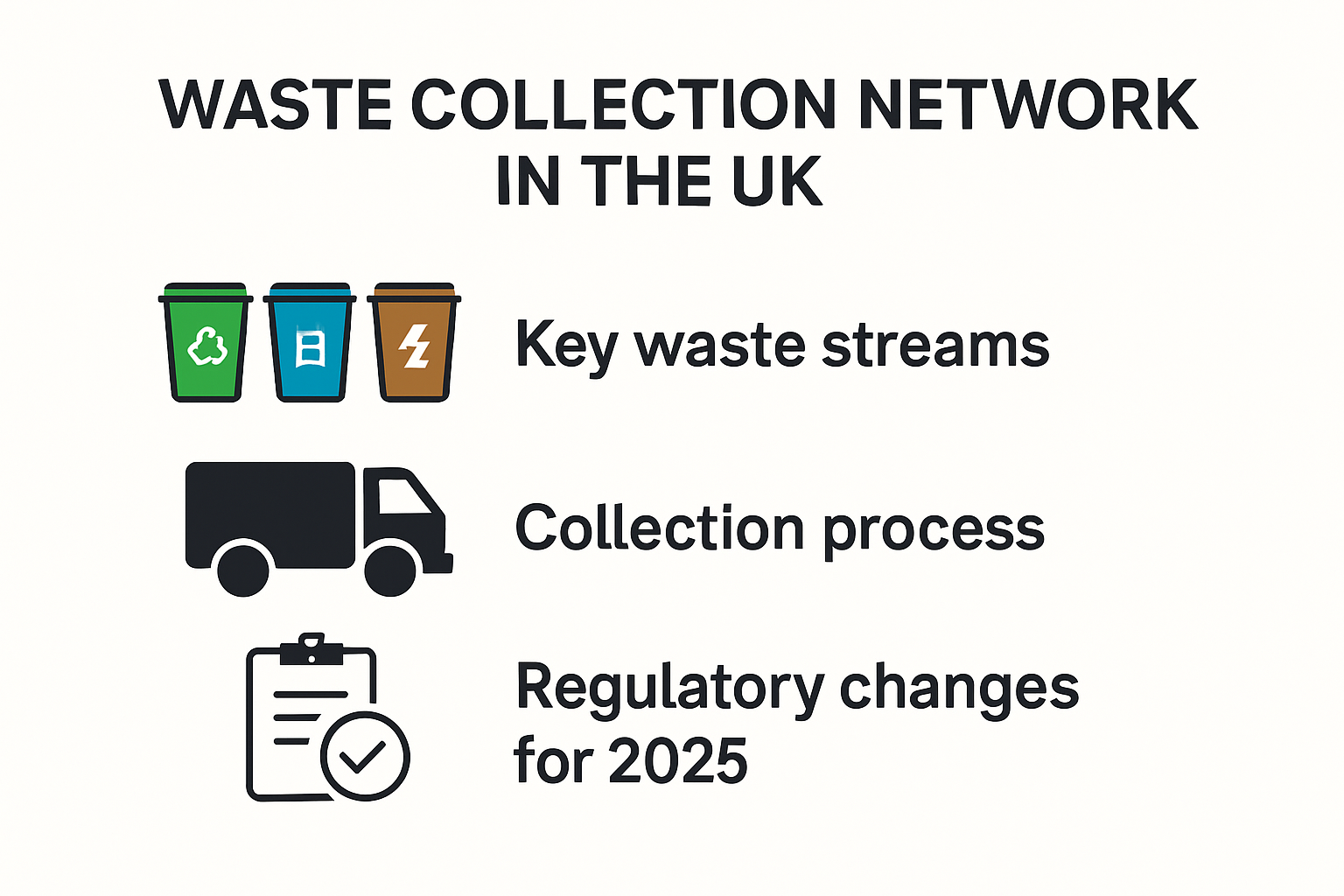
UK waste collection network structure and process for businesses infographic

Regulatory Landscape and Business Responsibilities

The Local Government Association emphasizes the critical importance of aligning waste collection reforms to ensure operational efficiency. Research from governmental sources indicates that businesses will need to adapt their internal waste management processes to comply with new regulations.

Key regulatory considerations include:

  • Mandatory waste stream separation
  • Enhanced tracking and reporting of waste disposal
  • Increased focus on recycling and reducing landfill contributions
  • Potential financial penalties for non-compliance

The waste collection network in the UK is transitioning towards a more sustainable and environmentally conscious model. Our guide on waste compliance provides businesses with detailed insights into navigating these complex regulatory requirements.

Businesses must recognize that waste collection is no longer simply a logistical challenge but a strategic imperative. The new regulations aim to create a more transparent, accountable, and environmentally responsible waste management ecosystem. Companies that proactively adapt to these changes will not only ensure legal compliance but also demonstrate corporate social responsibility and environmental stewardship.

The transformation of the UK’s waste collection network represents a significant shift towards sustainable practices. By understanding and implementing these new standards, businesses can contribute to broader environmental goals while maintaining operational efficiency and minimizing potential regulatory risks.

Warehouse staff sorting waste into color-coded bins

Different Waste Types and Disposal Solutions for Businesses

Businesses in the UK generate diverse waste streams that require specialized disposal solutions. Understanding these waste categories and their appropriate management protocols is crucial for legal compliance and environmental responsibility.

Classification of Business Waste Streams

The UK waste management landscape categorizes business waste into several critical types. According to government regulations, businesses must differentiate between multiple waste streams:

  • General Waste: Non-recyclable materials that cannot be repurposed
  • Recyclable Waste: Includes paper, cardboard, plastics, metals, and glass
  • Food Waste: Organic materials from commercial kitchens, restaurants, and food production facilities
  • Hazardous Waste: Chemicals, batteries, electronic equipment requiring specialized disposal
  • Confidential Waste: Documents and materials requiring secure destruction

The following table summarises typical business waste streams and their required disposal measures under UK regulations.

Waste Type Typical Sources Required Disposal Approach
General Waste Offices, shops, manufacturing Collection for landfill/incineration
Recyclable Waste Packaging, offices, retail Separate recycling collections
Food Waste Restaurants, kitchens, food production Dedicated organic waste collection
Hazardous Waste Labs, factories, electronics Specialist disposal with documentation
Confidential Waste Legal, finance, healthcare sectors Secure shredding/destruction

Learn more about reducing waste generation through strategic management techniques that minimize environmental impact.

Regulatory Compliance and Disposal Requirements

The Simpler Recycling reforms mandate specific disposal protocols. Notably, businesses with 10 or more full-time equivalent employees must separate waste streams by 31 March 2025. Micro-firms have until 31 March 2027 to implement these requirements.

Key disposal considerations include:

  • Precise waste stream segregation
  • Documentation of waste disposal processes
  • Compliance with environmental regulations
  • Implementation of sustainable disposal strategies

Specialized Disposal Solutions

Different waste types demand unique disposal approaches. Liquid waste disposal options require particularly careful handling to prevent environmental contamination. Industrial sectors such as manufacturing, healthcare, and food production must develop comprehensive waste management strategies that address their specific operational challenges.

Businesses must invest in robust waste management systems that not only ensure regulatory compliance but also demonstrate environmental stewardship. This involves:

  • Regular waste audits
  • Staff training on proper waste segregation
  • Partnerships with certified waste management providers
  • Continuous monitoring of disposal practices

The evolving waste management landscape demands proactive approaches. Businesses that anticipate and adapt to regulatory changes will minimize potential financial penalties while contributing to broader environmental sustainability goals. Comprehensive waste management is no longer optional but a critical component of responsible business operations in the UK.

Choosing the Right Waste Collection Partner for Your Site

Selecting an appropriate waste collection partner is a critical decision for businesses navigating the complex landscape of waste management regulations in 2025. The right partner can transform waste disposal from a mere operational requirement into a strategic advantage for environmental sustainability and regulatory compliance.

Key Selection Criteria for Waste Collection Providers

Businesses must evaluate potential waste collection partners through a comprehensive lens. Explore regional waste management solutions that align with your specific operational needs and regulatory requirements.

Critical factors in selecting a waste collection partner include:

  • Regulatory Compliance: Proven ability to meet UK Government’s Simpler Recycling requirements
  • Technical Capabilities: Advanced waste sorting and processing infrastructure
  • Environmental Credentials: Demonstrable commitment to sustainable waste management
  • Comprehensive Service Range: Ability to handle multiple waste streams
  • Reporting and Documentation: Transparent waste tracking and compliance reporting

The table below compares essential criteria to consider when selecting a waste collection partner so businesses can make an informed decision.

Selection Criteria Why It Matters How to Evaluate
Regulatory Compliance Ensures adherence to legal obligations Check certifications & compliance records
Technical Capabilities Efficient handling of diverse waste streams Assess infrastructure & technology used
Environmental Credentials Supports sustainability goals Evaluate published environmental policies
Service Range Manages all business waste needs Review breadth of services offered
Reporting & Documentation Assists with audits and legal requirements Request sample reports & tracking systems

Different industries require nuanced waste management approaches. According to research from sustainability experts, the upcoming Circular Economy Strategy will introduce sector-specific roadmaps for industries including:

  • Textiles
  • Transport
  • Construction
  • Agri-food
  • Chemicals
  • Plastics

Get insights on managing complex waste removal challenges specific to your industry sector.

Due Diligence and Partnership Evaluation

Businesses must conduct thorough due diligence when selecting a waste collection partner. This involves:

  • Comprehensive background checks
  • Verification of industry certifications
  • Assessment of technological capabilities
  • Review of environmental performance metrics
  • Evaluation of compliance history

By 31 March 2025, businesses with 10 or more full-time equivalent employees must have robust waste management systems in place. Micro-firms have until 31 March 2027 to implement similar protocols. This regulatory timeline underscores the importance of selecting a waste collection partner that can provide long-term, adaptable solutions.

The ideal waste collection partner should be more than a service provider—they should be a strategic ally in your environmental sustainability journey. They must demonstrate the capability to:

  • Adapt to evolving regulatory landscapes
  • Provide innovative waste management solutions
  • Support your organization’s sustainability goals
  • Offer transparent and comprehensive reporting
  • Minimize environmental impact

Choosing the right waste collection partner is not just about waste disposal. It is about creating a sustainable, compliant, and environmentally responsible waste management ecosystem that supports your business objectives and contributes to broader environmental conservation efforts.

The legal landscape for waste management in the UK is undergoing significant transformation, presenting businesses with complex compliance requirements that demand strategic attention and proactive implementation. Understanding and navigating these legal obligations is no longer optional but a critical operational imperative.

Businesses must recognize their comprehensive legal duties under waste management regulations. The Environmental Protection Act 1990 establishes a foundational duty of care, requiring businesses to ensure proper waste management and prevent unauthorized disposal.

Key legal responsibilities include:

  • Proper waste segregation and classification
  • Documented waste transfer and tracking
  • Engagement with authorized waste management providers
  • Maintaining comprehensive waste management records
  • Preventing environmental contamination

Discover our comprehensive guide to waste compliance to ensure your business meets all legal requirements.

Regulatory Timeline and Specific Obligations

The UK Government’s Simpler Recycling initiative introduces critical deadlines and specific obligations for businesses. According to current regulations:

  • Businesses with 10 or more full-time equivalent employees must implement waste separation protocols by 31 March 2025
  • Micro-firms (fewer than 10 employees) have until 31 March 2027 to comply
  • Mandatory separation of waste streams includes:
    • Dry recyclables (plastic, metal, glass, paper, card)
    • Food waste
    • Non-recyclable general waste

Consequences of Non-Compliance

Businesses failing to meet these legal requirements face significant potential consequences. Non-compliance can result in:

  • Substantial financial penalties
  • Legal enforcement actions
  • Potential business reputation damage
  • Increased environmental scrutiny
  • Potential suspension of operational licenses

Explore additional compliance strategies to mitigate risks and ensure full legal adherence.

The evolving legal framework surrounding waste management represents more than a regulatory challenge. It is a fundamental shift towards corporate environmental responsibility. Businesses must view these requirements not as bureaucratic obstacles but as opportunities to demonstrate commitment to sustainability, reduce environmental impact, and potentially generate operational efficiencies.

Successful navigation of these legal duties requires a holistic approach. This involves not just technical compliance but a cultural transformation that embeds waste management consciousness throughout the organization. Proactive businesses will treat these regulations as a strategic opportunity to differentiate themselves, enhance their corporate image, and contribute meaningfully to national environmental goals.

As the UK continues to refine its waste management strategy, businesses must remain agile, informed, and committed to continuous improvement in their waste management practices. The legal landscape is dynamic, and successful organizations will be those that view compliance as an ongoing journey of environmental stewardship.

Frequently Asked Questions

What are the new waste separation requirements for businesses in the UK by 2025?

From 31 March 2025, all businesses with more than 10 employees must separately collect dry recyclables, food waste, and general waste as mandated by UK regulations.

What are the consequences if a business does not comply with waste management regulations in the UK?

Non-compliance can result in significant financial penalties, legal actions, and damage to a business’s reputation, along with increased scrutiny from environmental authorities.

How can a business choose the right waste collection partner?

When selecting a waste collection partner, consider their regulatory compliance, technical capabilities, environmental credentials, service range, and the quality of their reporting and documentation.

UK businesses must ensure proper waste segregation, maintain documented waste transfer records, engage with authorised waste management providers, and prevent environmental contamination.

Future-Proof Your Waste Management with Venture Waste

Are you worried about keeping your business compliant with the new UK waste collection regulations in 2025? Many UK companies are facing growing pressure to separate waste accurately, document disposal, and avoid heavy penalties. Regulatory compliance is not just a box-ticking exercise. It is essential for protecting your business reputation and avoiding costly fines. If you feel overwhelmed by changing legal duties and wish to stay ahead of the risk, our expertise in waste regulation compliance can give you confidence and clarity.

https://venturewaste.co.uk

Let our team guide you step by step, from understanding dry recyclables and food waste collection to confidential destruction and full documentation. Visit Venture Waste Management to explore our range of tailored services. Take decisive action today to secure your legal compliance and environmental responsibility before the 2025 deadline. Your next step towards peace of mind is only a click away.

Office team at recycling station under waste management signage

Waste Management Definition for UK Businesses 2025

Office team at recycling station under waste management signage

Waste management rules for UK businesses are about to tighten, with new regulations requiring all companies with 10 or more employees to separate waste by 31 March 2025. That sounds straightforward, right? Here’s the curveball. This shift is not just about dodging fines or ticking compliance boxes. The real story is how these laws will force businesses to rethink their waste entirely, turning what used to be an afterthought into a strategic part of running a responsible company.

Table of Contents

Quick Summary

Takeaway Explanation
Understanding Waste Management is Crucial Waste management involves handling waste throughout its lifecycle and requires businesses to implement strategic approaches to minimize environmental impact and ensure compliance with legal requirements.
Compliance with New Regulations is Mandatory From 31 March 2025, businesses with 10 or more employees must adhere to waste separation regulations, categorising waste into dry recyclables, food waste, and non-recyclable materials to avoid penalties.
Tailored Strategies for Different Waste Types Each waste stream (hazardous, electronic, healthcare, etc.) demands specific handling protocols and businesses need to develop tailored strategies that comply with regulations and protect public health.
Choosing the Right Waste Management Partner Selecting an effective waste management partner involves assessing their regulatory compliance, technological capabilities, and sustainability practices to ensure alignment with your business’s environmental goals.
Continuous Education and Adaptation Required Businesses must remain informed about evolving waste management regulations and invest in training and infrastructure to enhance their waste management practices and demonstrate corporate social responsibility.


Understanding Waste Management Definition

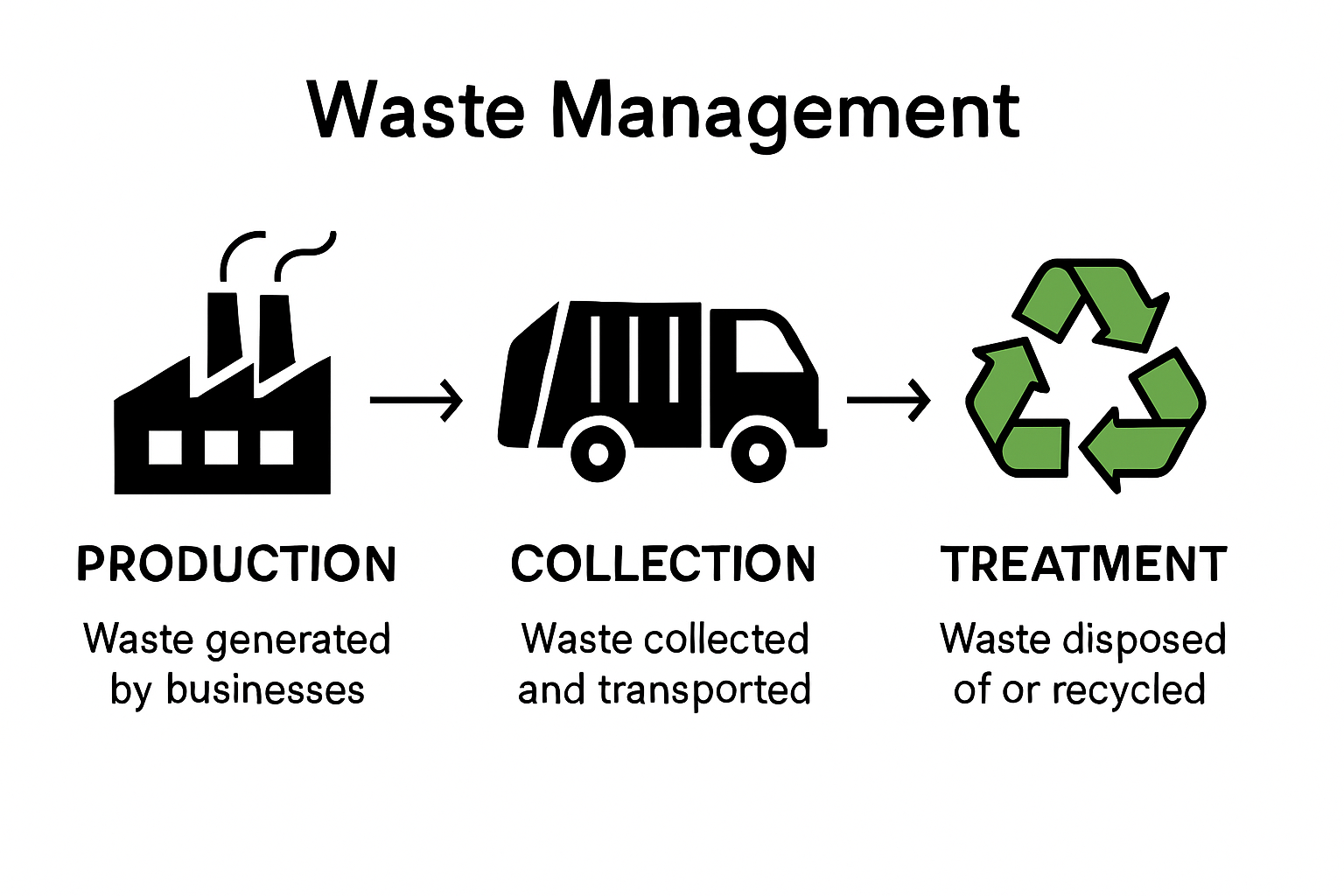
Waste management represents a comprehensive approach to handling, collecting, transporting, treating, and disposing of waste materials generated by businesses across various sectors. At its core, the waste management definition encompasses the entire lifecycle of waste from its initial production to its final disposal or recycling.

Infographic showing lifecycle of waste management for businesses

In the United Kingdom, waste management is governed by stringent legal requirements that businesses must navigate carefully. Explore our comprehensive waste management guidelines to understand the full scope of regulatory compliance. According to the Environment Act 2021, businesses are now required to implement more sophisticated waste management strategies that prioritize environmental protection and resource efficiency.

The definition extends beyond mere disposal, incorporating critical elements such as waste reduction, reuse, recycling, and responsible treatment. As of 31 March 2025, businesses in England must adhere to new waste separation regulations, which mandate the division of waste into specific categories: dry recyclable materials (including plastic, metal, glass, paper, and cardboard), food waste, and non-recyclable waste.

Comprehensive Waste Management Approach

A robust waste management definition for UK businesses in 2025 involves multiple key components. This includes:

  • Waste Auditing: Conducting thorough assessments of waste production and potential reduction strategies
  • Segregation Protocols: Implementing systematic approaches to separate different types of waste
  • Sustainable Disposal: Ensuring environmentally responsible methods of waste treatment and disposal

The NHS Clinical Waste Strategy provides an excellent example of how comprehensive waste management can be implemented across complex organisational structures. This strategy demonstrates the importance of a holistic approach that goes beyond traditional disposal methods.

Businesses must recognize that waste management is no longer just an operational necessity but a critical environmental and legal responsibility. The definition now encompasses a proactive approach to minimizing waste generation, maximizing recycling potential, and reducing overall environmental impact.

Moreover, effective waste management involves understanding the specific requirements of different waste streams. Hazardous materials, electronic waste, organic waste, and general commercial waste each require unique handling and disposal protocols. Companies must develop tailored strategies that comply with current regulations while also demonstrating a commitment to sustainable practices.

The evolving landscape of waste management challenges businesses to think beyond traditional disposal methods. It requires a strategic approach that integrates environmental consciousness, legal compliance, and operational efficiency. By embracing a comprehensive waste management definition, businesses can not only meet regulatory requirements but also contribute to broader environmental sustainability goals.

Ultimately, waste management in 2025 is about creating a circular economy approach that transforms waste from a problematic byproduct into a potential resource. It demands continuous learning, adaptation, and a commitment to innovative solutions that protect both business interests and the environment.

Types of Business Waste and Risks

Businesses across the United Kingdom generate diverse waste streams, each presenting unique environmental and health risks that require careful management and strategic disposal. Understanding these waste types is crucial for developing comprehensive waste management strategies that protect both organisational interests and public health.

Categorisation of Business Waste

The UK Health and Safety Executive identifies multiple business waste categories, each demanding specific handling protocols. These categories include construction and demolition waste, electrical and electronic equipment waste, hazardous waste, healthcare waste, packaging waste, and industrial byproducts.

Construction and demolition waste often contains potentially dangerous materials like asbestos, concrete debris, and metal scraps. Electronic waste represents another critical category, containing complex components that can release toxic substances such as lead, mercury, and cadmium if not processed correctly. Learn more about effective waste reduction strategies to mitigate these environmental risks.

Health and Environmental Risks

Warehouse workers sort hazardous and general waste near health risks poster

Business waste poses significant risks beyond mere disposal challenges. According to government guidance, different waste types carry specific health hazards:

  • Hazardous Waste: Chemicals, solvents, and industrial reagents can cause severe respiratory and dermatological complications
  • Healthcare Waste: Potentially infectious materials requiring specialized handling to prevent disease transmission
  • Mechanical Treatment Waste: Dust and particulate matter that can lead to respiratory disorders

The Environment Agency emphasizes that improper waste management can result in substantial environmental contamination, potentially leading to long-term ecological damage and significant financial penalties for non-compliant businesses.

Businesses must recognize that waste management extends far beyond simple disposal. It involves comprehensive risk assessment, careful segregation, and implementation of sustainable processing methods. Each waste stream requires a tailored approach that considers its unique chemical composition, potential environmental impact, and regulatory requirements.

Persistent Organic Pollutants (POPs) represent another critical concern. These toxic substances can accumulate in ecosystems, presenting long-term health risks to human populations and wildlife. Proper identification, containment, and specialized disposal of such materials are essential for responsible business practices.

Moreover, businesses must stay informed about evolving waste management regulations. The UK government continues to tighten waste handling standards, pushing organisations towards more environmentally responsible practices. This includes mandatory waste separation, increased recycling targets, and stricter penalties for non-compliance.

Effective waste management is not just a legal obligation but a moral responsibility. By understanding the intricate risks associated with different waste types, businesses can develop robust strategies that protect public health, minimize environmental impact, and demonstrate corporate social responsibility.

Ultimately, comprehensive waste management requires continuous education, investment in proper infrastructure, and a commitment to sustainable practices that go beyond mere regulatory compliance. It is an ongoing process of assessment, adaptation, and improvement.

To help you quickly understand the various categories of business waste, here is a summary table detailing common types and their associated handling requirements.

Waste Category Example Materials Special Handling Requirements
Construction & Demolition Asbestos, concrete, metal scraps Controlled disposal, hazard identification
Electronic (WEEE) Computers, TVs, batteries Specialist recycling, hazardous component removal
Hazardous Waste Chemicals, solvents, industrial reagents Licensed disposal, containment, strict documentation
Healthcare Waste Sharps, contaminated dressings Infection control procedures, incineration or specialist treatment
Packaging Waste Cardboard, plastics, pallets Segregation for recycling, reduction at source
Industrial Byproducts Sludges, process residues Waste minimization, permitted treatment/disposal options

The legal landscape for waste disposal in the United Kingdom has undergone significant transformations, with the Environment Act 2021 establishing a comprehensive framework that fundamentally reshapes how businesses manage and dispose of their waste. These regulations represent a pivotal moment in environmental legislation, mandating stringent compliance and sustainable waste management practices.

Waste Separation and Classification Regulations

As of 31 March 2025, businesses in England face critical new requirements for waste management. All workplaces with 10 or more full-time employees must implement strict waste separation protocols. This means categorizing waste into three distinct streams:

  • Dry Recyclable Materials: Includes plastic, metal, glass, paper, and cardboard
  • Food Waste: Separate collection and processing of organic waste
  • Non-Recyclable Waste: Materials that cannot be recycled or repurposed

Learn more about navigating hazardous waste handling requirements to ensure complete regulatory compliance. Micro-firms with fewer than 10 full-time equivalent employees will have until 31 March 2027 to implement these separation requirements, providing additional time for adaptation.

Below is a summary table outlining the new waste separation regulations becoming effective from 31 March 2025 and the specific requirements for businesses of different sizes.

Business Size Compliance Deadline Mandatory Separation Streams Key Notes
10+ employees 31 March 2025 Dry recyclables, Food, Non-recyclable Applies to all England
Fewer than 10 employees 31 March 2027 Dry recyclables, Food, Non-recyclable Extra adaptation period

Compliance and Enforcement Mechanisms

The Health and Safety Executive emphasizes that legal compliance extends beyond mere waste categorization. Businesses must maintain comprehensive documentation, including:

  • Accurate waste transfer notes
  • Detailed records of waste production and disposal
  • Certificates of proper waste handling and treatment
  • Evidence of using authorized waste management providers

Failure to comply can result in substantial financial penalties, potential legal action, and reputational damage. The regulatory framework now places unprecedented emphasis on environmental responsibility, treating waste management as a critical business obligation rather than an optional practice.

Businesses must also navigate complex regulations surrounding hazardous waste. Specific materials such as chemicals, electronic equipment, and medical waste require specialized handling protocols. The Environment Agency provides detailed guidance on identifying, classifying, and safely disposing of these high-risk waste streams.

Moreover, the legal requirements extend beyond disposal. Businesses are now expected to demonstrate proactive waste reduction strategies, implement circular economy principles, and continuously monitor and report their waste management practices. This represents a fundamental shift from a disposal-centric approach to a more holistic, environmentally conscious waste management model.

The regulations also introduce more rigorous tracking mechanisms. Digital reporting systems will enable authorities to monitor waste streams more effectively, ensuring transparency and accountability. Businesses will need to invest in sophisticated waste management technologies and training to meet these evolving legal standards.

Ultimately, these legal requirements reflect a broader commitment to environmental sustainability. They challenge businesses to reimagine waste not as a problem to be eliminated, but as a resource to be managed strategically. Compliance is no longer just about avoiding penalties but about contributing to a more sustainable economic and environmental future.

For businesses, this means developing comprehensive waste management strategies that integrate legal compliance, environmental responsibility, and operational efficiency. The 2025 regulations represent more than a legal mandate—they are a call to fundamental transformation in how businesses approach resource management and environmental stewardship.

Choosing the Right Waste Management Partner

Selecting an appropriate waste management partner represents a critical strategic decision for UK businesses in 2025. The complexity of evolving waste disposal regulations and environmental standards demands a comprehensive approach to partnership selection that goes far beyond simple waste collection services.

Evaluating Waste Management Capabilities

Businesses must conduct rigorous assessments of potential waste management partners, focusing on several key criteria. Discover strategies for optimising waste management costs to ensure both compliance and financial efficiency.

The Environment Agency recommends evaluating potential partners based on:

  • Regulatory Compliance: Verification of current waste management licenses and certifications
  • Technological Capabilities: Advanced sorting and processing technologies
  • Environmental Credentials: Proven commitment to sustainable waste management practices
  • Reporting and Transparency: Comprehensive waste tracking and documentation systems

Sustainability and Compliance Considerations

With the UK government’s ‘Simpler Recycling’ reforms effective from 31 March 2025, businesses must select partners capable of meeting stringent waste separation requirements. According to the NHS Sustainability Strategy, organisations should prioritize waste management partners who demonstrate:

  • Commitment to net zero carbon emissions
  • Advanced recycling and circular economy approaches
  • Ability to handle complex waste streams
  • Comprehensive waste reduction strategies

The legal landscape now demands more than mere waste disposal. A strategic waste management partner becomes an extension of a business’s environmental responsibility, helping organisations navigate increasingly complex regulatory environments.

Technological integration plays a crucial role in modern waste management partnerships. Businesses should seek partners offering digital tracking systems, real-time waste stream analytics, and comprehensive reporting mechanisms. These technological capabilities enable more precise waste management, helping organisations meet their environmental and legal obligations more effectively.

Financial considerations remain paramount. While sustainability is critical, businesses must balance environmental responsibility with economic pragmatism. Explore waste management solutions across different regions to understand regional variations in service quality and pricing.

Moreover, the right waste management partner should offer more than transactional services. They should provide consultative support, helping businesses develop proactive waste reduction strategies, understand emerging regulations, and implement innovative waste management approaches.

Industry-specific expertise is another critical factor. Different sectors generate unique waste streams requiring specialized handling. A waste management partner with deep understanding of your specific industry can provide more nuanced, effective waste management solutions.

The selection process should include comprehensive due diligence. This involves reviewing the partner’s track record, conducting site visits, examining case studies, and speaking with existing clients. Businesses should also assess the partner’s adaptability to future regulatory changes and technological innovations.

Ultimately, choosing the right waste management partner is about establishing a strategic relationship that extends beyond waste collection. It is about finding a collaborator committed to your organisation’s environmental goals, regulatory compliance, and long-term sustainability objectives.

In the rapidly evolving waste management landscape of 2025, the right partnership can transform waste from a compliance challenge into a strategic opportunity for environmental leadership and operational efficiency.

Frequently Asked Questions

What is waste management for UK businesses?

Waste management for UK businesses refers to the comprehensive approach of handling, collecting, transporting, treating, and disposing of waste materials generated by various sectors. It includes strategies for waste reduction, recycling, and responsible disposal to comply with legal requirements and protect the environment.

What are the new waste management regulations for UK businesses in 2025?

As of 31 March 2025, businesses in the UK with 10 or more employees must implement waste separation regulations, categorising waste into three streams: dry recyclables, food waste, and non-recyclable waste, to enhance environmental sustainability and compliance.

What types of business waste are there?

Business waste comprises several categories, including construction and demolition waste, electronic waste, hazardous waste, healthcare waste, packaging waste, and industrial byproducts. Each type has specific handling protocols and associated risks that must be carefully managed.

Why is compliance with waste management regulations important for businesses?

Compliance with waste management regulations is crucial as it helps businesses avoid substantial financial penalties, legal actions, and reputational damage. It also promotes environmental responsibility and supports the transition towards more sustainable waste management practices.

Ready to Meet the 2025 Waste Management Challenge?

Is your business worried about the new waste separation laws coming into effect soon? With rules demanding strict compliance and efficient handling of various waste streams, the pressure is on. Many firms feel uncertainty about categorising waste correctly or managing data-sensitive materials. Streamlining your processes today means less stress and legal risk tomorrow. To ensure you protect your business and the environment, now is the ideal time to adopt reliable and fully compliant solutions. See how trusted confidential waste services can help resolve your compliance headaches, especially if you manage sensitive documents or need proof of secure disposal.

https://venturewaste.co.uk

Act whilst you still have time to prepare. Venture Waste gives you seamless, nationwide support and a simple booking approach, whether you seek expert confidential waste support or wider business waste services. Visit Venture Waste Management for details or to schedule a collection. Take control of your waste responsibilities before the legal deadline arrives.

Team discussing waste management strategies in modern London office

Waste Management Step by Step: A Guide for UK Businesses 2025

Team discussing waste management strategies in modern London office

UK businesses face new waste rules in 2025, with all companies required to separate recyclables, food waste and non-recyclables by 31 March. Sounds straightforward enough, right? Actually, poor documentation now risks fines as high as £5,000 and even unlimited penalties in court. Missing one compliance detail could cost far more than just a black mark on your records.

Table of Contents

Quick Summary

Takeaway Explanation
Waste Categorisation is Essential Businesses must understand and appropriately classify their waste into general, recyclable, hazardous, and organic categories to ensure compliance and effective waste management strategies.
Legal Compliance is Crucial From 31 March 2025, all businesses in England are required to separate waste into distinct streams: dry recyclables, food waste, and non-recyclable materials to meet legal obligations.
Thorough Documentation is Required Accurate records of waste transfer notes and the entire waste journey must be maintained to comply with regulations and support effective waste management practices.
Confidential and Hazardous Waste Needs Special Handling Businesses must implement secure disposal methods for confidential materials and adhere strictly to protocols for hazardous waste to mitigate environmental and health risks.
Choose Your Waste Management Partner Wisely Selecting a compliant and capable waste management partner is essential for businesses, ensuring they meet regulatory standards and adopt sustainable practices effectively.


Navigating the complex landscape of waste management requires businesses to understand both the technical classifications of waste and their legal responsibilities. The regulatory framework in the UK mandates specific approaches to waste handling, sorting, and disposal that every organisation must comprehend to remain compliant and environmentally responsible.

Categorising Business Waste Types

Business waste is not a monolithic category but a diverse range of materials requiring distinct management strategies. Understanding these categories is crucial for proper disposal and legal compliance. Learn more about waste categorisation for businesses in the UK.

Waste types can be broadly classified into several key categories:

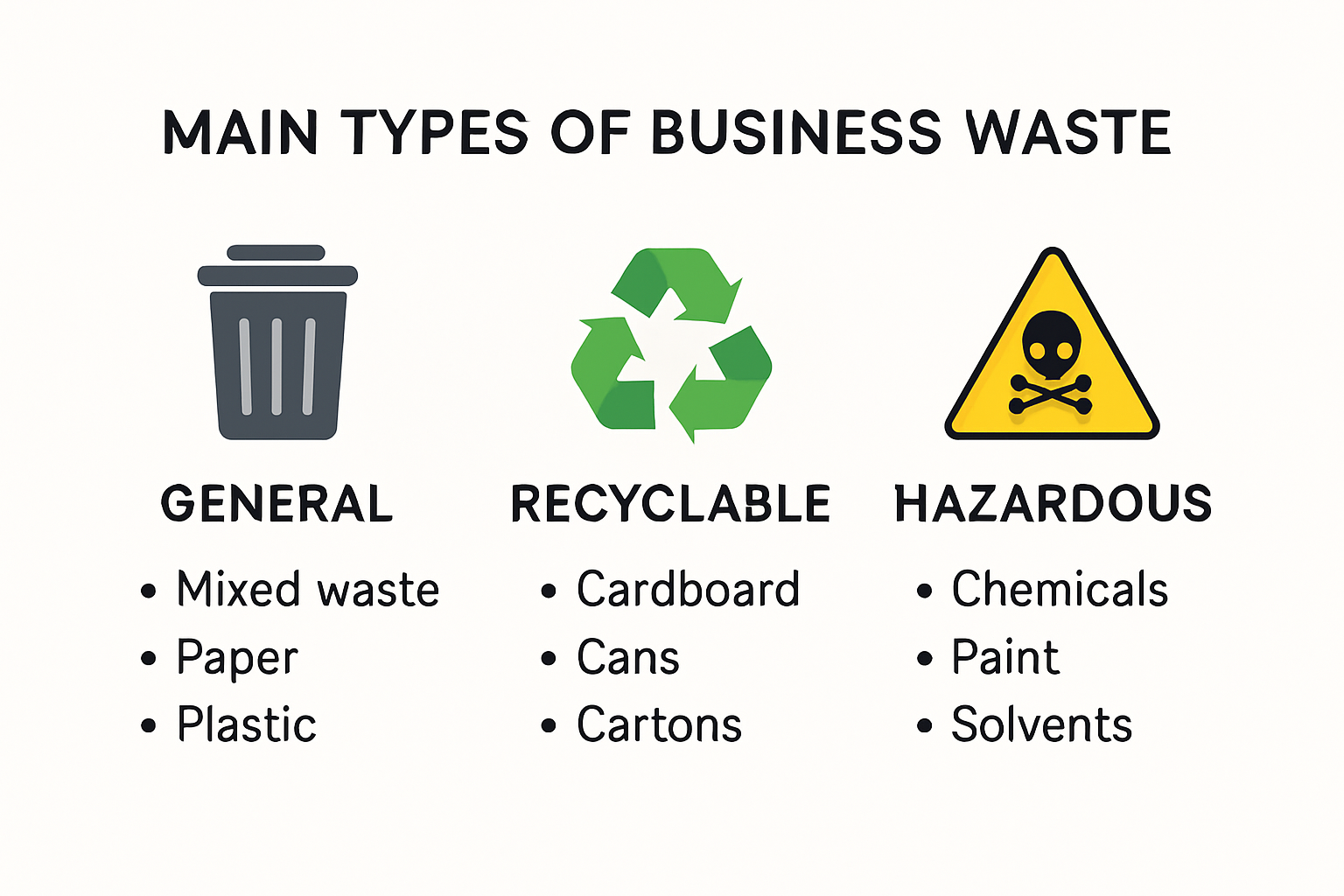
  • General Waste: Non-recyclable materials typically disposed of in standard bins, including packaging, food wrappers, and miscellaneous office refuse.
  • Recyclable Materials: Items that can be processed and reused, such as paper, cardboard, plastic, glass, and metal. These require separate collection and processing.
  • Hazardous Waste: Materials that pose potential risks to human health or the environment, including chemicals, batteries, electronic equipment, and medical waste.
  • Organic Waste: Biodegradable materials like food scraps and green waste, which can be composted or processed through specialised treatment methods.

Infographic explaining main business waste types and examples

Here is a summary table to help businesses easily differentiate between waste types and the required handling method, as discussed above:

Waste Type Examples Handling Requirement
General Waste Packaging, food wrappers, office refuse Standard disposal in general waste bins
Recyclable Paper, cardboard, plastics, glass, metals Separate collection for recycling
Hazardous Waste Chemicals, batteries, electronic equipment Special containment and licensed disposal
Organic Waste Food scraps, green waste Composting or specialised treatment

The UK’s waste management regulations impose strict legal duties on businesses. According to government guidelines, businesses must adhere to comprehensive waste management protocols.

Key legal responsibilities include:

  1. Waste Minimisation: Businesses must actively work to reduce waste generation through preventative measures and efficient resource management.
  2. Proper Segregation: From 31 March 2025, all businesses in England are legally required to separate waste into distinct streams: dry recyclables, food waste, and non-recyclable materials.
  3. Duty of Care Documentation: Under the Environmental Protection Act 1990, organisations must maintain accurate waste transfer notes for each waste load, documenting its origin, destination, and handling process.
  4. Registered Waste Carriers: Businesses must only engage with licensed waste carriers to ensure legal and environmentally responsible waste disposal.

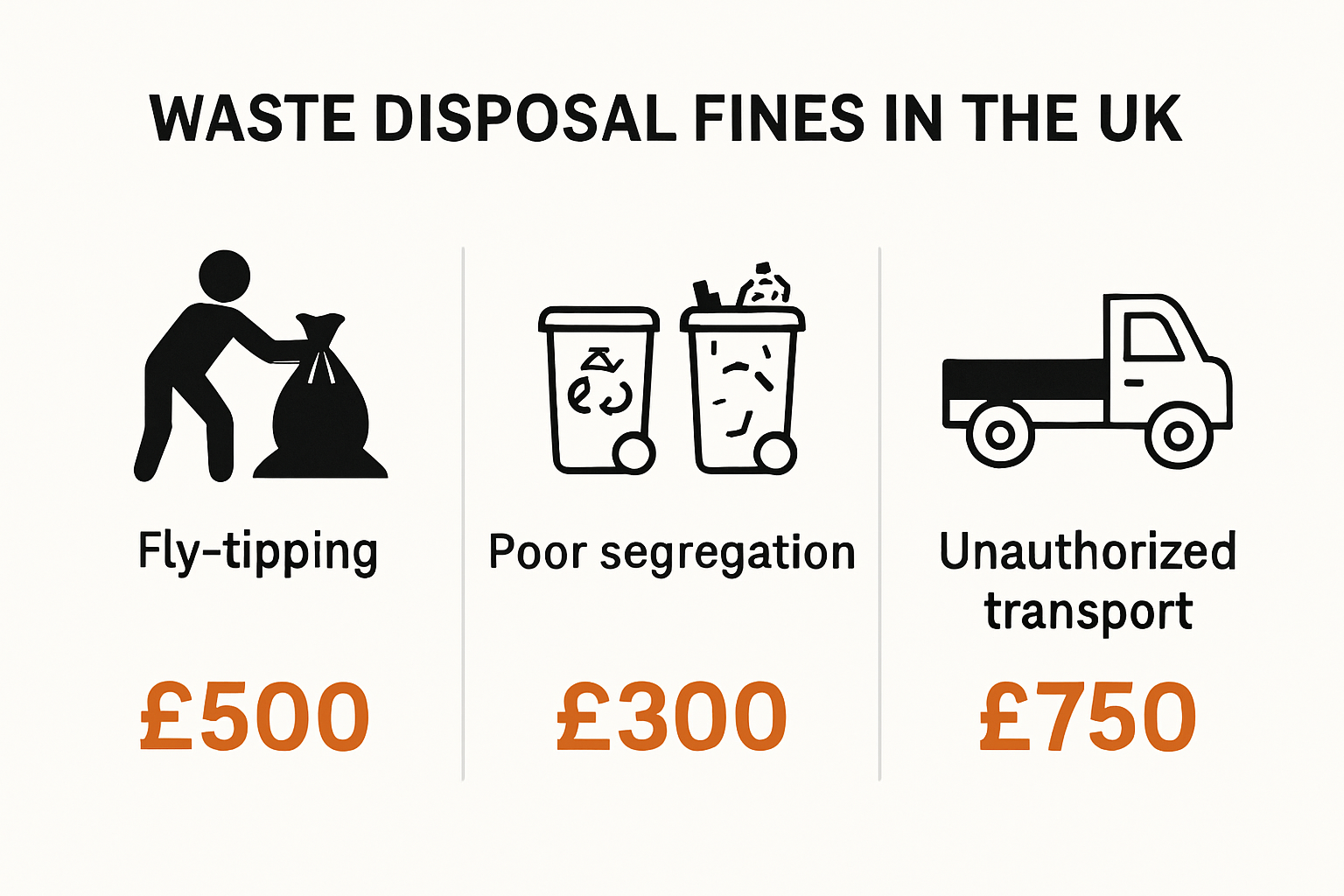
Non-compliance can result in significant financial penalties. Research indicates that businesses might face fixed penalty notices up to £300 for documentation issues and potential fines reaching £5,000 in magistrate’s courts, with Crown Court proceedings potentially imposing unlimited fines.

By understanding waste types and maintaining rigorous legal compliance, businesses can contribute to environmental sustainability while avoiding potential legal and financial repercussions. Proactive waste management is not just a regulatory requirement but a critical component of responsible business operations.

Step by Step Waste Management Process Explained

Implementing an effective waste management strategy requires a systematic approach that goes beyond simple disposal. Businesses must develop a comprehensive process that ensures legal compliance, environmental responsibility, and operational efficiency. Learn more about waste compliance steps to streamline your organisation’s waste management approach.

Initial Waste Assessment and Planning

The first critical stage in waste management involves a thorough assessment of your business’s waste generation patterns. This initial evaluation helps organisations understand their unique waste profile and develop targeted reduction and disposal strategies. According to government guidelines, businesses must prepare for significant changes in waste management regulations.

Key steps in the initial assessment include:

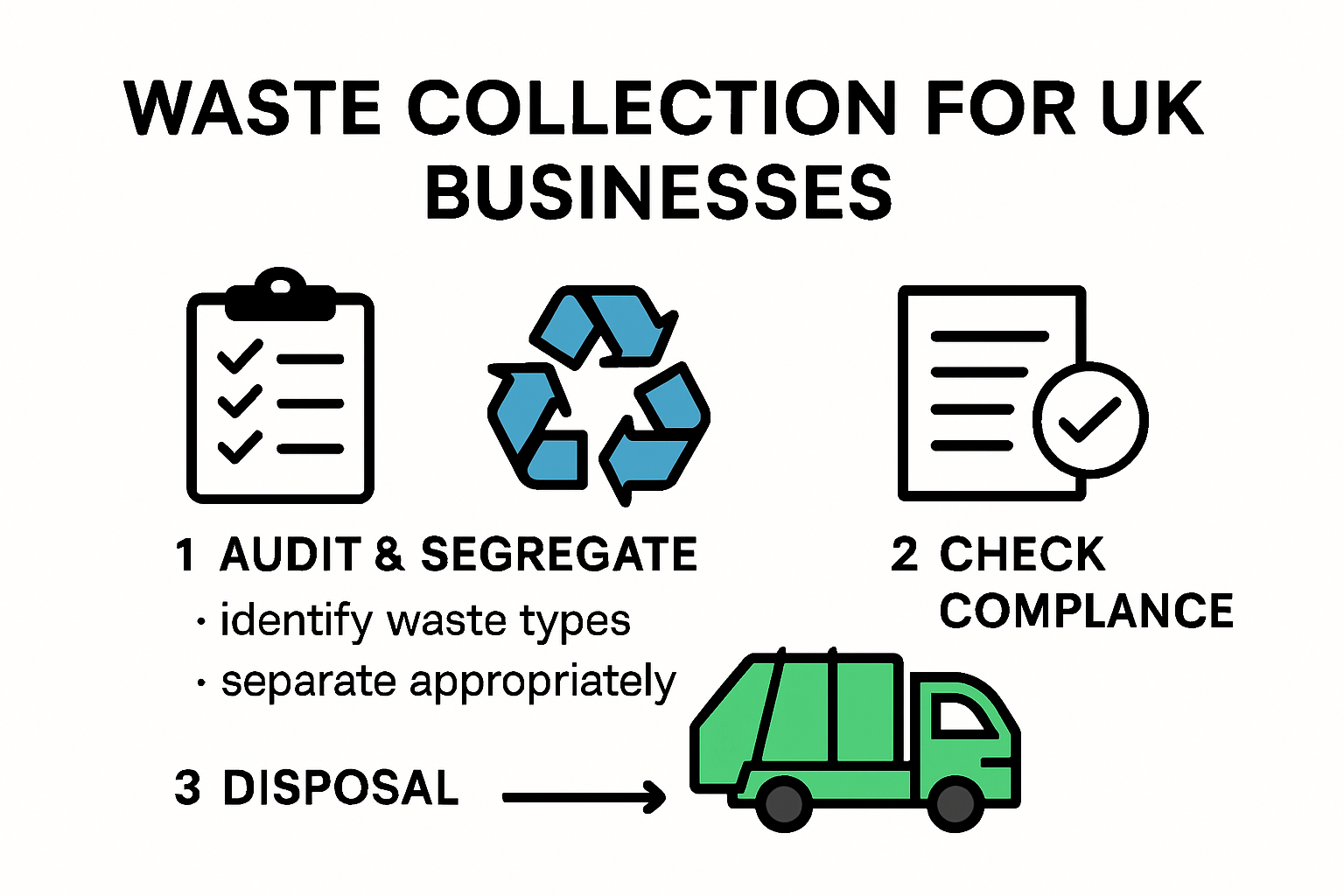
  • Waste Audit: Conduct a comprehensive inventory of all waste types produced by your organisation.
  • Volume Measurement: Quantify the amount of waste generated across different categories.
  • Current Disposal Methods: Evaluate existing waste handling practices.

Below is a summary table outlining the main steps in the waste management process as described in this section:

Step Description
Waste Audit Inventory of all waste types generated by the organisation
Volume Measurement Quantify waste volumes by type
Current Disposal Methods Assessment Review existing handling and disposal practices
Waste Segregation Implementation Separate waste by stream (recyclables, food, non-recyclables)
Compliance Documentation Record and track waste journey and maintain legal documentation

Implementation of Waste Segregation and Collection

Effective waste management hinges on proper segregation and collection processes. Simpler Recycling reforms mandate specific waste separation requirements for businesses. As of 31 March 2025, all workplaces in England must separate their waste into three distinct streams:

  1. Dry Recyclable Materials: Including plastic, metal, glass, paper, and cardboard.
  2. Food Waste: Separated and collected for specialized processing.
  3. Non-Recyclable Waste: Materials that cannot be recycled or repurposed.

Importantly, micro-firms with fewer than 10 full-time equivalent employees have until 31 March 2027 to fully comply with these segregation requirements.

Employees sorting waste into office recycling bins under informative poster

Documentation and Compliance Tracking

Maintaining accurate records is a crucial component of the waste management process. Businesses must develop a robust system for tracking waste generation, disposal, and compliance. This involves:

  • Creating and maintaining detailed waste transfer notes
  • Documenting the entire waste journey from generation to final disposal
  • Ensuring all waste carriers are properly licensed
  • Keeping comprehensive records for potential regulatory inspections

The documentation process serves multiple purposes: legal compliance, environmental accountability, and internal tracking of waste management effectiveness. Organisations that implement rigorous documentation practices can more easily identify opportunities for waste reduction and demonstrate their commitment to sustainable business practices.

By following these systematic steps, businesses can transform waste management from a mere operational necessity into a strategic approach that reduces environmental impact, minimizes costs, and ensures regulatory compliance. The process requires ongoing attention, regular reassessment, and a commitment to continuous improvement in waste handling practices.

Confidential and Hazardous Waste Disposal Solutions

Confidential and hazardous waste management represents a critical challenge for businesses across various sectors. These specialised waste streams demand meticulous handling, stringent security protocols, and compliance with complex regulatory frameworks. Explore our comprehensive hazardous waste disposal guide to understand the nuanced requirements for safe waste management.

Understanding Confidential Waste Management

Confidential waste encompasses sensitive documents, digital media, and materials containing potentially compromising information. Businesses must implement robust destruction processes that guarantee complete information elimination. The Health and Safety Executive emphasises the critical importance of secure disposal methods that prevent data breaches and protect organisational integrity.

Key strategies for confidential waste management include:

  • Secure Collection: Utilising locked, tamper-proof containers for document and media collection
  • Controlled Destruction: Implementing industrial shredding processes for physical documents
  • Digital Media Destruction: Physically destroying hard drives, USB devices, and electronic storage media
  • Comprehensive Documentation: Maintaining detailed certificates of destruction for audit purposes

Hazardous Waste Disposal Protocols

Hazardous waste requires specialised handling to mitigate environmental and health risks. According to the Environment Agency’s Sector Guidance Note S5.06, businesses must adhere to strict operational standards when managing potentially dangerous materials.

Critical considerations for hazardous waste disposal include:

  1. Risk Assessment: Comprehensive evaluation of potential environmental and health impacts
  2. Proper Classification: Precise identification and categorisation of hazardous materials
  3. Specialized Containment: Using approved containers designed for specific waste types
  4. Licensed Transportation: Engaging only certified waste carriers with appropriate permissions

Sector-Specific Waste Management Approaches

Different industries require tailored approaches to confidential and hazardous waste management. The NHS Clinical Waste Strategy provides an exemplary model, demonstrating how targeted waste management can simultaneously address environmental, financial, and safety concerns.

Sector-specific strategies might include:

  • Healthcare: Implementing stringent medical waste segregation and sterilisation protocols
  • Technology: Developing secure data destruction processes for electronic equipment
  • Manufacturing: Creating specialised chemical waste neutralisation and disposal systems
  • Financial Services: Establishing comprehensive document and digital information destruction mechanisms

Businesses must recognise that effective confidential and hazardous waste management extends beyond mere compliance. It represents a critical intersection of legal responsibility, environmental stewardship, and organisational risk management. By developing comprehensive, sector-specific waste disposal solutions, companies can protect sensitive information, minimise environmental impact, and demonstrate their commitment to responsible business practices.

Choosing the Right Waste Management Partner in the UK

Selecting an appropriate waste management partner is a critical decision that can significantly impact a business’s operational efficiency, legal compliance, and environmental responsibility. Discover strategies to optimise your waste management costs while ensuring comprehensive service delivery.

Essential Criteria for Waste Management Partner Selection

Business leaders must approach waste management partner selection with a strategic and comprehensive evaluation process. The Health and Safety Executive recommends a thorough assessment of potential service providers to guarantee regulatory compliance and operational effectiveness.

Key selection criteria include:

  • Regulatory Compliance: Verify the provider’s certification and licensing status
  • Service Range: Ensure comprehensive waste management capabilities across different waste streams
  • Technical Capabilities: Assess technological infrastructure for waste processing
  • Environmental Credentials: Evaluate the partner’s commitment to sustainable practices
  • Reporting and Transparency: Confirm detailed waste tracking and documentation processes

Understanding Regulatory Requirements

With the Simpler Recycling reforms mandating specific waste separation requirements, businesses must choose partners capable of meeting these evolving standards. As of 31 March 2025, all workplaces in England must separate waste into three distinct streams: dry recyclables, food waste, and non-recyclable materials.

Special considerations for different business sizes include:

  1. Large Enterprises: Require comprehensive, multi-stream waste management solutions
  2. Small Businesses: Need flexible, cost-effective waste collection services
  3. Micro-Firms: Benefit from local council partnerships until full compliance deadline of March 2027

Evaluating Cost and Performance Metrics

Beyond basic waste collection, businesses should assess potential partners through a multifaceted lens. Consider factors such as:

  • Waste reduction strategies
  • Cost-effectiveness of services
  • Frequency and reliability of collections
  • Detailed reporting mechanisms
  • Potential for circular economy contributions

The ideal waste management partner transforms waste disposal from a mere operational necessity into a strategic asset. They should offer more than standard collection services, providing insights into waste reduction, recycling opportunities, and potential cost savings.

Businesses must recognize that choosing a waste management partner is not just about compliance, but about creating a sustainable, efficient approach to resource management. The right partnership can help organisations reduce environmental impact, manage costs, and demonstrate corporate social responsibility.

Careful due diligence, comprehensive evaluation, and a forward-thinking approach are essential in selecting a waste management partner that will support your business’s operational and environmental goals in 2025 and beyond.

Frequently Asked Questions

What are the new waste management requirements for UK businesses in 2025?

From 31 March 2025, all UK businesses must separate their waste into distinct categories: dry recyclables, food waste, and non-recyclable materials. This is part of new regulations aimed at improving recycling and waste management practices.

What are the penalties for non-compliance with waste management regulations?

Businesses that fail to comply with waste management regulations can face fixed penalty notices up to £300, and fines as high as £5,000 in magistrate’s courts. In serious cases, penalties might reach unlimited amounts in Crown Court.

How can businesses effectively document their waste management processes?

Businesses should maintain detailed waste transfer notes, document the entire waste journey from generation to disposal, and ensure all waste carriers are properly licensed. Comprehensive records help ensure compliance and track waste management effectiveness.

What types of waste must businesses categorise?

Businesses must categorise their waste into four main types: general waste, recyclable materials, hazardous waste, and organic waste. Proper classification is crucial for compliance and effective waste management strategies.

Transform Waste Management Challenges into Peace of Mind with Venture Waste

Are you worried about keeping up with the strict documentation and waste segregation laws coming in 2025? UK businesses like yours face real risks if recycling, food, confidential, or hazardous waste are not managed to the new standards explained in our guide. Skipping a single compliance step or mismanaging confidential materials does not just threaten your reputation. It could result in serious fines or put your business at legal risk. Find expert support and practical step-by-step help in the confidential waste solutions from Venture Waste. We understand your goals of smooth compliance, thorough documentation, and secure disposal, and we deliver peace of mind through proven, efficient services.

https://venturewaste.co.uk

Do not wait until the deadline to get ahead of the 2025 waste regulations. Visit Venture Waste Management to discover how straightforward our three-step booking process makes it for you to stay compliant, avoid fines, and protect your business. For companies managing electronics or sensitive data, explore our WEEE Waste solutions designed for full legal and environmental compliance. Book your waste collection today and take control of your legal responsibilities with confidence.

Warehouse workers sorting waste under digital display reading Waste Disposal Cost Factors

Key Waste Disposal Cost Factors for UK Businesses 2025

Warehouse workers sorting waste under digital display reading Waste Disposal Cost Factors

Rising waste disposal costs are keeping UK businesses on edge for 2025. Here is something that will catch you off guard. The UK Landfill Tax is set to leap by over 20 percent, reaching £126.15 per tonne next year. Most would expect recycling targets or stricter regulations to take the biggest toll, but it is actually this single tax hike poised to reshape budgets and planning across every industry.

Table of Contents

Quick Summary

Takeaway Explanation
Landfill Tax Increase The UK Landfill Tax will rise from £103.70 to £126.15 per tonne in 2025, significantly impacting waste disposal costs for businesses.
Extended Producer Responsibility (EPR) EPR regulations require businesses to cover the lifecycle costs of their packaging, necessitating more sophisticated waste management strategies and potential redesign of packaging processes.
Effective Waste Segregation Implementing robust waste separation protocols can reduce disposal costs by up to 35%, minimising landfill tax expenses and potentially creating revenue streams through recyclable materials.
Technological Innovations Leveraging advanced waste tracking and sorting technologies enables businesses to optimise their disposal strategies and identify waste reduction opportunities, crucial for managing rising costs.
Compliance with Regulations Adhering to stringent waste disposal regulations, including the “Simpler Recycling” legislation, is essential for avoiding hefty fines and ensuring environmental responsibility.


Understanding Waste Disposal Cost Factors

Waste disposal costs for UK businesses are becoming increasingly complex and financially significant in 2025. Understanding the key factors that drive these expenses is crucial for companies seeking to manage their waste management budgets effectively.

Infographic showing waste disposal cost factors in the UK

Economic and Regulatory Drivers of Waste Disposal Expenses

The landscape of waste disposal costs is being dramatically reshaped by a combination of economic pressures and regulatory changes. According to research from the Environmental Services Association, businesses are facing unprecedented financial challenges in waste management. The UK Landfill Tax is set to increase from £103.70 per tonne in 2024 to £126.15 per tonne in 2025, representing a substantial 21.65% rise that will directly impact businesses’ waste disposal expenses.

Moreover, the expansion of the UK’s Emissions Trading Scheme (ETS) to include waste incineration is forcing businesses to account for carbon emissions associated with waste disposal. This regulatory shift means companies must now factor in additional costs related to carbon reporting and potential carbon pricing, further complicating the financial landscape of waste management.

Compliance and Extended Producer Responsibility

The introduction of Extended Producer Responsibility (EPR) regulations is another critical cost factor that businesses must navigate. Research from the Waste and Resources Action Programme indicates that businesses are now mandated to cover the entire lifecycle costs of their packaging, including collection, sorting, and recycling. This comprehensive approach means companies must invest in more sophisticated waste management strategies and potentially redesign their packaging and disposal processes.

Businesses looking to optimise their waste management approach will need to consider multiple variables. These include waste volume, type of materials, disposal methods, transportation costs, and the increasing complexity of environmental regulations.

Technological and Infrastructure Considerations

The evolution of waste disposal technologies is also playing a significant role in cost structures. Advanced sorting technologies, recycling innovations, and more efficient waste processing methods are emerging as crucial factors in managing disposal expenses. Companies that invest in these technologies may initially face higher upfront costs but can potentially reduce long-term waste management expenses.

Key cost factors businesses must evaluate include:

  • Waste Classification: Different types of waste require different disposal methods, each with unique cost implications.
  • Disposal Method: Recycling, incineration, and landfill each have distinct pricing structures.
  • Transportation Costs: The distance and method of waste transportation significantly impact overall expenses.
  • Regulatory Compliance: Ongoing costs associated with meeting evolving environmental regulations.

By understanding these intricate waste disposal cost factors, UK businesses can develop more strategic and cost-effective waste management approaches in 2025 and beyond.

Professionals review recycling stats next to screen titled Understanding Waste Disposal Cost Factors

How Business Type and Waste Stream Impact Prices

Waste disposal pricing in the UK is far from uniform, with significant variations driven by the specific characteristics of different business types and their unique waste streams. Understanding these nuanced factors is crucial for businesses seeking to effectively manage their waste disposal expenses.

Industry-Specific Waste Disposal Challenges

Different industries generate remarkably distinct waste profiles, directly influencing disposal costs. According to research from the Environmental Services Association, manufacturing sectors typically face more complex waste disposal challenges compared to service-based industries. Factories and production facilities generate mixed waste streams including metal scraps, chemical residues, and industrial packaging, each requiring specialized handling and disposal methods.

Healthcare facilities present another unique waste management scenario. Studies from the UK Healthcare Waste Management Association reveal that medical institutions must adhere to stringent disposal regulations for contaminated materials, sharps, and pharmaceutical waste. These strict requirements significantly escalate disposal expenses, often necessitating separate collection and treatment processes.

Waste Stream Composition and Economic Implications

The composition of waste streams plays a pivotal role in determining disposal costs. Businesses generating easily recyclable materials like clean paper, cardboard, and certain plastics can potentially reduce their waste management expenses. Conversely, companies producing hazardous or complex waste streams face substantially higher disposal fees.

Construction and demolition sectors, for instance, generate substantial volumes of mixed materials requiring careful sorting and processing. Research from the Construction Industry Waste Management Council indicates that these businesses can significantly impact their disposal costs through effective waste segregation and recycling strategies.

Geographic and Logistical Cost Factors

Businesses must also consider geographic and logistical factors that influence waste disposal pricing. Urban businesses often encounter higher collection costs due to complex access requirements and municipal regulations. Rural enterprises might face increased transportation expenses related to longer disposal routes.

Companies looking to optimise their waste management strategy should consider several critical factors:

  • Waste Volume: Total quantity of waste generated
  • Waste Complexity: Degree of material separation required
  • Disposal Method: Recycling, incineration, or landfill options
  • Transportation Requirements: Distance and accessibility of disposal facilities

By carefully analyzing these factors, businesses can develop more cost-effective waste management approaches tailored to their specific operational needs. The key lies in understanding the unique characteristics of their waste streams and implementing strategic disposal solutions that balance environmental responsibility with economic efficiency.

To provide a clearer understanding of how different industries face unique waste disposal challenges, the following table summarises key difficulties and requirements across major sectors mentioned:

Industry Sector Unique Waste Types Main Disposal Challenge Special Regulatory Needs
Manufacturing Metal scraps, chemicals, packaging Mixed streams need specialised handling Yes (hazardous waste)
Healthcare Contaminated, sharps, pharmaceuticals Separate and compliant medical collection Yes (medical waste regs)
Construction/Demolition Mixed building materials Careful sorting for recycling/recovery Sometimes (asbestos, etc.)
Service Industries Paper, packaging, food waste Managing recyclable waste effectively Generally less stringent

Compliance, Security, and Special Waste Requirements

Compliance with waste disposal regulations has become increasingly complex for UK businesses in 2025, with stringent requirements that extend far beyond simple waste collection. Companies must navigate a sophisticated landscape of legal obligations, security protocols, and specialized waste management strategies.

The UK government has implemented rigorous waste management regulations that demand meticulous attention from businesses. According to research from the Environment Agency, businesses must now adhere to comprehensive waste disposal guidelines that go well beyond traditional disposal methods. The “Simpler Recycling” legislation, effective from 31 March 2025, mandates that all businesses (excluding micro-businesses) must recycle specific materials, including aerosols, glass bottles, and plastic containers.

Non-compliance carries severe consequences. Businesses failing to meet these regulations can face substantial penalties, including fines up to £50,000 and potential imprisonment under the Environmental Protection Act 1990. Research from the Waste and Resources Action Programme highlights the increasing financial and legal risks associated with improper waste management.

Special Waste and Hazardous Material Handling

Businesses dealing with hazardous or specialized waste face particularly complex compliance requirements. Guidance from the Health and Safety Executive outlines strict protocols for handling, storing, and disposing of dangerous materials. Companies must register with the Environment Agency, implement rigorous segregation processes, and use only certified waste carriers.

Certain industries face additional challenges. Medical facilities, chemical manufacturers, and industrial producers must maintain extensive documentation, implement specialized containment procedures, and follow precise disposal protocols. These requirements not only ensure environmental safety but also significantly impact waste disposal costs.

Confidential Waste and Security Considerations

For businesses handling sensitive information, waste disposal goes beyond environmental compliance. Learn more about secure waste management strategies to protect critical business information. Industries such as legal services, healthcare, and financial institutions must implement robust destruction protocols for confidential documents and digital media.

Key compliance considerations include:

  • Documentation: Maintaining comprehensive waste transfer records
  • Segregation: Proper separation of different waste types
  • Destruction Methods: Secure disposal of sensitive materials
  • Carrier Verification: Using only licensed waste management providers

For a concise overview of critical compliance steps required for businesses, the following checklist summarises key actions to ensure legal and secure waste disposal:

Compliance Step Required for All Businesses Special Note
Maintain Documentation ✓ Waste transfer notes and records
Segregate Waste Types ✓ Especially for hazardous/special/confidential waste
Use Certified Carriers ✓ Check licensing/registration
Follow Special Protocols ⨯ Only if handling hazardous/confidential waste
Secure Destruction ⨯ Needed for confidential materials

The Landfill Tax increase to £126.15 per tonne in April 2025 further emphasizes the financial importance of effective waste management. Businesses that proactively develop comprehensive waste compliance strategies can mitigate financial risks while ensuring environmental responsibility.

Ultimately, successful waste management in 2025 requires a holistic approach that balances legal compliance, environmental responsibility, and cost-effectiveness. Companies must invest in understanding and implementing sophisticated waste disposal strategies that meet increasingly complex regulatory requirements.

Ways to Reduce Waste Disposal Costs in 2025

Businesses across the UK are facing mounting pressure to develop strategic approaches for minimizing waste disposal expenses in 2025. With increasingly complex environmental regulations and rising disposal costs, companies must adopt innovative strategies to manage their waste management budgets effectively.

Strategic Waste Segregation and Recycling

Effective waste management begins with comprehensive segregation strategies. According to research from the Waste and Resources Action Programme, businesses can significantly reduce disposal costs by implementing robust waste separation protocols. The “Simpler Recycling” regulations, effective from March 31, 2025, require businesses to separate dry recyclable materials like paper, card, plastic, metal, and glass from food waste and residual waste.

Research from the Environmental Services Association indicates that companies implementing advanced waste segregation can reduce disposal costs by up to 35%. This approach not only minimizes landfill tax expenses but also creates potential revenue streams through recyclable material sales.

Packaging and Procurement Innovations

The Extended Producer Responsibility (EPR) scheme, launching in October 2025, presents both challenges and opportunities for businesses. Guidance from the UK Business Sustainability Council suggests that companies can mitigate EPR costs by fundamentally reimagining their packaging strategies.

Key innovations include:

  • Lightweight Packaging: Reducing material volume
  • Reusable Packaging: Implementing circular economy principles
  • Minimalist Design: Eliminating unnecessary packaging components

Businesses looking to optimise their waste management approach can significantly reduce disposal costs through strategic procurement and design decisions.

Technology and Waste Management Optimization

Technological solutions are transforming waste management cost structures. Advanced waste tracking systems, artificial intelligence-driven sorting technologies, and data analytics platforms enable businesses to gain unprecedented insights into their waste streams.

With the impending landfill tax increase to £126.15 per tonne from April 2025, businesses must leverage technology to minimize disposal expenses. Implementing real-time waste monitoring, predictive analytics, and automated sorting can help companies identify waste reduction opportunities and optimize disposal strategies.

Practical steps for reducing waste disposal costs include:

  • Conducting comprehensive waste audits
  • Investing in employee training on waste reduction
  • Exploring alternative waste treatment technologies
  • Negotiating flexible waste management contracts
  • Implementing circular economy principles

By adopting a proactive and strategic approach to waste management, UK businesses can transform waste disposal from a financial burden into an opportunity for cost savings and environmental responsibility. The key lies in understanding unique waste streams, leveraging technological innovations, and maintaining flexibility in waste management strategies.

Frequently Asked Questions

What are the main factors driving waste disposal costs for UK businesses in 2025?

Rising waste disposal costs are primarily driven by the increase in the UK Landfill Tax, regulatory changes like Extended Producer Responsibility (EPR), and the need for technological advancements in waste management.

How much will the UK Landfill Tax increase in 2025?

The UK Landfill Tax is expected to rise from £103.70 to £126.15 per tonne in 2025, representing a significant increase that will affect waste disposal budgets for businesses across various sectors.

What is Extended Producer Responsibility (EPR) and how will it impact costs?

Extended Producer Responsibility (EPR) regulations require businesses to manage the entire lifecycle costs of their packaging, leading to additional expenses in waste management and potentially necessitating changes in packaging strategies to reduce overall waste.

How can UK businesses reduce their waste disposal costs effectively?

Businesses can reduce waste disposal costs by implementing effective waste segregation strategies, investing in technological innovations, and rethinking packaging methods, possibly reducing costs by up to 35% through improved recycling and minimising landfill usage.

Simplify Your Waste Disposal Costs and Stay Compliant in 2025

Are you concerned about the rising waste disposal costs and the added pressure of new regulations like the Landfill Tax increase and “Simpler Recycling” rules? Navigating these challenges can feel overwhelming, especially when trying to balance cost control and the need for full legal compliance. If managing complex waste streams, specialised materials and confidential waste feels like a drain on your resources, you are not alone. Our regulation solutions page offers guidance on staying ahead of all the new compliance requirements while helping you avoid costly penalties.

https://venturewaste.co.uk

Take action now to protect your budget and reputation. Discover how Venture Waste Management can help your business reduce disposal costs, ensure safe document destruction with our confidential waste services and streamline your waste processes. Visit our site today and experience a simple booking system, expert advice, and reliable nationwide service tailored for UK businesses facing 2025’s toughest waste disposal challenges.

Two NHS staff handle clinical waste in designated storage room

Clinical Waste Disposal Requirements for UK Businesses 2025

Two NHS staff handle clinical waste in designated storage room

Clinical waste is piling up fast in UK businesses, with firms producing over 600,000 tonnes every year. You might think strict regulations would keep things straightforward and safe. Yet new 2025 rules are set to shake up everything you thought you knew about compliance and penalties. These changes are not just about more paperwork; even a small slip-up can now lead to hefty fines and business shutdowns.

Table of Contents

Quick Summary

Takeaway Explanation
Understand Clinical Waste Types Familiarity with categories like infectious, pharmaceutical, sharps, and anatomical waste is essential for implementing effective disposal strategies that comply with regulations.
Ensure Compliance with Legislation Adherence to regulations such as the Health and Safety at Work Act and the Separation of Waste (England) Regulations 2025 is crucial; businesses must establish robust waste segregation and detailed documentation.
Implement Safe Storage and Collection Use leak-proof, puncture-resistant containers with appropriate labelling and ensure safe collection protocols, including trained personnel and specialized transport to mitigate risks.
Tailor Strategies for Different Sectors Different sectors like healthcare, labs, and educational institutions require specific clinical waste management strategies that align with their unique operational challenges and regulatory requirements.
Conduct Regular Risk Assessments Continuous risk assessment and staff training are vital for identifying hazards and ensuring compliance with evolving regulations while protecting public health and the environment.

Infographic of UK clinical waste disposal requirements for 2025.


Understanding Clinical Waste Types and Risks

Clinical waste represents a complex and potentially hazardous category of materials that demands precise handling and disposal protocols. The UK regulatory framework defines clinical waste as a critical subset of healthcare and industrial waste that poses significant health and environmental risks.

Categories of Clinical Waste

Understanding the specific types of clinical waste is crucial for businesses to implement appropriate disposal strategies. Learn more about specialized waste management approaches that align with regulatory requirements.

According to the UK government’s official guidance, clinical waste can be categorized into several key classifications:

  • Infectious Waste: Materials contaminated with viable pathogens that could transmit disease, including used medical equipment, contaminated personal protective equipment, and biological samples.
  • Pharmaceutical Waste: Expired or unused medications, chemotherapy drugs, and other pharmaceutical compounds that require specialized disposal to prevent environmental contamination.
  • Sharps Waste: Needles, scalpels, broken glass, and other potentially infectious materials that can cause puncture wounds and transmit bloodborne pathogens.
  • Anatomical Waste: Human tissue, organs, body parts, and related biological materials that demand stringent handling protocols.

A summary table below organises the main clinical waste categories and their examples:

Waste Category Examples Key Risks
Infectious Waste Used PPE, contaminated medical equipment, biological samples Transmission of pathogens
Pharmaceutical Waste Expired drugs, unused medication, chemotherapy compounds Environmental contamination
Sharps Waste Needles, scalpels, broken glass Injury, bloodborne pathogens
Anatomical Waste Human tissue, organs, body parts Biohazard risk, strict protocols

Risk Assessment and Management

The NHS Clinical Waste Strategy highlights the critical importance of comprehensive risk management in clinical waste disposal. Businesses must conduct thorough risk assessments that evaluate potential hazards associated with their specific waste streams.

Key risk assessment considerations include:

  • Identifying potential biological, chemical, and physical hazards
  • Evaluating transmission routes for infectious agents
  • Assessing environmental contamination risks
  • Determining appropriate personal protective equipment requirements

Business leaders must recognize that improper clinical waste management can lead to severe consequences, including:

  • Potential disease transmission
  • Environmental pollution
  • Legal penalties and significant financial liabilities
  • Reputational damage

The National Standards of Healthcare Cleanliness 2025 emphasizes a proactive approach to waste management, recommending comprehensive training, robust documentation, and continuous improvement in waste handling procedures.

Effective clinical waste management requires a multifaceted strategy that combines rigorous protocols, employee training, specialized equipment, and compliance with evolving regulatory standards. Businesses must stay informed about current guidelines and invest in comprehensive waste management systems to protect public health and maintain environmental sustainability.

Complying With UK Clinical Waste Legislation

Office staff review compliance legislation on laptop at desk

Navigating the complex landscape of clinical waste legislation requires businesses to adopt a comprehensive and proactive approach to regulatory compliance. The UK has established stringent legal frameworks that mandate precise waste management protocols to protect public health and environmental sustainability.

Legislative Framework and Key Regulations

Businesses must understand the intricate web of regulations governing clinical waste disposal. The Health and Safety Executive emphasizes that compliance involves adhering to multiple key legislative instruments, including:

The Separation of Waste (England) Regulations 2025 introduce particularly critical requirements for businesses. Effective from March 31, 2025, these regulations mandate that organizations with 10 or more full-time equivalent employees must implement robust waste segregation systems.

Compliance Requirements and Documentation

Successful legislative compliance demands meticulous documentation and systematic waste management processes. According to the NHS Clinical Waste Strategy, businesses must develop comprehensive waste management plans that include:

  • Detailed waste tracking and classification systems
  • Regular risk assessments
  • Staff training protocols
  • Documented waste disposal procedures
  • Environmental impact monitoring

Key documentation requirements include:

  • Waste transfer notes
  • Consignment notes for hazardous waste
  • Comprehensive waste inventory records
  • Staff training certificates
  • Annual waste management reports

The following table summarises key legislative requirements and the main compliance actions businesses must take:

Regulation / Requirement Main Compliance Actions
Health and Safety at Work Act 1974 Ensure safe working conditions, risk assessment
COSHH Regulations Assess & control hazardous substances, staff training
Environmental Protection Act 1990 Prevent pollution, safe waste disposal
Hazardous Waste Regulations 2005 Proper classification, storage & transfer documentation
Separation of Waste (England) Regulations 2025 Implement segregation systems (10+ FTEs), documentation

Penalties and Enforcement

Non-compliance with clinical waste legislation can result in severe consequences. The regulatory bodies impose significant penalties for businesses failing to meet established standards:

  • Substantial financial fines
  • Potential legal prosecution
  • Revocation of operational licenses
  • Mandatory remediation requirements
  • Reputational damage

Businesses must recognize that compliance is not optional but a fundamental legal and ethical responsibility. The evolving regulatory landscape demands continuous adaptation and proactive management of clinical waste disposal practices.

By implementing robust waste management systems, maintaining detailed documentation, and staying informed about legislative changes, businesses can effectively navigate the complex requirements of clinical waste disposal while protecting public health and environmental integrity.

Choosing Safe Storage and Collection Solutions

Selecting appropriate storage and collection solutions for clinical waste is a critical responsibility for businesses, requiring strategic planning, specialized equipment, and adherence to strict safety protocols. The complexity of clinical waste management demands a comprehensive approach that minimizes health risks and ensures environmental protection.

Storage Container Specifications

Proper storage begins with selecting the right containers that meet rigorous safety standards. The Health and Safety Executive provides detailed guidelines for clinical waste containment, emphasizing several key requirements:

  • Containers must be leak-proof and puncture-resistant
  • Color-coded systems for different waste categories
  • Clear labeling indicating hazardous contents
  • Secure lids to prevent accidental spillage
  • Resistance to chemical degradation

The Health Technical Memorandum 07-01 recommends specific container materials and design features that enhance safety and prevent cross-contamination. Learn more about advanced waste management strategies to optimize your storage solutions.

Collection and Transportation Protocols

Safe waste collection involves a meticulously planned process that minimizes potential health risks. According to the NHS Clinical Waste Strategy, businesses must implement comprehensive transportation protocols that include:

  • Scheduled collection intervals
  • Specialized vehicles with sealed compartments
  • Temperature-controlled transportation for sensitive materials
  • Comprehensive tracking and documentation systems
  • Trained personnel with appropriate personal protective equipment

Key considerations for safe collection include:

  • Minimizing handling time
  • Preventing cross-contamination
  • Maintaining chain of custody documentation
  • Ensuring secure transfer between storage and disposal sites

Risk Mitigation and Compliance

Effective risk mitigation requires a multifaceted approach that goes beyond basic storage and collection procedures. Businesses must develop robust systems that address potential hazards comprehensively:

  • Conduct regular risk assessments
  • Implement staff training programs
  • Develop emergency response protocols
  • Maintain detailed waste tracking records
  • Invest in high-quality containment and transportation equipment

Non-compliance can result in significant consequences, including potential health risks, legal penalties, and reputational damage. The evolving regulatory landscape demands continuous adaptation and proactive management of clinical waste handling practices.

By investing in specialized storage solutions, implementing rigorous collection protocols, and maintaining a comprehensive risk management approach, businesses can effectively manage clinical waste while protecting public health, ensuring environmental safety, and meeting stringent regulatory requirements.

Best Practices for Diverse Business Sectors

Clinical waste management is not a one-size-fits-all approach. Different business sectors face unique challenges in managing their clinical waste, requiring tailored strategies that address specific regulatory requirements and operational constraints.

Healthcare and Medical Facilities

Healthcare settings generate the most complex clinical waste streams, demanding rigorous management protocols. The Health and Safety Executive emphasizes the critical importance of comprehensive waste segregation and handling for medical environments.

Key best practices for healthcare facilities include:

  • Immediate segregation of waste at the point of generation
  • Use of color-coded containment systems
  • Comprehensive staff training on waste classification
  • Implementation of zero-contamination protocols
  • Regular internal audits of waste management procedures

The Simpler Recycling Workplace Guidelines requires healthcare facilities to separate waste streams effectively, including distinguishing between recyclable medical materials and hazardous clinical waste. Learn about advanced waste management techniques to enhance your facility’s compliance.

Industrial and Research Laboratories

Research and industrial laboratories face unique challenges in clinical waste management. According to the NHS Clinical Waste Strategy, these sectors must develop specialized waste management approaches that consider:

  • Chemical compatibility of different waste streams
  • Temperature-sensitive material handling
  • Precise documentation of experimental waste
  • Secure disposal of sensitive biological materials
  • Cross-contamination prevention protocols

Critical considerations for laboratory waste management include:

  • Detailed chemical composition tracking
  • Neutralization of potentially hazardous materials
  • Specialized containment for infectious research materials
  • Comprehensive staff safety training
  • Robust emergency response planning

Educational and Training Institutions

Educational institutions, including universities and vocational training centers, must implement comprehensive clinical waste management strategies that balance safety with educational requirements. The waste management approach must account for:

  • Student training and safety protocols
  • Varied waste streams from different departments
  • Cost-effective disposal solutions
  • Compliance with educational sector regulations
  • Environmental sustainability considerations

Key best practices include:

  • Centralized waste management coordination
  • Department-specific waste handling guidelines
  • Regular safety training for students and staff
  • Investment in specialized waste segregation infrastructure
  • Continuous monitoring and improvement of waste management systems

Across all sectors, the fundamental principles remain consistent: prioritize safety, maintain strict documentation, invest in staff training, and continuously adapt to evolving regulatory requirements. By developing sector-specific strategies that align with national guidelines, businesses can effectively manage clinical waste while protecting public health and the environment.

Frequently Asked Questions

What are the main categories of clinical waste?

Clinical waste can be categorised into four main types: infectious waste, pharmaceutical waste, sharps waste, and anatomical waste. Understanding these categories is crucial for ensuring proper disposal and compliance with regulations.

What are the compliance requirements for clinical waste disposal in the UK?

UK businesses must adhere to regulations such as the Health and Safety at Work Act, Environmental Protection Act, and the Separation of Waste (England) Regulations 2025, which necessitate robust waste segregation, documentation, and risk assessments.

What penalties can businesses face for non-compliance with clinical waste regulations?

Failure to comply with clinical waste regulations can result in substantial financial fines, legal prosecution, revocation of operational licenses, and damage to a business’s reputation.

How can businesses effectively manage clinical waste storage and collection?

Businesses should implement safe storage solutions with leak-proof, puncture-resistant containers and ensure trained personnel follow strict collection protocols, including regular risk assessments and documentation.

Simplify Your Clinical Waste Compliance for 2025 with Venture Waste
Are you worried about keeping your business safe and compliant with the new 2025 clinical waste regulations? If you are feeling pressure from complex rules about waste segregation, documentation, and safe storage, you are not alone. Many UK businesses are struggling with the thought of heavy penalties and the need for precise handling of clinical waste to avoid risks to health and reputation. Our team at Venture Waste Management understands how important it is to stay ahead of these changes, especially when dealing with sensitive materials. We help you implement robust procedures so your business never faces non-compliance or last-minute panic. For organisations needing to safely manage different waste streams, visit our confidential waste solutions page for further guidance.

https://venturewaste.co.uk

Take the stress out of clinical waste disposal. Contact us today to arrange a tailored, compliant collection service, or book directly through our main waste management platform. Safeguard your workplace and organisation right now, while meeting all the new UK requirements.

Workers separate waste outside UK office on sunny morning

Waste Collection Process in the UK for Businesses 2025

Workers separate waste outside UK office on sunny morning

Every business in the UK will soon face new rules for handling their rubbish. From next March, all workplaces with 10 or more staff must separate waste into three categories or risk penalties. That sounds like a headache for managers juggling tight budgets and busy routines. Yet here’s the twist. This isn’t just about new hoops to jump through. Done right, these changes could actually slash your costs and put your company ahead on sustainability.

Table of Contents

Quick Summary

Takeaway Explanation
Mandatory Waste Separation From 31 March 2025, businesses with 10 or more employees must separate their waste into dry recyclable materials, food waste, and non-recyclable waste to comply with UK regulations.
Customised Waste Strategies Different business sectors, such as manufacturing, offices, and hospitality, require tailored waste management plans that consider their unique waste generation patterns and regulatory demands.
Comprehensive Compliance and Documentation Businesses must maintain detailed records of waste disposal processes, including collection dates and disposal methods, to demonstrate compliance with environmental regulations and avoid penalties.
Focus on Sustainability and Innovation Adopting practices like digital document management, advanced waste tracking, and circular economy principles will not only enhance corporate social responsibility but also present cost-saving opportunities.
Training and Internal Policies Regular employee training on waste segregation and clear internal policies are vital for effective waste management, ensuring compliance and fostering a culture of environmental responsibility.

Understanding the Waste Collection Process


Navigating the waste collection process for businesses in the UK requires a comprehensive understanding of legal requirements, waste categorisation, and responsible disposal strategies. The landscape of waste management is evolving rapidly, with new regulations transforming how organisations handle their waste streams.

Effective from 31 March 2025, businesses in England face significant changes in waste management protocols. Our comprehensive guide on waste compliance highlights the critical legal obligations businesses must now meet. According to UK government regulations, businesses with 10 or more full-time equivalent employees are mandated to separate their waste into three distinct categories:

  • Dry Recyclable Materials: Includes plastic, metal, glass, paper, and cardboard
  • Food Waste: Dedicated collection for organic waste materials
  • Non-Recyclable Waste: Materials that cannot be recycled or reused

Micro-firms with fewer than 10 full-time equivalent employees will have additional time to implement these requirements, with compliance deadline extended to 31 March 2027.

Waste Collection Process Workflow

The waste collection process involves several strategic steps designed to ensure environmental responsibility and regulatory compliance. Businesses must first conduct a comprehensive waste audit to understand their specific waste generation patterns. This audit helps identify the volume and types of waste produced, enabling more precise waste management strategies.

Infographic showing waste collection process steps for businesses

Once waste types are categorised, businesses must engage with licensed waste management providers who can handle different waste streams appropriately. The process typically involves:

  1. Waste categorisation and segregation at the point of generation
  2. Secure storage of separated waste materials
  3. Scheduled collection by certified waste management professionals
  4. Transportation to appropriate recycling or disposal facilities
  5. Documented tracking and reporting of waste disposal activities

The UK Wide General Waste Collection service offers businesses a streamlined approach to managing these complex requirements. Businesses must maintain detailed records of their waste disposal, including collection dates, waste types, and disposal methods, to demonstrate compliance with environmental regulations.

Understanding and implementing an effective waste collection process is not just a legal requirement but a critical component of corporate environmental responsibility. By adopting systematic waste management practices, businesses can significantly reduce their environmental footprint, contribute to national recycling goals, and potentially reduce waste disposal costs through more efficient processes.

Businesses that proactively adapt to these new waste collection regulations will position themselves as environmentally conscious organisations, potentially gaining competitive advantages in an increasingly sustainability-focused marketplace.

Employees sort office waste beside workflow poster

Key Steps for Different Business Types

The waste collection process is not a one-size-fits-all approach. Different business types require tailored strategies to effectively manage their waste streams and comply with the Simpler Recycling legislation. Understanding the unique waste generation patterns and specific requirements for various industry sectors is crucial for successful waste management.

Manufacturing and Industrial Businesses

Manufacturing facilities generate complex waste streams that demand meticulous segregation and disposal processes. According to UK environmental regulations, these businesses must implement robust waste management systems that address multiple waste categories:

  • Production Waste: Segregating materials like metal scraps, plastic offcuts, and packaging materials
  • Hazardous Industrial Waste: Proper containment and specialist disposal of chemicals, oils, and contaminated materials
  • Recyclable Materials: Comprehensive sorting of metal, plastic, and paper waste for recycling

Industrial businesses should develop comprehensive waste mapping protocols that track waste generation from production lines to final disposal. This approach not only ensures regulatory compliance but also identifies opportunities for waste reduction and potential cost savings.

Office and Commercial Environments

Office environments present unique waste management challenges with predominantly paper-based and electronic waste streams. Our comprehensive guide on waste compliance emphasizes the importance of implementing structured waste separation strategies:

  1. Digital document management to reduce paper waste
  2. Dedicated recycling stations for paper, plastics, and electronic equipment
  3. Secure destruction of confidential documents
  4. Proper disposal of electronic waste (WEEE regulations)

Commercial businesses must train employees on correct waste segregation techniques and establish clear guidelines for waste disposal. This includes creating designated recycling areas, providing clearly labeled waste bins, and conducting regular waste audits.

Hospitality and Food Service Sectors

Restaurants, cafes, and catering businesses face specific challenges with food waste management. The UK government’s Simpler Recycling initiative mandates specific approaches for food waste handling:

  • Separate collection of food waste for composting or anaerobic digestion
  • Implementing food waste reduction strategies
  • Tracking and measuring food waste generation
  • Exploring partnerships with local composting facilities

These businesses must invest in specialised waste collection containers, train staff on proper waste segregation, and develop systems to minimize food waste generation. By adopting proactive waste management strategies, hospitality businesses can reduce their environmental impact and potentially lower waste disposal costs.

Regardless of business type, the key to successful waste collection lies in understanding specific waste streams, implementing targeted separation strategies, and maintaining detailed documentation of waste management processes. Businesses that approach waste collection as a strategic initiative rather than a mere compliance requirement will be better positioned to meet regulatory standards and contribute to broader environmental sustainability goals.

To help clarify the sector-specific requirements, the table below compares waste collection strategies across key business types in the UK.

Business Type Main Waste Streams Key Compliance Measures
Manufacturing & Industrial Production, Hazardous, Recyclable Materials Waste mapping, specialist containment/disposal
Office & Commercial Paper, Electronic (WEEE), Plastics Digital management, secure destruction, audits
Hospitality & Food Service Food waste, Packaging, General Recycling Food waste separation, staff training, partnerships

Compliance with UK Waste Regulations

Navigating the complex landscape of UK waste regulations requires businesses to develop a strategic and comprehensive approach to waste management. The steps to waste compliance have become increasingly sophisticated, with new regulations transforming how organisations handle their waste streams.

The Separation of Waste (England) Regulations 2025 introduce significant changes to waste management protocols. According to UK government guidelines, businesses must adhere to strict waste separation and disposal standards. Key regulatory requirements include:

  • Mandatory separation of waste streams into distinct categories
  • Specific collection protocols for different types of waste
  • Detailed record-keeping and documentation of waste disposal processes
  • Compliance with environmental protection standards

Businesses must understand that non-compliance can result in substantial financial penalties and potential legal consequences. The regulations apply differently to various business sizes, with larger organisations facing more immediate implementation deadlines.

Waste Separation and Documentation Protocols

Effective compliance goes beyond mere waste sorting. According to research from the UK Environment Agency, businesses must develop comprehensive waste management systems that include:

  1. Detailed waste auditing processes
  2. Systematic waste tracking and documentation
  3. Implementation of waste reduction strategies
  4. Regular internal compliance reviews

The regulations permit some flexibility in waste collection. For instance, legislation allows certain recyclable materials like metal, glass, and plastic to be collected together under specific conditions. This approach aims to streamline recycling processes while maintaining environmental standards.

Financial and Operational Implications

Compliance with waste regulations is not just a legal requirement but a strategic business opportunity. Our comprehensive guide on waste management highlights the potential benefits of proactive waste management:

  • Reduced waste disposal costs
  • Improved environmental credentials
  • Potential tax incentives and grants
  • Enhanced corporate social responsibility

Businesses must invest in staff training, develop robust waste management infrastructure, and create clear internal policies to meet these regulatory requirements. The most successful organisations view waste compliance as a strategic initiative rather than a mere administrative burden.

The evolving regulatory landscape demands continuous adaptation. Businesses that develop flexible, forward-thinking waste management strategies will not only ensure compliance but also position themselves as environmental leaders in their respective industries. Proactive approach to waste regulations can transform a potential challenge into a significant competitive advantage, demonstrating corporate responsibility and environmental stewardship.

To clarify the compliance steps, the table below summarises essential protocols for meeting UK waste regulation requirements.

Compliance Step Requirements/Actions
Waste Stream Separation Segregate waste into required categories (recyclable, food, others)
Licensed Collection & Record-Keeping Use certified collectors; document collection dates/types/methods
Internal Auditing & Tracking Regular internal audits and documentation
Waste Reduction Strategies Implement measures for reducing and recycling waste
Training & Policy Implementation Regular staff training and enforcement of internal waste policies

Best Practices for Secure and Sustainable Disposal

Secure and sustainable waste disposal represents a critical responsibility for businesses across the United Kingdom. The evolving regulatory landscape demands comprehensive strategies that protect sensitive information, minimise environmental impact, and demonstrate corporate social responsibility.

Secure Information Management

Confidential waste risk management has become increasingly sophisticated in 2025. According to the Environmental Protection Act 1990, businesses have a legal duty to prevent potential data breaches and environmental harm during waste disposal. Critical practices include:

  • Implementing secure document destruction protocols
  • Using cross-cut shredding for sensitive paperwork
  • Maintaining comprehensive audit trails for confidential waste
  • Encrypting and securely destroying digital storage media

Organisations must develop robust systems that track confidential waste from generation to final destruction, ensuring no sensitive information can be reconstructed or misused.

Environmental Sustainability Strategies

The NHS Clinical Waste Strategy provides an exemplary model for sustainable waste management. Businesses should adopt similar comprehensive approaches that focus on:

  1. Minimising waste generation through strategic planning
  2. Maximising recycling and repurposing opportunities
  3. Implementing circular economy principles
  4. Reducing carbon emissions associated with waste disposal

Effective sustainable disposal requires a holistic approach that goes beyond simple recycling. This involves carefully analysing waste streams, identifying reduction opportunities, and investing in innovative waste management technologies.

Technological and Operational Innovations

Advanced waste disposal practices in 2025 integrate cutting-edge technologies and sophisticated operational protocols. According to UK government guidelines, businesses should:

  • Invest in waste tracking and management software
  • Develop comprehensive waste auditing systems
  • Train employees in advanced waste segregation techniques
  • Partner with certified waste management providers
  • Regularly review and update waste management strategies

Businesses that view waste disposal as a strategic opportunity rather than a compliance requirement will gain significant competitive advantages. By demonstrating environmental leadership, organisations can enhance their reputation, reduce operational costs, and contribute to broader sustainability goals.

The most successful approaches combine technological innovation, rigorous process management, and a genuine commitment to environmental stewardship. As regulatory requirements continue to evolve, businesses must remain adaptable, continuously learning and improving their waste management strategies to meet the highest standards of security and sustainability.

Frequently Asked Questions

What changes will businesses in the UK need to make for waste collection by 2025?

From 31 March 2025, businesses with 10 or more employees must separate their waste into three categories: dry recyclable materials, food waste, and non-recyclable waste, or risk penalties.

How can different business types efficiently manage their waste?

Each business type requires a tailored strategy. Manufacturing and industrial sectors need robust waste segregation systems, offices should focus on digital management and secure document disposal, while hospitality businesses must separate food waste for composting.

What are the financial implications of not complying with UK waste regulations?

Non-compliance with waste regulations can result in substantial financial penalties and legal repercussions. Businesses may also miss opportunities for cost savings and improved operational efficiency by not adhering to best waste management practices.

How can businesses ensure secure disposal of sensitive information?

To secure sensitive information during disposal, businesses should implement document destruction protocols, use shredders for paper, and ensure that digital data is securely erased, maintaining an audit trail throughout the process.

Take Control of Your Business Waste Compliance for 2025

Facing the new separation requirements for business waste in the UK can feel overwhelming. If you are concerned about legal compliance, sorting procedures or the risk of penalties, you are not alone. Staying on top of current waste regulation guidance, and ensuring your processes meet the latest standards, is now essential for every growing company.

https://venturewaste.co.uk

Make waste compliance simple and secure with Venture Waste. We help businesses meet every obligation covered in the article, from regular audits to compliant waste collection and confidential document destruction. Visit Venture Waste today to discover solutions that match your sector, and ensure you are ready for 2025’s regulations. Take the next step now—book your waste management review and safeguard your business against costly mistakes.

UK business office with skip visible and guide text on glass

Skip Hire Guide 2025: Essential Tips for UK Businesses

UK business office with skip visible and guide text on glass

UK businesses are preparing for stricter waste rules this year, with mandatory waste separation coming into force for all workplaces by 31 March 2025. Most assume this is just another tick-box exercise in compliance or paperwork. The truth is that getting skip hire wrong now can cost you more than just a fine because new requirements will completely change how your business sorts, stores and disposes of everything—down to your last bin bag.

Table of Contents

Quick Summary

Takeaway Explanation
Choosing the Right Skip Size Selecting an appropriate skip size is crucial for operational efficiency and compliance. Understand waste volume and type to ensure effective disposal and legal adherence.
Mandatory Waste Separation by 2025 UK businesses must sort waste into distinct categories: dry recyclables, food waste, and non-recyclable waste by 31 March 2025, improving both compliance and environmental impact.
Implementing Hazardous Waste Management Protocols Strict protocols must be established for the handling and disposal of hazardous materials, as well as confidential data, to prevent legal issues and environmental harm.
Conducting Comprehensive Waste Audits A waste audit is essential for identifying inefficiencies and developing strategies for waste reduction, which can lead to cost savings and enhanced environmental performance.
Adopting the Waste Hierarchy Businesses should focus on reducing waste at its source, reusing materials, recycling, recovering energy from waste, and treating disposal as a last resort, fostering sustainable practices.

Choosing the Right Skip for Your Business Waste


Selecting the appropriate skip for your business waste is a critical decision that impacts both operational efficiency and regulatory compliance. As of 2025, businesses across the UK face increasingly stringent waste management regulations that demand precise and responsible waste disposal strategies.

Understanding Skip Size Requirements

Choosing the right skip size is more than a matter of convenience – it’s a strategic business decision. Explore cost-effective waste solutions that align with your specific waste management needs. Different business sectors require different skip capacities:

  • 4-yard skip: Ideal for small office clear-outs, holding approximately 40 bin bags of waste. Perfect for businesses with limited waste generation like small retail outlets or professional services.
  • 8-yard skip: Accommodates around 80 bin bags, suitable for larger refurbishments, construction projects, or businesses with substantial waste production such as manufacturing facilities or large retail environments.
  • 12-yard skip: Recommended for extensive commercial renovations, industrial waste management, or businesses undergoing significant structural changes.

According to government regulations from gov.uk, businesses must now separate recyclable materials including plastic, metal, glass, paper, and card from general waste. This requirement makes skip selection even more crucial for maintaining legal compliance.

Comparison of common skip sizes and waste types

To help you select the best skip size for your business, the following table compares the different skip types, their capacities, and typical business uses as discussed above.

Skip Size Capacity (Approx. Bin Bags) Typical Business Use
4-yard 40 Small office clear-outs, small retail outlets, professional services
8-yard 80 Large refurbishments, construction, manufacturing, large retail
12-yard 120 Extensive renovations, industrial waste, major structural changes

Waste Classification and Skip Selection

Before hiring a skip, businesses must carefully assess their waste type. Different materials require specific handling:

  • Construction and demolition waste: Requires robust, durable skips capable of handling heavy materials
  • Office clearance waste: Needs skips that can accommodate mixed materials while facilitating easy recycling
  • Hazardous materials: Demand specialized skips with strict containment protocols

The Waste Management Industry Association emphasizes that businesses must use registered waste carriers to ensure legal and environmentally responsible disposal. This means not just selecting the right skip, but partnering with certified waste management professionals.

Practical considerations extend beyond size and waste type. Businesses must also evaluate:

  • Available space for skip placement
  • Duration of waste collection needed
  • Budget constraints
  • Frequency of waste generation

By meticulously matching skip specifications to your business’s unique waste management requirements, you can optimize disposal processes, reduce environmental impact, and maintain full regulatory compliance in 2025 and beyond.

Workers sorting waste into labeled skips under Skip Selection sign

Safe Disposal of Hazardous and Confidential Materials

Navigating the complex landscape of hazardous and confidential waste disposal requires meticulous planning and strict adherence to UK regulatory standards. Businesses must implement comprehensive strategies to protect sensitive information and manage potentially dangerous materials responsibly.

Hazardous Waste Management Protocols

Hazardous waste represents a significant challenge for UK businesses. According to the Health and Safety Executive, proper handling and disposal are critical to prevent environmental contamination and workplace risks. The Control of Substances Hazardous to Health (COSHH) Regulations 2002 mandate rigorous assessment and control procedures for potentially dangerous materials.

Key considerations for hazardous waste management include:

  • Chemical Waste: Requires specialized containment and disposal methods
  • Electronic Waste: Demands secure destruction to prevent data breaches
  • Medical Waste: Needs stringent segregation and specialized treatment

Learn more about confidential waste management to understand the critical importance of secure disposal processes for sensitive materials.

Here’s a summary table outlining the requirements and focus for each hazardous waste type mentioned above.

Waste Type Key Requirement Primary Focus
Chemical Waste Specialised containment/disposal Environmental protection
Electronic Waste Secure destruction Data security
Medical Waste Segregation & special treatment Health & safety/compliance

The UK government’s Waste Duty of Care Code of Practice establishes clear guidelines for waste management. Businesses must provide accurate waste descriptions, including:

  • Precise classification codes
  • Exact quantity of materials
  • Specific nature of waste
  • Unique handling requirements

The UK government regulations emphasize that businesses bear full responsibility for ensuring their waste is handled legally and safely throughout its entire disposal journey.

Confidential materials demand special attention. Organizations must implement secure destruction processes that completely eliminate the risk of information compromise. This involves:

  • Certified destruction certificates
  • Witnessed disposal procedures
  • Comprehensive documentation tracking

Beyond legal compliance, businesses must consider environmental impact. Responsible disposal means working with certified waste management providers who can guarantee secure, environmentally friendly waste treatment. This approach protects both corporate interests and broader ecological concerns.

By developing a comprehensive waste management strategy that addresses both hazardous materials and confidential information, businesses can mitigate risks, ensure legal compliance, and demonstrate their commitment to responsible corporate practices in 2025 and beyond.

Skip Hire Regulations for UK Workplaces in 2025

The landscape of workplace waste management is undergoing significant transformation in 2025, with stringent regulations reshaping how UK businesses approach skip hire and waste disposal. Understanding these evolving requirements is crucial for maintaining legal compliance and environmental responsibility.

Mandatory Waste Separation Requirements

Starting 31 March 2025, UK workplaces face comprehensive waste management mandates. Check out our guide on efficient waste removal to stay ahead of regulatory changes. According to government regulations, businesses must now separate their waste into three distinct categories:

  • Dry Recyclable Materials: Including plastic, metal, glass, paper, and card
  • Food Waste: Requiring separate collection and processing
  • Non-Recyclable Waste: Designated for general disposal

Interestingly, workplaces with fewer than 10 full-time equivalent employees receive a temporary extension, with compliance deadline set for 31 March 2027. This phased approach allows smaller businesses additional time to adapt to new waste management protocols.

Safety and Operational Compliance

The Health and Safety Executive emphasizes critical safety considerations for skip hire and waste management. Businesses must ensure:

  • Proper training for skip handler vehicle operators
  • Secure skip placement that does not obstruct public spaces
  • Compliance with load weight and height restrictions
  • Appropriate personal protective equipment for waste handling staff

Additional operational requirements include:

  • Maintaining accurate waste transfer documentation
  • Ensuring waste is collected only by licensed waste carriers
  • Implementing robust tracking mechanisms for waste disposal

Beyond mere compliance, these regulations reflect a broader commitment to environmental sustainability. Businesses must now demonstrate:

  • Proactive waste reduction strategies
  • Clear documentation of waste management processes
  • Commitment to minimizing environmental impact

Non-compliance can result in significant penalties, including:

  • Substantial financial fines
  • Potential legal prosecution
  • Reputational damage

The 2025 skip hire regulations represent more than bureaucratic requirements. They signal a fundamental shift towards responsible waste management, encouraging businesses to view waste not as a disposal problem, but as a resource that can be minimized, recycled, and managed efficiently.

By embracing these regulations, UK businesses can contribute to national environmental goals, reduce operational costs, and position themselves as forward-thinking, responsible organizations in an increasingly sustainability-conscious marketplace.

Best Practices for Managing Business Waste Efficiently

Efficient waste management is no longer an optional strategy but a critical business imperative in 2025. UK businesses must adopt comprehensive approaches that balance environmental responsibility, regulatory compliance, and operational cost-effectiveness.

Comprehensive Waste Auditing

Conducting a thorough waste audit represents the foundational step in developing an effective waste management strategy. Discover strategies to reduce waste management costs and optimize your business’s environmental performance. According to environmental management experts, a comprehensive waste audit should systematically evaluate:

  • Total waste volume by category
  • Current disposal and recycling practices
  • Potential opportunities for waste reduction
  • Financial implications of existing waste management approaches

The audit process helps businesses identify inefficiencies, quantify waste streams, and develop targeted reduction strategies. By understanding precise waste generation patterns, organizations can implement more strategic and cost-effective waste management solutions.

Implementing the Waste Hierarchy

The waste hierarchy provides a structured framework for responsible waste management. As outlined by the Business Climate Hub, businesses should prioritize strategies in the following order:

  • Prevention: Minimizing waste generation at the source
  • Reuse: Finding alternative uses for materials
  • Recycling: Converting waste into new products
  • Recovery: Extracting energy from non-recyclable waste
  • Disposal: Final option when all other methods are exhausted

Practical implementation might involve:

  • Redesigning packaging to reduce material use
  • Establishing internal recycling stations
  • Partnering with suppliers committed to sustainable practices
  • Investing in staff training on waste reduction techniques

Operational Waste Management Strategies

Successful waste management requires a holistic, systematic approach. Key operational strategies include:

  • Developing clear waste management guidelines
  • Implementing robust tracking and documentation systems
  • Regular staff training on waste segregation protocols
  • Establishing partnerships with certified waste management providers
  • Investing in appropriate waste storage and handling infrastructure

Businesses should also consider technological solutions such as digital waste tracking systems, which can provide real-time insights into waste generation, help identify reduction opportunities, and ensure regulatory compliance.

By adopting these best practices, UK businesses can transform waste management from a compliance requirement into a strategic opportunity for cost savings, environmental stewardship, and organizational efficiency. The most successful organizations will view waste not as a problem to be disposed of, but as a resource to be carefully managed and minimized.

Frequently Asked Questions

What are the mandatory waste separation requirements for businesses in the UK by 2025?

UK businesses must separate their waste into three categories: dry recyclables (plastic, metal, glass, paper, and card), food waste, and non-recyclable waste, with compliance enforced by 31 March 2025.

How do I choose the right skip size for my business needs?

Consider the type and volume of waste generated by your business. For small office clear-outs, a 4-yard skip may suffice, while larger refurbishments may require an 8-yard or 12-yard skip.

What are the best practices for safely disposing of hazardous waste?

Implement strict hazardous waste management protocols, such as using specialised containers, ensuring proper training for staff, and partnering with certified waste management companies to meet legal requirements.

What should I do to ensure compliance with skip hire regulations in 2025?

Maintain accurate waste transfer documentation, ensure skips are handled by licensed waste carriers, and conduct regular training for staff involved in waste management processes.

Secure Your Business Waste Management for 2025 – Stay Ahead of Compliance
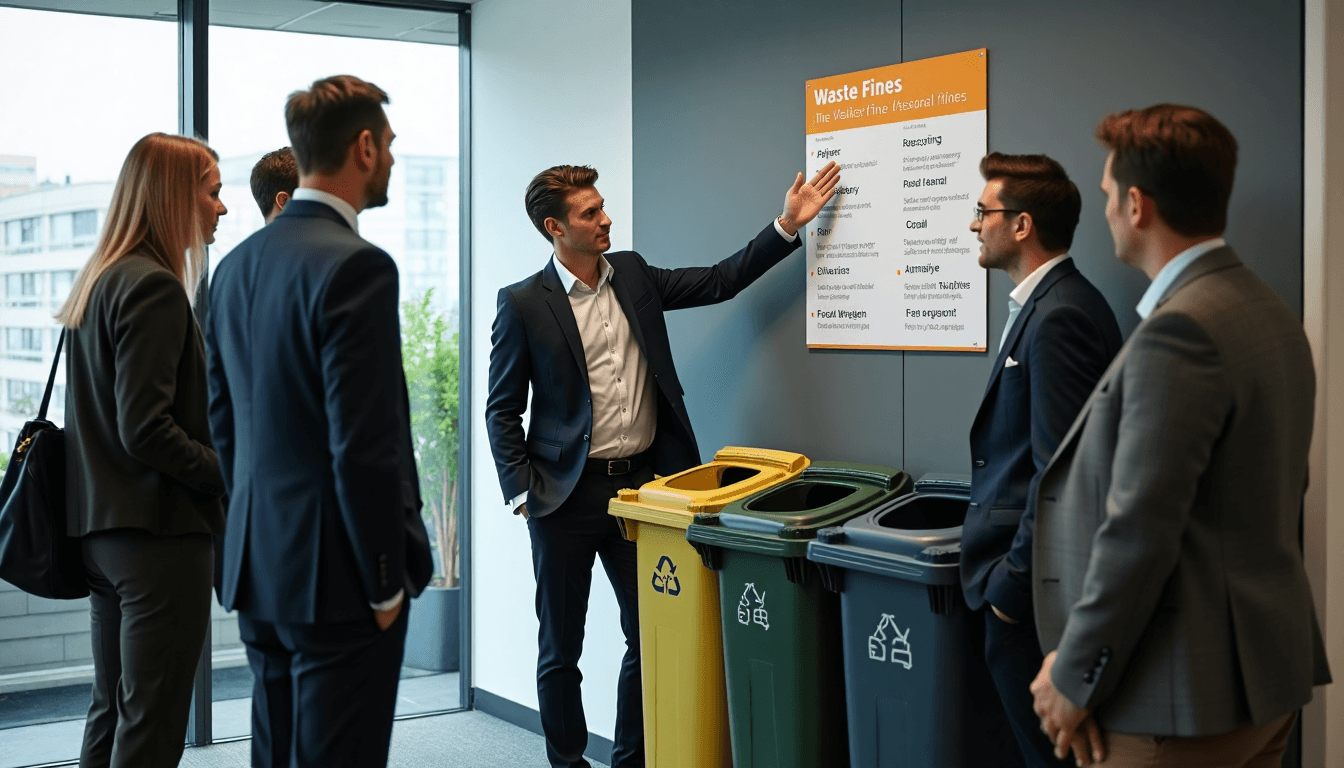
The shift to stricter UK waste regulations by 2025 is causing real concerns for businesses. If you are worried about choosing the right skip, meeting legal waste separation rules or managing hazardous and confidential materials, you are not alone. The pressure to avoid costly penalties and maintain full compliance means you need reliable waste partners and tailored solutions now.

Explore our expert support for confidential waste if you are handling sensitive documents and ensure you never risk data breaches or legal troubles.

https://venturewaste.co.uk

Ready to take the stress out of waste management? For fast, compliant and simple skip hire, visit Venture Waste Management today. Streamline your waste collection process with our three-step booking, expert guidance and nationwide coverage. Act now to protect your business and gain confidence your waste solutions are fully up to date for 2025.

Business team learning about UK waste disposal fines near office recycling bins

Waste Disposal Fines UK 2025: What Every Business Must Know

Business team learning about UK waste disposal fines near office recycling bins

Business owners are facing tighter rules on waste disposal in 2025, and many do not realise just how costly a simple mistake can become. Here is the shocker. Ten companies were hit with a combined £6,550 in fines in a single month for common offences like fly-tipping and paperwork errors. It is not just big corporations getting caught out, and the penalties can easily wipe out your profit for the quarter.

Table of Contents

Quick Summary

Takeaway Explanation
Understand Waste Disposal Fines Businesses face escalating fines for non-compliance with waste management regulations, with penalties ranging from fixed notices to substantial monetary sanctions.
Correct Waste Segregation is Crucial As of March 31, 2025, businesses with 10 or more employees must correctly segregate waste into distinct streams to avoid financial penalties, including dry recyclables and food waste.
Document Everything Maintaining accurate waste transfer documents is essential; errors can lead to fines up to £20,000, emphasising the need for meticulous record-keeping and compliance.
Partner with Licensed Providers Ensure waste is transported and disposed of by licensed waste carriers to avoid significant penalties associated with unauthorized transportation and disposal.
Conduct Regular Waste Audits Performing comprehensive waste audits is critical for identifying compliance gaps and developing robust waste management strategies to minimise risks and costs.


Understanding Waste Disposal Fines in the UK

Waste disposal regulations in the United Kingdom represent a complex legal landscape that businesses must navigate carefully. Non-compliance can result in significant financial penalties and potential legal consequences. These fines are designed not merely as punitive measures but as critical mechanisms to encourage responsible waste management and environmental protection.

Infographic explaining UK waste disposal fine types and penalties

The UK government has established a robust system of waste disposal fines that target various infractions across different sectors. According to gov.uk Environmental Protection Guidelines, businesses can face penalties ranging from fixed penalty notices to substantial monetary sanctions depending on the severity and frequency of their waste management violations.

Research from DEFRA indicates that waste disposal fines in 2025 will become increasingly stringent. For instance, businesses producing over 5 kilograms of food waste weekly must now arrange separate collection by a licensed waste carrier, with non-compliance potentially resulting in immediate financial penalties.

The penalty structure is multifaceted. Minor infractions might attract fixed penalty notices, while repeated or severe violations could lead to prosecution. South Oxon District Council reports that fixed penalty notices for fly-tipping have increased from £400 to £1,000, demonstrating the government’s commitment to stricter enforcement.

Categories of Waste Disposal Violations

Businesses must understand the specific categories of waste disposal violations that can trigger financial penalties. These typically include:

  • Improper Waste Segregation: Failing to separate different types of waste correctly
  • Unauthorized Waste Transportation: Moving waste without proper licensing
  • Fly-tipping: Illegally dumping waste in unauthorized locations
  • Documentation Errors: Incomplete or inaccurate waste transfer documentation

Haringey Council’s enforcement records provide a compelling example. In May 2025, ten businesses were collectively fined £6,550 for various waste offences, including fly-tipping and operating unlicensed skips. This illustrates the real-world financial risks of non-compliance.

To help businesses navigate these complex regulations, we recommend exploring our comprehensive guide on waste compliance steps. Understanding these regulations is not just about avoiding fines but about contributing to a more sustainable waste management ecosystem.

Proactive waste management isn’t just a legal requirement—it’s a strategic business decision. By investing in proper waste disposal practices, businesses can avoid penalties, reduce environmental impact, and potentially even generate cost savings through more efficient waste handling strategies.

Below is a table summarising the main categories of violations and their potential penalties, to clarify the financial risks associated with each type:

Category of Violation Example Offence Typical Penalty Range
Improper Waste Segregation Mixing recyclable and food waste Fixed penalty notice or prosecution
Unauthorized Waste Transportation Using unlicensed waste carriers Up to £5,000 or prosecution
Fly-tipping Illegal dumping of waste £400–£1,000 fixed penalty; higher for repeat offences
Documentation Errors Incomplete/inaccurate transfer notes Up to £20,000 or unlimited in serious cases

Common Waste Disposal Mistakes by Businesses

Business waste management is a critical responsibility that extends far beyond simple disposal. Understanding and avoiding common waste disposal mistakes can save companies significant financial resources and prevent potential legal complications.

Incorrect Waste Segregation Practices

One of the most prevalent errors businesses commit is improper waste segregation. Facilitate Magazine highlights that mixing different waste streams can render recyclable materials completely unsuitable for processing. As of March 31, 2025, businesses with 10 or more employees are legally mandated to separate dry recyclables (plastic, metal, glass, paper, and card), food waste, and non-recyclable waste before collection.

Businesses frequently make critical mistakes such as:

  • Mixing food waste with recyclable materials
  • Contaminating paper recyclables with food residue
  • Failing to clean containers before recycling
  • Disposing of electronic waste in general waste streams

These seemingly minor errors can result in entire waste batches being rejected, leading to additional disposal costs and potential fines.

Documentation and Compliance Failures

Another significant area of risk involves waste documentation and regulatory compliance. Government regulations emphasize the importance of maintaining accurate waste transfer records. Businesses that fail to properly document their waste disposal can face substantial penalties.

Key documentation mistakes include:

  • Incomplete waste transfer notes
  • Incorrect classification of waste types
  • Failure to retain disposal records
  • Not tracking waste from generation to final disposal

The financial implications are severe. Non-compliance can result in fines up to £20,000 in Magistrates’ Court, with potential unlimited fines in Crown Court proceedings. To help businesses manage these complexities, we recommend exploring our guide on waste reduction strategies.

Unauthorized Waste Transportation and Disposal

Compliance officer reviewing waste transfer paperwork with commercial driver

Businesses often underestimate the legal requirements surrounding waste transportation. Using unlicensed waste carriers or disposing of waste at unauthorized locations can trigger significant penalties. Research indicates that businesses must work exclusively with licensed waste management providers.

Common unauthorized disposal mistakes include:

  • Hiring unregistered waste removal services
  • Disposing of commercial waste in residential bins
  • Transporting waste without appropriate documentation
  • Dumping waste in non-designated areas

Proactive waste management requires continuous education and systematic approach. By understanding these common mistakes, businesses can develop robust waste disposal strategies that minimize financial risks and support environmental sustainability. Regular staff training, implementing clear waste management protocols, and partnering with certified waste management providers are crucial steps towards full compliance.

Here is a checklist table highlighting common business waste disposal mistakes and their potential consequences:

Mistake Potential Consequence Fine/Penalty
Mixing food waste with recyclables Batch rejection, added cost Financial penalty
Failing to clean recyclable containers Contaminated recyclables Possible fine
Using unlicensed waste carriers Legal breach Up to £5,000+
Incomplete waste transfer documentation Audit failure, prosecution Up to £20,000/unlimited
Disposing e-waste with general waste Breach of WEEE rules Financial penalty

The landscape of waste management in the UK has become increasingly complex, with stringent regulations governing different waste types. Businesses must navigate these legal requirements carefully to ensure compliance and avoid potential financial penalties.

Recyclable Waste Separation Regulations

The Separation of Waste (England) Regulations 2025 introduce comprehensive guidelines for waste separation. As of 31 March 2025, all workplaces in England are legally mandated to separate their waste into distinct streams:

  • Dry recyclable materials (plastic, metal, glass, paper, and card)
  • Food waste
  • Non-recyclable waste

Interestingly, the regulations provide some flexibility in collection methods. Metal, glass, and plastic can be co-collected, as can food and garden waste. However, paper and card must be collected separately to prevent contamination and ensure effective recycling.

It’s worth noting that micro-firms with fewer than 10 full-time equivalent employees receive a temporary exemption, with compliance required by 31 March 2027. Learn more about navigating these compliance steps.

Hazardous Waste Management

Hazardous waste requires an entirely different approach to disposal. Businesses generating hazardous waste must adhere to strict protocols that go beyond standard waste management practices. According to the Environment Agency, hazardous waste includes materials that pose potential risks to human health or the environment.

Key categories of hazardous waste include:

  • Chemical waste
  • Electrical and electronic equipment
  • Batteries
  • Medical and pharmaceutical waste
  • Oils and contaminated materials

Businesses must:

  • Obtain special permits for hazardous waste disposal
  • Use licensed hazardous waste carriers
  • Maintain detailed documentation of waste transfer
  • Ensure proper packaging and labeling
  • Follow specific transportation and disposal guidelines

Special Waste Streams and Compliance

Certain waste types demand unique handling and disposal methods. Electronic waste (WEEE), for instance, requires specialized recycling processes. Government guidelines mandate that businesses must:

  • Separate WEEE from other waste streams
  • Work with authorized WEEE recycling partners
  • Provide evidence of proper disposal
  • Maintain comprehensive records of electronic waste disposal

The consequences of non-compliance can be severe. Businesses may face significant fines, potential legal action, and reputational damage. Proactive waste management is not just about avoiding penalties but also about contributing to environmental sustainability.

Understanding these legal requirements is crucial. Businesses should invest in staff training, develop robust waste management protocols, and stay updated on evolving regulations. Regular audits and partnerships with certified waste management providers can help ensure full compliance and minimize potential risks.

How to Avoid Waste Disposal Fines in 2025

Navigating the complex landscape of waste disposal regulations requires strategic planning and proactive management. Businesses must implement comprehensive approaches to ensure full compliance and avoid potentially costly financial penalties in 2025.

Comprehensive Waste Auditing and Management

Research from Seton recommends conducting a thorough waste audit as the foundational step in avoiding disposal fines. This process involves systematically examining current waste management practices to identify potential areas of non-compliance.

Key elements of an effective waste audit include:

  • Documenting all waste streams generated
  • Measuring waste volume and composition
  • Identifying opportunities for waste reduction
  • Assessing current segregation practices
  • Reviewing waste disposal contracts and carriers

Businesses should create detailed waste management plans that outline specific strategies for waste reduction, segregation, and responsible disposal. Explore our comprehensive guide to waste compliance steps to develop a robust waste management strategy.

Waste Segregation and Licensing Compliance

Government regulations mandate strict waste segregation requirements for businesses with 10 or more employees. Starting 31 March 2025, businesses must separate waste into specific streams:

  • Dry recyclables (glass, metal, plastic, paper, card)
  • Food waste
  • Non-recyclable waste

To avoid fines, businesses must:

  • Provide clearly marked, colour-coded waste bins
  • Train staff on proper waste segregation techniques
  • Ensure all waste is collected by licensed waste carriers
  • Maintain accurate documentation of waste disposal activities
  • Regularly review and update waste management protocols

Record-Keeping and Continuous Improvement

Meticulous record-keeping is crucial in demonstrating compliance and avoiding potential penalties. Environment Agency guidelines emphasize the importance of maintaining comprehensive waste transfer documentation.

Essential documentation includes:

  • Waste transfer notes
  • Carrier licensing verification
  • Waste volume and type tracking
  • Staff training records
  • Disposal and recycling certificates

Businesses should implement digital tracking systems to streamline record-keeping and facilitate easy access during potential compliance audits. Regular internal reviews and staff training can help identify and address potential compliance gaps before they result in financial penalties.

Proactive waste management is more than a legal requirement—it’s a strategic approach to reducing environmental impact and operational costs. By investing time and resources in understanding and implementing these guidelines, businesses can transform waste management from a potential liability into an opportunity for sustainability and efficiency.

Frequently Asked Questions

What are the potential fines for waste disposal violations in the UK?

Businesses in the UK can face fines ranging from fixed penalty notices for minor infractions to substantial monetary sanctions for severe violations. For example, fines for fly-tipping can increase from £400 to £1,000, while documentation errors can lead to penalties of up to £20,000 or even unlimited fines in serious cases.

What are the new regulations for waste segregation coming into effect in 2025?

As of 31 March 2025, businesses with ten or more employees must correctly segregate waste into specific streams: dry recyclables, food waste, and non-recyclable waste. Companies failing to comply may face significant financial penalties.

How can businesses avoid receiving waste disposal fines?

To avoid fines, businesses should conduct regular waste audits, ensure correct waste segregation practices, maintain accurate documentation, and use licensed waste carriers for transportation and disposal. Training staff on compliance is also crucial.

What documentation is required for waste disposal compliance?

Businesses must maintain comprehensive waste transfer documents that include details on waste types, carrier licensing verification, waste volumes, and disposal certificates. Incomplete or inaccurate documentation can lead to serious financial penalties.

Take Control of Waste Compliance and Protect Your Bottom Line

Are you feeling anxious about stricter waste disposal fines in 2025? Many UK businesses are struggling with the sudden changes in waste segregation, documentation, and the threat of costly penalties. Whether it is the challenge of correct waste separation, keeping your records in order, or simply staying on the right side of the law, one simple oversight can jeopardise your entire compliance strategy. If you want expert guidance on the latest regulations, our regulation hub covers all the key updates and gives practical tips tailored for your business situation.

https://venturewaste.co.uk

Stop letting uncertainty put your business at risk. Venture Waste Management makes it quick and simple not only to comply with new waste laws but also to streamline your waste process with reliable, licensed collection and documentation. Visit Venture Waste Management today to skip the stress and book your compliant waste services. Ensure your team is ready before the new rules come into force—secure your free compliance consultation now.