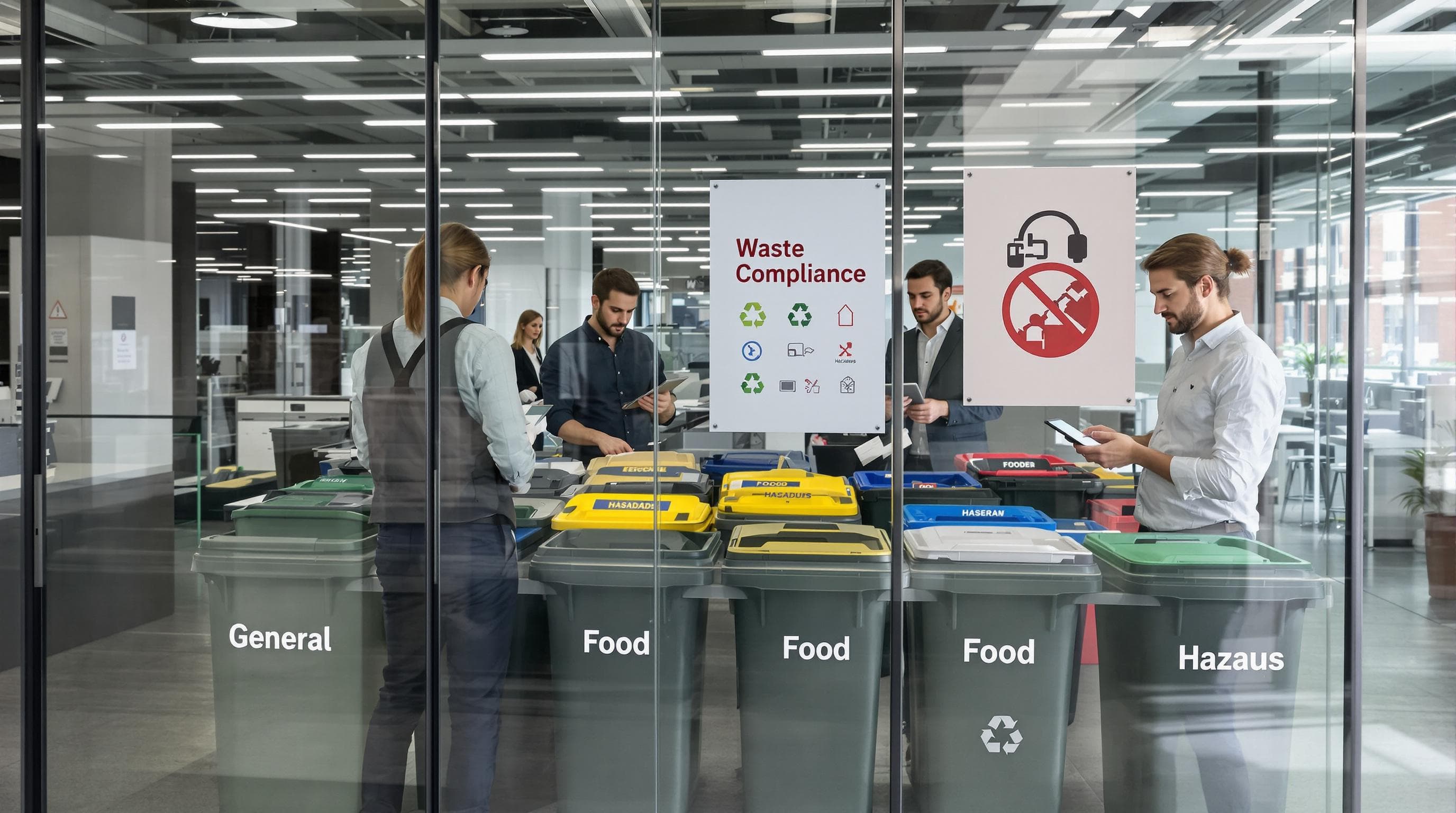
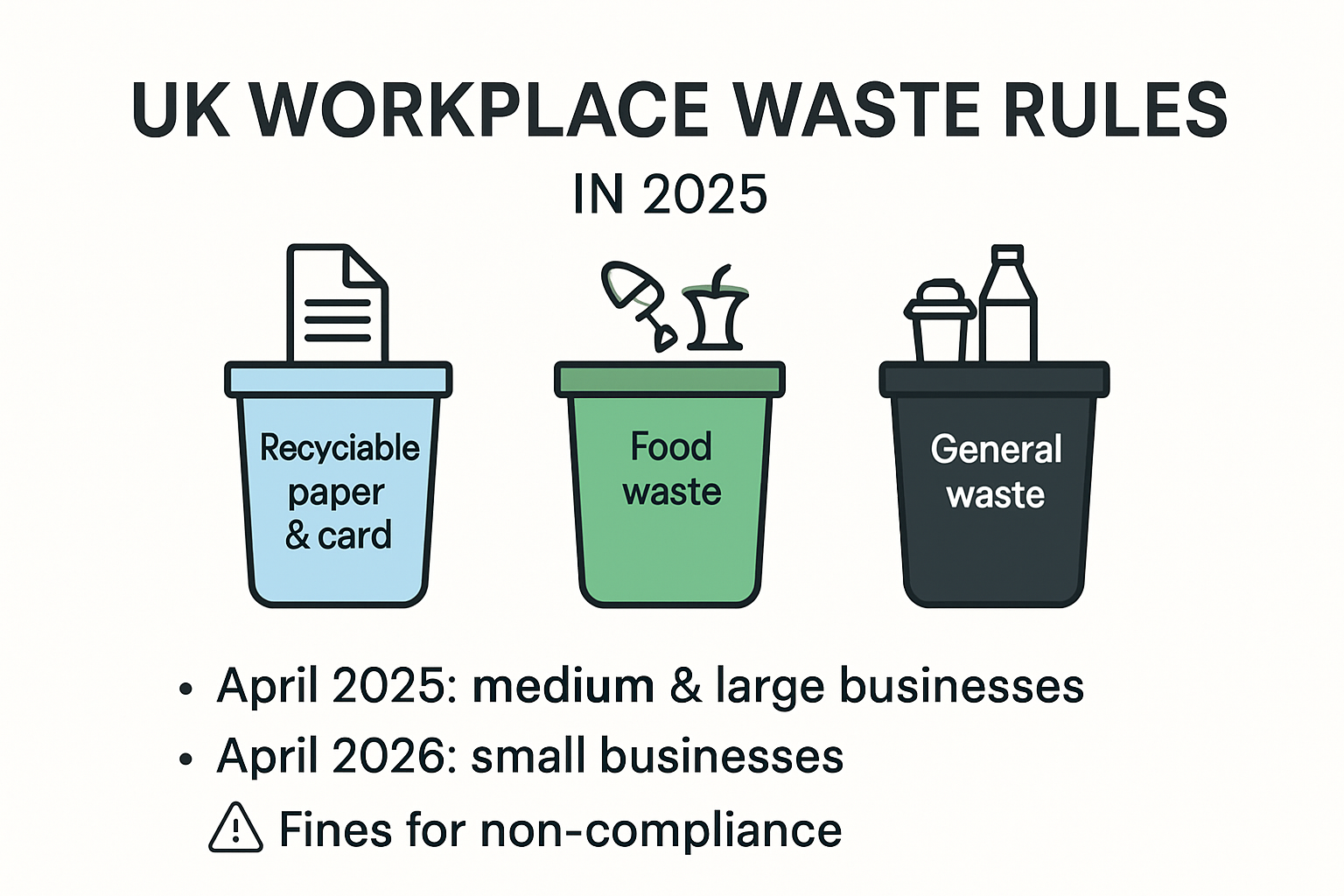
UK SME staff sort materials at labeled bins with 'Waste Reduction' text

Waste Reduction for SMEs: Practical UK Strategies for 2025

Waste is costing UK businesses more than they realise. SMEs produce nearly 34 million tonnes of waste every year, much of it avoidable. Most firms assume slashing waste is expensive and complicated. Quite the opposite. The biggest savings come from simple, sector-specific tweaks that not only protect the environment but also save thousands of pounds in the process.

Table of Contents

Quick Summary

Takeaway Explanation
Understand Your Waste Streams Identify distinct waste categories such as general, recyclable, organic, and hazardous waste to implement targeted minimisation strategies.
Conduct Regular Waste Audits Perform waste audits quarterly to track waste generation patterns, enabling effective strategies for reduction and cost savings of up to 20%.
Tailored Sector-Specific Solutions Develop specific waste reduction approaches for sectors like retail, manufacturing, and professional services to effectively address unique challenges.
Leverage Technology for Innovation Adopt advanced technologies such as AI-powered tracking and digital inventory management to optimise waste reduction efforts.
Choose the Right Waste Management Partner Evaluate potential partners on compliance, technology, and sector-specific experience to ensure a strategic fit that enhances sustainability and reduces costs.

Understanding Waste Streams in Your Business

Waste reduction for SMEs begins with a comprehensive understanding of the waste streams generated within your business operations. Every enterprise produces multiple types of waste, and identifying these streams is crucial for developing targeted waste minimisation strategies.

Infographic showing main business waste categories for SMEs

Identifying Your Business Waste Categories

Businesses typically generate several distinct waste categories that require different management approaches. Our comprehensive waste management guide suggests breaking down waste streams into key classifications:

  • General Waste: Non-recyclable materials like contaminated packaging, mixed office waste, and general rubbish that cannot be recycled or repurposed.
  • Recyclable Materials: Paper, cardboard, plastics, glass, and metals that can be processed and reused in manufacturing.
  • Organic Waste: Food scraps, biodegradable materials from catering, landscaping, and agricultural operations.
  • Hazardous Waste: Chemical substances, electronic equipment, batteries, and materials requiring specialised disposal methods.

Understanding these waste streams enables businesses to implement more precise and effective waste reduction techniques. According to WRAP UK, businesses generate approximately 33.9 million tonnes of waste annually, with significant potential for reduction and recycling.

Conducting a Waste Audit

A systematic waste audit provides critical insights into your organisation’s waste generation patterns. This process involves:

  1. Documenting all waste produced across different departments
  2. Measuring waste volume and weight for each category
  3. Identifying potential reduction opportunities
  4. Tracking waste disposal costs and environmental impact

Professional waste management consultants recommend conducting these audits quarterly to maintain an accurate understanding of your waste streams. By mapping out exactly what waste your business produces, you can develop targeted strategies to minimise waste generation and improve overall operational efficiency.

The financial implications of effective waste management are substantial. Research from DEFRA indicates that businesses can reduce waste management costs by up to 20% through strategic waste stream analysis and implementation of targeted reduction strategies.

Successful waste reduction is not just about environmental responsibility but also represents a significant opportunity for cost savings and operational improvement. By systematically understanding and addressing your business waste streams, you can create a more sustainable and economically efficient organisation.

To help clarify the four primary business waste categories and their typical examples, here is a summary table:

Waste Category Typical Examples Management Approach
General Waste Contaminated packaging, mixed office waste, rubbish Standard disposal or landfill
Recyclable Materials Paper, cardboard, plastics, glass, metals Recycle through accredited streams
Organic Waste Food scraps, landscaping debris, biodegradable waste Composting or dedicated organics
Hazardous Waste Chemicals, electronics, batteries Specialised disposal and treatment

Effective Solutions for Different SME Sectors

UK café staff reduce food and packaging waste under 'Sector Solutions' signage

Waste reduction strategies are not one-size-fits-all. Different sectors require tailored approaches that address their unique waste generation challenges and operational constraints. Learn more about sector-specific waste management techniques to develop targeted waste minimisation strategies.

Retail and Hospitality Sector Waste Solutions

Retail and hospitality businesses face distinctive waste management challenges. According to WRAP UK, these sectors generate significant volumes of packaging, food waste, and mixed materials. Key strategies include:

  • Packaging Reduction: Implementing minimal packaging designs and transitioning to recyclable or biodegradable alternatives.
  • Food Waste Management: Developing precise inventory control systems and partnering with food redistribution networks.
  • Circular Economy Approaches: Creating closed-loop systems where packaging and materials are continuously reused or recycled.

Restaurants can reduce food waste by 30-50% through advanced inventory management and strategic donation programmes. Some businesses have successfully implemented digital tracking systems that monitor food consumption patterns and adjust purchasing accordingly.

Manufacturing and Industrial Waste Minimisation

Manufacturing sectors require comprehensive waste reduction strategies that address complex production processes. Research from DEFRA highlights several critical approaches:

  1. Process Redesign: Restructuring production lines to minimise material waste
  2. Advanced Recycling Technologies: Implementing on-site material recovery systems
  3. Waste-to-Energy Conversion: Transforming non-recyclable waste into energy resources

Industrial businesses can achieve significant waste reduction by conducting thorough waste stream audits and investing in innovative recycling technologies. Some manufacturers have reported waste reduction of up to 40% through systematic process improvements and material recovery techniques.

Professional Services and Office-Based Sectors

Office environments might seem low-waste, but digital and physical waste accumulation can be substantial. Strategic approaches include:

  • Digital Document Management: Reducing paper consumption through digital workflows
  • Electronic Waste Recycling: Implementing certified e-waste disposal programmes
  • Sustainable Office Supply Procurement: Selecting suppliers with robust sustainability credentials

Professional services can significantly reduce waste by transitioning to cloud-based document systems and implementing strict digital document management protocols. The environmental impact extends beyond immediate waste reduction, contributing to broader carbon footprint minimisation efforts.

By recognising the unique waste generation patterns within different sectors, SMEs can develop targeted, effective waste reduction strategies that not only minimise environmental impact but also drive operational efficiency and potential cost savings.

Below is a summary table comparing key waste reduction strategies across the three main SME sectors discussed:

SME Sector Main Waste Types Key Reduction Strategies Potential Waste Reduction
Retail & Hospitality Packaging, food waste, mixed waste Minimal packaging, inventory control, circular economy 30-50% (food waste)
Manufacturing & Industrial Processing waste, materials, non-recyclables Process redesign, recycling tech, waste-to-energy Up to 40% (overall)
Professional Services & Offices Paper, e-waste, office supplies Digital workflow, e-waste recycling, sustainable procurement Substantial (paper/e-waste)

Maximising Savings and Sustainability in 2025

As UK businesses enter 2025, waste reduction strategies are no longer optional but a critical component of financial and environmental management. Explore comprehensive waste management strategies that simultaneously reduce costs and environmental impact.

Financial Benefits of Waste Reduction

Implementing targeted waste reduction approaches delivers substantial economic advantages for SMEs. According to WRAP UK, businesses can save up to £5,000 annually by reducing waste generation and improving resource efficiency.

Key financial benefits include:

  • Direct Cost Savings: Reducing waste disposal expenses and purchasing fewer raw materials
  • Operational Efficiency: Streamlining production processes and minimising unnecessary resource consumption
  • Tax Incentives: Potential government grants and reduced environmental taxation for sustainable practices

The Environmental Protection Agency highlights that strategic waste management can reduce operational costs by 10-20% through systematic resource optimization.

Sustainable Technology and Innovation

Technological advancements are transforming waste reduction strategies for SMEs. Emerging solutions include:

  1. AI-powered waste tracking systems
  2. Advanced recycling technologies
  3. Digital inventory management platforms
  4. Real-time waste stream analytics

These innovations enable businesses to:

  • Monitor waste generation in real-time
  • Identify inefficiencies quickly
  • Develop data-driven waste reduction strategies
  • Automate recycling and resource recovery processes

Long-Term Strategic Planning

Successful waste reduction requires comprehensive, forward-thinking approaches. SMEs should:

  • Develop multi-year sustainability roadmaps
  • Set measurable waste reduction targets
  • Invest in employee training and engagement
  • Regularly review and update waste management strategies

By adopting a holistic approach to waste reduction, SMEs can create competitive advantages. Companies demonstrating strong environmental credentials attract environmentally conscious customers and investors, potentially increasing market share and brand reputation.

The journey towards waste reduction is not just about minimising environmental impact but creating more resilient, efficient, and financially robust businesses. As regulatory pressures increase and sustainability becomes a key business differentiator, SMEs that proactively embrace waste reduction will be best positioned for success in 2025 and beyond.

Choosing the Right UK Waste Management Partner

Selecting an appropriate waste management partner represents a critical strategic decision for SMEs seeking comprehensive waste reduction solutions. Explore our comprehensive waste collection network to understand the essential criteria for choosing the right partner.

Key Selection Criteria for Waste Management Providers

Identifying a suitable waste management partner requires careful evaluation across multiple dimensions. According to DEFRA, businesses should consider the following critical factors:

  • Compliance and Certification: Verify providers hold current waste management licenses and environmental certifications
  • Technology and Innovation: Assess the provider’s technological capabilities for waste tracking and recycling
  • Sector-Specific Experience: Select partners with demonstrable expertise in your specific industry segment
  • Transparent Reporting: Ensure comprehensive waste stream documentation and regular performance reporting

Research from WRAP UK indicates that businesses working with specialised waste management partners can reduce waste disposal costs by up to 25% and improve overall environmental performance.

Evaluating Financial and Environmental Impact

Beyond basic waste collection, the right partner should offer strategic value across financial and sustainability metrics. Key evaluation points include:

  1. Detailed waste stream analysis capabilities
  2. Cost-effectiveness of waste management solutions
  3. Demonstrated commitment to circular economy principles
  4. Proven track record of emission reduction
  5. Customisable waste management approaches

The Environmental Services Association reports that advanced waste management partnerships can help SMEs reduce carbon emissions by up to 40% through innovative recycling and resource recovery techniques.

Due Diligence and Long-Term Partnership Considerations

Choosing a waste management partner extends far beyond immediate operational needs. Successful partnerships require:

  • Comprehensive initial waste stream assessment
  • Flexibility to adapt to changing business requirements
  • Collaborative approach to continuous improvement
  • Regular performance reviews and strategy refinement
  • Alignment with broader sustainability objectives

Businesses should approach waste management partnerships as strategic relationships, not merely transactional services. The most effective partnerships involve ongoing collaboration, technology integration, and shared sustainability goals.

By meticulously evaluating potential waste management partners against these comprehensive criteria, SMEs can develop robust, cost-effective waste reduction strategies that contribute to both environmental sustainability and operational efficiency. The right partnership transforms waste management from a necessary expense to a strategic competitive advantage in the evolving business landscape of 2025.

Frequently Asked Questions

What are the main waste categories that SMEs should identify?

SMEs should identify four main waste categories: general waste, recyclable materials, organic waste, and hazardous waste to implement targeted reduction strategies.

How often should SMEs conduct a waste audit?

It is recommended that SMEs conduct a waste audit quarterly to track waste generation patterns and identify potential reduction opportunities.

What waste reduction strategies are effective for the retail and hospitality sectors?

Effective strategies for the retail and hospitality sectors include reducing packaging, managing food waste through inventory control, and implementing circular economy approaches.

How can technology aid in waste reduction for SMEs?

Technology aids in waste reduction by providing tools such as AI-powered tracking systems, digital inventory management platforms, and advanced recycling technologies, enabling real-time monitoring and efficient resource management.

Cut Business Waste and Boost Savings in 2025 with Venture Waste

Are you struggling with rising waste disposal costs and complex compliance requirements? The practical solutions in our article highlight just how much SMEs can save by adopting targeted waste reduction and sector-specific strategies. Yet, putting these plans into action can be daunting when you are managing multiple waste streams or trying to stay on top of regulations. Choosing a partner who understands the intricacies of the waste collection process for UK businesses in 2025 is the quickest route to reliable results.

https://venturewaste.co.uk

Let Venture Waste Management simplify your next step towards a cleaner, more efficient operation. Our team takes you from first contact to final confirmation—making it easy for you to book compliant waste collections, handle confidential materials or streamline recycling in your business. Do not let inefficiencies or regulatory worries hold you back. Start your journey today by exploring our comprehensive collection network or visit Venture Waste Management to see how quickly you can move towards real savings and environmental progress. Act now if you want next financial quarter’s figures to look better than the last.

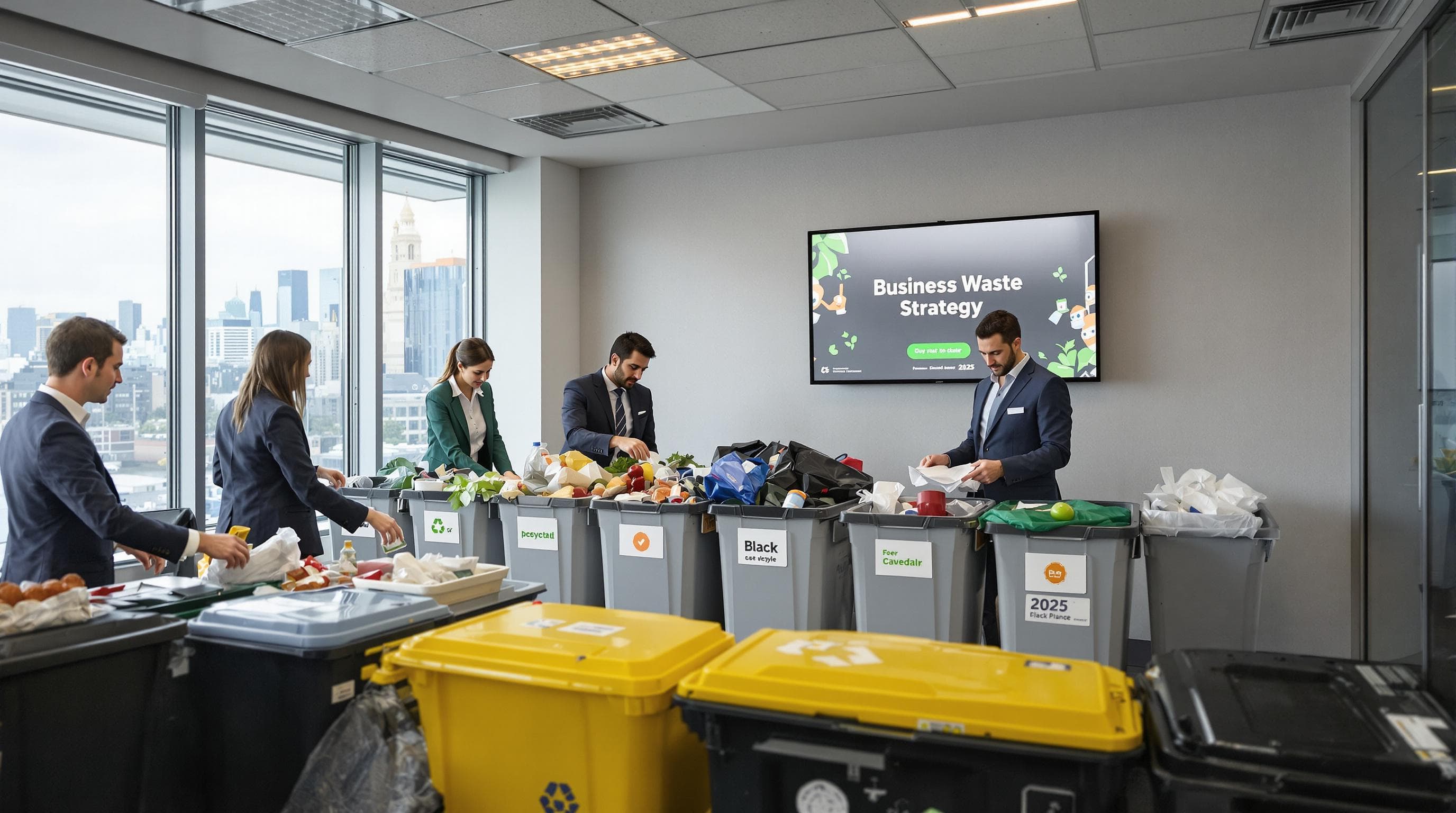
Office staff sorting business waste into recycling bins as screen shows sustainability strategy

Waste Management Challenges UK: Solutions for Businesses 2025

Office staff sorting business waste into recycling bins as screen shows sustainability strategy

Business waste in the UK is reaching a critical tipping point and companies now face far tougher compliance and financial hurdles than ever before. In 2025, organisations will need to comply with new rules like the Separation of Waste Regulations, which require the meticulous sorting of materials such as plastic, glass, metal, card, and food waste. This means that by 31 March 2025, every business must have systems ready for detailed waste separation or risk hefty penalties and disruption. You might expect high-tech recycling plants or clever gadgets to be the fix, but the real challenge is reshaping how every part of a business operates just to keep up. UK firms are discovering that waste is no longer just about bins and collections. It is now a test of strategy, culture, and constant adaptation.

Table of Contents

Quick Summary

Takeaway Explanation
Adhere to Regulatory Compliance UK businesses must navigate increasingly complex waste management regulations, requiring investment in infrastructure and staff training to ensure detailed tracking and management of waste streams.
Implement Comprehensive Waste Separation The Separation of Waste Regulations 2025 mandates meticulous segregation of recyclable materials, necessitating businesses to restructure waste handling processes and invest in necessary systems.
Leverage Digital and Technological Innovations Advanced technologies such as IoT and AI enable real-time monitoring of waste generation, helping businesses optimise resource allocation and implement targeted waste reduction strategies.
Embrace Circular Economy Principles Adopting circular economy strategies, including modular product design and alternative material selection, can reduce waste generation at the design stage and enhance sustainability.
Explore Economic Incentives for Waste Reduction Businesses are encouraged to engage in collaborative approaches and take advantage of financial incentives that reward exceptional waste management practices, transforming waste into a potential revenue stream.

Current Waste Management Challenges in the UK

Business waste management in the United Kingdom faces unprecedented complexity and mounting pressures as environmental regulations tighten and sustainability becomes a critical priority. The landscape of waste management is rapidly evolving, presenting significant challenges that demand innovative solutions and strategic approaches.

Infographic showing key UK business waste management challenges in 2025

Regulatory Complexity and Compliance Pressures

UK businesses are confronting an intricate web of waste management regulations that continue to become more stringent. Research from the UK Parliament reveals a stark reality: companies must navigate increasingly complex compliance requirements while simultaneously reducing their environmental footprint. The regulatory environment demands not just waste disposal, but comprehensive waste reduction, recycling, and circular economy strategies.

The Environmental Act 2021 has introduced more rigorous reporting requirements and extended producer responsibility, meaning businesses must track and manage their waste streams with unprecedented detail. This regulatory landscape requires significant investment in waste management infrastructure, tracking systems, and staff training.

Economic and Infrastructure Limitations

Economic constraints pose another substantial challenge for UK businesses in waste management. The cost of implementing sophisticated waste sorting, recycling, and disposal systems can be prohibitively expensive, particularly for small and medium enterprises. Waste management research indicates that many businesses struggle to balance compliance costs with operational efficiency.

Infrastructural limitations compound these economic challenges. The UK currently lacks sufficient recycling and processing facilities to handle the volume of commercial waste generated. This infrastructure gap forces many businesses to rely on export solutions or landfill disposal, both of which are becoming increasingly restricted and costly.

Technological and Cultural Transformation

Transitioning to an effective waste management approach requires more than regulatory compliance. It demands a fundamental cultural and technological transformation within organizations. Businesses must invest in advanced waste tracking technologies, train employees in sustainable practices, and develop comprehensive waste reduction strategies.

The challenge extends beyond technical solutions. It requires a holistic approach that integrates waste management into core business strategy. Companies must reimagine their production processes, supply chains, and product lifecycles to minimize waste generation.

For businesses seeking deeper insights into effective waste management strategies, our comprehensive guide on waste management definitions provides essential context and practical recommendations for navigating these complex challenges.

As UK businesses move towards 2025, successfully addressing these waste management challenges will require collaboration, innovation, and a commitment to sustainable practices. The companies that can effectively transform these challenges into opportunities will not only ensure regulatory compliance but also gain significant competitive advantages in an increasingly environmentally conscious market.

Here is a table summarising the main waste management challenges faced by UK businesses and their impacts, to aid quick comparison:

Challenge Description Key Impact
Regulatory Complexity Intricate and evolving regulations demanding detailed compliance, reporting, and waste reduction strategies. Increased admin and compliance cost
Economic Limitations High costs for waste sorting/recycling infrastructure, difficult for SMEs to absorb. Strain on resources; cost pressure
Infrastructure Gaps Insufficient recycling and processing facilities to handle business waste volumes. Reliance on landfill/export
Technological Transformation Need to adopt advanced tracking systems, data analysis, and employee training for effective waste management. Requires investment and upskilling
Cultural Change Shifting business culture to prioritise sustainability and integrate waste management into strategy and operations. Resistance to change; retraining

Navigating the complex landscape of waste management regulations requires businesses to understand and implement comprehensive legal strategies tailored to their specific industry and operational context. The United Kingdom has developed a sophisticated regulatory framework that demands rigorous compliance and proactive environmental responsibility.

Comprehensive Waste Separation Requirements

The Separation of Waste (England) Regulations 2025 represent a pivotal moment for business waste management. Effective from 31 March 2025, these regulations mandate businesses to meticulously separate recyclable waste streams. Companies must now systematically segregate materials including plastic, glass, metal, paper, card, and food waste. This requirement goes beyond simple recycling expectations, compelling businesses to fundamentally restructure their waste handling processes.

These regulations are not merely administrative checkboxes. They represent a strategic shift towards more sustainable business practices. Organizations must invest in infrastructure, training, and systems that support precise waste segregation. Small and medium enterprises will particularly feel the impact, requiring significant operational adaptations to ensure compliance.

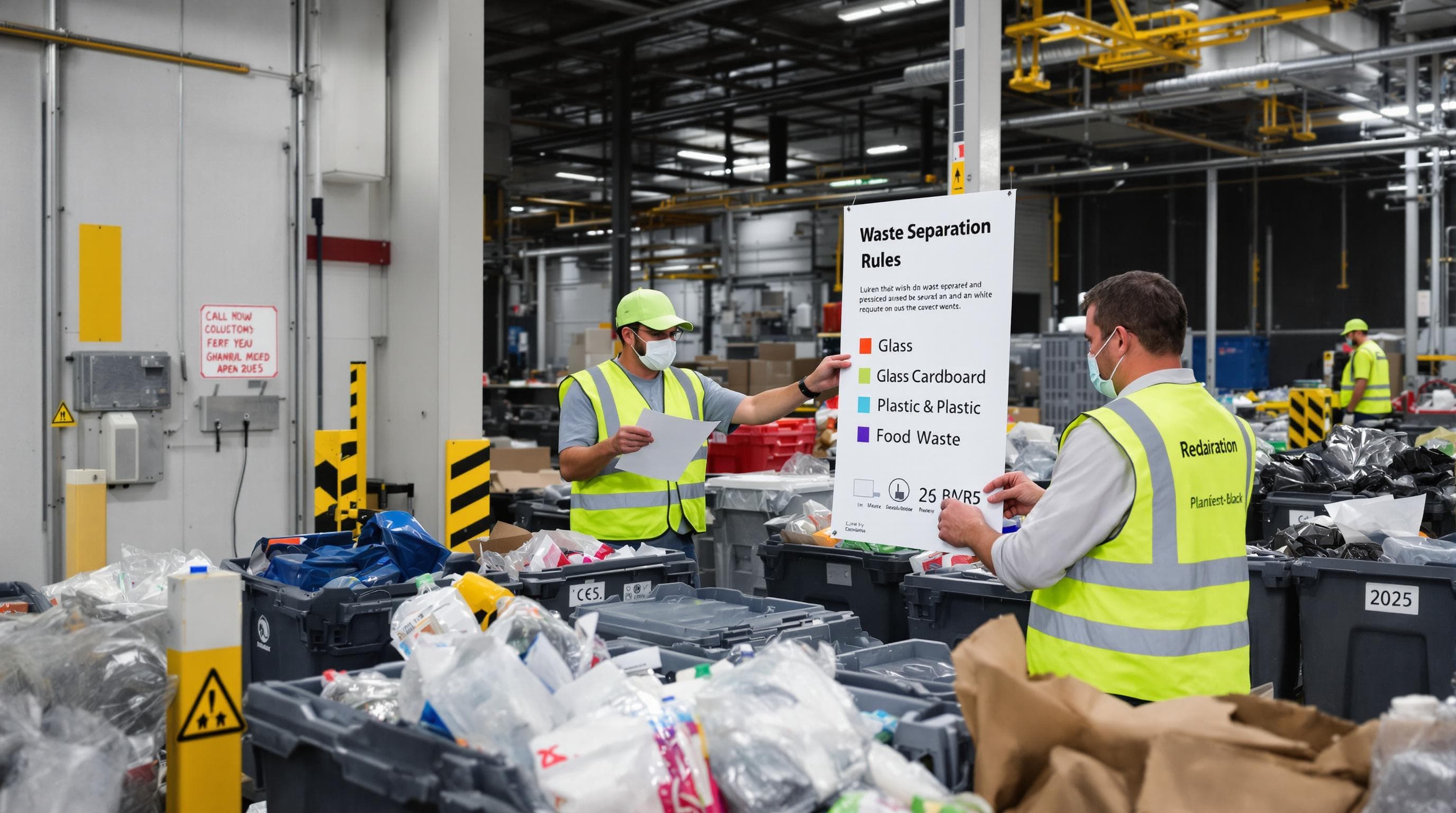
Business workers in hi-vis vests sorting recyclables with compliance signage visible

Extended Producer Responsibility and Financial Implications

The Extended Producer Responsibility (EPR) scheme, set to launch in October 2025, introduces a transformative financial model for waste management. This legislation shifts the economic burden of packaging waste disposal from local councils directly to the producing companies. The objective is clear: incentivize businesses to design more environmentally friendly packaging and take greater responsibility for their product lifecycles.

Financial implications are substantial. Companies will now face direct financial consequences for their packaging choices, creating a powerful economic motivation for sustainable design. Businesses must conduct comprehensive audits of their packaging materials, exploring alternatives that minimize waste and reduce potential financial penalties.

Industry-Specific Collection and Recycling Standards

The UK government has outlined specific implementation dates for recycling requirements that vary across different sectors. Government research indicates that by 31 March 2025, businesses must establish standardized collection processes for dry recyclable materials and food waste. This means each industry sector will need to develop tailored strategies matching their unique waste generation profiles.

Manufacturing, hospitality, healthcare, and retail sectors will face distinct challenges in meeting these standards. Each will require specialized waste management protocols that align with their specific operational characteristics. For instance, a manufacturing facility will have different recycling needs compared to a restaurant or a medical clinic.

Our comprehensive guide to waste disposal legal requirements offers businesses detailed insights into navigating these complex regulatory landscapes. Understanding these regulations is not just about compliance—it represents an opportunity to demonstrate corporate environmental responsibility and potentially reduce long-term waste management costs.

As regulations continue to evolve, businesses must adopt a proactive and adaptive approach. Those who view these legal requirements as strategic opportunities rather than bureaucratic obstacles will be best positioned to thrive in an increasingly sustainability-focused business environment.

To help businesses understand the main regulatory changes and their requirements, the following table outlines key 2025 regulations and what businesses must do to comply:

Regulation Effective Date Main Requirement Who is Affected
Separation of Waste Regulations 31 March 2025 Segregate recyclable materials: plastic, glass, metal, etc. All businesses in England
Extended Producer Responsibility (EPR) Scheme October 2025 Producers cover cost of packaging waste disposal Producers & packaging companies
Industry-specific Recycling Standards 31 March 2025 Implement sector-tailored collection/processes Manufacturing, Hospitality, Retail

Best Practices for Handling Hazardous and Confidential Waste

Handling hazardous and confidential waste represents a critical responsibility for UK businesses, requiring meticulous planning, stringent protocols, and comprehensive risk management strategies. The complexity of managing these sensitive waste streams demands a multifaceted approach that prioritizes environmental safety, legal compliance, and organizational security.

Risk Assessment and Classification Protocols

Government guidance on hazardous waste disposal emphasizes the fundamental importance of precise waste classification. Businesses must systematically identify and categorize their waste streams, understanding that hazardous materials include substances such as chemicals, batteries, solvents, pesticides, asbestos, and specialized industrial oils.

The classification process involves detailed evaluation of waste composition, potential environmental impact, and associated health risks. Companies must develop robust internal assessment frameworks that go beyond basic regulatory compliance. This involves comprehensive documentation, chemical analysis, and ongoing monitoring of waste generation processes.

Specialized training becomes crucial in this context. Employees must be equipped with the knowledge to recognize, handle, and appropriately document different categories of hazardous waste. This requires investment in continuous professional development and specialized safety training programs.

Secure Storage and Containment Strategies

Pollution prevention guidelines provide critical insights into effective hazardous waste management. The recommendations include implementing robust secondary containment measures such as impermeable drip trays and bunded storage areas. These strategies are designed to prevent potential environmental contamination in case of accidental leaks or spills.

Key storage considerations include maintaining strict segregation between different waste types, ensuring appropriate labeling, and establishing clear spatial guidelines. For instance, hazardous waste storage locations must be positioned at least 10 meters from watercourses and 50 meters from wells or boreholes to minimize potential environmental risks.

Confidential waste management requires equally rigorous approaches. Businesses must implement secure destruction protocols for sensitive documents, electronic media, and proprietary materials. This involves using specialized destruction services that provide comprehensive chain-of-custody documentation and certified disposal processes.

Transportation and Disposal Compliance

The ‘duty of care’ principle is paramount when transporting and disposing of hazardous and confidential waste. University research on waste management underscores the legal obligations businesses have in ensuring waste causes no harm to human health or the environment.

This requires partnering with licensed waste management providers who can demonstrate compliance with stringent transportation and disposal regulations. Companies must maintain meticulous records, including waste transfer notes, transportation manifests, and final disposal certificates.

Our comprehensive hazardous waste disposal guide offers businesses detailed strategies for navigating these complex requirements. The guide provides practical insights into developing robust waste management frameworks that balance legal compliance with operational efficiency.

Ultimately, effective hazardous and confidential waste management is not just about meeting regulatory requirements. It represents a critical aspect of corporate responsibility, demonstrating a commitment to environmental stewardship, workplace safety, and organizational integrity. Businesses that approach these challenges proactively will not only mitigate potential risks but also establish themselves as leaders in responsible waste management practices.

Innovative Solutions for Business Waste Reduction

The escalating environmental challenges and increasingly stringent regulations demand that UK businesses adopt transformative approaches to waste reduction. Innovative solutions are no longer optional but essential strategies for organizational sustainability, cost management, and environmental responsibility.

Circular Economy and Design Strategies

OECD research on waste management highlights the critical importance of implementing circular economy principles. This approach fundamentally reimagines product lifecycles, focusing on design that minimizes waste generation from the outset. Businesses are increasingly adopting strategies such as modular product design, which allows for easier repair, component replacement, and extended product lifespans.

Manufacturing sectors are pioneering innovative material selection processes. Companies are exploring alternative materials that are inherently recyclable, biodegradable, or have minimal environmental impact. This involves comprehensive supply chain redesign, where waste reduction becomes a core consideration in product development rather than an afterthought.

Technology plays a pivotal role in this transformation. Advanced computer-aided design (CAD) tools now incorporate waste reduction algorithms, enabling engineers to model products with minimal material waste and maximum resource efficiency. This represents a fundamental shift from traditional linear manufacturing approaches.

Digital Tracking and Waste Management Technologies

Digital technologies are revolutionizing waste management tracking and reduction strategies. Advanced software platforms now provide real-time monitoring of waste generation, enabling businesses to identify inefficiencies and implement targeted reduction strategies. These systems utilize artificial intelligence and machine learning to predict waste streams, optimize resource allocation, and recommend precise intervention points.

IoT (Internet of Things) sensors are being deployed across industrial environments to track material usage, monitor waste generation, and provide granular insights into consumption patterns. These technologies enable businesses to move from reactive to predictive waste management approaches, reducing unnecessary waste before it is generated.

Economic Incentives and Collaborative Approaches

Beyond technological solutions, innovative economic models are emerging to incentivize waste reduction. Many businesses are exploring collaborative waste management approaches, where industrial symbiosis allows waste from one organization to become a resource for another. This approach transforms waste from a cost center to a potential revenue stream.

Government and industry bodies are developing sophisticated financial mechanisms to encourage waste reduction. Tax incentives, grants, and preferential procurement policies are being designed to reward businesses that demonstrate exceptional waste management practices. These economic tools provide tangible financial motivations for sustainable innovation.

Our comprehensive guide on saving money through waste management offers businesses practical insights into implementing these innovative strategies. By viewing waste reduction not as a compliance requirement but as a strategic opportunity, companies can unlock significant economic and environmental benefits.

The future of business waste management lies in holistic, technology-enabled, and collaborative approaches. Organizations that embrace these innovative solutions will not only meet regulatory requirements but also gain competitive advantages in an increasingly sustainability-focused marketplace. The journey towards zero waste is complex, but with the right strategies, technologies, and mindset, it is an achievable and rewarding objective.

Frequently Asked Questions

What are the new waste management regulations for UK businesses in 2025?

The Separation of Waste Regulations require businesses to meticulously sort waste streams into categories like plastic, glass, metal, and food waste by 31 March 2025.

How can businesses prepare for the Separation of Waste Regulations?

To prepare, businesses should invest in waste management systems and staff training that ensure proper waste segregation and compliance with the new regulations.

What is Extended Producer Responsibility (EPR) and how does it affect businesses?

EPR shifts the responsibility for packaging waste disposal from local councils to businesses, incentivising them to design more sustainable packaging to avoid financial penalties.

What are some best practices for managing hazardous waste in businesses?

Best practices include conducting risk assessments, maintaining secure storage, following regulations for transportation and disposal, and providing specialised training to staff.

Turn Regulatory Challenges Into Business Opportunities with Venture Waste

You have just read about the mounting pressures facing UK businesses in waste management. New regulations demand meticulous separation, robust compliance, and smarter infrastructure—failing to adapt can mean costly penalties and operational setbacks. If the prospect of transforming your waste strategy for 2025 feels overwhelming, you are certainly not alone. There is a better way to respond to these new laws, one that prioritises compliance, efficiency and peace of mind.

https://venturewaste.co.uk

Let Venture Waste handle the complexity for you. Explore how our Waste Collection Network in the UK is uniquely designed to help businesses meet compliance with confidence. Benefit from a straightforward three-step process, expert handling of all waste streams and end-to-end support tailored for your sector. Do not wait until the March 2025 deadline is upon you. Visit Venture Waste to book a compliant collection or discover more about our waste collection process for businesses today. Make regulatory change work in your favour—act now to protect your business and the environment.

UK office team reviewing hazardous waste compliance documents

Hazardous Waste Regulations 2025: A Guide for UK Businesses

UK office team reviewing hazardous waste compliance documents

Hazardous waste rules in the UK are getting stricter for 2025, and businesses face a maze of new checks, reporting rules, and disposal standards. You might expect the hassle is only about keeping paperwork in order. But the real shock is that non-compliance can carry financial penalties reaching into the tens of thousands and even risk criminal charges. Keeping your business on the right side of the law now demands more than a tick-box audit, and many miss the hidden steps that matter most.

Table of Contents

Quick Summary

Takeaway Explanation
Understand Hazardous Waste Classification Businesses must accurately identify and classify waste streams according to specific criteria such as toxicity and chemical reactivity to comply with regulations.
Prioritise Documentation and Reporting Maintaining detailed records of waste generation, transportation, and disposal is essential to meet reporting requirements and avoid penalties.
Invest in Staff Training Comprehensive training programmes for employees on hazardous material handling and regulatory compliance are crucial for fostering a culture of environmental responsibility.
Choose Qualified Contractors When selecting a hazardous waste contractor, ensure they meet key qualifications and demonstrate a commitment to environmental stewardship and regulatory compliance.
Adopt Advanced Disposal Technologies Implementing modern treatment methodologies can enhance environmental protection and transform hazardous waste management into a strategic initiative.

Understanding Hazardous Waste Regulations in 2025

Hazardous waste regulations continue to evolve, presenting complex challenges for UK businesses in 2025. These regulations represent a critical framework designed to protect public health and the environment by establishing strict guidelines for managing potentially dangerous materials.

Flowchart explaining hazardous waste regulations steps in the UK

Key Definitions and Scope of Hazardous Waste

Hazardous waste encompasses materials that pose substantial risks to human health or environmental safety. According to the United States Environmental Protection Agency, these materials are characterized by specific properties including ignitability, corrosivity, reactivity, and toxicity. In the UK context, businesses must carefully identify and categorize waste streams that fall under these regulatory definitions.

The classification process involves detailed assessment of waste composition, potential environmental impact, and specific industrial context. Businesses must understand that seemingly innocuous materials can be classified as hazardous based on complex regulatory criteria. For instance, electronic waste, chemical residues, batteries, and certain industrial byproducts often require specialized handling and disposal protocols.

Regulatory Compliance and Reporting Requirements

Comprehensive regulatory compliance demands meticulous documentation and transparent reporting. Legislative updates from recent federal discussions indicate an increasing emphasis on precise waste tracking and comprehensive reporting mechanisms. Businesses must maintain detailed records documenting waste generation, transportation, treatment, and final disposal.

Key reporting requirements include:

  • Precise waste quantity measurements
  • Detailed material composition analysis
  • Transportation and disposal documentation
  • Environmental impact assessments

Non-compliance can result in significant financial penalties and potential legal consequences. Organizations must invest in robust waste management systems that facilitate accurate tracking and timely reporting.

The 2025 regulatory landscape reflects a growing emphasis on sustainable and environmentally responsible waste management strategies. Businesses are increasingly expected to demonstrate proactive approaches to waste reduction, recycling, and minimizing environmental impact. This shift requires organizations to view hazardous waste management not merely as a compliance requirement but as a critical component of corporate environmental responsibility.

Technological advancements and innovative treatment methodologies are reshaping how businesses approach hazardous waste. From advanced filtration techniques to more sophisticated recycling processes, organizations have unprecedented opportunities to transform waste management from a regulatory burden into a strategic environmental initiative.

For businesses seeking deeper insights into navigating these complex regulations, our comprehensive guide on hazardous waste handling provides essential strategies and practical recommendations for ensuring full regulatory compliance in 2025.

Understanding and implementing these hazardous waste regulations requires a multifaceted approach combining legal knowledge, technical expertise, and a commitment to environmental stewardship. Businesses that proactively engage with these regulations will not only mitigate risks but also contribute to broader environmental protection efforts.

Key Compliance Steps for UK Businesses

Navigating hazardous waste regulations requires a strategic and comprehensive approach for UK businesses in 2025. Compliance is not merely about avoiding penalties but about establishing responsible waste management practices that protect both the environment and organizational interests.

Waste Identification and Classification Process

The first critical step in hazardous waste compliance involves precise identification and classification of waste streams. According to the Environmental Protection Agency, businesses must conduct thorough assessments to determine whether their waste materials meet hazardous waste criteria. This process demands rigorous material analysis, considering factors such as chemical composition, potential environmental impact, and specific industrial context.

Key classification considerations include:

  • Chemical reactivity
  • Toxicity levels
  • Potential environmental contamination risks
  • Industry-specific waste generation patterns

Businesses must develop robust internal protocols for systematically evaluating and documenting waste characteristics. This requires investment in technical expertise and potentially specialized testing equipment to ensure accurate classification.

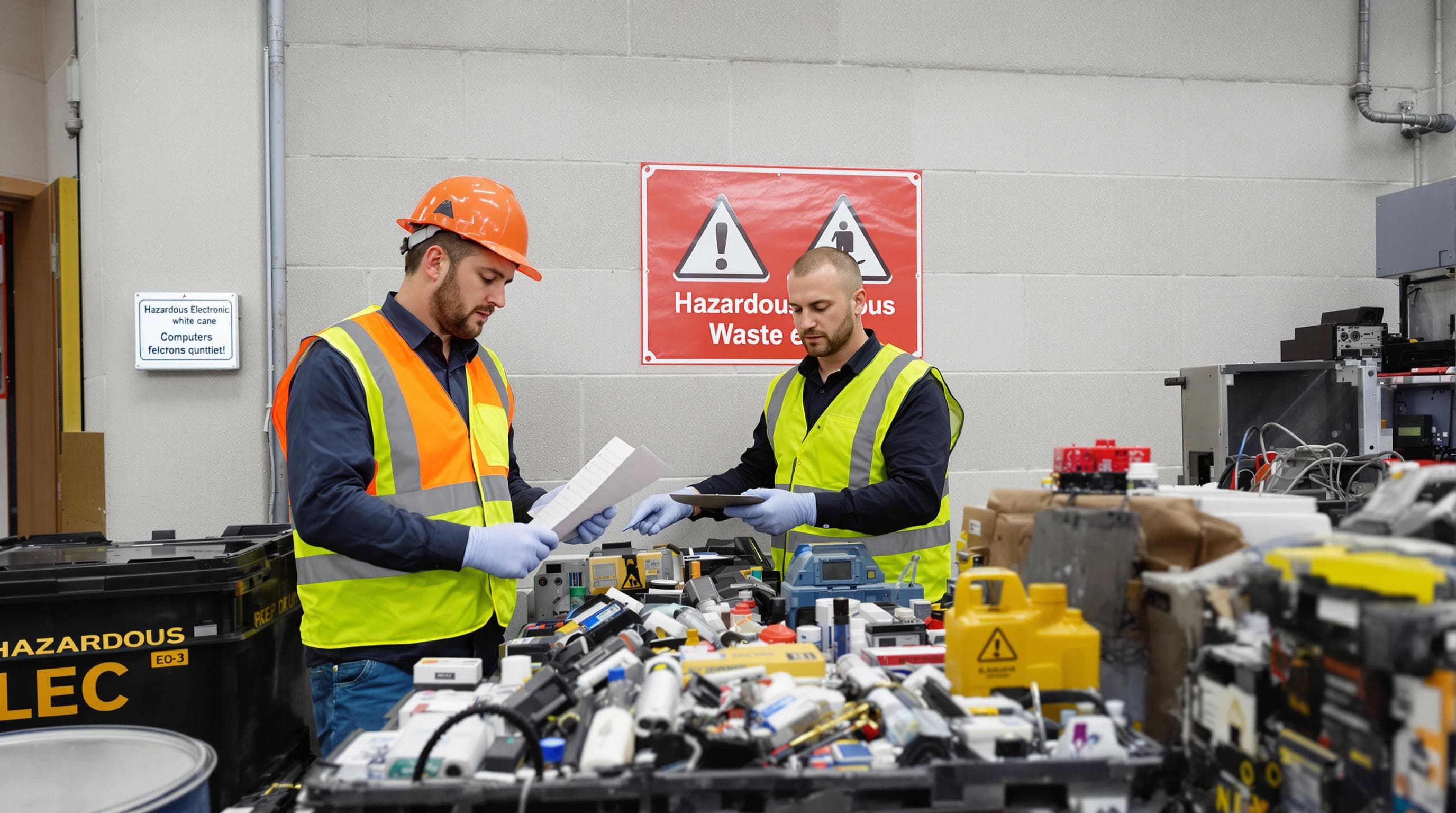
Technician classifying hazardous waste in industrial facility setting

Documentation and Reporting Requirements

Comprehensive documentation represents a fundamental compliance requirement. The National Conference of State Legislatures emphasizes the critical nature of maintaining precise records throughout the waste management lifecycle. Businesses must implement systematic documentation processes that track waste from generation through transportation and final disposal.

Essential documentation elements include:

  • Detailed waste inventory logs
  • Transportation manifests
  • Disposal certificates
  • Environmental impact assessments

Digital record-keeping systems can significantly streamline compliance efforts, providing real-time tracking and simplified reporting mechanisms. For businesses seeking additional guidance on managing confidential documentation related to waste management, our comprehensive documentation guide offers practical strategies.

Training and Organizational Preparedness

Effective hazardous waste compliance extends beyond technical processes to encompass comprehensive organizational training. Businesses must develop structured training programmes that educate employees about regulatory requirements, safety protocols, and proper handling procedures.

Key training focus areas include:

  • Hazardous material identification
  • Safe handling techniques
  • Emergency response protocols
  • Regulatory update awareness

Successful compliance requires a cultural commitment to environmental responsibility. Organizations must foster an organizational mindset that views hazardous waste management as a critical operational priority rather than a mere regulatory obligation.

By implementing these strategic compliance steps, UK businesses can transform hazardous waste management from a potential liability into an opportunity for demonstrating environmental stewardship and operational excellence. Proactive engagement with regulatory requirements not only mitigates legal risks but also contributes to broader sustainability objectives.

To help clarify the core compliance actions, the following table summarises the main steps UK businesses need to follow for hazardous waste regulatory compliance in 2025:

Compliance Step Description
Waste Identification & Classification Systematically identifying and classifying all waste streams
Documentation & Reporting Maintaining records from generation to disposal and submitting required reports
Staff Training Educating employees on handling, safety, and regulations
Use of Qualified Contractors Ensuring contractors are licensed and compliant
Implementation of Safe Disposal Applying appropriate containment, treatment, and certified disposal methods

Safe Disposal Methods for Hazardous Materials

Safe disposal of hazardous materials represents a critical responsibility for UK businesses, requiring meticulous planning, specialized techniques, and stringent adherence to regulatory standards. The complexity of managing potentially dangerous waste demands comprehensive strategies that protect both environmental and human health.

Containment and Preliminary Treatment Protocols

Before disposal, businesses must implement robust containment strategies. According to the Occupational Safety and Health Administration, preliminary treatment involves neutralizing or deactivating chemical components to reduce potential environmental risks. This process requires specialized knowledge and equipment to ensure complete neutralization.

Key preliminary treatment considerations include:

  • Chemical stabilization
  • Neutralization of reactive compounds
  • Segregation of incompatible materials
  • Reduction of hazardous material concentrations

Professional assessment of waste characteristics is crucial. Different materials require unique neutralization approaches, making expert consultation essential for effective preliminary treatment.

Certified Disposal and Transportation Procedures

The Environmental Protection Agency emphasizes the critical importance of using licensed hazardous waste contractors for proper disposal. Businesses must engage certified waste management professionals who understand complex regulatory requirements and possess specialized transportation infrastructure.

Critical transportation and disposal requirements include:

  • Sealed containment systems
  • Detailed transportation manifests
  • GPS tracking of hazardous material shipments
  • Compliance with transportation safety regulations

For businesses seeking comprehensive guidance on navigating these complex disposal processes, our detailed hazardous waste disposal guide provides essential insights and practical recommendations.

To offer a clear view of available hazardous waste treatment and disposal methods, the table below compares key approaches discussed in this section:

Disposal Method Key Features
Containment & Preliminary Treatment Chemical neutralisation, stabilisation, segregation
Certified Disposal & Transport Licensed contractor, sealed systems, legal manifests
Advanced Treatment Technologies Thermal destruction, filtration, chemical decomposition

Advanced Treatment and Environmental Protection

Modern hazardous waste disposal extends beyond simple removal, incorporating advanced treatment methodologies that prioritize environmental protection. Cutting-edge technologies enable more sustainable approaches to managing potentially dangerous materials.

Advanced treatment strategies include:

  • Thermal destruction processes
  • Chemical decomposition techniques
  • Advanced filtration systems
  • Molecular transformation technologies

These sophisticated approaches transform hazardous waste from a potential environmental threat into a manageable resource. Organizations must invest in continuous technological upgrades and staff training to implement these advanced disposal methodologies effectively.

Successful hazardous waste disposal requires a holistic approach that combines regulatory compliance, technological innovation, and a fundamental commitment to environmental stewardship. By implementing comprehensive disposal strategies, UK businesses can mitigate potential risks while demonstrating responsible environmental management practices.

Choosing a Licensed Hazardous Waste Contractor

Selecting an appropriate licensed hazardous waste contractor represents a critical decision for UK businesses in 2025. This process extends far beyond a simple service procurement and involves comprehensive risk management, regulatory compliance, and environmental responsibility.

Essential Contractor Qualifications

Businesses must conduct thorough due diligence when evaluating potential hazardous waste contractors. According to the Environmental Protection Agency, organizations remain responsible for their waste from ‘cradle to grave,’ making contractor selection a paramount consideration.

Key qualification criteria include:

  • Current and valid environmental licensing
  • Proven track record of regulatory compliance
  • Comprehensive insurance coverage
  • Specialized technical expertise
  • Robust safety management systems

Professional certification and accreditation serve as fundamental indicators of a contractor’s capability. Businesses should request and independently verify all relevant documentation, ensuring the contractor meets stringent industry standards.

Evaluation and Selection Methodology

The Journal of Chemical Health & Safety recommends a multifaceted approach to contractor assessment. This involves examining not just compliance credentials, but also evaluating operational capabilities, technological infrastructure, and environmental commitment.

Critical evaluation parameters include:

  • Disposal technique sophistication
  • Environmental impact mitigation strategies
  • Technological capabilities
  • Cost-effectiveness
  • Responsiveness and communication protocols

For businesses seeking structured guidance through this complex selection process, our comprehensive disposal guide offers detailed insights and practical recommendations.

Long-Term Partnership Considerations

Successful hazardous waste management transcends transactional relationships. Organizations should view contractor selection as establishing a strategic partnership focused on environmental stewardship and regulatory compliance.

Long-term partnership factors include:

  • Continuous improvement commitment
  • Transparency in waste tracking
  • Proactive regulatory adaptation
  • Collaborative risk management
  • Shared sustainability objectives

Businesses must prioritize contractors demonstrating not just technical competence, but a genuine commitment to environmental protection. This approach transforms hazardous waste management from a regulatory requirement into a collaborative environmental strategy.

The selection of a licensed hazardous waste contractor represents a nuanced decision requiring comprehensive evaluation. By implementing a rigorous, multidimensional selection process, UK businesses can ensure regulatory compliance, minimize environmental risks, and contribute to broader sustainability objectives.

Frequently Asked Questions

What are the key changes to hazardous waste regulations in 2025?

The hazardous waste regulations in the UK are becoming stricter in 2025, introducing more rigorous checks, reporting rules, and disposal standards to ensure businesses manage hazardous materials responsibly and protect public health and the environment.

How can businesses ensure compliance with hazardous waste regulations?

To ensure compliance, businesses must accurately classify their waste, maintain detailed documentation, provide staff training on hazardous materials, and choose certified contractors for disposal. Implementing robust internal processes helps mitigate the risk of penalties and legal issues.

What penalties can businesses face for non-compliance with hazardous waste regulations?

Non-compliance can result in financial penalties reaching tens of thousands of pounds, as well as potential legal action, which may include criminal charges depending on the severity of the violation.

What are the safe disposal methods for hazardous materials?

Safe disposal methods include containment and preliminary treatment to neutralise harmful substances, using certified disposal contractors for proper and legal disposal, and implementing advanced treatment technologies that prioritise environmental protection.

Transform Your Hazardous Waste Compliance Into a Competitive Advantage

Struggling to keep up with the strict 2025 hazardous waste regulations and feeling the pressure of heavy penalties for even a small documentation slip? The latest rules demand far more than simply ticking a box. They require you to stay on top of accurate waste classification, transparent reporting, and the safe handling of every hazardous material your business produces. If the thought of getting something wrong keeps you up at night, you are not alone.

Managing these demands does not need to add chaos to your daily operations. At Venture Waste, we help keep your business fully protected and prepared. Find out how our waste collection network for UK businesses in 2025 can simplify your compliance journey. Our tailored solutions mean you can hand over the burden of documentation, collection, and lawful disposal so you always stay ahead of the rules.

https://venturewaste.co.uk

Why wait and risk costly fines or legal trouble? Visit Venture Waste Management and see how simply booking our services can solve your hazardous waste challenges. Book now to make compliance easier and give your business the confidence it deserves.

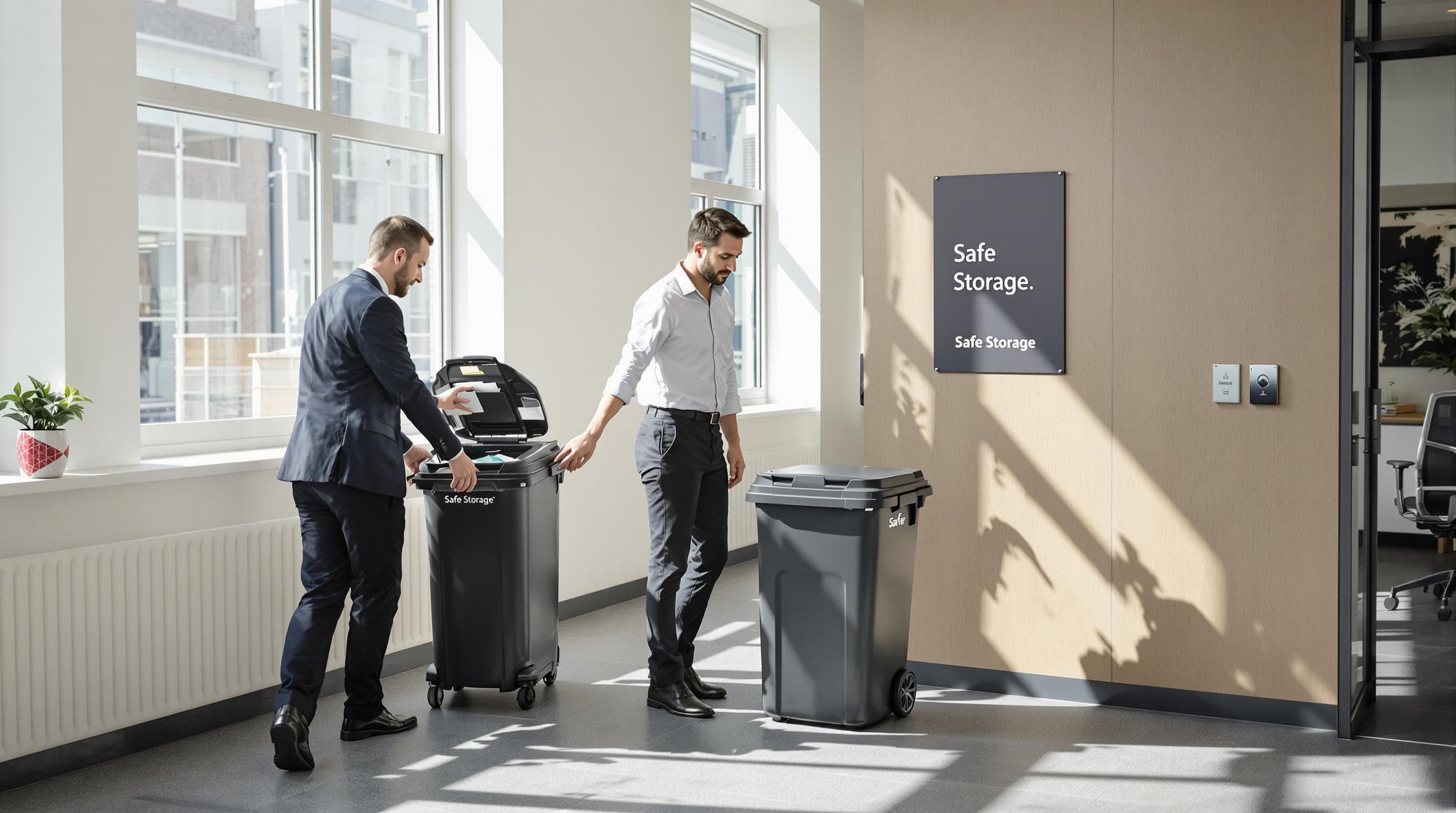
Employees using secure confidential waste bin in modern office

How to Store Confidential Waste Safely in 2025

Employees using secure confidential waste bin in modern office

Securing confidential waste will be non-negotiable for British businesses in 2025. Data breaches cost UK companies an average of £3.4 million each and even a single slip in storage can unleash reputational damage. Yet, the real surprise lies in how simple oversights, like using ordinary bins instead of lockable, tamper-proof containers, are where most violations begin. The strongest line of defence is not expensive tech upgrades but surprisingly practical steps you can act on now.

Table of Contents

Quick Summary

Takeaway Explanation
Implement robust destruction protocols Businesses must establish stringent protocols for the secure destruction of both paper-based and electronic confidential waste to prevent data breaches.
Adopt secure physical storage solutions Utilise locked and tamper-evident containers in controlled storage environments to protect confidential waste from unauthorized access.
Invest in access control and monitoring systems Use advanced access controls, such as biometric systems and CCTV surveillance, to monitor and restrict access to sensitive waste storage locations.
Prioritise staff training and compliance Regularly train employees on secure waste handling and the importance of compliance with data protection regulations to mitigate risks of breaches.
Select appropriate storage solutions Choose high-quality storage containers suited to the specific needs of your sector to ensure secure management and integration with destruction processes.

Infographic showing best practices for storing confidential waste safely

Understanding Types of Confidential Waste

Confidential waste represents a critical concern for businesses seeking to protect sensitive information and maintain regulatory compliance. Learn more about confidential waste management to understand the nuanced landscape of data protection and secure disposal.

Paper Based Confidential Materials

Paper documents remain one of the most common forms of confidential waste. These materials include financial records, employee files, medical documentation, legal contracts, and personal identification documents. According to research from the Information Commissioner’s Office, businesses must implement robust destruction protocols for paper-based confidential waste to prevent potential data breaches.

Typical paper-based confidential materials encompass:

  • Bank statements and financial reports
  • Medical patient records
  • Employee personnel files
  • Legal contracts and agreements
  • Sensitive business correspondence
  • Client proposal documents
  • Academic transcripts and student records

Electronic and Digital Confidential Waste

In the digital age, electronic confidential waste presents increasingly complex challenges for secure management. This category includes hard drives, USB storage devices, computer servers, backup tapes, smartphones, tablets, and other digital storage media containing sensitive electronic information. Commercial waste experts note that electronic waste requires specialized destruction techniques to ensure complete data elimination.

Electronic confidential waste typically involves:

  • Computer hard drives
  • Solid-state drives
  • Backup storage devices
  • Cloud storage backups
  • Smartphones with corporate data
  • Tablets with sensitive information
  • External hard drives and USB devices
  • Digital cameras and memory cards

Specialized Confidential Waste Categories

Beyond traditional paper and electronic formats, specialized confidential waste includes unique materials requiring careful handling. These categories demand specific disposal protocols to maintain data integrity and legal compliance. Healthcare facilities, research institutions, and government organizations often manage these specialized waste streams with heightened security measures.

Specialized confidential waste categories include:

  • Medical imaging films
  • Prototype design documents
  • Research and development materials
  • Pharmaceutical research records
  • Classified government documents
  • Security access cards
  • Biometric data storage devices

Understanding the diverse landscape of confidential waste is crucial for implementing comprehensive security strategies. Each waste type requires tailored destruction methods to prevent potential information leaks and maintain regulatory compliance. Businesses must develop nuanced approaches that address the specific characteristics of different confidential waste streams, ensuring complete and secure elimination of sensitive data across all platforms.

To help distinguish between the main types of confidential waste discussed above, the following summary table highlights typical examples from each category.

Category Typical Examples
Paper Based Bank statements, employee files, legal contracts, medical records, proposals
Electronic & Digital Hard drives, SSDs, backup devices, smartphones, tablets, USB drives
Specialized Medical imaging, prototypes, R&D materials, classified documents, access cards

Best Practices for Secure Waste Storage

Securing confidential waste storage is a critical responsibility for businesses aiming to protect sensitive information and maintain regulatory compliance. Learn more about confidential waste risk management to develop comprehensive protection strategies.

Secure Physical Storage Solutions

Physical security forms the foundation of effective confidential waste management. According to research from the UK’s Information Commissioner’s Office, businesses must implement robust physical storage measures to prevent unauthorized access and potential data breaches.

Key physical storage requirements include:

  • Locked, tamper-evident containers with restricted access
  • Secure storage rooms with controlled entry points
  • Limited personnel authorization for waste storage areas
  • Clearly marked storage zones with restricted access signage
  • Climate-controlled environments to prevent document degradation
  • Separate storage areas for different types of confidential waste

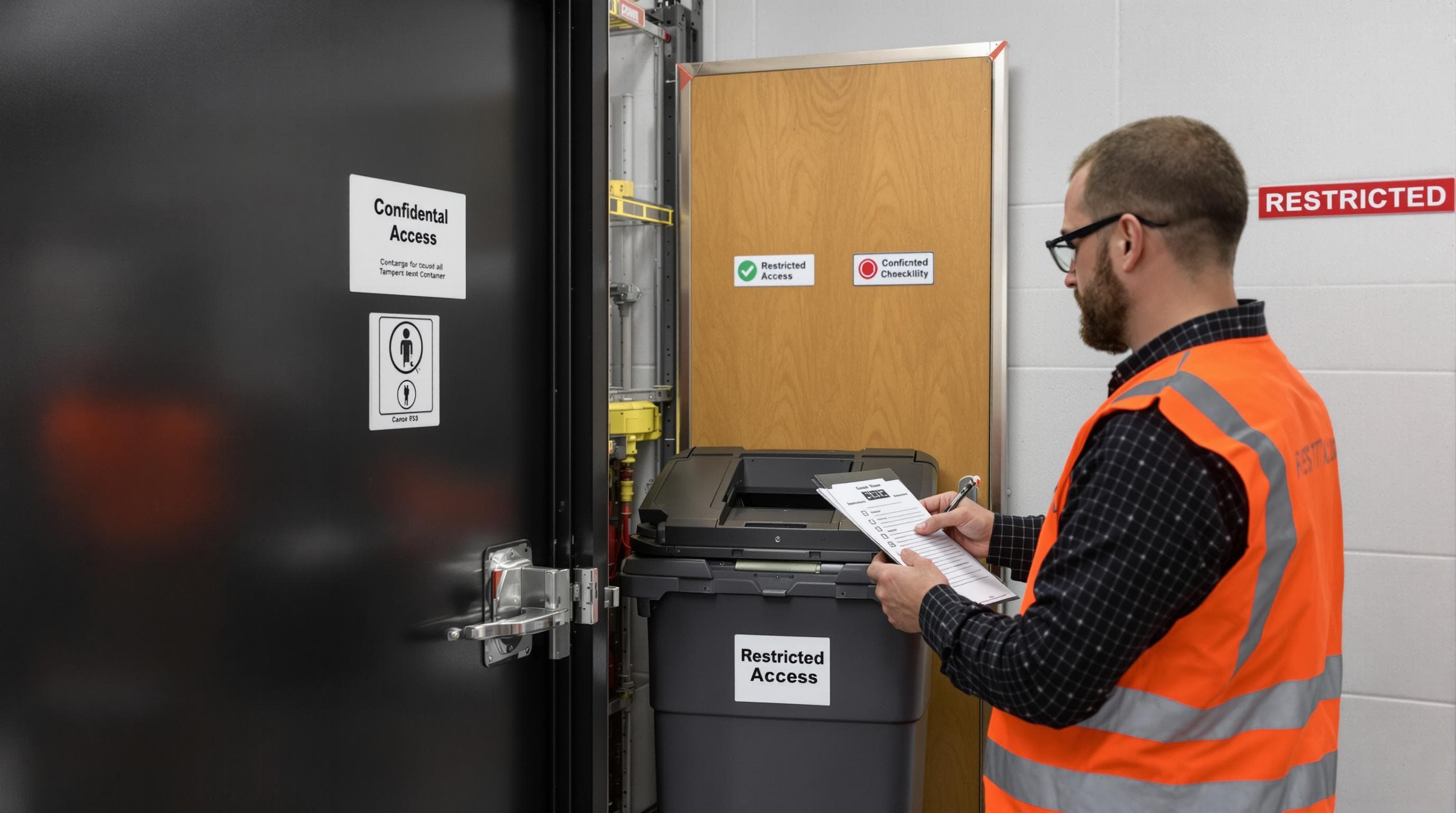
Staff locking confidential waste container in secure storage area

Access Control and Monitoring Systems

Implementing sophisticated access control mechanisms is crucial for protecting confidential waste. Commercial waste security experts recommend comprehensive monitoring systems that track and restrict access to sensitive waste storage locations.

Essential access control strategies include:

  • Biometric access controls (fingerprint or retinal scanning)
  • Electronic key card entry systems
  • 24-hour CCTV surveillance
  • Detailed access logs and visitor management protocols
  • Regular security audits of storage facilities
  • Multi-factor authentication for waste handling personnel

Staff Training and Compliance Protocols

Human factors play a significant role in maintaining secure confidential waste storage. Organizations must develop comprehensive training programs that educate employees about the critical importance of secure waste management.

Critical training components should address:

  • Proper handling and storage procedures
  • Recognition of sensitive document types
  • Understanding legal and regulatory requirements
  • Immediate reporting of potential security breaches
  • Consistent adherence to organizational waste management policies
  • Regular refresher courses on data protection protocols

To quickly compare the essential best practices for secure confidential waste storage, see the table below.

Best Practice Area Key Measures/Features
Physical Storage Locked containers, secure rooms, access restriction, climate control, separation by waste type
Access Control & Monitoring Biometric access, key cards, CCTV, access logs, audits, multi-factor authentication
Staff Training & Compliance Proper handling, legal awareness, incident reporting, policy adherence, refresher training

Effective confidential waste storage requires a multifaceted approach that combines physical security, technological solutions, and human awareness. Businesses must continuously evaluate and update their storage strategies to address evolving security challenges and regulatory requirements. By implementing comprehensive protection measures, organizations can mitigate risks associated with sensitive information exposure and demonstrate a commitment to robust data protection practices.

Confidential waste management in the United Kingdom involves complex legal frameworks that businesses must navigate carefully. Explore essential waste disposal legal requirements to ensure comprehensive regulatory compliance and mitigate potential legal risks.

Data Protection Regulatory Framework

The legal landscape for confidential waste management is primarily governed by the UK General Data Protection Regulation (UK GDPR) and the Data Protection Act 2018. According to the Information Commissioner’s Office, organizations have a legal obligation to implement robust mechanisms that prevent unauthorized access or disclosure of sensitive information during storage and disposal processes.

Key regulatory compliance requirements include:

  • Implementing secure waste destruction protocols
  • Maintaining detailed documentation of waste management procedures
  • Ensuring comprehensive staff training on data protection
  • Conducting regular internal audits of confidential waste handling
  • Developing clear retention and destruction policies
  • Creating accountability mechanisms for data protection

Environmental and Waste Management Regulations

Beyond data protection, businesses must adhere to environmental regulations that govern waste management. Research from the Environment Agency highlights the critical importance of responsible waste handling across various sectors.

Environmental compliance considerations encompass:

  • Adhering to the Environmental Protection Act 1990
  • Implementing proper waste segregation techniques
  • Maintaining accurate waste transfer documentation
  • Ensuring environmentally responsible disposal methods
  • Minimizing potential environmental contamination risks
  • Demonstrating a commitment to sustainable waste management practices

Different industry sectors face unique legal requirements for confidential waste management. Healthcare, financial services, legal practices, and government organizations must develop specialized compliance strategies that address their specific regulatory environments.

Sector-specific legal obligations typically involve:

  • Healthcare sector: Strict patient confidentiality regulations
  • Financial services: Comprehensive financial record protection
  • Legal practices: Attorney-client privilege preservation
  • Government agencies: National security information protection
  • Research institutions: Intellectual property safeguarding
  • Educational establishments: Student record confidentiality

Successful legal compliance in confidential waste management requires a proactive, multifaceted approach. Businesses must stay informed about evolving regulatory landscapes, invest in comprehensive staff training, and develop robust internal processes that consistently meet or exceed legal standards. By prioritizing legal compliance, organizations can protect sensitive information, mitigate potential risks, and demonstrate their commitment to responsible data management practices.

Choosing the Right Storage Solutions for Your Business

Selecting appropriate confidential waste storage solutions is crucial for businesses seeking to protect sensitive information and maintain regulatory compliance. Check out our comprehensive confidential waste solutions guide to understand the most effective storage strategies for your organization.

Container Selection and Specifications

Choosing the right storage containers is fundamental to secure confidential waste management. According to the Information Commissioner’s Office, businesses must invest in high-quality storage solutions that prevent unauthorized access and potential data breaches.

Key container selection criteria include:

  • Lockable containers with tamper-evident seals
  • Robust construction using durable materials
  • Size appropriate to your business volume
  • Color-coded systems for different waste types
  • Compatibility with secure destruction processes
  • Resistance to environmental degradation
  • Easy integration with existing waste management systems

Specialized Storage Solutions by Sector

Research from the UK Health and Safety Executive highlights the importance of sector-specific storage solutions that address unique confidential waste management challenges. Different industries require tailored approaches to ensure comprehensive protection of sensitive information.

Sector-specific storage considerations:

  • Healthcare: Secure medical record containers with infection control features
  • Financial Services: High-security lockboxes for financial documents
  • Legal Firms: Specialized cabinets with advanced security mechanisms
  • Educational Institutions: Confidential waste stations with restricted access
  • Government Agencies: Multi-layered security storage systems
  • Research Facilities: Controlled-environment storage for sensitive research materials

Digital and Physical Storage Integration

Modern confidential waste management requires a holistic approach that seamlessly integrates digital tracking with physical storage solutions. Government guidance recommends implementing comprehensive tracking and monitoring systems to enhance security and compliance.

Integrated storage solution features:

  • Digital inventory management systems
  • RFID tracking for physical containers
  • Real-time access logging
  • Automated destruction scheduling
  • Comprehensive audit trail capabilities
  • Secure chain of custody documentation
  • Integration with compliance management software

Effective confidential waste storage is not a one-size-fits-all solution. Businesses must carefully assess their specific needs, regulatory requirements, and operational constraints when selecting storage solutions. By investing in high-quality, sector-appropriate storage systems and implementing robust tracking mechanisms, organizations can significantly mitigate risks associated with sensitive information exposure and demonstrate a commitment to comprehensive data protection practices.

Frequently Asked Questions

What is confidential waste?

Confidential waste refers to any materials containing sensitive information, such as paper documents or electronic data that require secure disposal to prevent unauthorised access and breaches.

How can businesses securely store confidential waste?

Businesses can securely store confidential waste by using locked and tamper-evident containers, implementing access control mechanisms, and ensuring restricted access to storage areas.

In the UK, businesses must comply with the UK GDPR and the Data Protection Act 2018, which require implementing secure destruction protocols and maintaining detailed documentation for waste management practices.

Why is staff training important for managing confidential waste?

Staff training is crucial for ensuring that employees understand proper waste handling procedures, recognise sensitive document types, and adhere to legal and compliance requirements, thereby reducing the risk of accidental breaches.

Protect Your Confidential Waste with Secure Solutions from Venture Waste

Are you worried about the risk of data breaches or struggling to make sense of the latest secure storage requirements that the article has highlighted? As discussed above, simple oversights in storing confidential waste can lead to costly mistakes and serious compliance issues. If you want peace of mind and practical support, our dedicated confidential waste services deliver the secure containers, scheduled collections, and professional document shredding your business needs—no matter the industry or waste type.

https://venturewaste.co.uk

Take action now and avoid sleepless nights over compliance. Visit Venture Waste for tailored solutions that guarantee legal and environmental protection for your sensitive materials. Book your confidential waste collection today or explore our waste collection network for UK businesses to see how effortless compliance can be.

Modern UK office team sorting business waste with compliance signage

Waste Handling Best Practices for UK Businesses in 2025

Modern UK office team sorting business waste with compliance signage

Waste management rules for UK businesses are changing faster than ever. Starting from March 2025, strict new regulations demand separate collection of all business waste streams, with stiff penalties for those who slip up. You might think sorting rubbish is just a box-ticking exercise. The real surprise is how these changes could cut your disposal costs by up to 30 percent and transform the way your staff and partners work together on sustainability.

Table of Contents

Quick Summary

Takeaway Explanation
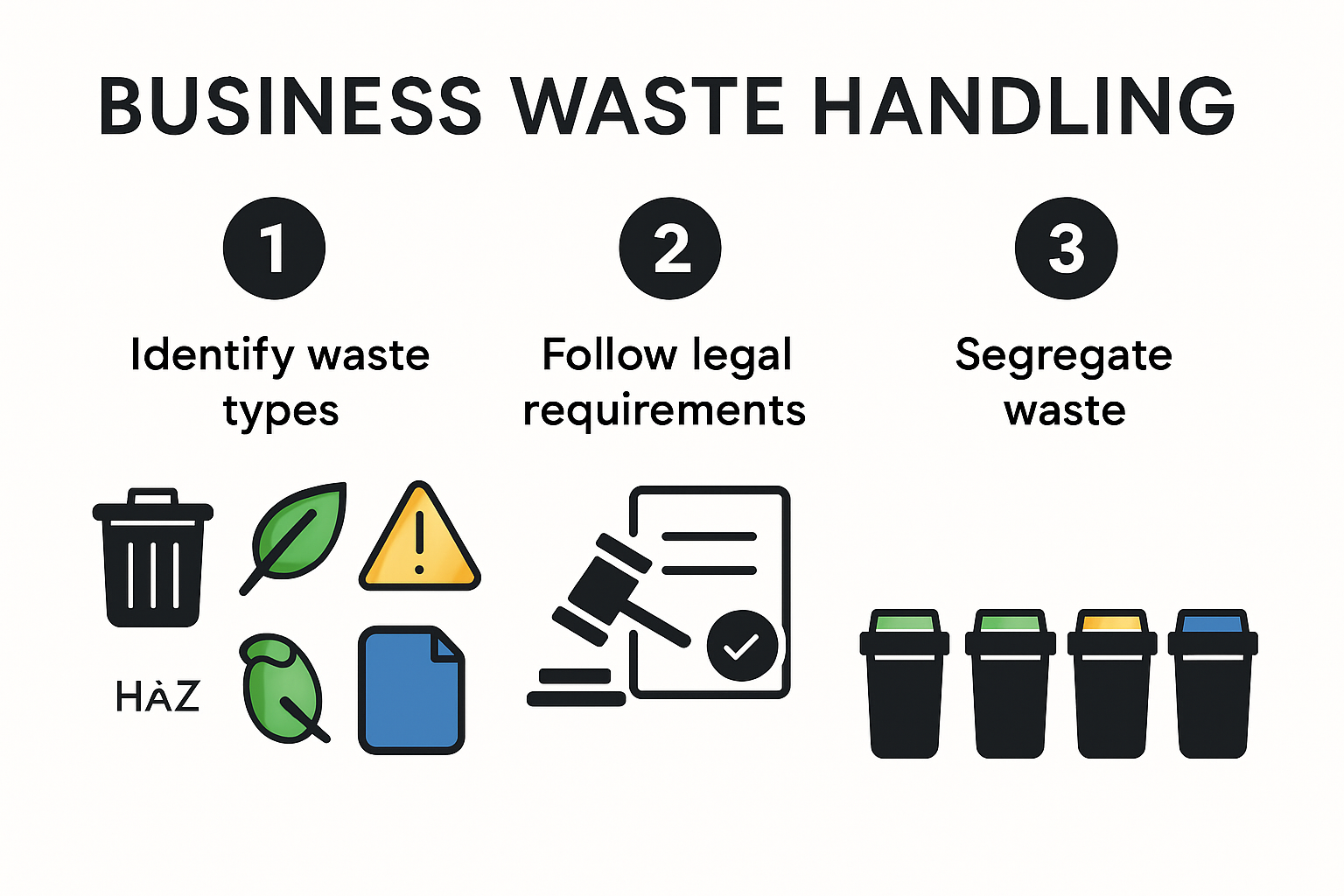
Understand Waste Types and Legal Compliance UK businesses must classify waste into categories such as general, recyclable, food, and hazardous waste, following strict regulations effective from March 2025 to avoid penalties.
Implement Safe Waste Segregation Systems Utilise colour-coded containers for different waste types to enhance segregation, and ensure staff are thoroughly trained in identification and disposal protocols to minimise cross-contamination risks.
Choose Reliable Waste Management Partners Conduct due diligence on potential waste management providers, ensuring they are compliant, equipped with necessary certifications, and capable of offering comprehensive waste handling services.
Focus on Hazardous and Confidential Waste Management Develop advanced management strategies for hazardous and confidential waste, including secure destruction protocols and meticulous tracking to mitigate environmental and legal risks.

Infographic summarizing UK business waste handling best practices

Navigating the complex landscape of waste management requires UK businesses to understand the intricate legal requirements and waste classification systems. The waste management guidelines for 2025 introduce significant changes that demand comprehensive attention from businesses across various sectors.

Classification of Business Waste

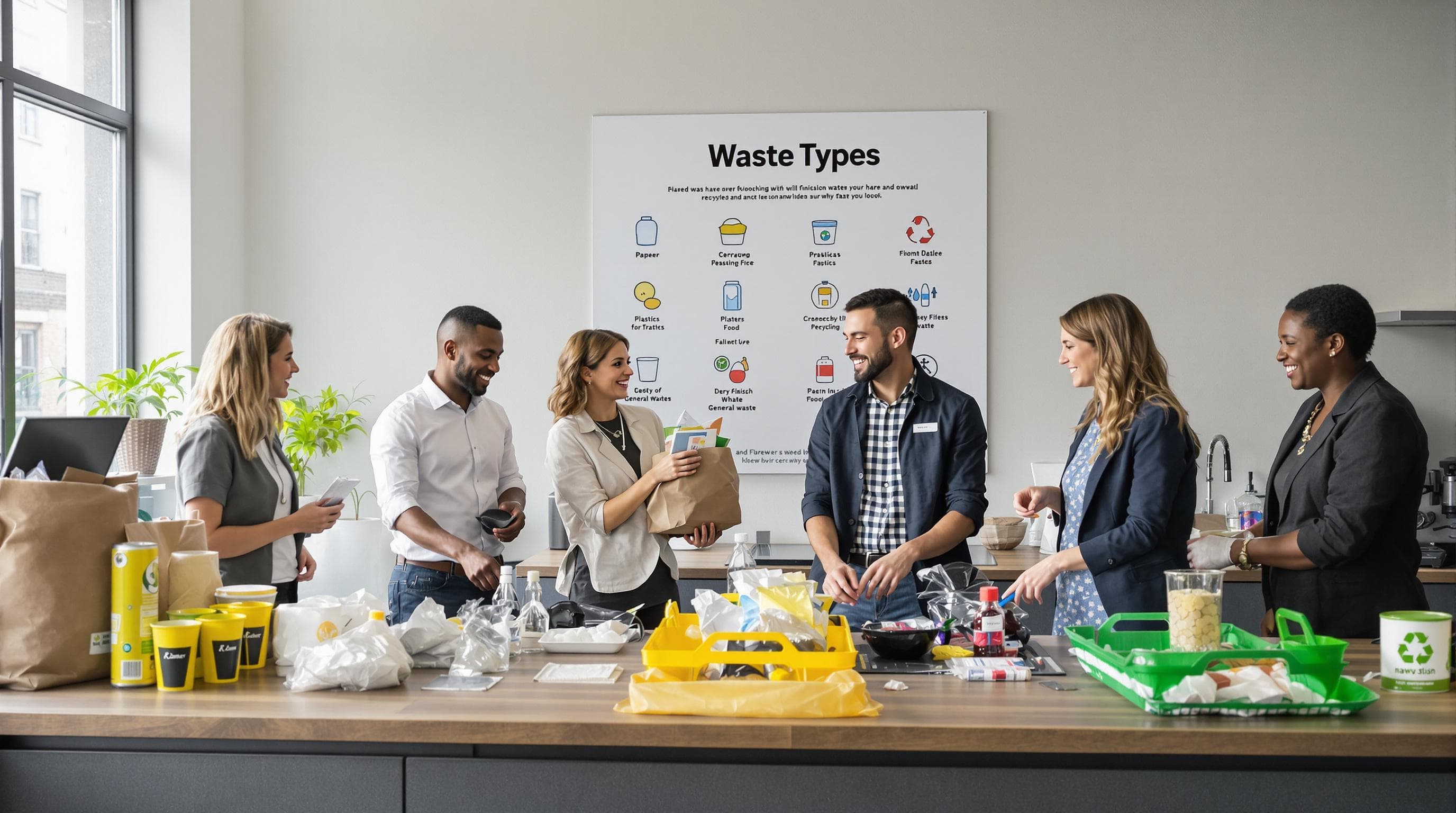
Waste types are not uniform and require precise categorisation to ensure proper handling and disposal. According to gov.uk environmental regulations, businesses must distinguish between several critical waste categories:

  • General Waste: Non-hazardous materials that cannot be recycled
  • Recyclable Waste: Materials like paper, cardboard, plastics, and metals
  • Food Waste: Organic materials from commercial food preparation
  • Hazardous Waste: Materials containing potentially harmful substances

The Separation of Waste (England) Regulations 2025 mandate that businesses must collect these waste streams separately. Research from the UK Environment Agency indicates that businesses failing to comply can face substantial financial penalties and potential legal consequences.

Effective from 31 March 2025, new regulations introduce stringent waste handling protocols. Legislation from gov.uk outlines critical compliance standards:

  1. Mandatory waste stream separation for most businesses
  2. Special provisions for micro-firms with fewer than 10 full-time employees
  3. Documented waste management processes
  4. Regular waste audits and reporting

Micro-firms receive a temporary exemption until 31 March 2027, providing additional time to adapt to these comprehensive waste management requirements. Environmental experts recommend businesses start preparing early to ensure smooth transition and avoid potential regulatory challenges.

Understanding these waste types and legal requirements is not just about compliance but represents a critical step towards sustainable business practices. By implementing robust waste management strategies, businesses can reduce environmental impact, minimize disposal costs, and demonstrate corporate responsibility.

For businesses seeking detailed guidance, our comprehensive waste management step-by-step guide provides in-depth insights into navigating these complex regulatory landscapes.

To clarify the main business waste categories and their definitions, see the table below:

Waste Category Definition
General Waste Non-hazardous materials that cannot be recycled
Recyclable Waste Materials like paper, cardboard, plastics, and metals
Food Waste Organic materials from commercial food preparation
Hazardous Waste Materials containing potentially harmful substances

Practical Steps for Safe Waste Segregation

Safe waste segregation is a critical component of responsible business waste management in the UK. Waste management experts emphasize that proper segregation not only ensures legal compliance but also significantly reduces environmental impact and potential operational risks.

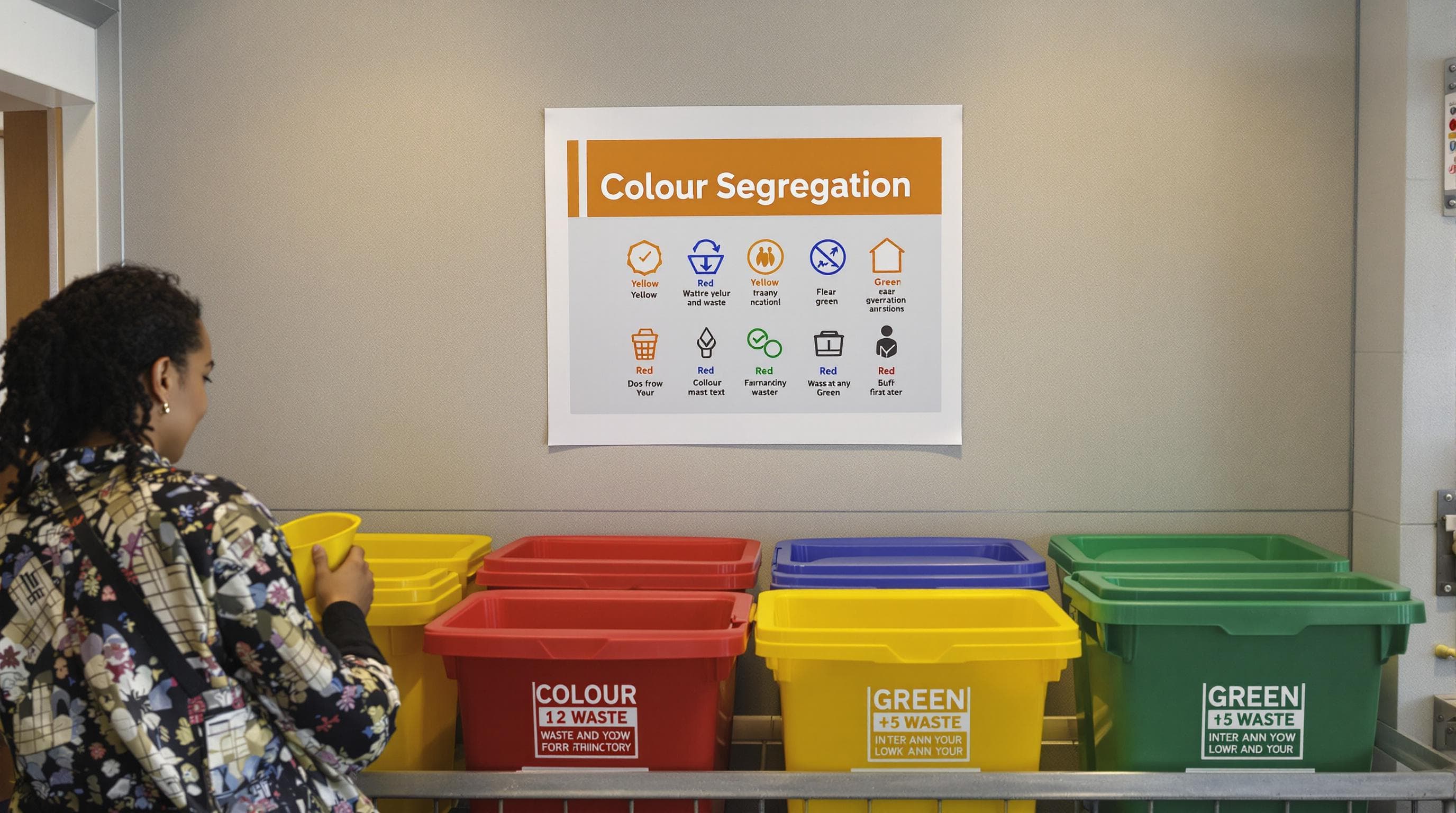
Color-Coded Waste Containment Systems

Implementing a robust color-coded waste segregation system is fundamental to effective waste management. According to the NHS Clinical Waste Strategy, businesses should adopt clear color-coded containers to prevent cross-contamination and simplify disposal processes:

  • Yellow Containers: Infectious or high-risk waste requiring specialized treatment
  • Orange Containers: Clinical or potentially hazardous materials
  • Red Containers: Highly infectious or contaminated waste
  • Blue Containers: Recyclable dry materials
  • Green Containers: General non-hazardous waste

This systematic approach allows for precise waste tracking and ensures that different waste types are handled appropriately. Business climate research indicates that businesses adopting structured waste segregation can reduce disposal costs by up to 30%.

Employees sort waste into colour-coded bins with segregation poster

Below is a summary table of colour-coded waste containers and their designated waste types:

Container Colour Waste Type
Yellow Infectious or high-risk waste requiring specialised treatment
Orange Clinical or potentially hazardous materials
Red Highly infectious or contaminated waste
Blue Recyclable dry materials
Green General non-hazardous waste

Comprehensive Staff Training and Protocols

Successful waste segregation relies heavily on staff understanding and consistent implementation. Waste management guidelines recommend developing comprehensive training programs that cover:

  1. Identifying different waste categories
  2. Understanding proper disposal techniques
  3. Recognizing potential cross-contamination risks
  4. Documenting waste management procedures

The waste hierarchy principle prioritizes waste management strategies: prevention, reuse, recycling, recovery, and final disposal. Staff training should emphasize reducing waste generation as the primary goal, with segregation serving as a critical secondary strategy.

Businesses must create clear, visual guidelines and provide regular refresher training to ensure ongoing compliance. Interactive workshops, poster displays, and digital training modules can help reinforce these critical waste management practices.

For businesses seeking more detailed guidance on navigating these complex waste segregation requirements, our comprehensive waste management guide offers in-depth insights and practical strategies to streamline your waste handling processes.

Choosing Reliable Waste Management Partners

Selecting the right waste management partner is a critical decision for UK businesses seeking to maintain legal compliance, environmental responsibility, and operational efficiency. Waste management experts emphasize that the choice of a waste management partner can significantly impact a company’s sustainability performance and regulatory adherence.

Due Diligence and Compliance Verification

Before engaging with a waste management service, businesses must conduct comprehensive due diligence. According to the Health and Safety Executive, key evaluation criteria should include:

  • Regulatory Compliance: Verify the company’s waste management licenses and environmental permits
  • Certification Standards: Check for ISO 14001 environmental management certification
  • Waste Tracking: Ensure transparent documentation of waste disposal processes
  • Environmental Credentials: Assess the partner’s commitment to sustainable waste management practices

Local Government Association research recommends that businesses prioritize partners who demonstrate a comprehensive understanding of the waste hierarchy and can provide detailed waste reduction strategies.

Evaluating Waste Management Service Capabilities

Beyond basic compliance, businesses should assess potential waste management partners based on their comprehensive service capabilities. Waste and Resources Action Programme guidelines suggest examining:

  1. Range of waste stream handling capabilities
  2. Technology and infrastructure for waste processing
  3. Reporting and data management systems
  4. Flexibility in service delivery
  5. Cost-effectiveness and transparent pricing models

For businesses in specific regions seeking localized expertise, our comprehensive guide to waste management companies provides insights into regional service providers and their unique capabilities.

The right waste management partner should act as a strategic collaborator, helping businesses navigate complex regulatory landscapes while implementing sustainable waste reduction strategies. By carefully evaluating potential partners against rigorous criteria, businesses can establish long-term relationships that support their environmental and operational objectives.

Advanced Solutions for Hazardous and Confidential Waste

Navigating the complex landscape of hazardous and confidential waste management requires sophisticated strategies and meticulous attention to detail. Waste management experts emphasize that businesses must implement robust protocols to mitigate environmental and legal risks associated with these sensitive waste streams.

Hazardous Waste Classification and Management

Precise classification and handling of hazardous waste are paramount for legal compliance and environmental protection. According to the UK government’s Waste Duty of Care Code of Practice, businesses must adhere to strict guidelines:

  • Chemical Waste: Requires specialized containment and disposal processes
  • Electronic Waste: Demands specific recycling and material recovery techniques
  • Medical Waste: Necessitates sterilization and controlled incineration protocols
  • Industrial Byproducts: Requires detailed tracking and specialized treatment

NHS Clinical Waste Strategy research indicates that implementing advanced waste management techniques can reduce carbon emissions by up to 30% and generate significant cost savings.

The following table summarises types of hazardous waste and their specific handling requirements as discussed above:

Hazardous Waste Type Specific Handling Requirement
Chemical Waste Specialised containment and disposal processes
Electronic Waste Specific recycling and material recovery techniques
Medical Waste Sterilisation and controlled incineration protocols
Industrial Byproducts Detailed tracking and specialised treatment

Confidential Waste Destruction Protocols

Confidential waste management extends beyond simple paper shredding. University of Liverpool’s data protection guidelines recommend comprehensive destruction strategies:

  1. Implement secure chain-of-custody documentation
  2. Utilize cross-cut industrial shredding technologies
  3. Employ locked, monitored disposal containers
  4. Maintain detailed destruction certificates
  5. Conduct regular security audits of waste handling processes

For businesses seeking comprehensive guidance on managing these complex waste streams, our detailed hazardous waste disposal guide provides in-depth strategies and actionable insights.

Successful hazardous and confidential waste management requires a holistic approach that combines technological innovation, strict regulatory compliance, and a commitment to environmental responsibility. By investing in advanced waste handling solutions, businesses can protect sensitive information, minimize environmental impact, and demonstrate corporate integrity.

Frequently Asked Questions

What are the new waste management regulations for UK businesses in 2025?

Starting from March 2025, UK businesses are required to implement separate collection of all waste streams, including general, recyclable, food, and hazardous waste, to ensure compliance with new regulations.

How can businesses reduce disposal costs by implementing waste segregation?

By adopting effective waste segregation practices, businesses can decrease contamination rates and enhance recycling efficiency, potentially reducing disposal costs by up to 30%.

What steps should businesses take to train staff on waste segregation?

Businesses should develop comprehensive training programmes that cover waste identification, proper disposal techniques, and procedures to avoid cross-contamination, ensuring staff are well-informed and compliant with regulations.

Why is it important to choose reliable waste management partners?

Choosing reliable waste management partners ensures compliance with regulations, facilitates effective waste handling, and helps businesses implement sustainable practices, ultimately supporting their environmental goals.

Transform Your Business Waste Handling for 2025 Compliance

Are you worried about the pressure of meeting the new waste regulations coming in March 2025? Many business owners are concerned about legal risks, staff training and the need for reliable separation of waste streams as required in the latest guidelines. If you want to avoid penalties and streamline waste costs while making sustainable progress, now is the time to act. Discover how a professional partner can eliminate your worries about audits, contamination and missed collections. See first-hand how the right system can help your team sort waste confidently and stay ahead of the government’s waste management changes by visiting our Waste Collection Process in the UK for Businesses 2025 page for practical details tailored to your sector.

https://venturewaste.co.uk

Take your next step towards compliance and business efficiency today. Venture Waste Management offers confidential destruction, hazardous waste removal, food waste solutions and more, matched with a simple booking process. Join the growing number of responsible UK businesses who trust us to future-proof their waste handling. Book your tailored service, get best-practice advice and ensure compliance now at Venture Waste Management.

Office workers sorting different waste types into labeled bins

Domestic Waste Types in the UK: 2025 Guide for Businesses

Office workers sorting different waste types into labeled bins

Domestic waste in the UK is more complex than most people realise. Biodegradable waste alone makes up around 45 percent of all household rubbish. You might assume sorting bins is just about ticking a box for the council. The real surprise is that smart waste management can actually save businesses money and help them stand out, all while protecting the environment.

Table of Contents

Quick Summary

Takeaway Explanation
Understanding Waste Types is Crucial Businesses must comprehend various domestic waste categories, including biodegradable, recyclable, and non-recyclable waste, to develop effective management strategies and reduce environmental impact.
Specialized Waste Handling is Necessary Certain waste streams like hazardous and electronic waste (WEEE) require meticulous management and compliance with specific regulations to ensure safety and environmental protection.
Prioritize Compliance and Certification When selecting a waste management partner, businesses should ensure that potential providers have essential certifications like ISO 14001 and Waste Carrier License to avoid legal and financial repercussions.
Invest in Staff Training and Systems Implementing robust waste segregation systems and regular employee training on waste handling protocols is essential for minimizing environmental risks and enhancing operational efficiency.
Economic Benefits of Responsible Management Efficient waste management can not only fulfil regulatory obligations but also lead to cost savings and improved corporate sustainability, turning waste handling into a competitive advantage.

Understanding Main Domestic Waste Types

Domestic waste types represent a complex ecosystem of materials generated by households and businesses across the United Kingdom, each requiring specific handling and disposal strategies. Understanding these waste categories is crucial for effective waste management and environmental sustainability.

Categories of Domestic Waste

Domestic waste can be comprehensively classified into several primary categories that reflect the diverse materials produced in residential and commercial settings. According to WRAP UK, these categories typically include:

  • Biodegradable Waste: Organic materials that decompose naturally, such as food scraps, garden trimmings, and paper products. Research from the UK’s Office for National Statistics indicates that biodegradable waste constitutes approximately 45% of total household waste.
  • Recyclable Materials: Items like plastics, glass, metals, and certain paper products that can be processed and reused. In 2021, the UK generated approximately 6.4 million tonnes of potentially recyclable domestic waste.
  • Non-Recyclable Waste: Materials that cannot be recycled and are typically destined for landfill or incineration, including certain plastics, contaminated packaging, and complex composite materials.

Infographic showing main domestic waste types with UK examples

Composition and Environmental Impact

The composition of domestic waste reveals significant insights into consumption patterns and environmental challenges. DEFRA statistics demonstrate that UK households produce substantial quantities of waste annually, with food waste being a particularly critical concern. Approximately 9.5 million tonnes of food waste are generated each year, representing both an economic and environmental challenge.

Interestingly, the domestic waste landscape is evolving. Businesses and households are increasingly recognizing the importance of waste segregation and responsible disposal. This shift is driven by stringent environmental regulations, growing environmental consciousness, and the economic potential of recycling and waste management.

For businesses seeking comprehensive waste management solutions, our step-by-step waste management guide provides detailed insights into effective waste handling strategies.

Understanding domestic waste types is not merely an academic exercise but a practical necessity. By comprehending the nature, volume, and potential of different waste categories, businesses can develop more sustainable practices, reduce environmental impact, and potentially generate cost savings through efficient waste management approaches.

Below is a summary table that outlines the main categories of domestic waste, their typical contents, and key statistics mentioned in this section.

Waste Category Typical Contents UK Statistics/Notes
Biodegradable Waste Food scraps, garden trimmings, paper products ~45% of total household waste (ONS); 9.5m tonnes food waste/year
Recyclable Materials Plastics, glass, metals, paper 6.4 million tonnes (2021)
Non-Recyclable Waste Non-recyclable plastics, contaminated packaging Sent to landfill or incineration

Special Waste Streams for UK Businesses

UK businesses encounter numerous specialized waste streams that require meticulous management and distinct disposal protocols. These unique waste categories demand targeted strategies to ensure environmental compliance, workplace safety, and regulatory adherence.

Hazardous Waste Management

Hazardous waste represents a critical challenge for businesses across various sectors. According to Environment Agency regulations, hazardous waste includes materials that pose substantial risks to human health and environmental safety. These typically encompass:

  • Chemical Waste: Solvents, industrial chemicals, and reactive substances
  • Electronic Waste (WEEE): Computers, electrical equipment, and electronic components
  • Medical and Pharmaceutical Waste: Contaminated materials from healthcare settings

The Hazardous Waste (England and Wales) Regulations 2005 mandate strict protocols for businesses generating hazardous waste. Companies must classify, document, and dispose of these materials through specialized waste management channels, with comprehensive tracking from production to final disposal.

Specialized Industrial Waste Streams

Different industries generate unique waste types requiring targeted management approaches. DEFRA guidelines highlight sector-specific waste management requirements. Construction sites produce substantial volumes of inert materials like concrete and metal, while manufacturing facilities generate complex industrial waste streams involving metals, plastics, and chemical residues.

Electrical and electronic equipment waste demands particular attention. The Waste Electrical and Electronic Equipment (WEEE) Regulations require businesses to implement comprehensive recycling and disposal strategies, ensuring responsible management of technological waste.

Staff safely handling hazardous and electronic waste in business facility

For businesses seeking comprehensive guidance on managing these complex waste streams, our waste management definition resource provides detailed insights into regulatory compliance and best practices.

Navigating these specialized waste streams requires a strategic approach. Businesses must invest in employee training, implement robust waste segregation systems, and partner with certified waste management providers. By understanding and proactively managing these unique waste categories, companies can minimize environmental impact, reduce potential legal risks, and demonstrate commitment to sustainable operational practices.

Safe Disposal of Hazardous and WEEE

Safe disposal of hazardous waste and Waste Electrical and Electronic Equipment (WEEE) represents a critical responsibility for UK businesses, demanding stringent compliance with environmental regulations and workplace safety standards. The complexity of these waste streams requires specialized knowledge and precise handling protocols.

Regulatory Framework for WEEE Disposal

The Waste Electrical and Electronic Equipment (WEEE) Regulations 2013 establish comprehensive guidelines for businesses managing electronic waste. UK government regulations mandate that producers must finance the collection, treatment, and recycling of electronic waste, ensuring environmentally responsible disposal. These regulations cover a wide range of electronic items, including:

  • Computing Equipment: Computers, laptops, servers, and peripherals
  • Telecommunications Devices: Mobile phones, landline systems
  • Office Electronics: Printers, copiers, networking equipment

From 1 January 2025, businesses must adhere to new reporting requirements, using specific waste shipment codes for non-hazardous (Y49) and hazardous (A1181) electronic waste when transporting materials for recovery.

Hazardous Waste Management Protocols

Hazardous waste disposal demands meticulous attention to safety and environmental protection. The Environment Agency outlines strict guidelines for handling materials that pose potential risks to human health and environmental sustainability. The Separation of Waste (England) Regulations 2025 introduce more rigorous waste stream separation requirements, compelling businesses to implement sophisticated waste management systems.

Critical considerations for hazardous waste disposal include:

  • Proper classification and documentation
  • Specialized containment and storage
  • Certified disposal through approved waste management providers

Our comprehensive guide to WEEE waste provides businesses with in-depth insights into navigating these complex regulatory landscapes.

Businesses must recognize that safe disposal is not merely a legal obligation but a critical environmental responsibility. Improper handling of hazardous waste and electronic equipment can lead to significant environmental contamination, potential health risks, and substantial financial penalties. Implementing robust waste management strategies requires a multifaceted approach, including:

  • Regular staff training on waste handling protocols
  • Investment in specialized waste segregation systems
  • Partnerships with certified waste management providers
  • Continuous monitoring and documentation of waste streams

By prioritizing safe disposal practices, businesses can mitigate environmental risks, demonstrate corporate social responsibility, and contribute to broader sustainability goals. The evolving regulatory landscape demands proactive approach, continuous education, and a commitment to responsible waste management practices.

Below is a table summarising key requirements and recommendations for the safe disposal of hazardous waste and WEEE for UK businesses.

Requirement/Practice Purpose Reference/Notes
Proper classification and documentation Ensures compliance and traceability Hazardous Waste (England and Wales) Regulations 2005
Use of correct waste shipment codes For legal reporting and safe transport Codes: Y49 (non-hazardous), A1181 (hazardous), from 2025
Specialized containment and storage Prevents environmental contamination Environment Agency guidelines
Certified disposal providers Guarantees legal and safe final processing Environment Agency; must have Waste Carrier License
Staff training on protocols Minimises risks, improves compliance Ongoing training required
Regular monitoring and documentation Tracks compliance and continuous improvement Best practice

Choosing a Reliable Waste Management Partner

Selecting the right waste management partner represents a critical strategic decision for UK businesses, with far-reaching implications for environmental compliance, operational efficiency, and corporate sustainability. The complexity of modern waste management demands a thorough and systematic approach to partner selection.

Essential Compliance and Certification Criteria

When evaluating potential waste management providers, businesses must prioritize comprehensive regulatory compliance. The Environment Agency recommends assessing providers based on several key accreditation standards. Critical certifications include:

  • ISO 14001: Environmental management system certification
  • Waste Carrier License: Mandatory legal requirement for waste transportation
  • Duty of Care Certification: Demonstrates commitment to responsible waste handling

According to DEFRA guidelines, businesses must verify a provider’s registration status and ensure they maintain current waste management documentation. Failure to do so can result in significant legal and financial penalties.

Evaluating Service Capabilities and Environmental Commitment

Beyond basic compliance, a reliable waste management partner should demonstrate a comprehensive service approach and genuine environmental commitment. UK waste management research highlights several critical evaluation criteria:

  • Comprehensive waste stream handling capabilities
  • Transparent reporting and documentation processes
  • Proven track record of recycling and landfill reduction
  • Innovative waste management technologies

Our guide to waste management solutions provides businesses with detailed insights into selecting the most appropriate waste management partner.

The selection process extends beyond mere technical capabilities. Businesses must consider a provider’s ability to offer tailored solutions that align with their specific operational requirements. This involves assessing factors such as collection frequency, waste volume management, specialized disposal needs for hazardous materials, and the provider’s capacity to adapt to evolving regulatory landscapes.

Economic considerations play a crucial role in partner selection. While cost should not be the sole determining factor, businesses must conduct a comprehensive cost benefit analysis. This involves evaluating not just immediate pricing, but long term value propositions such as potential waste reduction strategies, recycling incentives, and overall operational efficiency improvements.

Ultimately, choosing a reliable waste management partner is about establishing a strategic relationship that supports your business’s environmental responsibilities and operational goals. By conducting thorough due diligence, maintaining open communication, and selecting a provider committed to innovation and compliance, businesses can transform waste management from a regulatory obligation into a competitive advantage.

Frequently Asked Questions

What are the main types of domestic waste in the UK?

Domestic waste in the UK is primarily categorised into three main types: biodegradable waste (organic materials like food scraps), recyclable materials (plastics, glass, and metals), and non-recyclable waste (such as contaminated packaging and certain plastics).

How much of the UK’s domestic waste is biodegradable?

Approximately 45% of total household waste in the UK is biodegradable, including food residues and garden waste, according to recent statistics.

How should hazardous waste be managed in businesses?

Businesses must follow strict regulations for hazardous waste management, including proper classification, documentation, and partnering with certified waste disposal providers, as outlined in the Hazardous Waste (England and Wales) Regulations 2005.

What are the requirements for disposing of Waste Electrical and Electronic Equipment (WEEE)?

Under the WEEE Regulations 2013, businesses must finance the collection, treatment, and recycling of electronic waste, utilising specific waste shipment codes and ensuring responsible disposal to protect the environment.

Ready to Simplify Your Business Waste Management in 2025?

Struggling to keep domestic waste sorted and compliant as regulations tighten? Feeling overwhelmed by the sheer variety of waste streams, from food and recyclables to hazardous materials and WEEE? The article highlighted how the right process can cut costs, unlock value from your waste, and protect your reputation. Now, your next step is easy.

Discover exactly how our waste collection process for UK businesses works.

https://venturewaste.co.uk

Cut through the confusion and avoid costly compliance mistakes. With Venture Waste Management, you get:

  • A straightforward three-step booking system
  • Comprehensive support for all waste types, including confidential and hazardous
  • Full coverage and peace of mind knowing you always meet your legal obligations

Secure your business’s future today. Take action before regulations change again. Visit Venture Waste Management to streamline your waste disposal or explore how our UK-wide collection network supports businesses like yours. Your path to easier and safer waste handling starts now.

Business team reviewing hazardous waste compliance with 'Hazardous Waste' on laptop

Hazardous Waste Risks: What UK Businesses Must Know in 2025

Business team reviewing hazardous waste compliance with 'Hazardous Waste' on laptop

Hazardous waste is more than just a backroom issue for UK businesses. Every year, companies across the country face stiff consequences, with fines for non-compliance reaching as high as £50,000 and threats ranging from legal action to shutdowns. Yet here is the catch. Everyone thinks the danger is all about the nasty chemicals and accidents on-site. The real risk is hidden in a tangle of complex regulations and new environmental targets that most businesses are nowhere near ready for.

Table of Contents

Quick Summary

Takeaway Explanation
Proper Classification is Crucial Accurate identification and categorisation of hazardous materials are fundamental for safe disposal and compliance with UK regulations. Businesses must maintain detailed waste inventory records.
Adhere to Legal Obligations Companies have a legal duty of care under UK laws like the Health and Safety at Work Act to manage hazardous waste responsibly, including conducting regular risk assessments and employee training.
Invest in Risk Mitigation Develop comprehensive protocols that include training employees, maintaining documentation, and partnering with certified waste management professionals to minimise risks associated with hazardous waste.
Focus on Sustainable Practices Implement strategies to reduce waste, such as recycling, selecting environmentally responsible disposal methods, and aiming for sustainability targets to lessen environmental impact.
Implement Safe Storage Protocols The use of chemical-resistant containers, segregated storage areas, and proper labelling with hazard information is essential to prevent accidents and ensure workplace safety.


Understanding Hazardous Waste Risks for Businesses

Businesses across the United Kingdom face significant challenges when managing hazardous waste, with potential risks extending far beyond simple disposal. Understanding these risks is crucial for legal compliance, environmental protection, and organisational safety.

Defining Hazardous Waste in the Business Context

Hazardous waste represents materials that pose substantial threats to human health and environmental wellbeing. According to the UK Health and Safety Executive, these materials include chemicals, batteries, asbestos, clinical waste, and industrial byproducts that require specialised handling and disposal.

Business sectors such as manufacturing, healthcare, construction, and laboratories frequently generate hazardous waste. The complexity arises not just from waste generation but from the intricate legal and environmental responsibilities surrounding their management. Companies must meticulously assess, classify, and manage these materials to prevent potential harm.

Infographic depicting types, sources, and risks of hazardous waste

The UK government mandates strict regulations for hazardous waste management. Businesses have a legal duty of care to prevent environmental contamination and protect public health. Government guidelines emphasise comprehensive strategies that involve:

  • Proper waste classification: Identifying and categorising different types of hazardous materials
  • Secure storage: Implementing containment methods that prevent leakage or environmental exposure
  • Authorised disposal: Using certified waste carriers and treatment facilities

Non-compliance can result in significant financial penalties, potential legal action, and reputational damage. The NHS Clinical Waste Strategy provides an excellent example of proactive waste management, targeting an 80% reduction in clinical waste carbon emissions through strategic elimination and sustainable processing.

Risk Mitigation Strategies

Effective hazardous waste risk management requires a multifaceted approach. Businesses must develop comprehensive protocols that address identification, handling, transportation, and disposal. Key strategies include:

  1. Conducting regular risk assessments
  2. Training employees in proper waste handling techniques
  3. Investing in appropriate personal protective equipment
  4. Maintaining detailed documentation of waste streams
  5. Partnering with certified waste management professionals

Workers safely handling hazardous waste with 'Risk Mitigation' sign

To support businesses navigating these complex requirements, we recommend exploring our comprehensive guide on hazardous waste disposal for more detailed insights into managing potential risks effectively.

Ultimately, understanding hazardous waste risks is not merely a regulatory checkbox but a critical component of responsible business operations. By prioritising safety, environmental stewardship, and compliance, organisations can transform potential liabilities into opportunities for sustainable and ethical practice.

Navigating the complex landscape of hazardous waste management requires businesses to understand and strictly adhere to UK legal frameworks. The regulatory environment surrounding hazardous waste is intricate, with severe consequences for non-compliance.

Statutory Obligations and Regulatory Framework

The UK legal system imposes rigorous requirements on businesses handling hazardous materials. According to the Health and Safety at Work etc. Act 1974, employers must comprehensively assess and mitigate risks associated with hazardous substances. This legislation forms the cornerstone of workplace safety and environmental protection.

Key statutory obligations include:

  • Risk Assessment: Detailed evaluation of potential hazards
  • Preventive Measures: Implementing robust control strategies
  • Employee Training: Comprehensive safety education programmes

The Environment Protection Act 1990 further reinforces these requirements, establishing clear guidelines for waste management and environmental protection.

Compliance and Reporting Mechanisms

Businesses must maintain meticulous documentation and reporting processes. The Environment Agency requires comprehensive waste tracking, including:

  1. Detailed waste transfer notes
  2. Accurate waste classification records
  3. Regular environmental impact assessments
  4. Proof of authorised waste carrier usage

Non-compliance can result in significant financial penalties. Fines can range from £5,000 to £50,000 depending on the severity of the violation. In extreme cases, businesses may face criminal prosecution and potential operational shutdowns.

The UK waste management landscape continues to evolve. The NHS Clinical Waste Strategy demonstrates a growing emphasis on sustainable waste management, targeting an 80% reduction in clinical waste carbon emissions. This signals a broader shift towards more environmentally conscious regulatory approaches.

Businesses must stay informed about emerging regulations. The Environment Bill 2020 introduces more stringent environmental protection measures, including enhanced waste management standards.

For businesses seeking comprehensive guidance, we recommend exploring our detailed compliance resource to ensure full understanding of current legal requirements.

Ultimately, legal compliance in hazardous waste management is not just about avoiding penalties. It represents a critical commitment to workplace safety, environmental protection, and responsible business practices. Proactive engagement with regulatory requirements positions businesses as responsible corporate citizens in an increasingly environmentally conscious marketplace.

To help clarify the main statutory obligations and their purposes, the following table summarises key legal requirements mentioned above:

Legal Requirement Description Legislation Source
Risk Assessment Evaluation of potential hazards Health and Safety at Work etc. Act 1974
Preventive Measures Implementation of risk control strategies Health and Safety at Work etc. Act 1974
Employee Training Safety education programmes Health and Safety at Work etc. Act 1974
Waste Management Guidelines for hazardous waste disposal Environmental Protection Act 1990
Environmental Protection Safeguarding the environment from waste impacts Environmental Protection Act 1990

Impact on Health, Safety and the Environment

Hazardous waste represents a critical threat to human health, workplace safety, and environmental sustainability. Understanding the multifaceted impacts of improper waste management is essential for businesses committed to responsible operations.

Health Risks and Human Exposure

The Health and Safety Executive warns that hazardous waste can cause severe health complications through direct and indirect exposure. Chemicals, toxic substances, and biological materials can lead to acute and chronic health conditions.

Key health risks include:

  • Respiratory disorders: Exposure to chemical fumes and particulate matter
  • Neurological damage: Long-term exposure to heavy metals and toxic compounds
  • Cancer risks: Potential carcinogenic substances in industrial waste
  • Skin and eye irritations: Contact with corrosive or reactive materials

The Control of Substances Hazardous to Health Regulations 2002 mandates comprehensive protection strategies to minimise these risks through rigorous assessment and control mechanisms.

Environmental Contamination and Ecological Impact

Improper hazardous waste management can cause devastating environmental consequences. According to the Environmental Protection Act 1990, waste disposal directly affects soil, water, and air quality.

Potential environmental damages include:

  1. Groundwater pollution
  2. Soil degradation
  3. Air quality deterioration
  4. Ecosystem disruption
  5. Long-term biodiversity reduction

Businesses must recognise that environmental contamination extends beyond immediate geographical boundaries, potentially affecting entire ecological systems and future generations.

Mitigation and Preventive Strategies

Addressing health and environmental risks requires a proactive, comprehensive approach. Businesses can implement several critical strategies:

  • Conducting regular environmental impact assessments
  • Investing in advanced waste treatment technologies
  • Providing comprehensive employee training
  • Implementing strict waste handling protocols
  • Adopting sustainable waste management practices

For organisations seeking detailed guidance on responsible waste management, our comprehensive waste handling resource offers valuable insights into best practices.

Ultimately, managing hazardous waste transcends regulatory compliance. It represents a fundamental commitment to protecting human health, preserving environmental integrity, and demonstrating corporate social responsibility. By prioritising safety and sustainability, businesses can transform potential risks into opportunities for innovation and ethical leadership.

Best Practices for Safe Hazardous Waste Disposal

Safe hazardous waste disposal represents a critical responsibility for UK businesses, requiring meticulous planning, rigorous protocols, and a comprehensive understanding of environmental and legal obligations.

Waste Classification and Identification

Precise waste classification forms the foundation of effective hazardous waste management. The Environment Agency emphasizes the importance of accurate identification and categorisation of hazardous materials before disposal.

Key classification criteria include:

  • Chemical composition: Detailed analysis of waste constituents
  • Potential environmental impact: Assessing ecological risks
  • Toxicity levels: Measuring harmful substance concentrations
  • Physical state: Understanding material characteristics

Businesses must maintain comprehensive waste inventory records, documenting each hazardous material’s specific properties and potential risks. This systematic approach enables targeted, safe disposal strategies.

To help summarise the main criteria for hazardous waste classification, the following table outlines each criterion and its description:

Classification Criterion Description
Chemical Composition Analysis of waste ingredients/constituents
Potential Environmental Impact Assessment of ecological risks
Toxicity Levels Measuring concentrations of harmful substances
Physical State Understanding liquid, solid, gas, etc. forms

Safe Storage and Handling Protocols

Effective hazardous waste management extends beyond initial identification. The UK government’s waste prevention guidelines recommend robust storage and handling protocols:

  1. Use specialised, chemical-resistant containers
  2. Implement secure, segregated storage areas
  3. Ensure proper labelling with clear hazard information
  4. Maintain appropriate temperature and environmental controls
  5. Restrict access to trained personnel only

Additionally, businesses should invest in personal protective equipment and establish clear emergency response procedures for potential spills or accidents.

Sustainable Disposal and Minimisation Strategies

The NHS Clinical Waste Strategy provides an excellent framework for sustainable waste management, targeting significant carbon emission reductions through strategic disposal approaches.

Key minimisation strategies include:

  • Exploring waste reduction opportunities
  • Implementing recycling and recovery processes
  • Selecting certified waste treatment facilities
  • Prioritising environmentally responsible disposal methods
  • Continuously monitoring and improving waste management practices

For businesses seeking comprehensive guidance on navigating these complex requirements, our detailed hazardous waste disposal resource offers expert insights and practical recommendations.

Ultimately, safe hazardous waste disposal transcends mere regulatory compliance. It represents a fundamental commitment to environmental stewardship, workplace safety, and responsible business practices. By adopting a proactive, holistic approach to waste management, organisations can mitigate risks, protect human health, and contribute to a more sustainable future.

Frequently Asked Questions

What is classified as hazardous waste in the UK?

Hazardous waste in the UK includes materials that pose substantial threats to human health and the environment, such as chemicals, batteries, asbestos, and clinical waste. Accurate classification is essential for safe disposal and compliance with regulations.

UK businesses have a legal duty of care under laws such as the Health and Safety at Work Act and the Environmental Protection Act. This includes conducting regular risk assessments, implementing preventive measures, and ensuring proper waste disposal by certified carriers.

What are the potential consequences of non-compliance with hazardous waste regulations?

Non-compliance can result in hefty fines ranging from £5,000 to £50,000, legal action, and, in severe cases, operational shutdowns. Businesses may also face reputational damage due to violations.

How can businesses mitigate risks associated with hazardous waste?

Businesses can mitigate risks by conducting regular risk assessments, providing employee training, maintaining detailed documentation, using certified waste management professionals, and implementing sustainable waste minimisation practices.

Take the Uncertainty Out of Hazardous Waste Management

Are you worried about the steep penalties and complex legal traps highlighted in this article? Navigating hazardous waste regulations is more than just ticking boxes. You are tasked with protecting your staff, business reputation and the environment while keeping up with ever-changing UK rules. Many firms struggle with correct waste classification and safe storage, putting themselves at risk of fines or environmental harm. If you want professional support to avoid these risks, our hazardous waste solutions are designed for your needs.

https://venturewaste.co.uk

Stay compliant and safeguard your operations. Use our simple three-step booking process and partner with a trusted, nationwide provider. Visit Venture Waste now to arrange a hassle-free consultation and discover how straightforward it can be to protect your business from the real hazards ahead.

Office staff separating waste, focusing on legal compliance signage

Waste Disposal Legal Requirements UK 2025: What Businesses Must Know

Office staff separating waste, focusing on legal compliance signage

Waste disposal rules for UK businesses are about to change in a big way. From March 2025, organisations with 10 or more staff must split their rubbish into three categories or risk heavy legal penalties. Yet, here is the part few are prepared for. Fines for non-compliance can reach tens of thousands of pounds and new digital waste tracking will become mandatory by April 2026. Most businesses think it is just about sorting bins, but the real challenge is the flood of new reporting rules and how unprepared companies could face sudden legal trouble.

Table of Contents

Quick Summary

Takeaway Explanation
Upcoming Mandatory Waste Separation From 31 March 2025, businesses with 10 or more employees must separate their waste into three categories: dry recyclables, food waste, and non-recyclable waste. Micro firms have until 31 March 2027 for compliance.
Legal Consequences for Non-Compliance Non-compliance with waste regulations can lead to significant financial penalties and legal repercussions. Businesses must maintain proper waste documentation and ensure staff are trained in waste handling procedures.
Stringent Regulations for Hazardous Waste Businesses generating hazardous waste must strictly adhere to regulations, including obtaining waste transfer licenses and ensuring licensed disposal facilities are used to manage hazardous materials effectively.
Secure Disposal of Confidential and Electronic Waste The Data Protection Act 2018 requires businesses to implement secure protocols for disposing of confidential waste, including obtaining destruction certificates and proper data handling practices.
Need for Continuous Monitoring and Reporting The introduction of a mandatory digital waste tracking system in April 2026 necessitates that businesses develop comprehensive monitoring processes and maintain accurate records to comply with evolving waste disposal regulations.

To help clarify the upcoming waste separation requirements and compliance deadlines for different business sizes, the table below summarises the obligations for businesses and micro firms:

Business Size Deadline for Compliance Required Waste Separation
10+ employees 31 March 2025 Dry recyclables, Food waste, Non-recyclable
Fewer than 10 (micro) 31 March 2027 Dry recyclables, Food waste, Non-recyclable

Key UK Waste Disposal Laws for Businesses

Business waste management in the United Kingdom is governed by a complex framework of legal requirements designed to protect the environment and promote responsible waste disposal. Understanding these regulations is crucial for organisations across all sectors to ensure compliance and avoid potential penalties.


Understanding Mandatory Waste Separation Regulations

Starting 31 March 2025, businesses face significant changes in waste management obligations. Explore our guide on navigating waste disposal requirements to stay ahead of new legal mandates. According to gov.uk official guidance, all workplaces with 10 or more employees must now separate their waste into three distinct categories:

  • Dry Recyclable Materials: Includes plastic, metal, glass, paper, and cardboard
  • Food Waste: Requires specific collection and processing protocols
  • Non Recyclable Waste: Materials that cannot be reprocessed or recycled

The regulations introduce nuanced requirements for different business sizes. Micro firms with fewer than 10 full-time equivalent employees receive a temporary extension, having until 31 March 2027 to fully implement these waste separation protocols.

Infographic showing UK waste separation rules for businesses 2025

Non compliance with these regulations can result in significant financial penalties and potential legal consequences. The Separation of Waste (England) Regulations 2025 provide specific guidelines that businesses must follow. Key considerations include:

  • Ensuring proper waste stream segregation
  • Maintaining accurate documentation of waste disposal practices
  • Implementing robust internal waste management systems
  • Training staff on correct waste handling procedures

Interestingly, the regulations offer some flexibility. Certain recyclable waste streams—specifically metal, glass, and plastic—can be collected together. However, paper and card must typically be collected separately, with limited exemptions available.

Businesses must also consider additional legal frameworks beyond basic waste separation. The Environmental Protection Act 1990 and subsequent amendments continue to underpin waste management regulations, emphasising the duty of care for all organisations producing, carrying, or disposing of waste.

For comprehensive understanding, businesses should consult current environmental legislation and potentially seek professional guidance to ensure full compliance with these evolving waste disposal legal requirements. Proactive management and continuous staff education will be critical in successfully navigating these new regulatory landscapes.

Managing Hazardous and Special Waste Types

Staff sorting chemicals and electronics into hazardous waste bins

Businesses generating hazardous and special waste types must navigate a complex regulatory landscape that demands meticulous management and strict adherence to environmental protection protocols. Learn more about our comprehensive hazardous waste disposal guidelines to ensure your organisation remains compliant with current UK regulations.

Classification and Identification of Hazardous Waste

Hazardous waste represents a critical category of materials that pose potential risks to human health and the environment. According to the Environmental Protection Act 1990, these materials require specialised handling and disposal procedures. Businesses must carefully identify and classify their waste streams, considering factors such as chemical composition, toxicity, and potential environmental impact.

Key categories of hazardous waste include:

  • Chemical Waste: Solvents, industrial chemicals, and laboratory reagents
  • Electronic Waste (WEEE): Computers, electronic equipment containing toxic components
  • Medical and Pharmaceutical Waste: Contaminated materials from healthcare settings
  • Radioactive Materials: Specific waste from medical or scientific applications
  • Batteries and Electronic Components: Containing harmful metals and chemicals

Below is a table summarising the main types of hazardous waste and their examples for quick reference:

Hazardous Waste Category Typical Examples
Chemical Waste Solvents, Industrial chemicals, Lab reagents
Electronic Waste (WEEE) Computers, Monitors, Electronic devices
Medical and Pharmaceutical Waste Contaminated gloves, Syringes, Medicines
Radioactive Materials Medical/scientific isotopes, Lab samples
Batteries and Electronic Components Lead-acid batteries, Lithium batteries, Circuit boards

The UK government has established rigorous regulations governing hazardous waste management. The Environment Act 2021 provides a comprehensive framework for waste disposal, emphasising the principle of responsible management. Businesses must adhere to several critical requirements:

  • Obtain appropriate waste transfer licenses
  • Maintain detailed documentation of waste generation and disposal
  • Use only licensed waste carriers and disposal facilities
  • Implement robust tracking systems for hazardous waste movements
  • Provide comprehensive staff training on hazardous waste handling

Non-compliance can result in significant financial penalties, with fines potentially reaching tens of thousands of pounds. The Health and Safety Executive provides additional guidance on managing these complex waste streams, emphasising the importance of proper risk assessment and controlled disposal methods.

Businesses must also consider the environmental impact of their waste management practices. The regulations require organisations to demonstrate a commitment to minimising hazardous waste generation, promoting recycling where possible, and ensuring the most environmentally responsible disposal methods are employed. This approach not only ensures legal compliance but also demonstrates corporate responsibility towards environmental protection.

Secure Disposal of Confidential and WEEE Waste

Businesses handling sensitive information and electronic waste face increasingly stringent legal requirements in 2025, demanding sophisticated approaches to secure disposal and environmental protection. Learn about our comprehensive electronic waste disposal solutions to ensure your organisation remains compliant with the latest regulations.

Confidential Waste Management Protocols

Confidential waste disposal represents a critical area of legal compliance for businesses across all sectors. The Data Protection Act 2018 mandates rigorous protocols for destroying sensitive documents and electronic data. Organisations must implement systematic approaches that prevent potential data breaches and protect both corporate and client information.

Key requirements for confidential waste management include:

  • Secure Collection: Using locked confidential waste containers
  • Verified Destruction: Obtaining certificates of destruction
  • Comprehensive Documentation: Maintaining detailed disposal logs
  • Staff Training: Educating employees about information security protocols

The following checklist table helps businesses quickly review whether they’ve implemented key confidential waste management protocols:

Requirement Implemented (Yes/No) Notes
Secure Collection Locked containers in use
Verified Destruction Certificates obtained
Comprehensive Documentation Disposal logs maintained
Staff Training Information security covered

Electronic Waste (WEEE) Disposal Regulations

The Waste Electrical and Electronic Equipment (WEEE) Regulations impose strict guidelines for disposing of electronic equipment. According to the Environment Agency, businesses must follow comprehensive procedures when managing electronic waste:

  • Separately collect all electronic waste
  • Use only licensed WEEE recycling facilities
  • Ensure data destruction on all electronic devices
  • Provide accurate documentation for each item disposed

Interestingly, the UK government is preparing to introduce mandatory digital waste tracking from April 2026, which will revolutionise how businesses monitor and report their waste disposal activities. This system aims to create unprecedented transparency in waste management processes, requiring organisations to maintain meticulous records of their electronic and confidential waste streams.

Businesses must recognise that improper disposal of confidential and electronic waste can result in significant legal and financial consequences. Penalties can include substantial fines, potential legal action, and reputational damage. By implementing robust disposal strategies that comply with current regulations, organisations can protect themselves from these risks while demonstrating corporate responsibility towards data protection and environmental sustainability.

Best Practices for Compliance and Audits

Navigating the complex landscape of waste disposal regulations requires a strategic approach to compliance and systematic internal auditing. Explore our comprehensive compliance management strategies to ensure your organisation remains ahead of regulatory requirements.

Developing a Robust Waste Management Audit Framework

Effective waste management compliance begins with creating a comprehensive audit framework that systematically evaluates an organisation’s waste disposal practices. According to the Environment Agency, businesses must implement rigorous internal review processes that cover multiple dimensions of waste management.

Key components of an effective audit framework include:

  • Documentation Review: Comprehensive examination of waste transfer records
  • Process Mapping: Detailed tracking of waste generation and disposal pathways
  • Compliance Checklist: Systematic verification against current regulatory standards
  • Risk Assessment: Identifying potential areas of non-compliance
  • Staff Interview Protocols: Evaluating employee understanding of waste management procedures

Implementing Continuous Monitoring and Reporting Systems

The UK government’s upcoming mandatory digital waste tracking system, set to launch in April 2026, will revolutionise how businesses monitor and report waste disposal activities. This initiative demands that organisations develop sophisticated tracking mechanisms that provide real-time insights into their waste management processes.

Businesses must prepare for this transition by:

  • Investing in digital waste tracking technologies
  • Creating standardised reporting templates
  • Establishing clear accountability mechanisms
  • Training staff on new digital reporting requirements
  • Maintaining transparent and accurate waste disposal records

The Simpler Recycling reforms effective from 31 March 2025 emphasise the importance of precise waste separation and documentation. Non-domestic properties must now implement stringent protocols for food waste collection and recycling, requiring meticulous record-keeping and regular internal audits.

Organisations that proactively develop comprehensive compliance strategies will not only avoid potential legal penalties but also demonstrate corporate responsibility. By treating waste management as a strategic priority rather than a mere regulatory requirement, businesses can transform their approach to environmental sustainability, potentially reducing costs and enhancing their corporate reputation in an increasingly environmentally conscious marketplace.

Frequently Asked Questions

What are the new waste disposal requirements for businesses in the UK from March 2025?

Starting from 31 March 2025, businesses in the UK with 10 or more employees must separate their waste into three categories: dry recyclables, food waste, and non-recyclable waste.

What are the potential penalties for non-compliance with waste disposal regulations?

Non-compliance with waste separation regulations can result in significant financial penalties, with fines potentially reaching tens of thousands of pounds, as well as legal repercussions for businesses failing to adhere to the guidelines.

How can businesses ensure compliance with hazardous waste regulations?

To ensure compliance, businesses generating hazardous waste must obtain the appropriate waste transfer licenses, maintain accurate documentation, use licensed waste disposal facilities, and provide comprehensive training to staff on hazardous waste management practices.

What measures need to be taken for the secure disposal of confidential waste and electronic equipment?

Businesses must implement secure collection protocols, such as using locked containers for confidential waste, ensure verified destruction through certificates, maintain accurate disposal logs, and educate staff on data protection laws and information security protocols.

Stay Compliant and Confident with Venture Waste Management

Worried about the new UK waste disposal laws for 2025 and how they could impact your business? The latest regulations are raising the stakes, with fines and stricter reporting making it riskier than ever to get waste separation or documentation wrong. If you are concerned about compliance, unsure what counts as dry recyclables or confidential waste, or feel unprepared for digital waste tracking, you are not alone. Visit our regulation hub for practical guidance and reassurance tailored for businesses just like yours.

https://venturewaste.co.uk

Do not wait until legal deadlines are on your doorstep. Let Venture Waste Management take the guesswork out of compliance. Our easy three-step booking process, robust legal expertise, and all-in-one commercial waste services help you avoid risk, stay up-to-date and protect your business reputation. Start planning for 2025 by visiting Venture Waste Management today and discover how simple staying compliant can be.

Office compliance team reviews hazardous waste paperwork and regulations with legal signage

Hazardous Waste Regulations UK 2025: Essential Guide for Businesses

Office compliance team reviews hazardous waste paperwork and regulations with legal signage

UK businesses face a tough wake-up call with hazardous waste regulations about to change dramatically. Over 30,000 companies risk hefty fines if they fail to comply with stricter waste separation rules starting 31 March 2025. Most assume the challenge lies in dealing with toxic materials themselves. The real surprise is that missing out on paperwork alone could cost thousands, making proper record-keeping just as crucial as safe disposal.

Table of Contents

Quick Summary

Takeaway Explanation
Understand Legislative Updates It is crucial for businesses to familiarise themselves with the updated hazardous waste regulations coming into effect on 31 March 2025, which impose stricter requirements for waste classification, separation, and management.
Implement Proactive Waste Management Organisations should invest in comprehensive staff training, waste tracking systems, and risk assessment protocols to ensure compliance and mitigate environmental risks, thereby enhancing operational efficiency.
Prioritise Legal Documentation Accurate record-keeping and adherence to documentation guidelines outlined by government authorities are essential for regulatory compliance and to avoid significant legal and financial penalties.
Stay Informed on Waste Categories Businesses must correctly identify and classify hazardous waste types, such as chemical waste and electronic equipment, to align with the legal definitions and ensure proper handling and disposal.
Emphasise Best Practices in Disposal Adopting state-of-the-art waste treatment and disposal protocols, and prioritising recycling and reduction, solidifies an organisation’s commitment to environmental stewardship and legal obligations.

Understanding Hazardous Waste Regulations UK 2025

Hazardous waste regulations in the United Kingdom represent a complex framework designed to protect environmental and human health by ensuring responsible waste management. The year 2025 marks significant legislative updates that businesses must comprehend and implement strategically.

Core Principles of Hazardous Waste Management

The UK’s hazardous waste regulations fundamentally aim to control substances that pose potential risks to the environment and human wellbeing. Explore our comprehensive guide on hazardous waste handling to understand the intricate details of these requirements.

According to the Environment Act 2021, national authorities now have expanded powers to regulate hazardous waste management. These regulations empower governmental bodies to:

  • Restrict specific waste handling activities
  • Impose stringent storage requirements
  • Establish mandatory registration processes
  • Enforce comprehensive record-keeping obligations

UK hazardous waste regulations 2025 explained infographic

Classification and Separation Requirements

The Separation of Waste (England) Regulations 2025 introduce critical changes to waste management practices. Effective from 31 March 2025, businesses must implement separate collection protocols for recyclable waste streams, with particular emphasis on hazardous waste categories.

Key classification principles include:

  • Precise Identification: Businesses must accurately categorize waste types before disposal or recycling
  • Detailed Documentation: Maintaining comprehensive records of waste streams
  • Environmental Impact Assessment: Evaluating potential risks associated with specific waste materials

The UK government’s guidance released on 1 May 2025 provides businesses with comprehensive frameworks for waste identification and classification. Recoup’s analysis highlights that these new regulations aim to streamline waste management processes while enhancing environmental protection standards.

Non-compliance with hazardous waste regulations can result in significant legal and financial consequences. Businesses must invest time and resources in understanding these intricate requirements. Proactive waste management strategies should include:

  • Regular staff training on hazardous waste protocols
  • Implementing robust waste tracking systems
  • Conducting periodic internal audits
  • Maintaining updated knowledge of regulatory changes

By adopting a comprehensive approach to hazardous waste management, businesses can mitigate environmental risks, ensure legal compliance, and contribute to sustainable waste management practices in the United Kingdom.

Types of Hazardous Waste and Business Impact

Understanding the diverse range of hazardous waste and its potential business implications is crucial for organisations across various sectors. The complexity of hazardous waste management requires comprehensive knowledge and strategic approaches to ensure environmental safety and regulatory compliance.

Identifying Hazardous Waste Categories

Hazardous waste encompasses a wide array of materials that pose significant risks to human health and the environment. Explore our detailed disposal guide for comprehensive insights into managing these challenging waste streams.

According to gov.uk, hazardous waste in the United Kingdom includes several critical categories:

  • Chemical Waste: Brake fluids, print toners, industrial solvents
  • Electronic Equipment: Devices containing ozone-depleting substances
  • Battery Types: Lithium, lead-acid, and other specialized batteries
  • Pesticide Residues: Agricultural and industrial chemical remnants
  • Contaminated Oils: Industrial and mechanical oils (excluding edible varieties)
  • Asbestos Materials: Construction and demolition waste

The Health and Safety Executive emphasizes that hazardous waste is defined by its potential to cause substantial harm, requiring meticulous assessment and management throughout its lifecycle.

To help clarify the main categories of hazardous waste mentioned, the table below summarises types and examples for quick reference.

Hazardous Waste Category Examples
Chemical Waste Brake fluids, print toners, industrial solvents
Electronic Equipment Devices with ozone-depleting substances
Battery Types Lithium, lead-acid, specialised batteries
Pesticide Residues Agricultural, industrial chemical remnants
Contaminated Oils Industrial and mechanical oils (not edible)
Asbestos Materials Construction, demolition waste

Business Compliance and Risk Management

Businesses across various sectors face significant challenges in managing hazardous waste effectively. The “duty of care” regulations mandate that organisations must prevent environmental and health risks associated with waste disposal. This legal requirement encompasses several critical responsibilities:

  • Accurate waste classification
  • Proper documentation and tracking
  • Safe storage and transportation
  • Implementing risk mitigation strategies
  • Ensuring staff training on hazardous materials handling

Industries most impacted include manufacturing, healthcare, construction, automotive, and agricultural sectors. Each sector encounters unique challenges in managing specific types of hazardous waste, necessitating tailored approaches to compliance and risk management.

Financial and Operational Implications

Warehouse supervisor trains staff on hazardous waste risk management and segregation

The management of hazardous waste presents substantial financial and operational considerations for businesses. Non-compliance can result in significant penalties, including:

  • Substantial financial fines
  • Potential legal proceedings
  • Reputational damage
  • Increased insurance costs
  • Operational disruptions

Proactive businesses are investing in advanced waste management technologies, comprehensive staff training, and robust tracking systems to mitigate these risks. By developing strategic approaches to hazardous waste management, organisations can transform potential regulatory challenges into opportunities for environmental responsibility and operational efficiency.

Effective hazardous waste management is not merely a legal requirement but a critical component of responsible business practice in the modern environmental landscape.

Compliance Steps for Facilities, Offices and Sites

Navigating the complex landscape of hazardous waste regulations requires a systematic approach for facilities, offices, and industrial sites. Businesses must implement comprehensive strategies to ensure legal compliance and environmental responsibility.

To assist with planning and compliance, the following table presents a checklist summarising essential actions for hazardous waste management as described in the article.

Compliance Step Description Status (To Do/Done)
Classify Waste Identify and categorise all waste types
Separate Waste Streams Segregate dry recyclables, food waste, and non-recyclable waste
Label and Provide Containers Use clear labelling and proper containers for each waste type
Staff Training Train staff on disposal protocols and risk management
Conduct Risk Assessments Assess hazards and enact preventive measures
Maintain Documentation Complete consignment notes and keep records for three years
Use Authorised Waste Carriers Ensure only registered carriers handle hazardous waste

Waste Classification and Separation Protocols

Effective hazardous waste management begins with precise classification and separation. Learn our comprehensive approach to waste compliance to streamline your organisation’s waste management processes.

According to gov.uk, workplace waste separation requirements effective from 31 March 2025 mandate distinct waste streams:

  • Dry Recyclable Materials: Plastic, metal, glass, paper, and cardboard
  • Food Waste: Organic waste from kitchen and dining areas
  • Non-Recyclable Waste: Materials that cannot be recycled

Businesses must develop robust systems to:

  • Identify and label different waste categories
  • Provide clearly marked segregation containers
  • Train staff on proper waste disposal protocols
  • Maintain accurate waste tracking documentation

Risk Assessment and Preventive Measures

Comprehensive risk management is crucial for hazardous waste handling. The Health and Safety Executive emphasizes employers’ obligations to:

  • Conduct thorough risk assessments for hazardous substances
  • Implement preventive control measures
  • Provide comprehensive health and safety training
  • Ensure appropriate personal protective equipment (PPE)
  • Establish emergency response protocols

Strict documentation requirements are fundamental to regulatory compliance. Gov.uk guidelines specify that businesses must:

  • Accurately classify waste to determine hazardous status
  • Store hazardous waste in secure, designated areas
  • Use only authorized waste carriers for collection
  • Complete detailed consignment notes for all waste transfers
  • Retain comprehensive waste management records for three years

Failure to maintain proper documentation can result in significant legal and financial penalties. Organisations must invest in robust waste management systems that facilitate accurate record-keeping and demonstrate ongoing compliance.

By adopting a proactive and systematic approach to hazardous waste management, businesses can protect themselves from potential regulatory risks while contributing to environmental sustainability. Continuous staff training, regular audits, and staying informed about regulatory updates are key to maintaining effective compliance strategies.

Safe and legal hazardous waste disposal represents a critical responsibility for businesses across all sectors. Implementing comprehensive waste management strategies requires a nuanced understanding of regulatory requirements and environmental protection principles.

Identifying and Handling Hazardous Materials

Learn our comprehensive approach to hazardous waste disposal to ensure your organisation meets the highest standards of safety and compliance.

According to the Health and Safety Executive, businesses must prioritize the following practices when managing hazardous waste:

  • Precise Hazard Identification: Thoroughly assess and categorize potential hazardous materials
  • Risk Assessment: Develop comprehensive evaluation protocols for each waste type
  • Safe Containment: Utilize appropriate storage containers and protective measures
  • Proper Labeling: Clearly mark all hazardous waste containers with detailed information
  • Restricted Access: Limit access to hazardous waste storage areas

Regulatory Compliance and Best Available Techniques

The Environment Agency’s Sector Guidance Note S5.06 provides critical insights into defining appropriate waste management techniques. Key considerations include:

  • Implementing best available techniques (BAT) for waste recovery and disposal
  • Developing comprehensive environmental performance standards
  • Creating detailed operational protocols for different waste streams
  • Establishing monitoring and reporting mechanisms

Businesses must demonstrate a proactive approach to minimizing environmental impact and ensuring legal compliance through systematic waste management strategies.

Treatment and Disposal Protocols

The Environment Act 2021 provides a comprehensive framework for hazardous waste management, emphasizing several critical disposal principles:

  • Prioritize waste reduction and minimization
  • Implement recycling and recovery processes where possible
  • Ensure safe treatment of non-recyclable hazardous materials
  • Maintain detailed documentation of waste disposal activities
  • Regularly review and update waste management procedures

Effective waste disposal goes beyond mere compliance. It represents a fundamental commitment to environmental stewardship and organisational responsibility. Businesses must adopt a holistic approach that combines technological innovation, staff training, and continuous improvement in waste management practices.

By integrating these best practices, organisations can transform hazardous waste management from a regulatory obligation into a strategic opportunity for environmental leadership and operational excellence. Proactive waste management not only mitigates legal risks but also demonstrates a genuine commitment to sustainable business practices.

Frequently Asked Questions

What are the key changes to hazardous waste regulations in the UK for 2025?

The hazardous waste regulations in the UK will see stricter requirements for waste classification, separation, and management. These changes take effect from 31 March 2025, with businesses required to implement separate collection protocols for recyclable waste streams, particularly for hazardous waste.

How can businesses prepare for the new hazardous waste regulations?

Businesses should start by familiarising themselves with the updated regulations, investing in staff training on hazardous waste protocols, implementing waste tracking systems, and ensuring thorough documentation of waste management practices to ensure compliance.

What penalties can businesses face for non-compliance with hazardous waste regulations?

Non-compliance with hazardous waste regulations can result in severe penalties, including substantial financial fines, legal proceedings, reputational damage, and increased insurance costs, as well as operational disruptions due to non-compliance.

What types of materials are classified as hazardous waste in the UK?

Hazardous waste in the UK includes categories such as chemical waste (e.g., solvents), electronic equipment (e.g., devices containing ozone-depleting substances), certain battery types, pesticide residues, contaminated oils, and materials containing asbestos.

Stay One Step Ahead with Compliant Hazardous Waste Solutions

Feeling overwhelmed by the changing landscape of hazardous waste regulations in the UK for 2025? You are not alone. The article highlighted the risks of failing to keep up with new classification, separation, and record-keeping standards. Missed paperwork or unclear waste streams could result in legal consequences or unexpected costs for your business. Now is the time to get proactive and secure your compliance with confidence.

https://venturewaste.co.uk

Protect your business and peace of mind. Visit our regulations hub for dedicated support and actionable insights, or explore our home page for a full range of waste management solutions. Book your service quickly and efficiently while ensuring your business stays ahead of the 2025 regulations. Take the next step now to guarantee legal compliance and avoid costly penalties.